
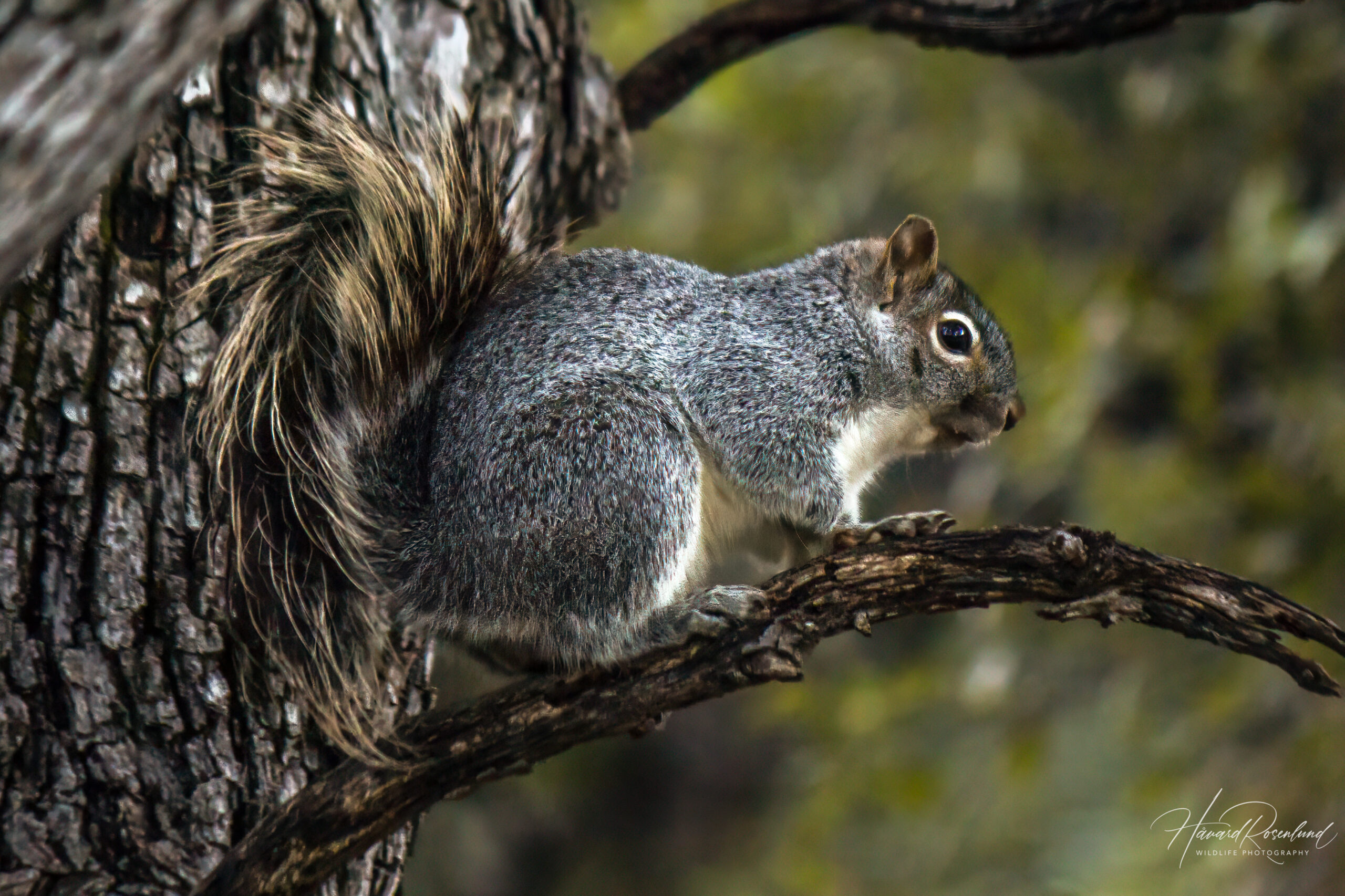
Arizona Gray Squirrel
Sciurus arizonensis
At a glance
Habitat
- Riparian deciduous and mixed forest in mountain canyons and valleys
Diet
- Acorns, walnuts, juniper seeds, pine seeds, fungi, flowers, fruit and occasional animal matter
Activity
- Diurnal
Size
- Length: about 49–57 cm including tail Weight: adults commonly about 540–740 g
Range
- Central and southeastern Arizona, western New Mexico and northeastern Sonora
Description
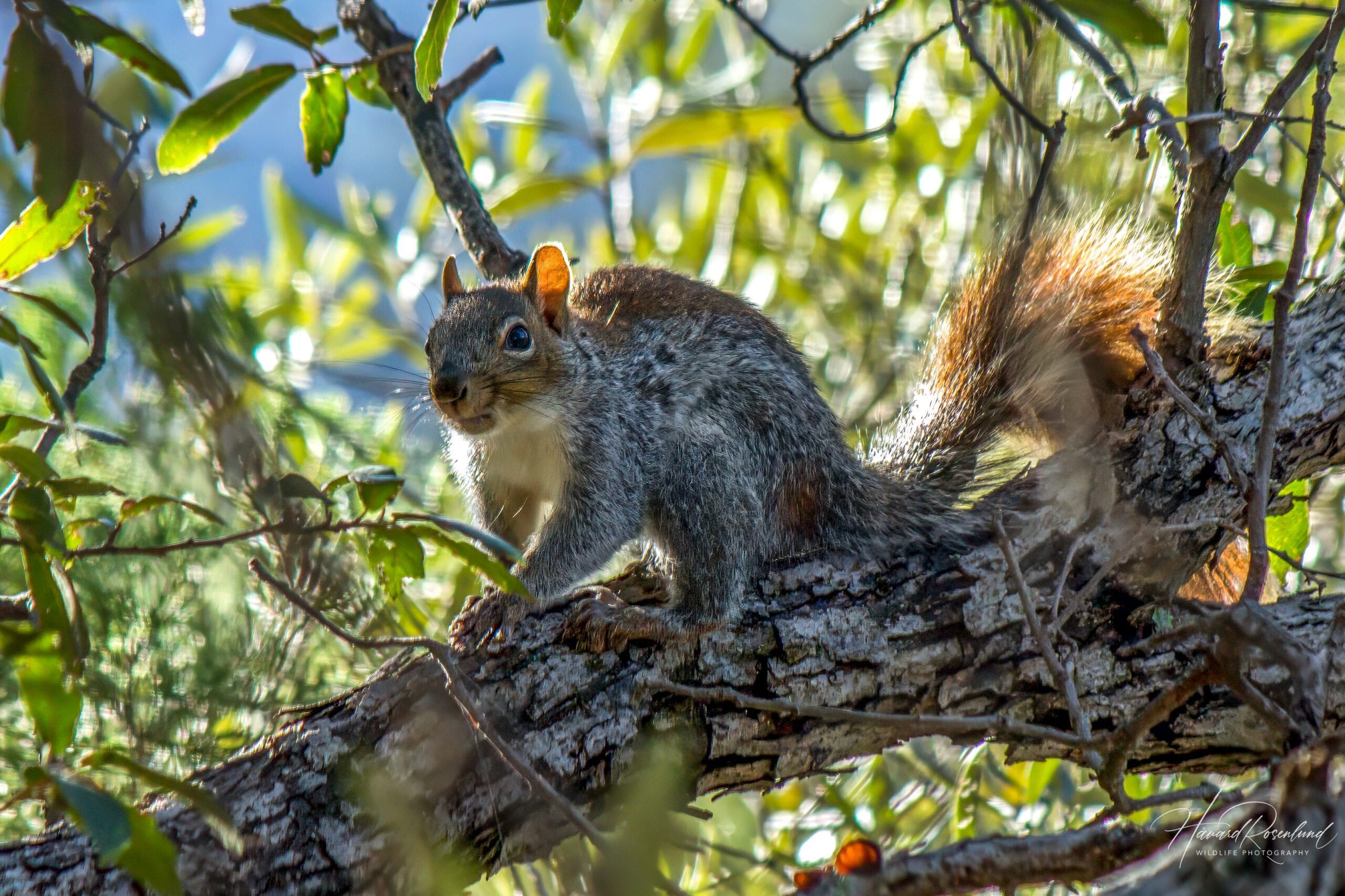
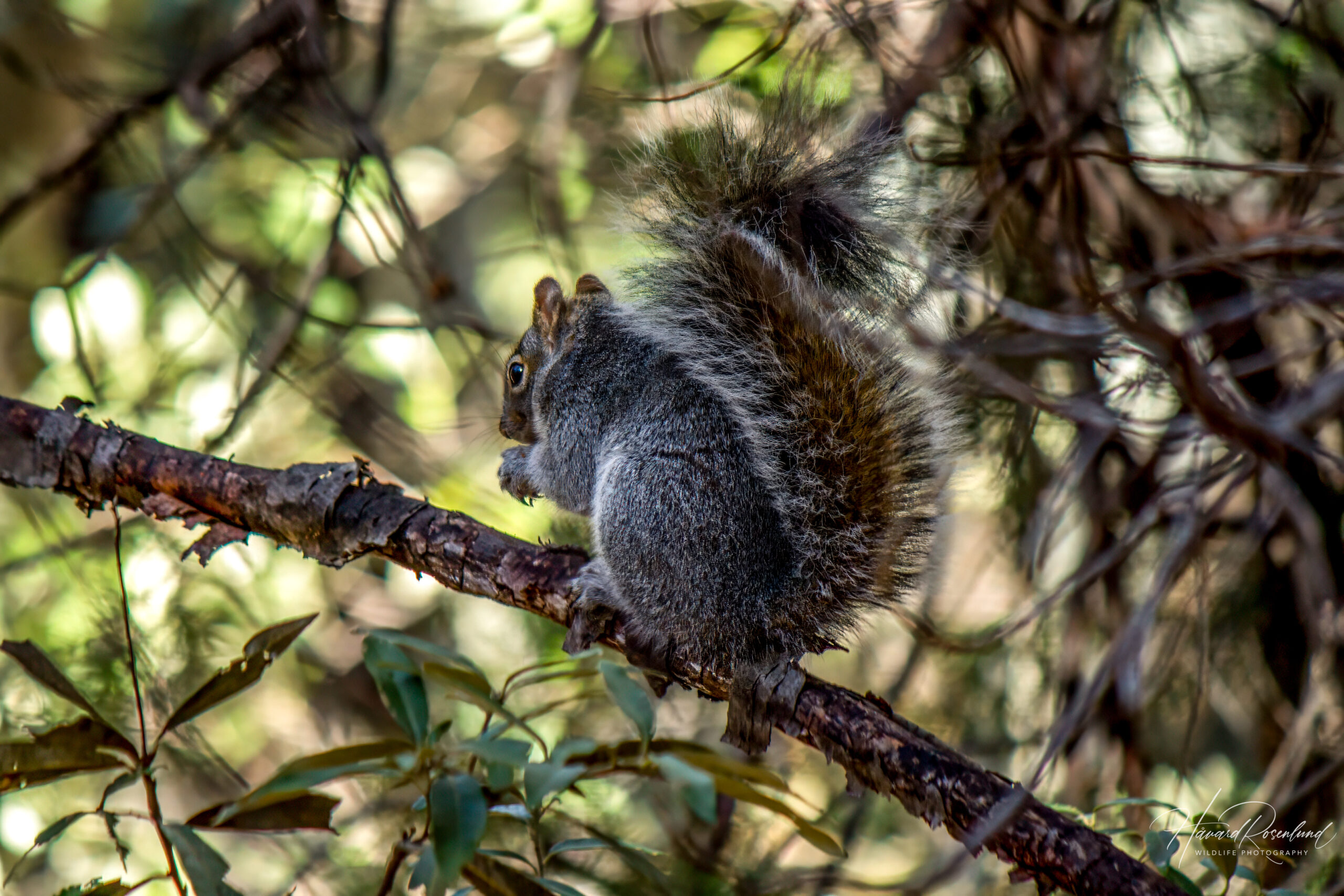
The Arizona gray squirrel (Sciurus arizonensis) is a large tree squirrel restricted to mountain forests in Arizona, western New Mexico and northeastern Sonora in Mexico. Adults measure roughly 49–57 cm including the tail and commonly weigh about 540–740 g.
The upperparts are grey, the belly is white to cream and the bushy tail is dark above with pale edges and a yellowish, reddish or dark underside. It differs from Abert's squirrel (Sciurus aberti) in lacking the long ear tufts and in its closer association with deciduous riparian forest rather than ponderosa-pine forest.
Taxonomy
The species is currently retained as Sciurus arizonensis by the Mammal Diversity Database. A proposed rearrangement of the squirrel tribe Sciurini would move this species, together with several relatives, to the genus Parasciurus.
The Mammal Diversity Database does not currently adopt that change and treats the proposed generic arrangement as tentative pending further investigation. Sciurus arizonensis therefore remains the current scientific name.
Habitat
Arizona gray squirrels inhabit riparian deciduous and mixed forest in mountain canyons and valleys, usually where large oaks, Arizona walnut, sycamore, cottonwood, juniper and pine provide food, nest sites and connected canopy. In the United States they are often found from about 1,500–1,900 m, although the species occurs lower in parts of Mexico.
The squirrels are particularly dependent on mature riparian forest with several canopy layers and good connections between trees. Dense woodland along streams also provides escape cover in landscapes that can otherwise be dry and open.
Diet
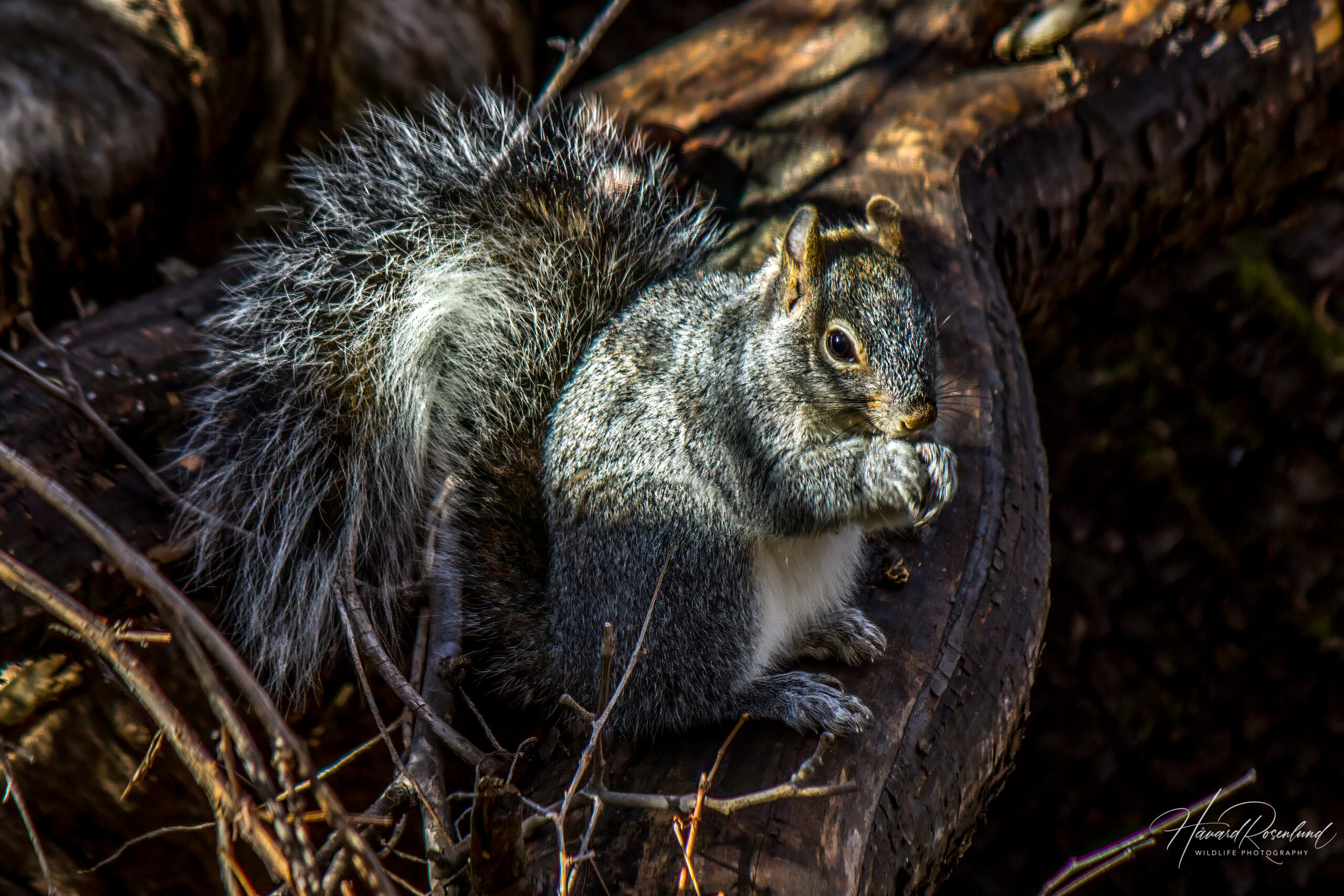
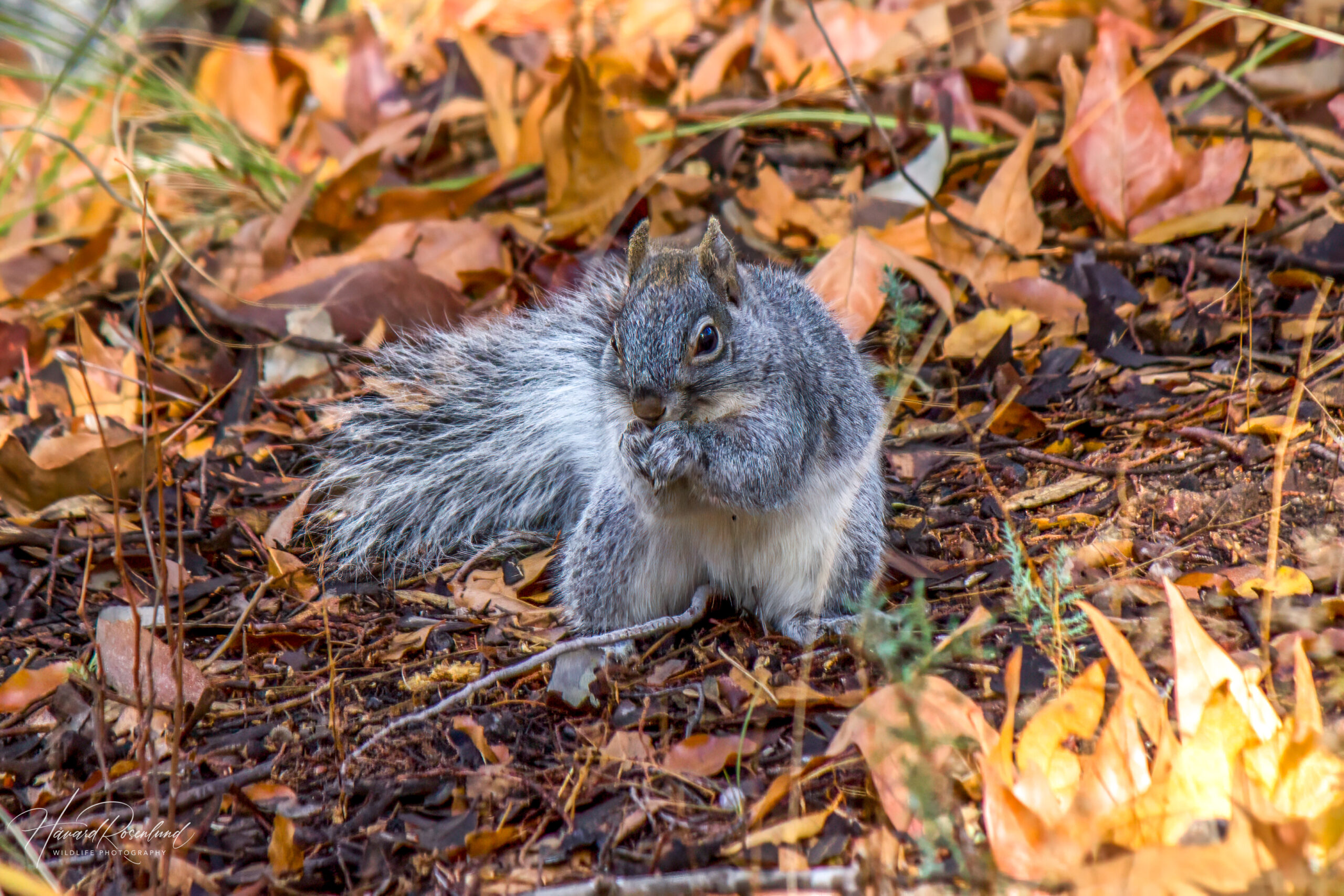
The diet changes strongly with season and year. Acorns, juniper seeds and walnuts were the main foods during fieldwork in the Huachuca Mountains in 2007–2008, but pine seeds, flowers, buds, fruit, fungi, insect galls and occasional other animal matter are also eaten.
Foraging
Arizona gray squirrels feed both in trees and on the ground, moving between mature food trees and the forest floor as different resources become available. The importance of major foods changed markedly between the two years in the Huachuca Mountains, reflecting strong variation in rainfall and seed and nut production. Poor food years can therefore affect both body condition and reproductive success.
Behaviour
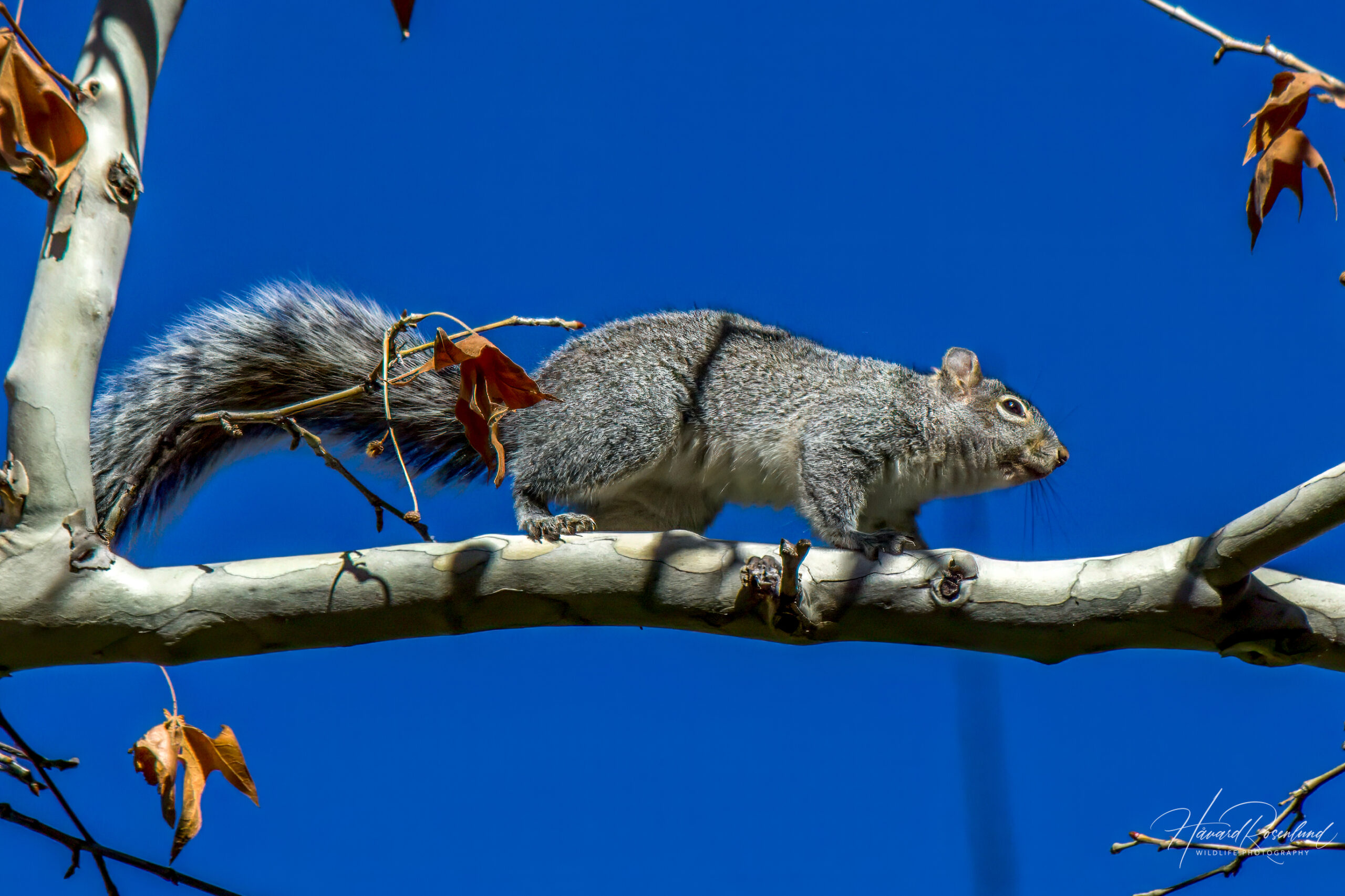
The Arizona gray squirrel is diurnal and individuals usually move alone, although home ranges overlap and several squirrels may use the same highly productive food tree.
A study published in 2010 from the Huachuca Mountains found that males had larger home ranges than females, and that both home-range size and overlap increased during the mating period. Male space use was especially associated with access to females, while female space use more closely tracked food resources.
Dense canopy and riparian undergrowth provide important cover from predators. Adult survival can be relatively high in good habitat, but a study published in 2014 from the Huachuca Mountains found predation to be the most frequent known cause of death.
Reproduction
Reproductive timing and success vary with rainfall and food production. During fieldwork in 2007–2008, males remained reproductively active over a broad January–July period, while the timing of female receptivity followed changes in food availability. More females reproduced in the year with better resource conditions.
Several males may chase one receptive female during mating. After a gestation of about two months, the female gives birth in a leaf-and-twig nest high in a tree or, less often, in a suitable tree cavity. Litters normally contain two to four young.
Not every adult female produces a litter each year, especially when food is scarce. Nest placement is strongly associated with mature trees and complex canopy structure, linking reproduction directly to the quality of riparian forest.
Status
The Arizona gray squirrel is classified as data deficient on the IUCN Red List. Arizona also lacks enough data to say confidently whether the statewide population is declining or how it is changing over time.
The species is nevertheless listed as Tier 2 among Arizona's Species of Greatest Conservation Need. For the Arizona gray squirrel, this reflects factors including its isolated distribution and the large proportion of its U.S. range that lies within Arizona. The lack of information also makes local changes difficult to detect without regular surveys and long-term monitoring.
Conservation
Protecting mature riparian woodland is the central conservation need. Loss of streamside forest, drought, logging, development and severe wildfire can remove canopy cover, food trees and nest sites while isolating the remaining habitat patches.
A study published in 2017 after large fires found that native Arizona gray squirrels remained closely associated with unburned riparian forest, whereas introduced Abert's squirrels used more open post-fire habitat more readily. The direct effect of Abert's squirrels on Arizona gray squirrel populations remains uncertain, but habitat change can increase overlap between the species.
Maintaining dense canopy, large deciduous trees and continuous unburned woodland along mountain streams, together with better long-term monitoring, will be important for assessing and reducing future risk.
Image gallery
Loading map and observations…
Have you seen this species?
Independent species archive
Did you find this species page useful?
Wildlife Vagabond is independently built and maintained. Voluntary support helps cover hosting, maps, data storage and continued improvements to the species archive.
Support Wildlife VagabondSpecies content will remain freely available.
References
Information about the species’ global distribution and status is based primarily on global Red List data. See the references below for details.
- Arizona Game and Fish Department. (n.d.). Arizona Wildlife Conservation Strategy: Sciurus arizonensis. https://awcs.azgfd.com/species/mammals/sciurus-arizonensis
- Best, T. L., & Riedel, S. (1995). Sciurus arizonensis. Mammalian Species. https://doi.org/10.1644/0.496.1
- Cudworth & Koprowski. (2014). Survival and mortality of the Arizona gray squirrel. https://experts.arizona.edu/en/publications/survival-and-mortality-of-the-arizona-gray-squirrel-sciurus-arizo/
- Cudworth, N. L., & Koprowski, J. L. (2011). Importance of scale in nest‐site selection by Arizona gray squirrels. The Journal of Wildlife Management, 75(7), 1668-1674. https://doi.org/10.1002/jwmg.194
- Cudworth, N. L., & Koprowski, J. L. (2013). Foraging and reproductive behavior of Arizona gray squirrels (Sciurus arizonensis): impacts of climatic variation. Journal of Mammalogy, 94(3), 683-690. https://doi.org/10.1644/12-MAMM-A-087.1
- International Union for Conservation of Nature. (n.d.). Sciurus arizonensis (Arizona Gray Squirrel), Data Deficient. The IUCN Red List of Threatened Species. https://www.iucnredlist.org/species/20005/22247935
- Ketcham, Koprowski & Falk. (2017). Differential response of native Arizona gray squirrels and introduced Abert’s squirrels to a mosaic of burn severities. https://conservation.arizona.edu/publication/differential-response-native-arizona-gray-squirrels-and-introduced-aberts-squirrels.html
- Mammal Diversity Database. (n.d.). Sciurus arizonensis: current taxonomy and distribution. American Society of Mammalogists. https://www.mammaldiversity.org/taxon/1001678/