
Southern Giraffe
Giraffa giraffa
At a glance
Habitat
- Savanna, open woodland, shrubland and semi-arid landscapes
Diet
- Leaves, shoots, flowers and fruit from trees and shrubs
Activity
- Active by day and night, with feeding peaks in cooler hours
Size
- Length: 4.5–5.5 m tall Weight: females about 830 kg; males about 1,200 kg
Range
- Southern Africa from Angola and Namibia through Botswana, Zambia and Zimbabwe to South Africa, Eswatini, Malawi and Mozambique
Description
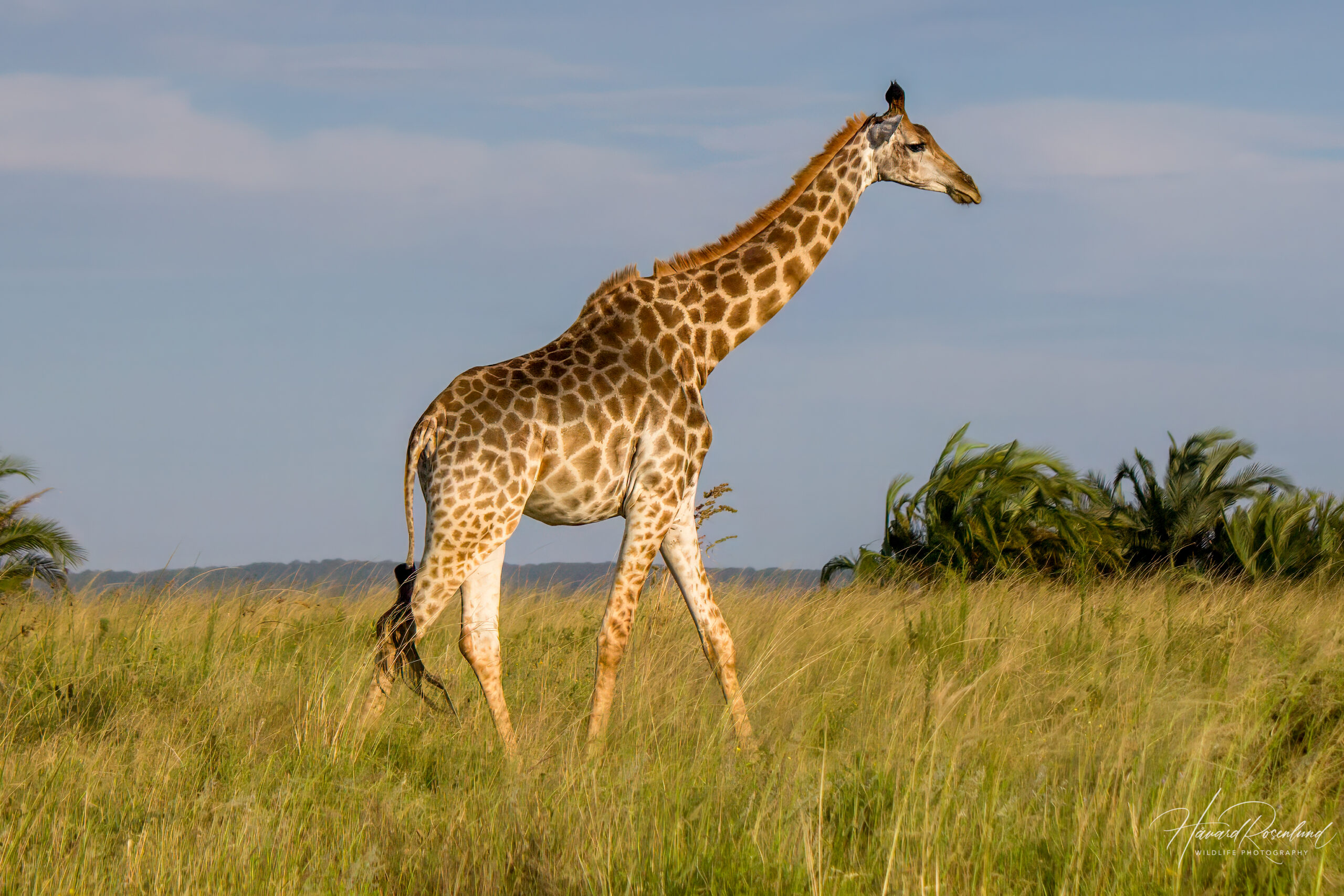
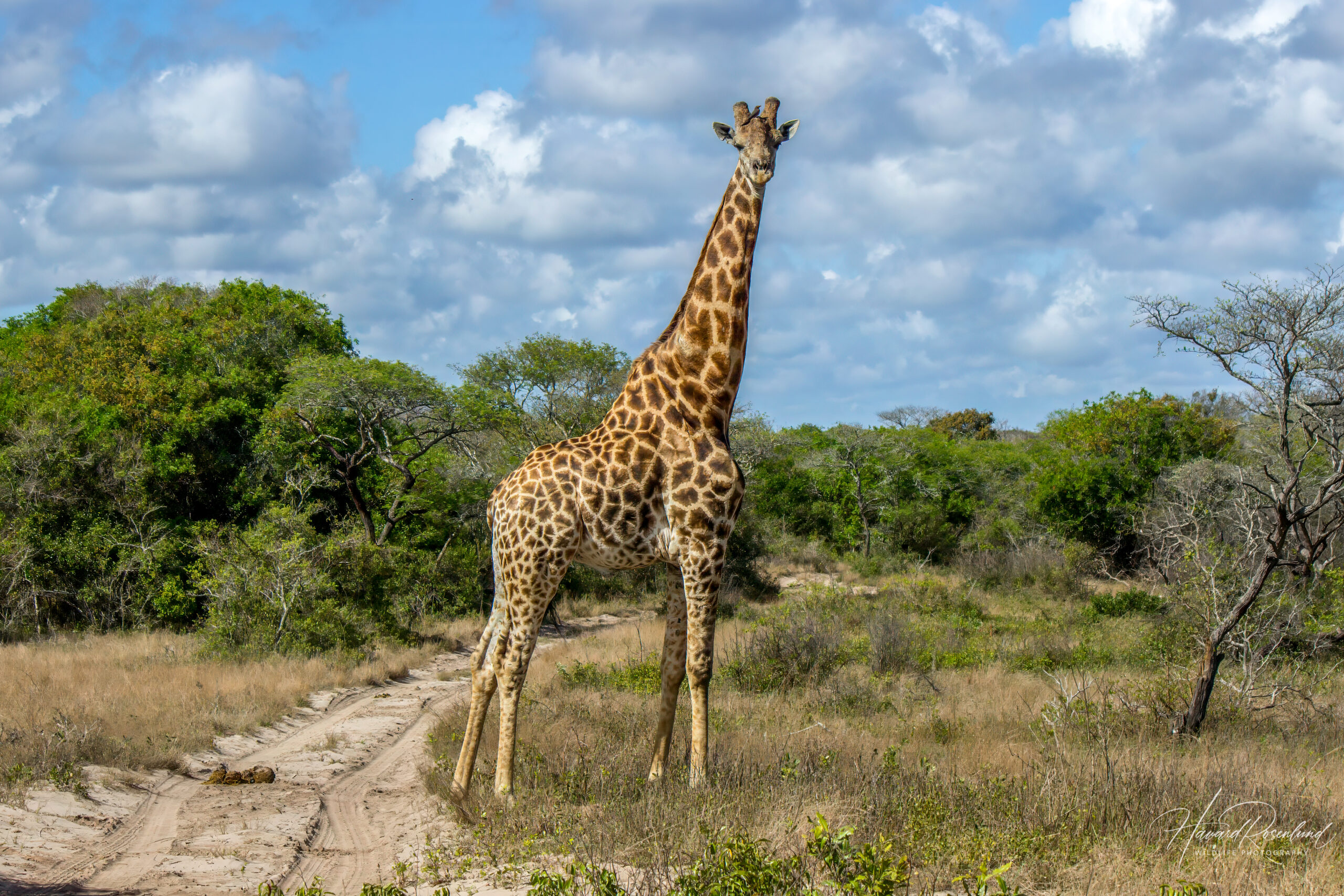
The southern giraffe (Giraffa giraffa) is the southernmost of the four giraffe species formally recognised by the IUCN in 2025. Adults stand roughly 4.5–5.5 m tall; males average around 1,200 kg and females about 830 kg.
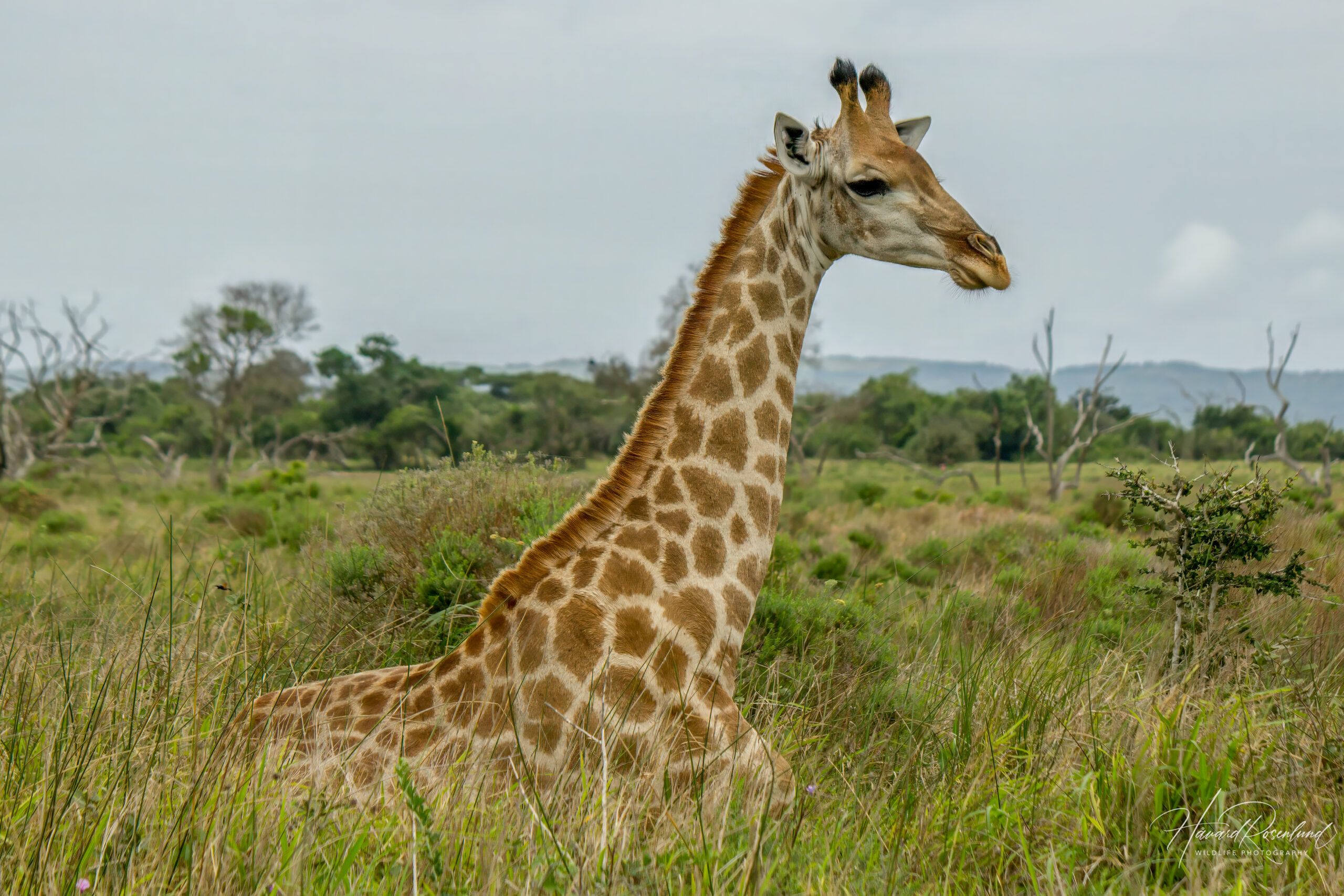
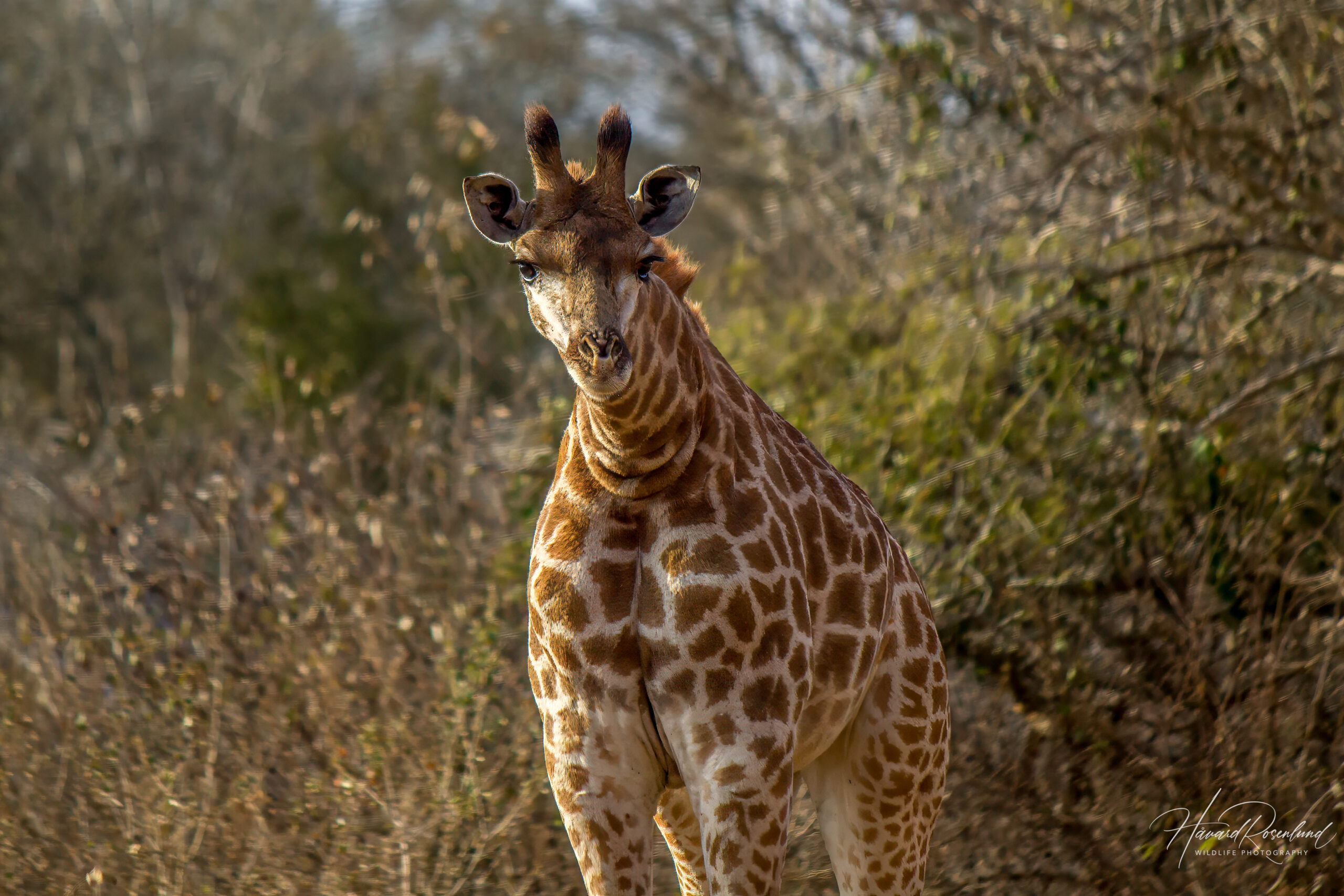
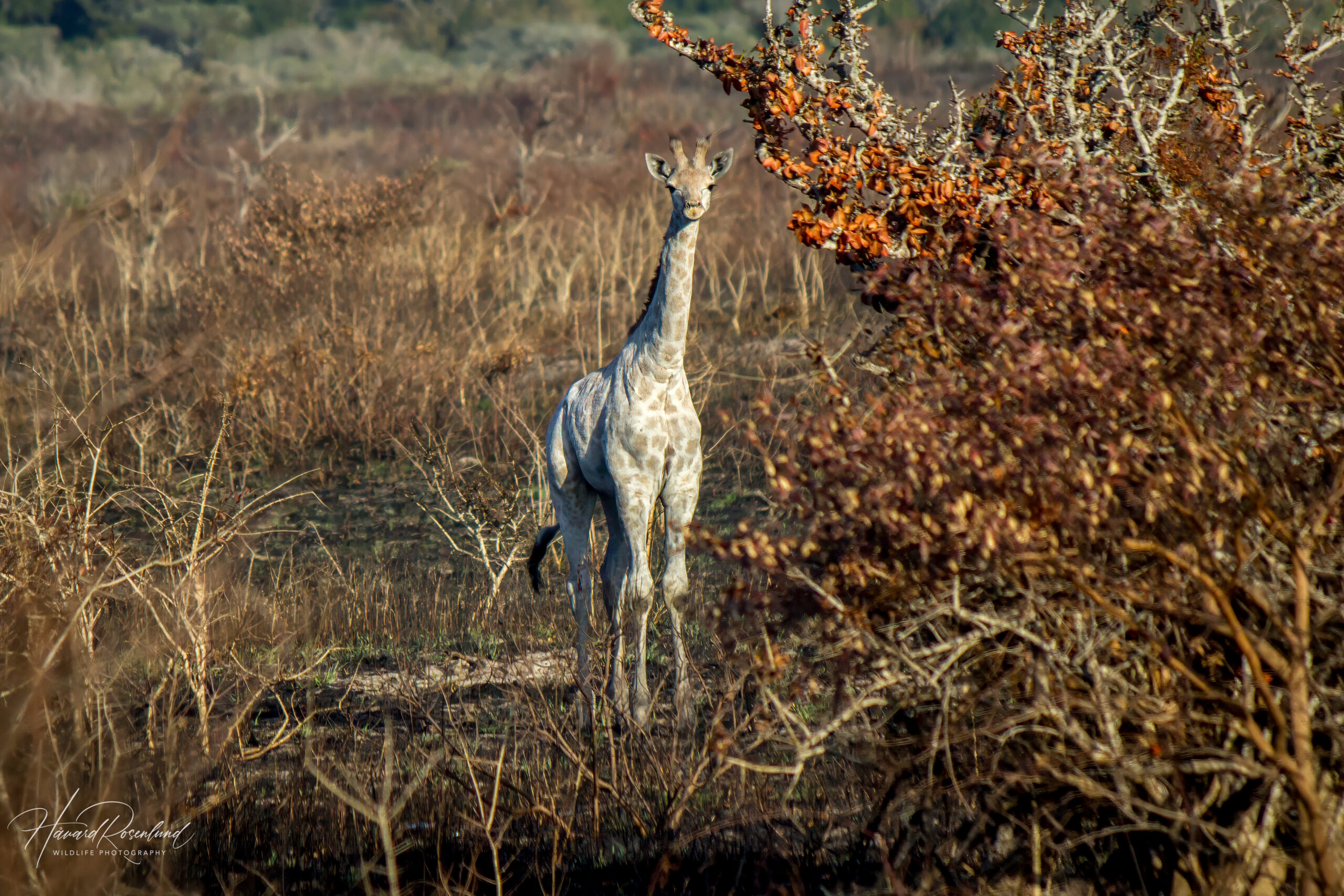
The coat has large, irregular brown patches with fairly clean edges that usually continue down the legs. Colour varies strongly between individuals and often darkens with age, especially in males. Very pale animals usually have reduced pigmentation rather than true albinism.
Both sexes carry skin-covered bony ossicones rather than true horns. Its long neck, ability to browse high in the vegetation and excellent eyesight make the giraffe one of the most distinctive large mammals in Africa.
Taxonomy
The IUCN SSC Giraffe and Okapi Specialist Group formally recognised four giraffe species in August 2025: northern giraffe (G. camelopardalis), reticulated giraffe (G. reticulata), Masai giraffe (G. tippelskirchi) and southern giraffe (G. giraffa).
Southern giraffe contains two recognised subspecies. The South African giraffe (G. g. giraffa) occurs principally in South Africa, Botswana, Zimbabwe, Eswatini and Mozambique, with introduced or reintroduced populations elsewhere. The Angolan giraffe (G. g. angolensis) is centred on Namibia, Botswana and parts of Zambia and Zimbabwe and has been reintroduced to Angola.
Because giraffes have been moved widely between reserves, some populations occur outside their historical range and some areas contain mixed ancestry. Modern conservation increasingly uses genetic information to avoid unnecessary mixing between lineages.
Long neck
Despite having the longest neck of any living mammal, a giraffe still has only seven cervical vertebrae, the usual mammalian number. In large males, the neck can exceed two metres in length. Each vertebra is greatly elongated, and a powerful nuchal ligament helps support the heavy head and neck.
The long neck gives giraffes access to foliage unavailable to most other herbivores and provides a wide view over open country. Male competition may also have contributed to its evolution because the neck is used as a weapon in dominance contests. The relative importance of feeding, vigilance, sexual selection and other pressures remains debated.
Extreme height creates a major circulatory challenge. The brain may sit around two metres above the heart, and giraffes maintain roughly twice the systemic blood pressure of most mammals. A powerful left ventricle, thick-walled blood vessels and tightly supported tissues in the lower legs help maintain blood flow without damaging vessels or allowing severe fluid accumulation. Several pressure-regulating mechanisms work together when the head is lowered to drink and raised again.
Habitat
Southern giraffes live in savanna, open woodland, shrubland and semi-arid landscapes where trees and tall shrubs provide browse. They can persist in dry country because much of their water comes from leaves, but access to seasonal or permanent water remains important in many areas.
The species now occupies both large public protected areas and a very large number of private reserves and wildlife properties. In South Africa, a 2025 national survey found giraffes across all nine provinces, although much of this expanded distribution results from giraffes being introduced by people outside the historical range.
Diet
Southern giraffes browse leaves, shoots, flowers and fruit from trees and shrubs. Acacias and related thorny plants are especially important in many areas. A flexible upper lip and a dark, prehensile tongue about 45–50 cm long help pull foliage between thorns, while tough tissues inside the mouth and abundant saliva reduce injury.
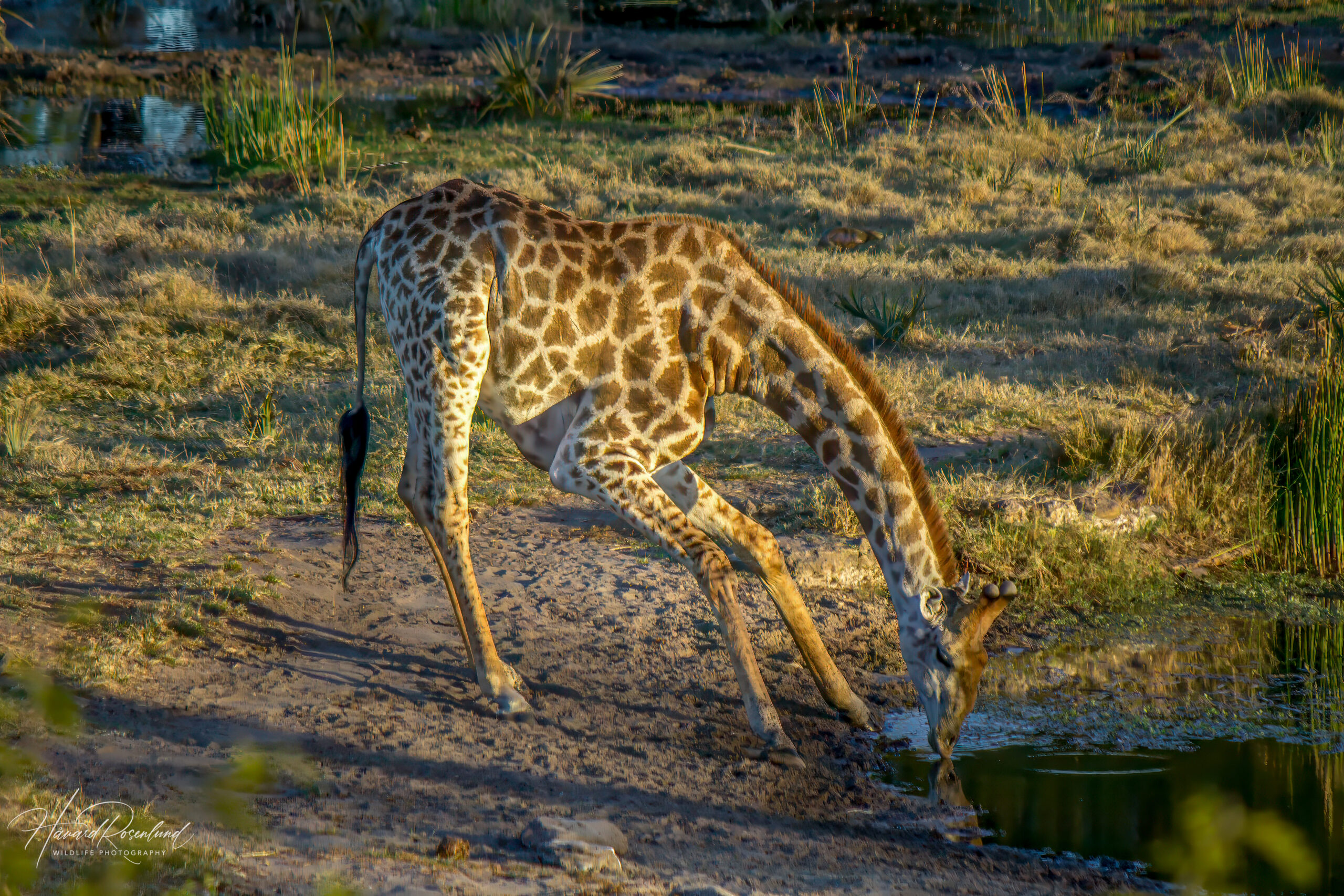
When water is available, giraffes drink by spreading the forelegs and lowering the head. This awkward posture makes rapid escape more difficult, so they often remain highly vigilant and may drink with other giraffes or other alert animals nearby.
Behaviour
Southern giraffes are active by both day and night, with much feeding in the cooler hours. They spend long periods moving slowly between trees they feed from, resting or ruminating, and may cover substantial distances as the availability of nutritious leaves and shoots shifts with the seasons.
Height gives them an excellent view across open country, allowing approaching danger to be detected at long range.
Social behaviour
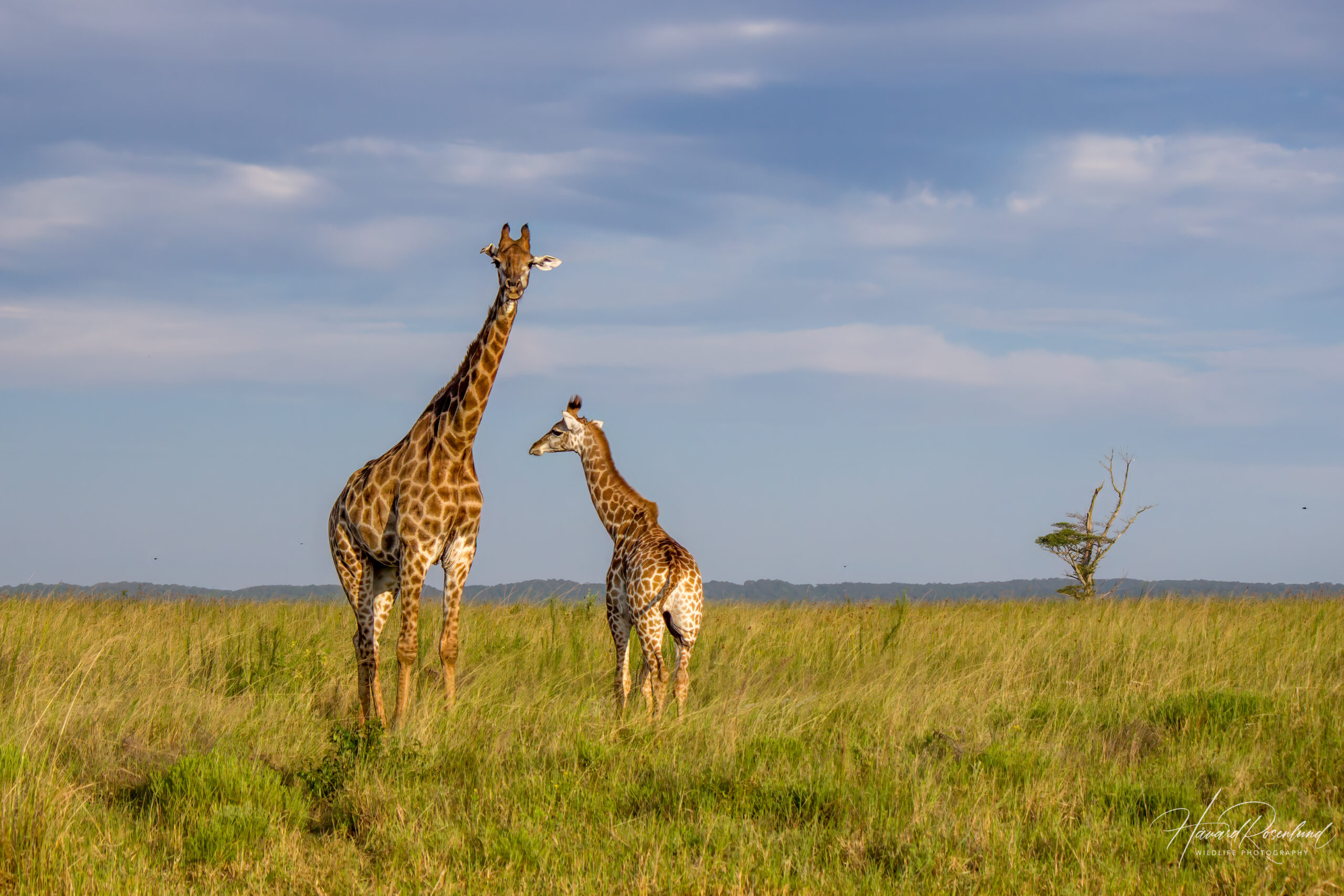
Giraffes live in fluid fission–fusion societies rather than permanent herds. Individuals repeatedly join and leave groups over hours or days. Females and calves often associate, young males may form bachelor groups, and adult males range widely while searching for receptive females.
Long-term relationships still exist within this flexible system. Females may repeatedly associate with particular companions, and calves can form temporary nursery groups while mothers feed nearby. Older males tend to spend more time alone than females and younger giraffes.
Male giraffes establish rank through sparring known as necking. They swing the head and neck so that the skull and ossicones strike an opponent’s body. Light bouts between younger males can look almost playful, while serious contests between adult giraffes can cause severe injury and, rarely, death.
Adult males often develop heavier skulls and more worn, bald ossicones through repeated fighting, although hair on the ossicones is not a completely reliable sexing character by itself.
The video below shows a relatively gentle contest between two young males.
Predation
Lions (Panthera leo) are the principal predators of giraffes and can kill calves, subadults and occasionally adult giraffes. A Serengeti study found lion claw marks on 13% of individually known giraffes older than one year, showing how often attacks can occur without ending in a kill. No calves carried such scars, which is consistent with calves being much less likely to survive once a lion makes contact.
Young giraffes are the most vulnerable age class, and spotted hyenas (Crocuta crocuta) and other large carnivores can also take calves. Adults rely on early detection, powerful kicks and their sheer size, while mothers defend calves vigorously. Predation is therefore strongly age-dependent and helps explain why calves hide and why temporary nursery groups form.
Reproduction
Pregnancy lasts about 14–15 months, usually around 400–460 days, and one calf is normally born. The calf drops to the ground during birth and is already around 1.7–1.8 m tall. It can usually stand and walk within its first hours.
Females may place calves together in temporary nursery groups while feeding nearby. Females can begin reproducing at around four years, while males generally breed later because they must first become large enough to compete successfully. Wild southern giraffes can live well past 30 years, as long-term monitoring of Angolan giraffes in Namibia has shown.
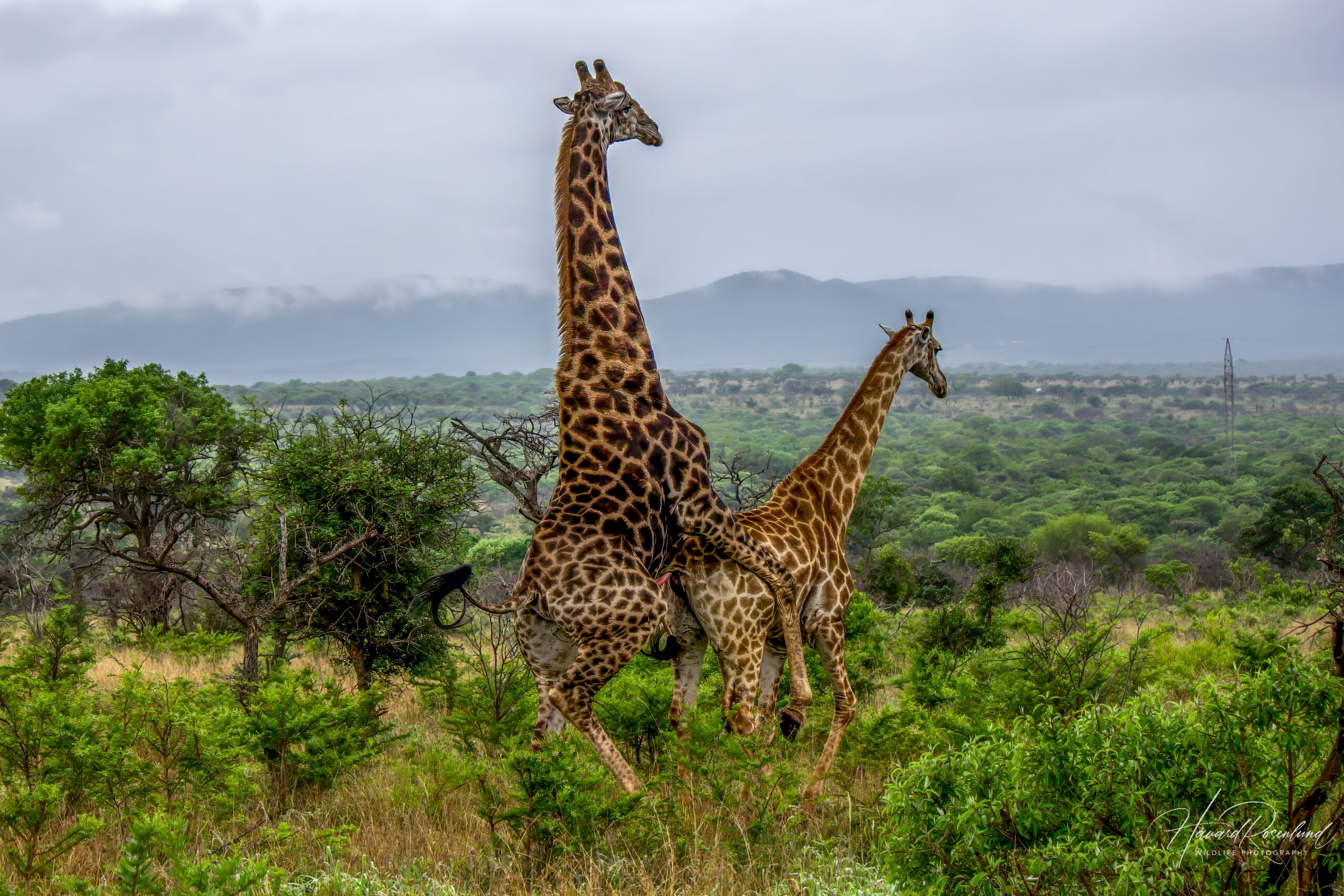
The observation below shows two southern giraffes mating; the mature male is noticeably larger and darker.
Cultural significance
Giraffes have a long cultural history in areas that now form part of the southern giraffe’s range. In Namibia they are among the most frequently depicted animals in ancient San rock engravings and paintings, including at Twyfelfontein and in the Brandberg region. Some images have been interpreted within wider San ritual and shamanic traditions, although the meaning of individual giraffe figures cannot always be known with confidence.
The prominence of giraffes in this art shows that they were more than simply familiar wildlife: they formed part of how hunter-gatherer communities understood and represented the animals around them.
Status
Following the IUCN taxonomic review published on 21 August 2025, the southern giraffe is recognised as a separate species but has not yet received its own global IUCN Red List assessment. Its current species-level category is therefore Not Evaluated. The older Vulnerable listing applies to the former broad treatment of all giraffes as one species and should not be transferred directly to Giraffa giraffa.
Giraffe Conservation Foundation’s State of Giraffe 2025 estimated 68,837 wild southern giraffes, about 50% more than the estimate five years earlier. The increase reflects a combination of real population growth, conservation translocations and much better survey coverage.
The species is currently the most numerous of the four giraffe species. Even so, habitat fragmentation, drought, illegal hunting and poorly planned translocations remain local concerns, and some populations are small or genetically isolated.
Conservation
Southern giraffe conservation is unusual because private land and active translocation have played such a large role in the species’ expansion. A 2025 survey estimated about 29,536 giraffes in South Africa and found that 49.4% of them occurred on private land. This helps explain why the species has expanded in both numbers and range while several other giraffe species remain in decline.
That success also creates management challenges. Many populations live in fenced and isolated areas, and giraffes have frequently been moved outside their historical range. Genetic testing, coordinated translocations and careful records of origin are therefore increasingly important, particularly where the South African and Angolan subspecies could be mixed.
Reintroductions have restored giraffes to countries and areas where they had disappeared, including Angola and Eswatini. Current conservation increasingly combines population surveys, satellite tracking, genetics and national or regional action plans rather than relying on head counts alone.
Conservation organizations

Image gallery
Loading map and observations…
National Red List status
| Country | Status | Assessment | Source |
|---|---|---|---|
| South Africa | LCLeast Concern | Red List of South African Species 2016Assessed as Giraffa camelopardalis giraffa | SANBI – Red List of South African Species |
Have you seen this species?
Independent species archive
Did you find this species page useful?
Wildlife Vagabond is independently built and maintained. Voluntary support helps cover hosting, maps, data storage and continued improvements to the species archive.
Support Wildlife VagabondSpecies content will remain freely available.
References
- British Museum. (n.d.). Rock art of Namibia and Twyfelfontein. https://africanrockart.britishmuseum.org/country/namibia/
- Coimbra, R. T., Winter, S., Kumar, V., Koepfli, K.-P., Gooley, R. M., Dobrynin, P., Fennessy, J., & Janke, A. (2021). Whole-genome analysis of giraffe supports four distinct species. Current Biology, 31(13), 2929-2938.e5. https://doi.org/10.1016/j.cub.2021.04.033
- Fennessy, J., Bidon, T., Reuss, F., Kumar, V., Elkan, P., Nilsson, M. A., Vamberger, M., Fritz, U., & Janke, A. (2016). Multi-locus Analyses Reveal Four Giraffe Species Instead of One. Current Biology, 26(18), 2543-2549. https://doi.org/10.1016/j.cub.2016.07.036
- Giraffe Conservation Foundation. (2025). State of Giraffe 2025. https://giraffeconservation.org/state-of-giraffe/
- Giraffe Conservation Foundation. (n.d.). Giraffe biology and adaptations. https://giraffeconservation.org/giraffe-species/facts-about-giraffe/
- Giraffe Conservation Foundation. (n.d.). How long do giraffe live?. https://giraffeconservation.org/facts-about-giraffe/how-long-do-giraffe-live/
- Giraffe Conservation Foundation. (n.d.). Southern giraffe. https://giraffeconservation.org/giraffe-species/southern-giraffe/
- Hoffman, R., Marneweck, C. J., Fennessy, J., Brown, M. B., Fennessy, S., & Parker, D. M. (2025). The Status of Giraffe in South Africa: The Importance of Private Land for Conservation. African Journal of Wildlife Research, 55(1). https://doi.org/10.3957/056.055.0285
- International Union for Conservation of Nature. (2025). Four giraffe species officially recognised. The IUCN Red List of Threatened Species. https://iucn.org/press-release/202508/four-giraffe-species-officially-recognised-major-conservation-reclassification
- IUCN SSC Giraffe and Okapi Specialist Group. (2025). Giraffe taxonomic review. https://iucn.org/resources/file/evaluation-taxonomic-status-giraffe-giraffa-spp
- Liu, C., Gao, J., Cui, X., Li, Z., Chen, L., Yuan, Y., Zhang, Y., Mei, L., Zhao, L., Cai, D., Hu, M., Zhou, B., Li, Z., Qin, T., Si, H., Li, G., Lin, Z., Xu, Y., Zhu, C., … Qiu, Q. (2021). A towering genome: Experimentally validated adaptations to high blood pressure and extreme stature in the giraffe. Science Advances, 7(12), eabe9459. https://doi.org/10.1126/sciadv.abe9459