
Barnacle Goose
Branta leucopsis
At a glance
Habitat
- Arctic tundra, coastal islands and cliffs when breeding; coastal grassland, saltmarsh and farmland in winter
Diet
- Grasses, sedges, leaves, roots and other low-growing vegetation
Activity
- Diurnal
Size
- Length: 58–70 cm Weight: 1.5–2.0 kg
Range
- Breeds in north-east Greenland, Svalbard and north-west Russia/Baltic; winters mainly in north-western Europe, with expanding temperate breeding populations
Description
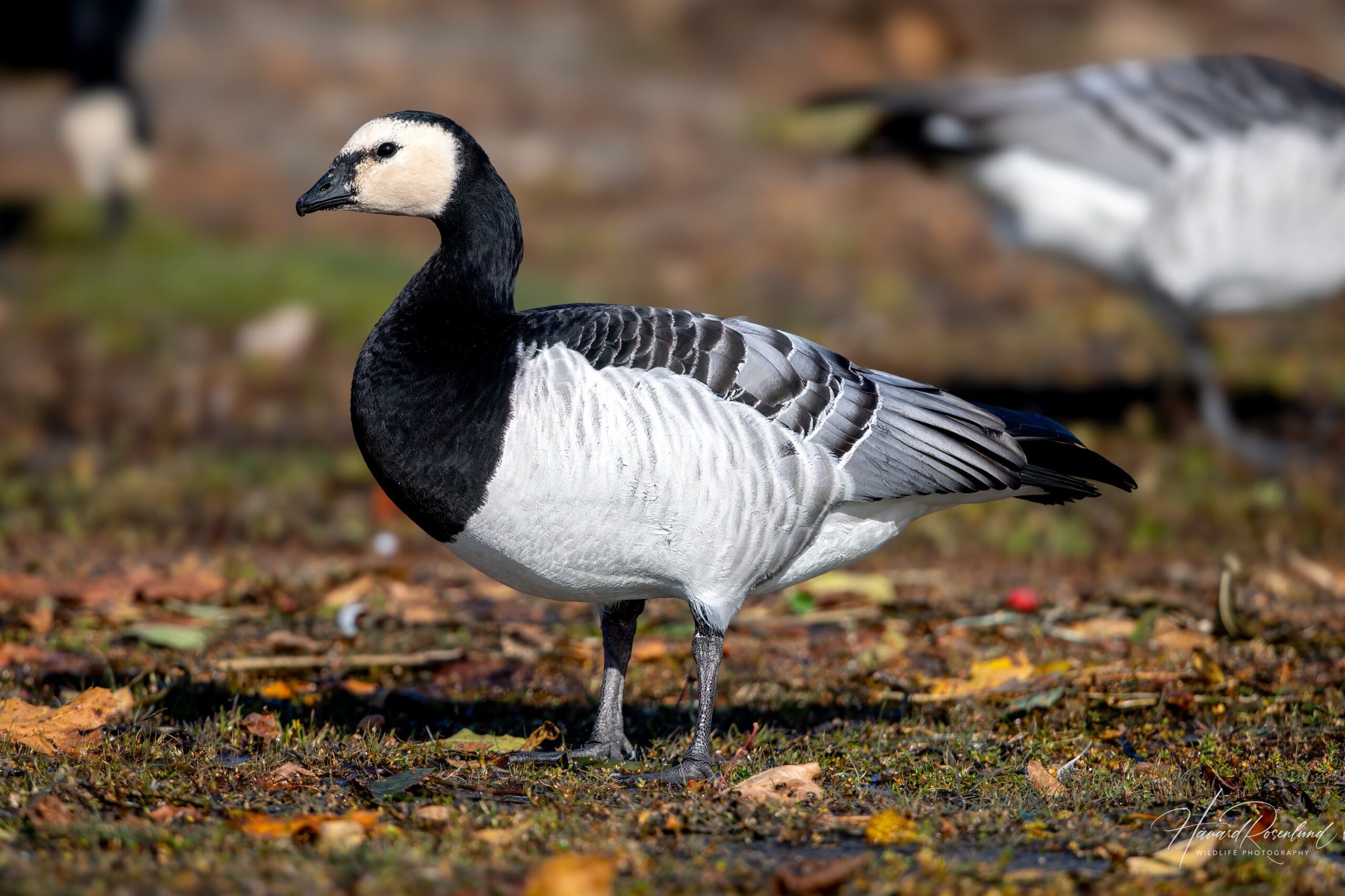
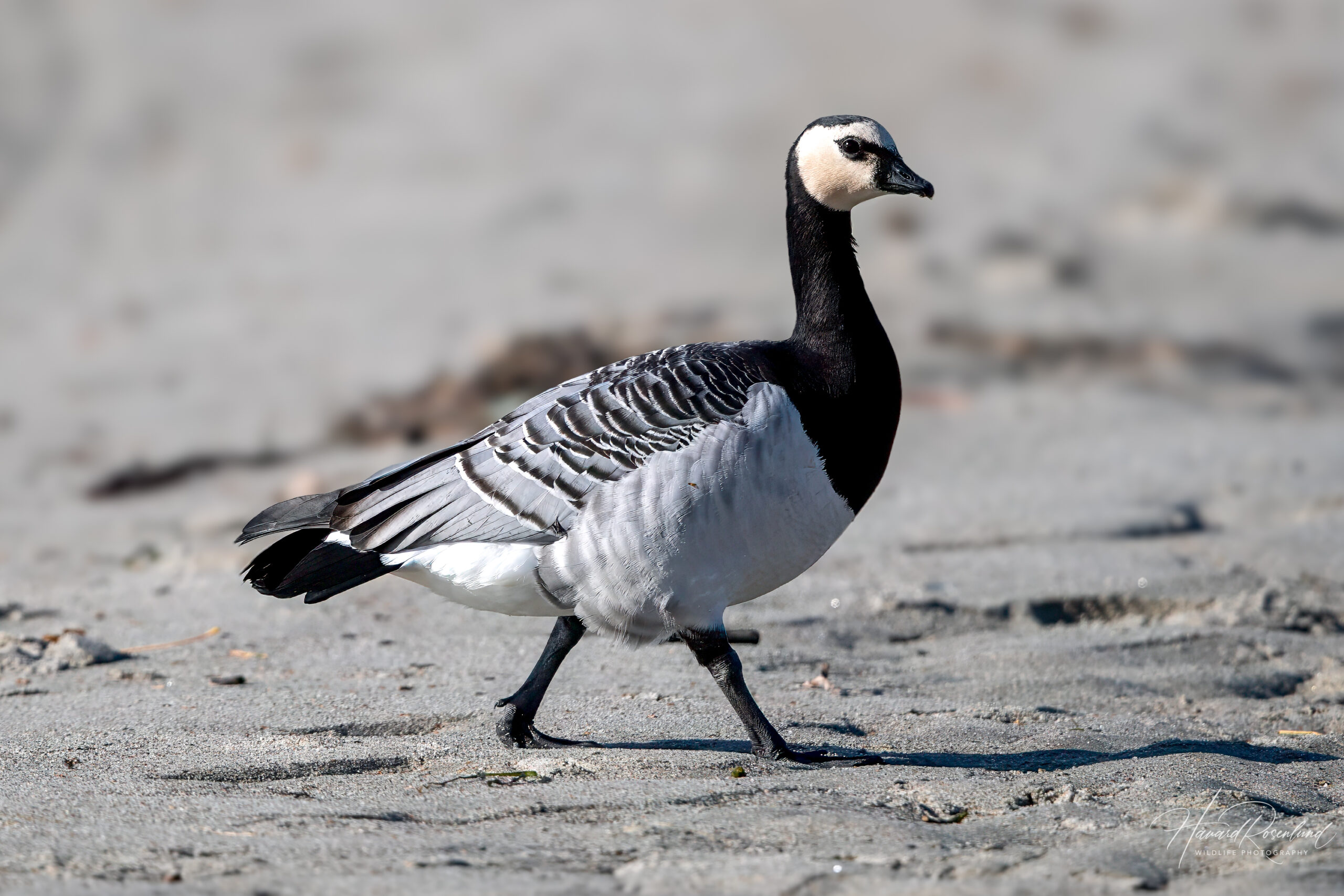
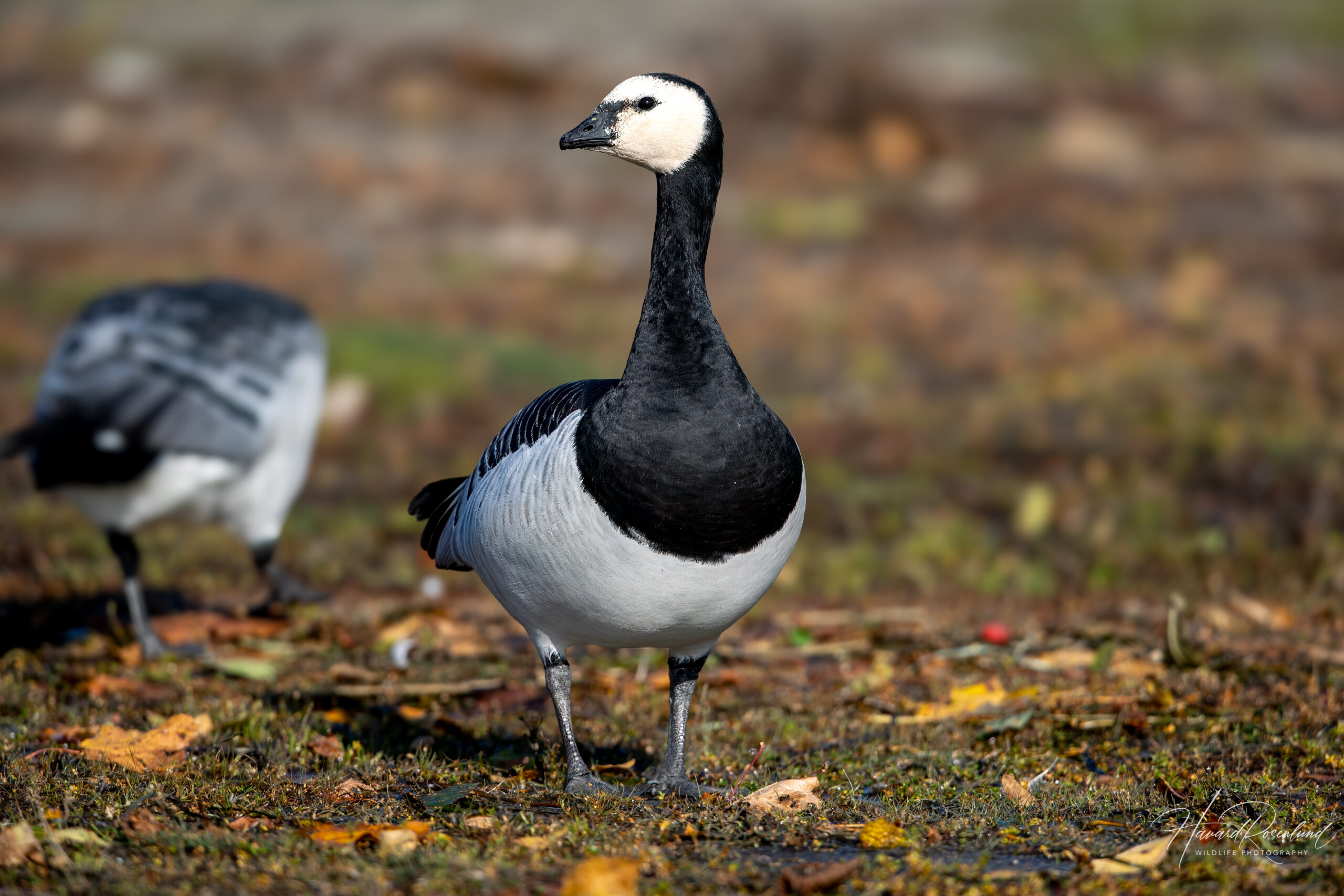
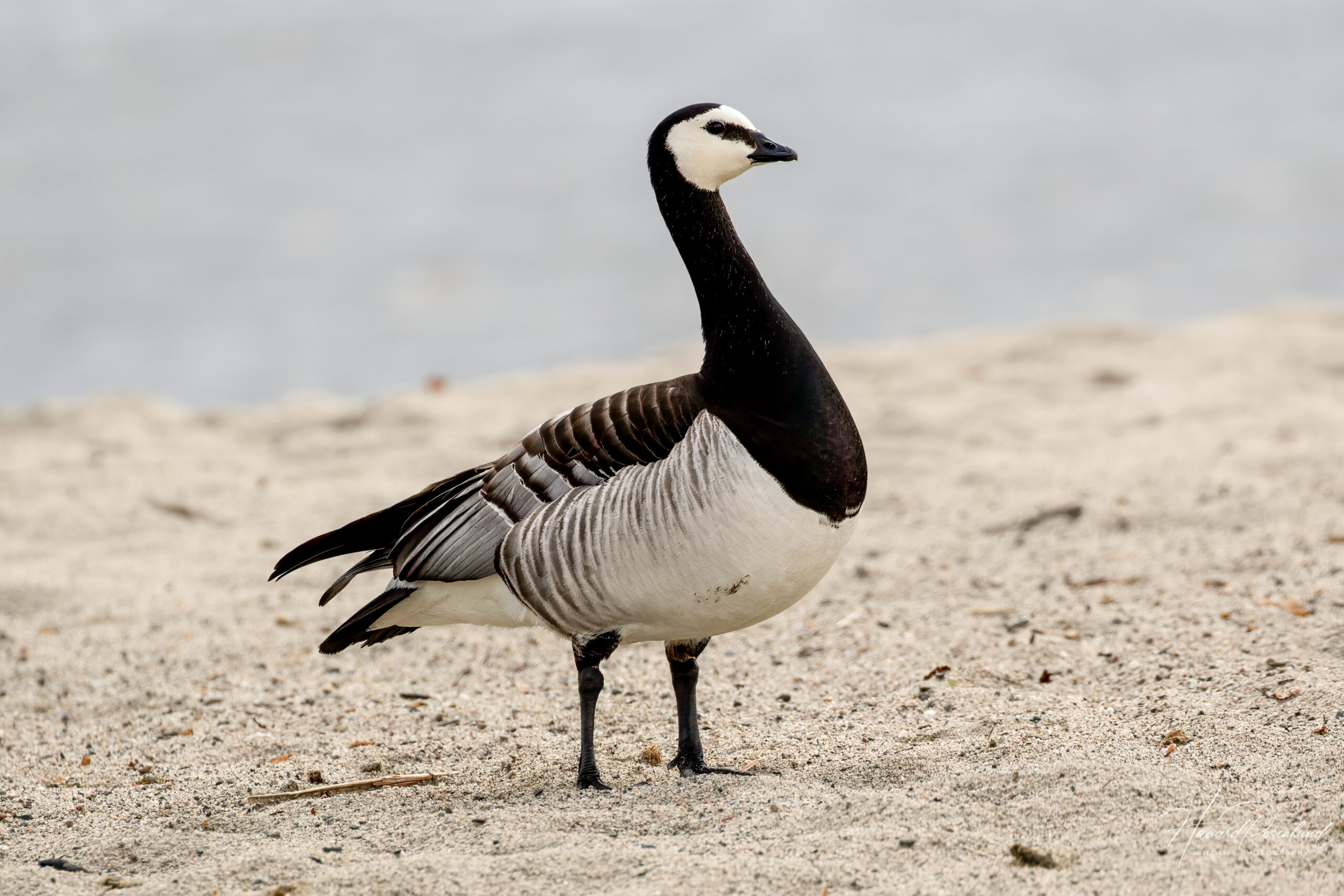
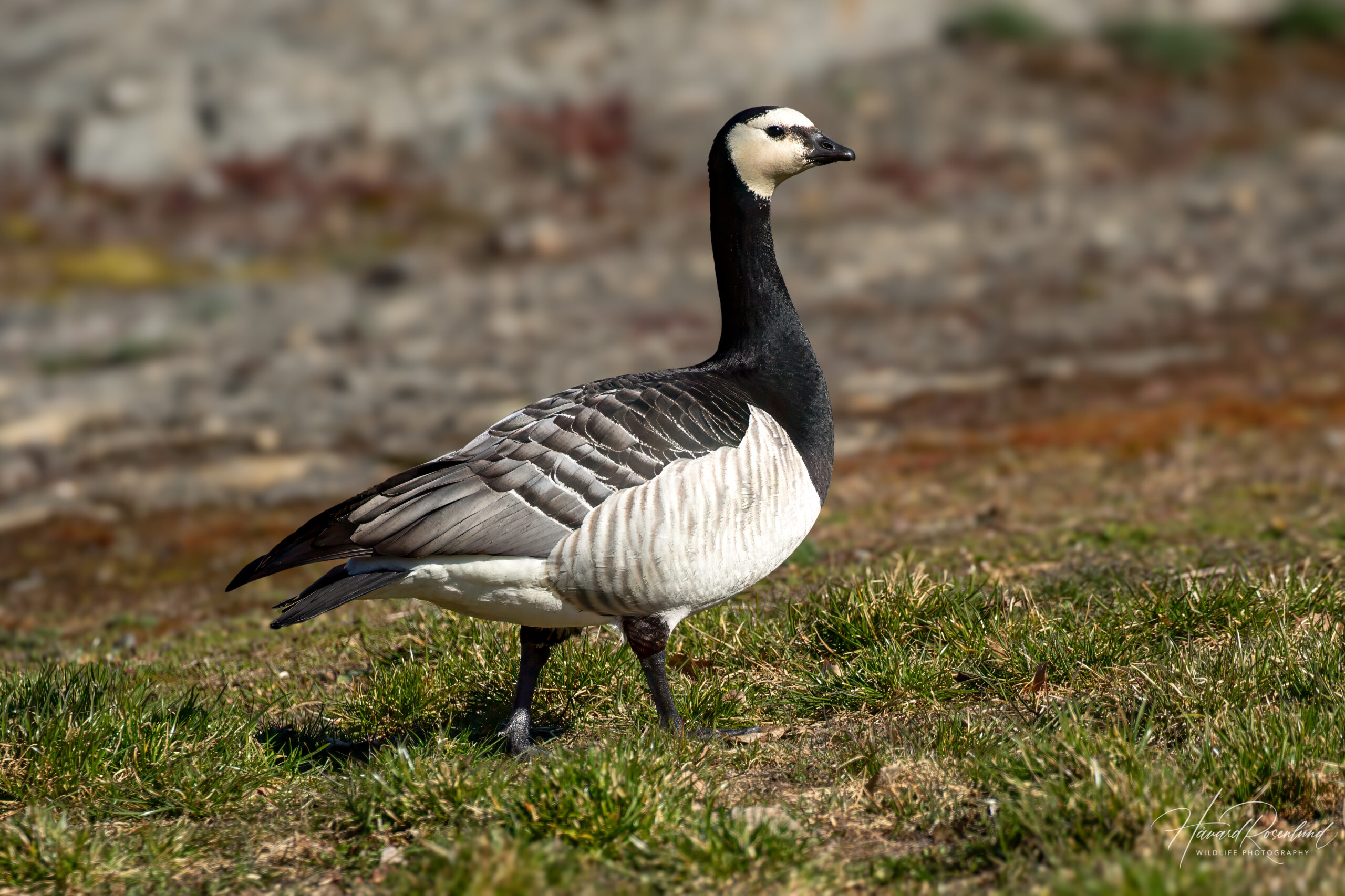
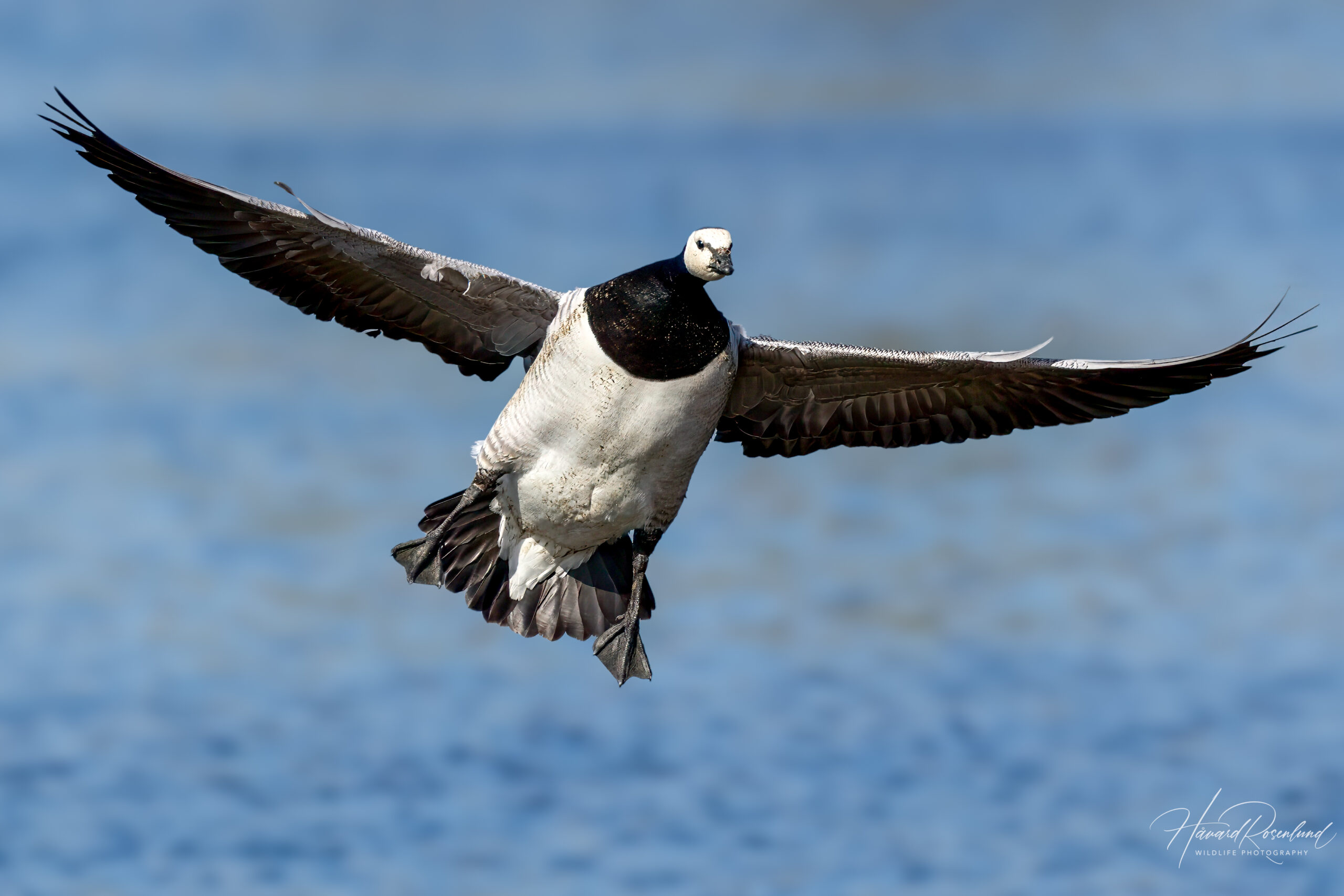
The barnacle goose (Branta leucopsis) is a compact, medium-sized goose of the Arctic and northern Europe. Adults are about 58–70 cm long and typically weigh 1.5–2.0 kg. The white face contrasts sharply with the black crown, neck and upper breast, while the back is barred grey and black and the underparts are pale. The sexes look alike, although males average slightly larger.
It can be separated from the darker brant (Branta bernicla) by its extensive white face and much stronger contrast between the black breast and pale belly. The much larger Canada goose (Branta canadensis) has a black head with only a white cheek patch. The English name has a curious history: medieval Europeans once believed these geese developed from goose barnacles because the birds disappeared northwards to breed in places then unknown to Europeans.
Habitat
Breeding habitat is more varied than the familiar image of geese nesting on cliffs suggests. Pairs may nest on small islands, skerries, rocky ledges and slopes, but also on relatively level tundra. Safe nesting sites and productive feeding areas for the families may be several kilometres apart.
During migration and winter, barnacle geese use coastal grassland, saltmarsh and increasingly agricultural fields. Large flocks often move between rich grazing areas and traditional coastal roosts.
Diet
Barnacle geese are specialised grazers. They feed mainly on grasses, sedges, leaves, roots and other low-growing plants, cropping vegetation with the short bill. On Arctic breeding grounds they exploit early snow-free patches and progressively shift to grasses, sedges and other vascular plants as summer develops.
Migration
Three major populations use distinct flyways. Birds breeding in north-east Greenland winter mainly in western Scotland and Ireland, the Svalbard population winters around Solway Firth on the England–Scotland border, and the north-west Russian and Baltic population winters chiefly along the coasts of Germany and the Netherlands.
Svalbard birds leave Solway Firth in April or early May and stage along the Norwegian coast, particularly in Nordland, before continuing north in the second half of May. Autumn migration begins from late August into September; Bjørnøya is an important stopover, although some birds appear capable of flying directly from Spitsbergen to Britain. Families remain together through the first winter and typically until the following spring migration.
Breeding
Barnacle geese nest as isolated pairs or in colonies. Both sexes contribute to the shallow nest, which is lined with vegetation and down. The female normally lays four to five eggs and incubates alone for 24–25 days, while the male remains nearby and guards the nest.
The goslings are precocial, meaning they hatch well developed and can feed for themselves soon afterwards. Parents and young leave the nest immediately after hatching and move toward rich feeding areas, which can require swimming or travelling several kilometres. Chicks hatched on rocky ledges must therefore descend shortly after hatching. They become capable of flight after about 40–45 days.
Long-term research on Svalbard has also shown that spring timing can affect the life history of the birds. In years with earlier spring onset, females tended to begin breeding at younger ages, showing how conditions on the Arctic breeding grounds can influence more than the timing of a single nesting attempt.
Status
The barnacle goose is classified as least concern on the IUCN Red List. All three major populations increased strongly after historical hunting pressure was reduced, and the species has also expanded its breeding range into temperate northern Europe.
Rapid growth does not make individual flyway populations immune to sudden losses. The Svalbard population is concentrated in relatively few breeding, moulting and wintering areas, and during the winter of 2021/22 more than 13,000 Svalbard-breeding barnacle geese died in an H5N1 avian-influenza outbreak at Solway Firth, roughly one third of that flyway population. The event illustrates how a globally secure species can still suffer severe short-term shocks where large numbers aggregate.
Image gallery
Loading map and observations…
Have you seen this species?
Independent species archive
Did you find this species page useful?
Wildlife Vagabond is independently built and maintained. Voluntary support helps cover hosting, maps, data storage and continued improvements to the species archive.
Support Wildlife VagabondSpecies content will remain freely available.
References
Information about the species’ global distribution and status is based primarily on global Red List data. See the references below for details.
- Artsdatabanken. (n.d.). Artsdatabanken – Barnacle Goose, Norwegian Red List 2021. https://lister.artsdatabanken.no/rodlisteforarter/2021/28036
- Artsdatabanken. (n.d.). Artsdatabanken – Barnacle Goose, Svalbard Red List 2021. https://lister.artsdatabanken.no/rodlisteforarter/2021/31807
- BirdLife International. (2024). Avian influenza and mass mortality in wild birds. https://datazone.birdlife.org/articles/an-unprecedented-global-epizootic-of-avian-influenza-is-causing-mass-mortality-of-wild-birds
- BirdLife International. (n.d.). Barnacle Goose species factsheet. https://datazone.birdlife.org/species/factsheet/barnacle-goose-branta-leucopsis
- British Trust for Ornithology. (n.d.). Barnacle Goose BirdFacts. https://www.bto.org/learn/about-birds/birdfacts/barnacle-goose
- Fjelldal, M. A., Layton-Matthews, K., Lee, A. M., Grøtan, V., Loonen, M. J. J. E., & Hansen, B. B. (2020). High-Arctic family planning: earlier spring onset advances age at first reproduction in barnacle geese. Biology letters, 16(4), 20200075. https://doi.org/10.1098/rsbl.2020.0075
- International Union for Conservation of Nature. (n.d.). Barnacle Goose. The IUCN Red List of Threatened Species. https://www.iucnredlist.org/species/22679943/131909954
- Layton-Matthews, K., Loonen, M. J. J. E., Hansen, B. B., Coste, C. F. D., Saether, B.-E., & Grøtan, V. (2019). Density-dependent population dynamics of a high Arctic capital breeder, the barnacle goose. The Journal of animal ecology, 88(8), 1191-1201. https://doi.org/10.1111/1365-2656.13001
- Norwegian Polar Institute. (n.d.). Barnacle Goose. https://npolar.no/arter/hvitkinngas/