
Common Warthog
Phacochoerus africanus
At a glance
Habitat
- Savanna, grassland, floodplains and open woodland
Diet
- Grasses, roots, rhizomes and bulbs, with opportunistic fruit, invertebrates, eggs and carrion
Activity
- Mainly diurnal, resting in burrows or shade during heat
Size
- Length: 90–150 cm (head–body) Weight: 45–150 kg
Range
- Open habitats across much of sub-Saharan Africa
Description
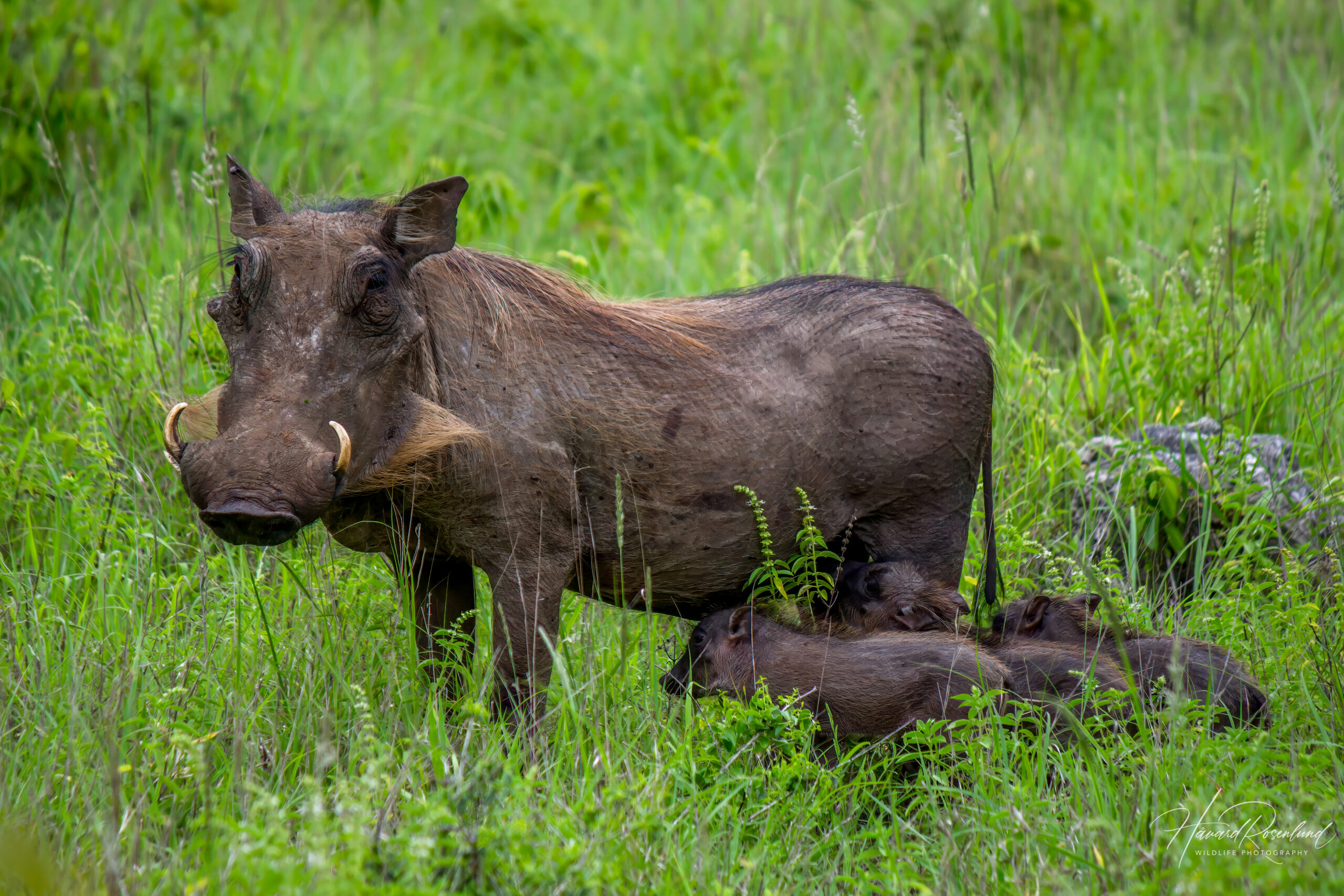
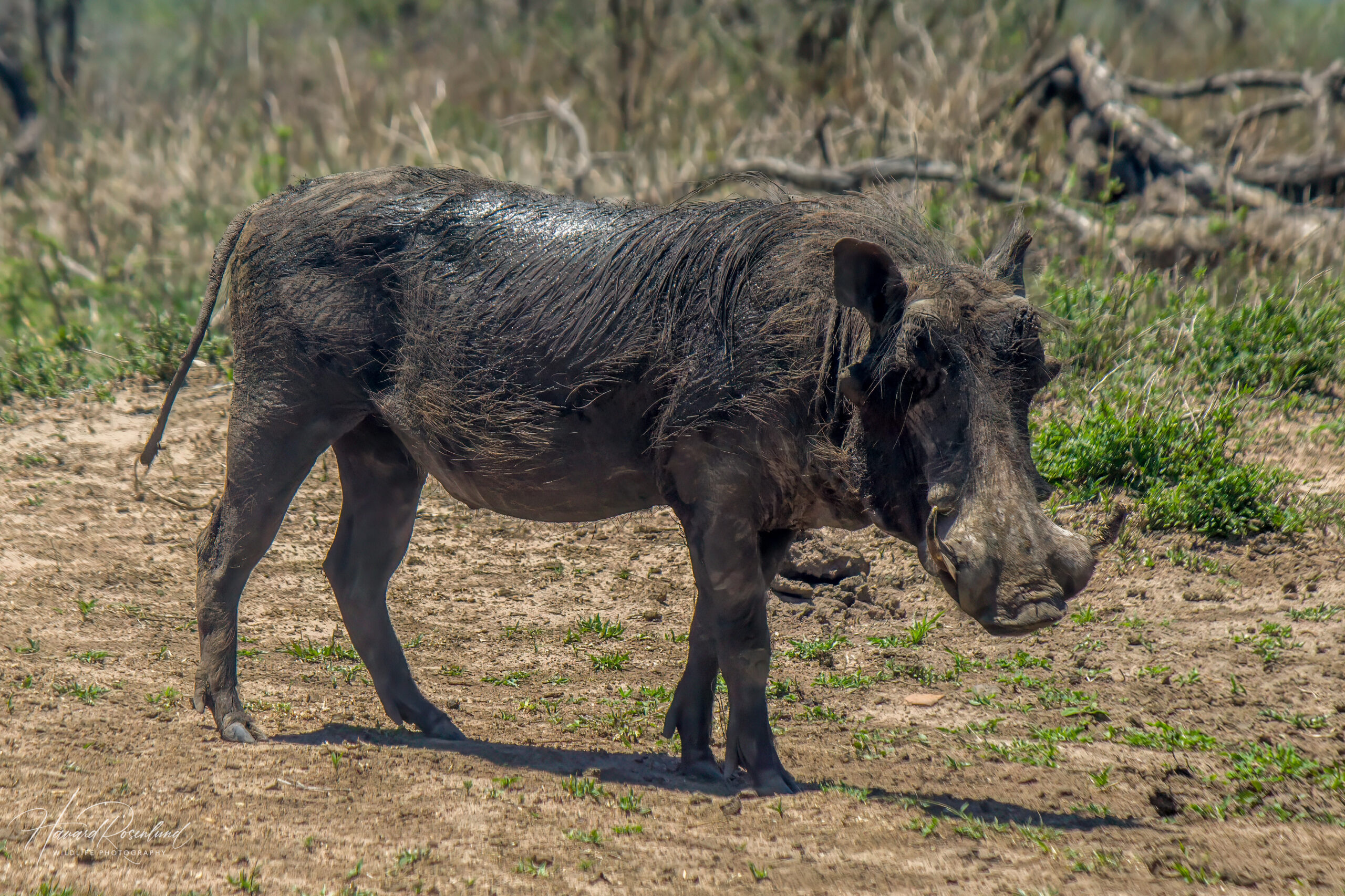
The common warthog (Phacochoerus africanus) is a medium-sized African wild pig of open habitats. Adults measure roughly 90–150 cm from head to body and can stand up to about 85 cm at the shoulder. Males are larger, generally weighing 60–150 kg, while females usually weigh 45–75 kg.
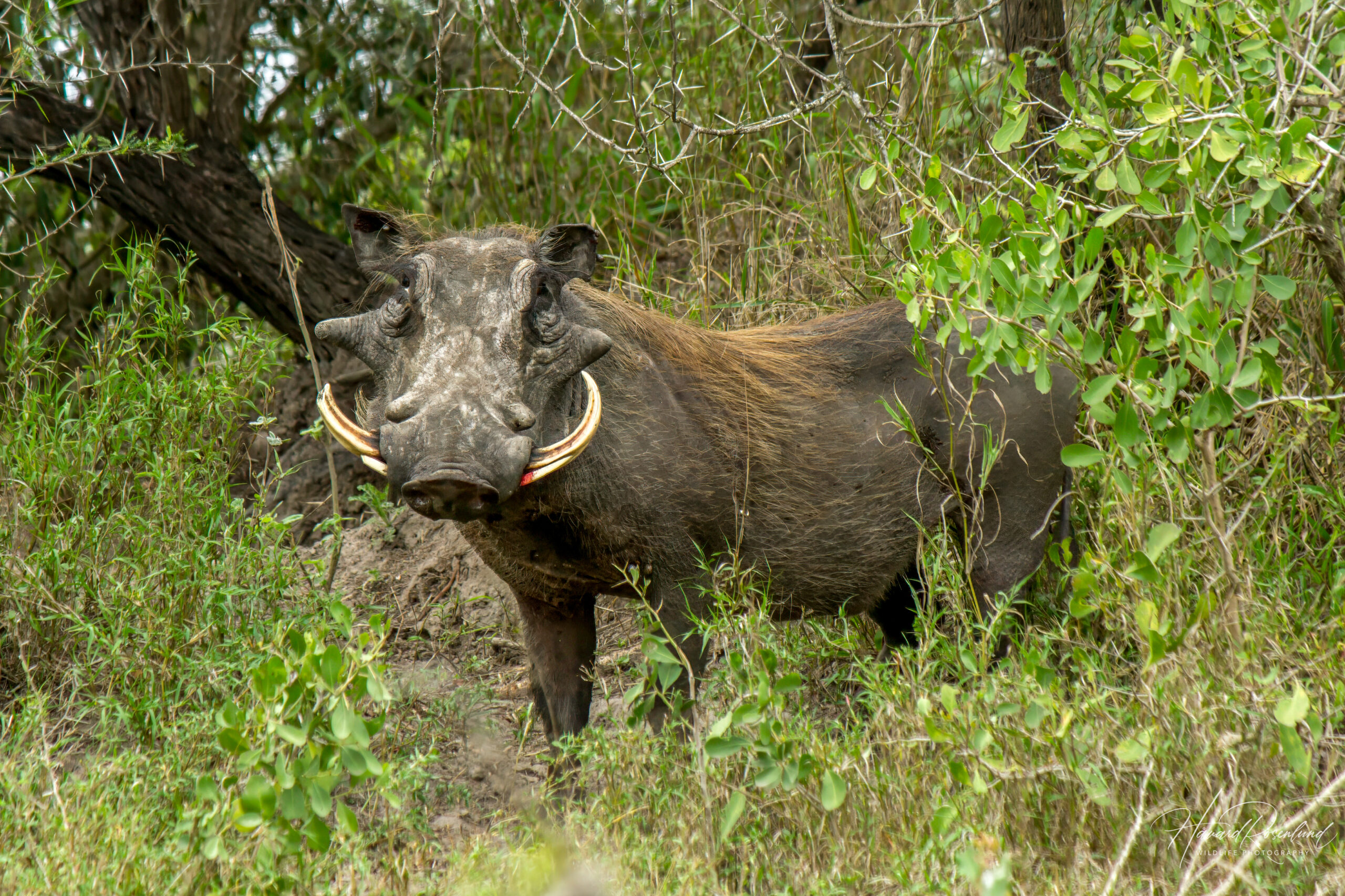
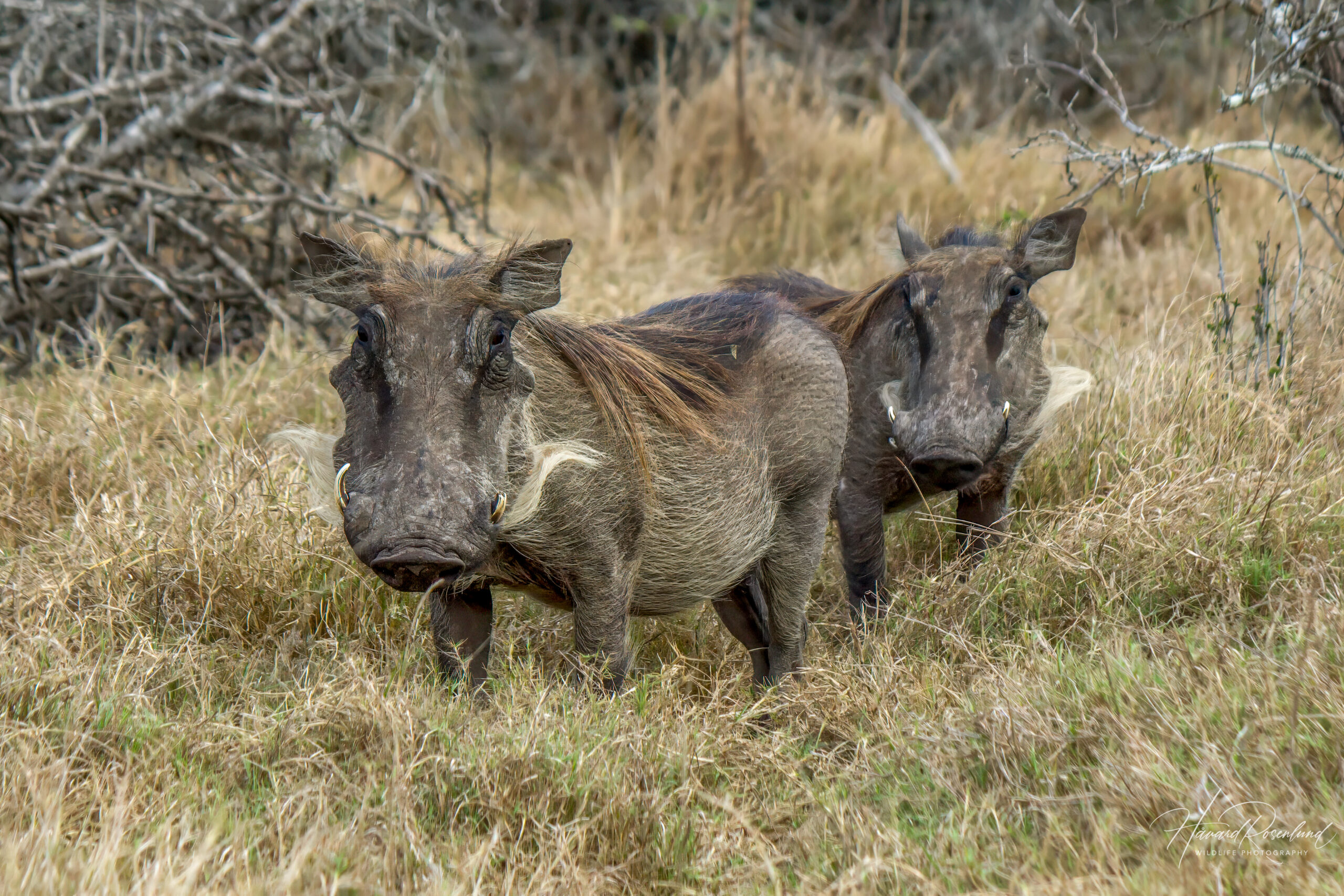
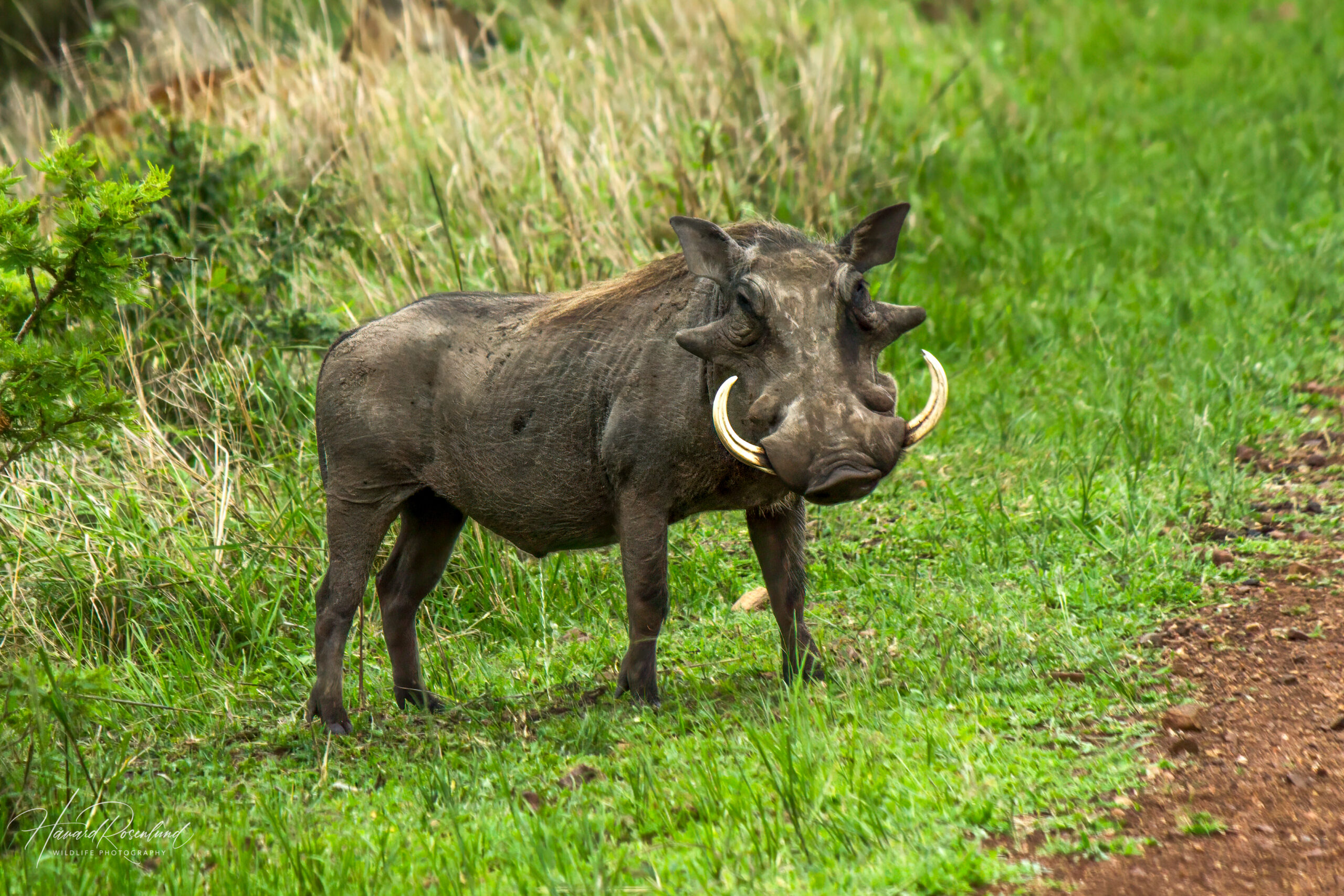
The conspicuous facial swellings that give the animal its English name are thickened pads of skin and connective tissue. They help protect the face during fights and are particularly large in adult males. The sparse coat, long mane and long tufted tail are other familiar features.
Taxonomy
The common warthog and desert warthog (Phacochoerus aethiopicus) are recognised as separate species. The desert warthog is concentrated in the Horn of Africa and parts of Kenya, while the common warthog has a much broader distribution across sub-Saharan Africa. Four subspecies of common warthog are generally recognised, although the boundaries between them and their contact zones remain under study.
Tusks
Common warthogs have two pairs of enlarged canine teeth. The upper tusks curve outward and upward and can reach about 25 cm, while the shorter lower tusks sharpen against the upper pair as the jaws move.
The tusks are displayed when warthogs threaten rivals and are also used in fights and defence. The broad upper tusks often absorb blows during ritualised contests, while the sharper lower tusks can cause serious wounds when fighting becomes intense or when an animal defends itself from a predator.
Habitat
Common warthogs favour savanna, grassland, floodplains and open woodland, generally avoiding dense rainforest and the driest true deserts. They need access to feeding grounds and safe resting sites, but can live in both relatively wet and dry open landscapes.
Diet
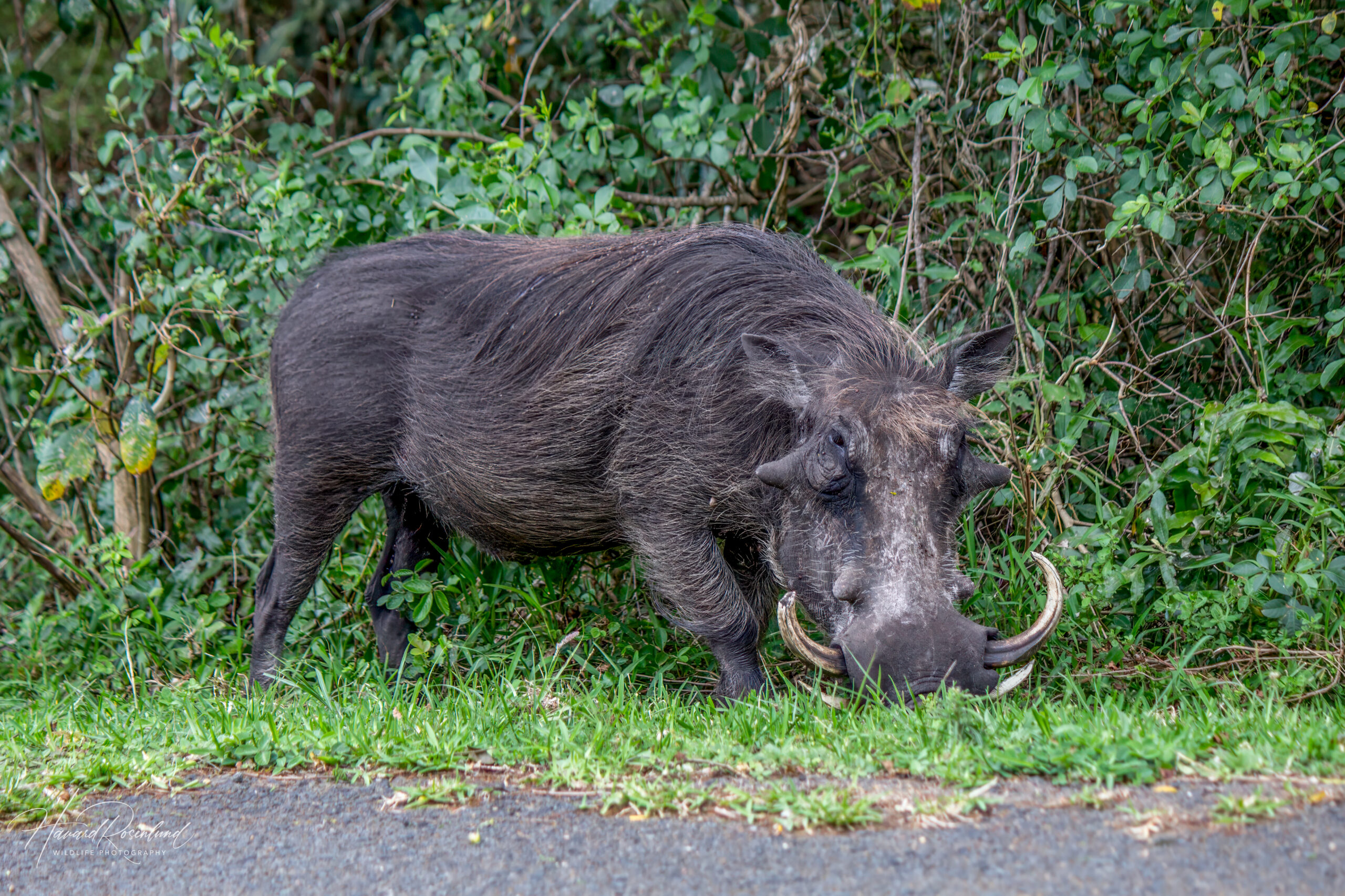
Grass dominates the diet, especially during the wet season. In dry periods warthogs dig for roots, rhizomes and bulbs, while fruit, invertebrates, eggs and carrion may supplement the diet. They often feed while resting on calloused wrist pads, which lets them crop grass close to the ground.
The video below shows a female warthog digging for underground food. Notice how she lowers herself onto the calloused wrist pads while digging.
Behaviour
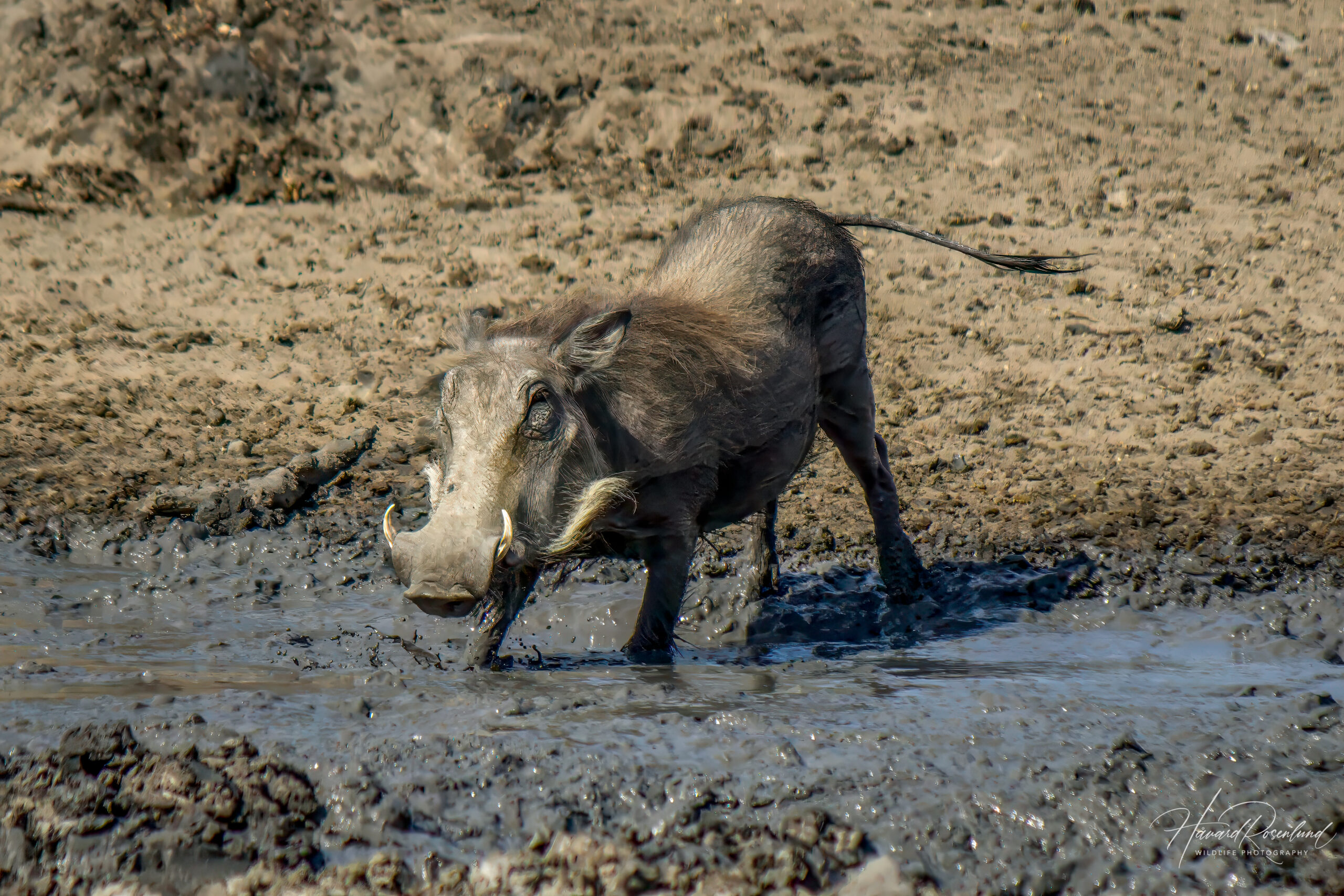
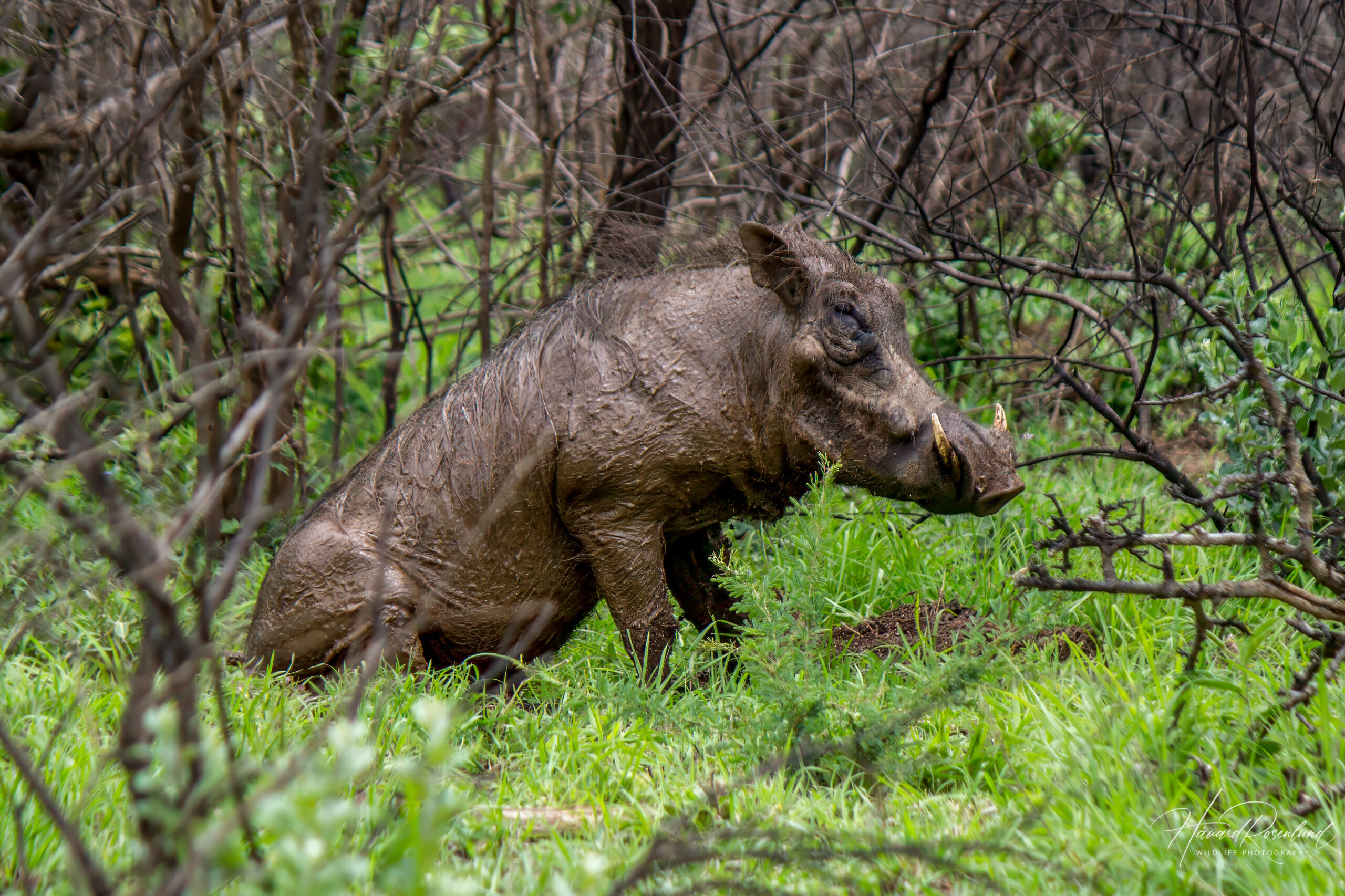
Common warthogs are strongly diurnal and usually go underground before dark. Activity is greatest in the early morning and late afternoon, although they may become more active around dusk or at night in very hot conditions or where disturbance is frequent. During the day they alternate between feeding, drinking and resting in the shade. Mud wallows help them cool down and may reduce parasites, and warthogs also rub against trees and termite mounds.
They can dig their own burrows but often use abandoned aardvark (Orycteropus afer) burrows. When resting, warthogs commonly reverse into the burrow so the head and tusks face the entrance. This provides a secure resting position and makes it easier to defend against a predator that tries to follow.
When warthogs run, they commonly hold the long tail upright, with the tuft resembling a small flag. This is one of the species’ most characteristic movements. Both sexes also scent-mark solid objects with secretions from facial glands, particularly around resting sites, feeding grounds and waterholes. Males mark more frequently than females, especially during the breeding season.
Predation
Lions (Panthera leo) are among the most important predators of common warthogs and can take them disproportionately often in some savanna systems. Spotted hyenas (Crocuta crocuta), leopards (Panthera pardus) and African wild dogs (Lycaon pictus) also prey on them. Piglets are particularly vulnerable and may also be taken by smaller predators, including jackals and large birds of prey.
Warthogs rely on early detection, rapid acceleration and access to burrows. When they detect a threat, they often sprint directly towards a familiar den. As noted earlier, they commonly reverse inside so that their sharp tusks can be used for defence. Adults can defend themselves effectively, and females with piglets may counter-attack predators forcefully.
Social behaviour
Females and their young live in family groups called sounders, which may contain one or more adult females with piglets and older juveniles. Juveniles may also form separate age groups, while young males commonly associate in bachelor groups of two or three. Mature males are usually solitary and join females mainly during the breeding season.
Sounders use overlapping home ranges rather than defending exclusive territories. In studied populations, home ranges have averaged about 174 hectares, varying from 64 to 374 hectares, and groups have travelled roughly 7 km per day. Both sexes tend to remain close to their natal area, even after young males leave the family group.
Bonds between adult females, particularly mothers and daughters, can persist across several breeding seasons. Cooperation also extends to care of the young: females have been observed nursing one another’s piglets, especially within closely related groups. During friendly encounters, warthogs may also rub their heads and bodies against one another.
Reproduction
Where seasons are pronounced, females usually come into oestrus early in the dry season, so most births occur around the beginning of the rainy season. The mating system is promiscuous, and both sexes may mate with several partners. Males roam between sounders, visit burrows to find oestrous females and may fight for access to them.
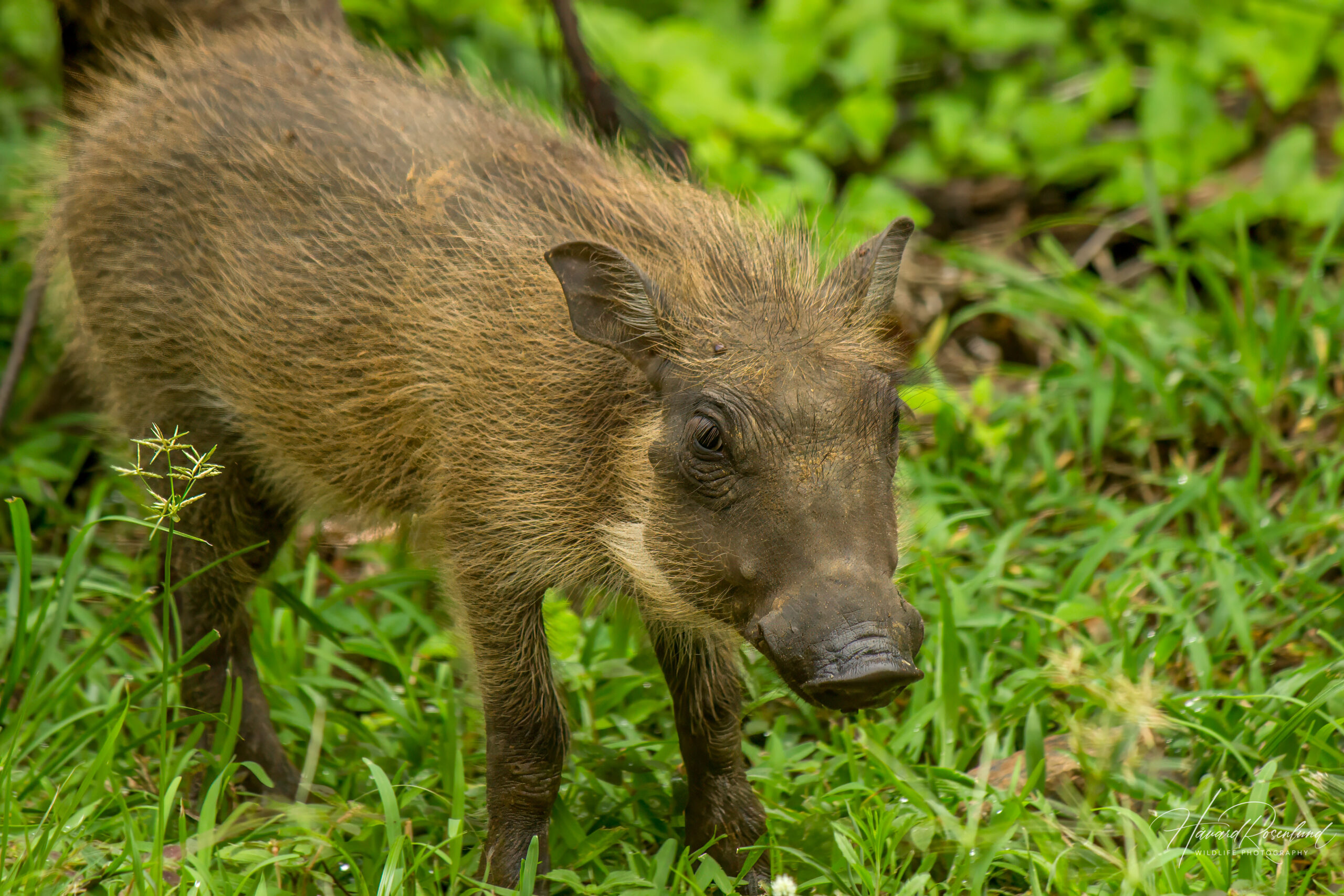
Gestation lasts 160–170 days, or about five and a half months. Litters most often contain two or three piglets but can range from one to eight. A female gives birth in a burrow away from the group and remains there with the piglets during their first weeks.
The burrow provides shade and protection during the most vulnerable stage of life. Piglets begin following the mother outside as they grow and later rejoin the wider family group.
Cultural significance
Traditional uses of common warthog parts have been documented in several African communities. Ethnozoological studies in Ethiopia record the use of warthog teeth and meat in local remedies, including treatments for toothache, rheumatism, skin problems and other ailments. Similar medicinal or belief-based uses have also been reported elsewhere in Africa.
These practices are local and should not be treated as traditions shared across the species’ entire range. They nonetheless show that warthogs have a place in local beliefs and healing practices in addition to being regarded as game animals or crop-raiders.
Status
The common warthog is formally listed as Least Concern on the IUCN Red List under the assessment published in 2016 and corrected in 2017. At an IUCN SSC expert reassessment meeting in February 2026, specialists recommended retaining Least Concern. The species remains widespread and is expanding its range and abundance in parts of South Africa, although the overall global trend is decreasing.
Drought, hunting, disease, habitat conversion and persecution around farms can cause severe local declines. Common warthogs are also important natural reservoirs of African swine fever virus. This makes the species important in disease management where wildlife and livestock overlap. Populations are often most secure in well-managed protected areas, while trends outside them are less consistently monitored.
Image gallery
Loading map and observations…
Have you seen this species?
Independent species archive
Did you find this species page useful?
Wildlife Vagabond is independently built and maintained. Voluntary support helps cover hosting, maps, data storage and continued improvements to the species archive.
Support Wildlife VagabondSpecies content will remain freely available.
References
- Cumming. (2017). Common Warthog Phacochoerus africanus. https://www.cambridge.org/core/books/ecology-conservation-and-management-of-wild-pigs-and-peccaries/common-warthog-phacochoerus-africanus-gmelin-1788/748CCD77870966845294631AE38F0C16
- de Jong, Y. A., d’Huart, J.-P., & Butynski, T. M. (2023). Biogeography and conservation of desert warthog Phacochoerus aethiopicus and common warthog Phacochoerus africanus (Artiodactyla: Suidae) in the Horn of Africa. Mammalia, 87(1), 1-19. https://doi.org/10.1515/mammalia-2022-0048
- International Union for Conservation of Nature. (2026). Experts call for more attention to African wild pigs. The IUCN Red List of Threatened Species. https://iucn.org/news/202603/experts-call-more-attention-african-wild-pigs
- International Union for Conservation of Nature. (n.d.). de Jong et al. (2016, errata 2017). Phacochoerus africanus. The IUCN Red List of Threatened Species. https://www.iucnredlist.org/species/41768/109669842
- IUCN SSC Wild Pig Specialist Group. (n.d.). Common Warthog. https://www.iucn-wpsg.org/common-warthog
- Kendie, F. A., Mekuriaw, S. A., & Dagnew, M. A. (2018). Ethnozoological study of traditional medicinal appreciation of animals and their products among the indigenous people of Metema Woreda, North-Western Ethiopia. Journal of ethnobiology and ethnomedicine, 14(1), 37. https://doi.org/10.1186/s13002-018-0234-7
- Mammal Diversity Database. (n.d.). Phacochoerus africanus. American Society of Mammalogists. https://www.mammaldiversity.org/taxon/1006366/
- Treydte, A. C., Bernasconi, S. M., Kreuzer, M., & Edwards, P. J. (2006). Diet of the common warthog (<i>Phacochoerus africanus</i>) on former cattle grounds in a Tanzanian savanna. Journal of Mammalogy, 87(5), 889-898. https://doi.org/10.1644/05-MAMM-A-336R2.1
- Wendimu, A., & Tekalign, W. (2023). An ethnozoological study of traditional medicinal animals and their products from Wolaita, Southern Ethiopia. Heliyon, 9(1), e12733. https://doi.org/10.1016/j.heliyon.2022.e12733