
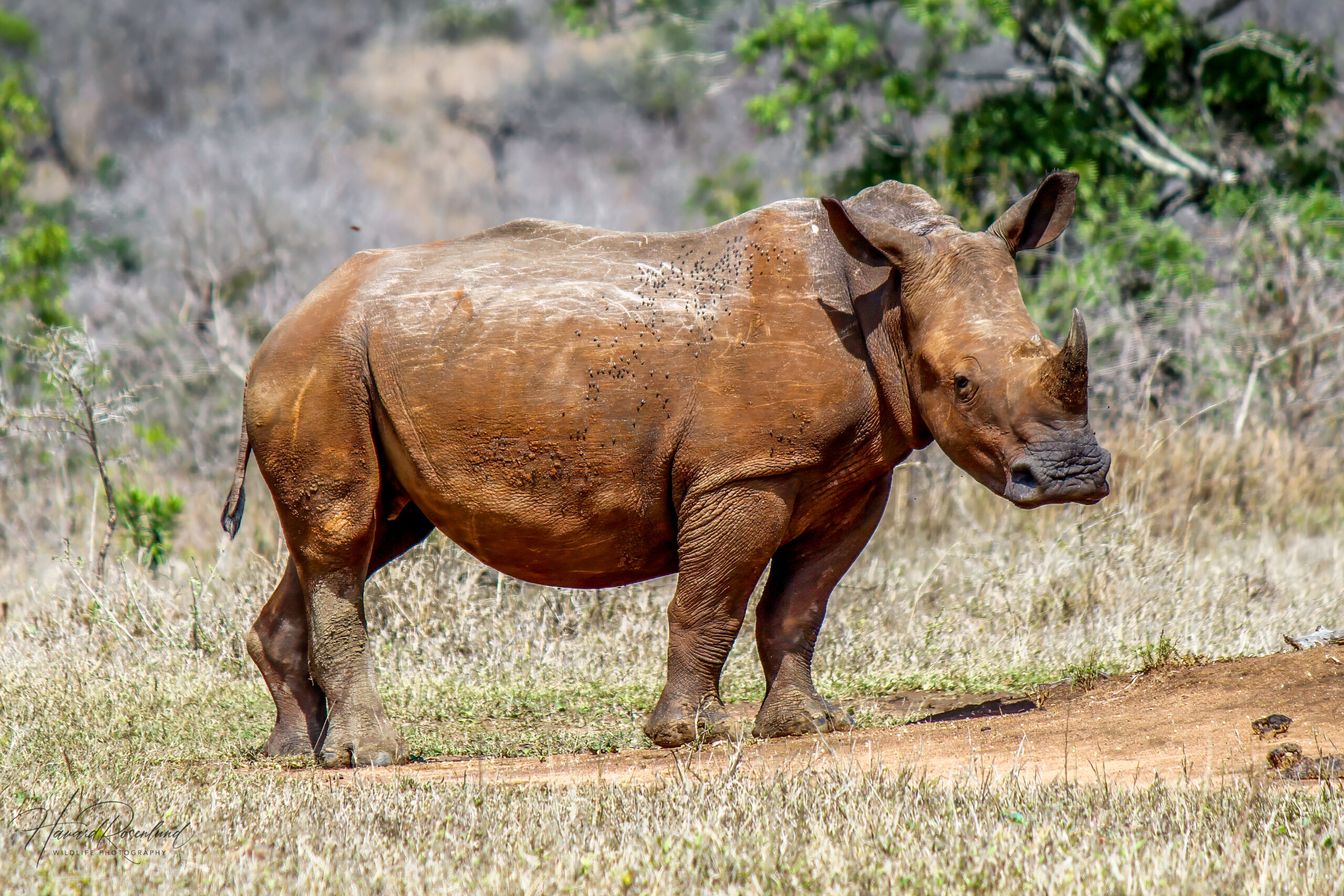
White Rhinoceros
Ceratotherium simum
At a glance
Habitat
- Open grassland and savanna with water, shade and suitable wallows
Diet
- Grazer: mainly short grasses
Activity
- Feeds by day and night; rests during the hottest hours
Size
- Length: 3–5 m Weight: 1,600–2,700 kg
Range
- Southern Africa, with reintroduced populations elsewhere in Africa
Description
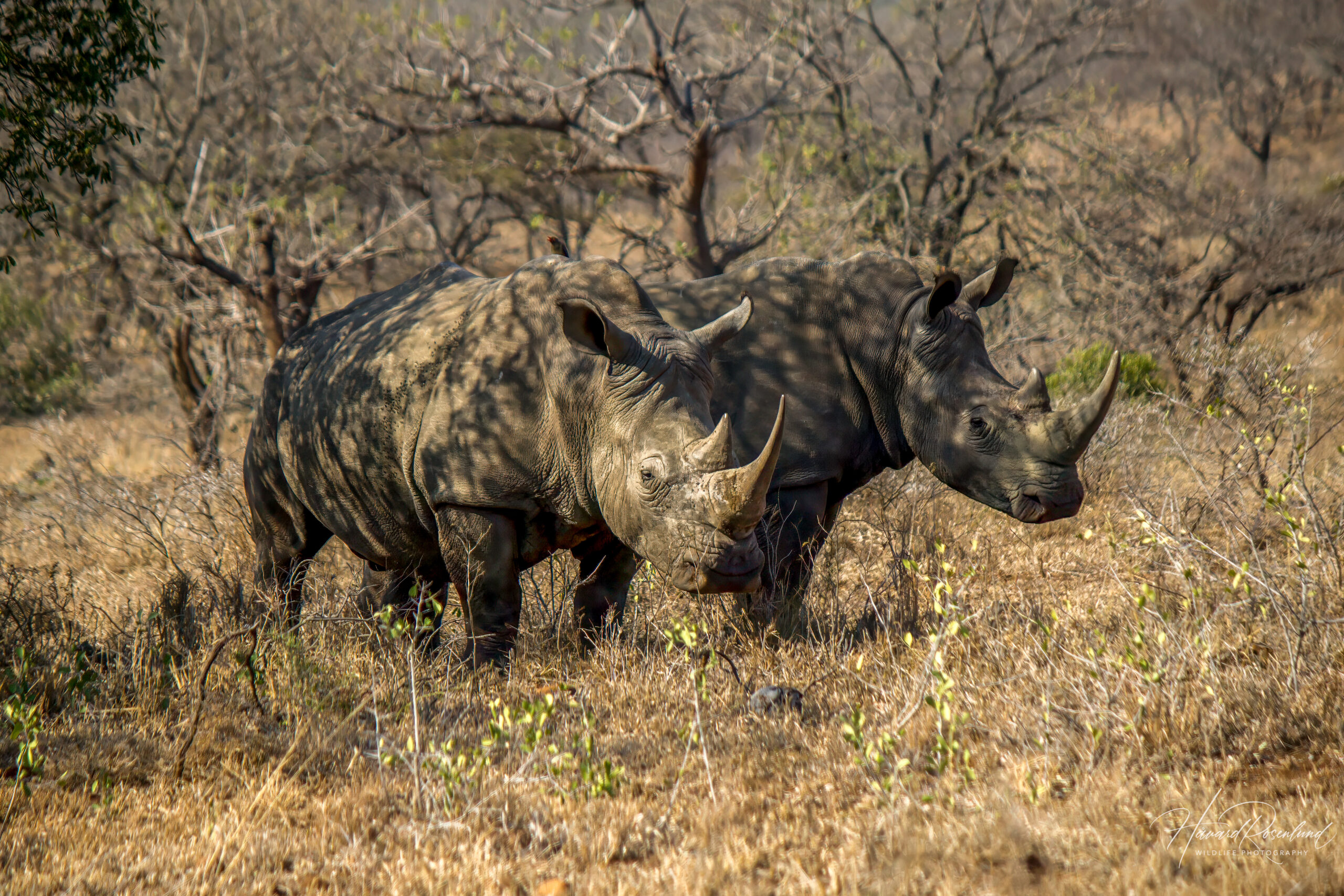
The white rhinoceros (Ceratotherium simum), also called the square-lipped rhinoceros, is the largest living rhinoceros and one of the heaviest land mammals after the elephants. Adults measure roughly 3–5 m from head to body and stand about 1.5–1.8 m at the shoulder. Females commonly weigh around 1,600 kg, while large bulls may reach 2,300–2,700 kg.
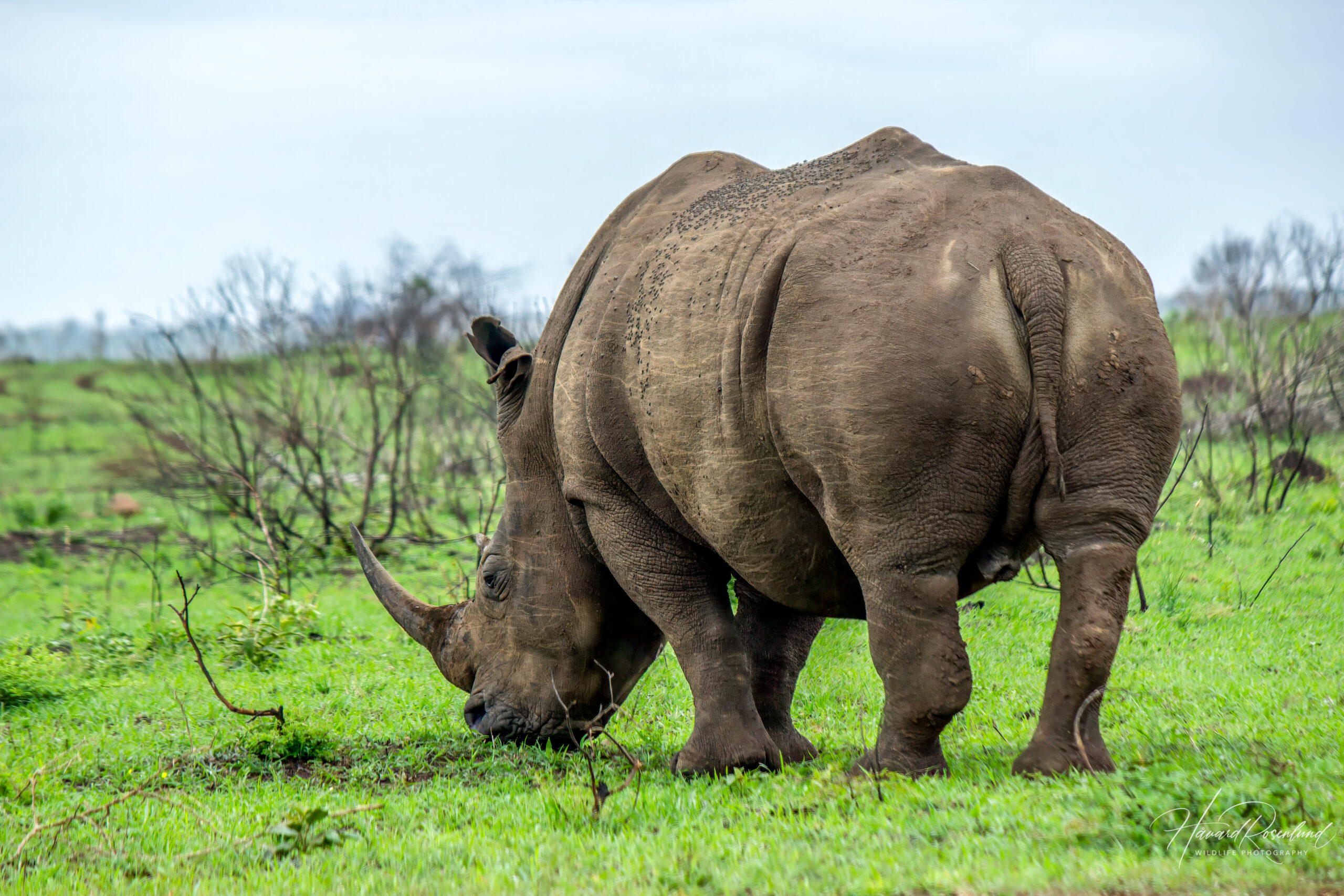
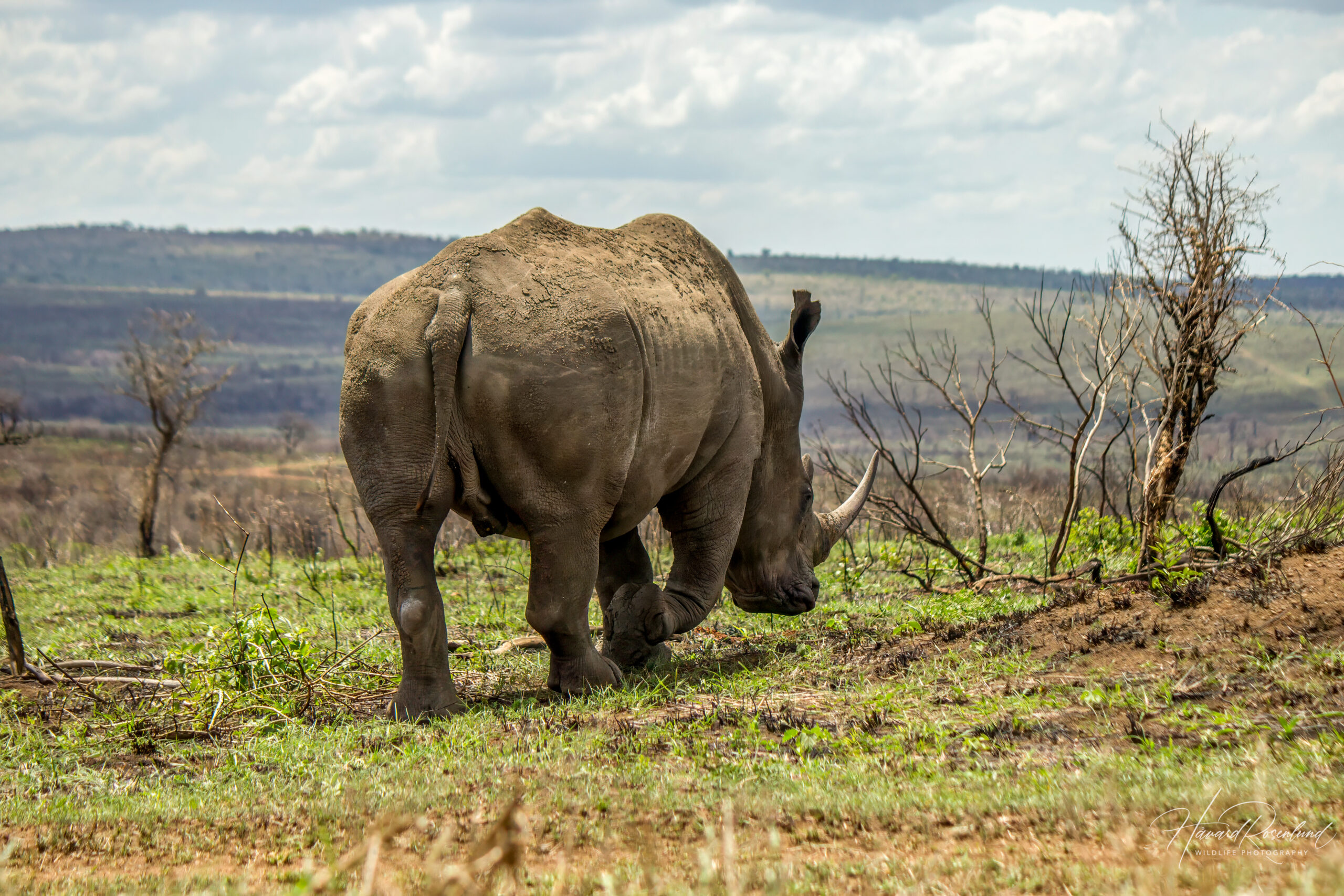
Compared with the black rhinoceros (Diceros bicornis), the white rhinoceros has a longer, heavier and more barrel-shaped body, a larger and more elongated head, and a much more pronounced muscular hump over the neck and shoulders. The hump helps support the heavy head. Because the species grazes short grass, the head is normally carried low, giving the animal a long, low-slung silhouette rather than the black rhino’s shorter and more upright profile.
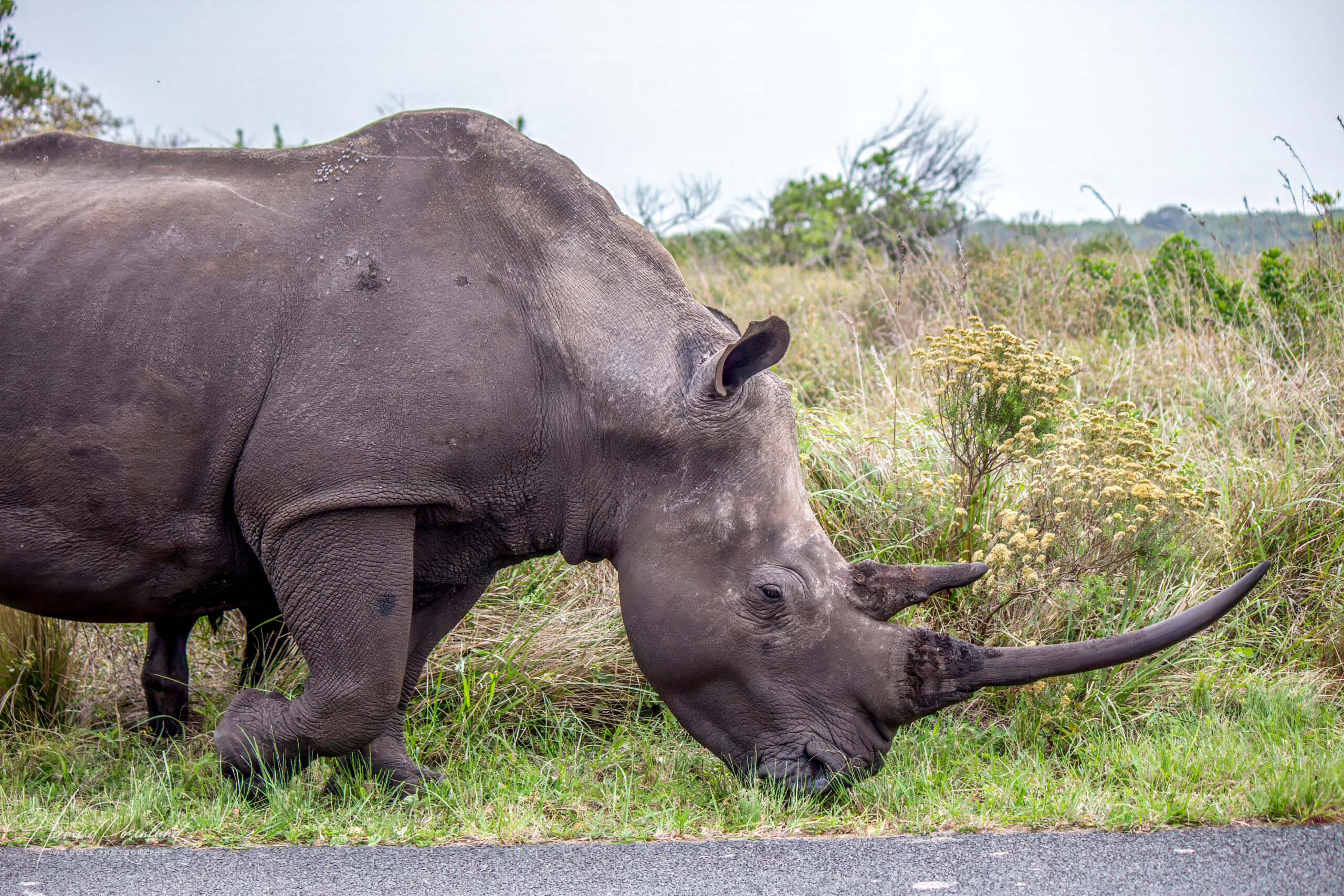
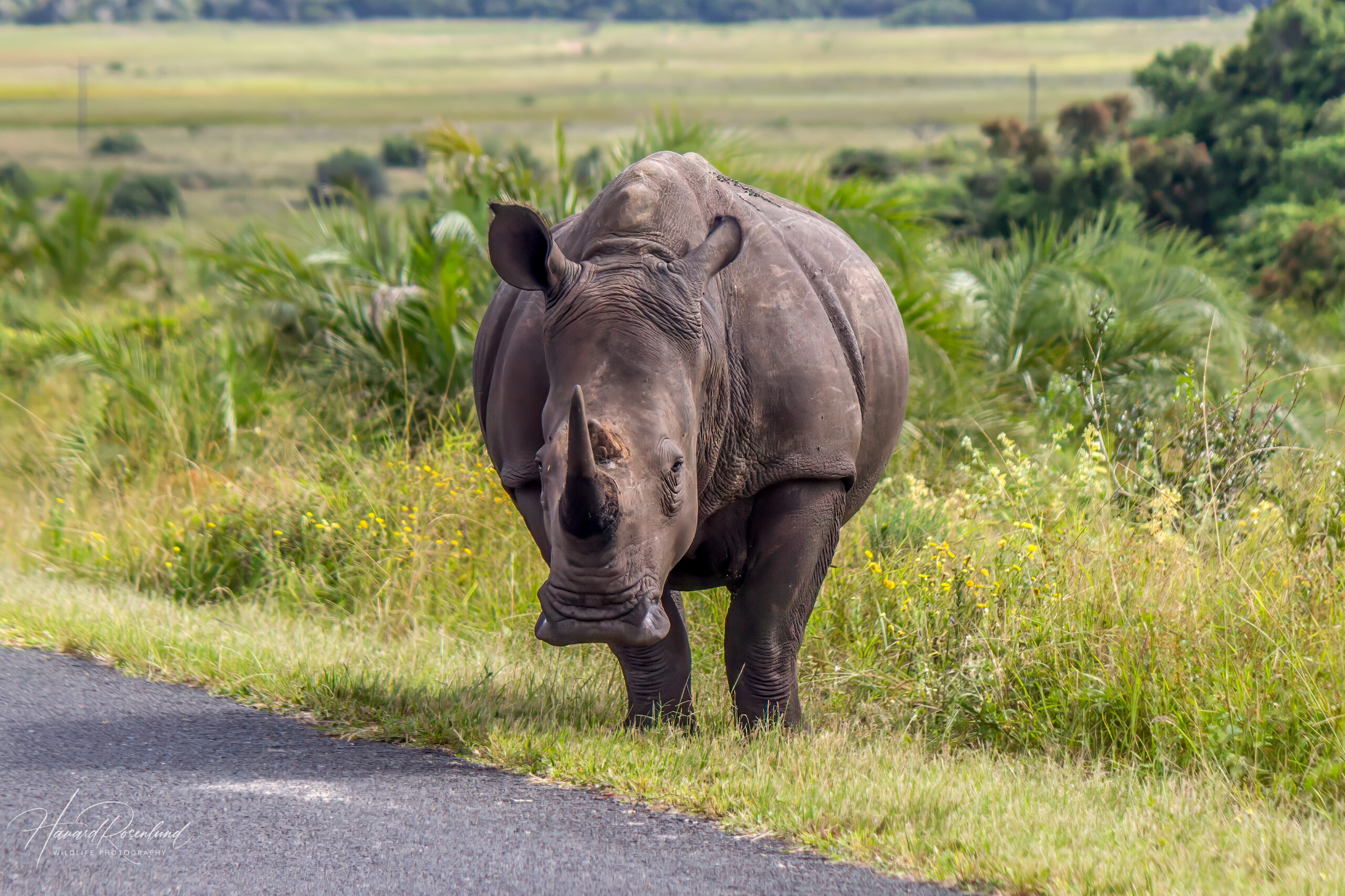
Both sexes carry two horns made primarily of keratin. The front horn is normally much longer and varies greatly between individuals; exceptional females can grow a front horn around 1.5 m long, while the horns of territorial males are often worn down through fighting, scraping and marking. The broad, straight upper lip is a clear difference from the pointed, prehensile lip of the black rhinoceros, which can grasp leaves and twigs.
Despite its English name, the animal is grey rather than white. The familiar explanation that “white” developed from Afrikaans wyd, meaning “wide”, is often repeated but is not securely documented. “Square-lipped rhinoceros” describes the animal well, although it is much less commonly used. White rhinos have relatively poor eyesight but an excellent sense of smell and very sensitive hearing.
Taxonomy
Two major geographic forms are traditionally recognised: the southern white rhinoceros (Ceratotherium simum simum) and the northern white rhinoceros (C. s. cottoni). The southern form accounts for virtually the entire surviving wild population.
The rank of the northern form has been debated. Some taxonomic work has treated it as a separate species, Ceratotherium cottoni, based on differences in body form and genetics, while Mammal Diversity Database v2.5 retains cottoni within the broader species Ceratotherium simum. This page follows the broader species treatment while recognising the northern form as highly distinctive.
Habitat
White rhinoceroses favour open grassland and savanna with abundant short grass, access to water, shade and suitable wallows. Their broad range of open habitats includes both wetter savannas and relatively dry grasslands, provided that dependable water and grazing remain within reach.
Diet
White rhinoceroses are specialised grazers. Their broad lips crop mainly short grasses close to the ground, and repeated grazing can create closely cropped “grazing lawns” that are also used by smaller herbivores. Much of an adult’s time is devoted to finding and processing the large quantity of grass needed to maintain such a heavy body.
They drink readily when water is available, often every day, but can survive roughly four to five days without drinking during dry periods. This gives them some flexibility, although they remain much more closely tied to water than many desert-adapted herbivores.
Behaviour
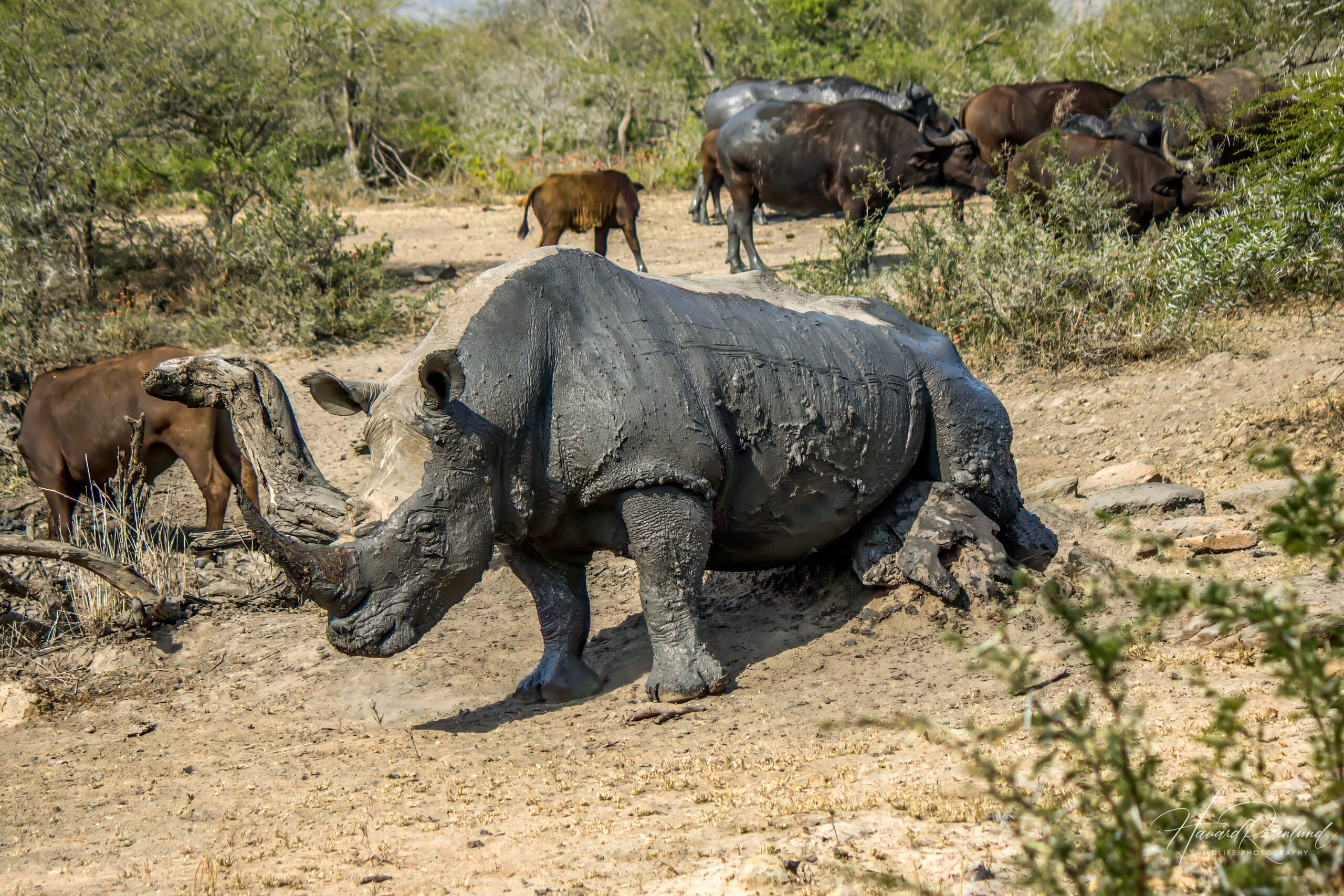
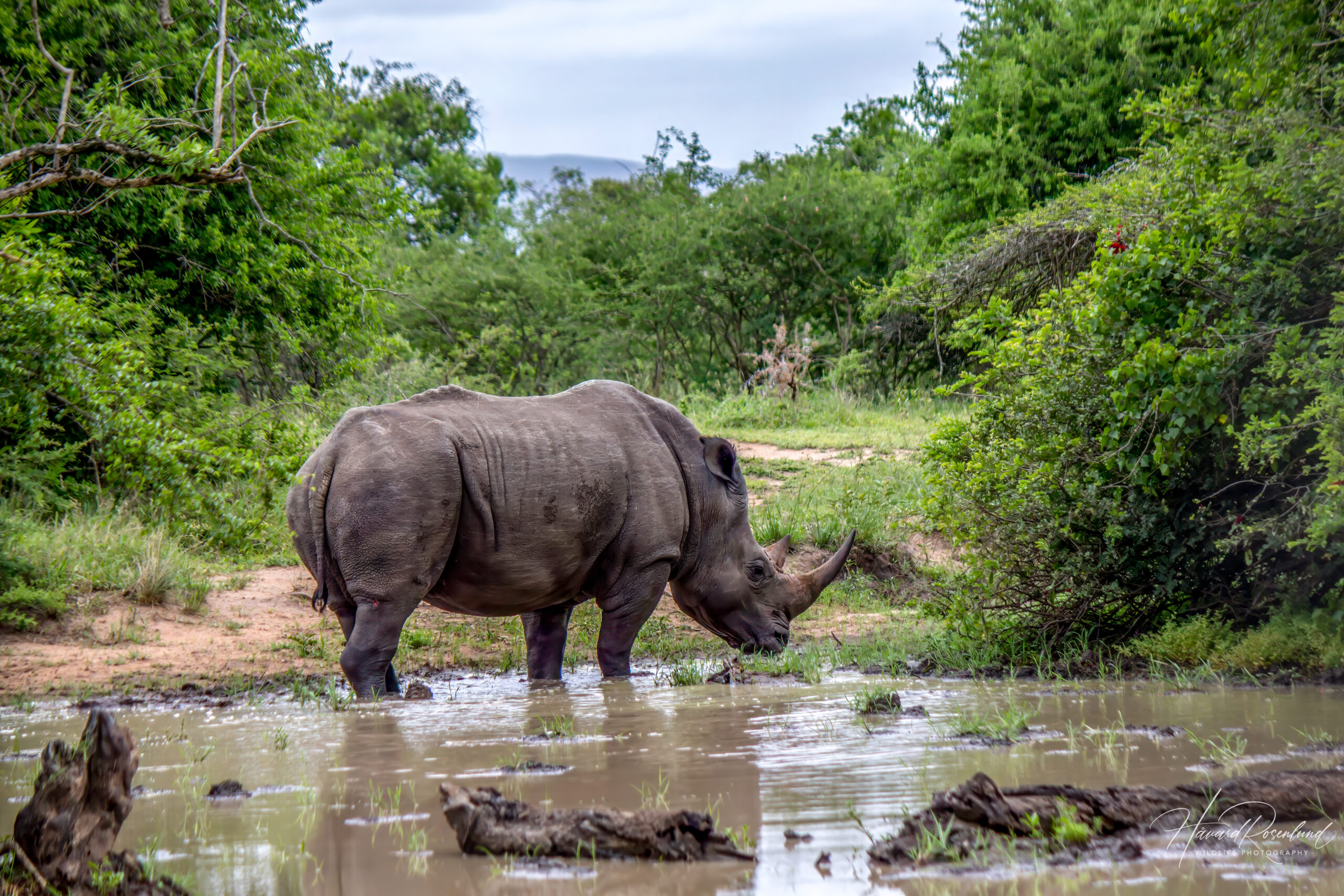
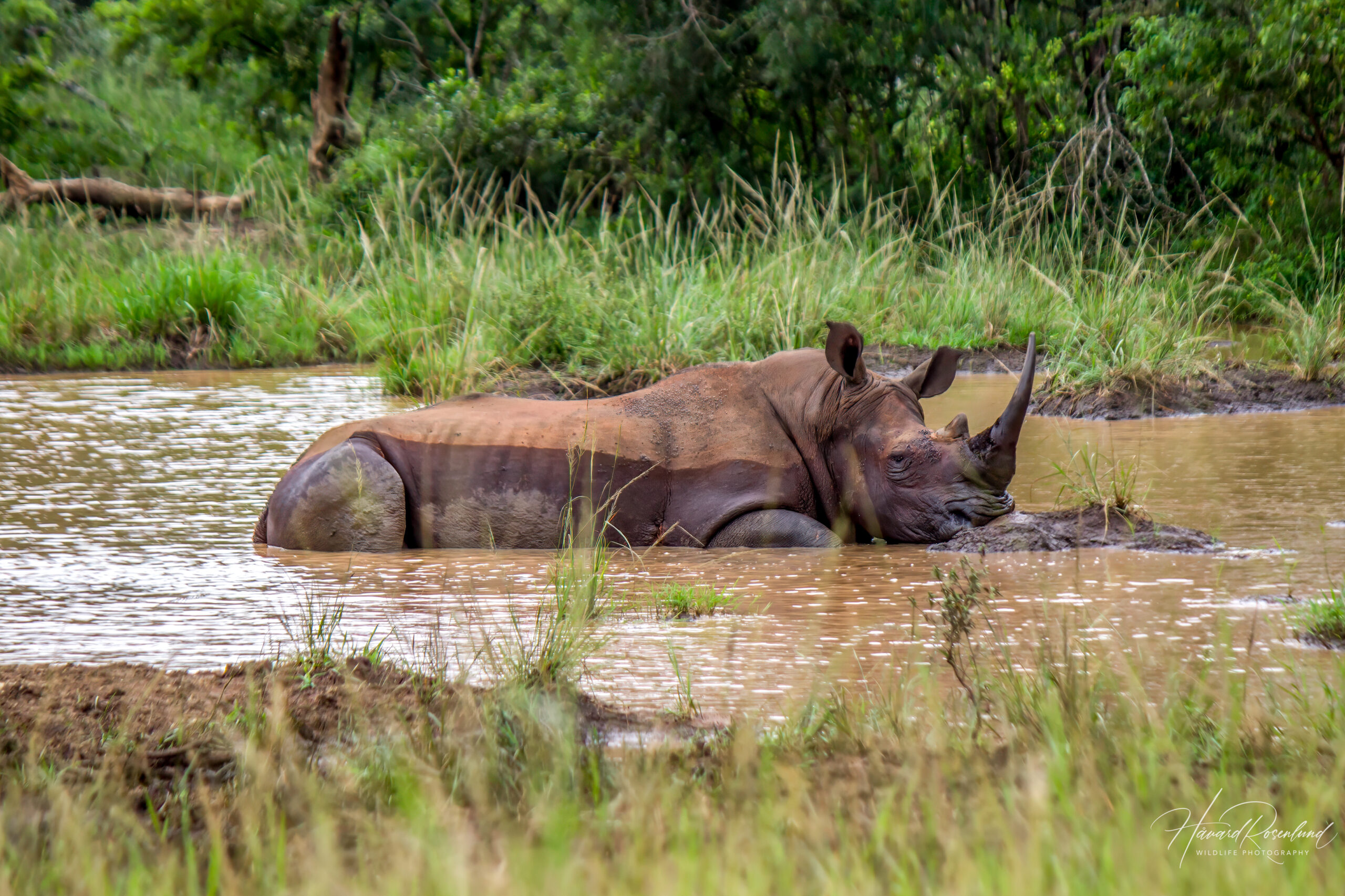
White rhinos feed during both day and night, while the hottest hours are often spent resting beneath trees or in shallow shade. They regularly wallow in mud, which cools the skin and leaves a coating that helps protect against sunlight and biting insects. After leaving a wallow they often rub against familiar trees, rocks or termite mounds.
Their repeated use of grazing lawns, paths, wallows and dung sites can reshape local vegetation and redistribute nutrients. A single animal may therefore leave a surprisingly visible footprint on the landscape even though much of its daily behaviour consists simply of grazing, resting and moving between familiar resources.
Social behaviour
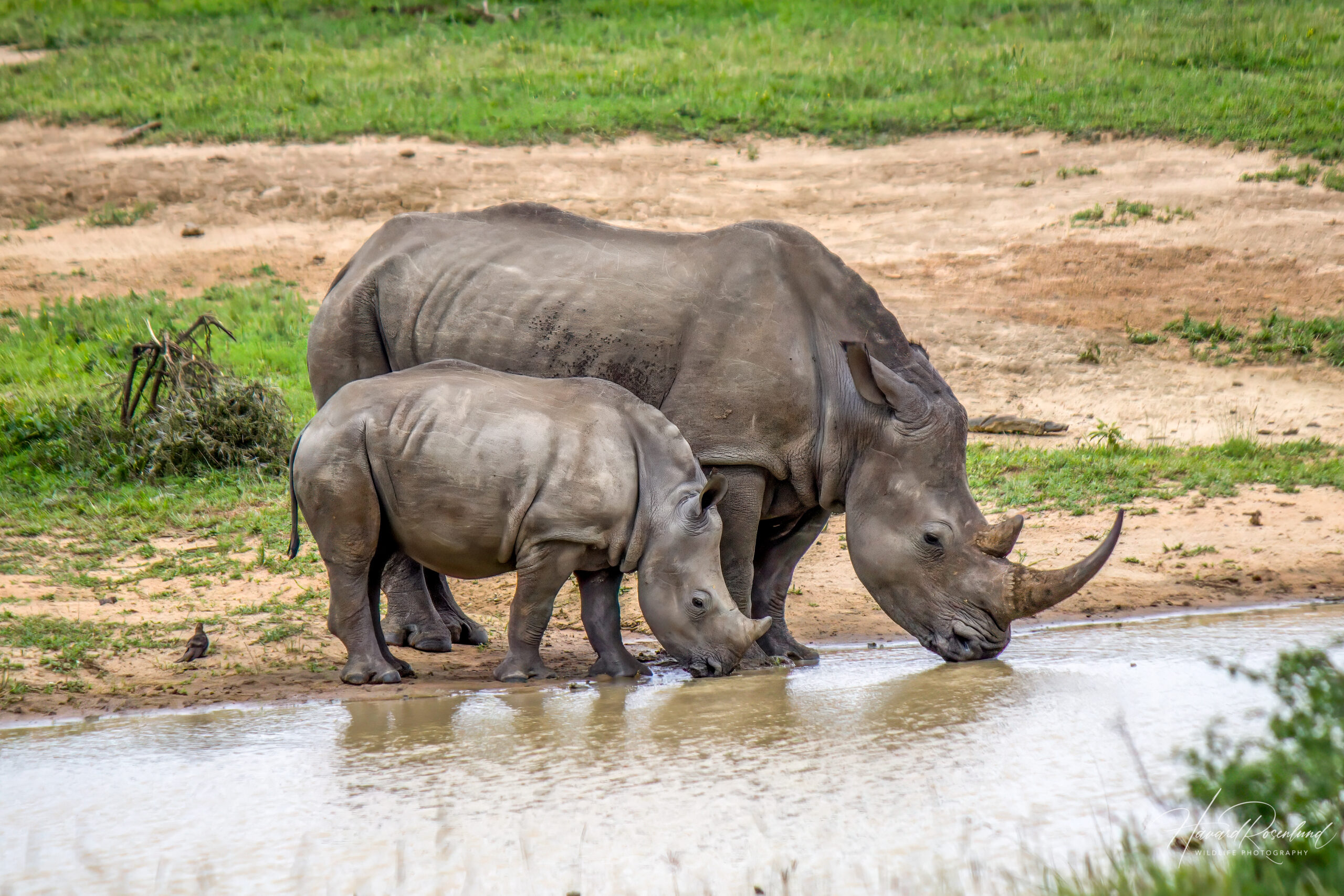
White rhinoceroses are the most social of the living rhino species. Females, calves and subadults form loose groups, sometimes called crashes, whose membership changes over time. Groups of ten or more can occur. A female may be accompanied by her current calf and an older daughter, while immature males often associate with other young animals before becoming more independent.
Adult bulls are usually solitary. A dominant bull advertises his presence with urine spraying, scraped soil, damaged vegetation and repeated visits to communal dung middens. Scent at these middens carries information about identity, sex and reproductive condition, making them important communication centres rather than simple waste sites.
Neighbouring bulls often avoid serious combat through scent and ritualised displays. A subordinate male may be tolerated inside another bull’s territory if he behaves submissively and does not challenge the owner. White and black rhinos may use some of the same paths, waterholes and middens, but the two species usually keep their distance.
Home ranges
Adult bulls defend territories that contain grazing, water and access to females, while females use larger overlapping home ranges rather than exclusive territories. Long-term work in Hluhluwe-iMfolozi has estimated female home ranges at roughly 20 km², with the most heavily used parts covering about 5 km²; male territories there are closer in size to these smaller areas.
Range size varies with habitat quality, rhino density and whether animals have recently been moved. In productive grassland, several females can overlap within a male territory, whereas newly moved animals may initially roam much more widely before settling. The difference between female home ranges and male territories is therefore important both for mating and for managing fenced populations.
Predation
Adult white rhinoceroses are so large that natural predation has little influence on most populations. Lions (Panthera leo) have nevertheless killed calves in Kruger National Park, while occasional injuries to ears and tails have been interpreted as possible evidence of attacks by spotted hyenas (Crocuta crocuta). Calves and younger animals are therefore much more vulnerable than healthy adults.
Mothers can defend calves aggressively, and the company of another rhino may provide additional protection for young animals exploring unfamiliar areas. Studies of young white rhinos leaving their natal areas suggest that travelling with another rhino may reduce both the risk from predators and the danger of encounters with territorial bulls. Natural predation remains minor compared with poaching, but it is still part of the ecology of young white rhinos.
Reproduction
Females generally reach sexual maturity at about six to seven years, while males may be physically mature earlier but often do not breed until they are large enough to compete successfully, commonly around ten years or more. During courtship, a bull may remain with a female in oestrus for several days, sometimes for more than two weeks, while the pair repeatedly interact before mating.
Gestation lasts about 16 months and normally results in one calf. The newborn can stand within its first hours and remains close to its highly protective mother. It may suckle for more than a year and usually stays with her until shortly before the next birth, often two and a half to three years later.
Females reproduce slowly, making adult survival especially important for population growth. White rhinos may live for roughly 35–40 years in the wild.
Here is a video I filmed of a female with a young calf in iSimangaliso Wetland Park, South Africa:
Cultural significance
Archaeology, oral traditions and historical sources show that rhinos have long carried symbolic meaning in southern Africa. In some farming communities, the white rhino’s more social and territorial character was used as an image of chiefly power and leadership, contrasting with the more solitary and forceful traits associated with the black rhinoceros (Diceros bicornis).
Rhinos more generally appear in chiefly praise poetry, initiation traditions, rainmaking practices and symbols of authority. The famous gold rhinoceros from Mapungubwe is one of the best-known archaeological examples, although it cannot be confidently assigned to one living rhino species. Rhino horn also acquired cultural value far beyond Africa: it was historically used in traditional medicine and carved objects in parts of East Asia and for jambiya dagger handles in Yemen.
Status
The white rhinoceros is listed as Near Threatened on the IUCN Red List. The latest continental estimate recorded about 15,752 white rhinos at the end of 2024, almost all of them southern white rhinos. This was an 11.2% decline from the 2023 estimate.
Most of the remaining population is in southern Africa, especially South Africa, with reintroduced populations in several other African countries. Numbers outside South Africa were generally increasing in the latest continental assessment, while the main decline was concentrated in the country that still holds most of the species.
Threats
Poaching for horn remains the most immediate human-driven threat. Rhino horn is made mainly of keratin and has no proven medicinal benefit, but organised criminal networks continue to supply illegal markets. White rhinos have suffered the largest share of Africa’s recent rhino losses because they are the most numerous species and are often easier to locate in open habitat.
South Africa recorded 352 poached rhinos in 2025, down 16% from 420 in 2024. The national reduction was encouraging, but pressure shifted geographically: Kruger National Park lost 175 rhinos in 2025 compared with 88 the year before, while Hluhluwe–iMfolozi Park fell from 198 to 63. These figures cover both African rhino species, although white rhinos make up most of South Africa’s rhino population.
Poaching is not the only pressure. Drought can increase adult mortality and reduce reproduction, while many surviving populations are confined to fenced reserves where having only a few animals can reduce genetic diversity and make healthy population growth harder to maintain.
Conservation
The southern white rhinoceros is one of conservation’s most remarkable recoveries. By the beginning of the twentieth century only a tiny remnant survived in KwaZulu-Natal, centred on the area now protected within Hluhluwe–iMfolozi Park. Protection and the large-scale movement of animals through Operation Rhino allowed descendants of this remnant population to repopulate reserves across southern Africa. By the end of 2012, the continental population had risen above 21,000.
That recovery has been partly reversed by poaching and other pressures, but intensive management continues. Anti-trafficking investigations, prosecution of criminal networks, dehorning where appropriate, ranger protection, improved monitoring and movement of animals between secure populations all contribute. South Africa published a revised integrated Black and White Rhino Biodiversity Management Plan on 16 April 2026 to coordinate long-term conservation more closely.
Population size alone is not enough. Many fenced South African populations contain only a handful of white rhinos; the 2025 State of the Rhino report noted a median of about seven animals per population. Moving animals between populations and carefully managed breeding are therefore important both for population growth and for maintaining genetic diversity. Long-term success also depends on local communities receiving meaningful benefits from living alongside rhinos.
Northern white rhinoceros
The northern white rhinoceros (Ceratotherium simum cottoni) is functionally extinct. The last two individuals, Najin and her daughter Fatu, live under protection at Ol Pejeta Conservancy in Kenya. Neither can carry a pregnancy, and no living male remains.
The BioRescue programme is attempting to preserve the northern form through assisted reproduction. Egg cells are collected from Fatu and fertilised with frozen sperm from deceased northern white rhino males. The embryos are produced through in-vitro fertilisation (IVF) and are intended for transfer to southern white rhinoceros surrogate mothers.
BioRescue’s technical update on 22 April 2026 reported that a new embryo produced early in 2026 had brought the total to 39 pure northern white rhino embryos. Three embryo transfers to southern white rhino surrogates during the second half of 2025 did not result in a lasting pregnancy, and two additional females with proven reproductive success had joined the programme as potential surrogate mothers. BioRescue had not yet achieved a lasting pregnancy with a northern white rhino embryo at the time of that update.
The programme remains experimental, but the work has already demonstrated that an in-vitro-produced southern white rhino embryo can establish a pregnancy after embryo transfer. Each attempt therefore contributes knowledge that may also help other mammal populations close to extinction.
Conservation organizations

Image gallery
Loading map and observations…
National Red List status
| Country | Status | Assessment | Source |
|---|---|---|---|
| South Africa | NTNear Threatened | Red List of South African Species 2020 | SANBI – Red List of South African Species |
Have you seen this species?
Independent species archive
Did you find this species page useful?
Wildlife Vagabond is independently built and maintained. Voluntary support helps cover hosting, maps, data storage and continued improvements to the species archive.
Support Wildlife VagabondSpecies content will remain freely available.
References
- BioRescue Consortium. (2026). New embryo boosts survival chances for the Northern White Rhino. https://www.biorescue.org/en/news/new-embryo-boosts-survival-chances-northern-white-rhino
- Boeyens & Van der Ryst. (2014). The cultural and symbolic significance of the African rhinoceros. Southern African Humanities, 26, 21–55. https://www.sahumanities.org/index.php/sah/article/view/394
- Harley, E. H., de Waal, M., Murray, S., & O’Ryan, C. (2016). Comparison of whole mitochondrial genome sequences of northern and southern white rhinoceroses (Ceratotherium simum): the conservation consequences of species definitions. Conservation Genetics, 17(6), 1285-1291. https://doi.org/10.1007/s10592-016-0861-2
- International Rhino Foundation. (n.d.). State of the Rhino 2025. https://rhinos.org/about-rhinos/state-of-the-rhino/
- International Union for Conservation of Nature. (2025). African rhino numbers and poaching trends. The IUCN Red List of Threatened Species. https://iucn.org/press-release/202508/poaching-african-rhinos-down-drought-and-other-threats-drive-losses-globally
- International Union for Conservation of Nature. (n.d.). Ceratotherium simum (White Rhinoceros). The IUCN Red List of Threatened Species. https://www.iucnredlist.org/species/4185/16980466
- Mammal Diversity Database. (2026). Ceratotherium simum: current taxonomy and distribution. American Society of Mammalogists. https://www.mammaldiversity.org/taxon/1006111/
- Pienaar. (1994). Social organization and behaviour of the white rhinoceros. https://rhinoresourcecenter.com/library/references/proceedings-of-a-symposium-on-rhinos-as-game-ranch-animals/social-organization-and-behaviour-of-the-white-rhinoceros/
- Save the Rhino International. (n.d.). Historical demand for rhino horn in Asia and Yemen. https://www.savetherhino.org/thorny-issues/tackling-the-demand-for-rhino-horn/
- Shrader, A., & Owen-Smith, N. (2002). The role of companionship in the dispersal of white rhinoceroses (Ceratotherium simum). Behavioral Ecology and Sociobiology, 52(3), 255-261. https://doi.org/10.1007/s00265-002-0506-y
- South African Department of Forestry, Fisheries and the Environment. (2026). Revised Black and White Rhino Biodiversity Management Plan. https://www.dffe.gov.za/node/5371
- South African Department of Forestry, Fisheries and the Environment. (2026). Rhino poaching declined by 16% in 2025. https://www.dffe.gov.za/mediarelease/aucamp_16%25decline_antipoaching
- South African National Parks. (n.d.). White Rhino: biology, water requirements and grazing ecology. https://www.sanparks.org/conservation/parks/marakele-national-park/primary-consumers-herbivores/white-rhino