Description
The rock ptarmigan (Lagopus muta) is a medium-sized grouse belonging to the pheasant family (Phasianidae). It has a circumpolar distribution, occurring across Arctic regions and high mountain ranges of the Northern Hemisphere, including Scandinavia, Siberia, North America, Greenland, and parts of the Alps and Himalayas. Adults typically measure 34–38 cm (13–15 in) in length, with a wingspan of around 55–65 cm (22–26 in). Body mass varies seasonally, generally ranging from 400 to 700 g, with birds often being heavier in winter.
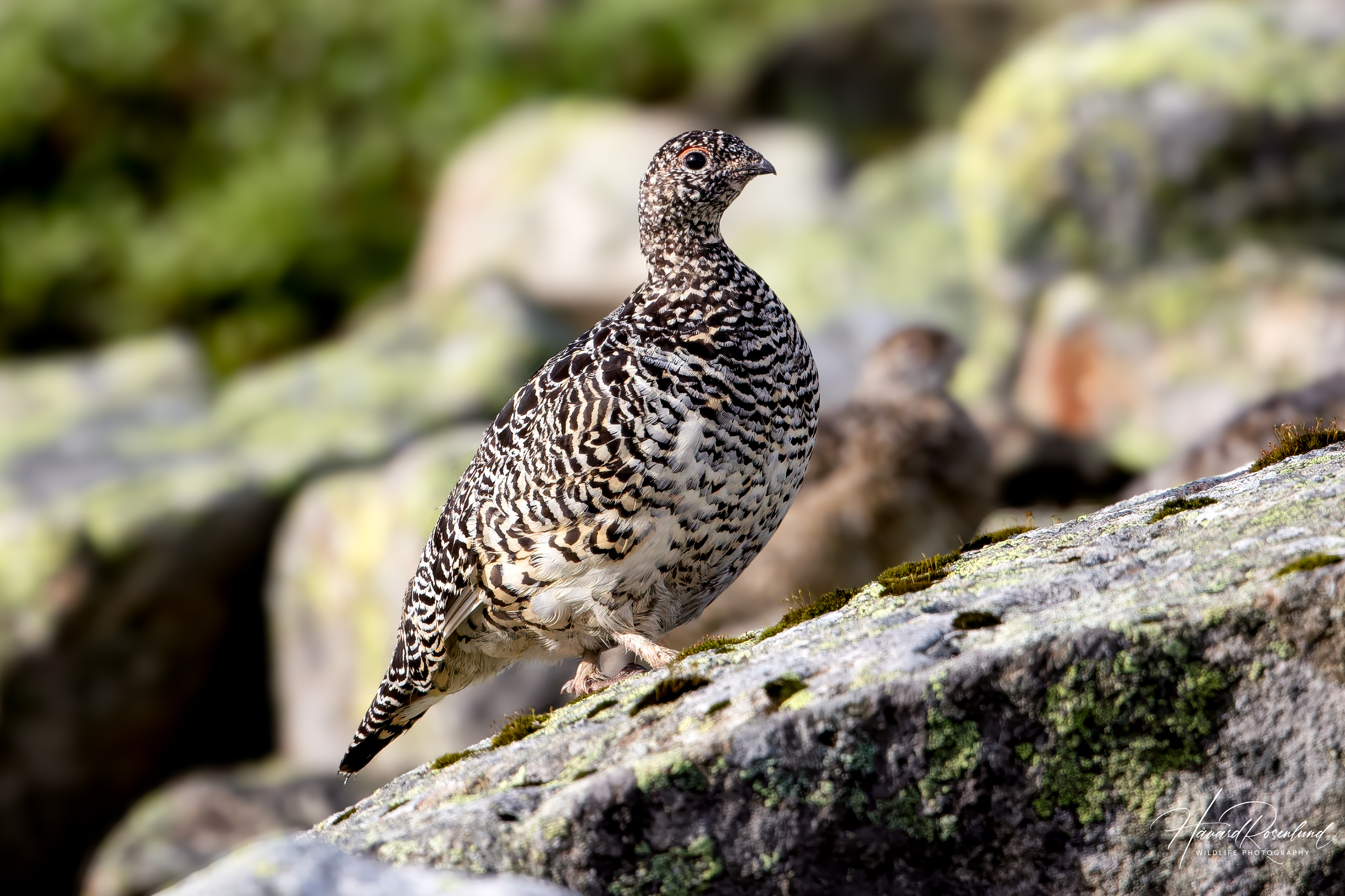
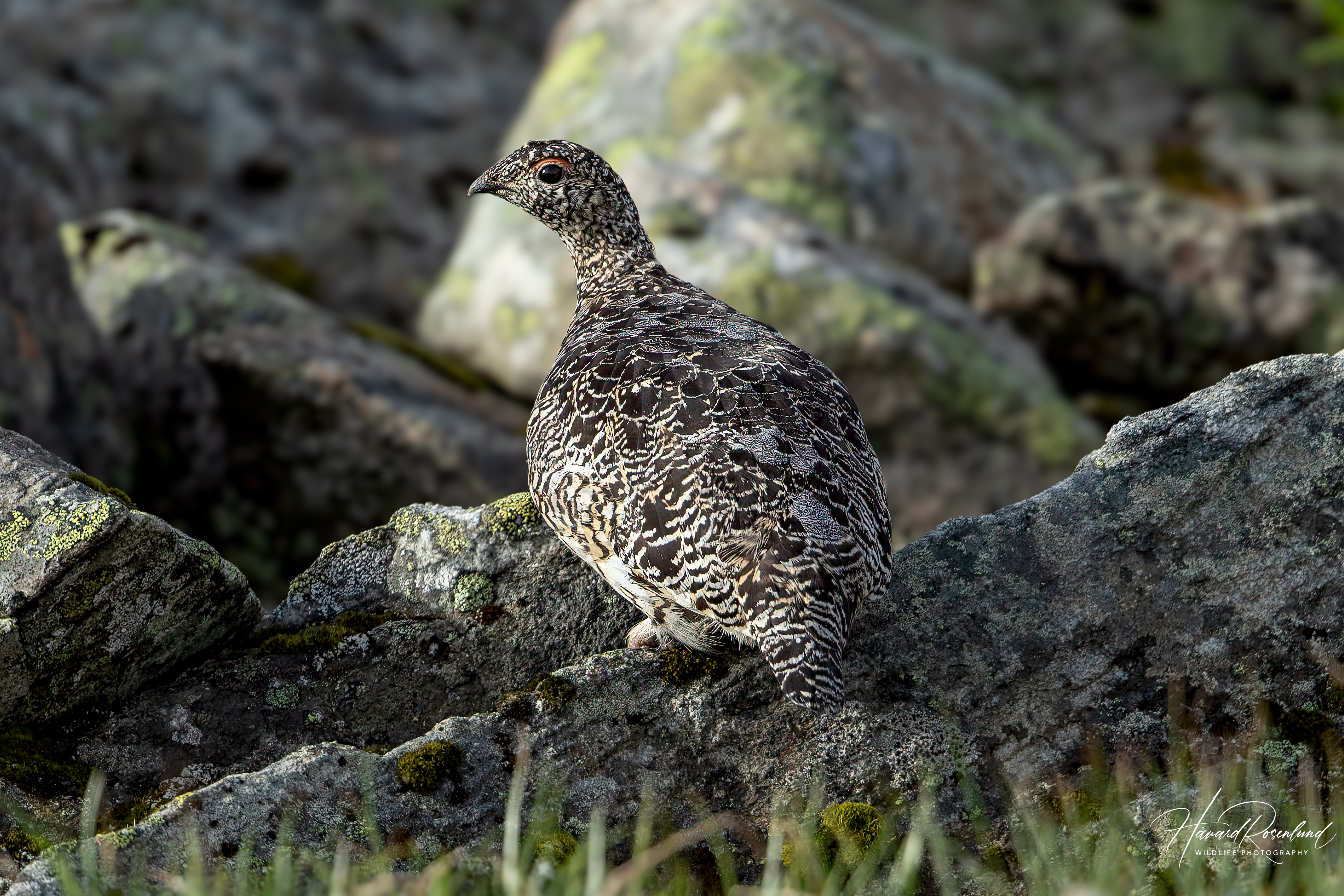
The species is well known for its seasonal plumage change. In winter, the rock ptarmigan is almost entirely white, providing excellent camouflage in snowy landscapes. During summer, its plumage becomes mottled grey-brown, blending in with rocky tundra and alpine vegetation. Males are distinguished by a black stripe, or “bridle,” running from the bill through the eye, which is less distinct or absent in females.
The rock ptarmigan can be confused with the willow ptarmigan (Lagopus lagopus), but the two species differ in several key ways. Rock ptarmigans generally inhabit higher, more barren terrain, while willow ptarmigans prefer lower elevations with shrub and willow cover. In winter, the rock ptarmigan has a black tail, whereas the willow ptarmigan retains a largely white tail. Additionally, the willow ptarmigan is typically slightly larger and lacks the prominent black facial stripe seen in male rock ptarmigans.
Diet & habitat
The rock ptarmigan is primarily herbivorous, feeding on buds, leaves, shoots, flowers, berries, and seeds. During winter, when food availability is limited, it relies heavily on woody plants such as willow and birch, as well as mosses and lichens in the most extreme environments.
Its habitat consists mainly of alpine tundra, rocky slopes, and high mountain plateaus, usually above the tree line. In Arctic regions, it may occur at much lower elevations, sometimes close to sea level. Feeding often takes place on the ground, where birds browse low vegetation or dig through snow to access buried plant material.
Behavior
Rock ptarmigans are generally cryptic and cautious, relying on camouflage rather than flight to avoid predators. Outside the breeding season, they may form small flocks, particularly during winter, while breeding birds tend to be more solitary and territorial.
The species is a year-round resident, making only short seasonal movements, often shifting slightly in elevation depending on snow conditions and food availability. Thickly feathered feet function as natural snowshoes, allowing efficient movement across snow-covered terrain and helping conserve body heat.
Nesting
Breeding typically begins in late spring or early summer, once snow conditions allow access to suitable nesting sites. Males establish territories and perform displays to attract females. The female builds a shallow nest on the ground, usually well concealed among rocks or low vegetation. She lays a clutch of 5–10 eggs, which she incubates alone for approximately 21–23 days. After hatching, the chicks are precocial, leaving the nest shortly after emergence and feeding themselves almost immediately. The female provides protection and guidance during the early stages of life.
Rock ptarmigans may live up to 5–7 years in the wild, although many individuals do not reach this age due to predation and harsh environmental conditions.
Cultural significance
The rock ptarmigan has long played an important role in the cultures of Arctic and mountain regions. It has traditionally been a valuable game species, providing food and feathers for local and indigenous communities living in remote and resource-limited environments.
In Scandinavia, the species is closely associated with high mountain landscapes and traditional hunting culture, symbolizing resilience, wilderness, and adaptation to extreme conditions. It features in local folklore, historical accounts, and outdoor traditions, and remains an iconic species for hunters and nature enthusiasts alike.
Status
The rock ptarmigan is currently classified as least concern on the IUCN Red List and has a wide distribution across the Arctic and alpine regions of the Northern Hemisphere. However, some local populations have shown declines.
Potential threats include climate change, which may disrupt snow cover patterns critical for camouflage, as well as habitat alteration and hunting pressure in certain areas. Continued monitoring is important to understand how changing environmental conditions may affect the species in the future.
Pictures