
Cameras and AI Will Track Fish Deliveries to Connecticut Ospreys
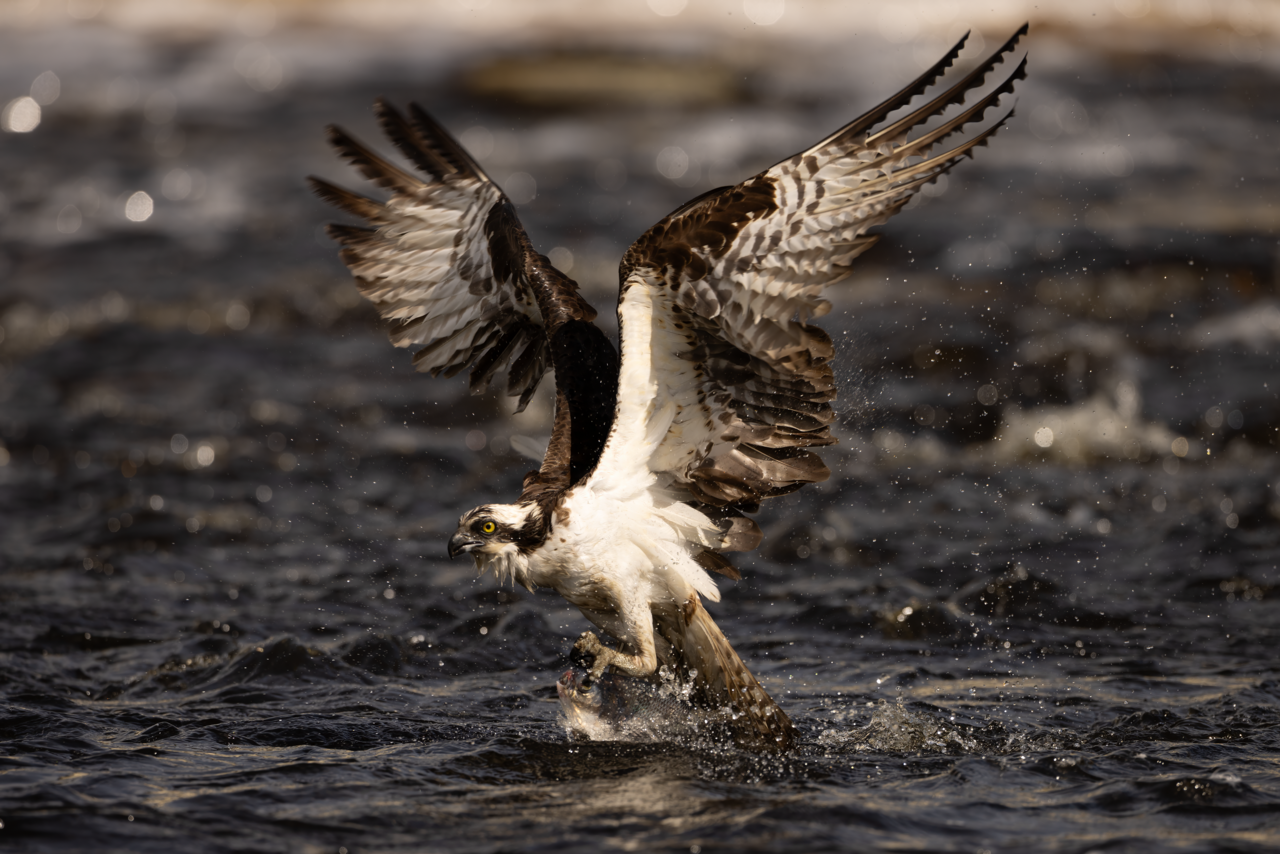
A new Connecticut, USA study will use nest cameras and artificial intelligence to document fish delivered to young ospreys (Pandion haliaetus). Connecticut Audubon Society announced the project on 4 March 2026 after its monitoring programme recorded fewer fledglings per active nest in 2025 than in any previous year of the 12-year series.
Cameras Will Compare Prey Deliveries Across Three Aquatic Settings
The Osprey Prey Study plans to place cameras at nests near salt water, brackish water and fresh water. The images will be used to identify the species, number and size of fish brought back by adults and to test whether prey deliveries differ among coastal, estuarine and inland nests.
Artificial intelligence will screen the large image volume and flag frames that contain fish deliveries. Human observers can then identify and measure prey in the relevant photographs. Volunteers from the existing Osprey Nation network are also expected to contribute photographs and field observations.
Productivity Fell to 1.26 Fledglings per Active Nest in 2025
Osprey Nation recorded 726 active nests and 1,077 fledglings in 2024, compared with 682 active nests and 862 fledglings in 2025. Productivity fell from 1.48 to 1.26 fledglings per active nest, the lowest value in the programme’s 12-year history.
Those figures do not identify the cause. The 2025 report documented incubation failures, losses after hatching and abandoned nesting attempts, as well as severe heat and storms. Observers also reported possible starvation at individual nests and fewer menhaden in some local waters, but the report treated those observations as anecdotal. Low osprey breeding success linked to prey availability farther south in Chesapeake Bay is one reason for testing the question directly in Connecticut rather than assuming the same explanation applies.
Connecticut Audubon describes the first camera season as a baseline for later comparison. The project is designed to link actual prey deliveries with nest performance so subsequent analyses can test whether food availability contributes to breeding outcomes alongside weather, disturbance, predation and other factors.
Ecology
Related news
VKM: Exporting Up to 26 Osprey Young to Ireland Would Not Harm Conservation Status in Norway
VKM concluded that exporting up to 26 wild young ospreys from two Norwegian donor areas to Ireland would…
Read story →
24 Osprey Chicks Fledged From 12 Rutland Nests
Rutland Osprey Project reported 24 chicks fledged from 12 nests in 2026. The season produced 14 chicks assessed…
Read story →
Ospreys Raised Three Chicks in Switzerland’s First Breeding in 112 Years
A male released by the Swiss reintroduction project and an unringed female of unknown origin raised three chicks…
Read story →SPECIES IN THIS STORY
Species in this story
Independent research and conservation news archive
Did you find this information useful?
Wildlife Vagabond is independently built and maintained. Voluntary support helps cover source verification, hosting and continued work on research and conservation news.
Support Wildlife VagabondThe news archive will remain freely available.