
Dhole gets its first chromosome-level genome assembly
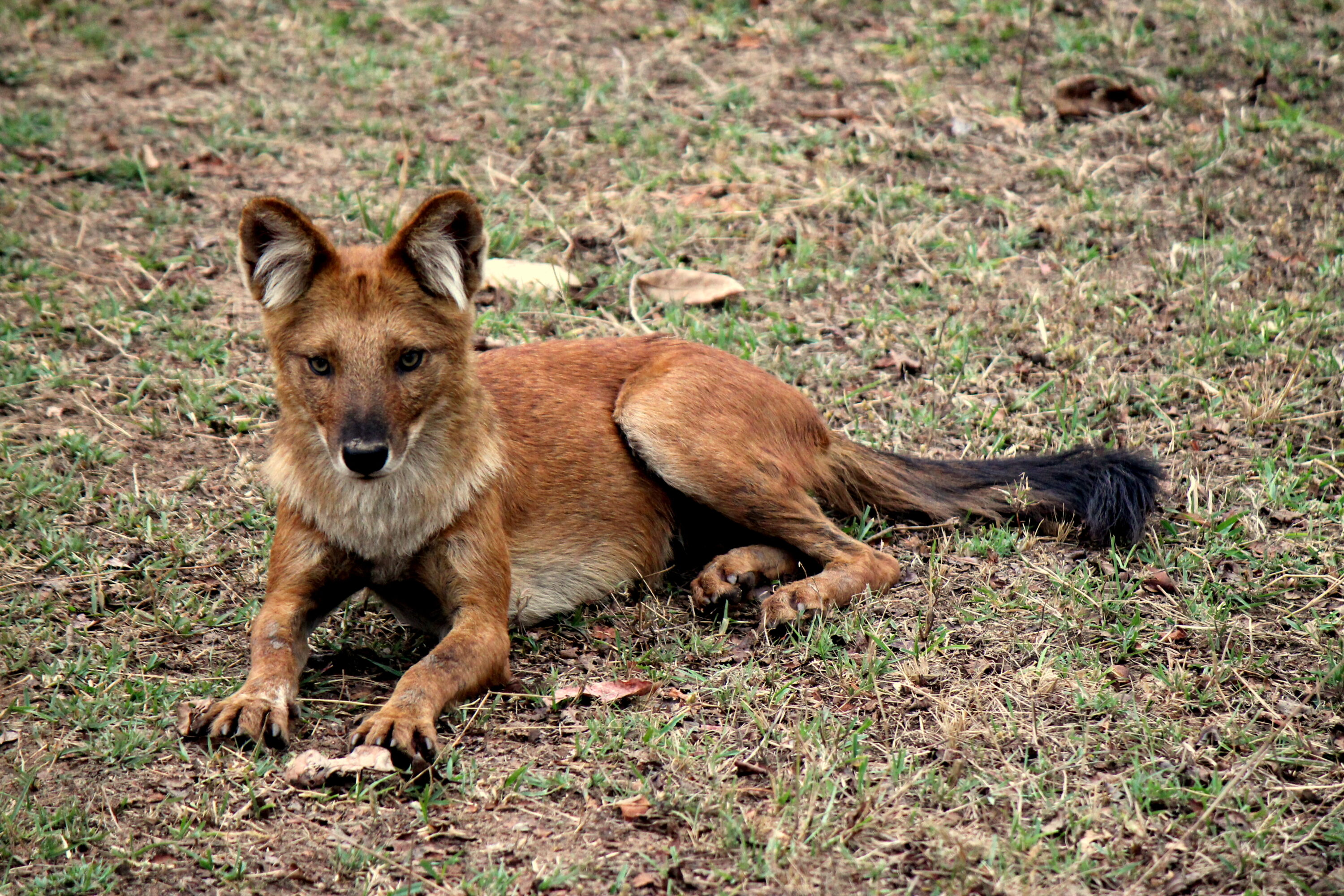
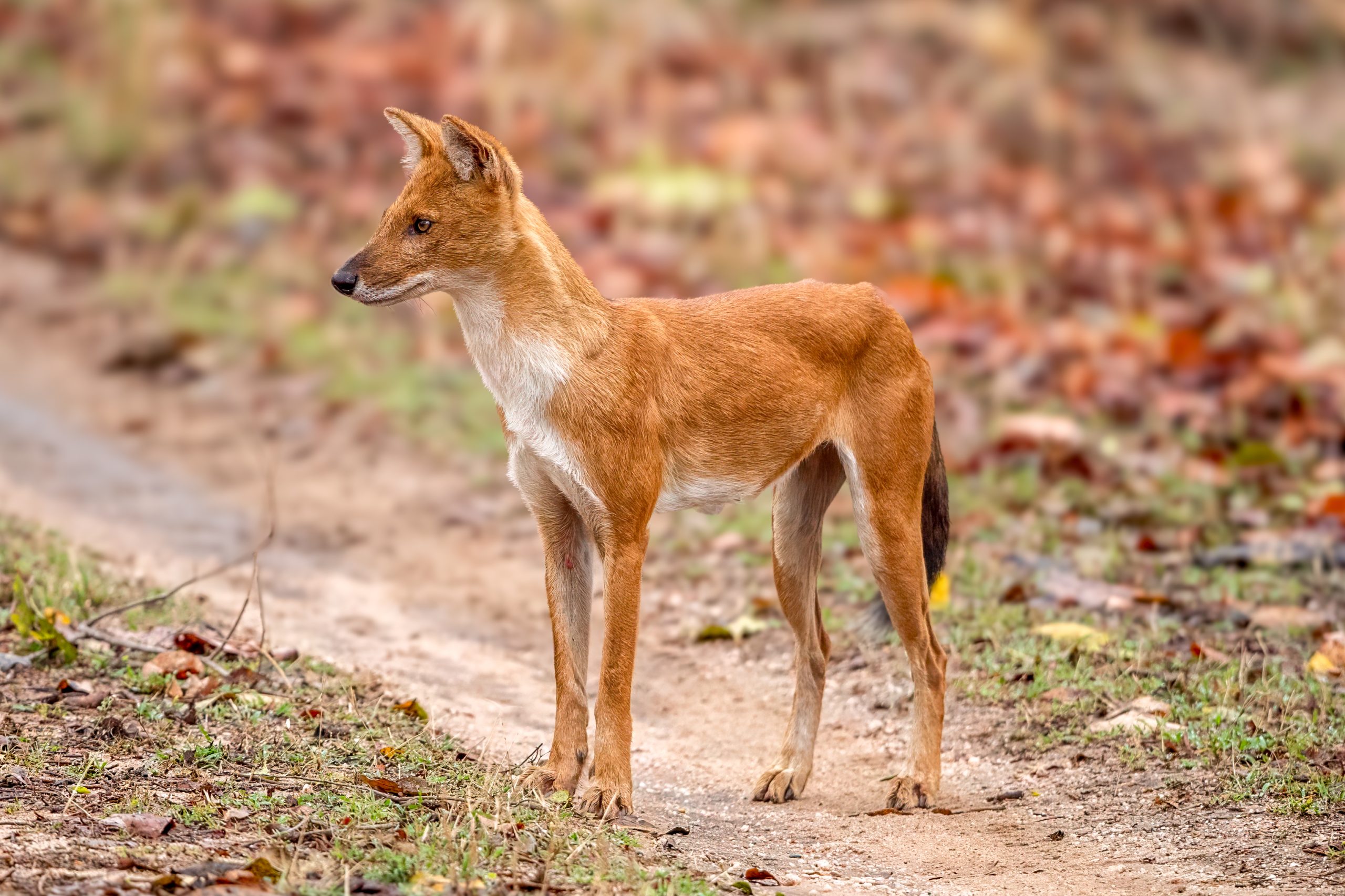
The dhole (Cuon alpinus) now has its first chromosome-level genome assembly: a reference map of its DNA organized into large sequences corresponding to chromosomes. A genome assembly pieces together DNA sequences read by sequencing instruments; the more completely those pieces can be joined and organized, the more useful the reference can be for future research.
To build the assembly, the researchers combined short-read Illumina sequencing with longer reads from Oxford Nanopore sequencing and Hi-C data on interactions between parts of the genome. Together, these data helped them assemble the DNA and arrange it into larger sequences. The resulting assembly spans 2.42 billion DNA base pairs. The authors anchored 97.0% of the assembled sequence to 39 chromosomes.
The assembly’s contig N50 was 41.42 million base pairs, and its scaffold N50 was 63.77 million. These measures describe how continuous the assembled sequences are: for each measure, half of the assembled genome is in sequences at least that long. Contigs are assembled DNA stretches; scaffolds arrange sequence stretches into larger units. The N50 values are measures of assembly continuity, not the lengths of individual chromosomes.
A completeness check based on BUSCO found 98.1% of the expected conserved genes used in the assessment. This indicates that the assembly contains most of those genes; it is not a measure of how much variation exists among dholes.
The researchers predicted 20,247 protein-coding genes. They assigned a functional annotation—a proposed biological role—to 17,817 of them, or 90% of the predicted genes. Repetitive sequences and transposable elements made up 44.7% of the assembled genome. Among the reported repeat classes, long interspersed nuclear elements, or LINEs, were the predominant class.
A chromosome-level reference gives researchers a detailed framework for locating genes and other DNA sequences in the dhole genome. The authors present it as a resource for future research on canid evolution, population genetics and conservation biology. This paper provides the genomic resource; it does not test evolutionary hypotheses, measure genetic differences among dhole populations or assess conservation interventions.
Genetics & genomics
Related news
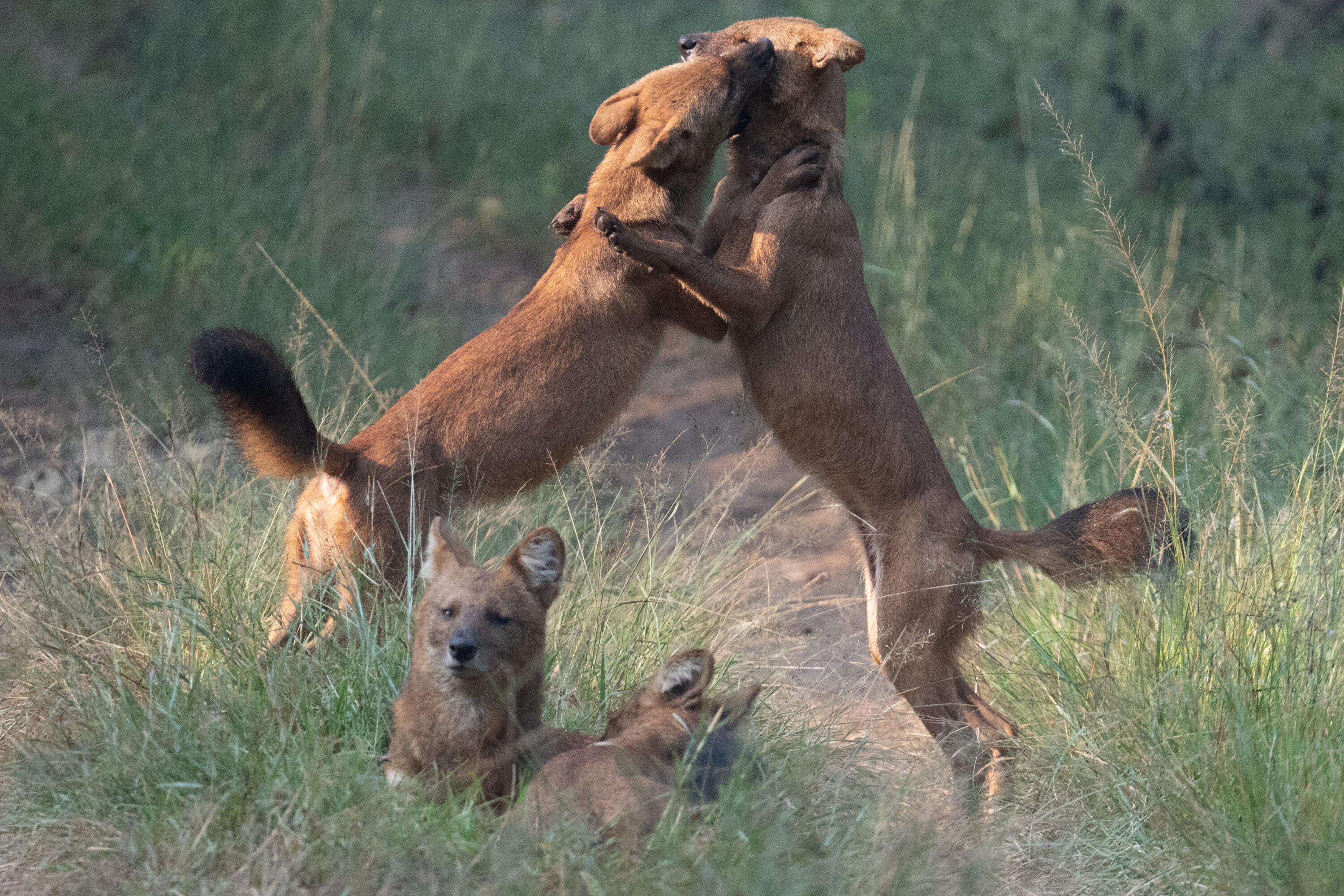
Dhole Density Was Nearly Three Times as High in Nemmara as in Parambikulam
A DNA-based survey of dholes at six study sites in India's Western Ghats found almost three times as…
Read story →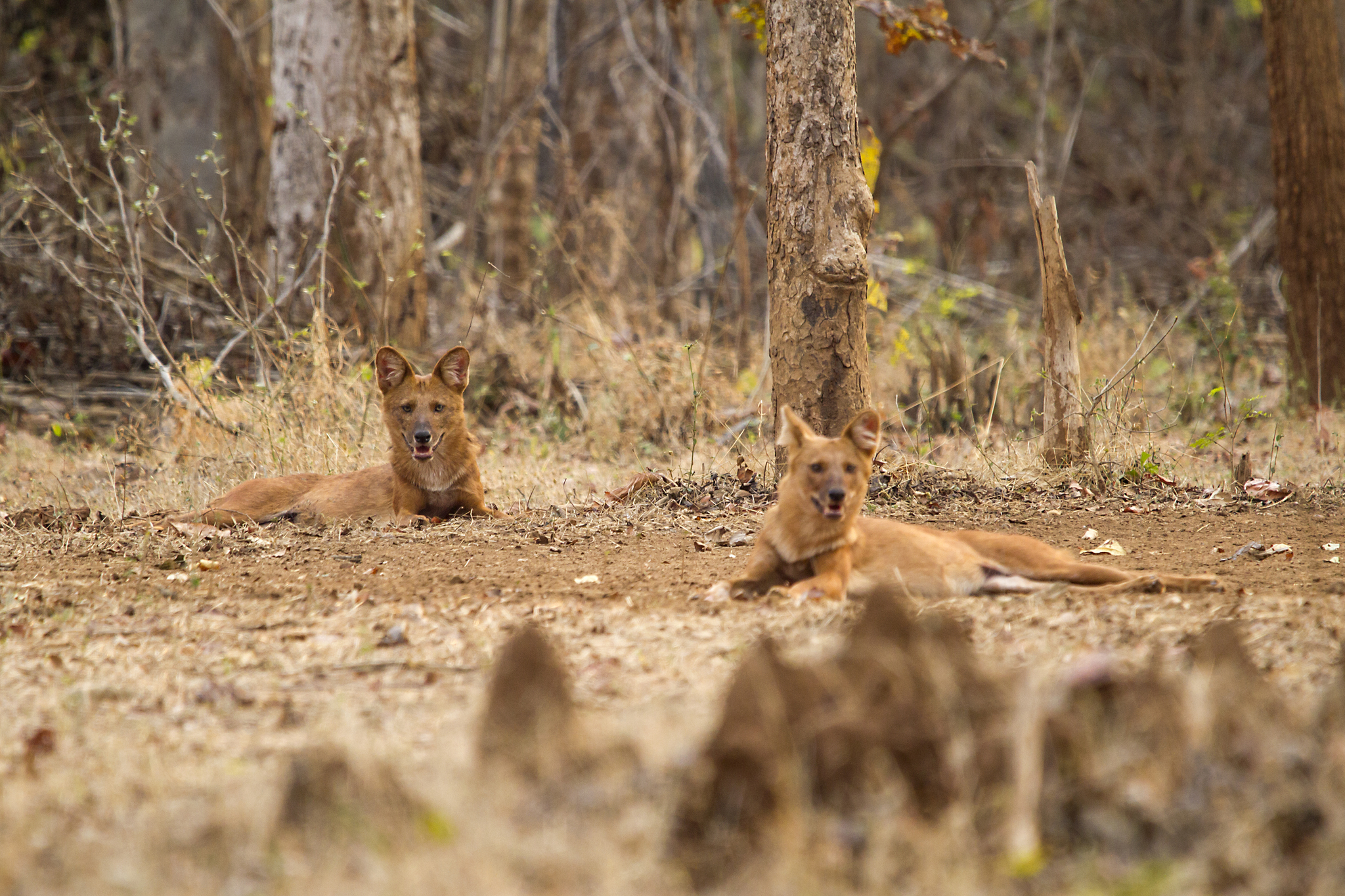
Models Estimated 47.6% Contraction in Suitable Dhole Habitat in China
Models suggest suitable dhole habitat in China contracted by 47.6% from the historical to current period and could…
Read story →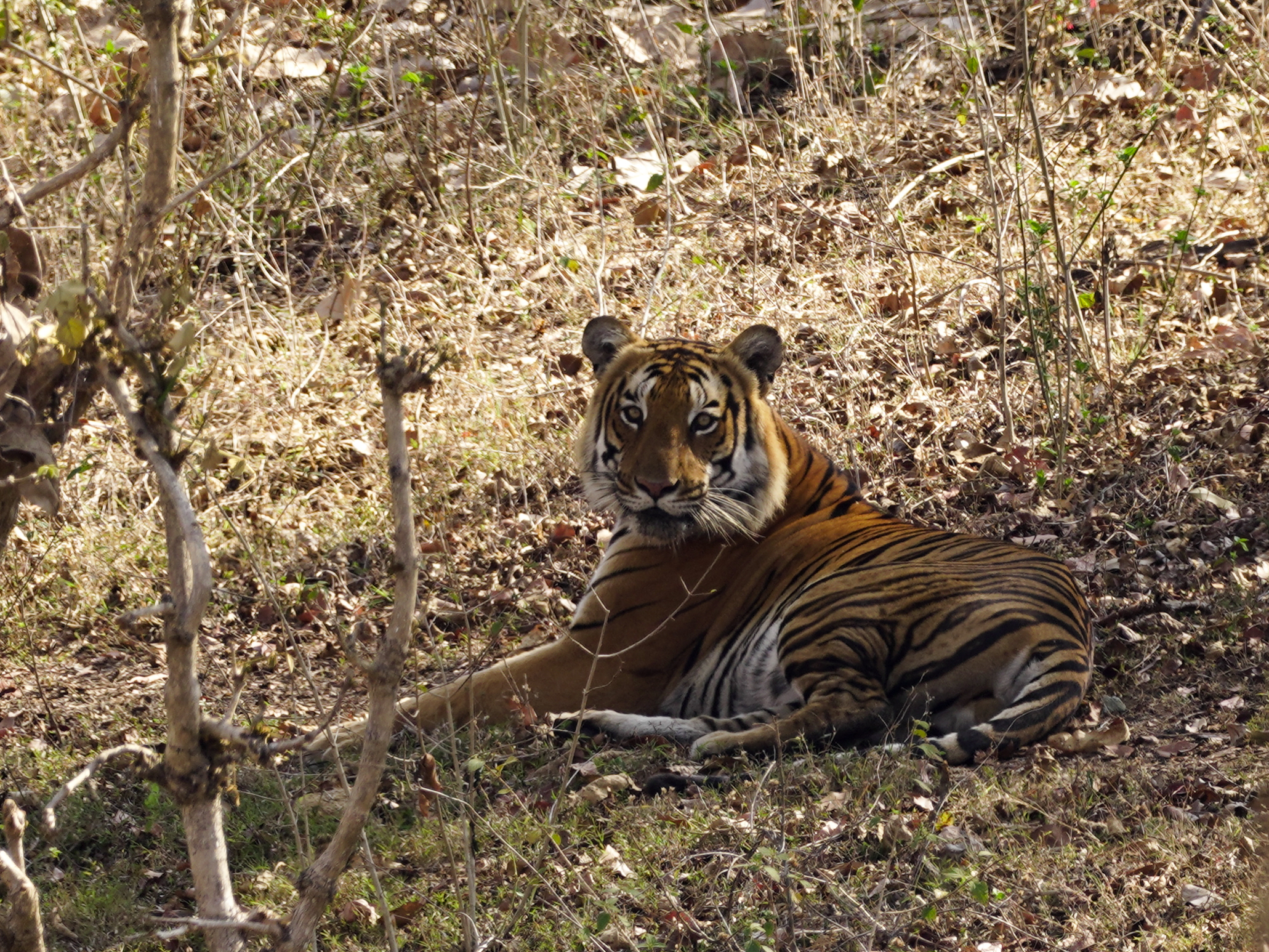
Key Movement Bottlenecks for Five Large Mammals Lay Outside Protected Areas in Tamil Nadu
A 2026 study of tiger, leopard, dhole, Asian elephant and gaur identified modelled movement bottlenecks outside protected areas,…
Read story →SPECIES IN THIS STORY
Species in this story
Independent research and conservation news archive
Did you find this information useful?
Wildlife Vagabond is independently built and maintained. Voluntary support helps cover source verification, hosting and continued work on research and conservation news.
Support Wildlife VagabondThe news archive will remain freely available.