
Great-tailed Grackles Hovered Over Floating Sargassum to Catch Swimming Crabs
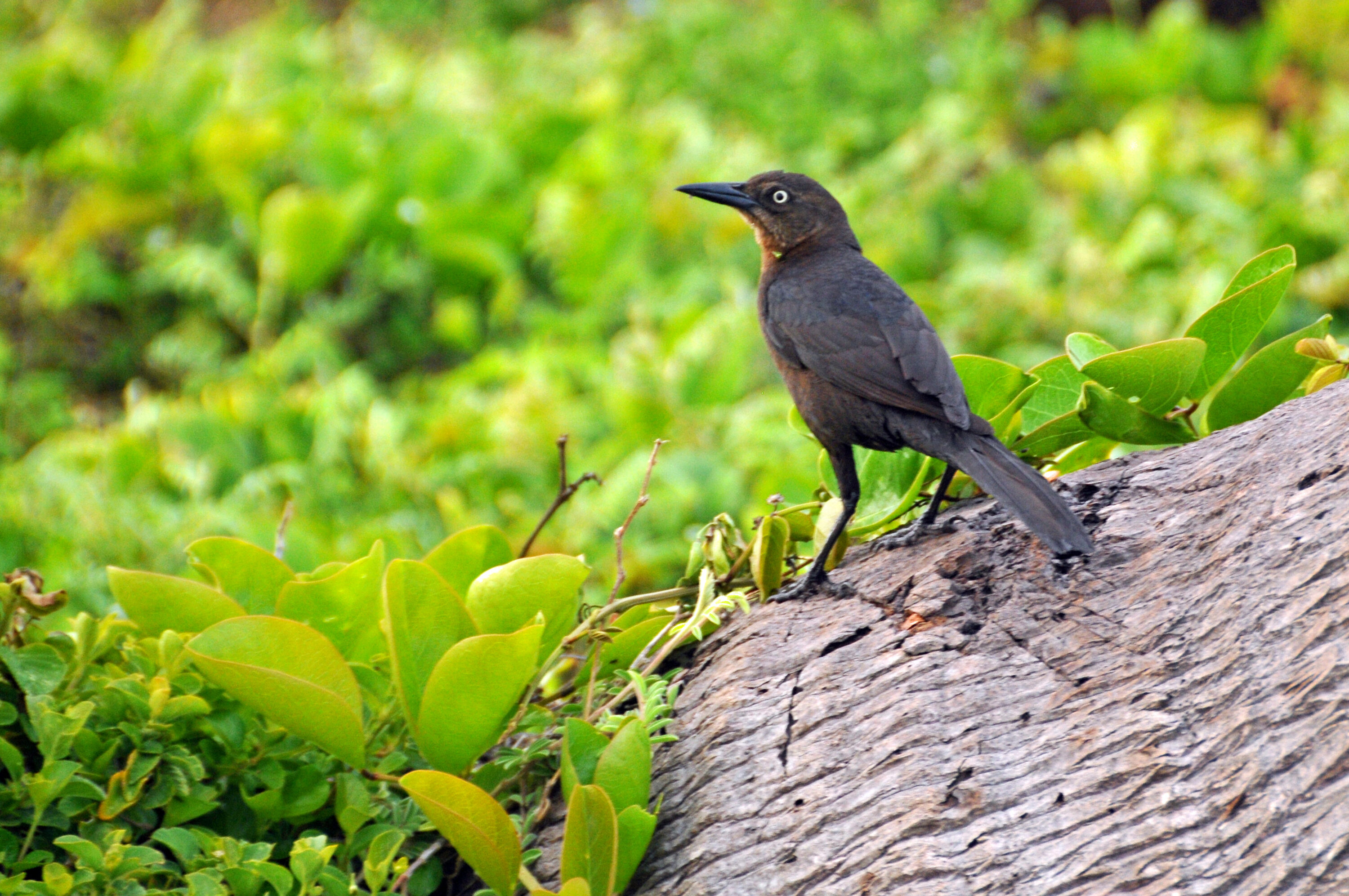
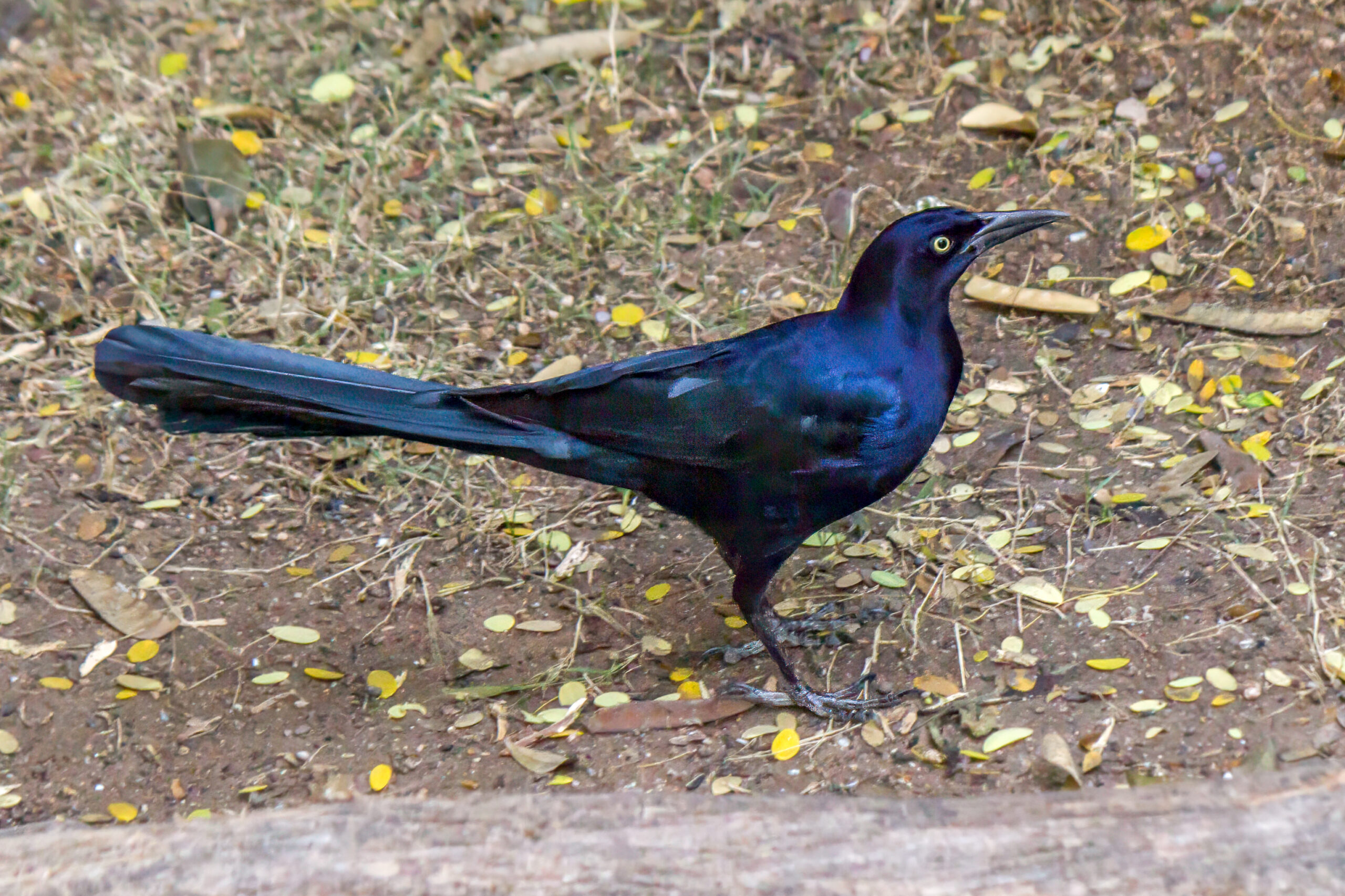
Great-tailed grackles (Quiscalus mexicanus) on Isla Cozumel, Mexico, repeatedly flew from shore to floating sargassum, hovered above the drifting algae and picked prey from the rafts before returning to land. The study describes this as a previously undocumented addition to the feeding repertoire of a bird otherwise best known as a terrestrial generalist.
Fifty-seven trips over floating sargassum
Karl R. Wirth observed the birds for more than 13 hours across 12 days between 24 July and 21 August 2022. Observations were made when floating sargassum was present and grackles were foraging along the coast. In total, 57 over-water excursions were recorded. The median trip reached 44 metres from shore and lasted 10 seconds; birds travelled as far as 180 metres, and individual trips lasted from four to 58 seconds.
More than 95 per cent of the excursions involved a single brown-plumaged bird foraging alone, although loose groups of up to four were occasionally seen. Plumage and eye colour suggested that most active foragers were mature birds and, because adult females are brown whereas adult males are black, they were presumed to be female. The birds were not individually marked, so the study could not determine how many different individuals used the technique. Males were seen trying to steal crabs from returning birds, but no male was observed performing the over-water foraging sequence.
A five-phase capture sequence
Successful trips followed a consistent sequence. A bird left a shoreline perch and flew toward a sargassum raft, slowed into a more upright searching flight, hovered when it detected possible prey, lowered itself to take the animal with its bill and then returned to land. Its toes could touch the algae during capture, but the wings continued beating because the floating mat did not support the bird’s weight.
Across the 57 recorded excursions, a grackle returned to shore with prey 39 times. Thirty of those prey items were identified from photographs or remains as the sargassum swimming crab Portunus sayi; the other nine could not be identified. On shore, the grackles usually shook and rubbed the crabs against a hard surface before eating them. Later video observations also showed birds sometimes holding prey with their feet.
The energetic model suggested the strategy could pay off
A simple energetic model tested whether the energy gained from the crabs could exceed the cost of flying and hovering. Even under conservative assumptions about digestion, the model predicted a positive net energy gain for an average female after accounting for the time associated with a successful capture. Less conservative assumptions increased that gain further. In biological terms, the calculation suggests that a successful crab capture could provide more usable energy than the bird spent reaching and taking the prey.
The author treats this calculation as preliminary. Direct values were not available for the flight costs of great-tailed grackles, the energy content of the crabs or how efficiently the birds digest crab tissue and shell. The model therefore supports the plausibility of an energetic gain rather than providing a precise energy budget.
Recurring sargassum influxes have altered western Caribbean shorelines since 2014–2015. The floating rafts carry invertebrates and other animals close to shore, creating a food source over deeper water that the grackles could exploit. Informal observations from Playa del Carmen and San Pedro, Belize, suggest that similar grackle behaviour may occur elsewhere where nearshore sargassum remains accessible outside heavy surf.
The Cozumel observations cannot show whether the technique arose independently in different places or spread through social learning, and the unmarked birds prevent an estimate of how many individuals used it. What the study does document is a repeatable, structured foraging sequence in which a land-associated generalist exploited prey in a newly abundant floating habitat.
Behaviour
Related news
Great-tailed Grackle Is Now Known from 44 of Arkansas’s 75 Counties
A 2026 Arkansas review documents Great-tailed Grackle from 44 of 75 counties, while breeding and year-round populations are…
Read story →
Great-tailed Grackles Now Breed Widely and Winter Regularly in Nebraska
A 2026 Nebraska synthesis documents the species' expansion from isolated records in the 1970s to widespread breeding and…
Read story →
Nuclear DNA Supports One Unified Great-tailed Grackle Lineage
A genome-scale study resolves a long-standing conflict between mitochondrial and nuclear evidence and finds no signal of admixture…
Read story →SPECIES IN THIS STORY
Species in this story
Independent research and conservation news archive
Did you find this information useful?
Wildlife Vagabond is independently built and maintained. Voluntary support helps cover source verification, hosting and continued work on research and conservation news.
Support Wildlife VagabondThe news archive will remain freely available.