
Nuclear DNA Supports One Unified Great-tailed Grackle Lineage
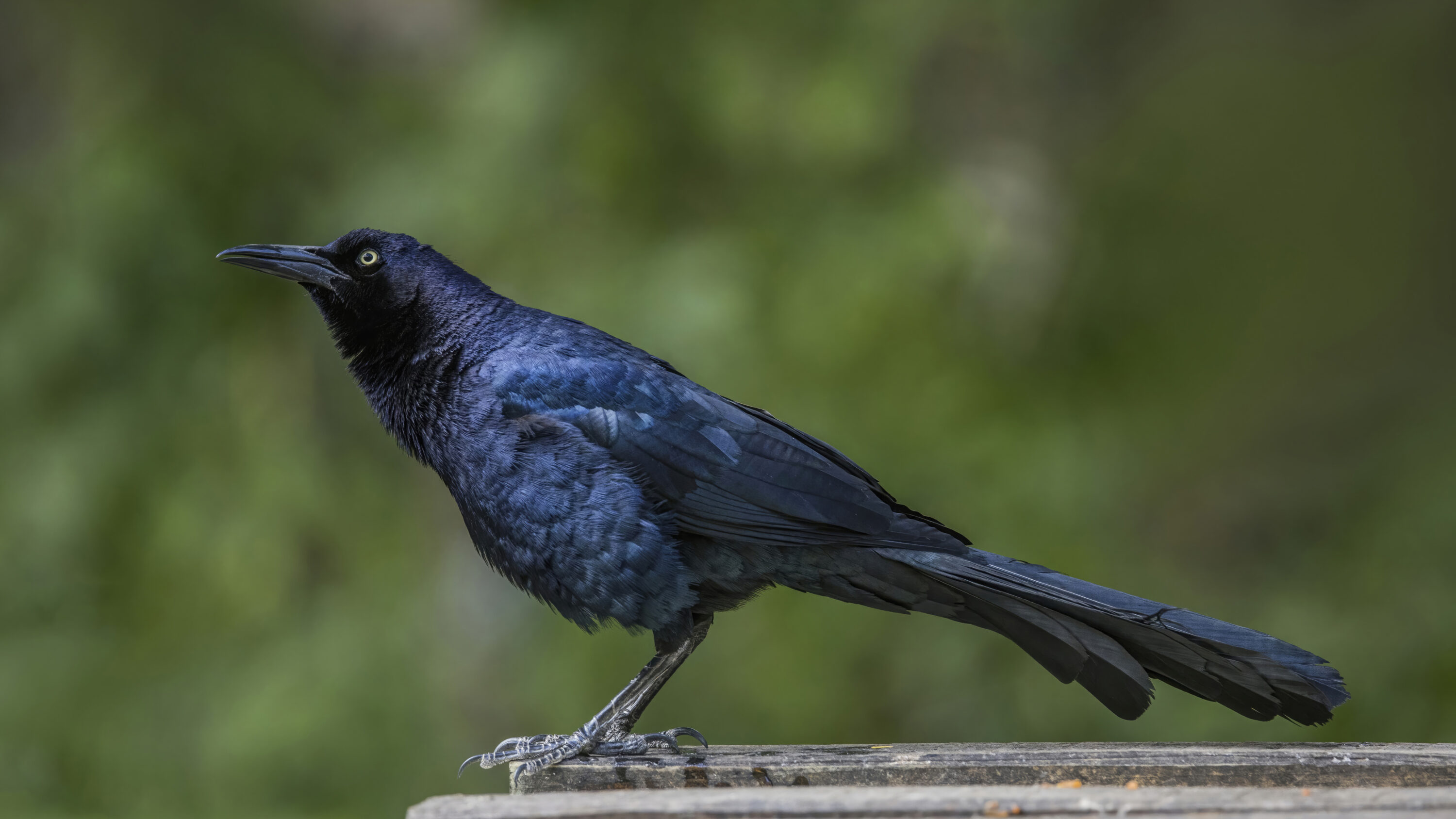
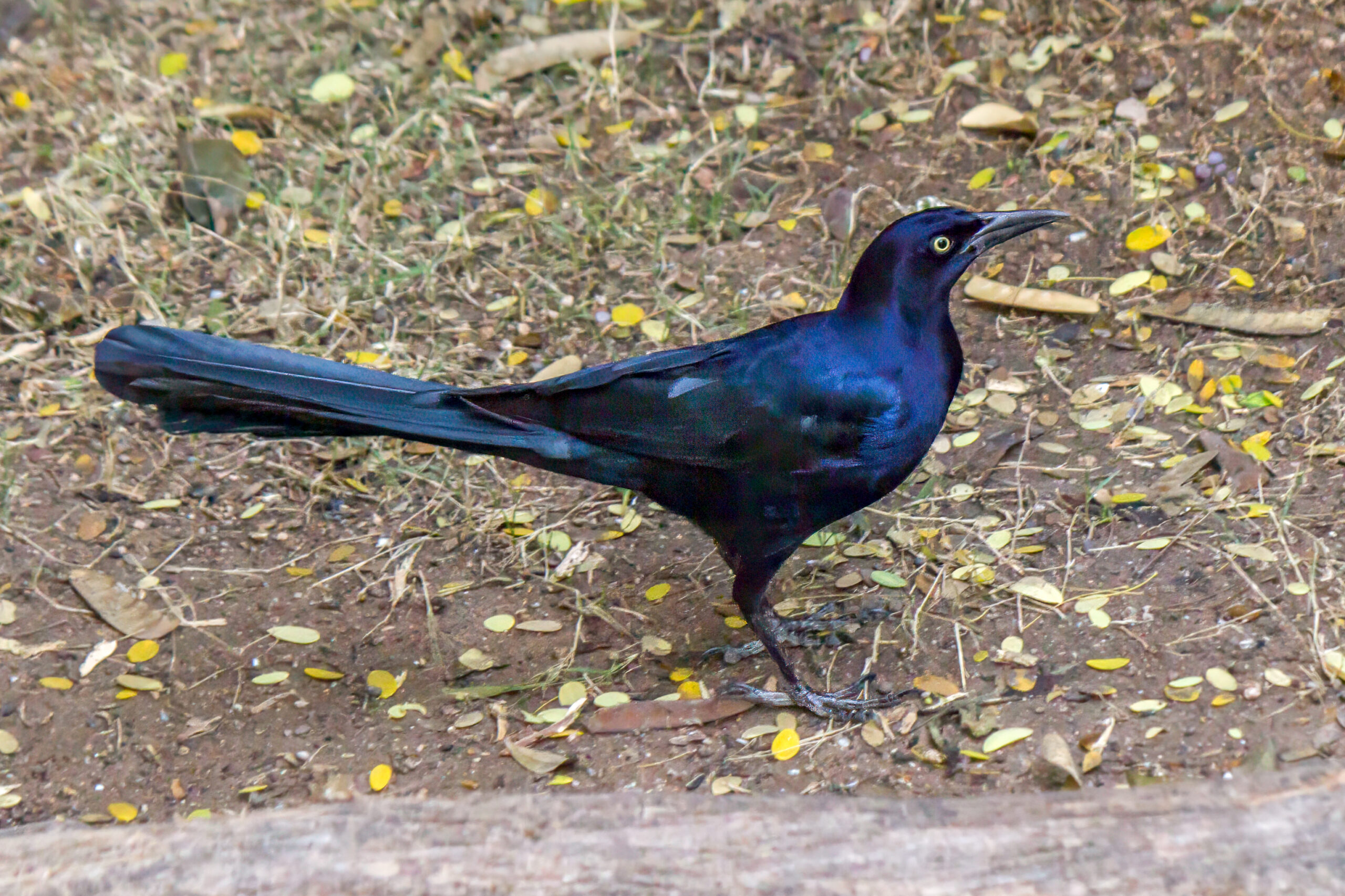
A genome-scale study has clarified one of the more puzzling branches of the grackle family tree. Published in Ornithology on 10 June 2026, the research supports the great-tailed grackle Quiscalus mexicanus as a single evolutionary lineage, even though its western and eastern populations carry two deeply divergent forms of mitochondrial DNA.
That distinction matters because mitochondrial DNA is inherited only through the maternal line. It can preserve a different historical signal from the much larger nuclear genome, especially when populations separated in the past, met again, or exchanged genes. Earlier mitochondrial studies had raised doubts about whether the great-tailed grackle formed one natural group. Some analyses appeared to place one of its two mitochondrial lineages closer to the boat-tailed grackle (Quiscalus major) than to other great-tailed grackles.
The question was further complicated by the two living species meeting along parts of the Gulf Coast in Texas and Louisiana. Birds with intermediate features had been interpreted as possible hybrids. If regular interbreeding were occurring, it could blur the boundary between the species and help explain why different genetic markers told different stories.
Many nuclear markers tested the mitochondrial family tree
Eamon C. Corbett, Robb T. Brumfield and Brant C. Faircloth tested these alternatives with both mitochondrial sequences and nuclear ultraconserved elements, or UCEs. UCEs are highly conserved stretches of the genome bordered by more variable DNA. By sequencing many such regions across the nuclear genome, the researchers obtained numerous independent markers inherited through both parents, rather than relying on the single maternal history recorded by mitochondrial DNA. This gives a broader picture of shared ancestry across the genome. The study included representatives of all 13 recognized subspecies in the Cassidix group: great-tailed grackles, boat-tailed grackles and the extinct slender-billed grackle (Quiscalus palustris).
The nuclear evidence brought the two deep great-tailed grackle lineages back together. Western and eastern populations were one another’s closest relatives, and the species was recovered as monophyletic — meaning that the sampled great-tailed grackles formed one complete evolutionary branch descended from a shared ancestor, rather than one mitochondrial lineage belonging more closely with boat-tailed grackles. The analysis also supported boat-tailed grackle as its own lineage, while the extinct slender-billed grackle was most likely the sister lineage to the unified great-tailed grackle.
No genomic signal of regular gene exchange with boat-tailed grackles
Tests for gene flow found no evidence of admixture between the sampled great-tailed and boat-tailed grackles. Here, admixture means detectable mixing of ancestry across the genomes that would remain after repeated successful interbreeding. The result does not prove that no individual hybrid has ever occurred in the contact zone; rather, the sampled genomes showed no signal of regular, fertile gene exchange between the species. The authors therefore suggest that apparent hybrids, if genuine, are likely rare or infertile.
Some subspecies boundaries did not match the genomic groups
The study also resolved relationships within the species more clearly than earlier work. Some genetic groupings did not match current subspecies boundaries, showing that named forms based on appearance and geography do not always map neatly onto shared genomic ancestry. That result is evidence that parts of the subspecies taxonomy deserve reassessment, not by itself a formal reason to rename or merge forms. Any revision would need to weigh the genomic results alongside morphology, distribution and broader sampling.
For the great-tailed grackle, the nuclear data support a single monophyletic lineage despite the two deeply divergent mitochondrial lineages. Together with the absence of detected admixture with boat-tailed grackles, the results resolve the main conflict in earlier mitochondrial work while also showing that several genetic groupings within the Cassidix complex do not match current subspecies taxonomy.
Evolution & taxonomy
Related news
Great-tailed Grackles Hovered Over Floating Sargassum to Catch Swimming Crabs
During more than 13 hours of observation across 12 days on Cozumel, Mexico, great-tailed grackles made 57 flights…
Read story →
Great-tailed Grackle Is Now Known from 44 of Arkansas’s 75 Counties
A 2026 Arkansas review documents Great-tailed Grackle from 44 of 75 counties, while breeding and year-round populations are…
Read story →
Great-tailed Grackles Now Breed Widely and Winter Regularly in Nebraska
A 2026 Nebraska synthesis documents the species' expansion from isolated records in the 1970s to widespread breeding and…
Read story →SPECIES IN THIS STORY
Species in this story
Independent research and conservation news archive
Did you find this information useful?
Wildlife Vagabond is independently built and maintained. Voluntary support helps cover source verification, hosting and continued work on research and conservation news.
Support Wildlife VagabondThe news archive will remain freely available.