
How Harris’s hawks follow a flying target—and turn toward a perch after the catch
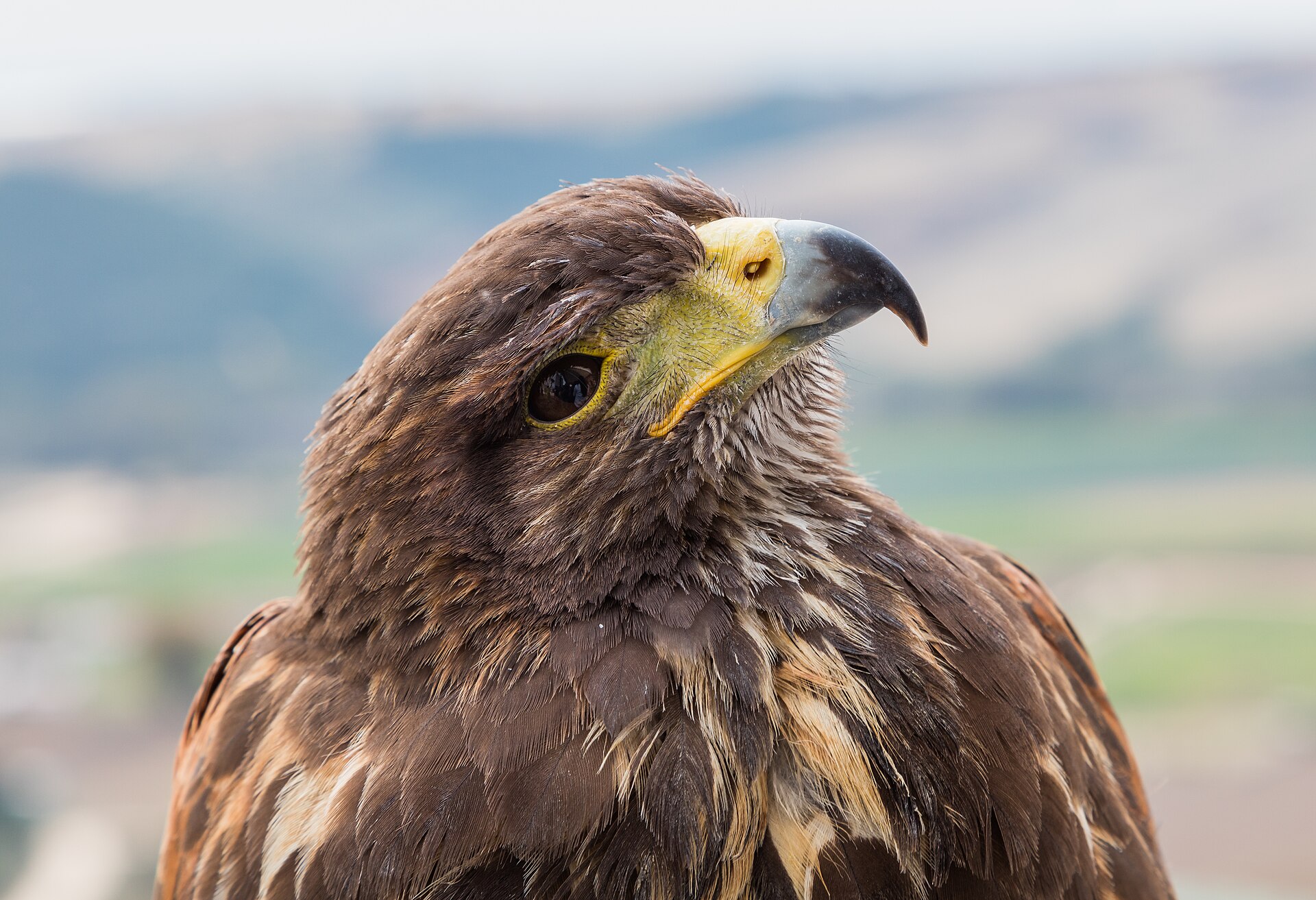
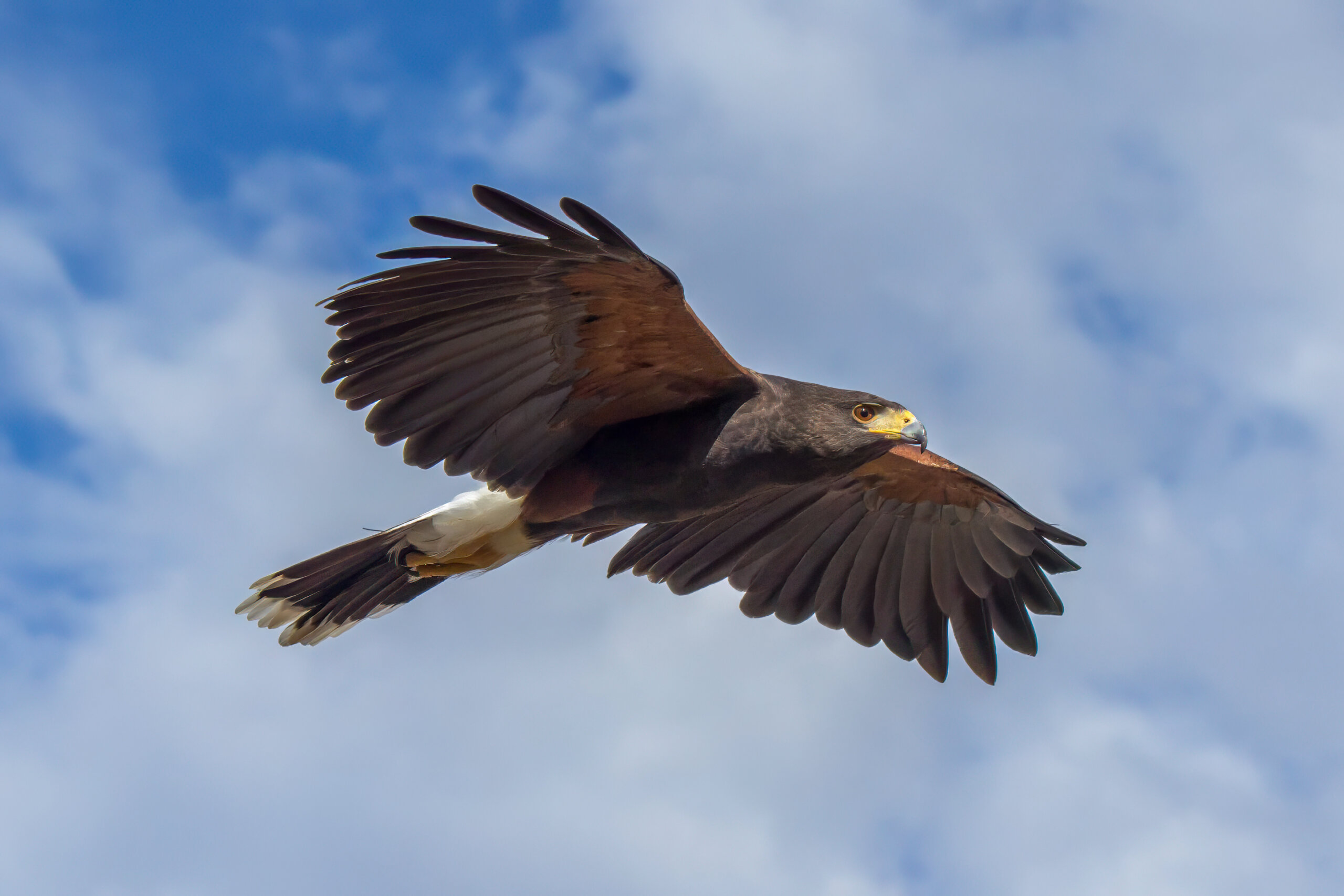
How does a flying bird keep a moving target in view while also navigating through open space? Researchers studied two trained Harris’s hawks (Parabuteo unicinctus) as they flew between perches 30 metres apart and caught a tossed piece of food.
Each hawk wore a camera system on its head that captured nearly the full surroundings. The researchers combined the recordings with a three-dimensional map of the outdoor field, made from drone images. By matching landmarks in the footage to the map, they reconstructed the hawk’s head position and direction, as well as the target’s position relative to the bird.
Smooth tracking gives way to stepwise head turns
During pursuit, the hawks moved their heads smoothly, keeping the airborne target directly in front of the head until capture. That does not establish exactly where the birds were looking: the cameras recorded head direction, not eye direction. After the catch, the hawks turned toward the next perch using rapid, stepwise head movements called head saccades. Each began with a quick rotation in the direction of the turn, followed by a phase in which the head shifted position with little further rotation. Researchers recorded 37 head saccades across nine flights by the two hawks.
Larger turns involved more head saccades, shifting the perch closer to the hawk’s forward-facing direction in successive movements. Individual saccades with larger head movements also reached higher peak speeds. Together, these patterns suggest that a head saccade took roughly the same amount of time regardless of the angle of the turn.
In a separate test of a ground-based target, the researchers removed the landing perch from the 3D map and estimated its position from the camera images. The estimated perch location differed by a mean absolute distance of 21.0 centimetres from its position in the original 3D scan.
The recordings show how the hawks’ head movements shifted from tracking an airborne target to turning toward the next perch. By combining a head-mounted camera with a mapped landscape, the researchers could relate those movements to both a moving target and surrounding landmarks—details that GPS or motion sensors alone cannot capture at the same time. The system offers a way to study pursuit and navigation during flight outdoors, while the distinction between head direction and eye direction remains important when interpreting what the birds saw.
Behaviour
Related news
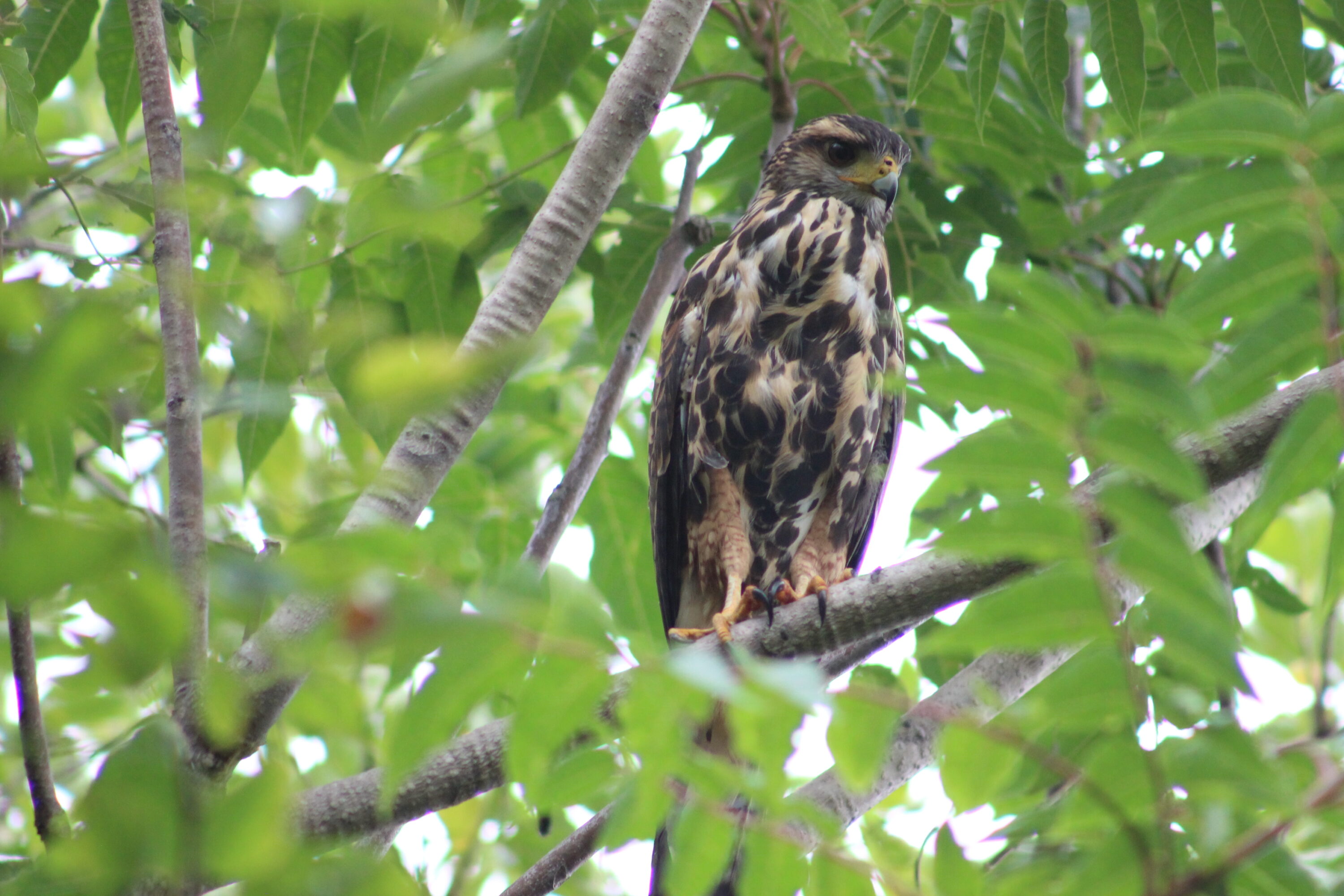
Young Harris’s Hawks Gripped Pine Cones Like Prey
Two young Harris’s hawks in Argentina pulled pine cones from trees and gripped and tore at them with…
Read story →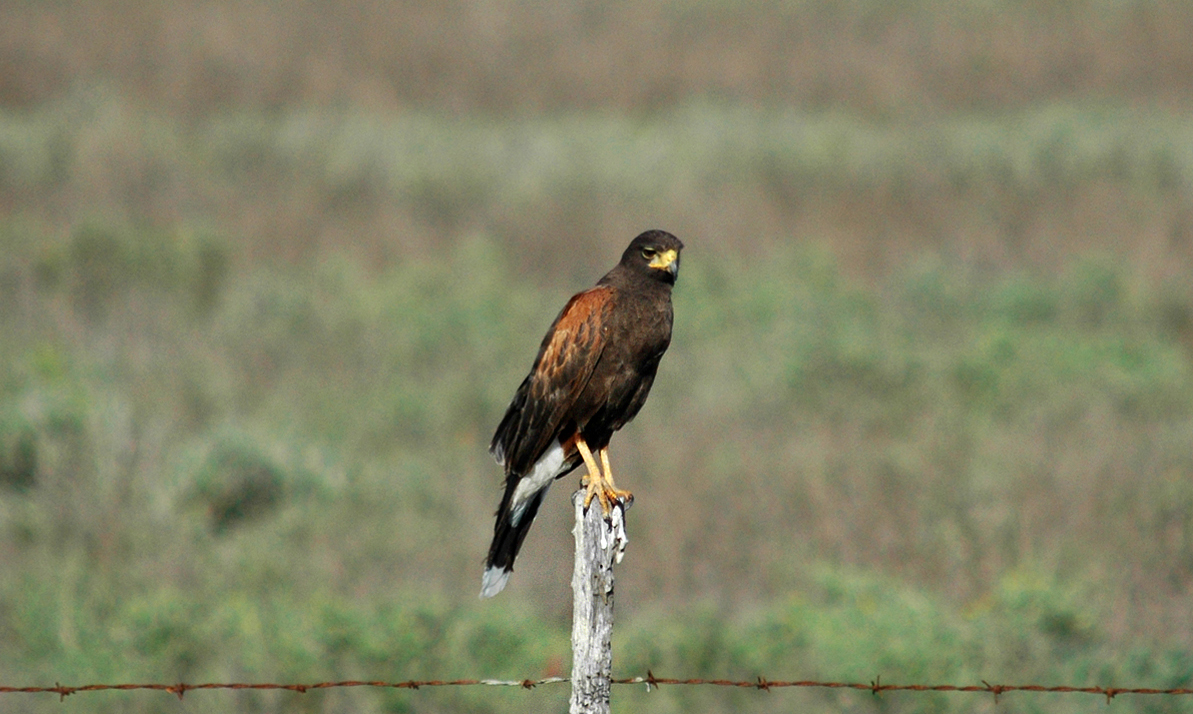
Preliminary Evidence Shows Harris’s Hawks Can Prey on Invasive Red-bellied Squirrels in Buenos Aires
Pellets, prey remains and direct observations in Buenos Aires provided preliminary evidence that Harris’s hawks can capture and…
Read story →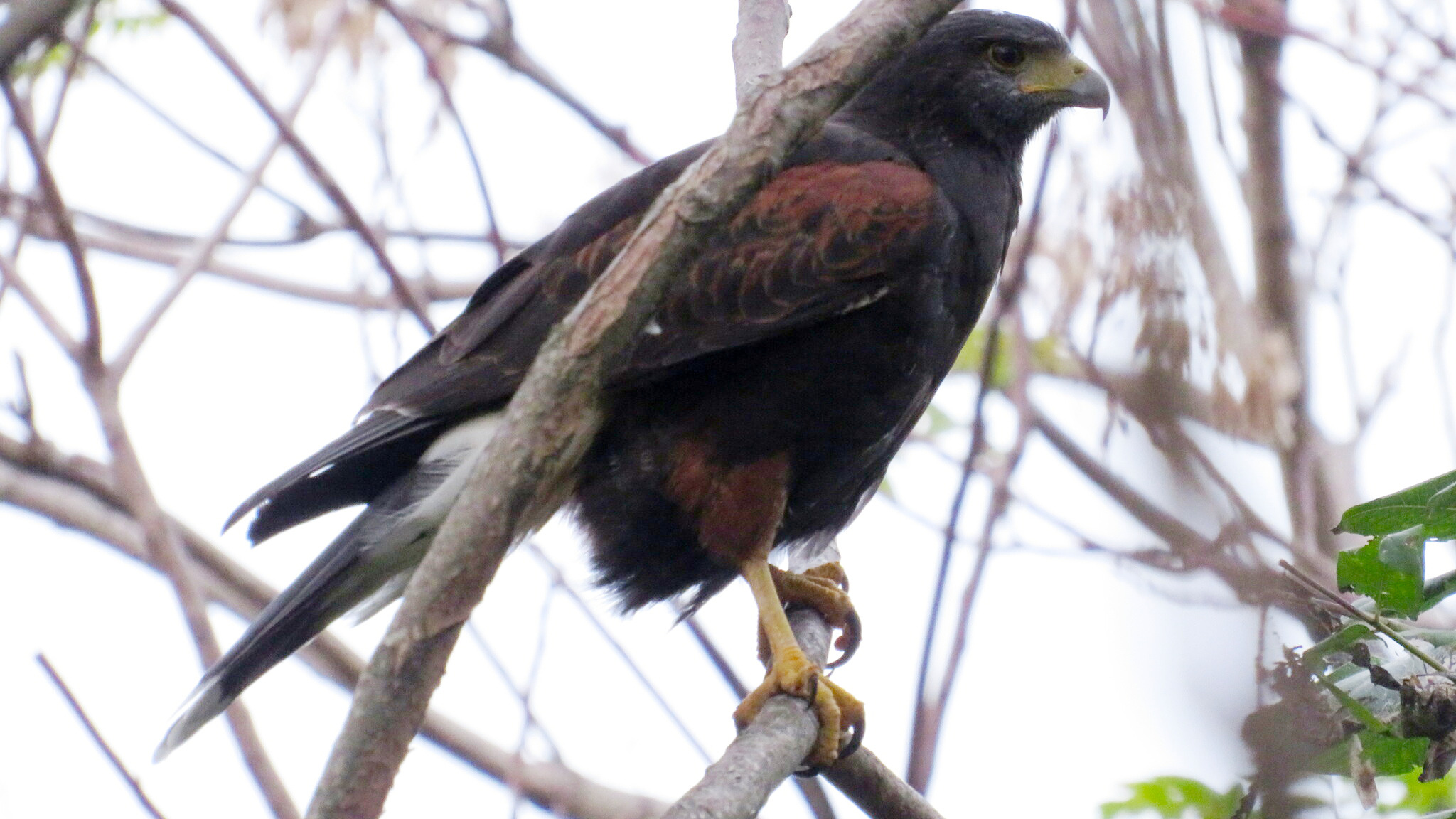
South American Harris's Hawk Form Reached Definitive Adult Plumage After Four Annual Molts
A 2026 study of 139 photographed individuals of the South American Harris's hawk form identified five age classes,…
Read story →SPECIES IN THIS STORY
Species in this story
Independent research and conservation news archive
Did you find this information useful?
Wildlife Vagabond is independently built and maintained. Voluntary support helps cover source verification, hosting and continued work on research and conservation news.
Support Wildlife VagabondThe news archive will remain freely available.