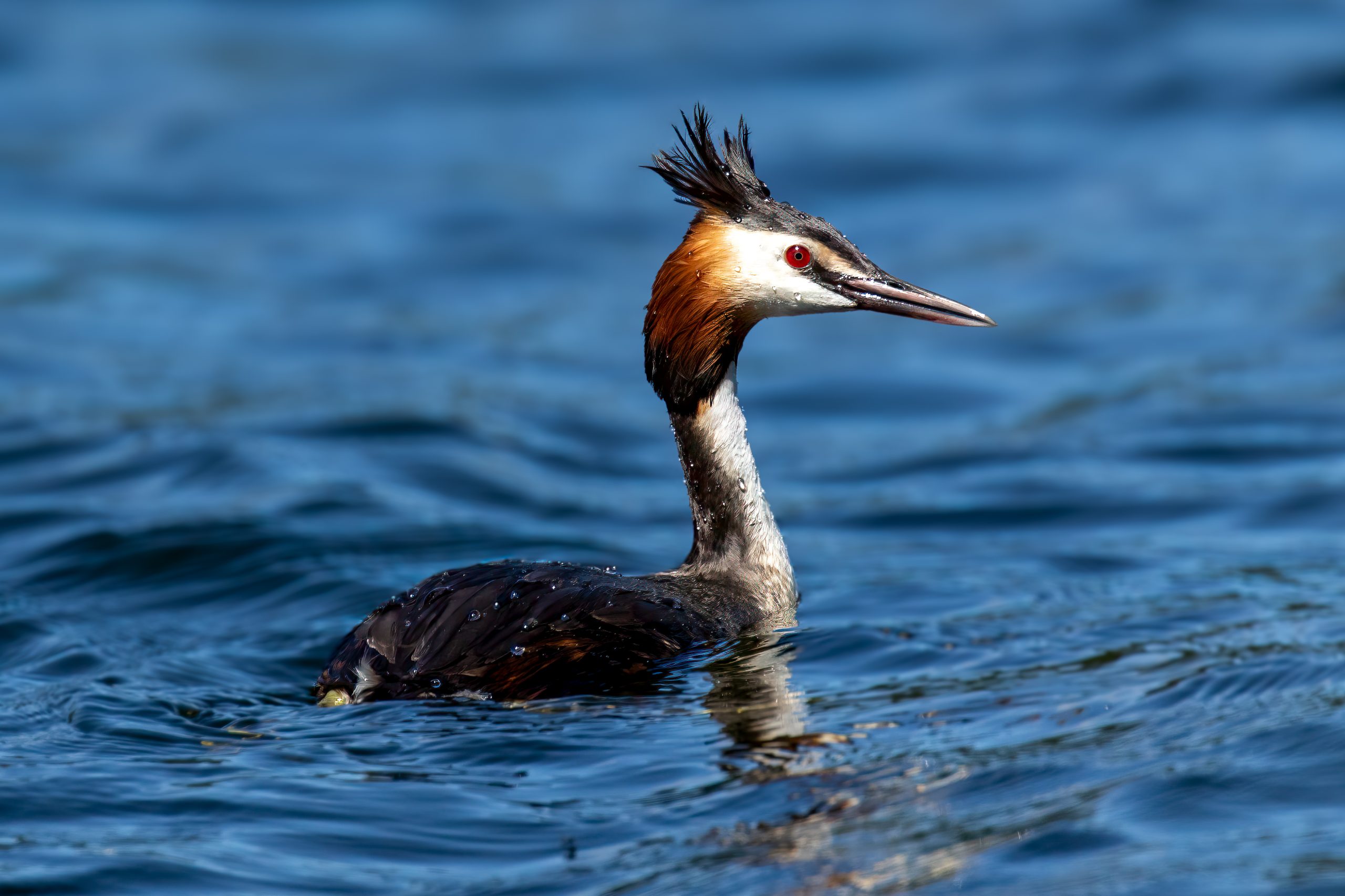
Moscow’s Great Crested Grebe Breeding Population Reached 86 Pairs in 2025
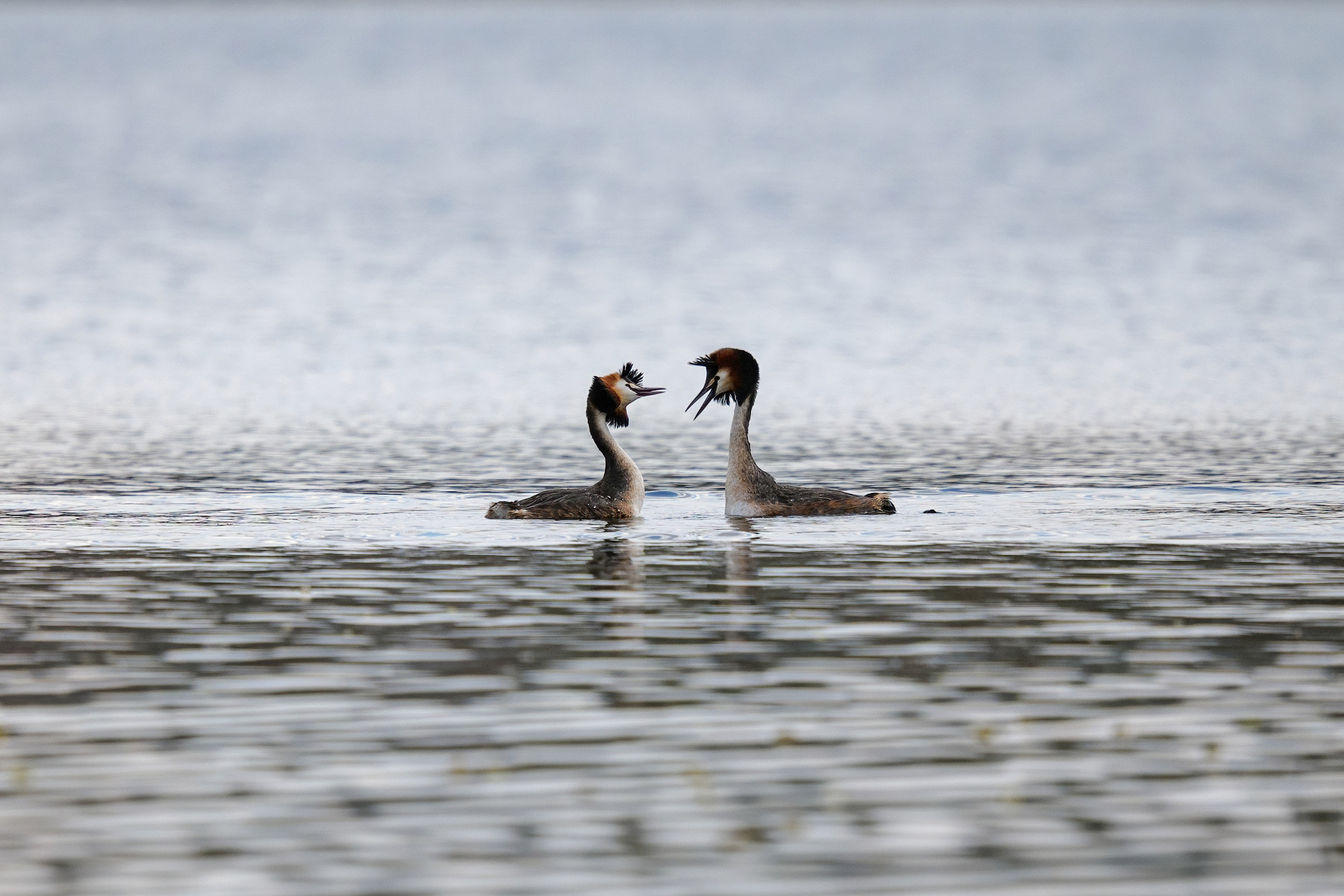
Long-term monitoring of great crested grebes (Podiceps cristatus) in Moscow found that the city’s breeding population reached 86 pairs in 2025 and was still growing. The study combines breeding monitoring conducted since 1998 with winter counts dating back to 1985 and covers 150 ponds and 23 rivers across Moscow.
Great crested grebes began nesting in Moscow in the late 1990s. The long-term series still showed a clear upward trend through 2025, so the breeding population was continuing to expand.
Winter numbers tracked the previous breeding population
Years with more breeding great crested grebes were followed by winters with more grebes in Moscow. The long time series therefore links the growth of the city’s breeding and wintering populations.
The author found no evidence that crowding was limiting the population as a whole. Brood size nevertheless declined as the number of breeding females increased, a pattern also known from other waterfowl, particularly mallards. The smaller broods therefore did not amount to evidence that crowding was holding back the population overall.
Spring weather did not provide a simple explanation for the population increase. Brood numbers were not clearly related to the duration of frost or to spring temperatures. When temperatures rose above 0°C earlier, females waited longer before starting to lay eggs, but this did not lead to more nesting birds.
The early association with Black-headed Gull colonies weakened
The spatial pattern of nesting also changed during the establishment of the urban population. Until 2004, breeding great crested grebes were strongly associated with colonies of black-headed gulls (Chroicocephalus ridibundus). The author reports that this relationship has since weakened.
The paper places Moscow’s colonisation in a broader historical context. The establishment of the city population followed twentieth-century growth and range expansion of great crested grebes in Europe, while Moscow also developed a network of artificial water bodies and specially protected natural areas that created additional urban wetland habitat.
Several traits pointed to stronger adaptation to city life
The author describes several signs that the Moscow population has become increasingly adapted to city conditions: shorter escape distances from people, neophilia — a greater readiness to investigate novel things — nesting on open water and the use of artificial substrates for nests. The author treats these traits as signs of ongoing synurbisation, the adaptation of wild animals to urban environments, rather than as results from a separate behavioural experiment.
The study therefore documents more than a single 2025 count. Its long time series describes the formation of a breeding population since the late 1990s, a parallel wintering population and a gradual weakening of the early association with black-headed gull colonies as the species became more established in the city. The clearest population result is that the breeding population had reached 86 pairs by 2025 and was still growing.
Population & status
Related news
African Buffalo Herds Concentrated in Wetlands and Forest During Gambella's Dry Season
A two-year study in Ethiopia's Gambella National Park found similar but uncertain buffalo abundance estimates in 2022 and…
Read story →
Therthangal Spoonbill Colony Returned to 12 Active Nests After Complete Breeding Failure
Six breeding seasons at Therthangal Bird Sanctuary in Tamil Nadu ranged from 12 active Eurasian Spoonbill nests in…
Read story →
Cattle Egret Reporting Rate Rose From 0.38 to 0.60 in Southern African Atlas Data
A systematic review of 173 studies found generally stable or increasing cattle egret populations in the better-studied parts…
Read story →SPECIES IN THIS STORY