
Ospreys Produced Far Fewer Young in Saltier Parts of Chesapeake Bay
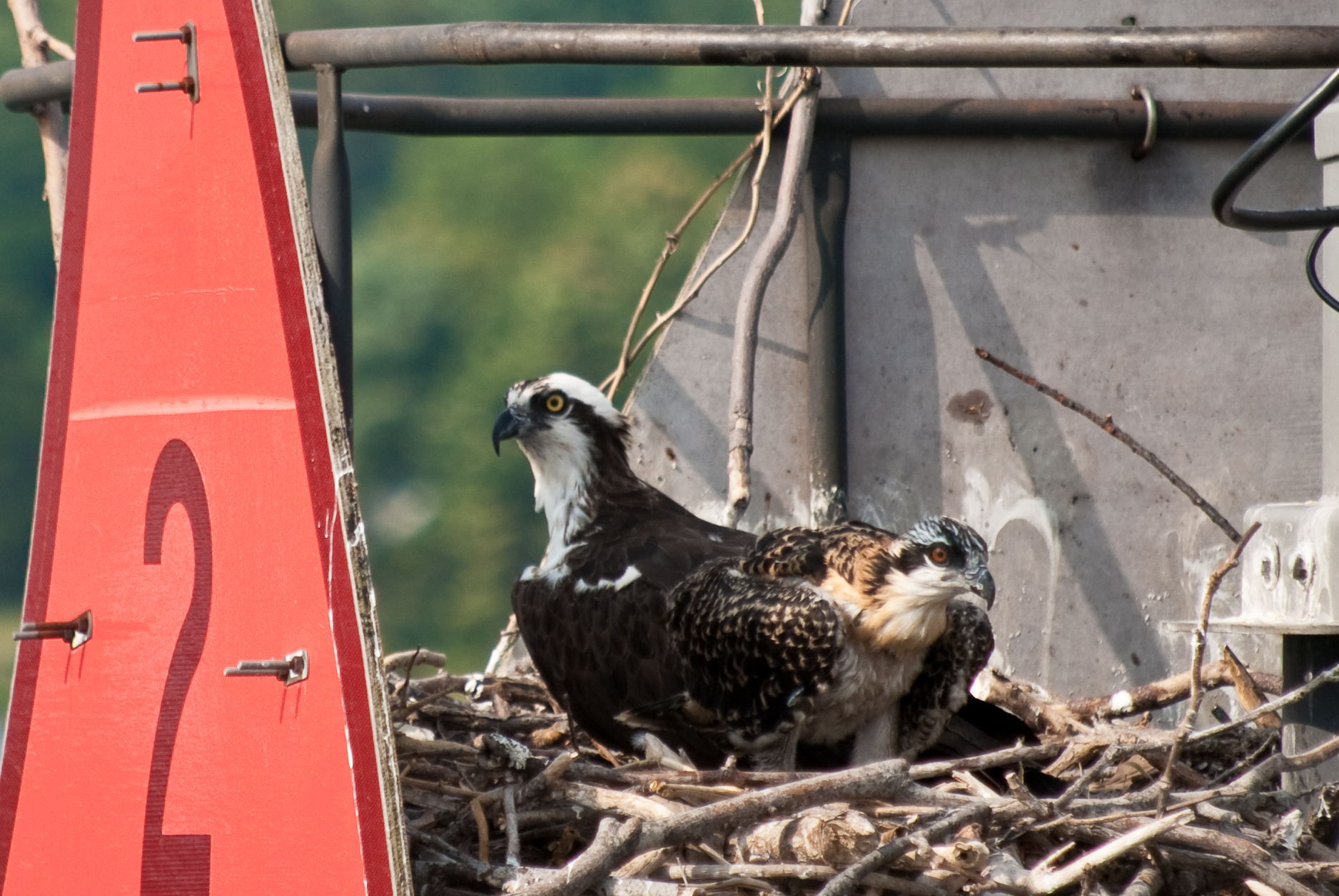
Ospreys (Pandion haliaetus) breeding in saltier parts of Chesapeake Bay produced far fewer young than pairs at two low-salinity reference areas in 2024. The study, published 8 June 2026, monitored 571 occupied territories: 487 pairs across ten areas averaging more than 10 parts per thousand salinity and 84 pairs at two areas below 5 parts per thousand. Each focal nest was checked at least four times through the breeding season, with adults, eggs and young recorded to follow breeding attempts towards fledging. Reproductive rate — the number of young fledged per occupied pair — averaged 0.51 in the high-salinity areas and 1.36 at the low-salinity sites.
The largest gap developed after hatching
About 66.9% of pairs in the high-salinity areas produced no young, compared with 34.5% in the fresher areas. A total of 27.1% of high-salinity pairs were not documented laying eggs, versus 3.6% at low salinity. Eggs of known outcome hatched at broadly similar rates in the two groups, but the pattern diverged sharply after hatching: roughly 45–47% of young survived to near fledging at high salinity, compared with 84% at low salinity. High-salinity pairs also lost about 1.1 young on average after hatching, compared with 0.3 at the low-salinity sites. The large reproductive gap therefore accumulated mainly through failure to begin breeding and loss of young rather than through poorer hatching alone.
No high-salinity area reached the population-maintenance level
None of the ten high-salinity study areas reached 1.15 fledged young per pair, a previously estimated level needed for young production to roughly offset mortality and maintain the Chesapeake population over time. Persistently producing fewer young than this means an area functions as a demographic sink unless birds are supplied by immigration. Only two of the ten high-salinity areas reached a lower published threshold of 0.8, while both low-salinity sites exceeded both thresholds. At four high-salinity areas with historical data, reproductive rate fell from 1.57 young per pair in 1985–1988 to 0.46 in 2024, while the proportion of hatched young lost before fledging rose from 13.2% to 50.1%.
Salinity also marks different fish communities
The authors interpret the combination of fewer breeding attempts, smaller clutches, brood reduction and chick losses as evidence of food stress. Salinity is not proposed as a direct physiological cause in the ospreys; it separates parts of the bay with different prey communities. Breeding ospreys in high-salinity waters rely particularly heavily on Atlantic menhaden (Brevoortia tyrannus), an energy-rich schooling fish in the herring family, whereas birds in fresher reaches depend more on fish such as catfish and gizzard shad. The authors identify reduced menhaden availability as the leading explanation, drawing on earlier Chesapeake Bay studies that documented declining menhaden deliveries to nests and improved osprey reproduction when nests were experimentally supplied with the fish.
The 2024 survey did not directly measure adult menhaden abundance, however, and the authors note that there is no fisheries-independent monitoring of adult menhaden inside Chesapeake Bay. The effect of commercial harvest on local availability therefore remains disputed, and other ecological factors may also affect the fish. The study’s direct finding is that osprey reproductive performance was substantially lower across the high-salinity main stem of the bay than at the two low-salinity reference areas.
Reproduction & development
Related news
VKM: Exporting Up to 26 Osprey Young to Ireland Would Not Harm Conservation Status in Norway
VKM concluded that exporting up to 26 wild young ospreys from two Norwegian donor areas to Ireland would…
Read story →
24 Osprey Chicks Fledged From 12 Rutland Nests
Rutland Osprey Project reported 24 chicks fledged from 12 nests in 2026. The season produced 14 chicks assessed…
Read story →
Ospreys Raised Three Chicks in Switzerland’s First Breeding in 112 Years
A male released by the Swiss reintroduction project and an unringed female of unknown origin raised three chicks…
Read story →SPECIES IN THIS STORY
Species in this story
Independent research and conservation news archive
Did you find this information useful?
Wildlife Vagabond is independently built and maintained. Voluntary support helps cover source verification, hosting and continued work on research and conservation news.
Support Wildlife VagabondThe news archive will remain freely available.