
Rusty-spotted Cat Documented Using a Tree Cavity as a Daytime Den in Odisha
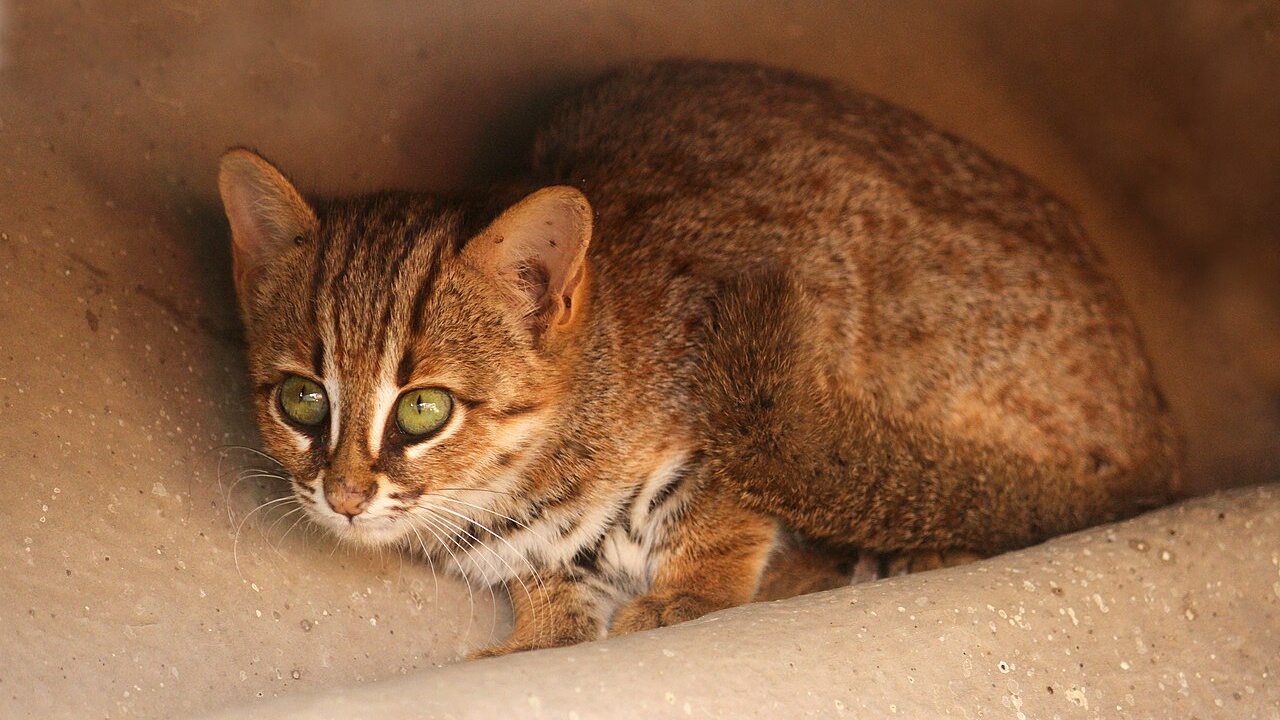
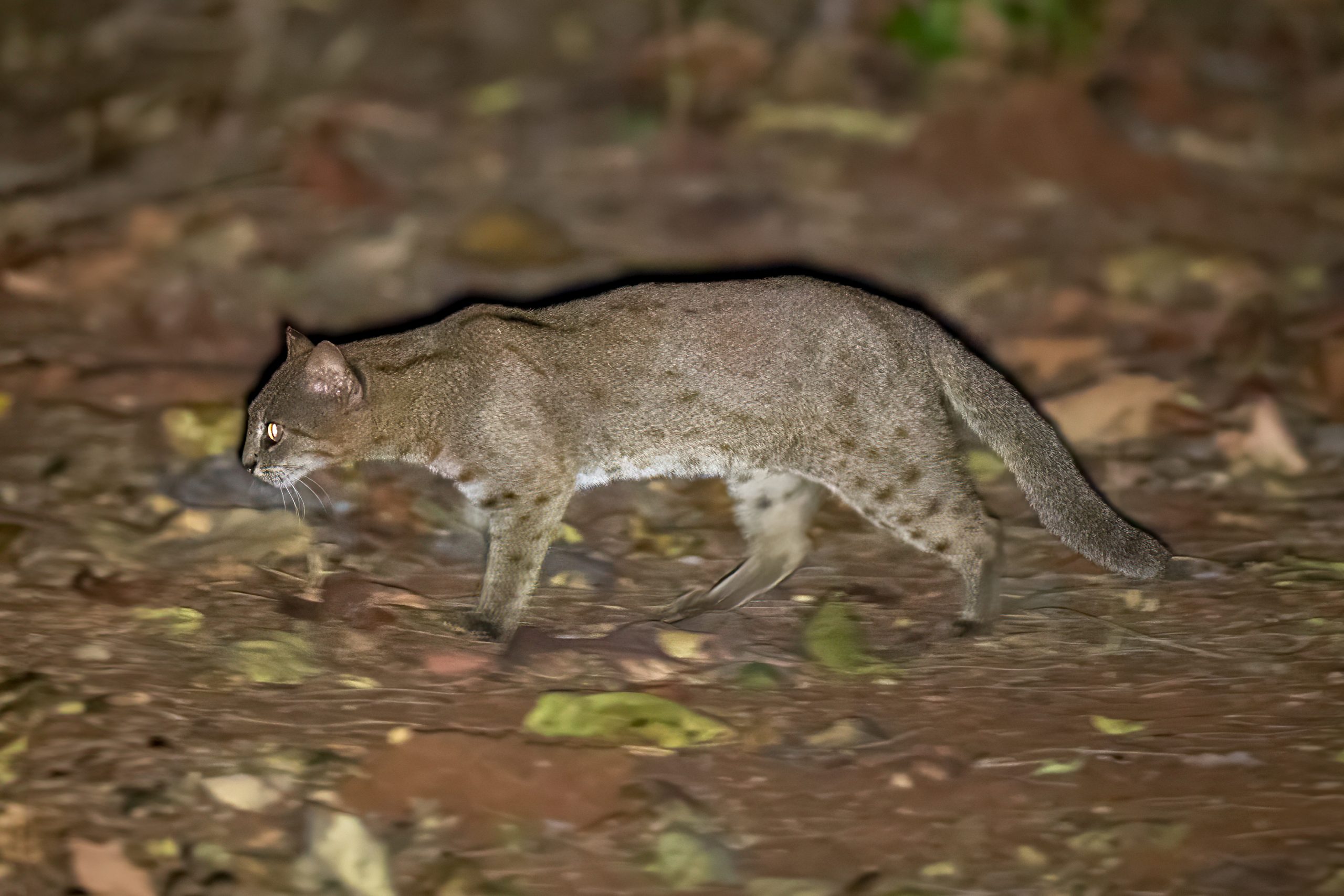
A 2026 field note from Keonjhar Wildlife Division in Odisha documents a rusty-spotted cat (Prionailurus rubiginosus) using a natural tree cavity as a daytime den. The authors report that tree-cavity use by the species had not previously been documented from India.
The adult cat was found on 26 February 2025 while researchers were inspecting tree cavities during a survey of forest microhabitats. It was sleeping inside a hollow in an unhealthy Syzygium nervosum tree, with its head lowered between its forelegs.
The host tree was 24.8 m tall and had a girth of 106 cm at breast height. The cavity began 157 cm above ground and had formed naturally as the core of the main stem decayed. Its entrance measured 28 × 17 cm, with a vertical depth of 60 cm and a horizontal depth of 36 cm. The cavity faced northeast, and its floor was 18 cm wide.
A previous review had listed 517 vertebrate species using tree cavities in India but did not include the rusty-spotted cat because no such use had been documented. The authors therefore add the species to the known cavity-user list and highlight large old, dying and hollow trees as habitat structures that can provide shelter for cavity-using wildlife.
Ecology
Related news
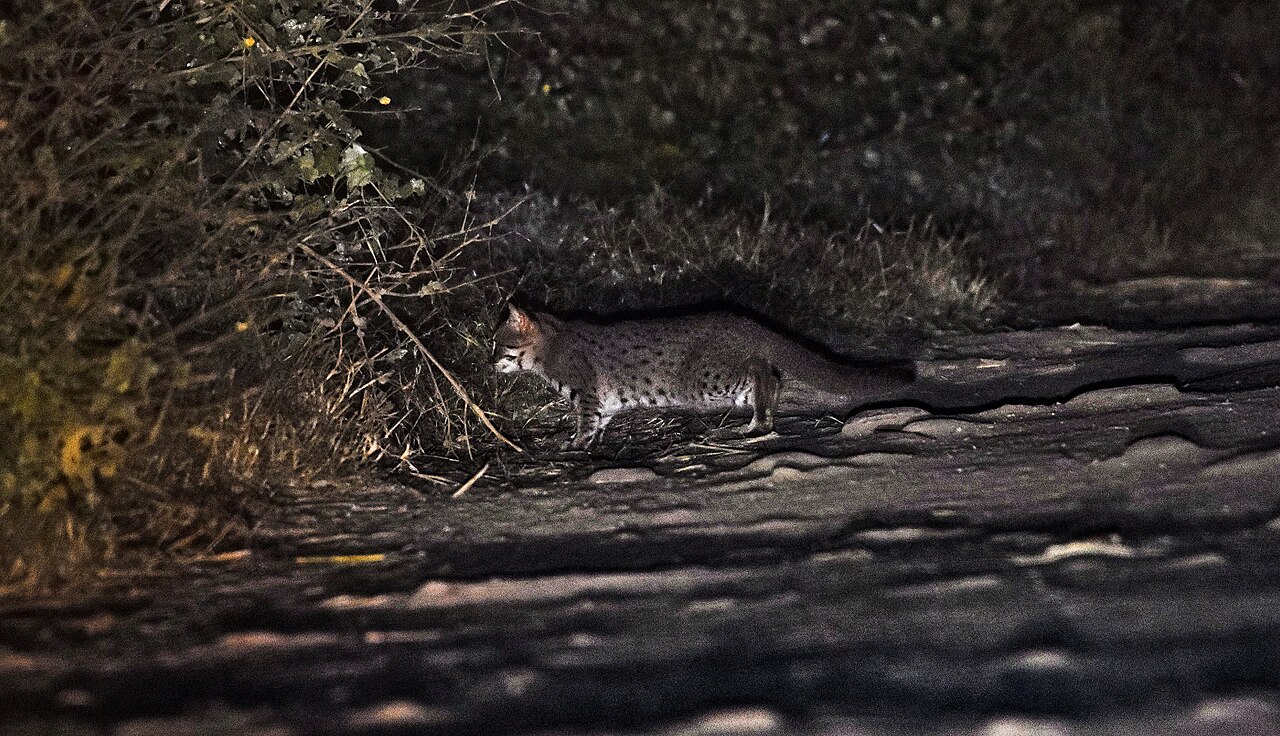
Daily Detection Probability for Rusty-spotted Cats Was Just 1.5% at Wasgamuwa
At 120 camera-trap sites in and around Wasgamuwa National Park, the model estimated a daily rusty-spotted-cat detection probability…
Read story →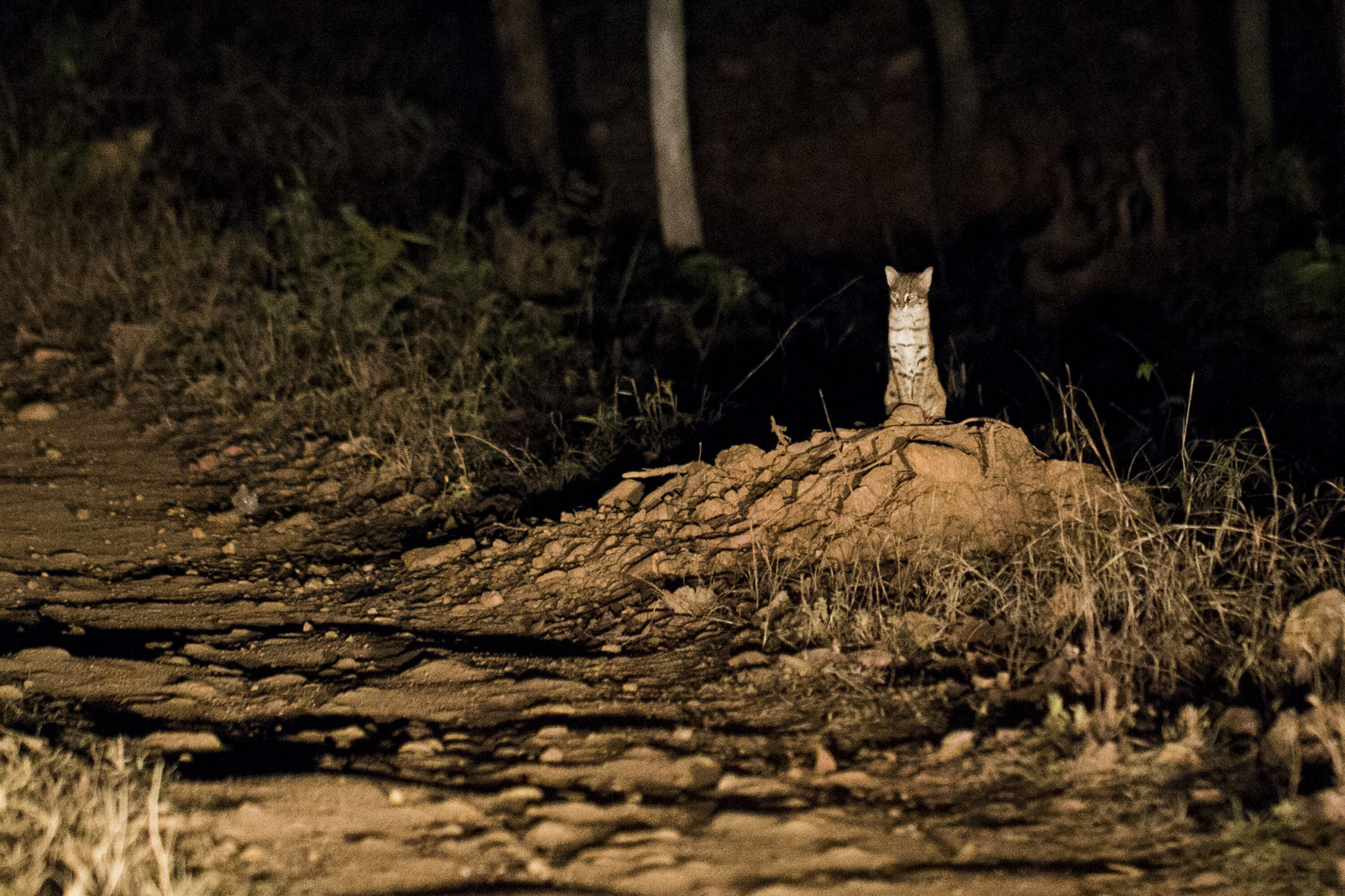
Two Suspected Roadkill Rusty-spotted Cats Provided the First Records From National Chambal Sanctuary
Two rusty-spotted cats found dead along the same road in Etawah in 2025 became the first documented records…
Read story →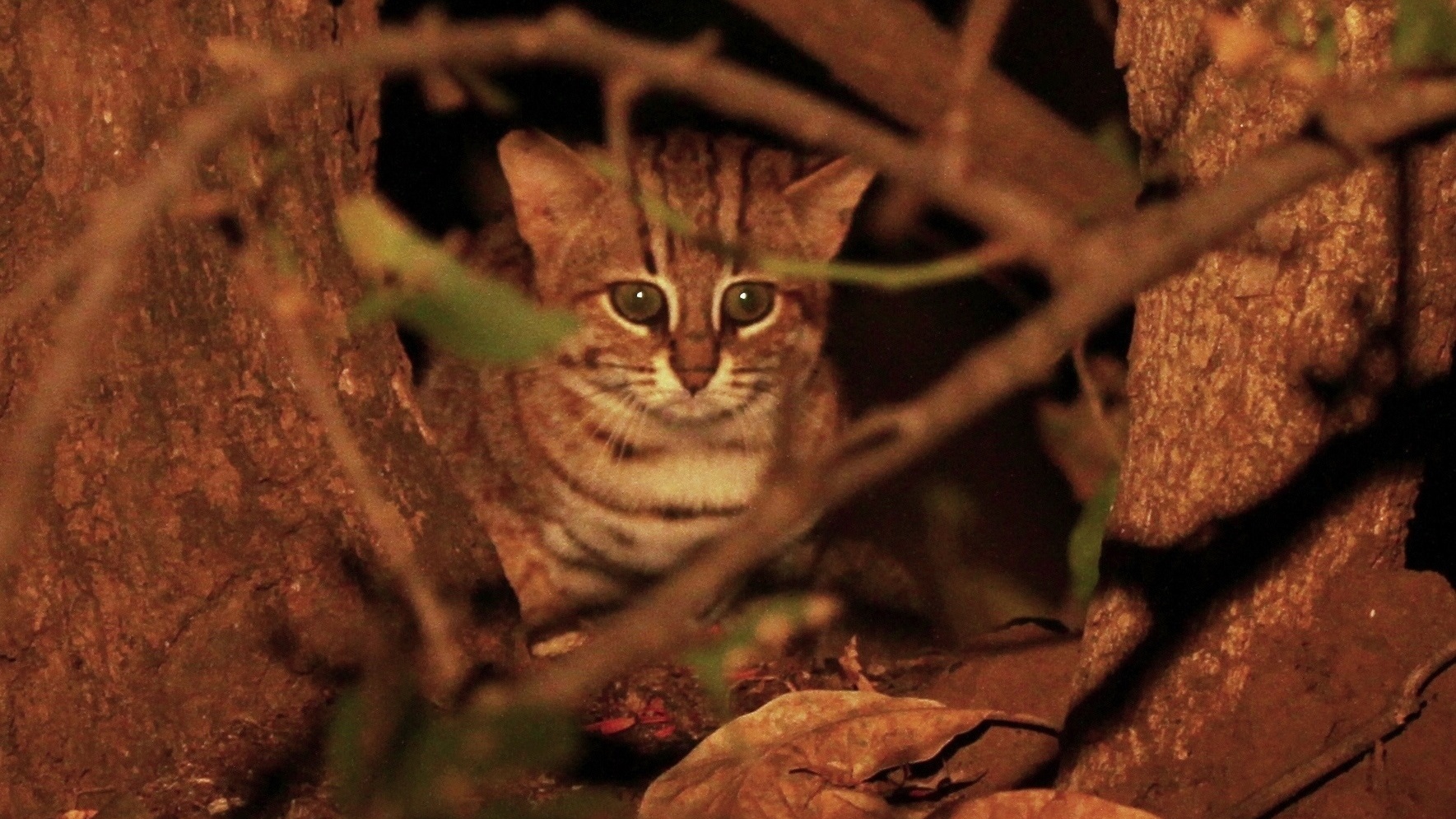
Rusty-spotted Cat With Kitten Confirmed Breeding in Delhi NCR
An adult rusty-spotted cat photographed with a kitten in Faridabad in July 2025 provided the first photographic evidence…
Read story →SPECIES IN THIS STORY
Species in this story
Independent research and conservation news archive
Did you find this information useful?
Wildlife Vagabond is independently built and maintained. Voluntary support helps cover source verification, hosting and continued work on research and conservation news.
Support Wildlife VagabondThe news archive will remain freely available.