
Modelled Rose-ringed Parakeet Abundance in Surveyed Thessaloniki Grids Rose by 64%
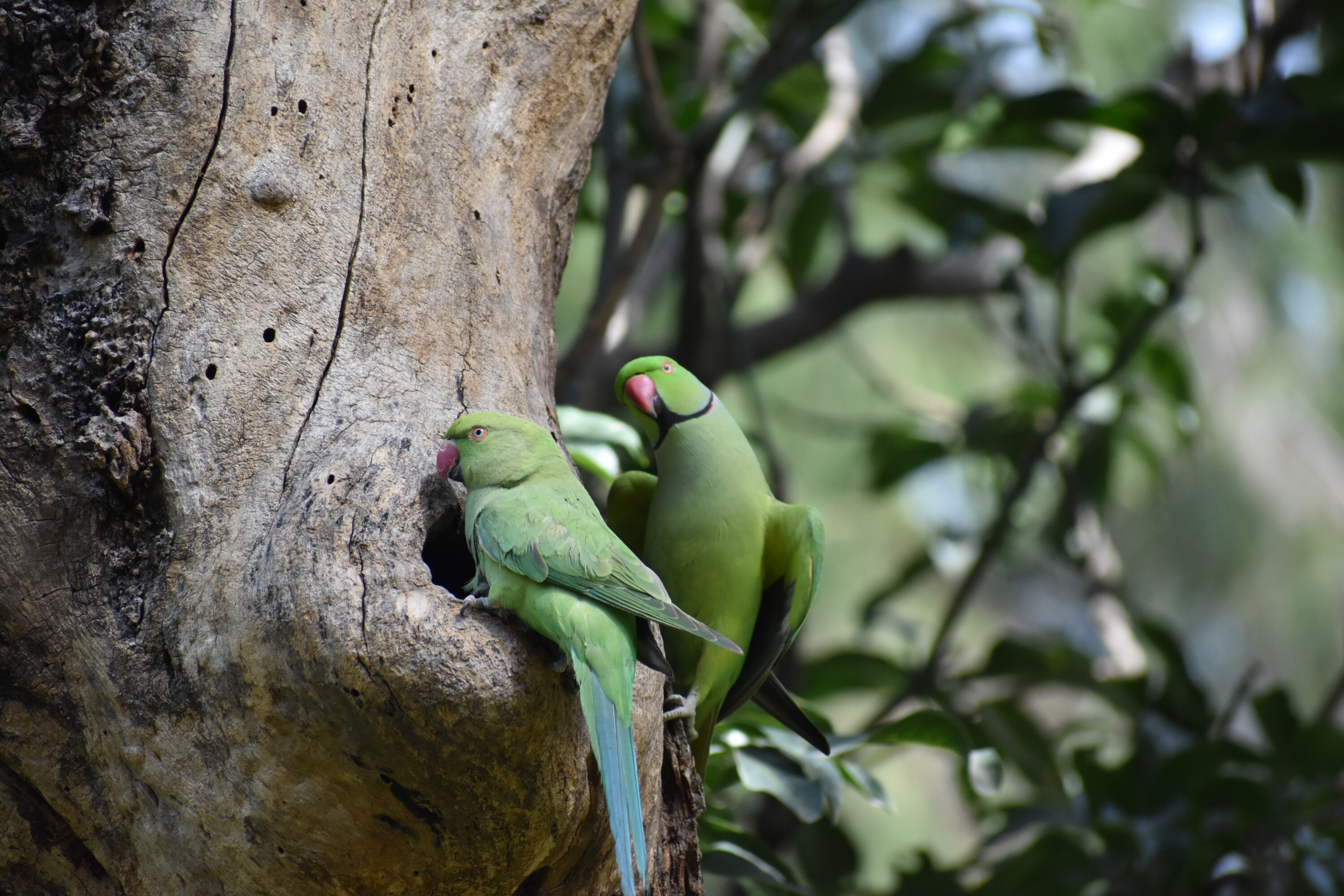
A two-year study of introduced rose-ringed parakeets (Psittacula krameri) in Thessaloniki, Greece, found strong short-term growth and spatial expansion within the surveyed part of the city. Repeated counts across 99 one-square-kilometre grids produced a modelled abundance of 183 birds in 2024 and 304 in 2025, an estimated increase of about 64%.
Each grid was surveyed twice during the breeding period in May of each year. Repeated visits allowed the researchers to account for birds that were present but not detected, rather than treating every non-detection as a true absence.
The species occupied more of the surveyed city
The proportion of grids with at least one recorded parakeet increased from 34.3% in 2024 to 45.5% in 2025. Every grid occupied in 2024 remained occupied in 2025, while parakeets also appeared in additional grids during the second survey year.
Both presence and abundance were positively associated with dense urban fabric and urban green space. Rose-ringed parakeets were therefore more likely to occur, and were generally more numerous, where heavily built-up areas also contained green space.
The researchers interpret this urban pattern in light of conditions that may favour the species. Cities are generally warmer than surrounding rural areas, while parks, street trees and gardens can provide food throughout the year. Mature trees and other cavities may also supply nesting and roosting sites. These factors were not tested as separate causal mechanisms in the study, but are discussed as plausible explanations for why the parakeets were concentrated in this combination of dense development and green space.
The 304 birds are a model estimate for the surveyed grid network
The estimate of 304 birds does not represent a complete census of every rose-ringed parakeet in the wider Thessaloniki region. It applies to the 99 surveyed grids, and the authors note that additional birds and colonies may occur beyond the study area.
The study therefore documents a strong short-term increase across two consecutive breeding periods, not a long-term population trajectory. It also did not directly measure ecological effects on native species. The authors call for continued monitoring and targeted research on ecological impacts as the introduced population expands.
Population & status
Related news
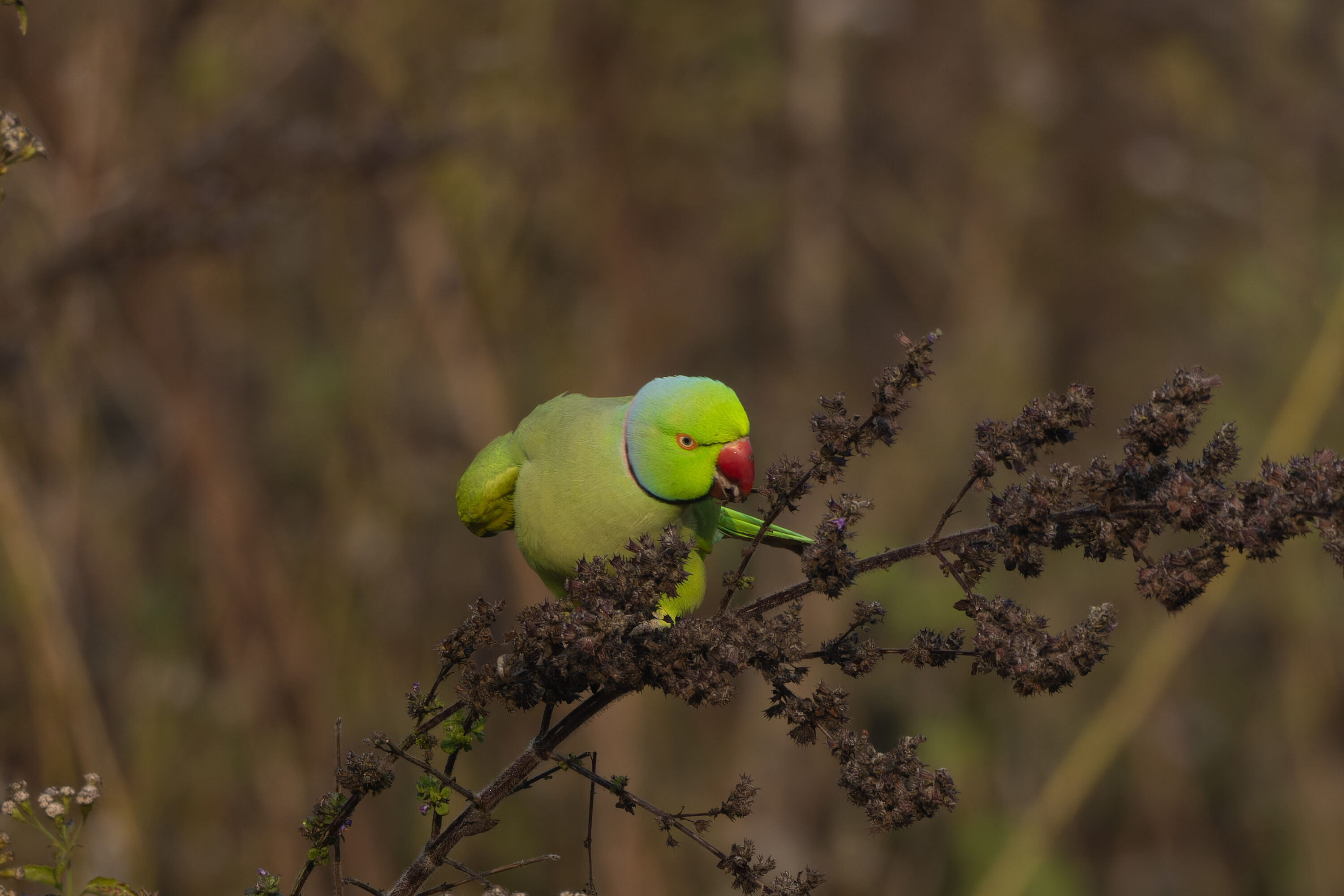
Rose-ringed Parakeet Index Showed Clear Increases on Both Time Scales in India
The 2025 State of India’s Birds update estimated a +60.6% long-term trend and a +2.3% current annual trend…
Read story →
Birds and Indian Palm Squirrels Shared Seed-Dispersal Roles on a Lucknow Campus
A 2026 campus study in Lucknow recorded complementary seed-dispersal roles among birds and Indian palm squirrels, with squirrels…
Read story →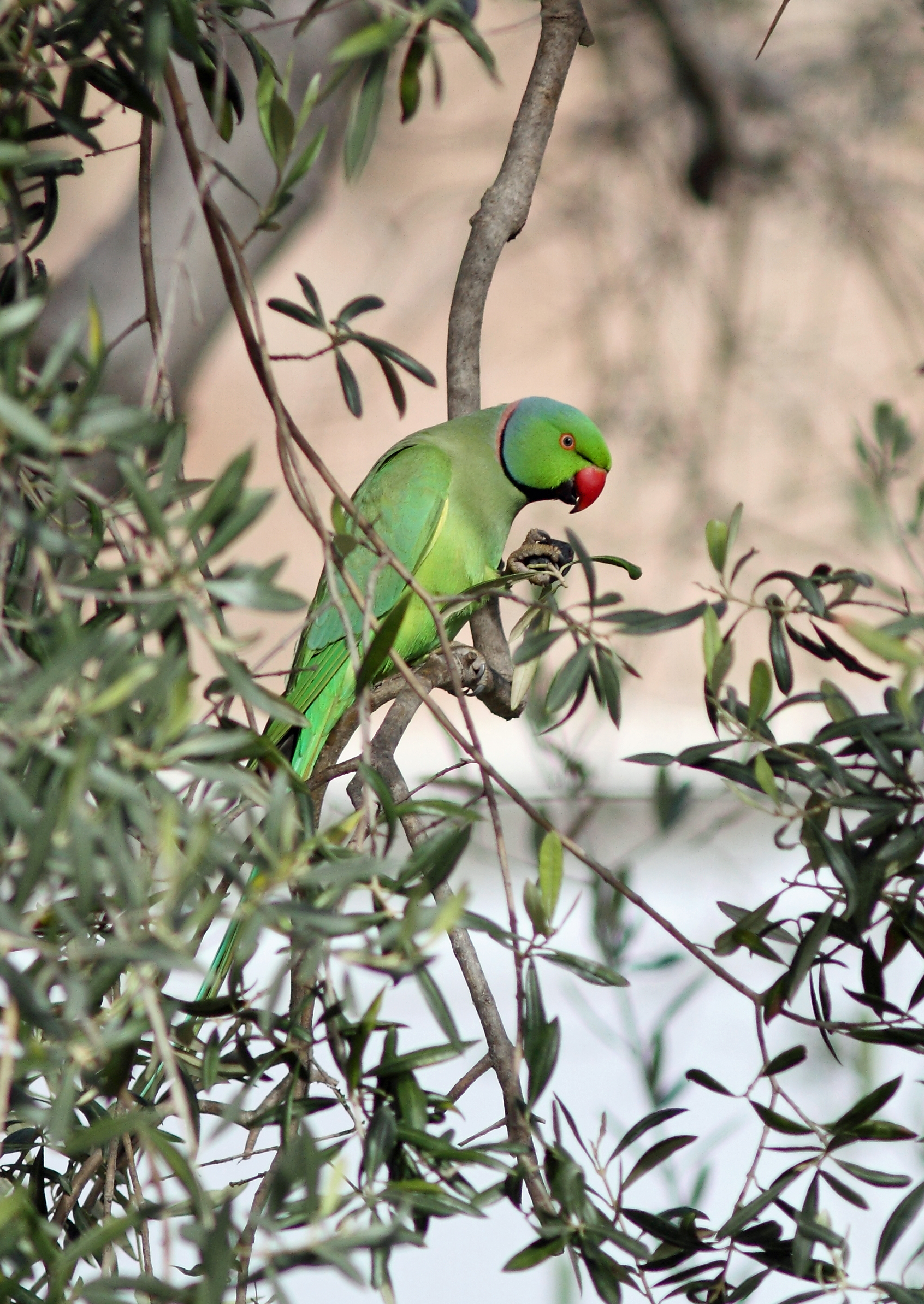
Rose-ringed and Monk Parakeets Filled Ecological Roles Rare Among Native Birds in Italian Cities
Across 220 survey points in six Italian cities, rose-ringed and monk parakeets had combinations of ecological traits that…
Read story →SPECIES IN THIS STORY
Species in this story
Independent research and conservation news archive
Did you find this information useful?
Wildlife Vagabond is independently built and maintained. Voluntary support helps cover source verification, hosting and continued work on research and conservation news.
Support Wildlife VagabondThe news archive will remain freely available.