
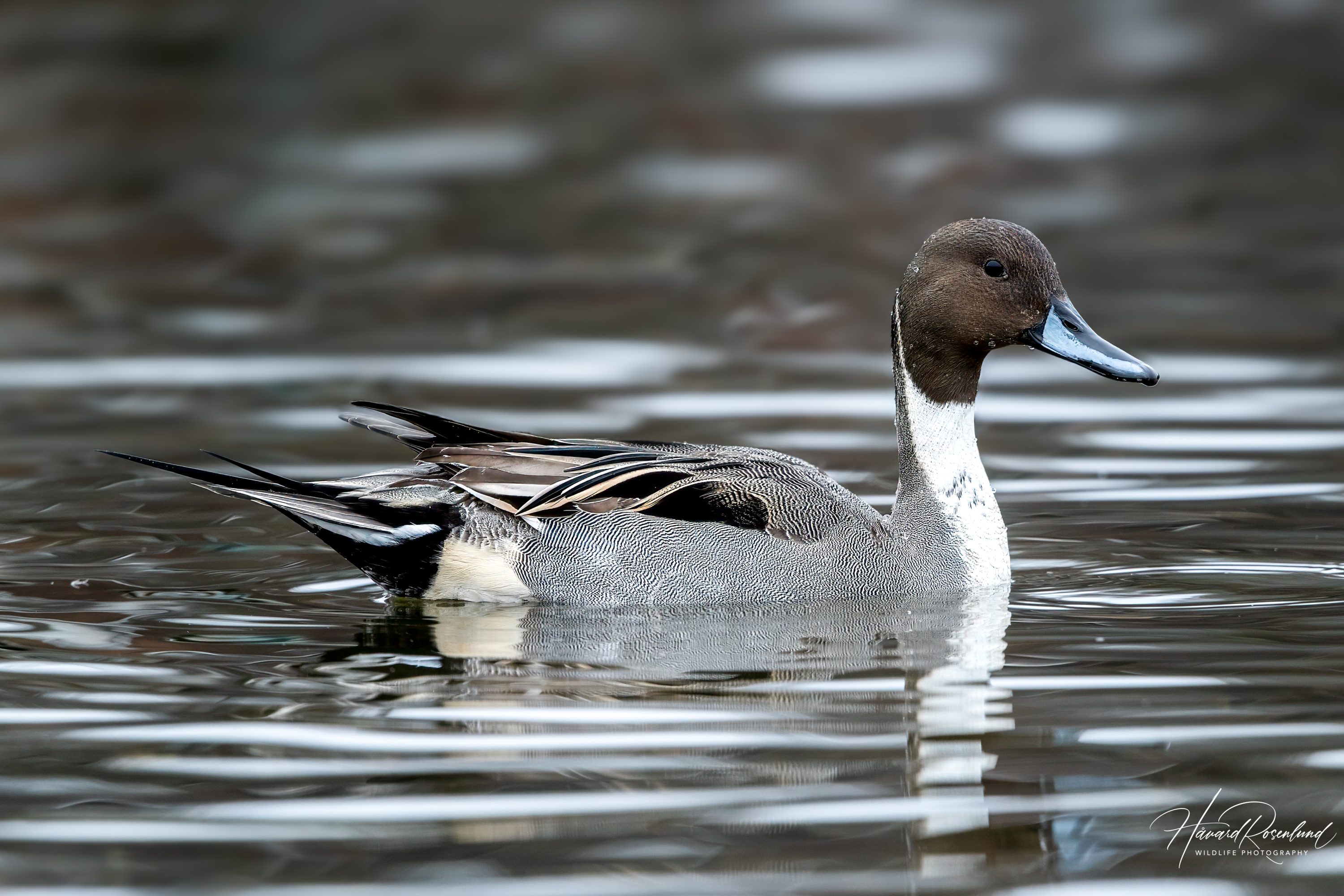
Northern Pintail
Anas acuta
At a glance
Habitat
- Open shallow wetlands, wet grassland, tundra pools, flooded meadows, estuaries and coastal lagoons
Diet
- Seeds and other plant material in autumn and winter; more aquatic invertebrates in spring and summer
Activity
- Active by day and night; much migration occurs after dark
Size
- Length: 51–76 cm; males longest because of the elongated tail Weight: about 0.5–1.45 kg
Range
- Holarctic: breeds across northern Eurasia and North America and winters much farther south across Europe, Asia, Africa and North America
Description
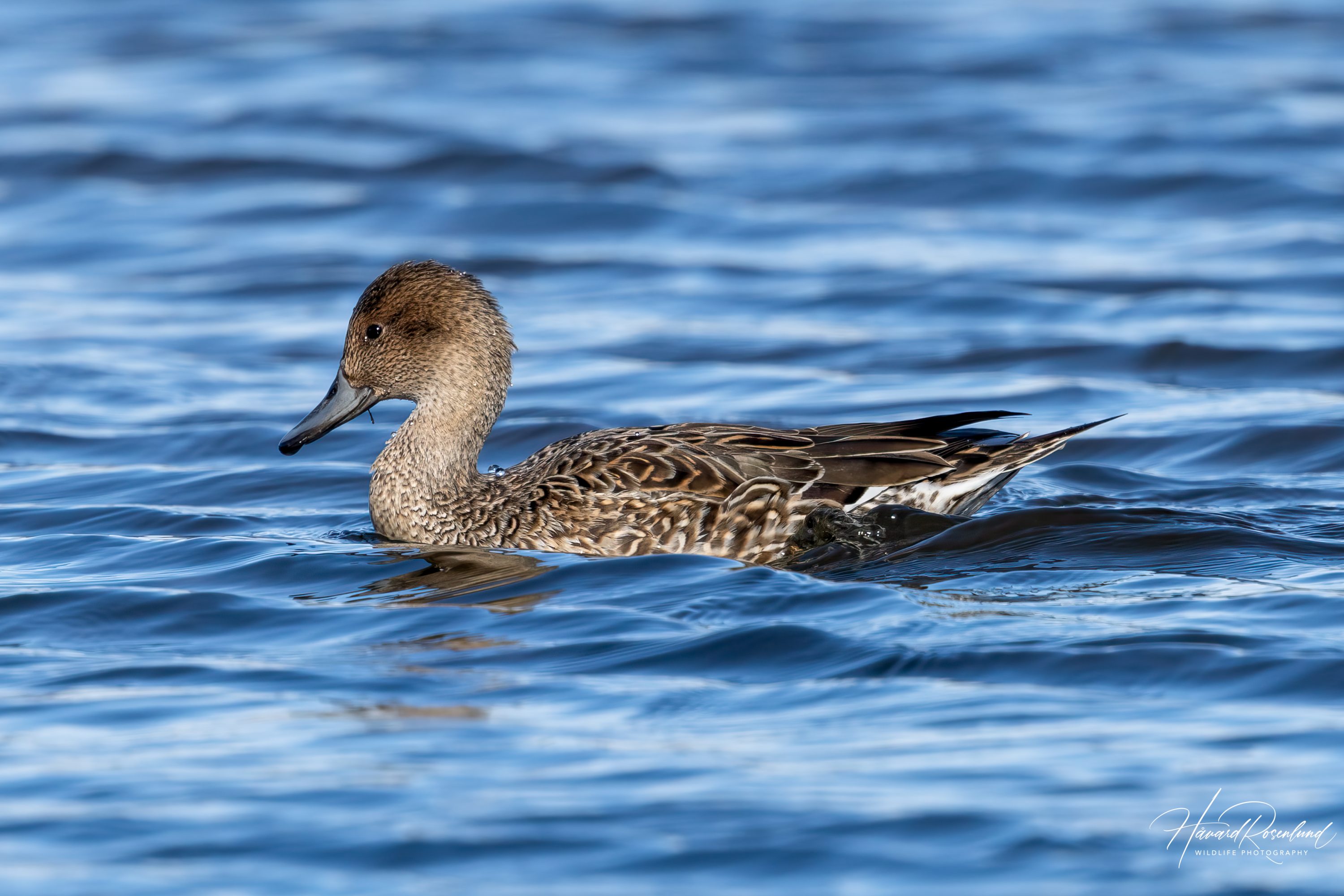
The northern pintail (Anas acuta) is an exceptionally slender dabbling duck with a long neck, narrow wings and a pointed rear profile. Adults range roughly from 51 to 76 cm and about 0.5–1.45 kg, with males larger and appearing especially long because of the greatly elongated central tail feathers.
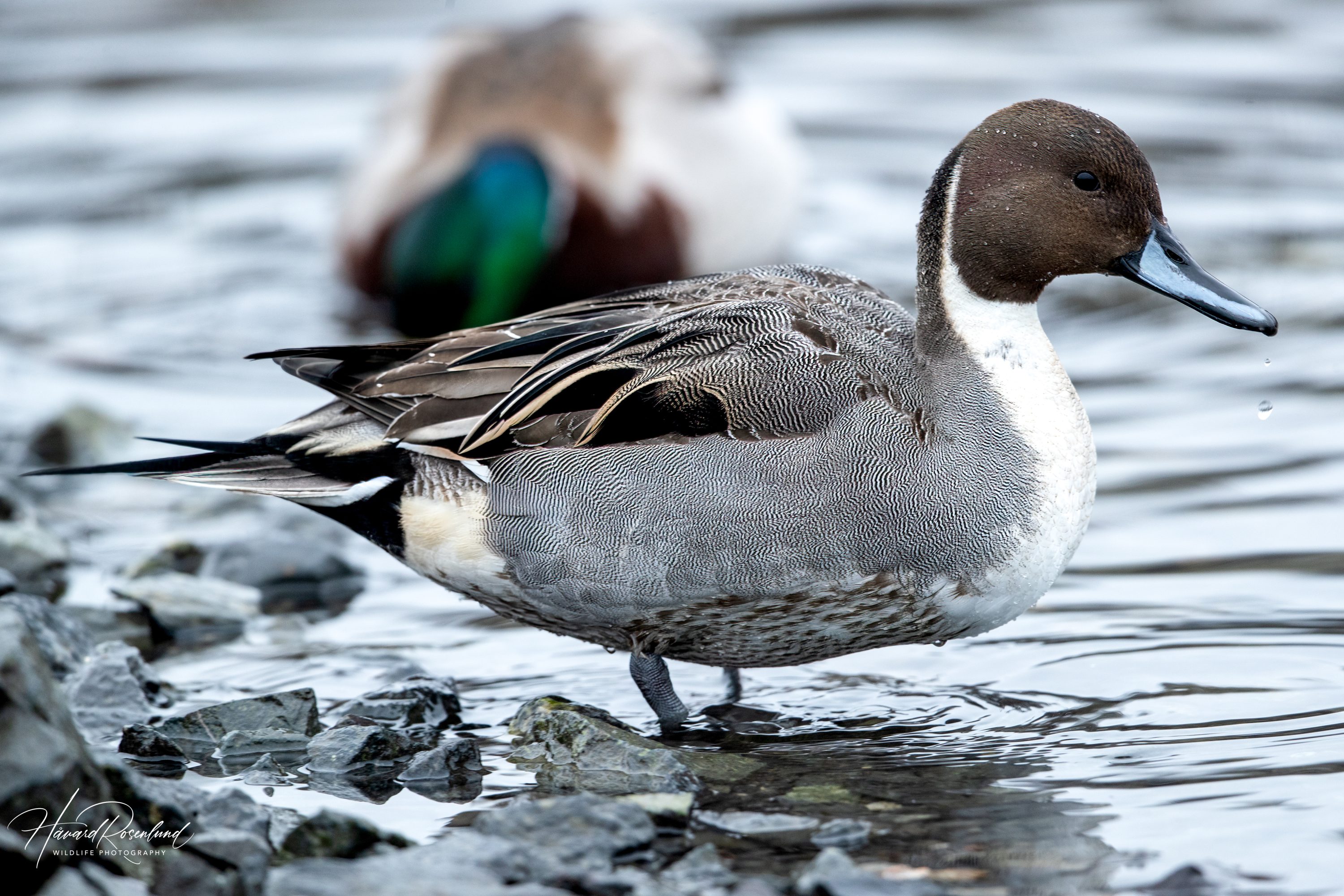
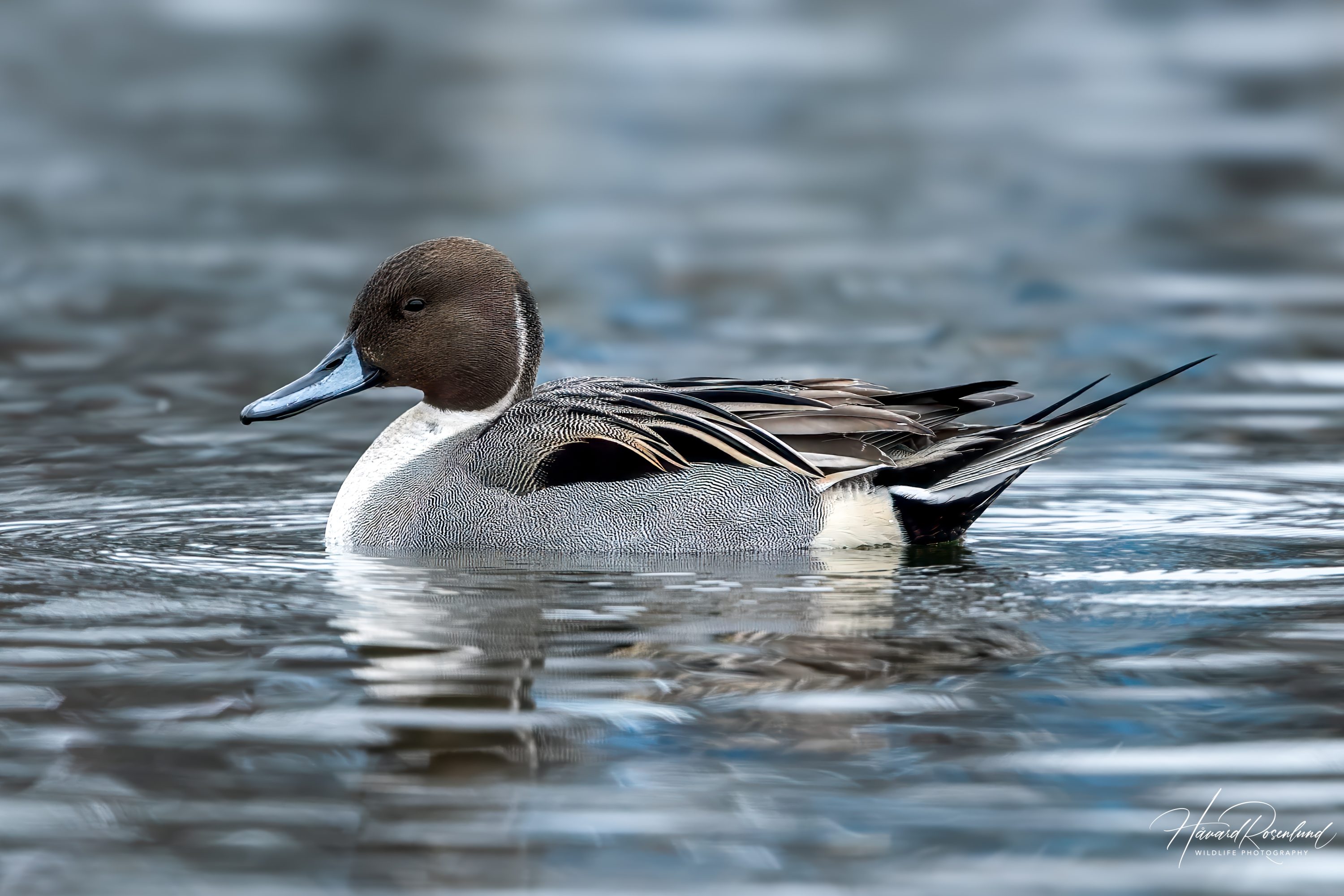
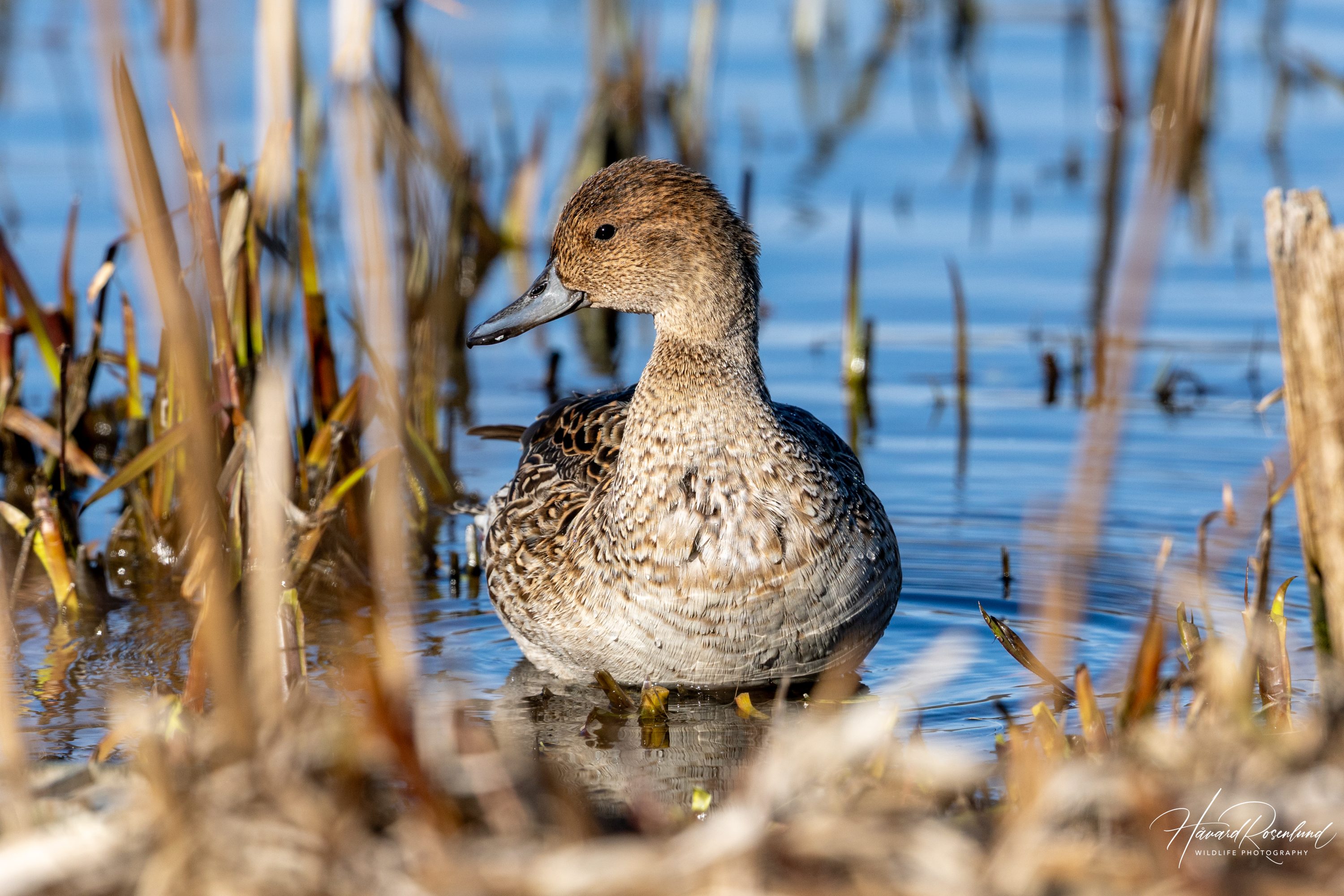
Breeding males have a chocolate-brown head, white breast and a narrow white line sweeping up each side of the neck, with a finely patterned grey body and long black central tail. Females are mottled brown but remain noticeably slim and long-necked. The combination of shape and pointed tail often identifies the species even before plumage details can be seen.
Habitat
Northern pintails favour open, shallow and often seasonal wetlands. Breeding habitat includes tundra pools, prairie potholes, marshes, wet grassland and flooded meadows, frequently in landscapes where water levels change rapidly through spring and summer.
Outside breeding they broaden into shallow lakes, estuaries, coastal lagoons, salt and brackish marshes and flooded agricultural land. Because breeding distribution responds quickly to water conditions, temporary wetlands and wet grassland can become especially important in wet years.
Diet
The diet changes markedly through the annual cycle. Seeds from grasses, sedges and aquatic plants, together with waste grain and other plant material, dominate much of autumn and winter. During spring and summer the proportion of aquatic insects, crustaceans, molluscs and other invertebrates rises.
Animal food is especially important to females preparing to breed and to growing ducklings. Pintails usually feed by dabbling, grazing or tipping forward in shallow water rather than diving deeply, and they also forage extensively on wet ground and flooded fields.
Behaviour
Northern pintails are social outside breeding and commonly mix with other dabbling ducks in flocks that may become very large on wintering wetlands. They are alert, fast-flying birds and often move between safe roosting water and feeding areas at dusk, during the night or early in the morning.
Activity can therefore extend well beyond daylight, particularly where feeding opportunities or disturbance make darkness advantageous. After breeding, males commonly gather separately for the flightless wing moult, while females remain with their broods.
Migration
Most northern pintails are strong long-distance migrants. Spring movement begins early, and birds track the appearance of ice-free wetlands northward. Individuals do not follow one rigid route, and breeding destinations can shift with wetland conditions.
A satellite study published in 2005 followed adult females leaving California’s Central Valley. Between 77% and 87% first stopped in the SONEC region of southern Oregon, northeastern California and northwestern Nevada, before following different routes toward the prairie regions or Alaska. The strategies changed with cold weather and wetland abundance farther east.
A study published in 2011 marked 198 pintails on wintering areas in Japan. About 67% migrated to Kamchatka or Chukotka, while most of the remainder used other parts of the Russian Far East. Some of these breeding areas overlap with pintails arriving from North America. A 2009 study combining band recoveries and population genetics found rare movement in both directions between birds wintering in Japan and California and little genetic differentiation between them; their breeding distributions overlapped mainly around Chukotka and Kamchatka.
Breeding
Pairs form during autumn and winter, and many northern pintails reach the breeding grounds already paired. The female chooses a ground nest site in short vegetation, sometimes surprisingly far from open water, and lines the shallow scrape with plant material and down. Clutches commonly contain about seven to nine eggs.
The female incubates alone for roughly 22–24 days, and the male normally leaves after incubation begins. The ducklings hatch covered in down and leave the nest soon afterwards; they can walk, swim and feed themselves but remain under the female’s guidance and protection. Young birds generally become capable of sustained flight after about 40–55 days.
A three-year study published in 1996 followed 795 nests on Alaska’s Yukon–Kuskokwim Delta. Annual nest success ranged from about 10.7% to 43.1%, with predation and tidal flooding causing most failures. Nesting success can therefore vary greatly between years and places; in agricultural regions nests may additionally be exposed to machinery.
Banding records also show substantial longevity. The North American record is 22 years and 3 months for a wild northern pintail.
Relationship with humans
Northern pintails are important gamebirds across parts of their range, especially in North America. Beginning with the 2025–26 hunting season, an interim U.S. harvest strategy uses updated population and harvest data together with predictions of the autumn population to guide season lengths and bag limits.
Hunting can also alter daily habitat use. A study published in 2012 followed 203 radio-marked females in Suisun Marsh, California. During the hunting season, birds shifted toward permanent pools inside protected areas by day and used preferred feeding vegetation more strongly at night.
Status
The northern pintail is classified as least concern on the IUCN Red List. It remains one of the most widespread ducks in the Northern Hemisphere, although the global population trend is decreasing and regional trajectories differ substantially.
The same populations depend on chains of productive wetlands across breeding, migration and wintering areas. Loss or degradation at one stage of the annual cycle can therefore affect birds thousands of kilometres away.
Image gallery
Loading map and observations…
Have you seen this species?
Independent species archive
Did you find this species page useful?
Wildlife Vagabond is independently built and maintained. Voluntary support helps cover hosting, maps, data storage and continued improvements to the species archive.
Support Wildlife VagabondSpecies content will remain freely available.
References
Information about the species’ global distribution and status is based primarily on global Red List data. See the references below for details.
- AviList. (n.d.). v2025 – Global avian checklist. https://www.avilist.org/
- BirdLife International. (n.d.). Northern Pintail (Anas acuta) species factsheet. https://datazone.birdlife.org/species/factsheet/northern-pintail-anas-acuta
- Casazza, M. L., Coates, P. S., Miller, M. R., Overton, C. T., & Yparraguirre, D. R. (2012). Hunting influences the diel patterns in habitat selection by northern pintails Anas acuta. Wildlife Biology, 18(1), 1-13. https://doi.org/10.2981/09-099
- Cornell Lab of Ornithology. (n.d.). Northern Pintail life history and identification. https://www.allaboutbirds.org/guide/Northern_Pintail/lifehistory
- Flint, P. L., & Grand, J. B. (1996). Nesting Success of Northern Pintails on the Coastal Yukon-Kuskokwim Delta, Alaska. The Condor, 98(1), 54-60. https://doi.org/10.2307/1369508
- Flint, P. L., Kiyoaki, O., Pearce, J. M., Brian, G., Hiroyoshi, H., Fleskes, J. P., Tetsuo, S., & Derksen, D. V. (2009). Breeding-Season Sympatry Facilitates Genetic Exchange Among Allopatric Wintering Populations of Northern Pintails in Japan and California. The Condor, 111(4), 591-598. https://doi.org/10.1525/cond.2009.090100
- Hupp, J. W., Yamaguchi, N., Flint, P. L., Pearce, J. M., Tokita, K., Shimada, T., Ramey, A. M., Kharitonov, S., & Higuchi, H. (2011). Variation in spring migration routes and breeding distribution of northern pintails Anas acuta that winter in Japan. Journal of Avian Biology, 42(4), 289-300. https://doi.org/10.1111/j.1600-048X.2011.05320.x
- International Union for Conservation of Nature. (n.d.). Anas acuta. The IUCN Red List of Threatened Species. https://www.iucnredlist.org/species/22680301/153882797
- Miller, M. R., Takekawa, J. Y., Fleskes, J. P., Orthmeyer, D. L., Casazza, M. L., & Perry, W. M. (2005). Spring migration of Northern Pintails from California's Central Valley wintering area tracked with satellite telemetry: routes, timing, and destinations. Canadian Journal of Zoology, 83(10), 1314-1332. https://doi.org/10.1139/z05-125
- U.S. Fish & Wildlife Service. (2024). New Strategy to Inform Northern Pintail Hunting Regulations. https://www.fws.gov/apps/story/2024-06/new-strategy-inform-northern-pintail-hunting-regulations
- U.S. Geological Survey. (n.d.). USGS Bird Banding Laboratory – Longevity Records of North American Birds. https://www.pwrc.usgs.gov/BBL/Bander_Portal/login/Longevity_main.php