
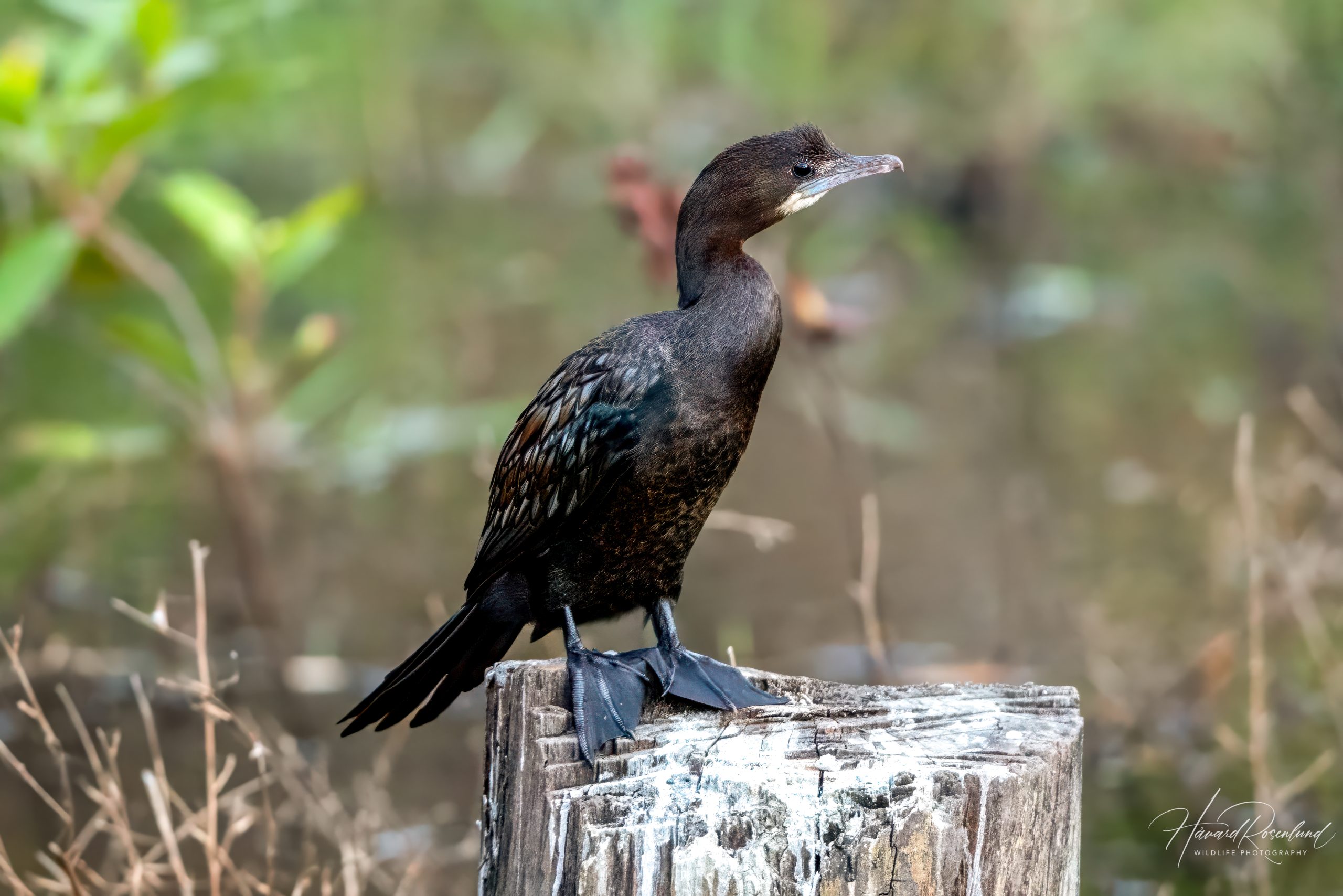
Little Cormorant
Microcarbo niger
At a glance
Habitat
- Ponds, lakes, rivers, marshes, reservoirs, rice fields and other freshwater wetlands, from small village ponds to large lakes
Diet
- Mainly small fish; also frogs, crustaceans, aquatic insects and other small aquatic prey
Activity
- Diurnal
Size
- Length: ~50–56 cm Weight: ~360–525 g
Range
- Indian subcontinent through parts of mainland Southeast Asia to Java and neighbouring regions
Description
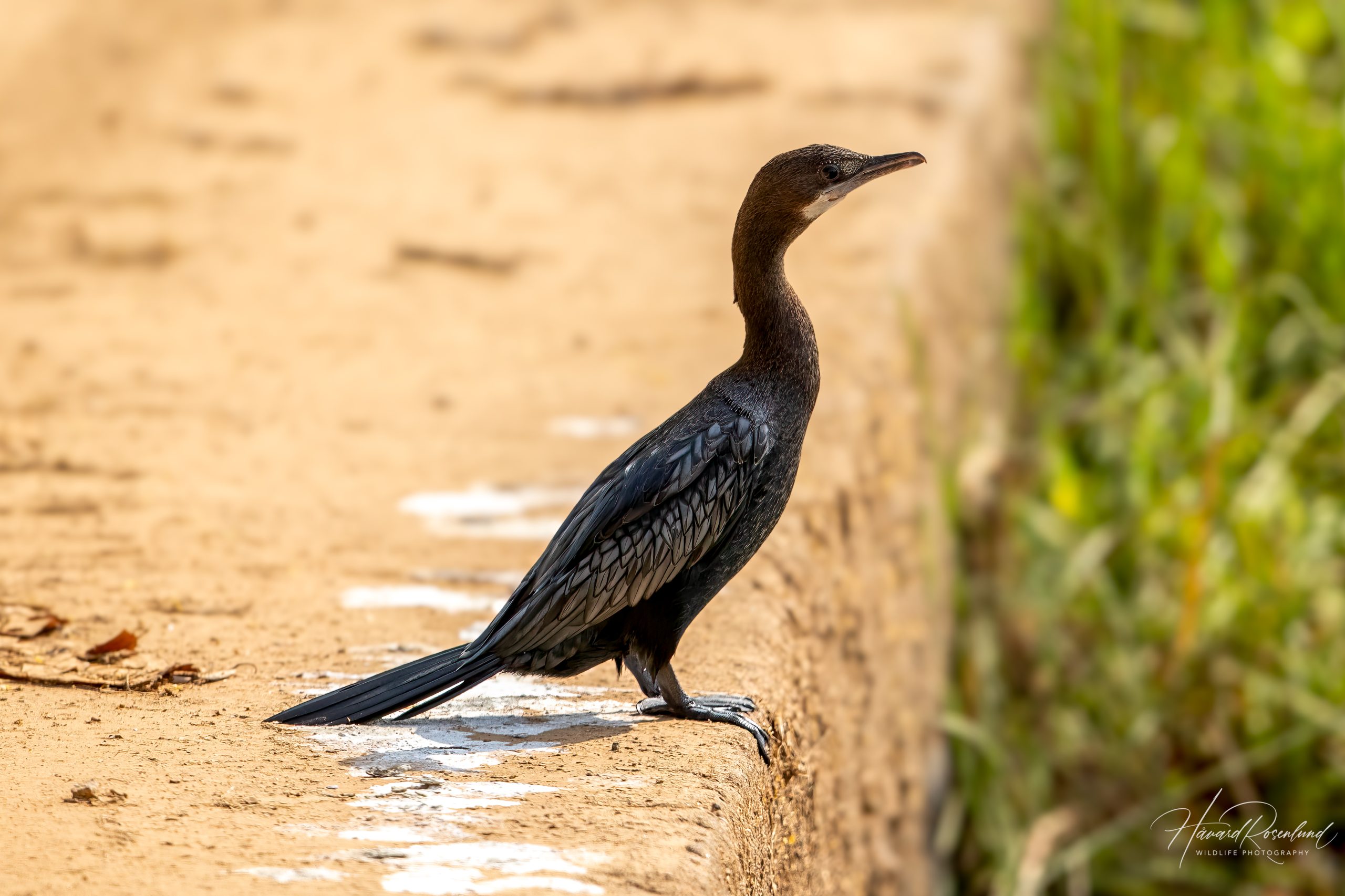
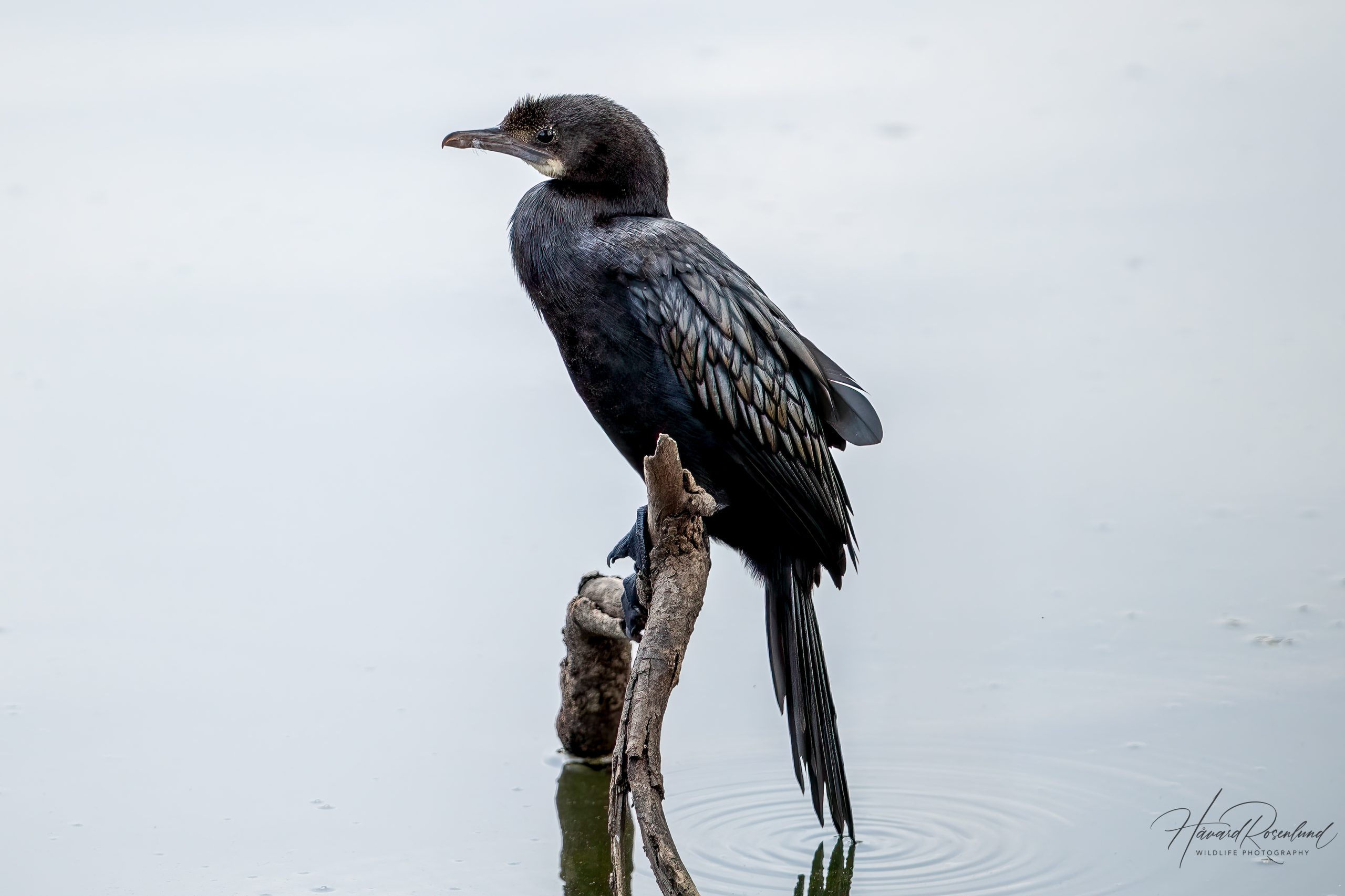
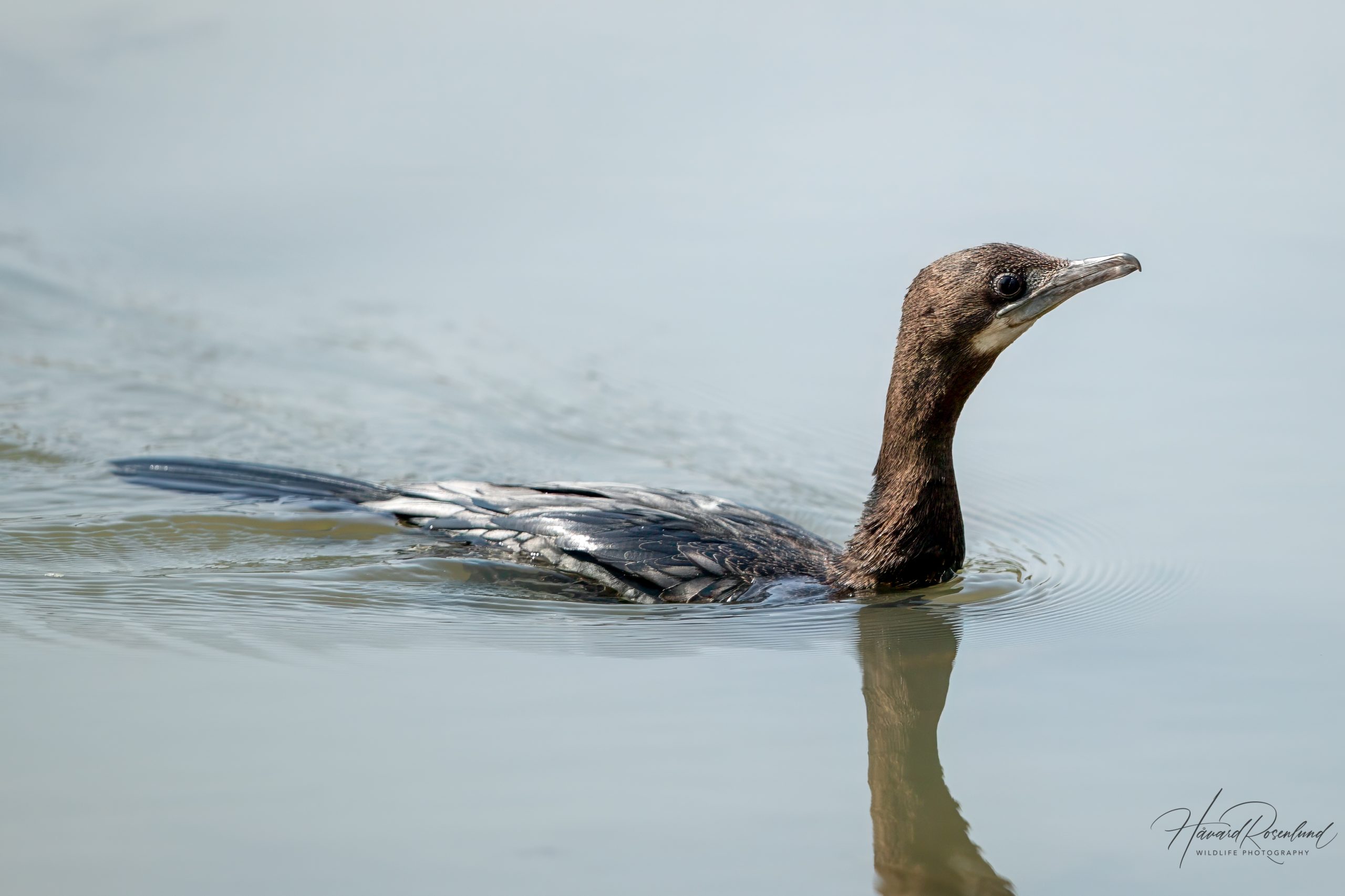
The little cormorant (Microcarbo niger) is one of the smallest members of the cormorant family. Adults are roughly 50–56 cm long, have a wingspan of around 90 cm and weigh about 360–525 g. Breeding birds are glossy black with small white feathers around the head and neck, while non-breeding birds become browner and often show a pale throat.
The similar Indian cormorant (Phalacrocorax fuscicollis) is larger and longer-billed, with a more elongated head and neck. The little cormorant's compact proportions, short bill and small size are often the easiest features to use when both species occur together.
Habitat
Little cormorants are strongly associated with freshwater but use an exceptionally broad range of wetlands. They occur on rivers, lakes, village ponds, reservoirs, marshes, irrigation channels, flooded fields and rice paddies, and can also use brackish or tidal waters locally. Shallow and moderately deep water with abundant small fish is especially useful for feeding.
The species tolerates considerable human activity. A large study published in 2025, based on fieldwork in northern and north-eastern Bangladesh from 2017 to 2023, found many breeding colonies in wetlands heavily used by people. Even human-made or heavily modified waters can therefore remain valuable when they still provide fish, nesting trees and relatively secure roosting sites.
Diet
Small fish dominate the diet, with frogs, crustaceans, aquatic insects and other small aquatic animals taken as well. Birds dive from the surface and pursue prey underwater, using the feet for propulsion and the bill to seize prey.
Behaviour
A 2024 study in an urban wetland in Kolkata recorded 1,957 dives in the main lake. Average dives lasted about 10.8 seconds, and longer dives tended to be followed by longer pauses at the surface. The results suggest that water depth and the time needed to search for fish directly influence how long the birds remain submerged and how long they pause between dives.
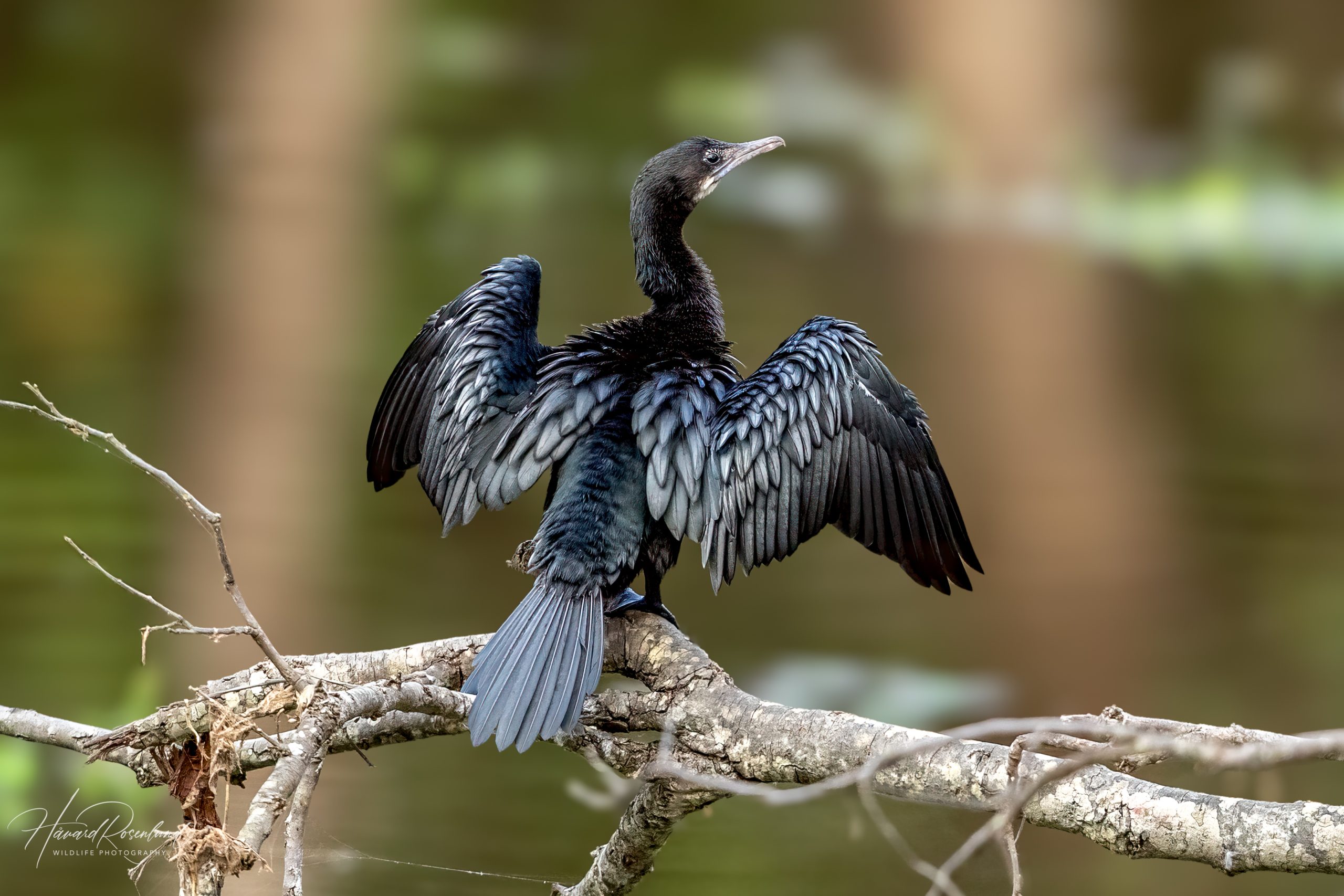
After diving they often perch on branches, posts or other structures with the wings spread widely. This familiar cormorant posture helps wet feathers dry after feeding. Cormorant feathers allow more water to enter the outer plumage than the feathers of many other waterbirds. This reduces the amount of trapped air and therefore the buoyancy that must be overcome while diving, while a layer of air still remains close to the body for insulation. The trade-off makes underwater hunting more efficient but leaves the plumage wetter when the bird emerges.
Social behaviour
Little cormorants may hunt alone, in loose groups or in larger feeding concentrations where many birds exploit the same fish-rich water. They also roost communally. The Bangladesh material from 2017 to 2023 included 39 separate communal night roosts in addition to the breeding colonies, showing that shared resting sites are an important part of their social life outside the breeding season.
Breeding
Little cormorants are colonial breeders, often nesting together with herons, egrets and other waterbirds. Nests are platforms of sticks placed in trees or large shrubs near water. Three to five eggs are typical, and both parents share incubation and feeding.
The Bangladesh study published in 2025 recorded 186 active colony sites, including 147 breeding colonies, and counted 22,892 nests during fieldwork from 2017 to 2023. In the 42 nests followed in greater detail, incubation lasted 24–29 days and the young fledged after about 35–45 days. Nest numbers were also higher at colony sites with more and taller trees. Many colonies were in wetlands heavily used by people.
The chicks hatch naked and helpless and depend completely on the adults. Both parents feed them by regurgitating partly digested food.
Status
The little cormorant is classified as least concern on the IUCN Red List and remains common across much of its range. In India, the population has increased strongly over the long term, while the trend in recent years has been broadly stable to slightly positive.
Locally, pollution, reduced fish availability, removal of colony trees and disturbance can damage important breeding and feeding sites. The species' ability to use reservoirs, village ponds and agricultural wetlands nevertheless gives it considerable resilience in human-dominated landscapes.
Image gallery
Loading map and observations…
Have you seen this species?
Independent species archive
Did you find this species page useful?
Wildlife Vagabond is independently built and maintained. Voluntary support helps cover hosting, maps, data storage and continued improvements to the species archive.
Support Wildlife VagabondSpecies content will remain freely available.
References
Information about the species’ global distribution and status is based primarily on global Red List data. See the references below for details.
- BirdLife International. (n.d.). Little Cormorant species factsheet. https://datazone.birdlife.org/species/factsheet/little-cormorant-microcarbo-niger
- Chatterjee, L., Rong, A., Samrat, C. S., Sinha, S., Samanta, T., & Basu Roy, A. (2024). Foraging and diving pattern of the Little Cormorant Microcarbo niger (Vieillot) (Pelecaniformes: Phalacrocoracidae) of Ecopark, Kolkata, India. Journal of Animal Diversity, 6(3), 26–32. https://doi.org/10.22034/JAD.2024.6.3.2
- Grémillet, D., Chauvin, C., Wilson, R. P., Le Maho, Y., & Wanless, S. (2005). Unusual feather structure allows partial plumage wettability in diving great cormorants Phalacrocorax carbo. Journal of Avian Biology, 36(1), 57-63. https://doi.org/10.1111/j.0908-8857.2005.03331.x
- International Union for Conservation of Nature. (n.d.). Little Cormorant. The IUCN Red List of Threatened Species. https://www.iucnredlist.org/species/22696740/93583483
- Sadik, A. S., Akash, M., Shamsuddoha, M., Akter, R., Datta, A. K., Khan, M. M. H., & Hasan, M. K. (2025). Breeding ecology of the Little Cormorant <i>Microcarbo niger</i> in northern Bangladesh. Indian BIRDS, 21(1), 1–8. https://indianbirds.in/
- Srinivasan, S., Chhatre, S. S., Guardado, J. O., Park, K.-C., Parker, A. R., Rubner, M. F., McKinley, G. H., & Cohen, R. E. (2014). Quantification of feather structure, wettability and resistance to liquid penetration. Journal of The Royal Society Interface, 11(96), 20140287. https://doi.org/10.1098/rsif.2014.0287
- State of India's Birds. (2025). 2025 – Little Cormorant. https://stateofindiasbirds.in/species/litcor1/
- Store norske leksikon. (n.d.). orientdvergskarv. https://snl.no/orientdvergskarv