
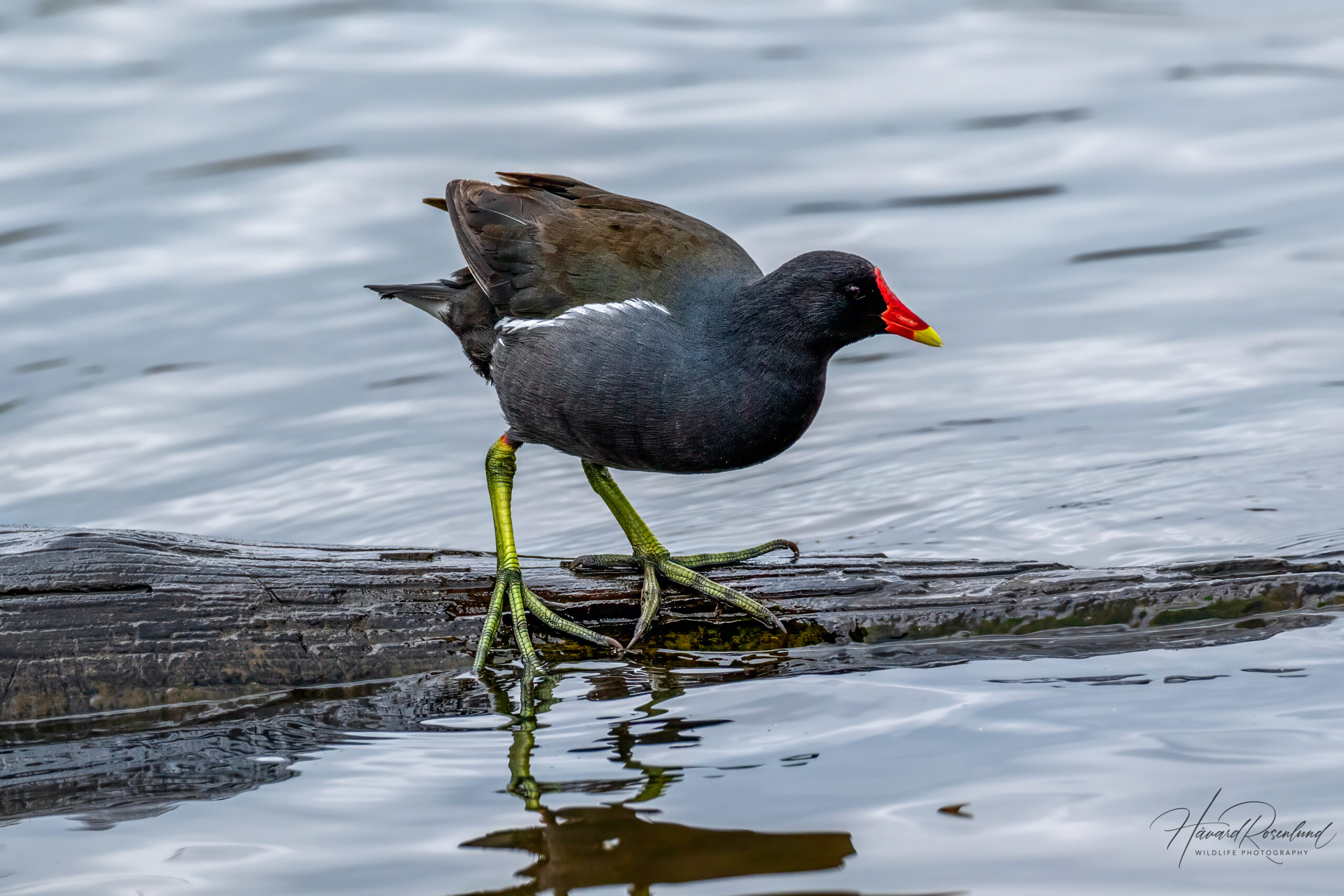
Common Moorhen
Gallinula chloropus
At a glance
Habitat
- Ponds, marshes, slow rivers, canals, lake margins and brackish wetlands with dense vegetation
Diet
- Aquatic plants, seeds, fruit, insects, molluscs, worms and occasional small vertebrates
Activity
- Active by day and night, often feeding most at dawn and dusk
Size
- Length: 30–38 cm Weight: about 190–500 g
Range
- Europe, Africa and Asia, with migratory northern populations
Description
The common moorhen (Gallinula chloropus) is a widespread rail of Europe, Africa and Asia. Adults measure about 30–38 cm and weigh roughly 190–500 g, with considerable variation between sexes, regions and seasons.
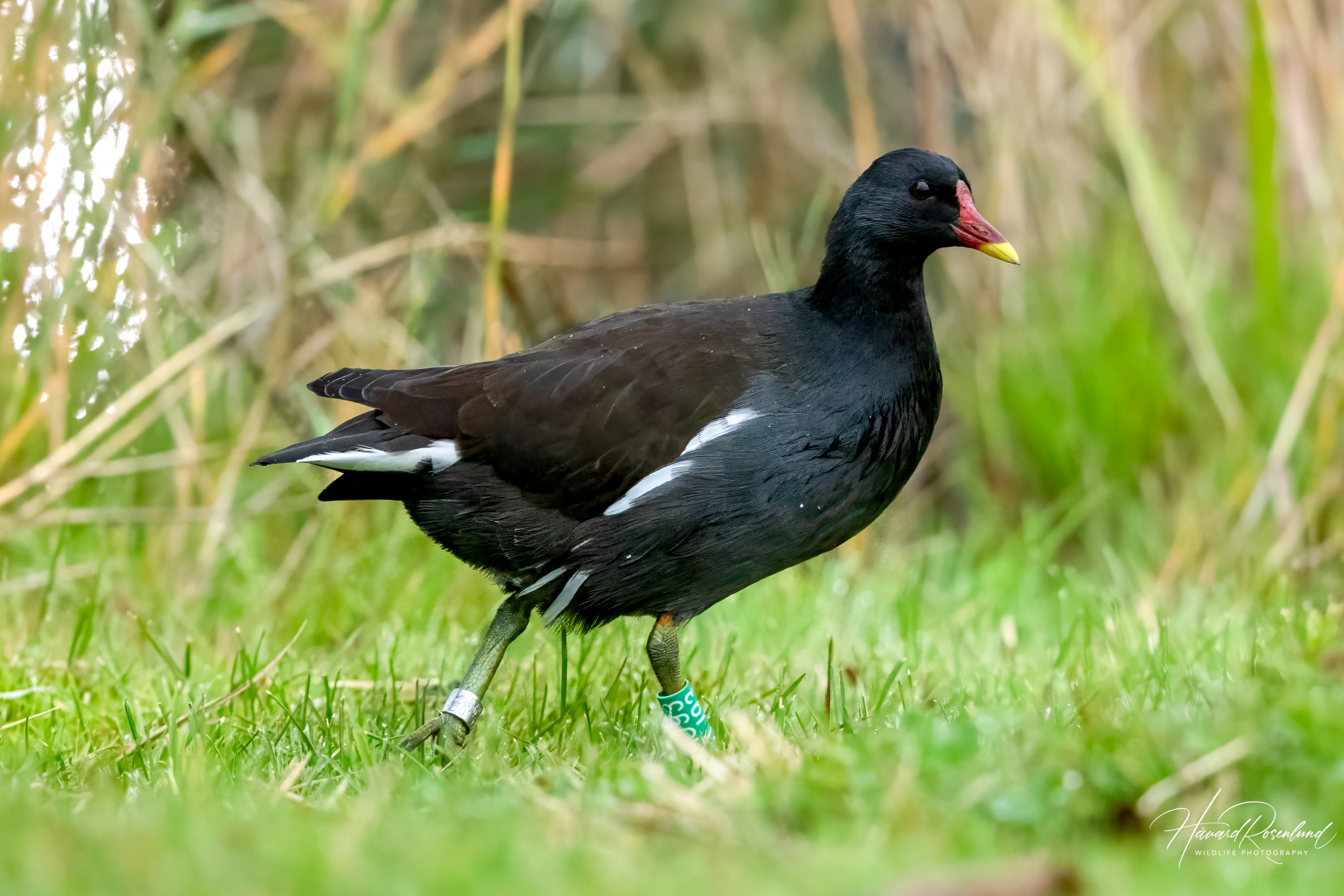
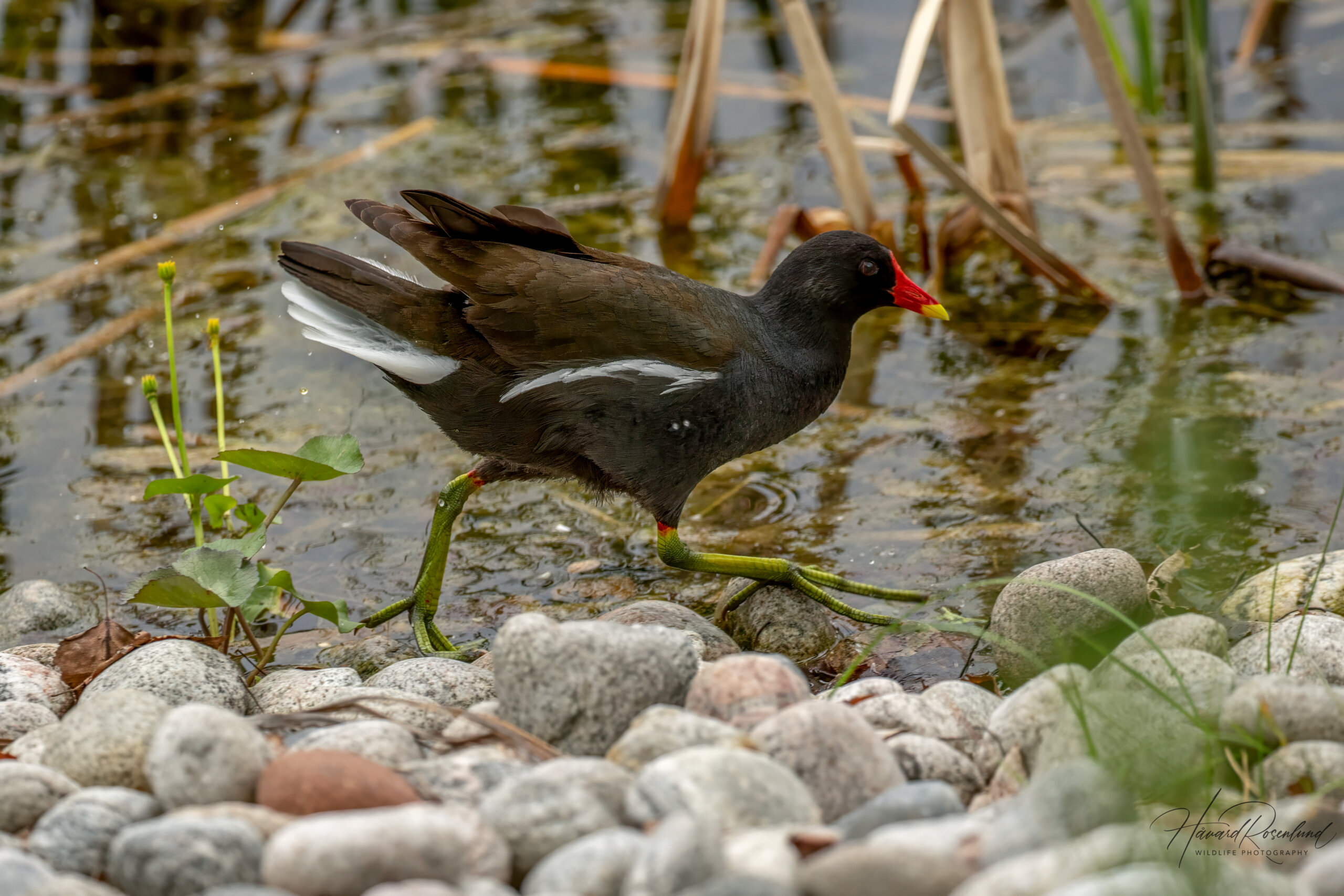
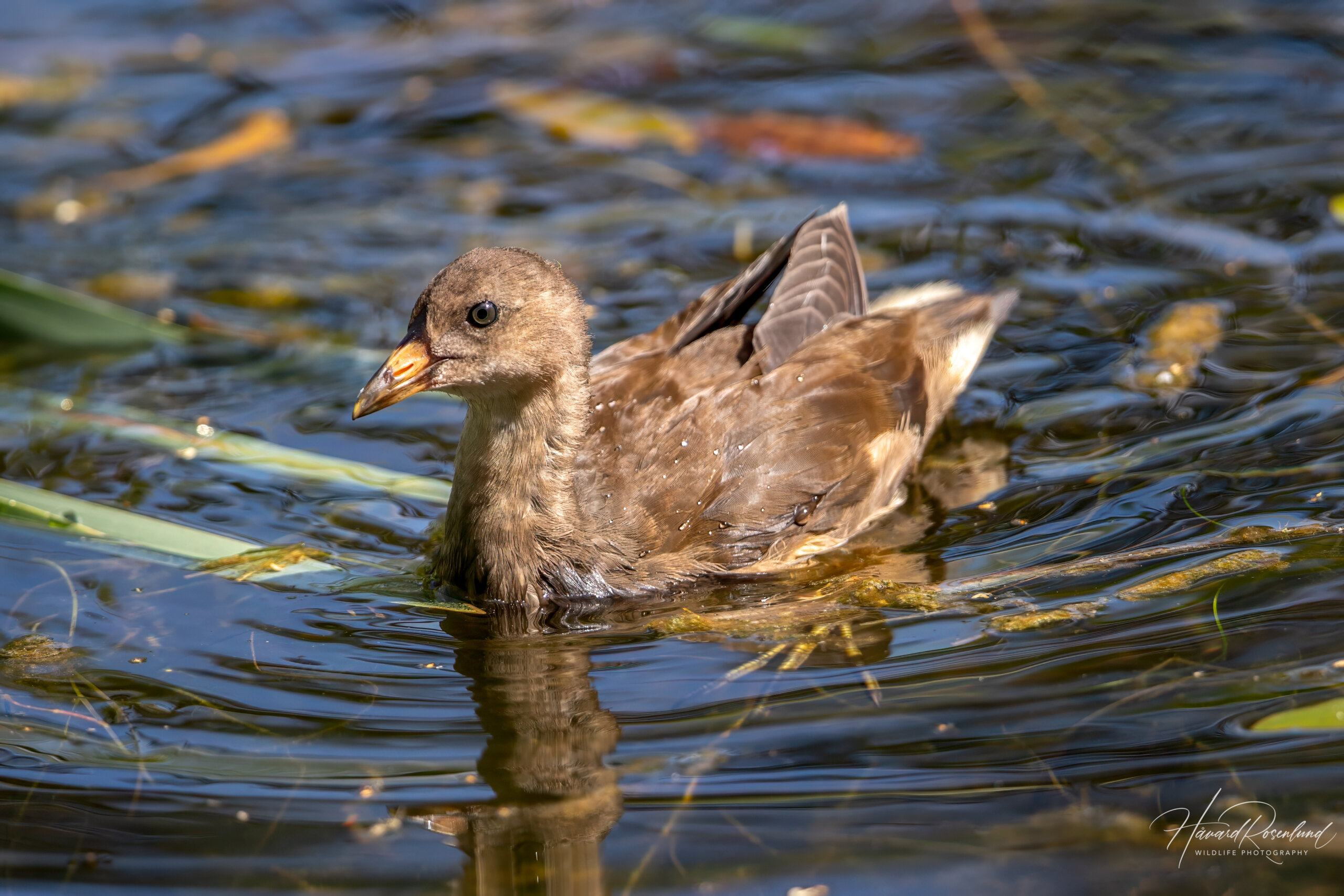
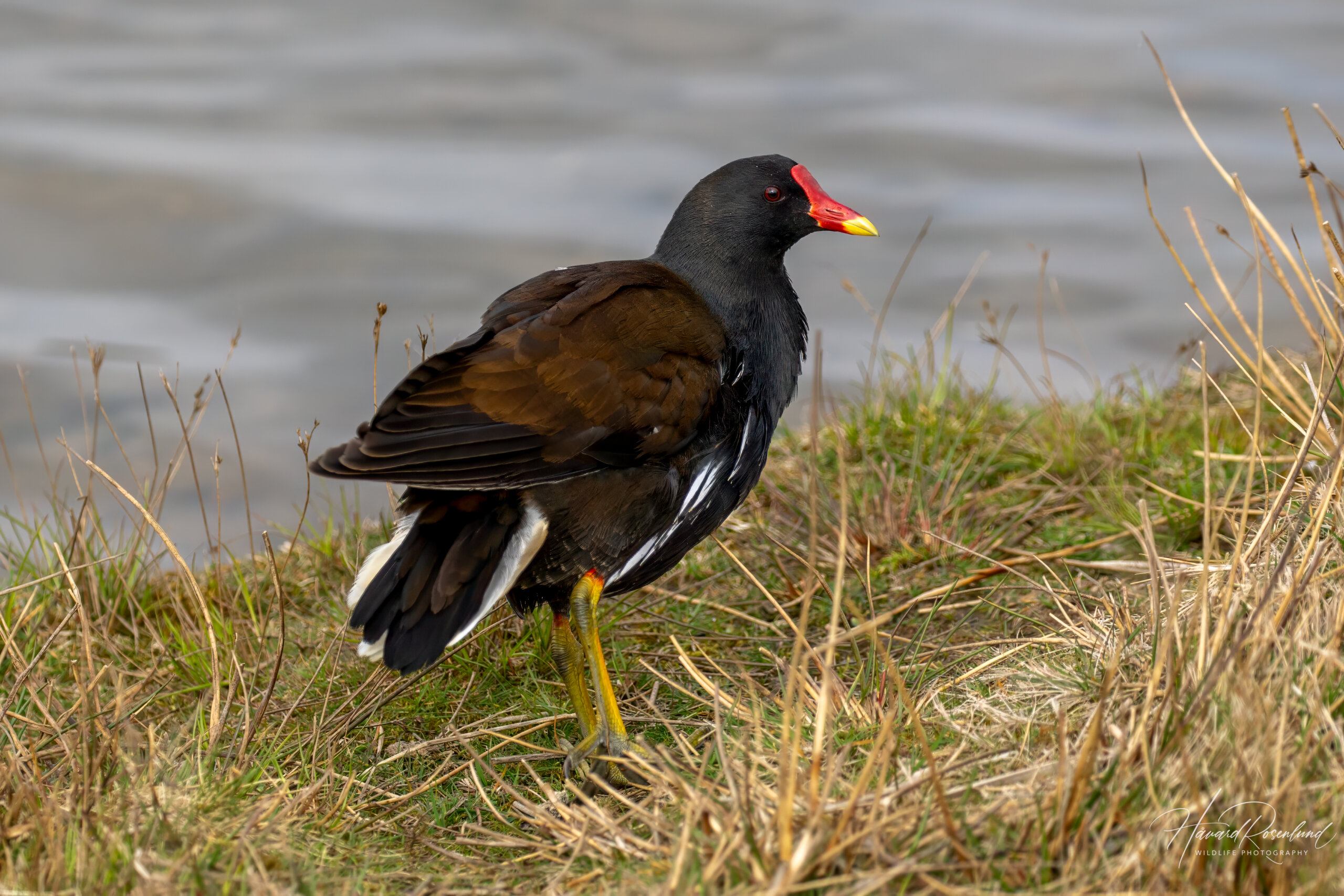
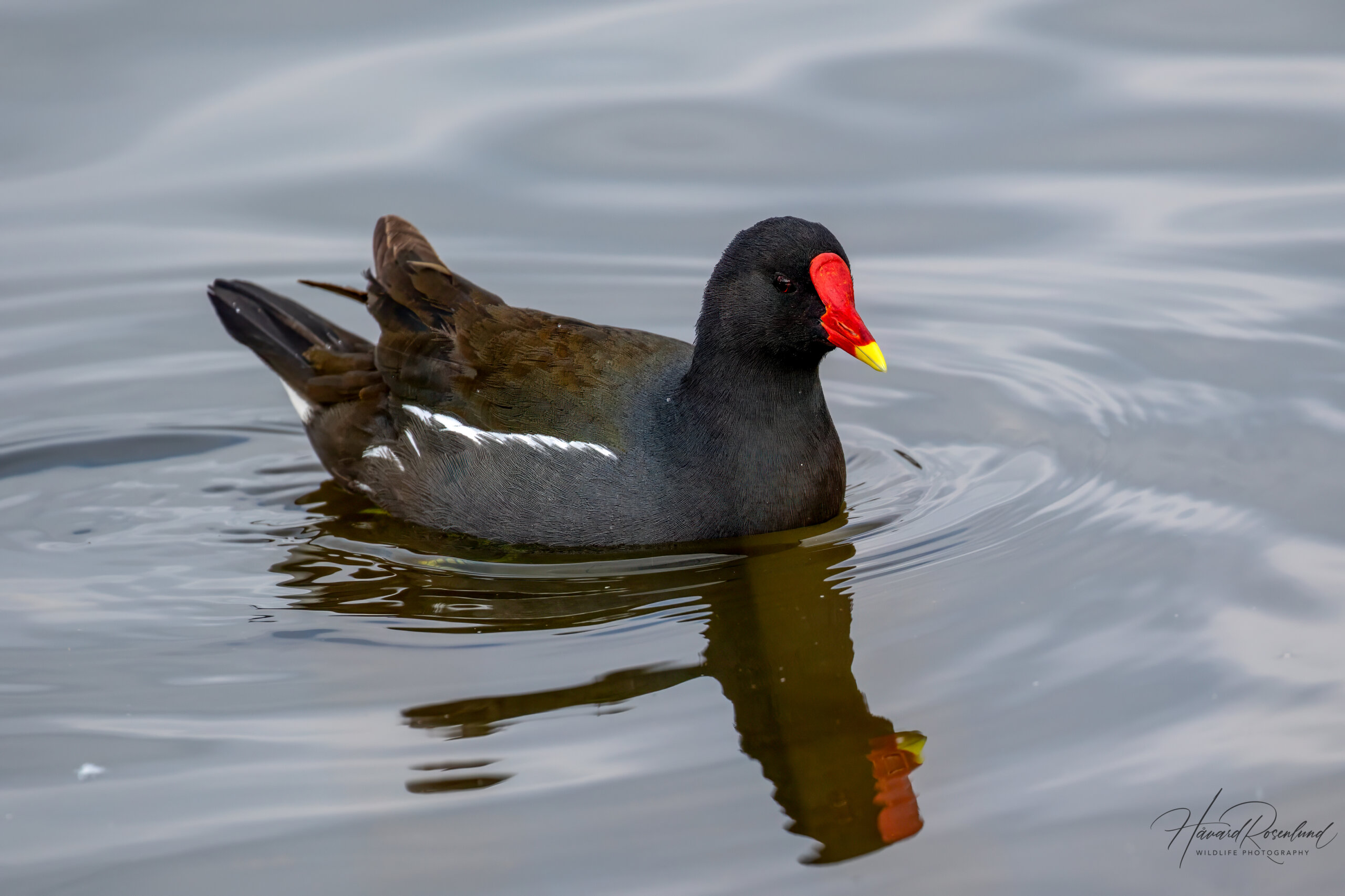
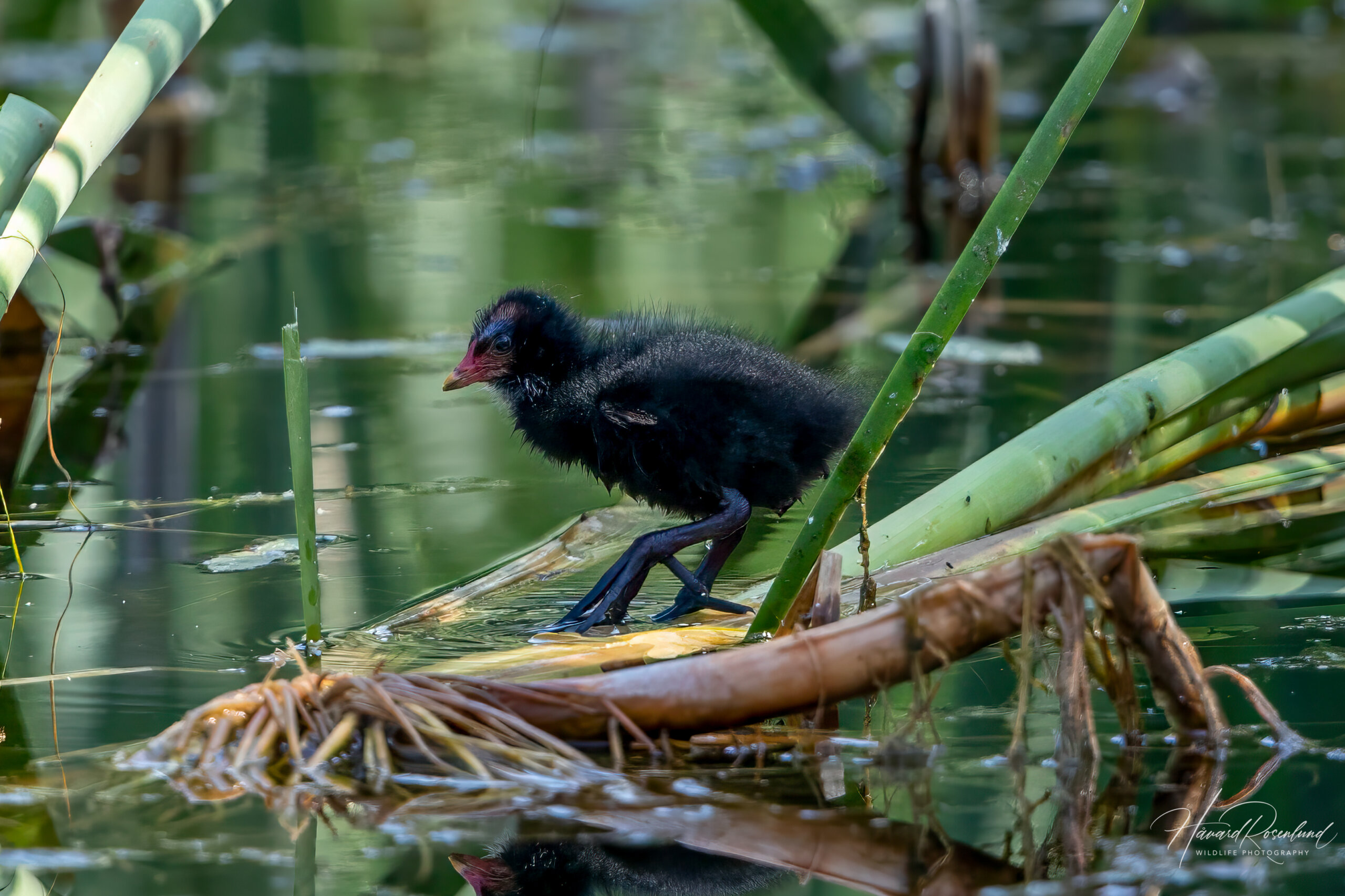
The plumage is dark slate-grey to brownish black, with a white stripe along the flank and white undertail coverts. Adults have a red frontal shield and red bill tipped with yellow, while the long yellow-green legs have exceptionally long toes for walking on mud and floating vegetation. Juveniles are browner and lack the bright red bill and shield.
Taxonomy
The common moorhen was formerly treated together with the American common gallinule, but modern global checklists recognise them as separate species. The Old World form retains the name Gallinula chloropus, while the American species is Gallinula galeata.
AviList and BirdLife follow this treatment. Older literature using a broader concept of G. chloropus may therefore include populations that are no longer assigned to this species.
Habitat
Common moorhens inhabit ponds, marshes, slow rivers, canals, lake margins and sheltered brackish wetlands with emergent or overhanging vegetation. They adapt readily to reservoirs, drainage ditches and urban park ponds, becoming much less shy where they are accustomed to people.
Diet
The species is an opportunistic omnivore. Aquatic leaves, shoots, seeds, fruit and algae are eaten together with insects, snails, worms, crustaceans, tadpoles, small fish and occasional eggs or carrion.
Moorhens graze on land, pick food from the water surface and floating vegetation and move across water-lily leaves and other plant mats to reach food. They also take small animal prey among shoreline vegetation and in shallow water.
Behaviour
Moorhens swim with a characteristic nodding movement of the head and tail and frequently flick the white undertail pattern. They are strong walkers and climbers and may run over dense vegetation or scramble into shrubs when disturbed.
Breeding pairs defend territories aggressively, using calls, displays and fights with the feet. Outside active territorial defence they are generally less confrontational and can tolerate other birds at productive feeding and resting sites.
Migration
Movement patterns vary across the range. Northern populations migrate south or west in autumn, while many birds in milder climates remain resident or move only short distances. Juveniles may disperse widely after leaving the natal territory.
Severe winters with prolonged ice can force additional movements and cause high mortality, especially where shallow feeding areas and sheltered margins freeze for long periods.
Breeding
Most common moorhens form socially monogamous pairs, but the mating system is flexible and can include extra-pair parentage, polygyny—where one male mates with more than one female—or groups with more than two breeding adults. A study published in 1983 showed that females can compete directly for males: the heaviest females won most aggressive encounters and more often formed pairs with males carrying large fat reserves, and these females initiated more nesting attempts.
Both adults build a platform nest from reeds, grasses and other wetland vegetation, usually concealed just above water or on a low bank. The clutch commonly contains five to nine eggs, although smaller and larger clutches occur. Both sexes incubate for about 19–22 days.
Breeding timing varies widely across the range. In temperate regions breeding takes place mainly in spring and summer, while it can occur year-round in the tropics. Later or secondary clutches are often smaller than the first.
The chicks are precocial, meaning they are mobile soon after hatching, and can leave the nest quickly. They swim and walk with their parents but are brooded, defended and fed for several weeks. Young from an early brood sometimes remain on the territory and help feed and defend younger siblings, a form of cooperative care. Full flight develops after roughly 40–50 days, and a pair may raise two or more broods in a long season.
Status
The common moorhen is classified as least concern on the IUCN Red List. It has an enormous range and remains common, although regional trends vary and wetland loss, pollution, hunting, introduced predators and severe winters affect local populations.
Image gallery
Loading map and observations…
Have you seen this species?
Independent species archive
Did you find this species page useful?
Wildlife Vagabond is independently built and maintained. Voluntary support helps cover hosting, maps, data storage and continued improvements to the species archive.
Support Wildlife VagabondSpecies content will remain freely available.
References
Information about the species’ global distribution and status is based primarily on global Red List data. See the references below for details.
- Animal Diversity Web. (n.d.). Gallinula chloropus: morphology, diet, behaviour and reproduction. https://animaldiversity.org/accounts/Gallinula_chloropus/
- Artsdatabanken. (2021). Sivhøne Gallinula chloropus – Norsk rødliste for arter 2021. https://lister.artsdatabanken.no/rodlisteforarter/2021/28428
- BirdLife International. (n.d.). Common Moorhen Gallinula chloropus species factsheet. https://datazone.birdlife.org/species/factsheet/common-moorhen-gallinula-chloropus
- BirdLife Norge. (n.d.). Norske navn på verdens fugler: sivhøne Gallinula chloropus. https://www.birdlife.no/fuglekunnskap/navn/
- British Trust for Ornithology. (n.d.). Moorhen bird facts, nesting and population trends. https://www.bto.org/learn/about-birds/birdfacts/moorhen
- Dale, S. (2021). Population size and trend, and habitat selection of Common Moorhens (Gallinula chloropus) in Oslo and Akershus, southeastern Norway. Ornis Norvegica, 44, 1-11. https://doi.org/10.15845/on.v44i0.3163
- Gibbons, D. W. (1987). Juvenile helping in the moorhen, Gallinula chloropus. Animal Behaviour, 35(1), 170-181. https://doi.org/10.1016/S0003-3472(87)80222-1
- International Union for Conservation of Nature. (n.d.). Gallinula chloropus. The IUCN Red List of Threatened Species. https://www.iucnredlist.org/species/62120190/86175318
- Loyau, A., & Schmeller, D. S. (2012). Mixed reproductive strategies of the Common moorhen on a microscale as revealed by genetic data. Comptes Rendus. Biologies, 335(10-11), 673-679. https://doi.org/10.1016/j.crvi.2012.09.008
- Petrie, M. (1983). Female Moorhens Compete for Small Fat Males. Science, 220(4595), 413-415. https://doi.org/10.1126/science.220.4595.413