
Eurasian Coot
Fulica atra
At a glance
Habitat
- Lakes, ponds, reservoirs, marshes, slow rivers and sheltered brackish wetlands
Diet
- Aquatic plants, algae, seeds, shoots, molluscs, insects and occasional small vertebrates or eggs
Activity
- Active by day and night, often feeding most in daylight
Size
- Length: 32–42 cm Weight: about 600–1,200 g
Range
- Europe, Africa, Asia, Australia and New Zealand
Description
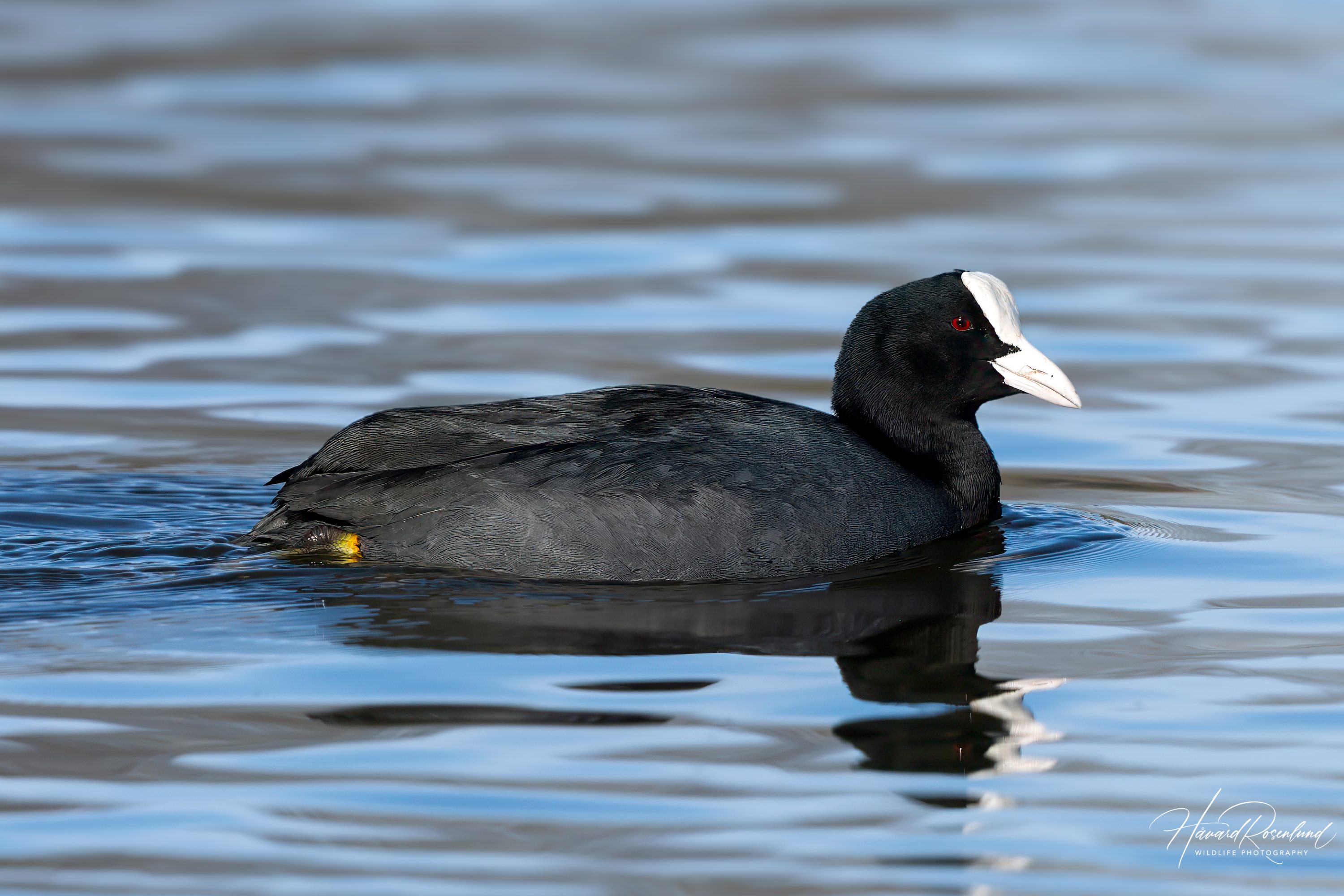
The Eurasian coot (Fulica atra) is a large rail distributed across Europe, Africa and Asia and east to Australia and New Zealand. Adults measure about 32–42 cm and commonly weigh roughly 600–1,200 g, with males averaging larger than females.
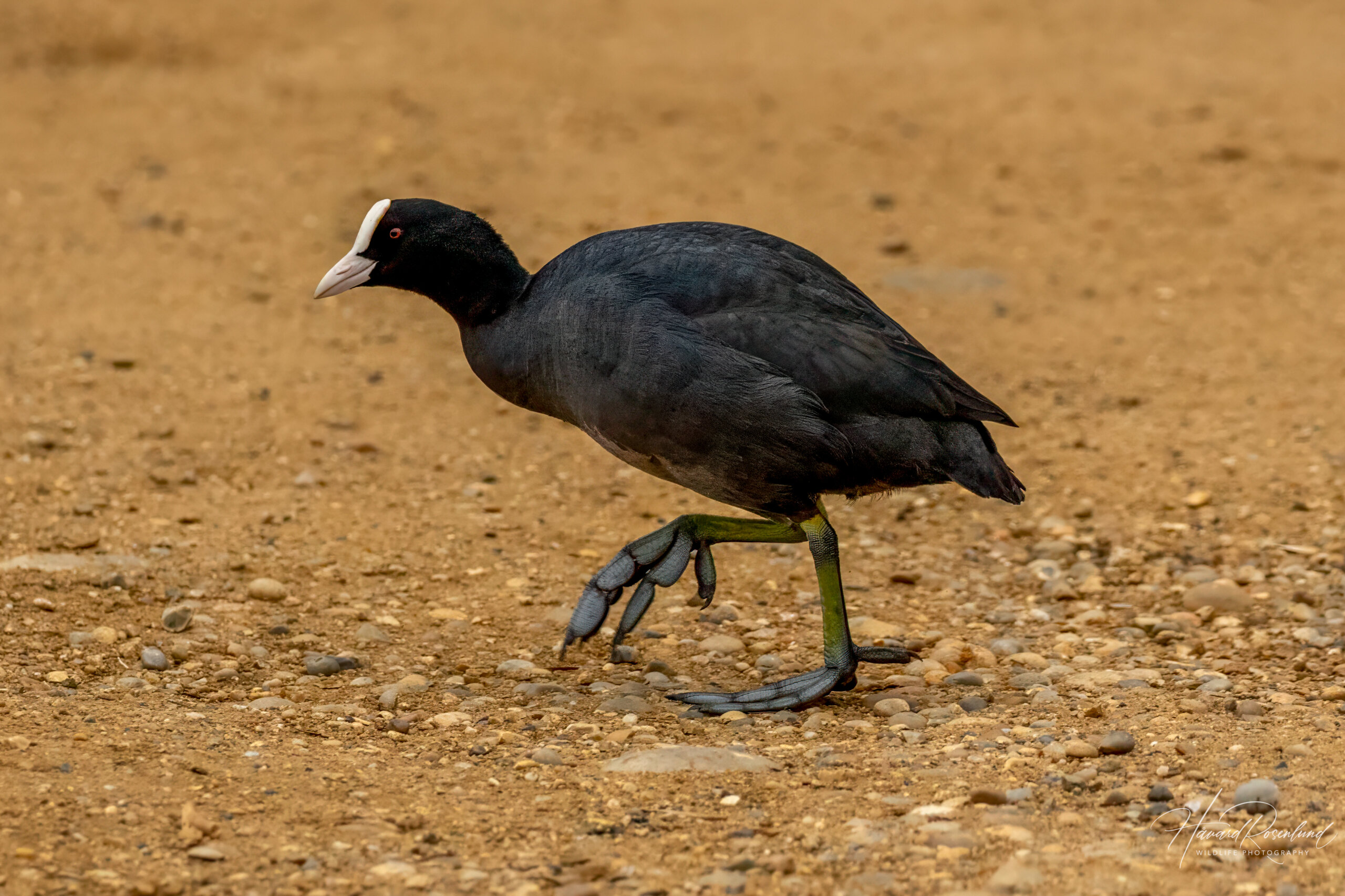
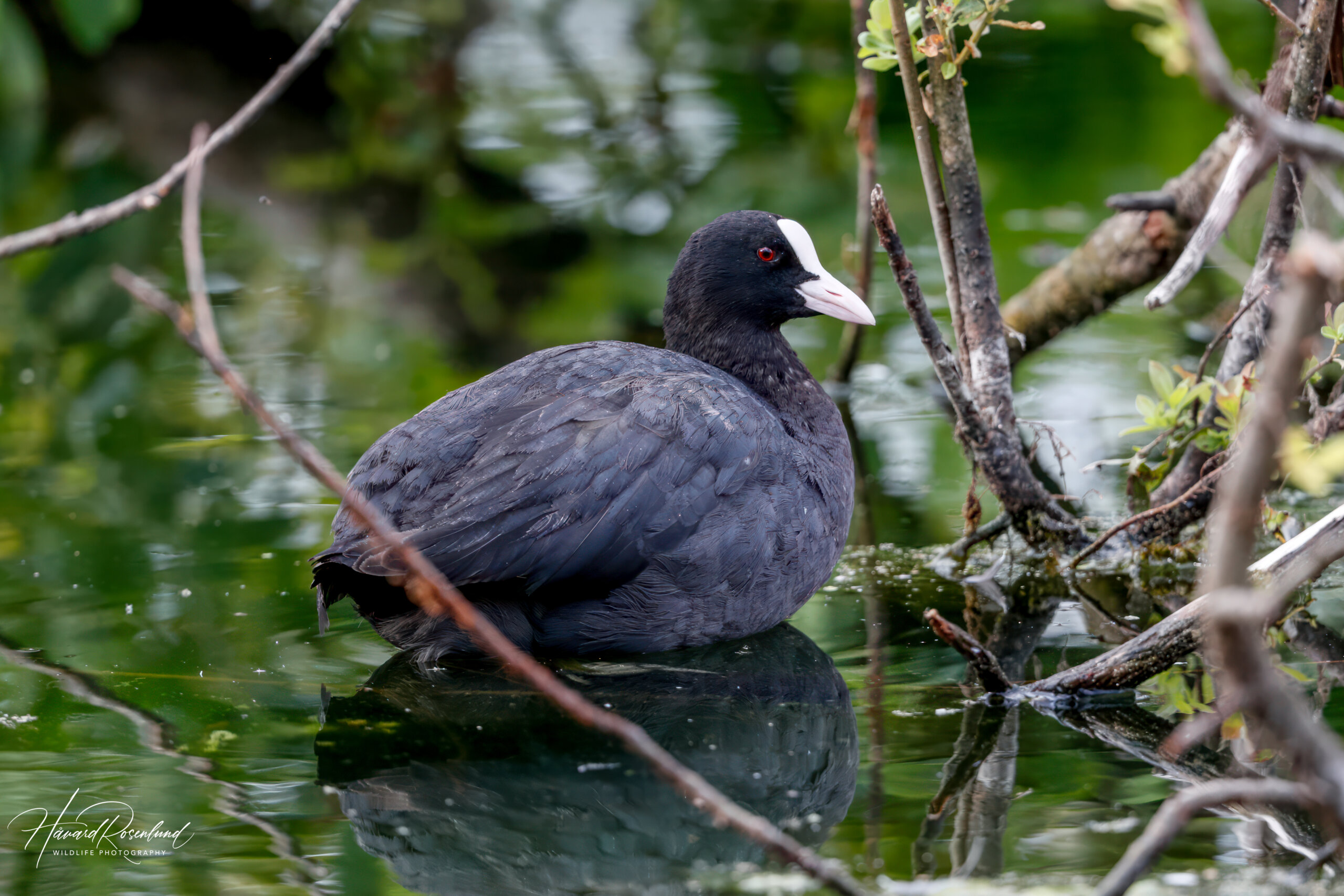
The body is sooty black to dark slate-grey, contrasting with a white bill and frontal shield. The eyes are red and the legs yellow-green. Each long toe carries broad lateral lobes rather than a continuous web. These spread the bird’s weight on mud and floating vegetation and fold back to reduce resistance during swimming.
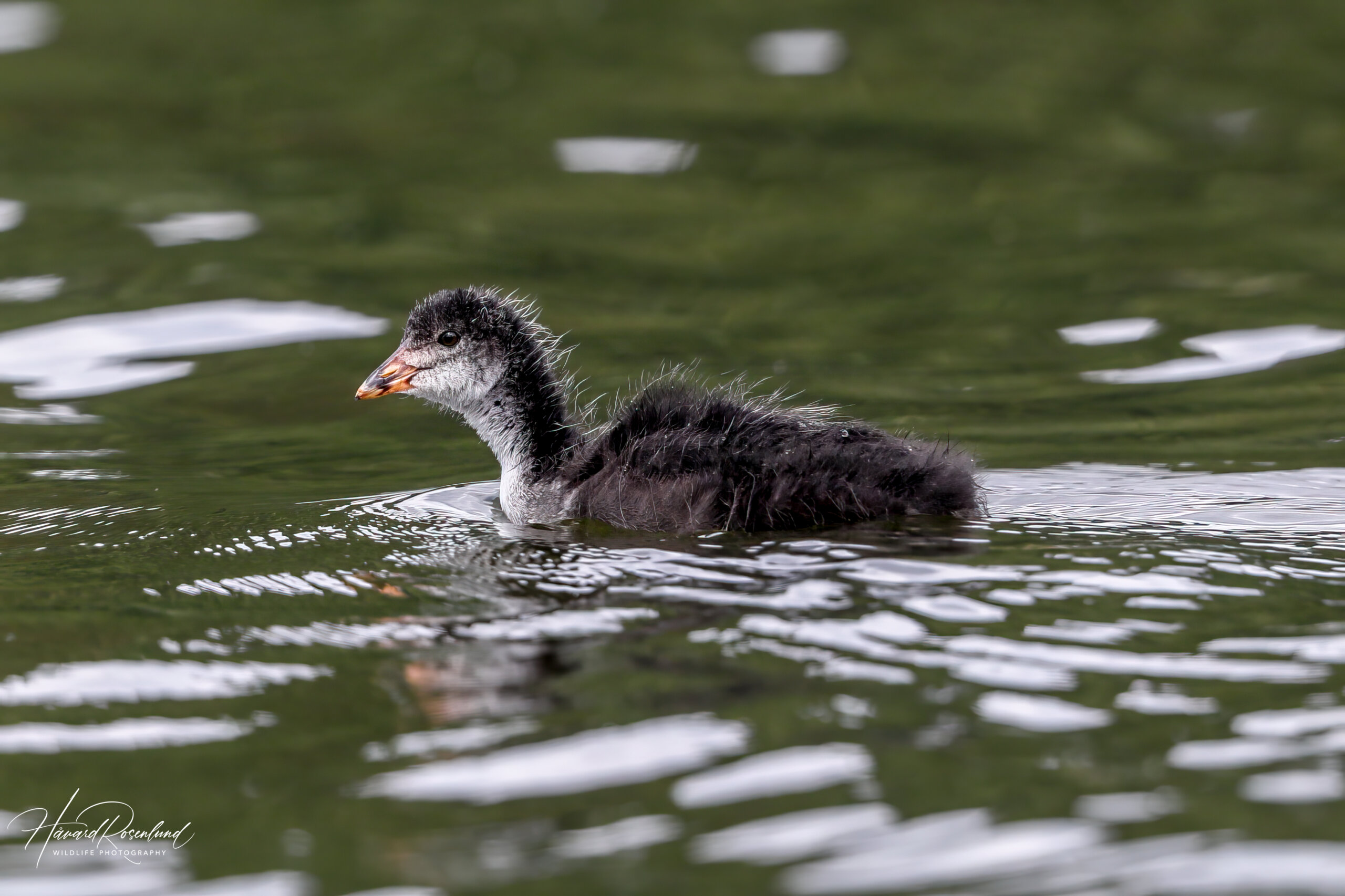
Juveniles are paler grey-brown with a whitish throat and breast and lack the full white frontal shield. Newly hatched chicks have striking red-orange head feathers and colourful bare skin.
Habitat
Eurasian coots favour freshwater lakes, ponds, reservoirs, marshes and slow rivers with open water and nearby emergent vegetation. They also use sheltered brackish lagoons and urban park lakes. Dense reeds and floating vegetation provide nesting cover, while open water is important for feeding and escape.
Diet
The species is an opportunistic omnivore. Aquatic leaves, shoots, algae, seeds and grasses form much of the diet, supplemented by molluscs, aquatic insects, worms, crustaceans, small fish, amphibians and occasional eggs or carrion.
Foraging
Coots use several distinct feeding methods within the same wetland. They graze on short vegetation on land, pick food from the water surface and floating plants, up-end in shallow water and dive for submerged vegetation and animals.
Most dives are short and made in relatively shallow water because deeper dives demand more energy. A bird lifts slightly above the water before diving and uses both feet and wings beneath the surface. Dives reaching about 7 m and lasting 15–20 seconds have been documented, but are much less common than the usual shallow dives. This broad feeding repertoire allows coots to switch between plant material and animal prey as water level, season and food availability change.
Behaviour
Breeding adults can be intensely territorial. Disputes involve loud calls, rapid chases across the water and fights in which opponents lean back and strike with their feet. Coots are strong swimmers but take flight less readily; when disturbed they often run across the water before becoming airborne.
They are active both by day and at night. Territorial pairs dominate suitable nesting areas in spring and summer, while the strong aggression of the breeding season largely disappears once breeding is over.
Social behaviour
Outside breeding, Eurasian coots can become highly gregarious. Hundreds or even thousands may gather on productive lakes and reservoirs where submerged vegetation and other food are abundant.
Communal night roosts also occur. These large non-breeding gatherings contrast sharply with the territorial behaviour of breeding pairs and make social organisation strongly seasonal.
Migration
Movement patterns vary strongly across the range. Northern and eastern populations migrate when wetlands freeze, whereas birds in milder climates may remain resident or make only short local movements. Juveniles can disperse widely after the breeding season.
Once airborne, coots are capable migrants and often travel at night. Severe winters can force large movements and cause high mortality where prolonged ice removes access to feeding areas.
Breeding
Both adults build a platform nest of reeds, grasses and other aquatic vegetation, anchored among emergent plants or placed on a floating base. Breeding timing varies geographically; in central Europe egg-laying occurs mainly from April to July, while in southwestern parts of the range it can extend from February to September. The clutch commonly contains about five to ten eggs. Both parents incubate for roughly 21–24 days, and hatching is spread over several days because incubation begins before the clutch is complete.
The chicks are precocial, meaning they are well developed and mobile soon after hatching, and they leave the nest quickly. The brood is often divided between the parents, which lead and feed separate groups. Adults may also build additional resting platforms where the young are brooded.
Mortality is highest among the last-hatched chicks during their first days. A study published in 1984 showed that this is not simply a result of sibling competition: parents actively regulate which chicks accompany them on foraging trips and maintain large differences in feeding. The least-fed chicks grow more slowly, and rare cases have also been described in which parental aggression towards a chick ended in its death. Brood reduction therefore depends strongly on food supply, water conditions and hatching order.
Females sometimes lay eggs in the nests of other Eurasian coots. This conspecific brood parasitism has been documented in several populations, but its frequency and circumstances vary.
Status
The Eurasian coot is classified as least concern on the IUCN Red List. It has an enormous range and a very large global population. The European Red List assessment published in 2021 also classifies the species as Least Concern.
Wetland drainage, loss of reed margins, poor water quality, hunting, fishing-line entanglement, disease and severe winters affect populations locally. Water-level changes during nesting can flood or strand nests, while prolonged ice can cause high winter mortality.
Image gallery
Loading map and observations…
Have you seen this species?
Independent species archive
Did you find this species page useful?
Wildlife Vagabond is independently built and maintained. Voluntary support helps cover hosting, maps, data storage and continued improvements to the species archive.
Support Wildlife VagabondSpecies content will remain freely available.
References
Information about the species’ global distribution and status is based primarily on global Red List data. See the references below for details.
- Artsdatabanken. (2021). Sothøne Fulica atra – Norsk rødliste for arter 2021. https://lister.artsdatabanken.no/rodlisteforarter/2021/28484
- BirdLife International. (2021). European Red List of Birds: Fulica atra. https://www.birdlife.org/wp-content/uploads/2022/05/BirdLife-European-Red-List-of-Birds-2021.pdf.pdf
- BirdLife International. (n.d.). Eurasian Coot Fulica atra species factsheet. https://datazone.birdlife.org/species/factsheet/eurasian-coot-fulica-atra
- BirdLife Norge. (n.d.). Norske navn på verdens fugler: sothøne Fulica atra. https://www.birdlife.no/fuglekunnskap/navn/
- Brinkhof, M. W. G., & Cavé, A. J. (1997). Food supply and seasonal variation in breeding success: an experiment in the European coot. Proceedings of the Royal Society B: Biological Sciences, 264(1380), 291–296. https://doi.org/10.1098/rspb.1997.0041
- British Trust for Ornithology. (n.d.). Coot bird facts, biometrics, nesting and movements. https://www.bto.org/learn/about-birds/birdfacts/coot
- Halupka, L., Czyż, B., & Macias Dominguez, C. M. (2020). The effect of climate change on laying dates, clutch size and productivity of Eurasian Coots Fulica atra. International Journal of Biometeorology, 64(11), 1857-1863. https://doi.org/10.1007/s00484-020-01972-3
- Horsfall, J. (1984). Brood reduction and brood division in coots. Animal Behaviour, 32(1), 216-225. https://doi.org/10.1016/S0003-3472(84)80340-1
- International Union for Conservation of Nature. (n.d.). Fulica atra. The IUCN Red List of Threatened Species. https://www.iucnredlist.org/species/22692913/89498332
- Moreno, J. (2012). Parental infanticide in birds through early eviction from the nest: rare or under‐reported? Journal of Avian Biology, 43(1), 43-49. https://doi.org/10.1111/j.1600-048X.2011.05608.x
- Museums Victoria. (n.d.). Eurasian Coot Fulica atra: biology and diving behaviour. https://collections.museumsvictoria.com.au/species/8254
- Ręk, P. (2010). Testing the relationship between clutch size and brood size in the Coot (Fulica atra). Journal of Ornithology, 151(1), 163-168. https://doi.org/10.1007/s10336-009-0440-0
- Sakai, J. (2015). Food of adult and young Eurasian Coot <i>Fulica atra</i> at Lake Ogawara, Aomori Prefecture, Japan. Japanese Journal of Ornithology, 64(2), 237–241. https://doi.org/10.3838/jjo.64.237