
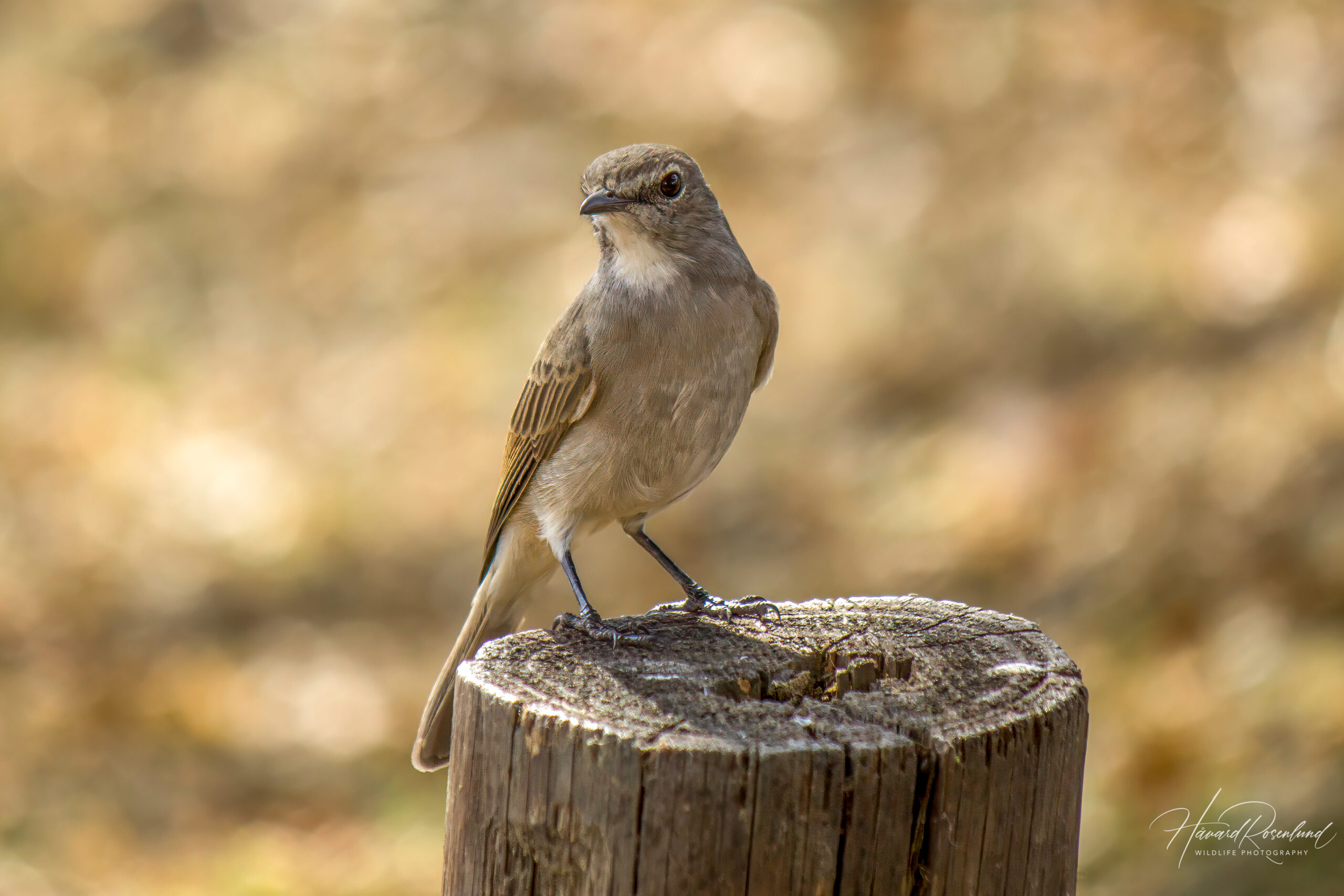
Pale Flycatcher
Agricola pallidus
At a glance
Habitat
- Wooded savanna, broad-leaved woodland including miombo and mopane, forest edges, thickets and gardens
Diet
- Mainly insects and other arthropods; occasionally small fruit
Activity
- Diurnal; hunts from perches with short aerial or ground sallies
Size
- Length: 15–17 cm Weight: 21–28 g
Range
- Patchily distributed across much of sub-Saharan Africa
Description
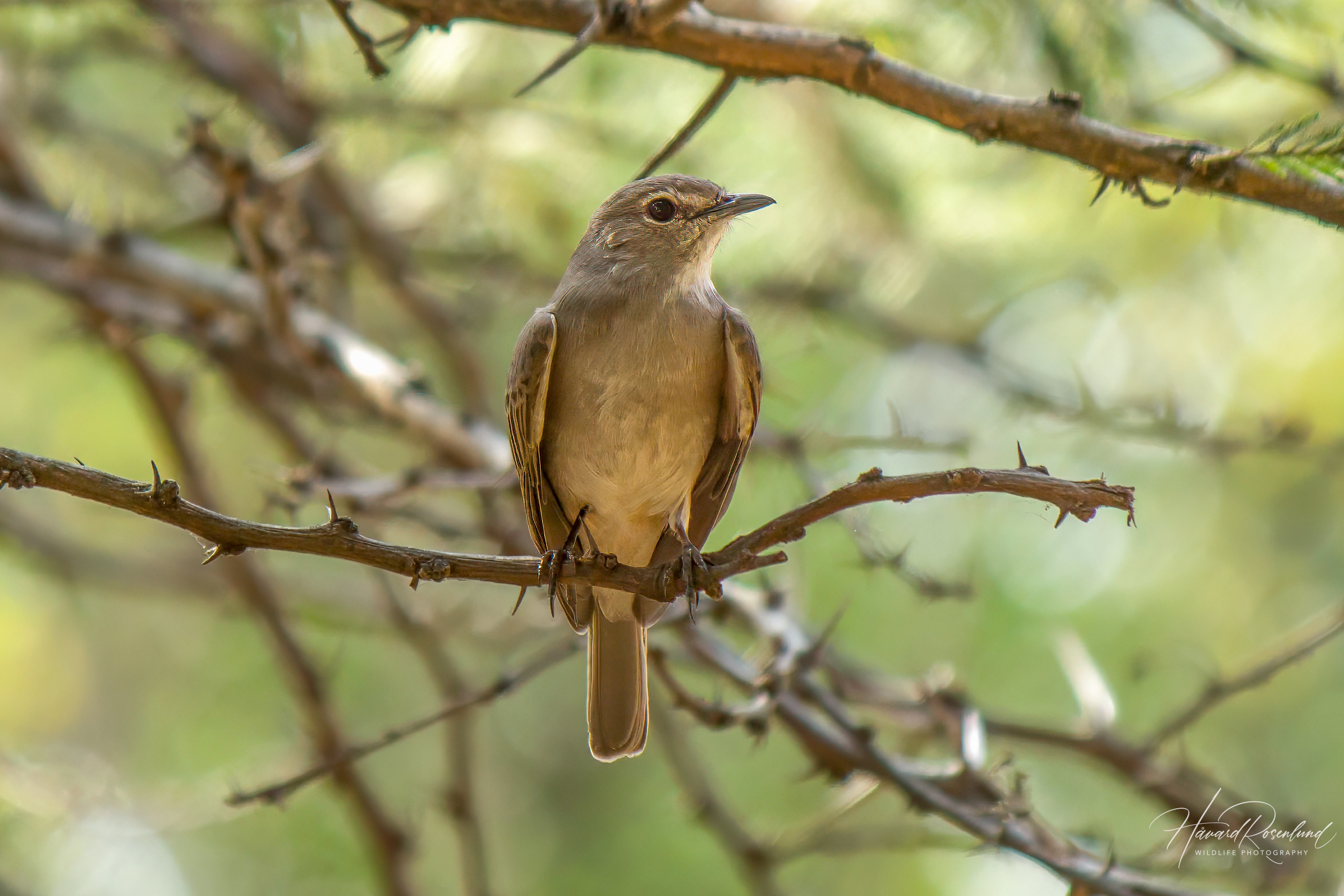
The pale flycatcher (Agricola pallidus) is a fairly large, long-tailed and plainly coloured African flycatcher. It is about 15–17 cm long and typically weighs 21–28 g. The upperparts are earthy grey-brown to warm brown, while the underparts are paler with a whitish throat and centre of the belly. A pale eye-ring, broad-based bill and unstreaked crown are useful identification features. The sexes look alike.
It can resemble the African grey flycatcher (Bradornis microrhynchus), but the pale flycatcher has an unstreaked crown and generally less contrast between the throat and breast.
Taxonomy
The pale flycatcher has moved repeatedly between closely related flycatcher genera. Many older sources use Bradornis pallidus, while several more recent checklists placed it in Melaenornis.
AviList now recognises the species as Agricola pallidus. These name changes reflect revisions to generic boundaries within African flycatchers rather than a split of the pale flycatcher itself, so older combinations still refer to the same species.
Habitat
Pale flycatchers favour wooded but relatively open habitats, particularly wooded savanna and broad-leaved woodland such as miombo and mopane. They also occur along woodland and forest edges, in thickets, riverine vegetation, cultivated landscapes and well-vegetated gardens.
The species is less characteristic of very dry, open savanna. A mixture of trees and open feeding space suits its hunting style, providing exposed perches from which birds can watch the surrounding air, foliage and ground.
Diet
Insects and other arthropods dominate the diet, including beetles, flies, caterpillars and many other small invertebrates. Small fruit is taken occasionally.
Much of the day is spent quietly scanning from a perch between brief feeding sallies. A pale flycatcher watches for movement, makes a short flight to seize prey in the air, from foliage or on the ground, and often returns to the same or a nearby lookout.
Behaviour
Pale flycatchers are usually encountered alone or in pairs and are often unobtrusive despite their habit of using fairly exposed perches. Breeding pairs become territorial around nesting areas, while outside active breeding individuals may range more freely through suitable woodland.
The species is mainly resident, although local movements occur. It is not a long-distance migrant.
Breeding
Breeding timing varies across the wide African range and commonly follows local rains. The nest is a cup of grass, fibres, rootlets and other plant material, placed in a tree, shrub, cavity or sheltered fork.
Clutches usually contain two to four eggs. The female performs most or all of the incubation, which lasts about two weeks, while both parents feed the chicks. Nest parasitism by Klaas's cuckoo (Chrysococcyx klaas) has been recorded.
Status
The pale flycatcher is classified as least concern on the IUCN Red List. It has a broad, although patchy, distribution across sub-Saharan Africa and remains locally common in suitable woodland and savanna.
The species can use secondary vegetation, cultivated areas and gardens, making it less vulnerable to moderate habitat change. Local populations may nevertheless decline where woodland structure is heavily degraded or cleared.
Image gallery
Loading map and observations…
Have you seen this species?
Independent species archive
Did you find this species page useful?
Wildlife Vagabond is independently built and maintained. Voluntary support helps cover hosting, maps, data storage and continued improvements to the species archive.
Support Wildlife VagabondSpecies content will remain freely available.
References
Information about the species’ global distribution and status is based primarily on global Red List data. See the references below for details.
- Avibase. (n.d.). AviList 2025 / Avibase – Pale Flycatcher (Agricola pallidus). https://avibase.bsc-eoc.org/species.jsp?avibaseid=FA03A965234ED42B&lang=EN
- BirdLife International. (n.d.). Pale Flycatcher species factsheet. https://datazone.birdlife.org/species/factsheet/pale-flycatcher-agricola-pallidus
- eBird. (n.d.). Cornell Lab of Ornithology, eBird – Pale Flycatcher. Cornell Lab of Ornithology. https://ebird.org/species/palfly2
- International Union for Conservation of Nature. (n.d.). Pale Flycatcher. The IUCN Red List of Threatened Species. https://www.iucnredlist.org/species/22709035/94189782