
Lesser Black-backed Gull
Larus fuscus
At a glance
Habitat
- Coastal islands, open shore and rooftops; estuaries, inland waters, farmland and towns outside breeding
Diet
- Fish, marine invertebrates, insects, earthworms, carrion and other readily available foods
Activity
- Diurnal
Size
- Length: 51–61 cm Weight: 831 g
Range
- Breeds from western Europe across northern Eurasia; many winter in southern Europe and Africa
Description
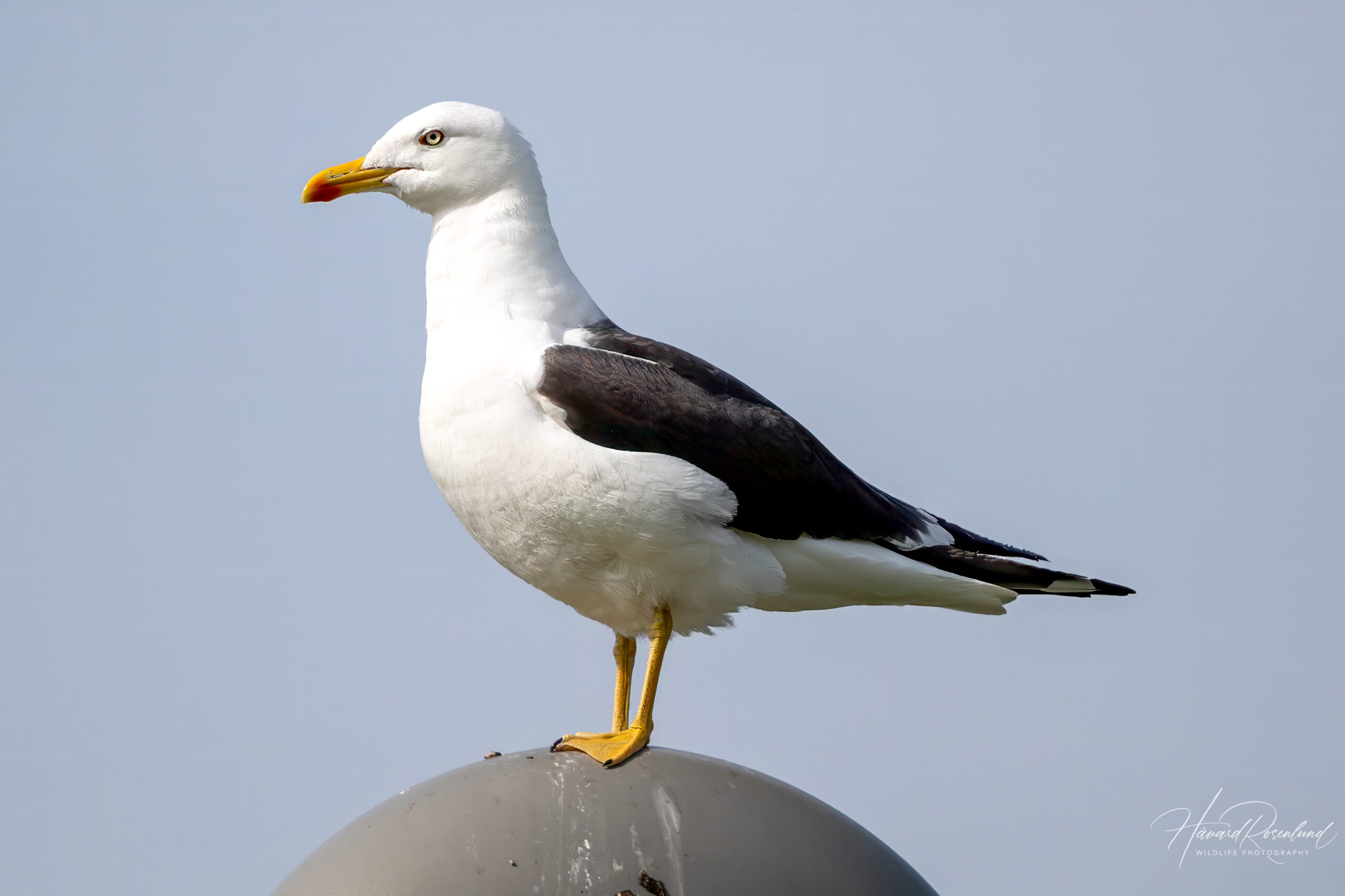
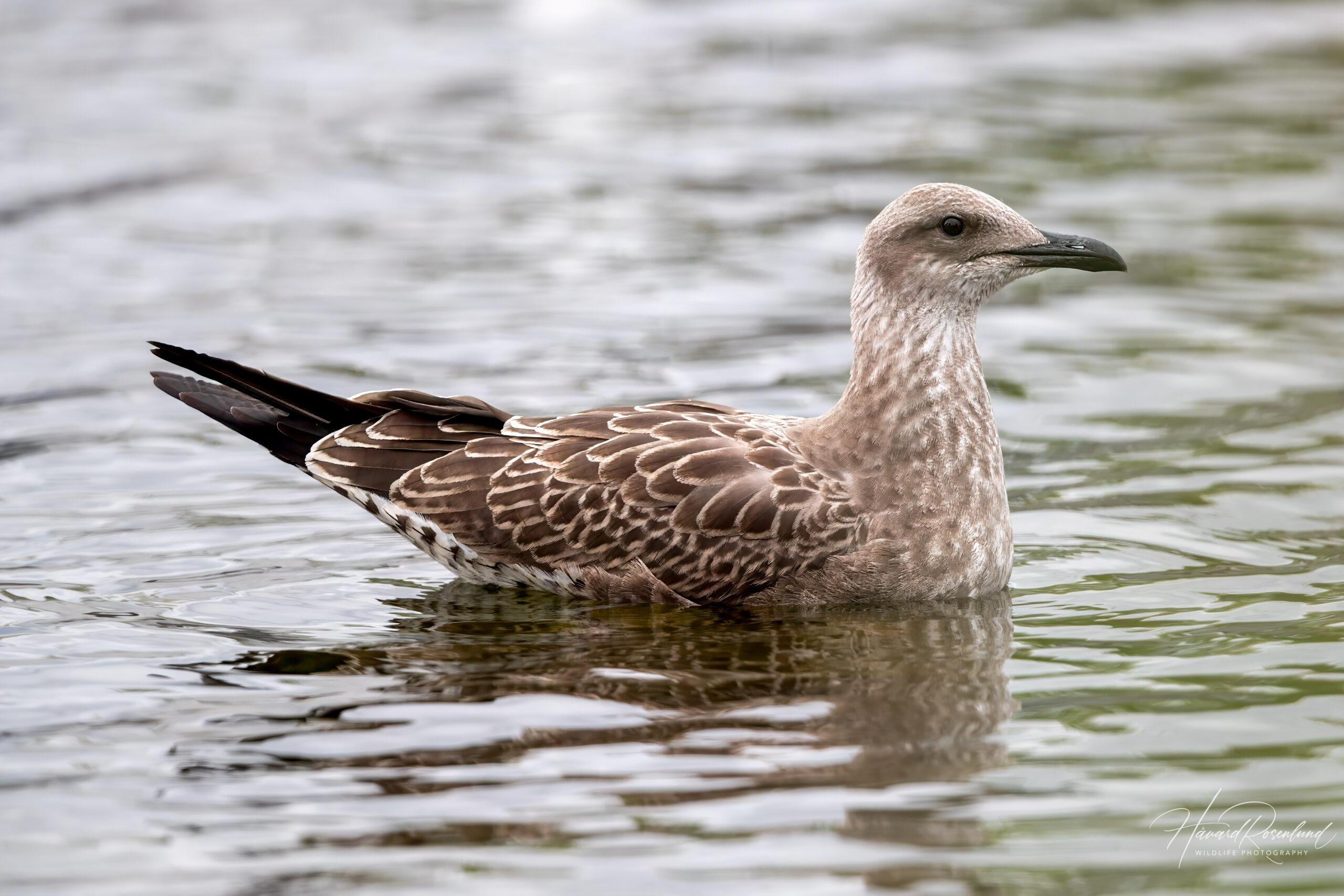
The lesser black-backed gull (Larus fuscus) is a medium-sized dark-backed gull breeding from western Europe across northern Eurasia. Adults are about 51–61 cm long and average roughly 831 g. They have a dark grey to nearly black back (mantle) and upperwings, white head and underparts, yellow legs and a yellow bill with a red spot near the tip of the lower mandible. Juveniles are mottled brown and take several years to acquire full adult plumage.
Compared with the much larger great black-backed gull (Larus marinus), the lesser black-backed gull is slimmer and lighter, with yellow rather than pinkish legs and a more slender bill. Mantle shade varies substantially among its subspecies, from dark slate-grey in western birds to almost black in the nominate Baltic form.
Taxonomy
Several subspecies are recognised and differ in mantle colour, breeding distribution and migration. The nominate L. f. fuscus, often known as the Baltic gull, breeds around the Baltic and parts of northern Fennoscandia and is the darkest form. L. f. intermedius breeds from the Netherlands and Denmark north through much of southern Scandinavia, while the paler L. f. graellsii breeds chiefly around Britain, Ireland and nearby Atlantic coasts.
The boundaries between forms are not always sharp. Intermediate-looking birds occur where neighbouring populations meet, and identification of subspecies away from known breeding areas can be difficult. The differences matter biologically because the forms also use very different migration routes and wintering regions.
Habitat
Lesser black-backed gulls breed on coastal islands, rocky shores, dunes, moorland and increasingly on flat roofs in towns and cities. Outside the breeding season they use estuaries, beaches, offshore waters, lakes, rivers, reservoirs, farmland and urban areas.
Despite being a marine gull, individuals and colonies can differ greatly in how much they use the sea. A three-season GPS study published in 2019 followed 12 urban-nesting gulls in Bristol. Although the sea lay about 10 km away, the birds made almost no use of it during breeding: roughly two-thirds of their time away from the nest was spent in suburban and urban areas and one-third in rural green areas, mainly farmland. The species is therefore better viewed as an exceptionally flexible coastal and inland forager than as a bird restricted to marine habitat.
Diet
The diet is highly opportunistic and includes fish, marine invertebrates, insects, earthworms, eggs, small vertebrates, carrion and human-derived food. Birds may forage at the sea surface, on ploughed fields, in parks, at refuse sites or around fishing vessels.
Individual birds can specialise strongly in particular food sources. GPS tracking of 40 breeding gulls on Texel showed that eight females in particular made heavy use of fishery discards during weekdays and switched to terrestrial feeding when fishing activity stopped at weekends, without spending more time foraging overall. In an inland urban colony in Scotland, analyses of regurgitated food showed that earthworms could form an important part of the breeding diet. Such variation allows neighbouring birds to exploit very different food sources.
Migration
Migration distance and direction vary strongly among subspecies and individuals. Many intermedius and graellsii from north-western Europe move toward south-western Europe, the western Mediterranean and West Africa, while some western birds remain much farther north.
The nominate L. f. fuscus follows a striking eastern flyway. A tracking study of birds breeding in northern Norway found that most wintered at lakes in East Africa, with the south-eastern Mediterranean as the most important stopover region. During autumn migration they covered about 399 km per day on average, more than twice as much as during spring migration in the same study. This shows how rapidly this form can cover its long route.
A multi-year GPS study of 82 adults from eight colonies in western Europe found that individual winter distributions, migration routes and timing were generally much more consistent within the same bird than between different birds. Ninety-four per cent used overlapping winter areas in every year they were tracked, although some individuals still varied substantially or occasionally changed strategy. The species therefore combines enormous variation among individuals with a strong tendency for each bird to return to familiar routes and wintering areas.
Breeding
Lesser black-backed gulls usually breed colonially, sometimes alongside herring gulls (Larus argentatus). The nest is a shallow scrape lined with vegetation and can be placed on islands, coastal ground, moorland or flat roofs. A typical clutch contains three eggs.
Both parents incubate for about 24–27 days and feed the downy chicks. Young become capable of flight after roughly 30–40 days but may remain dependent on their parents for some time afterwards. One brood is typical. Most birds first breed at around four years of age, and ringing records show that the species can live for more than three decades; one ringed individual reached at least 34 years and 10 months.
Relationship with humans
The species has adapted strongly to human-altered food supplies and nesting opportunities. Fishing discards, refuse sites, farmland and urban green spaces can all provide food, while flat roofs offer nesting sites with few ground predators. Urban-nesting populations have expanded in several regions.
This success can also create conflict. Roof-nesting gulls may be noisy and defensive around chicks, while easy access to waste and deliberate or accidental feeding can make towns reliable places to find food. Research on city-nesting birds shows, however, that urban gulls use a broad range of habitats rather than simply depending on refuse. Their use of towns therefore reflects both nesting opportunities and food gathered across the wider surrounding landscape.
Status
The lesser black-backed gull is classified as least concern on the IUCN Red List. It has a very large range, but trends differ markedly among regions and subspecies.
Some urban populations have expanded, while several traditional coastal populations have declined as food supplies and breeding conditions have changed. The nominate fuscus has undergone substantial regional declines around parts of the Baltic and Fennoscandia, whereas other forms have fared better. A species can therefore remain secure globally while particular subspecies and regional populations decline sharply.
Image gallery
Loading map and observations…
Have you seen this species?
Independent species archive
Did you find this species page useful?
Wildlife Vagabond is independently built and maintained. Voluntary support helps cover hosting, maps, data storage and continued improvements to the species archive.
Support Wildlife VagabondSpecies content will remain freely available.
References
Information about the species’ global distribution and status is based primarily on global Red List data. See the references below for details.
- BirdLife International. (n.d.). Lesser Black-backed Gull species factsheet. https://datazone.birdlife.org/species/factsheet/lesser-black-backed-gull-larus-fuscus
- British Trust for Ornithology. (n.d.). Lesser Black-backed Gull. https://www.bto.org/learn/about-birds/birdfacts/lesser-black-backed-gull
- Brown, J. M., van Loon, E. E., Bouten, W., Camphuysen, K. C. J., Lens, L., Müller, W., Thaxter, C. B., & Shamoun‐Baranes, J. (2021). Long‐distance migrants vary migratory behaviour as much as short‐distance migrants: An individual‐level comparison from a seabird species with diverse migration strategies. Journal of Animal Ecology, 90(5), 1058-1070. https://doi.org/10.1111/1365-2656.13431
- Bustnes, J. O., Moe, B., Helberg, M., & Phillips, R. A. (2013). Rapid long‐distance migration in N orwegian L esser B lack‐backed G ulls L arus fuscus fuscus along their eastern flyway. Ibis, 155(2), 402-406. https://doi.org/10.1111/ibi.12022
- Coulson, J. C., & Coulson, B. A. (2008). Lesser Black-backed GullsLarus fuscusnesting in an inland urban colony: the importance of earthworms (Lumbricidae) in their diet. Bird Study, 55(3), 297-303. https://doi.org/10.1080/00063650809461535
- International Union for Conservation of Nature. (n.d.). Lesser Black-backed Gull. The IUCN Red List of Threatened Species. https://www.iucnredlist.org/species/22694373/211737029
- Spelt, A., Williamson, C., Shamoun-Baranes, J., Shepard, E., Rock, P., & Windsor, S. (2019). Habitat use of urban-nesting lesser black-backed gulls during the breeding season. Scientific Reports, 9(1), 10527. https://doi.org/10.1038/s41598-019-46890-6
- Tyson, C., Shamoun-Baranes, J., Van Loon, E. E., Camphuysen, K. (. J., & Hintzen, N. T. (2015). Individual specialization on fishery discards by lesser black-backed gulls (Larus fuscus). ICES Journal of Marine Science, 72(6), 1882-1891. https://doi.org/10.1093/icesjms/fsv021