
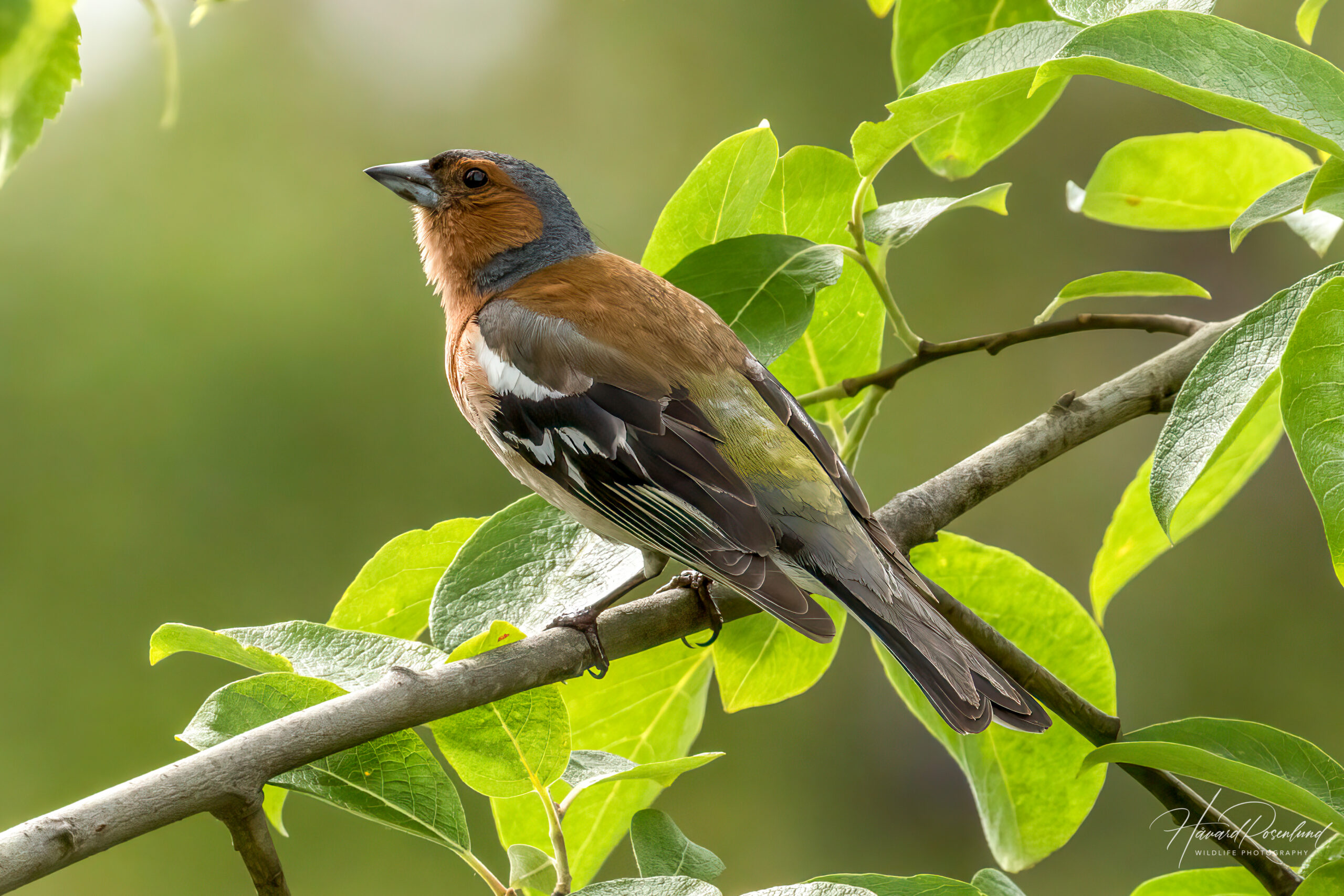
Common Chaffinch
Fringilla coelebs
At a glance
Habitat
- Woodland, forest edges, parks, gardens, orchards and farmland with trees or hedges
Diet
- Mostly seeds, buds and fruit; insects and other invertebrates are important during breeding
Activity
- Diurnal
Size
- Length: 15 cm Weight: 19–26 g
Range
- Europe and western Asia, with populations extending south into the Mediterranean region and North Africa
Description
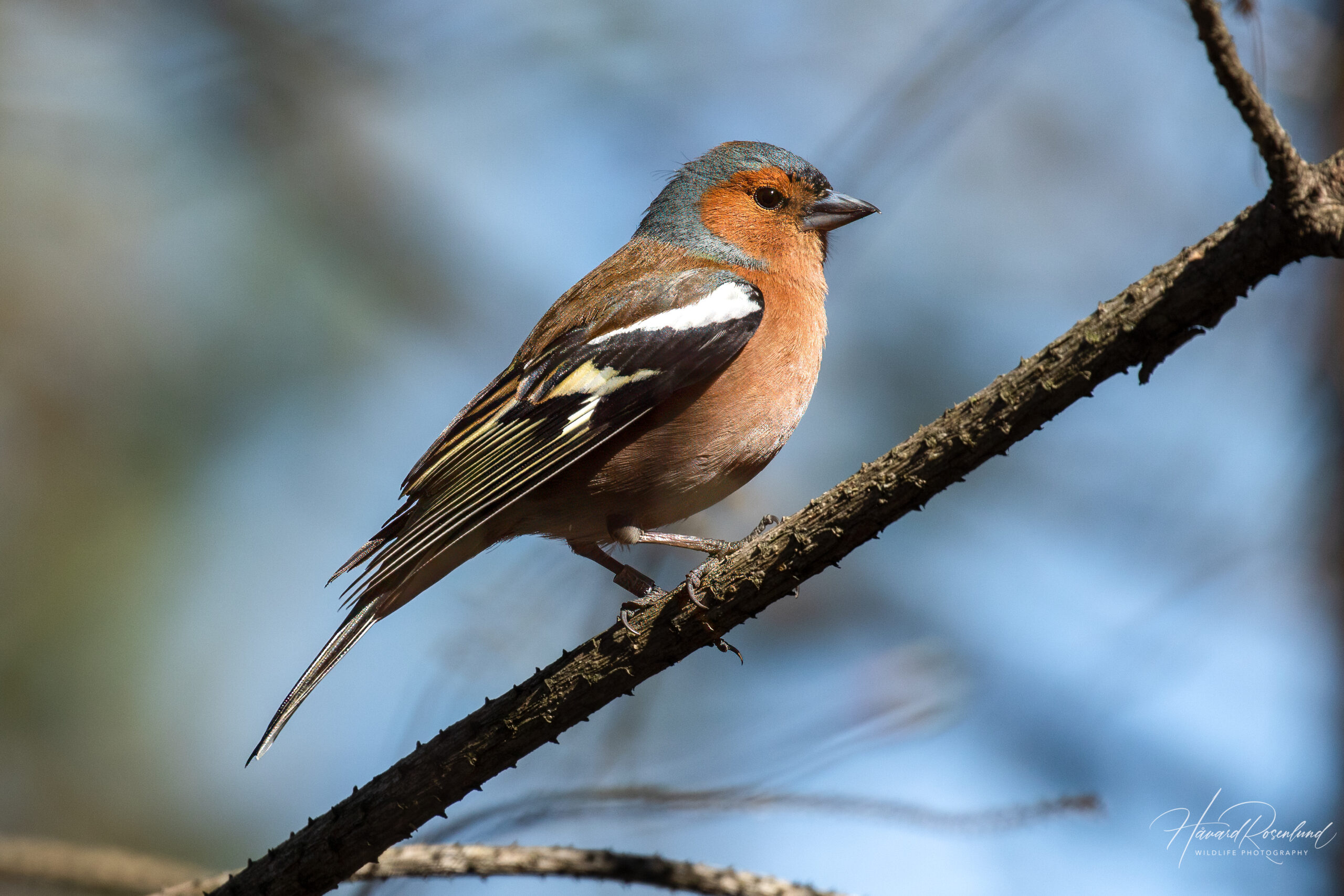
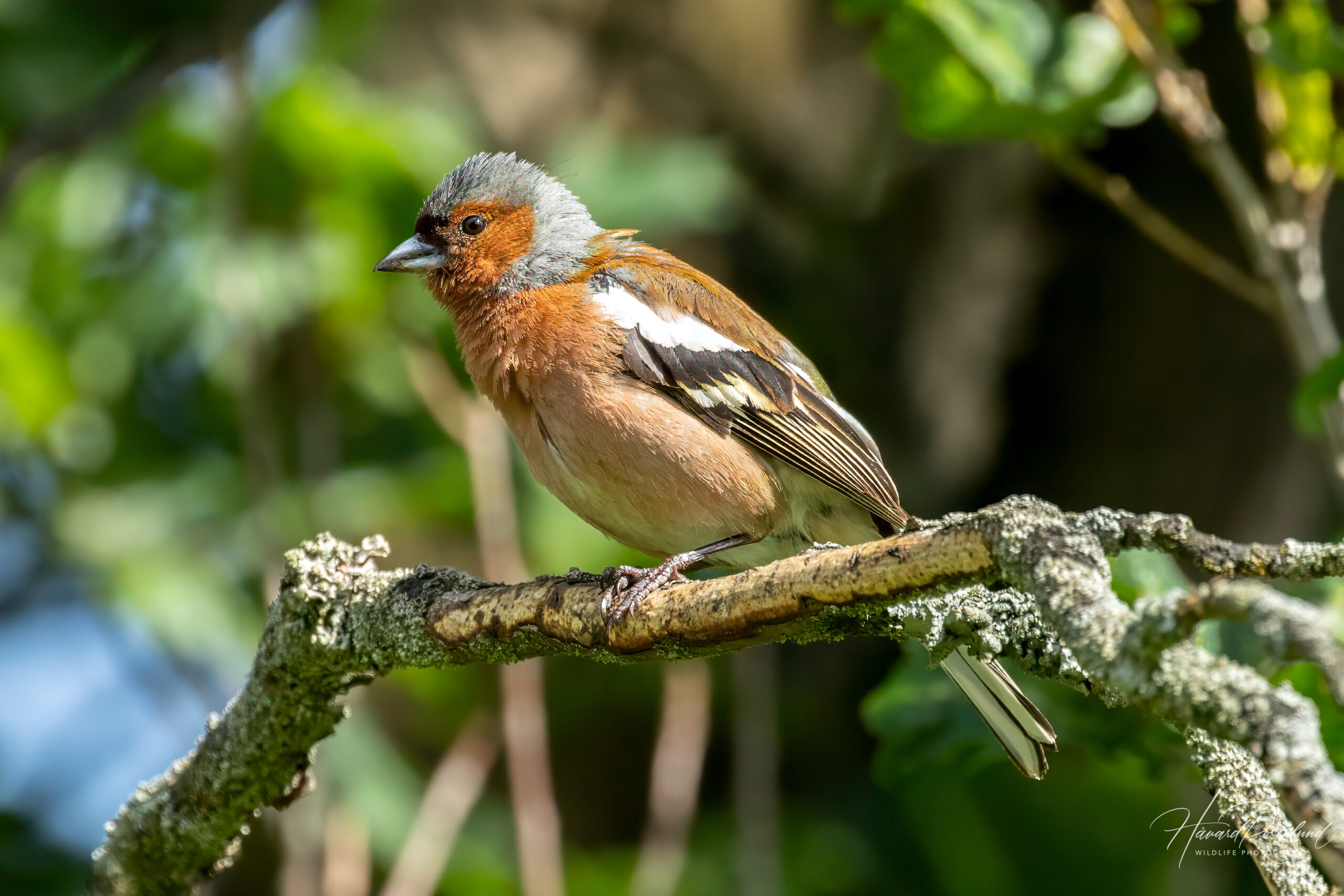
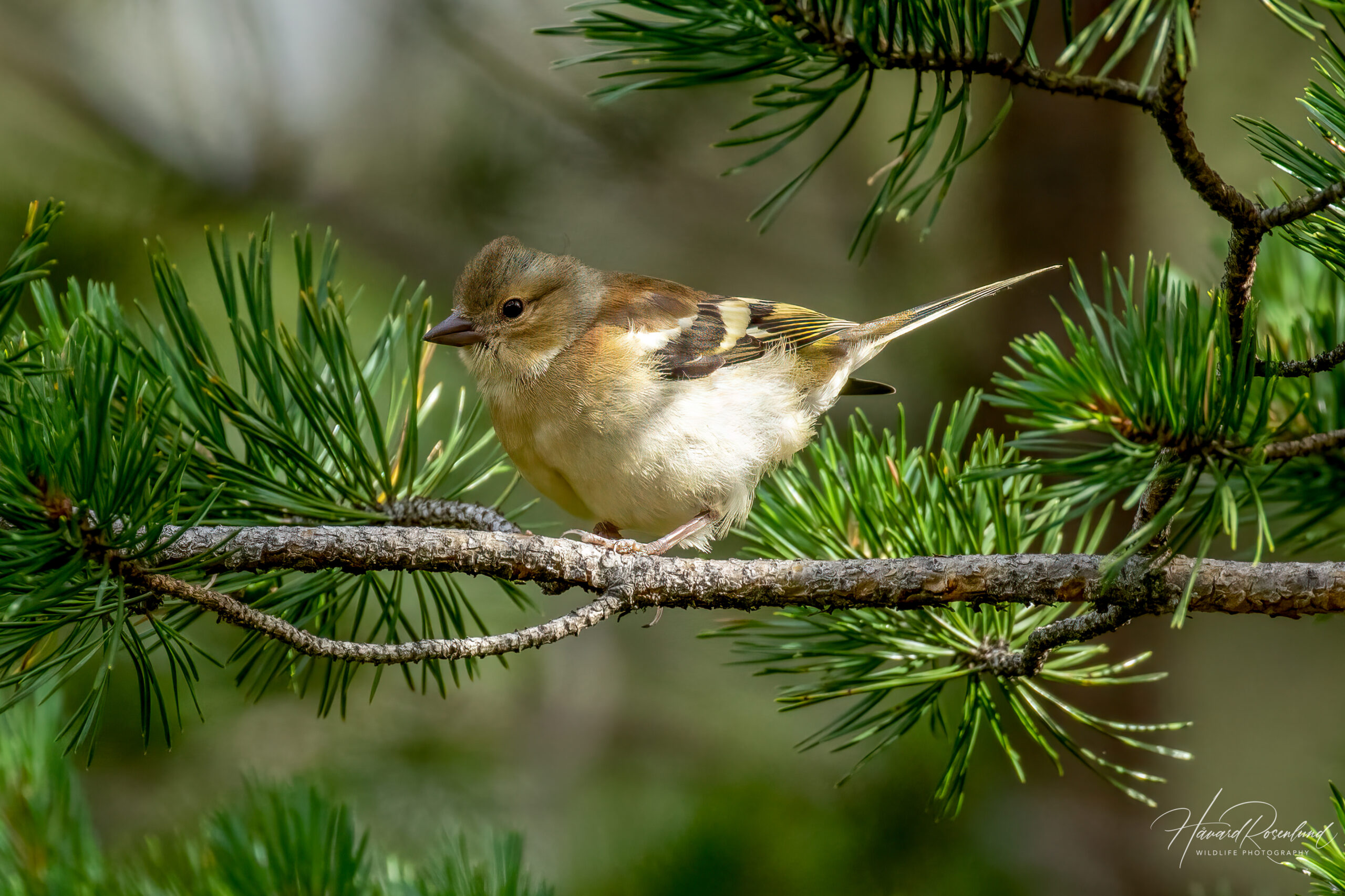
The common chaffinch (Fringilla coelebs) is a compact finch and one of the most familiar woodland songbirds across Europe. Adults are about 15 cm long and weigh around 22 g on average. Breeding males have a blue-grey crown and nape, warm pinkish-chestnut underparts, a brown back and greenish rump. Females and juveniles are much duller grey-brown, but both sexes share the strong black-and-white wing pattern and white outer tail feathers that are conspicuous in flight.
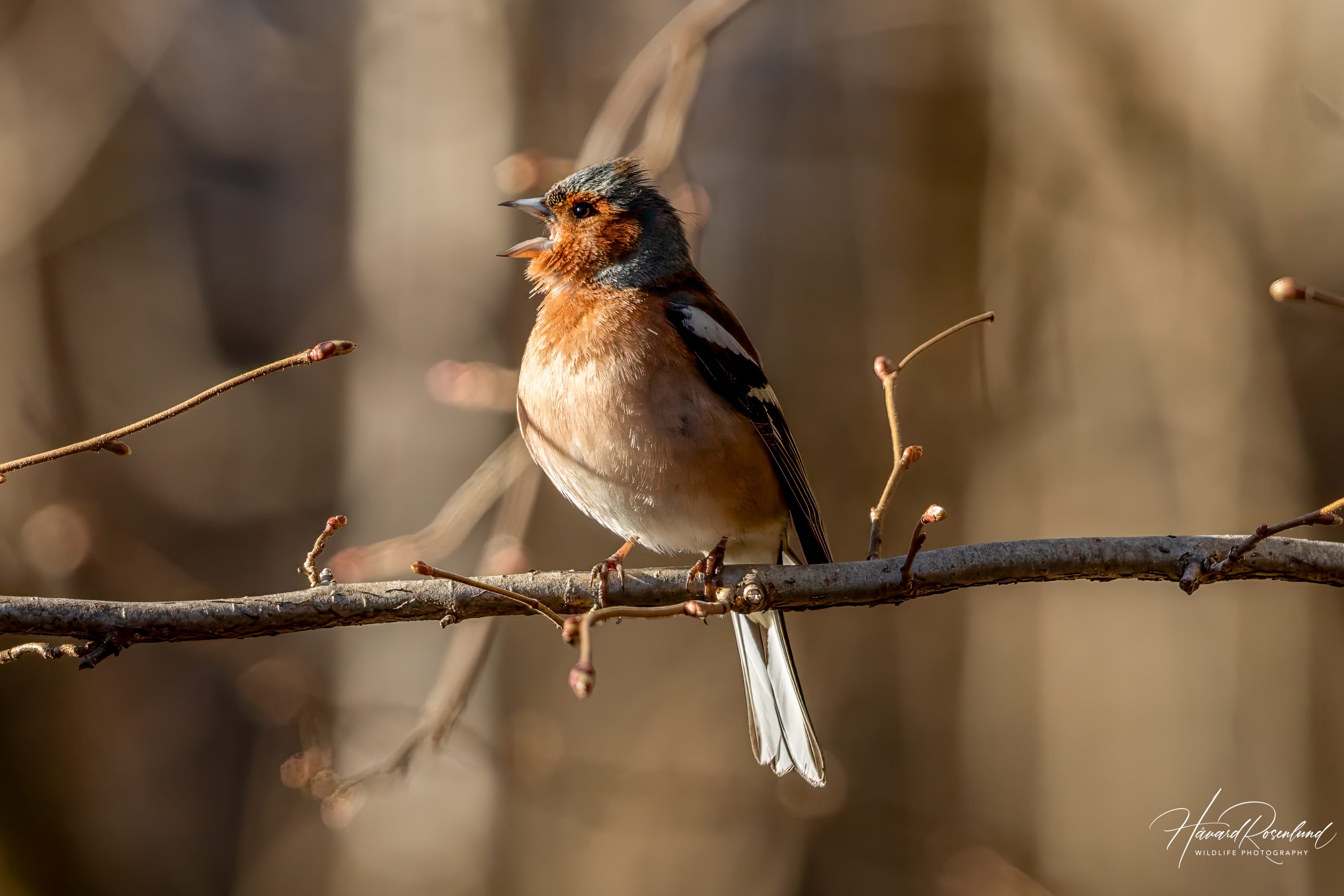
The male’s song is equally characteristic: a rapid, accelerating series of notes ending in a flourish.
Habitat
Chaffinches use a broad range of wooded and semi-open habitats, including deciduous, mixed and coniferous forest, hedgerows, orchards, parks, gardens and farmland with scattered trees. They are especially successful where trees provide nesting and song sites while more open ground nearby offers feeding opportunities.
The species is therefore not dependent on one particular woodland type. Mature woodland, forest edges and human-modified landscapes can all be suitable when they provide a mixture of cover, nesting sites and productive ground or vegetation for feeding.
Diet
Seeds, buds and fruit dominate much of the adult diet outside the breeding season. Chaffinches frequently feed on the ground, taking weed seeds, fallen tree seeds and grain, and can gather in large feeding flocks where food is concentrated. Beech mast can become an especially important winter food in years with heavy seed crops.
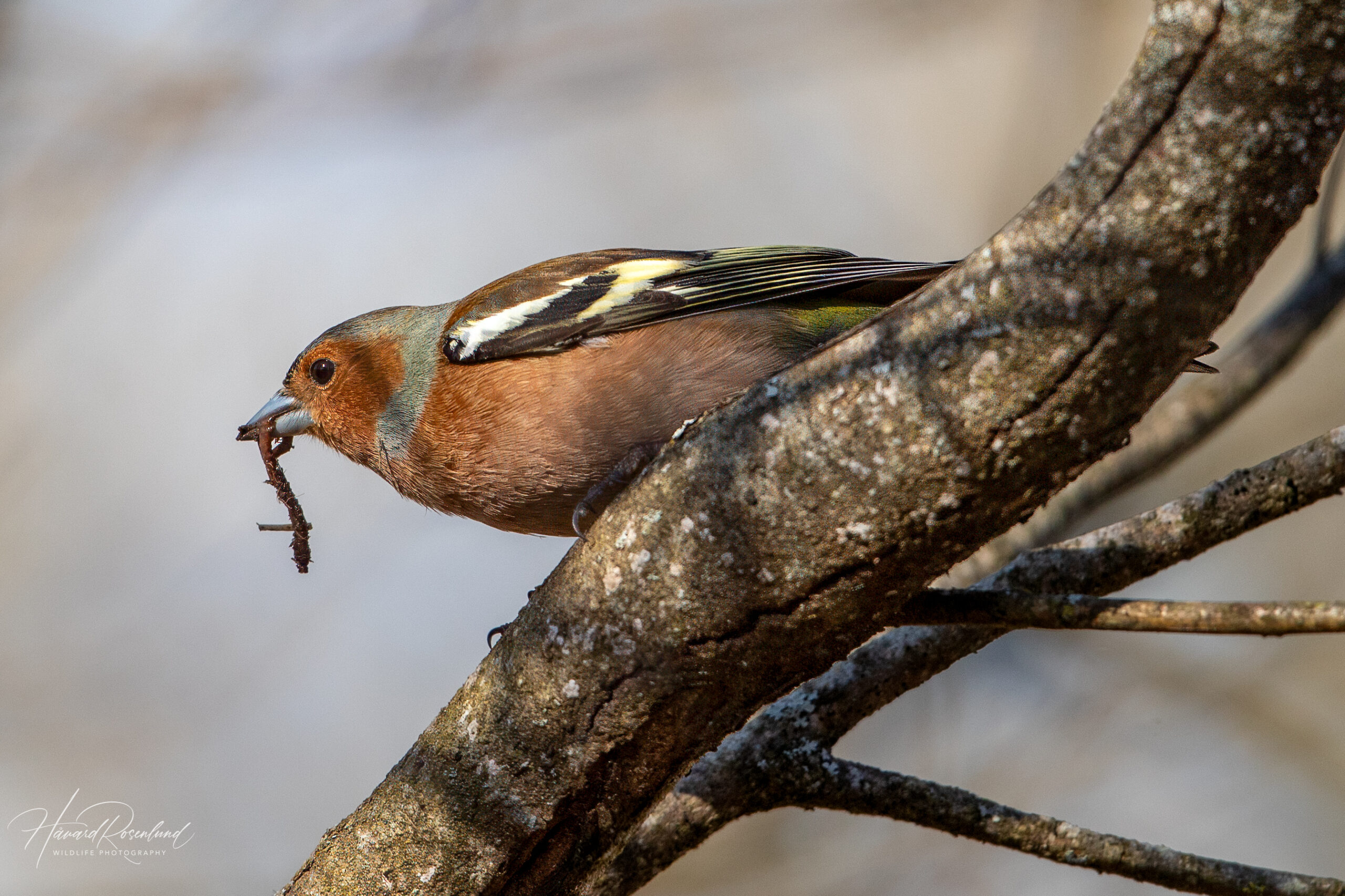
During spring and summer, insects, caterpillars and other invertebrates become much more important. Nestlings are fed mainly protein-rich animal prey, so breeding birds depend on a good supply of invertebrates even though the adults eat large quantities of seeds during much of the rest of the year.
Song
The song is a short, flowing phrase with a distinctive ending.
Male chaffinches sing repeatedly from prominent perches from early spring, often before nesting itself is underway. They use the song to advertise and defend a territory, and it also plays a role in attracting and maintaining contact with a mate.
Studies of song learning have shown that young chaffinches learn much of their song from other males rather than developing one completely fixed pattern. Small differences in what is copied and how it is reproduced allow local song types and dialects to develop and persist between generations.
Migration
Migration varies strongly with latitude and climate. Northern and eastern populations are mostly migratory and move into western and southern Europe for winter, while many birds in milder parts of western and southern Europe are resident or make shorter seasonal movements.
Outside breeding, chaffinches often form loose flocks and may feed alongside bramblings (Fringilla montifringilla) and other seed-eating birds. Winter populations in western Europe can therefore contain both local residents and migrants that have travelled hundreds or thousands of kilometres from northern breeding areas.
Breeding
The female builds a finely constructed cup nest in the fork of a tree or shrub. Moss, grass and plant fibres are bound together with spider silk, and the exterior is often camouflaged with pieces of lichen and bark. The male contributes little to the actual nest building.
A typical clutch contains 4–5 bluish, spotted eggs. The female incubates for about 12–13 days, while both parents feed the chicks after hatching. The young normally remain in the nest for about 13–15 days before fledging and can continue to depend on their parents for roughly another two to three weeks. One brood is typical.
Disease
Chaffinches are among the European finches affected by finch trichomonosis, a disease caused by the protozoan parasite Trichomonas gallinae. The disease emerged in British finches in 2005 and caused epidemic mortality and regional population declines in both chaffinches and European greenfinches (Chloris chloris). Genetic work published in 2011 identified a clonal strain of the parasite as the agent behind the emerging epidemic.
The epidemic subsequently spread eastward and reached southern Fennoscandia. A study published in 2013 documented population effects in Finland and found that migrating chaffinches may have helped carry the parasite between regions. Greenfinches suffered the most dramatic early losses, but the impact on chaffinches has also become substantial: the UK breeding population fell by 36% between 1995 and 2024, with trichomonosis considered the main driver of the recent decline.
Status
The common chaffinch is classified as least concern on the IUCN Red List. It has a very large range and remains one of the most numerous birds across much of Europe.
Population trends vary regionally and can be influenced by woodland conditions, food availability, weather and disease. Despite declines in some areas, the species remains globally widespread and abundant.
Image gallery
Loading map and observations…
Have you seen this species?
Independent species archive
Did you find this species page useful?
Wildlife Vagabond is independently built and maintained. Voluntary support helps cover hosting, maps, data storage and continued improvements to the species archive.
Support Wildlife VagabondSpecies content will remain freely available.
References
Information about the species’ global distribution and status is based primarily on global Red List data. See the references below for details.
- BirdLife International. (n.d.). Common Chaffinch species factsheet. https://datazone.birdlife.org/species/factsheet/common-chaffinch-fringilla-coelebs
- British Trust for Ornithology. (n.d.). Chaffinch. https://www.bto.org/learn/about-birds/birdfacts/chaffinch
- International Union for Conservation of Nature. (n.d.). Common Chaffinch. The IUCN Red List of Threatened Species. https://www.iucnredlist.org/species/22720030/155432370
- Lachlan, R., & Slater, P. (2003). Song learning by chaffinches: how accurate, and from where? Animal Behaviour, 65(5), 957-969. https://doi.org/10.1006/anbe.2003.2091
- Lawson, B., Cunningham, A. A., Chantrey, J., Hughes, L. A., John, S. K., Bunbury, N., Bell, D. J., & Tyler, K. M. (2011). A clonal strain of Trichomonas gallinae is the aetiologic agent of an emerging avian epidemic disease. Infection, Genetics and Evolution, 11(7), 1638-1645. https://doi.org/10.1016/j.meegid.2011.06.007
- Lehikoinen, A., Lehikoinen, E., Valkama, J., Väisänen, R. A., & Isomursu, M. (2013). Impacts of trichomonosis epidemics on Greenfinch Chloris chloris and Chaffinch Fringilla coelebs populations in Finland. Ibis, 155(2), 357-366. https://doi.org/10.1111/ibi.12028
- Riebel, K., Lachlan, R. F., & Slater, P. J. (2015). Learning and Cultural Transmission in Chaffinch Song. Advances in the Study of Behavior, 181-227. https://doi.org/10.1016/bs.asb.2015.01.001