
Little Tern
Sternula albifrons
At a glance
Habitat
- Coasts, estuaries, lagoons, saltpans, river mouths and large inland waters
Diet
- Mainly small fish; also crustaceans and aquatic insects
Activity
- Diurnal
Size
- Length: 21–25 cm Weight: 39–63 g
Range
- Europe, Africa, Asia and Australasia; many northern populations migrate south
Description
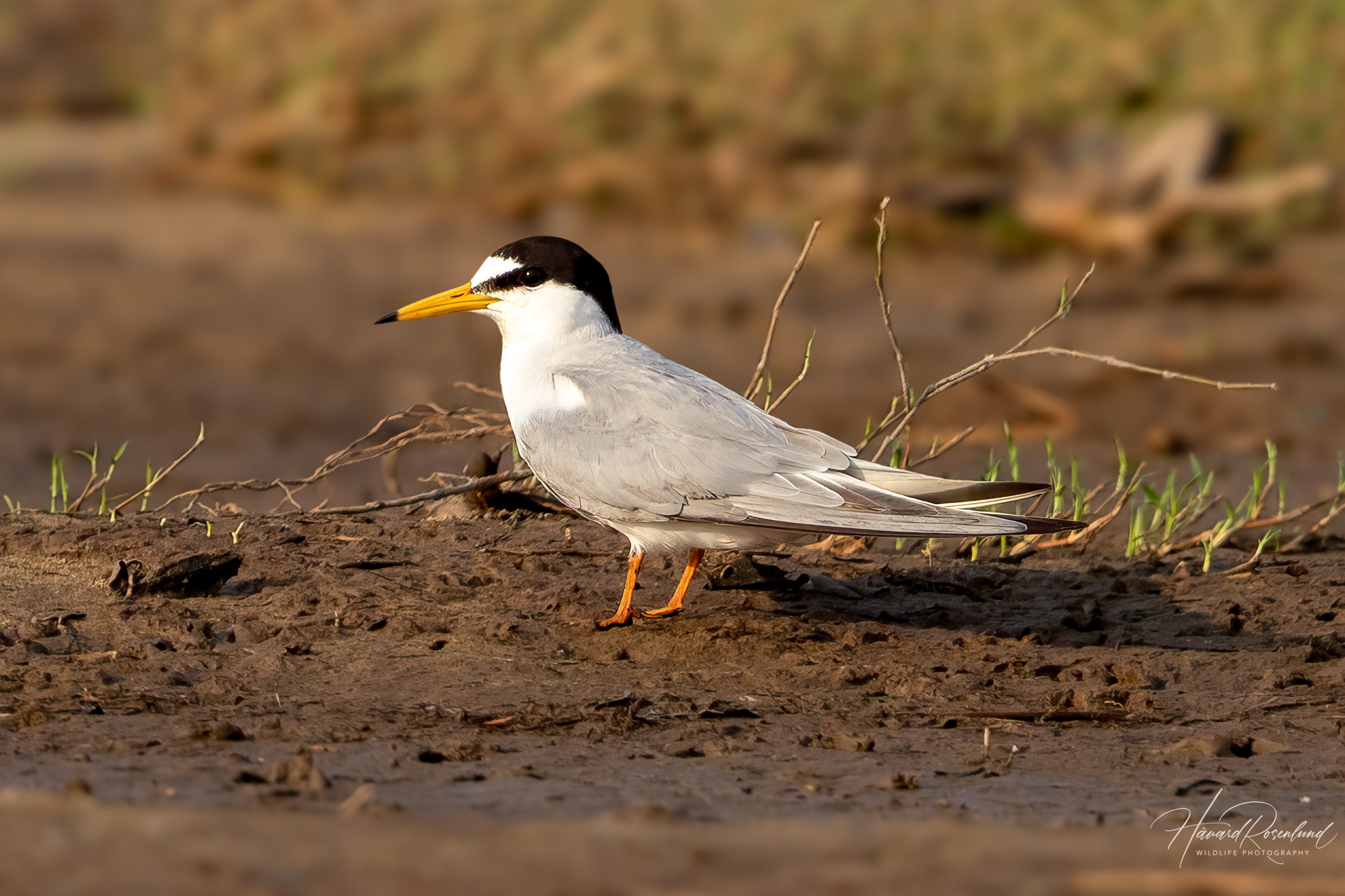
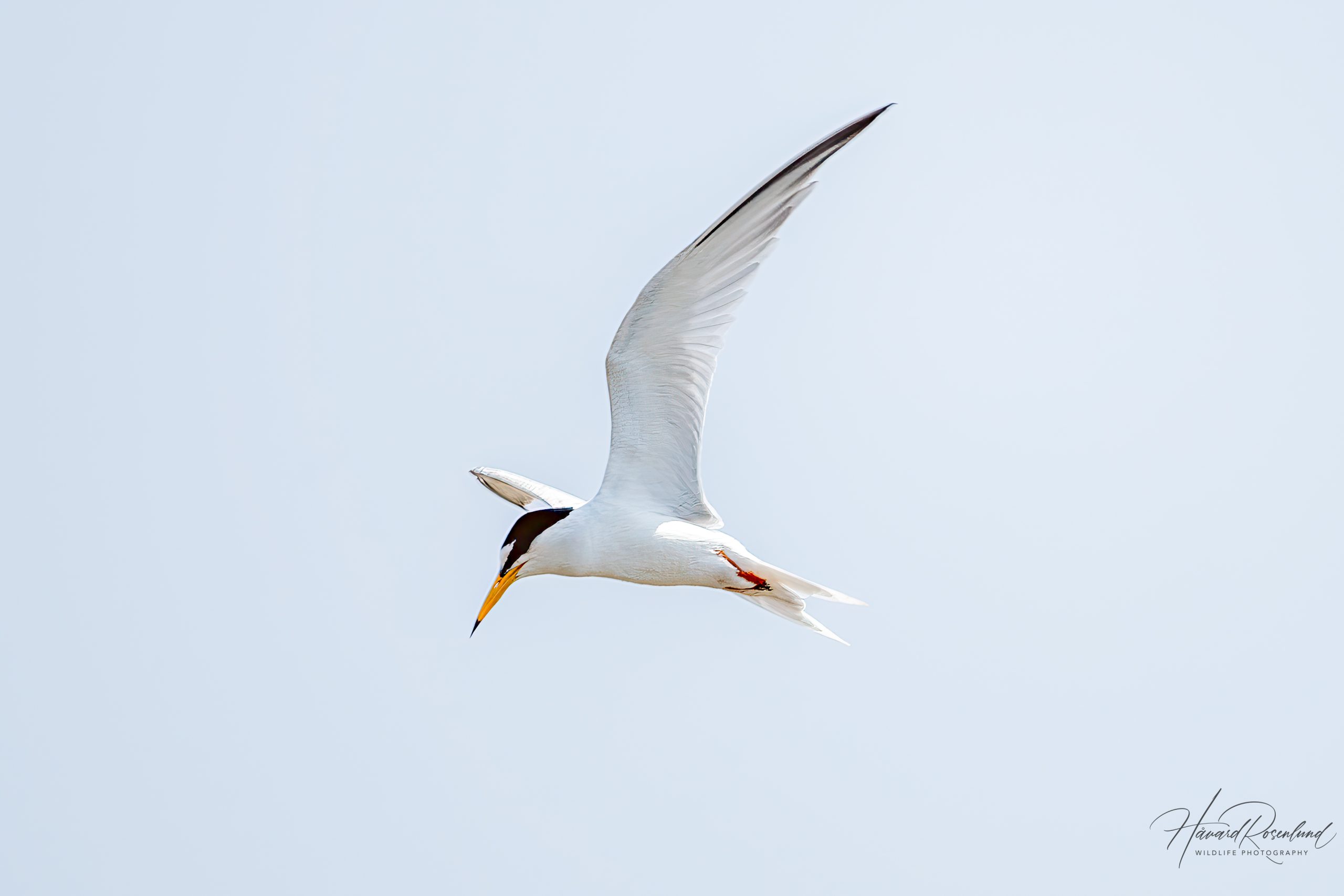
The little tern (Sternula albifrons) is one of the world's smallest terns, measuring about 21–25 cm with a wingspan of roughly 41–47 cm and a weight of around 39–63 g. Breeding adults have pale grey upperparts, white underparts, a black cap separated by a white forehead, and a slender yellow bill with a black tip. The legs are yellow and the short tail is forked.
Outside the breeding season the forehead becomes more extensively white and the bill and legs darken. Saunders's tern (Sternula saundersi) is extremely similar and overlaps with little tern around parts of the Indian Ocean region. The shape of the white forehead, the pattern of the outer flight feathers and leg colour can help separate them, but identification can be difficult.
Habitat
Little terns occur along coasts, estuaries, lagoons, saltpans, river mouths and large inland rivers, lakes and reservoirs. Feeding usually takes place over shallow, relatively sheltered water, while breeding requires open ground such as sand, shingle, gravel or exposed islands with little vegetation.
The quality of a breeding site depends on more than the nesting surface itself. Adults need productive feeding waters close enough to deliver small fish repeatedly to mates and chicks. Colonies therefore depend on both suitable nesting ground and nearby feeding waters.
Diet
Small fish form the core of the diet, supplemented by shrimps, other crustaceans and aquatic insects. A study published in 2025 at two colonies in Ria Formosa, southern Portugal, analysed 182 regurgitates and found sand smelts (Atherina spp.) and gobies (Pomatoschistus spp.) to be the dominant prey at both sites.
Hunting
Little terns hunt visually while flying low over shallow water. A bird may pause in a brief hover before making a rapid surface plunge, often entering only the upper part of the water column to seize fish that have come close enough to the surface. Water clarity is therefore important: prey must be visible from the air before the attack begins.
The 2025 study in Ria Formosa also tracked nine breeding adults at the two colonies during 2021–2022. The birds foraged mainly in waters around their colonies, particularly entrance channels and the adjacent ocean. All nine foraged mainly during daylight. Foraging can still shift quickly among nearby feeding areas as tides, currents and local prey concentrations change.
Behaviour
Little terns are active, agile fliers that may gather into larger resting flocks where safe open banks are available. Between feeding bouts they often rest communally on beaches, sandbars, mudflats or other open surfaces with a clear view of approaching danger.
The high, sharp calls are used frequently in contact and alarm, and birds can become conspicuously vocal when disturbed. Outside the immediate breeding period they remain highly mobile and readily shift among nearby roosting and resting sites.
Migration
Movement patterns differ across the broad range. Populations breeding in Europe and northern Asia are long-distance migrants, travelling south after breeding to warmer coasts in Africa, southern Asia and the Indian Ocean region. Some populations in warmer areas are resident or make shorter seasonal movements.
Migrating birds depend on a chain of estuaries, coastlines, lagoons and large river systems where they can rest and feed. Suitable feeding and resting sites are therefore important throughout the annual cycle, not only around the breeding colonies.
Breeding
Breeding timing varies geographically and commonly falls between April and July across much of the Northern Hemisphere. Colonies are established on bare beaches, shingle banks, sandbars, islands, saltpans and similar open surfaces. One to three camouflaged eggs are laid in a shallow scrape.
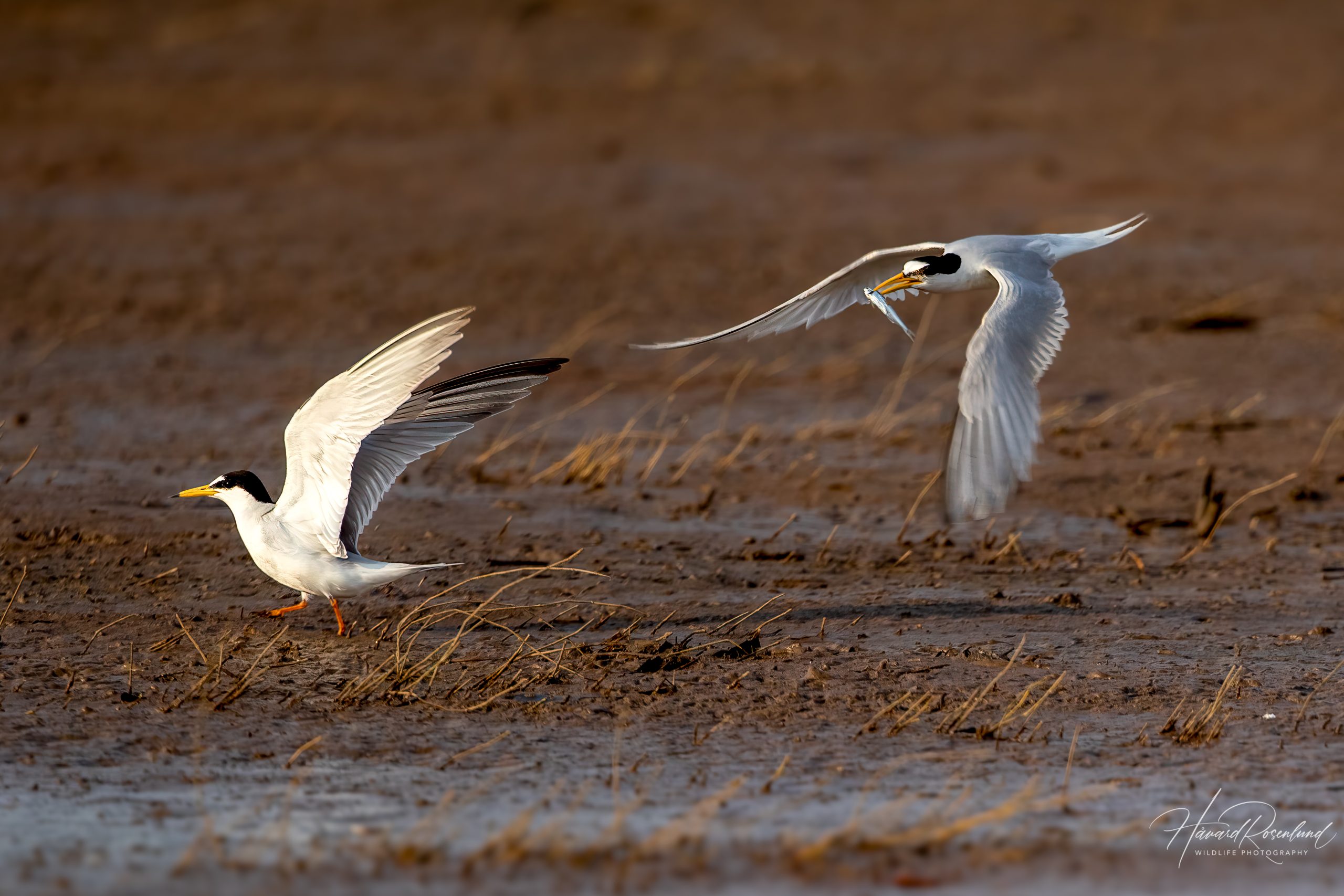
Courtship includes aerial display and fish offerings from the male to the female. Both parents incubate and later feed the chicks, while adults defend the colony vigorously and may repeatedly dive at gulls, crows, mammals or people that approach too closely. The young leave the nest scrape soon after hatching and hide nearby while their parents continue to bring fish.
Incubation normally lasts about three weeks, and the young become capable of flight after roughly another three to four weeks. A 2025 study at the Sabkhat Al-Fasl Lagoons in Saudi Arabia found ground temperatures ranging from about 25 °C at night to more than 50 °C during the day. At camera-monitored nests, adults incubated for more than 95% of the time both during the hottest periods above 45 °C and during cooler nights below 30 °C, often orienting their bodies to shade the clutch in strong heat.
Ground nesting leaves colonies exposed to predators, flooding, storms, vehicles, dogs and human recreation. Disturbance can force adults away from eggs or young and may reduce breeding success even when apparently suitable nesting substrate remains.
Status
The little tern is classified as least concern on the IUCN Red List. It has an extremely large global range, but regional trends differ considerably, and several populations are declining or considered threatened at national or regional level.
The main threats are loss and disturbance of open nesting habitat, coastal development, river regulation, sediment extraction, flooding, rising sea level and predators concentrated around colonies. Because colonies can shift between years, protection often has to follow where the birds nest rather than focus on a single fixed patch. A study published in 2007, following breeding in Ria Formosa in southern Portugal from 2003–2005, found nesting attempts on sandy beaches up to 34 times more likely to succeed where warning signs were installed and wardens protected the colonies.
Saltpans and other human-made habitats can provide important alternative nesting areas. A 2025 study in the Bay of Cádiz, Spain, found that birds nesting on natural beaches had smaller home ranges, shorter and more frequent foraging trips and higher hatching success than birds nesting in saltpans. Birds in the saltpans used less energy, possibly reflecting the more restricted access and lower disturbance at these sites. The two habitats can therefore offer different advantages, while natural beaches and nearby feeding waters remain important parts of the species' breeding habitat.
Image gallery
Loading map and observations…
Have you seen this species?
Independent species archive
Did you find this species page useful?
Wildlife Vagabond is independently built and maintained. Voluntary support helps cover hosting, maps, data storage and continued improvements to the species archive.
Support Wildlife VagabondSpecies content will remain freely available.
References
Information about the species’ global distribution and status is based primarily on global Red List data. See the references below for details.
- Alrashidi, M. (2025). Breeding Ecology and Incubation Behaviours of Little Tern Sternula albifrons in the Sabkhat Al-Fasl Lagoons, Saudi Arabia. Marine Ornithology, 53(2). https://doi.org/10.5038/2074-1235.53.2.1642
- Australian Government. (2022). Conservation Advice for Sternula albifrons (Little Tern). https://www.dcceew.gov.au/sites/default/files/documents/conservation-advice-sternula-albifrons_0.pdf
- BirdLife International. (2021). European Red List of Birds: Little Tern supplementary material. https://birdlifedata.blob.core.windows.net/sub-global/3276_sternula_albifrons.pdf
- BirdLife International. (n.d.). Little Tern (Sternula albifrons) species factsheet. https://datazone.birdlife.org/species/factsheet/little-tern-sternula-albifrons
- Cerveira, L. R., Pereira, J. M., Veríssimo, S. N., Paiva, V. H., & Ramos, J. A. (2025). Spatial and trophic ecology of the estuarine Little Tern Sternula albifrons. Current Zoology, 71(5), 603-612. https://doi.org/10.1093/cz/zoaf005
- De la Cruz, A., Reyes-González, J. M., Álvarez, A., Korneeva, Y., Martín, N., Rollán, L., Lemaire, J., Forján, A., Couso, M., Pérez-Hurtado, A., Castro, M., Pereira, J. M., Paiva, V. H., Ramos, J. A., Rocha, A. D., Márquez-Rodríguez, A., & Arroyo, G. M. (2025). The cost of choice: Energy-based breeding strategies for a sensitive species in natural versus managed coastal habitats. Global Ecology and Conservation, 64, e03972. https://doi.org/10.1016/j.gecco.2025.e03972
- International Union for Conservation of Nature. (n.d.). Sternula albifrons. The IUCN Red List of Threatened Species. https://www.iucnredlist.org/species/22694656/155476219
- Medeiros, R., Ramos, J. A., Paiva, V. H., Almeida, A., Pedro, P., & Antunes, S. (2007). Signage reduces the impact of human disturbance on little tern nesting success in Portugal. Biological Conservation, 135(1), 99-106. https://doi.org/10.1016/j.biocon.2006.10.001