
Black-winged Kite
Elanus caeruleus
At a glance
Habitat
- Open grassland, savanna, farmland, marsh edges and lightly wooded country
Diet
- Mostly small rodents; also reptiles, insects, small birds and bats
Activity
- Diurnal; often hunts around dawn and dusk
Size
- Length: 30–37 cm Weight: 197–343 g
Range
- Africa, Iberia, the Middle East and southern to eastern Asia; expanding in Europe
Description
The black-winged kite (Elanus caeruleus) is a small, lightly built raptor of open country. Adults are about 30–37 cm long with a wingspan of 77–92 cm. Males weigh roughly 197–277 g and females about 219–343 g.
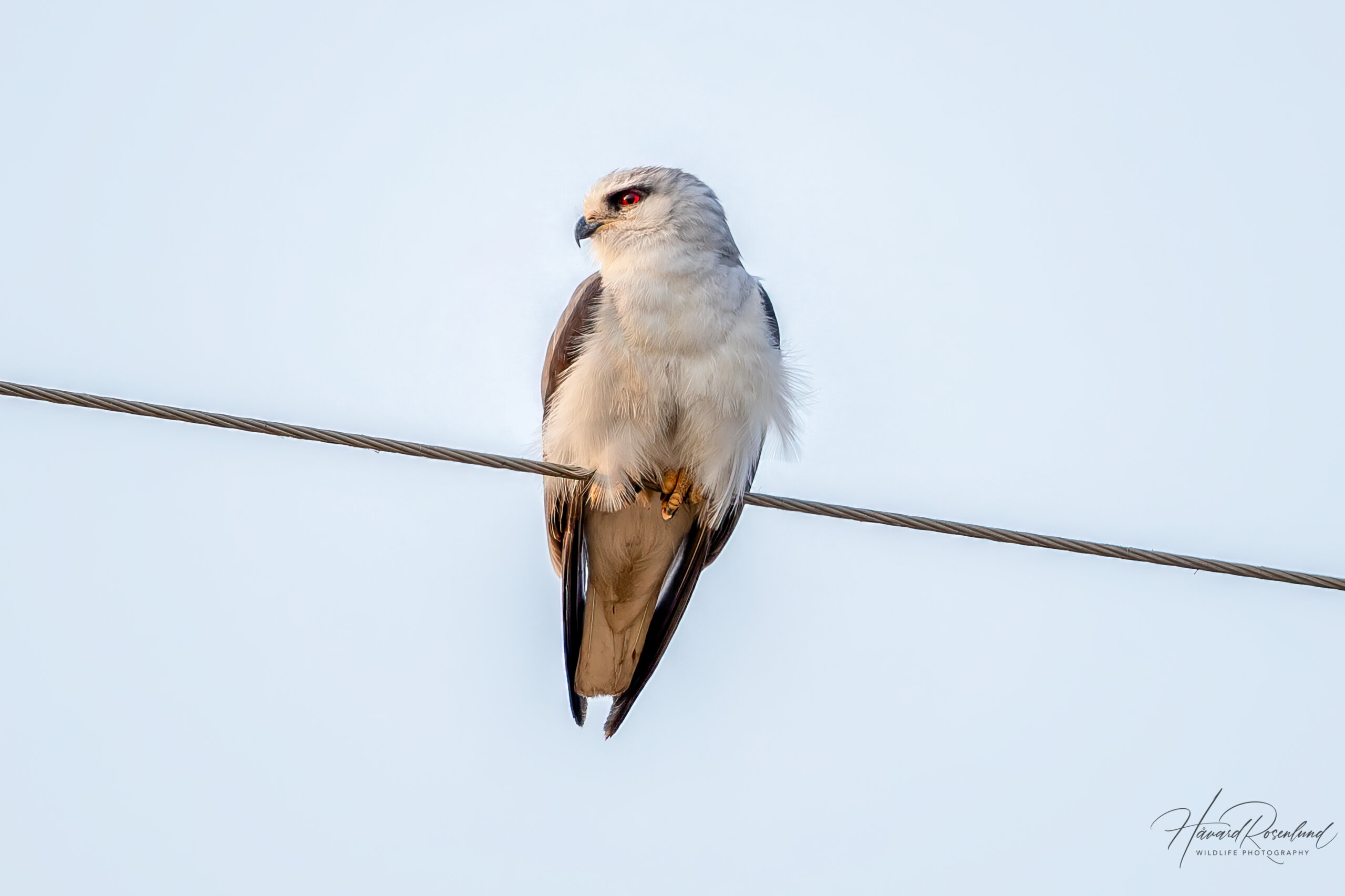
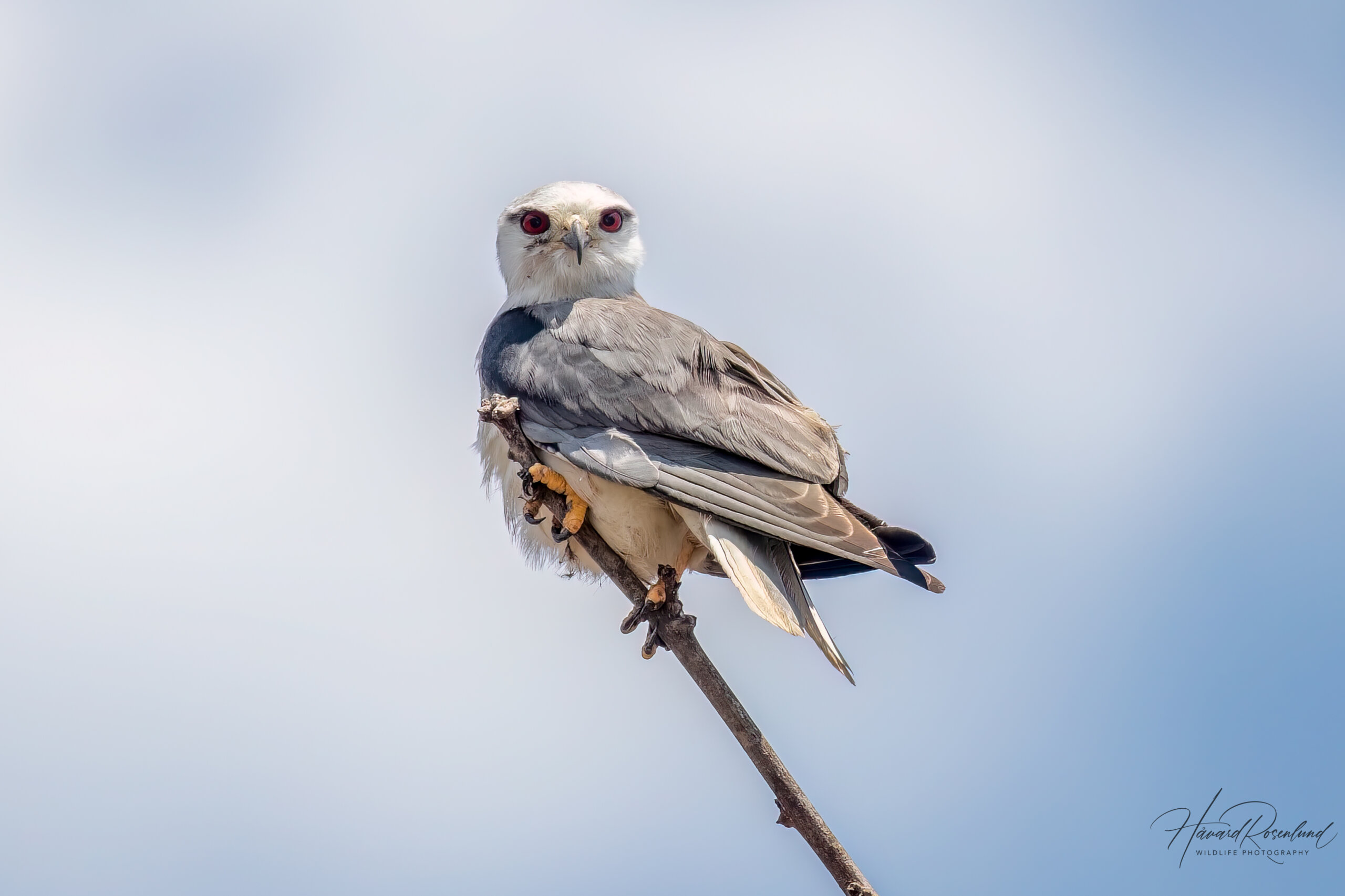
The plumage is strikingly pale: the head and underparts are white, the back and much of the upperwing are pale grey, and the shoulder area is sharply black. Deep red eyes, a narrow dark eye patch, and yellow cere give the face a distinctive appearance. Juveniles are browner above, with buff or rusty feather edges, and have less intensely coloured eyes.
The black-winged kite is closely related to the Australian black-shouldered kite (Elanus axillaris) and the white-tailed kite (Elanus leucurus) of the Americas. The three were formerly treated as a single species in some classifications. Elanus kites also belong to an early-diverging branch of the hawk and eagle family and are evolutionarily distant from typical kites such as those in the genus Milvus.
Habitat
Black-winged kites favour open landscapes with scattered trees or other elevated perches, including grassland, savanna, farmland, pasture, marsh margins, scrub and forest clearings. Dense closed forest and extremely arid treeless desert are generally avoided.
The species often prospers in agricultural mosaics where short vegetation provides access to rodents and isolated trees, poles or other structures provide hunting and nesting sites.
Diet
Small rodents dominate the diet in many regions and can make up the great majority of prey when abundant. Lizards, snakes, large insects, small birds and bats are also taken.
When rodents become exceptionally abundant, local kite numbers can rise and breeding can begin quickly. When prey becomes scarcer, birds may disperse or move to new areas.
Hunting
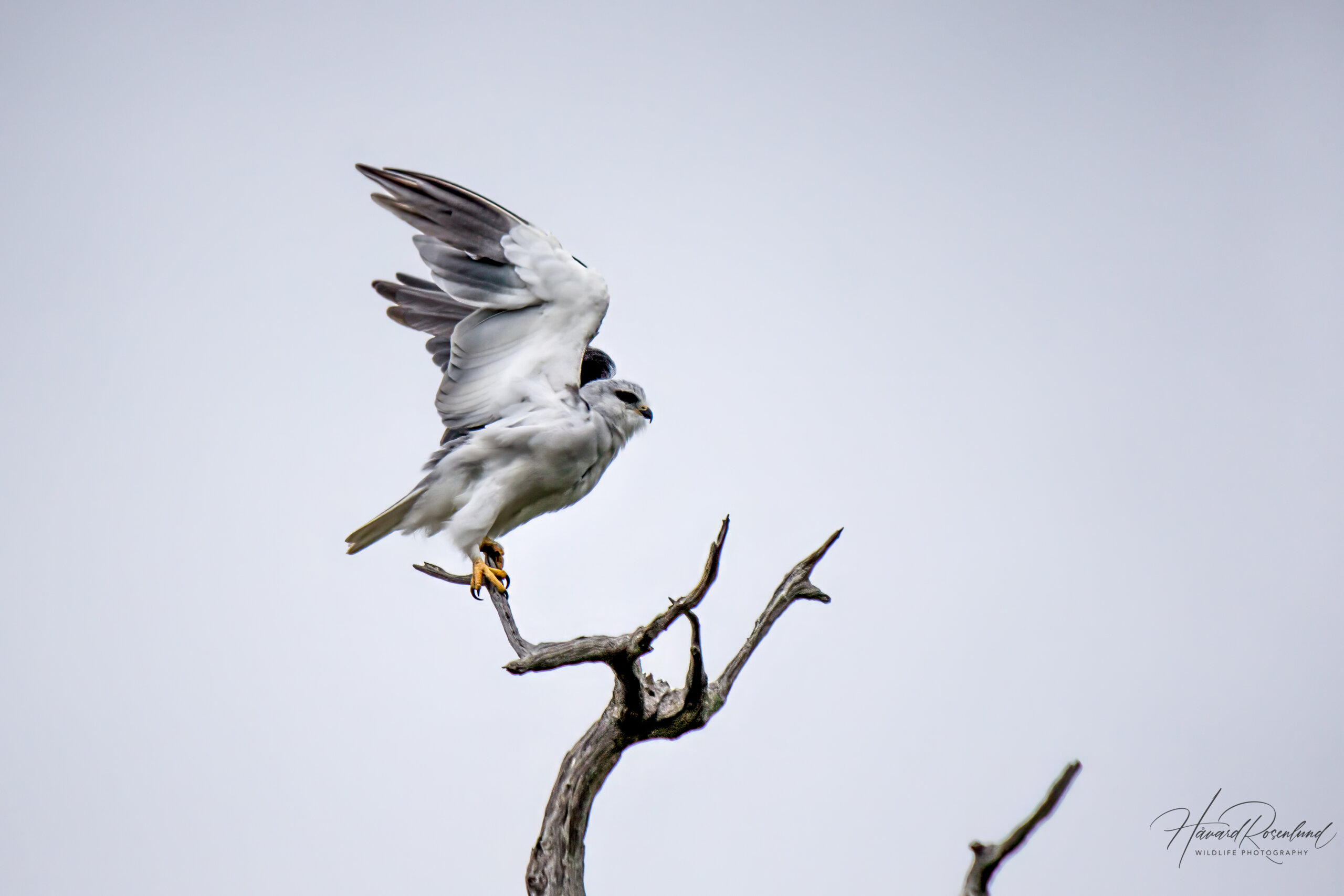
One of the black-winged kite's most characteristic behaviours is sustained hovering over open ground. The bird holds almost stationary in the air while scanning below, then drops rapidly onto detected prey. It also hunts from exposed perches such as dead trees, fence posts and utility poles and may fly slowly back and forth over fields while searching.
The species readily combines methods as conditions change. Birds may switch between hovering and perch hunting over the same feeding area and have also been recorded following grass fires to catch small animals flushed by the advancing flames.
Behaviour
Many populations are resident, but black-winged kites can disperse over long distances or become nomadic when prey conditions change. Individuals may move hundreds of kilometres between their natal area and first breeding site or between successive breeding attempts.
By day they usually occur alone or as pairs. At night, however, birds may gather at communal roosts, sometimes in groups of many tens of individuals where prey-rich open landscapes support a high local population.
Breeding
Breeding timing varies across the enormous range and can change rapidly when food conditions are favourable. Pairs build a relatively small, loose stick nest in a tree or palm and may breed again within the same year when prey is abundant.
The female usually lays three to five eggs. Incubation lasts roughly 30–35 days, with the female performing most of it while the male provides food. After hatching, she broods and closely tends the chicks for about the first 14 days, while the male does most of the hunting and supplies food.
The young fledge after about 30–40 days. They remain dependent on the adults for several more weeks while developing their hunting skills, with this post-fledging period often lasting around a month.
Status
The black-winged kite remains globally classified as Least Concern on the IUCN Red List. It has a huge distribution across Africa and Asia and has expanded substantially in Europe, where open agricultural landscapes with abundant rodents can provide particularly suitable habitat.
The European expansion has continued north and east. In 2025 Germany recorded its first documented breeding, when a pair in Lower Saxony raised young. Hungary also recorded its first successful breeding, while a breeding attempt took place in western Denmark.
Its ability to exploit agricultural mosaics and respond quickly to fluctuations in rodent abundance has allowed it to prosper in many modified landscapes. Local numbers can nevertheless fluctuate strongly with prey conditions and land use.
Image gallery
Loading map and observations…
National Red List status
| Country | Status | Assessment | Source |
|---|---|---|---|
| South Africa | NTNear Threatened | Regional Red Data Book of Birds of South Africa, Lesotho and Eswatini 2025 | BirdLife South Africa – Regional Red Data Book 2025 |
Have you seen this species?
Independent species archive
Did you find this species page useful?
Wildlife Vagabond is independently built and maintained. Voluntary support helps cover hosting, maps, data storage and continued improvements to the species archive.
Support Wildlife VagabondSpecies content will remain freely available.
References
- Balbontín, J., Negro, J. J., Sarasola, J. H., Ferrero, J. J., & Rivera, D. (2008). Land‐use changes may explain the recent range expansion of the Black‐shouldered Kite Elanus caeruleus in southern Europe. Ibis, 150(4), 707-716. https://doi.org/10.1111/j.1474-919X.2008.00845.x
- BirdLife International. (n.d.). Black-winged Kite species factsheet. https://datazone.birdlife.org/species/factsheet/black-winged-kite-elanus-caeruleus
- BirdLife Norge. (2025). Six new species on the updated Norwegian list. https://www.birdlife.no/organisasjonen/nyheter/?id=3721
- International Union for Conservation of Nature. (2016). Elanus caeruleus. The IUCN Red List of Threatened Species. https://www.iucnredlist.org/species/22695028/86874970
- Kemp, A. C., Kirwan, G. M., Marks, J. S., Motis, A., & Garcia, E. (2020). Black-winged Kite (Elanus caeruleus). Birds of the World. https://doi.org/10.2173/bow.bkskit1.01
- Krüger, Linnhoff & Meinecke. (2026). First breeding record of the Black-winged Kite in Germany during ongoing range expansion in Europe. https://www.vogelwelt.com/downloads/
- The Peregrine Fund. (n.d.). Black-winged Kite species profile. https://peregrinefund.org/explore-raptors-species/kites/black-winged-kite