
Oriental Honey-buzzard
Pernis ptilorhynchus
At a glance
Habitat
- Forests, woodland edges and wooded agricultural mosaics across tropical and temperate Asia
Diet
- Specialised on larvae and pupae of social wasps and bees; also frogs and other small vertebrates and insects
Activity
- Diurnal
Size
- Length: 52–68 cm Weight: about 780 g
Range
- Resident across much of South and Southeast Asia; northern populations in East Asia migrate south for winter
Description
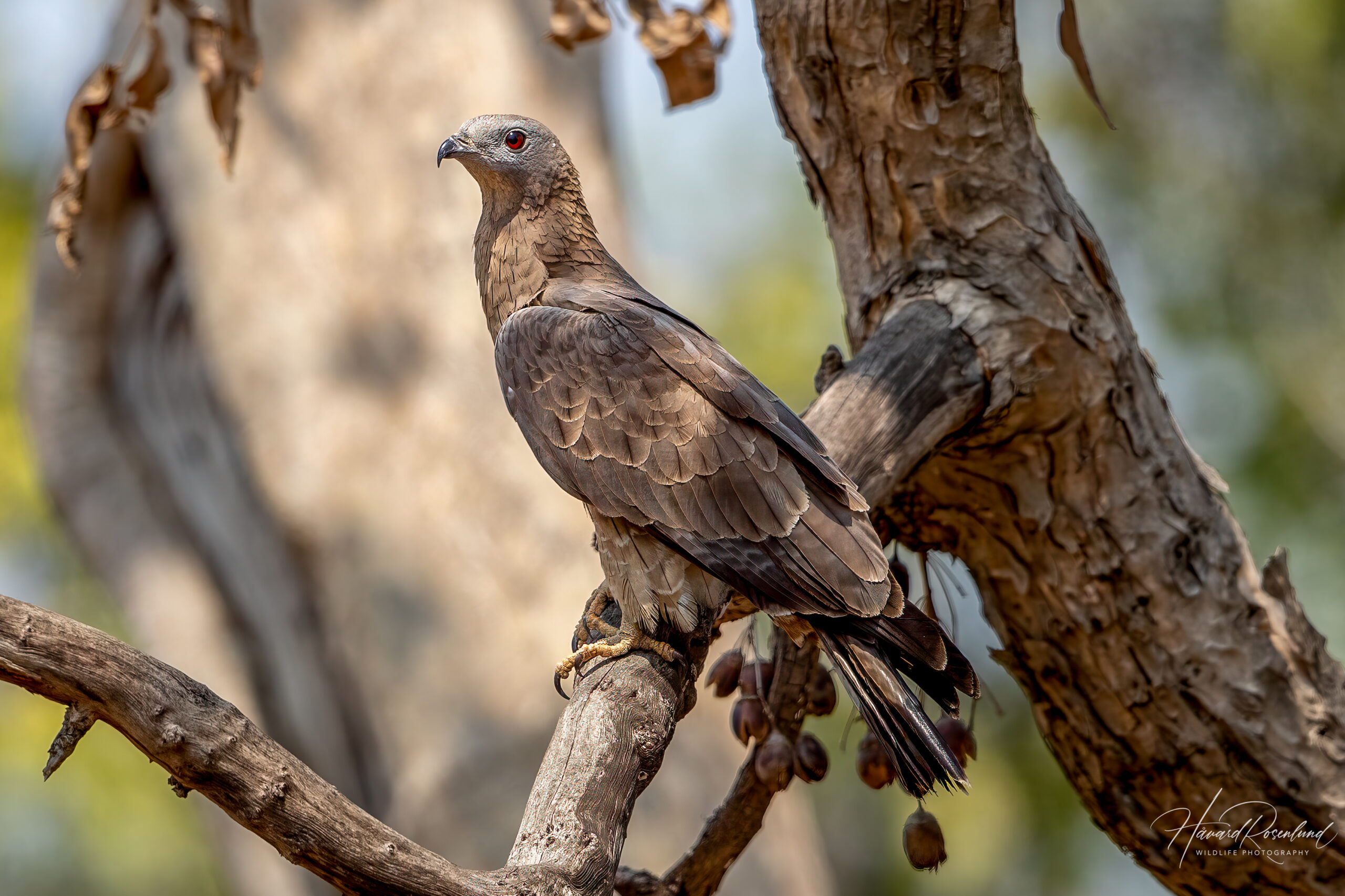
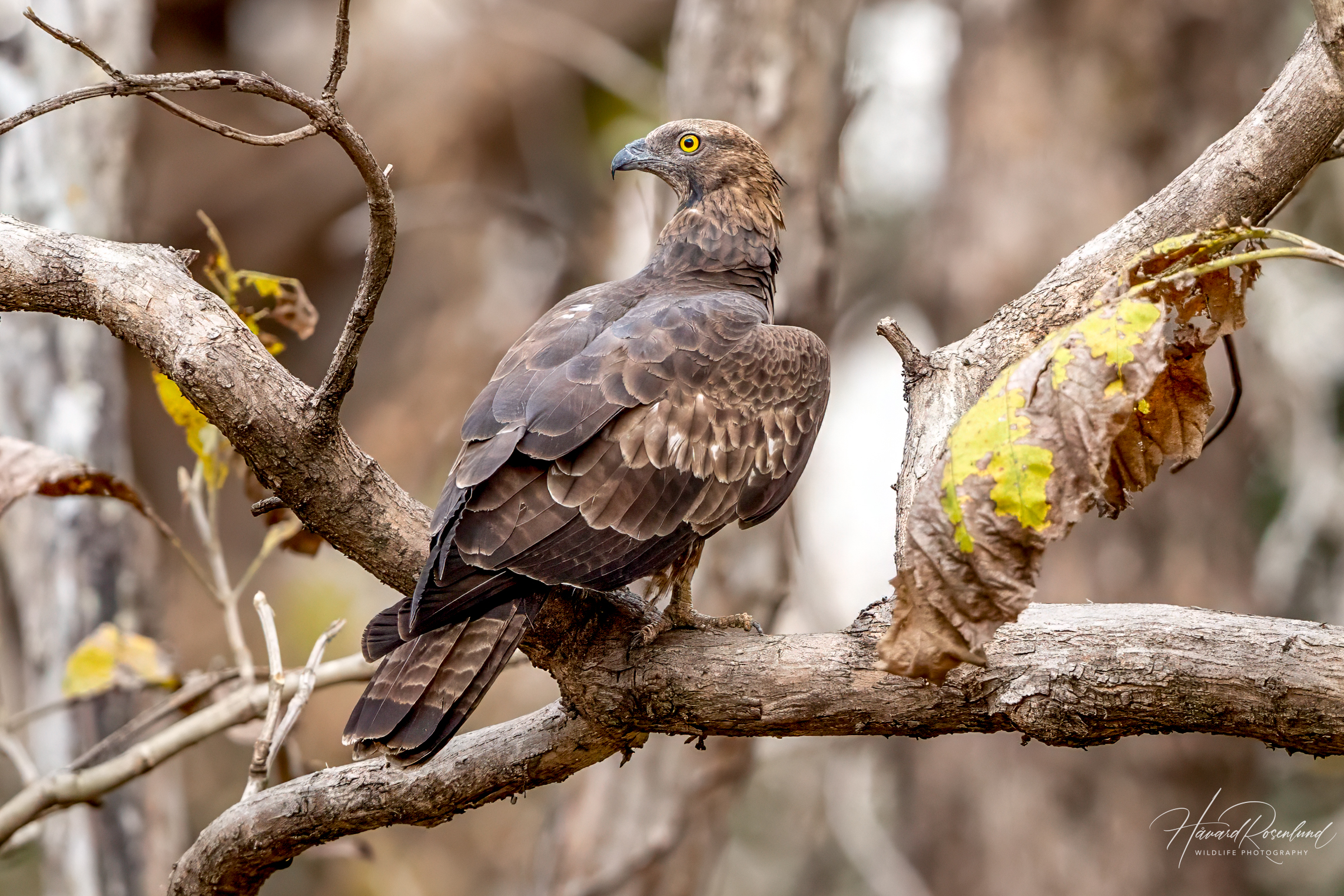
The Oriental honey-buzzard (Pernis ptilorhynchus) is a medium-sized raptor distributed across much of Asia. Adults are about 52–68 cm long and weigh around 780 g on average, although size varies geographically and females are generally larger than males. Plumage is exceptionally variable, ranging from very dark brown birds to pale, strongly barred individuals. Adult males often have a greyer head than females, but colour alone is not a reliable guide because of extensive individual and subspecific variation.
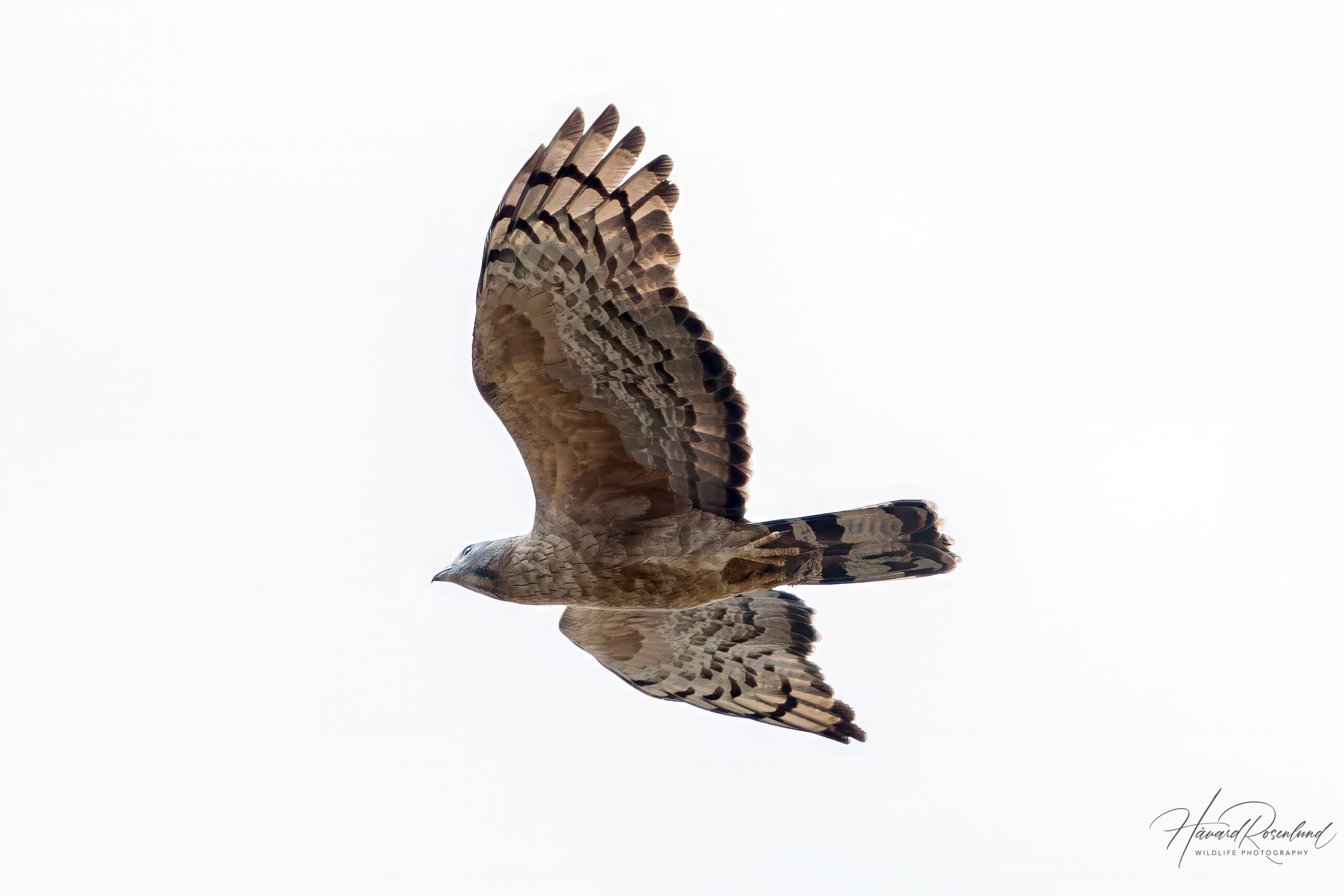
The head is relatively small and pigeon-like for a raptor, and many birds show a short crest. Long wings and a relatively long tail give the species a distinctive shape in soaring flight. Where it overlaps with the European honey-buzzard (Pernis apivorus), identification can be difficult because both species are highly variable and similar in structure.
Habitat
Oriental honey-buzzards use forests, woodland edges and wooded agricultural mosaics across tropical, subtropical and temperate Asia. Breeding birds need trees for nesting, while feeding areas must provide abundant social wasps and bees or other suitable prey.
The species can use partly modified landscapes when sufficient tree cover and insect-rich habitat remain. Resident populations occur across much of South and Southeast Asia, while northern migrants use a broad network of forested stopover and wintering areas farther south.
Diet
Larvae and pupae of social wasps and bees form the most characteristic part of the diet, together with comb taken from their nests. The species is not exclusively insectivorous, however, and also takes frogs, other insects and occasional small vertebrates. The balance between these prey types changes with season and breeding demands.
Foraging
Oriental honey-buzzards are unusually specialised for exploiting the nests of stinging social insects. Birds can follow wasp or bee activity to locate colonies, dig into underground nests with the feet or open nests above ground, then remove larvae, pupae and comb. This feeding style differs markedly from the pursuit or ambush hunting typical of many other medium-sized raptors.
The head and feet show several adaptations associated with this behaviour. Compared with many other raptors, Oriental honey-buzzards have a relatively long slender bill with a reduced hook, elongated cere, narrow slit-like nostrils and long toes useful for excavation. The small facial feathers are densely packed and scale-like; microscopic studies found an armour-like structure that may reduce the chance of stings reaching the skin. An unusual filamentous material has also been reported on these feathers and may have a protective chemical function, although that remains a hypothesis. Immunity to bee or wasp venom has not been demonstrated.
Migration
Migration differs sharply between populations. Birds across much of India, Southeast Asia and the tropical part of the range are resident or make only local movements, while northern populations breeding in Japan, the Russian Far East and neighbouring East Asia migrate south to Southeast Asia and the Indonesian archipelago.
Satellite tracking has revealed an unusual migration system in Japanese birds. In autumn they can cross roughly 650–680 km of the East China Sea directly, aided by favourable tailwinds and atmospheric conditions that permit long periods of soaring and gliding over water. In spring the tracked birds avoid this direct crossing and make a much longer detour through China and the Korean Peninsula. Individuals also show strong fidelity to particular spring routes and stopover areas.
Breeding
Breeding season and timing vary widely across the species' large range. Pairs build a stick nest in a tree, often incorporating fresh leafy material. A clutch of two eggs is typical, and incubation lasts roughly a month. Both adults participate in parental care.
Food delivered to the nest changes through the breeding cycle and with local prey availability. Detailed camera monitoring in Japan showed few food deliveries before hatching, followed by frequent provisioning of both wasps and frogs once chicks were present. Males and females differed to some extent in the wasp prey they delivered, suggesting that the pair can partition prey while feeding the brood.
Status
The Oriental honey-buzzard is classified as least concern on the IUCN Red List. It has a very large Asian distribution and remains widespread across both resident tropical populations and migratory northern populations.
Indian monitoring data published in 2025 show a long-term national change of about +9% and a recent annual change of about −0.7%, both consistent with a stable trend. The species remains in the low conservation-priority category in India and is associated mainly with forest and plantation habitats.
Image gallery
Loading map and observations…
Have you seen this species?
Independent species archive
Did you find this species page useful?
Wildlife Vagabond is independently built and maintained. Voluntary support helps cover hosting, maps, data storage and continued improvements to the species archive.
Support Wildlife VagabondSpecies content will remain freely available.
References
Information about the species’ global distribution and status is based primarily on global Red List data. See the references below for details.
- BirdLife International. (n.d.). Oriental Honey-Buzzard species factsheet. https://datazone.birdlife.org/species/factsheet/oriental-honey-buzzard-pernis-ptilorhynchus
- Inoue, M., Sakamoto, Y., Takeuchi, M., Nagai, T., Nishimura, Y., & Yanagisawa, N. (2014). Seasonal change of prey brought to an Oriental Honey Buzzard <i>Pernis ptilorhynchus</i> nest during the breeding season in west Mikawa, Aichi Prefecture, Japan. Japanese Journal of Ornithology, 63(2), 323-328. https://doi.org/10.3838/jjo.63.323
- International Union for Conservation of Nature. (n.d.). Oriental Honey-Buzzard. The IUCN Red List of Threatened Species. https://www.iucnredlist.org/species/22694995/199637824
- Nourani, E., Yamaguchi, N. M., Manda, A., & Higuchi, H. (2016). Wind conditions facilitate the seasonal water‐crossing behaviour of Oriental Honey‐buzzards Pernis ptilorhynchus over the East China Sea. Ibis, 158(3), 506-518. https://doi.org/10.1111/ibi.12383
- Sievwright, H., & Higuchi, H. (2011). Morphometric Analysis of the Unusual Feeding Morphology of Oriental Honey Buzzards. Ornithological Science, 10(2), 131-144. https://doi.org/10.2326/osj.10.131
- Sievwright, H., & Higuchi, H. (2016). The Feather Structure of Oriental Honey Buzzards (Pernis ptilorhynchus) and Other Hawk Species in Relation to Their Foraging Behavior. Zoological Science, 33(3), 295. https://doi.org/10.2108/zs150175
- State of India's Birds. (2025). 2025 – Oriental Honey Buzzard. https://stateofindiasbirds.in/species/orihob2/
- Yamaguchi, N., Tokita, K., Uematsu, A., Kuno, K., Saeki, M., Hiraoka, E., Uchida, K., Hotta, M., Nakayama, F., Takahashi, M., Nakamura, H., & Higuchi, H. (2008). The large‐scale detoured migration route and the shifting pattern of migration in Oriental honey‐buzzards breeding in Japan. Journal of Zoology, 276(1), 54-62. https://doi.org/10.1111/j.1469-7998.2008.00466.x