
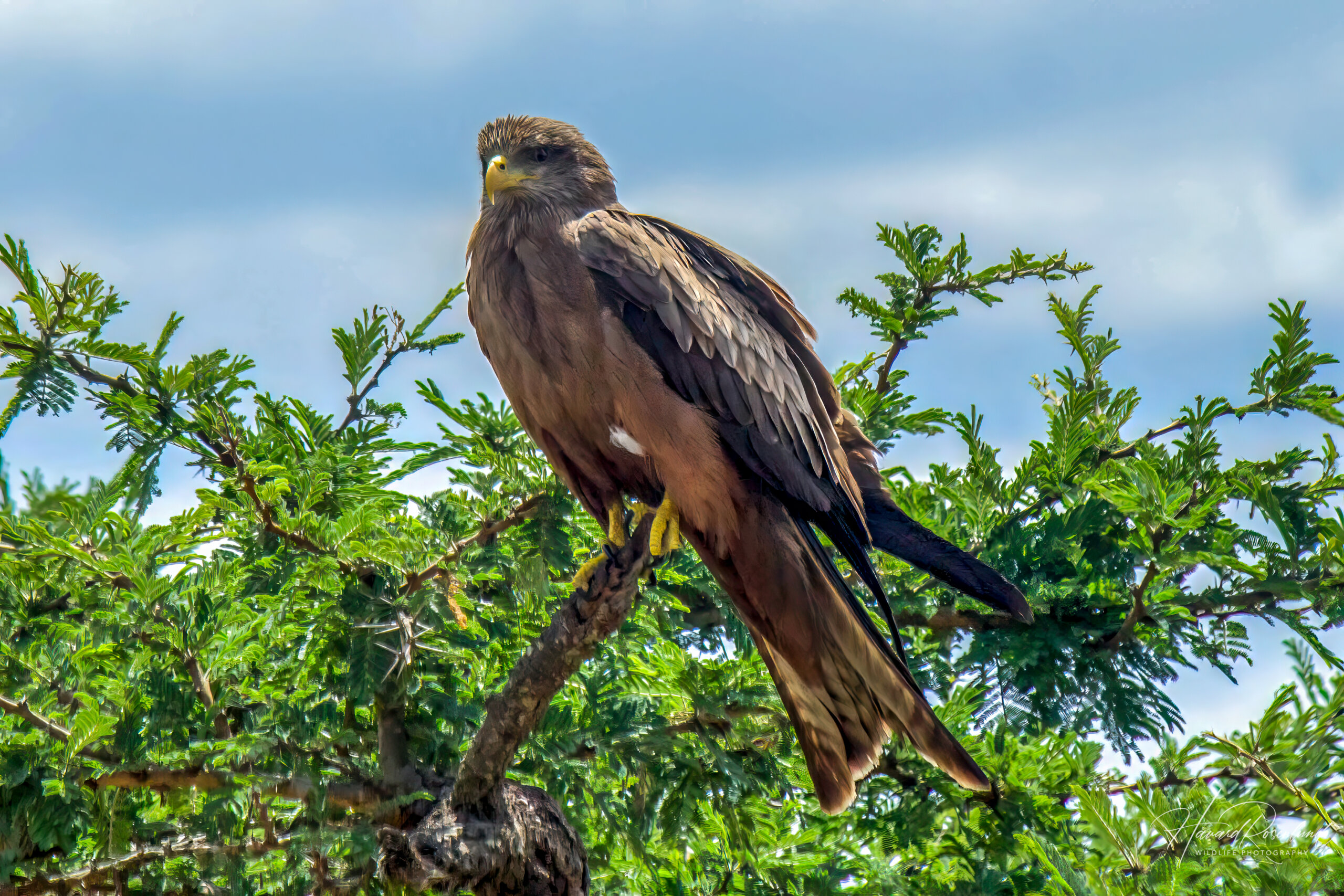
Yellow-billed Kite
Milvus aegyptius
At a glance
Habitat
- Savanna, open woodland, wetlands, farmland and urban areas
Diet
- Carrion and human food waste; also small vertebrates, insects, fish and other animal prey
Activity
- Diurnal
Size
- Length: 50–60 cm Weight: 429–870 g
Range
- Most of Africa and parts of the Arabian Peninsula; many southern populations are migratory
Description
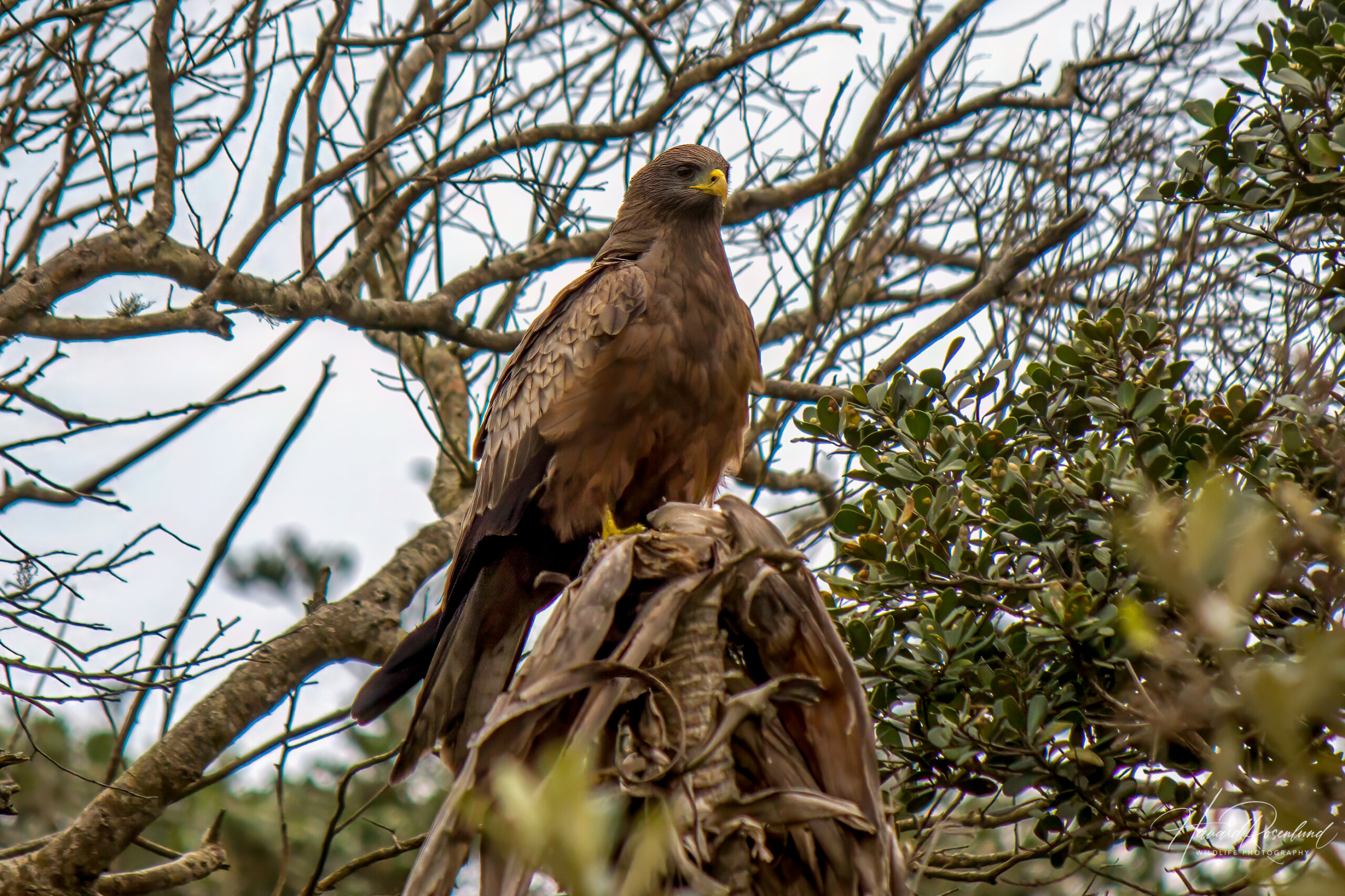
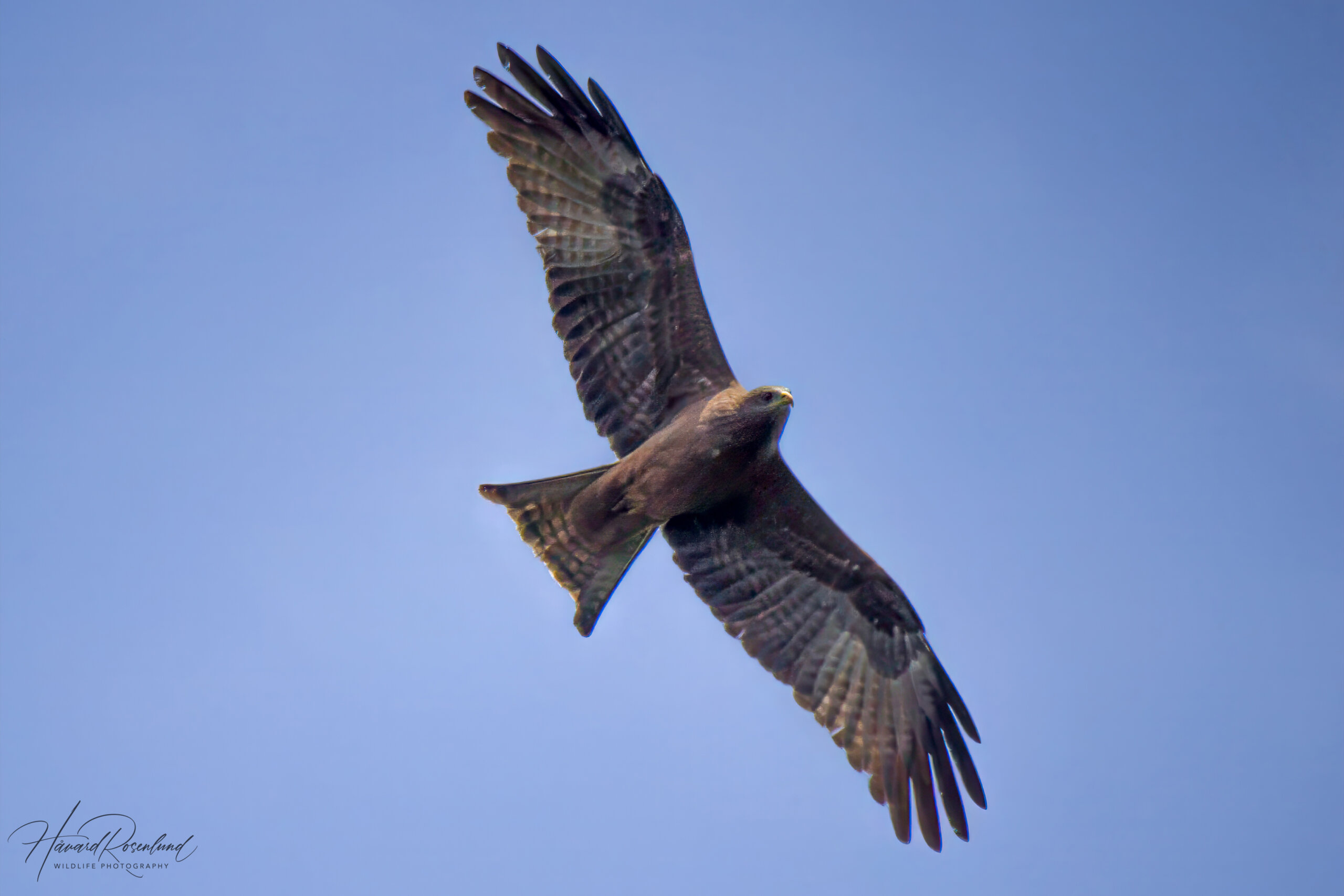
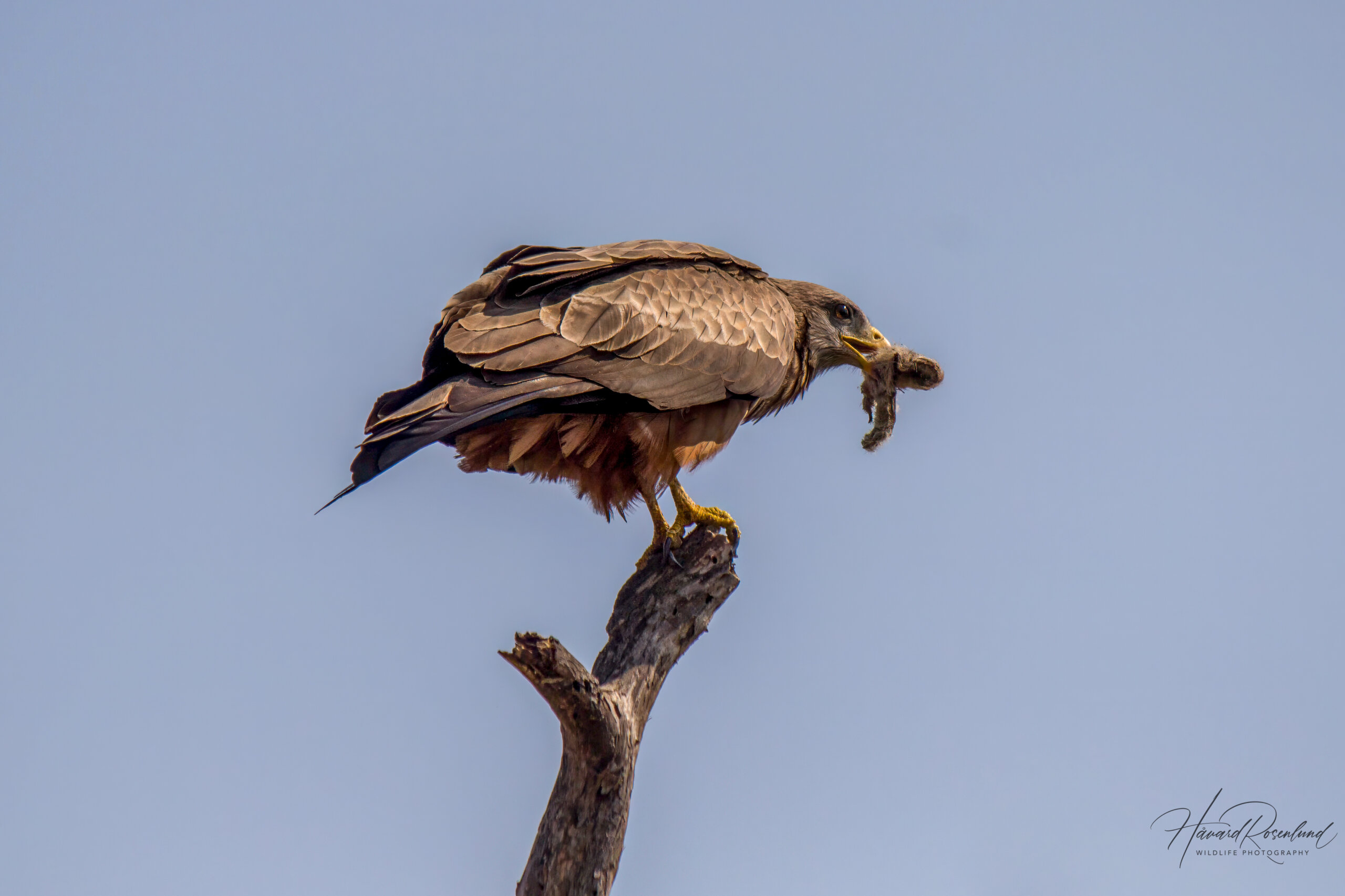
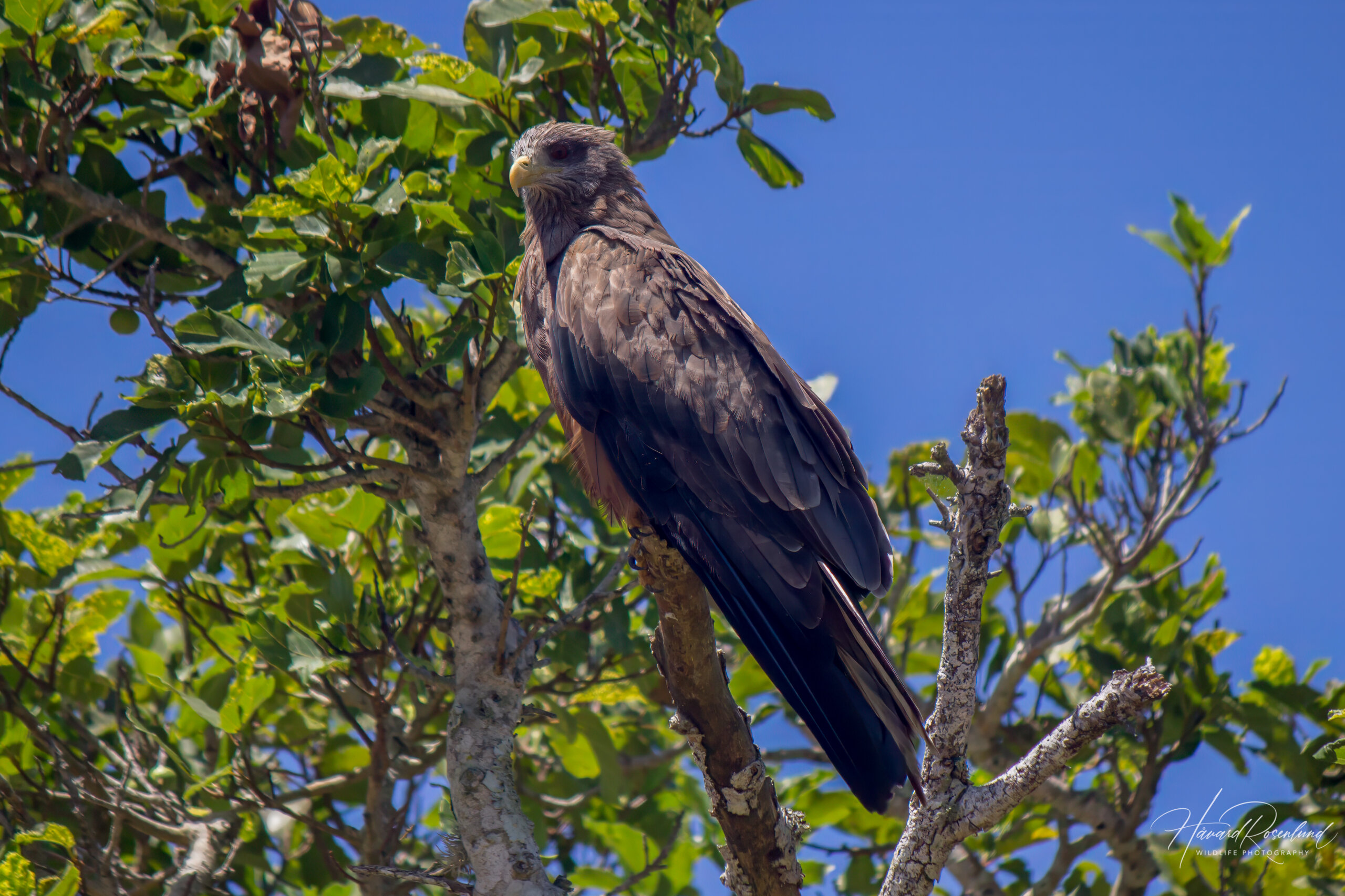
The yellow-billed kite (Milvus aegyptius) is a medium-sized African kite, about 50–60 cm long, with a wingspan of roughly 130–155 cm and a weight of about 429–870 g. Adults are mostly brown, often with a paler grey-brown head, long narrow wings and a distinctly forked tail. The most obvious feature is the entirely yellow bill.
Juveniles have a dark bill and are more heavily streaked, so they can resemble young black kites more closely. Adult black kites (Milvus migrans) retain a dark bill, which is one of the easiest ways to separate them when the two occur together in Africa.
Taxonomy
The yellow-billed kite was long treated as part of the black kite complex. Genetic, morphological and distributional evidence supports treating it as a separate species, and current AviList taxonomy recognises Milvus aegyptius separately from black kite (Milvus migrans).
Two subspecies are generally recognised: M. a. aegyptius in northeastern Africa and Arabia and M. a. parasitus across much of sub-Saharan Africa. The latter is the form represented by the birds photographed in southern Africa on this page.
Habitat
Yellow-billed kites occupy a broad range of open and partly wooded habitats, including savanna, woodland edges, wetlands, river valleys, farmland and towns. They are less associated with the interior of dense forest and the most barren treeless deserts.
In KwaZulu-Natal, nesting is especially associated with riparian areas that have dense vegetation and tall trees. Where a regular food source is available, nests can also lie closer together, showing how predictable human-related food can influence the local density of breeding pairs.
Diet
The diet is extremely broad. Yellow-billed kites eat carrion and discarded food but also take insects, fish, amphibians, reptiles, birds and small mammals. The balance shifts with local conditions and with whatever food is easiest to obtain.
This flexibility allows the same bird to switch between natural prey, dead animals and human food waste within a short period, rather than depending on one narrow food source.
Hunting & scavenging
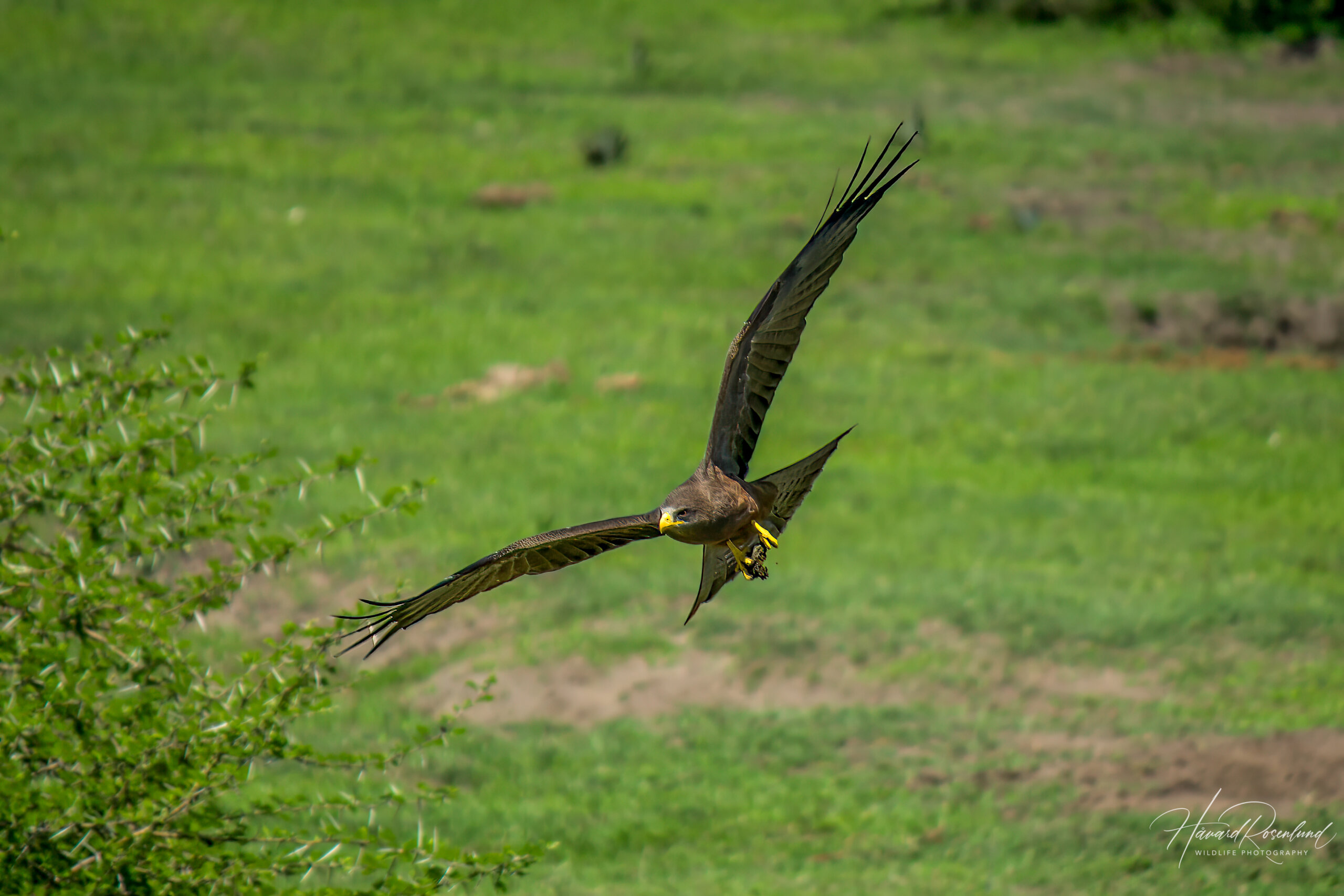
Yellow-billed kites search mainly from the air, using agile, low-energy flight to patrol roads, wetlands, grassland, settlements and other open areas. Live prey can be seized from the ground or water surface, sometimes without the kite landing, and small items may be eaten while the bird remains in flight.
Scavenging is equally important. Kites rapidly investigate carcasses, dead fish, refuse and other concentrated food sources and can gather in large numbers when food is abundant. They also practise kleptoparasitism, meaning that they attempt to steal prey from other birds, and may opportunistically snatch exposed food around people.
Hunting, scavenging and food theft therefore form one highly flexible feeding strategy rather than separate ecological roles.
Social behaviour
Yellow-billed kites are often seen alone or in pairs while feeding, but they become highly social where food or safe roosting sites are concentrated. Large feeding aggregations can develop quickly around carrion, refuse or other predictable resources.
A study published in 2025 followed a communal roost near Pietermaritzburg, South Africa, from 2016 to 2024. Numbers usually peaked from late February into early March, with a maximum of 3,369 kites in 2017.
Migration
Movement patterns vary greatly across Africa. Many tropical populations are resident or locally mobile, whereas birds breeding farther south are intra-African migrants. In southern Africa these breeding migrants arrive mainly from August to October and leave again around March.
The same nine-year study found strikingly consistent departure timing: in all years from 2016 to 2024, the birds left just before the period 20–26 March. They departed at almost the same time even while abundant food remained available nearby, suggesting that their annual migration rhythm is driven largely by internal seasonal cues rather than simply by local food shortage.
Breeding
Breeding seasons differ across the range and are closely tied to regional climate. Both adults build a stick nest, usually high in a tree, and nests may contain green leaves as well as pieces of human-made material collected nearby. Pairs defend the immediate nest area vigorously even where several nests occur relatively close together.
The clutch is usually two or three eggs. Incubation lasts about 30–34 days, and the young normally leave the nest after roughly six weeks. They continue to depend on their parents for food and support for several weeks after fledging.
A separate study published in 2025 in KwaZulu-Natal found that where many pairs bred close together, strong competition between neighbours reduced breeding success. An area can therefore offer both abundant food and many suitable nest sites yet become crowded enough for competition to offset some of those advantages.
Relationship with humans
Few African raptors exploit human food sources as readily as the yellow-billed kite. Birds patrol markets, fishing sites, roads, slaughter areas, refuse dumps and settlements for scraps and carrion, and in some places they have become a conspicuous part of everyday urban wildlife.
This relationship provides abundant food but also exposes kites to traffic, contaminated waste, poisoning and disturbance. Their success around people therefore reflects remarkable behavioural flexibility rather than complete freedom from human-related risks.
Status
The yellow-billed kite is globally classified as Least Concern on the IUCN Red List. It remains widespread and locally abundant across much of Africa and parts of the Arabian Peninsula.
There are signs of decline in parts of the southern African breeding range, although trends differ considerably from one area to another. The species can therefore decline locally even while remaining familiar, adaptable and widespread overall.
Image gallery
Loading map and observations…
Have you seen this species?
Independent species archive
Did you find this species page useful?
Wildlife Vagabond is independently built and maintained. Voluntary support helps cover hosting, maps, data storage and continued improvements to the species archive.
Support Wildlife VagabondSpecies content will remain freely available.
References
Information about the species’ global distribution and status is based primarily on global Red List data. See the references below for details.
- AviList. (n.d.). Global avian taxonomy, v2025. https://www.avilist.org/
- BirdLife International. (n.d.). Yellow-billed Kite species factsheet. https://datazone.birdlife.org/species/factsheet/yellow-billed-kite-milvus-aegyptius
- International Union for Conservation of Nature. (2021). Milvus aegyptius. The IUCN Red List of Threatened Species. https://www.iucnredlist.org/species/22734928/197335248
- Johnson, J. A., Watson, R. T., & Mindell, D. P. (2005). Prioritizing species conservation: does the Cape Verde kite exist? Proceedings of the Royal Society B: Biological Sciences, 272(1570), 1365-1371. https://doi.org/10.1098/rspb.2005.3098
- Porter, R. N., Gula, J., Howells, W. W., Weiersbye, I. B., Hoffman, B., Singh, P., & Downs, C. T. (2025). Interannual Synchrony in the Post‐Breeding Migration Departure of Yellow‐Billed Kites (Milvus aegyptius) From a Roost Site in South Africa. African Journal of Ecology, 63(5), e70081. https://doi.org/10.1111/aje.70081
- Porter, R. N., Howells, W. W., Weiersbye, I. B., Hoffman, B., & Porter, S. N. (2025). Yellow-billed Kite Milvus aegyptius nesting dynamics and breeding success across a human-modified landscape. Ostrich, 96(1), 42-53. https://doi.org/10.2989/00306525.2025.2480667
- The Peregrine Fund. (n.d.). Yellow-billed Kite species profile. https://peregrinefund.org/explore-raptors-species/kites/yellow-billed-kite