
Indian Vulture
Gyps indicus
At a glance
Habitat
- Open woodland, dry country, rocky hills and cliffs with access to large carcasses and safe nesting sites
Diet
- Obligate scavenger; mainly carcasses of large mammals, especially domestic cattle and buffalo across much of India
Activity
- Diurnal; uses thermals for long-distance soaring
Size
- Length: 80–103 cm Weight: 5.5–6.3 kg
Range
- Indian subcontinent, centred on India with a small extension into Pakistan
Description
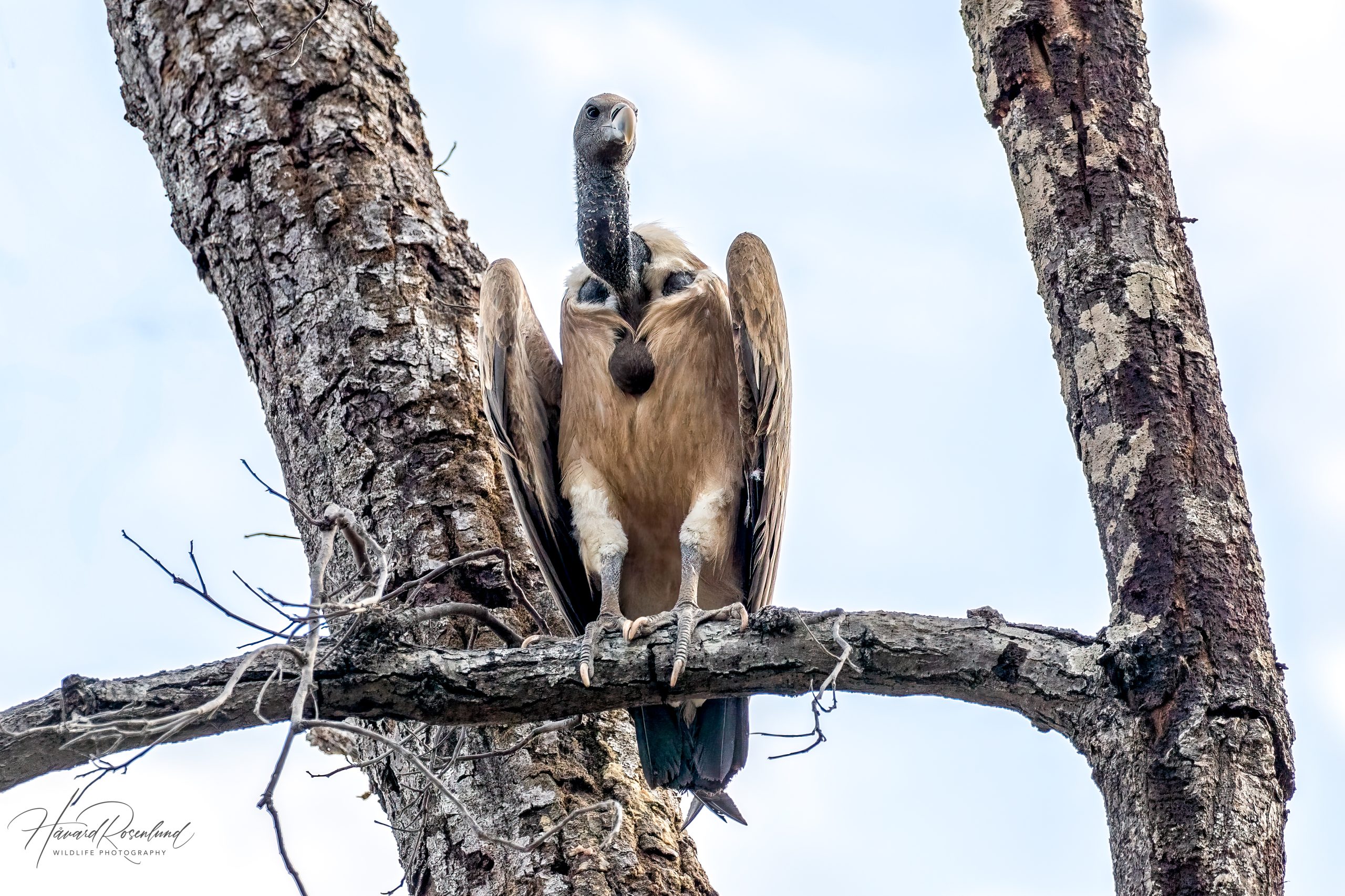
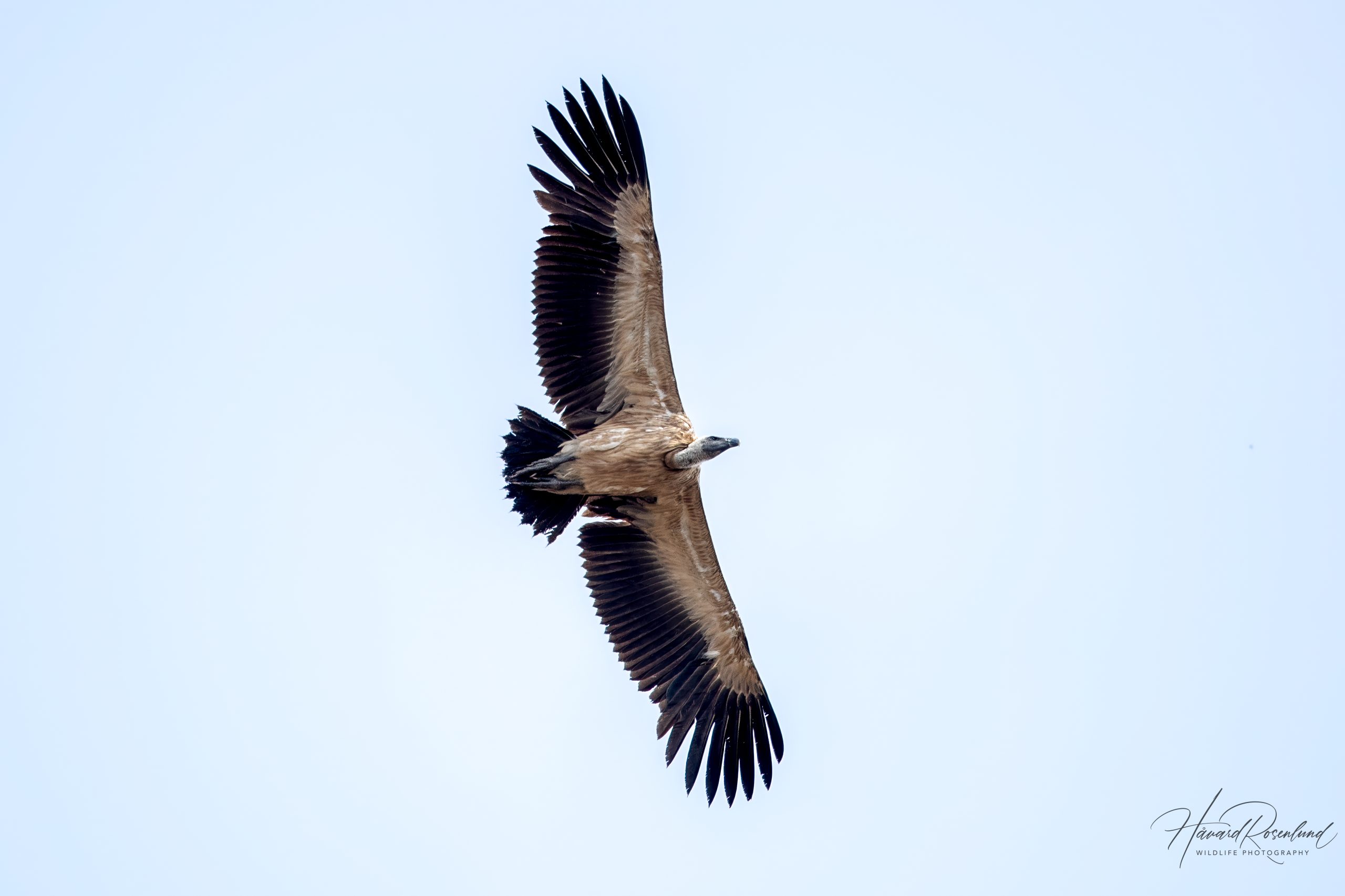
The Indian vulture (Gyps indicus), also called the long-billed vulture, is a large griffon vulture endemic to the Indian subcontinent. Adults have broad wings, a short tail, pale brown body plumage and contrasting dark flight feathers. The head and long neck are sparsely feathered and covered with pale to dusky down, and the heavy pale bill is adapted for opening and feeding deep inside large carcasses.
It can be confused with the slender-billed vulture (Gyps tenuirostris), which was formerly treated as part of the same species. Indian vultures are more robust, with a thicker bill and a broader, more down-covered head and neck. Adults weigh roughly 5.5–6.3 kg and have a wingspan of about 2–2.6 m.
Habitat
Indian vultures occur in dry and open landscapes with reliable access to carrion, including open woodland, scrub, grassland, agricultural country and rocky hill systems. They can forage over protected areas and heavily human-influenced landscapes alike because large livestock carcasses remain an important food source.
Nesting habitat is more specific. The species is strongly associated with cliffs, rocky escarpments and steep hills, although tree nesting also occurs in parts of Rajasthan and birds can use large historical buildings or monuments. Suitable rock faces and the surrounding foraging landscape are therefore central parts of its habitat.
Diet
Indian vultures are specialised scavengers and feed almost entirely on carrion. Cattle, water buffalo and other domestic ungulates are especially important over much of India, together with wild ungulates and other large mammals in protected landscapes. Their extremely acidic digestive system allows them to break down decomposing animal tissue that would expose many other animals to dangerous pathogens.
A 2024 DNA study of what Gyps vultures had eaten across India found domestic livestock in more than 95% of analysed samples from Central, West and North India, including samples collected inside and near protected areas. South India was different: 77% of samples there contained only wild prey. This regional pattern means that vultures across much of India remain exposed to veterinary medicines through livestock carcasses even when they forage within national parks and reserves.
Scavenging
Indian vultures search for carrion by riding columns of rising warm air and gliding between them, allowing birds to cover enormous areas with very little energy. Carcasses are located mainly by sight, and birds also watch the movements of other vultures and scavengers for clues that food has been found.
Because carrion is unpredictable, individual vultures range widely between feeding opportunities and move rapidly between areas as new carcasses become available.
Ecological role
Indian vultures are part of a specialised scavenger guild that removes large carcasses from the landscape rapidly. By consuming decomposing tissue they recycle nutrients and shorten the period during which carcasses remain available to other scavengers, insects and potentially harmful microorganisms.
Their highly acidic digestive system can destroy many pathogens present in carrion, so the ecological effect is not simply that dead animals disappear. Large declines in Indian vultures also alter which scavengers gain access to carcasses, reducing a function that once operated across huge parts of the subcontinent.
Social behaviour
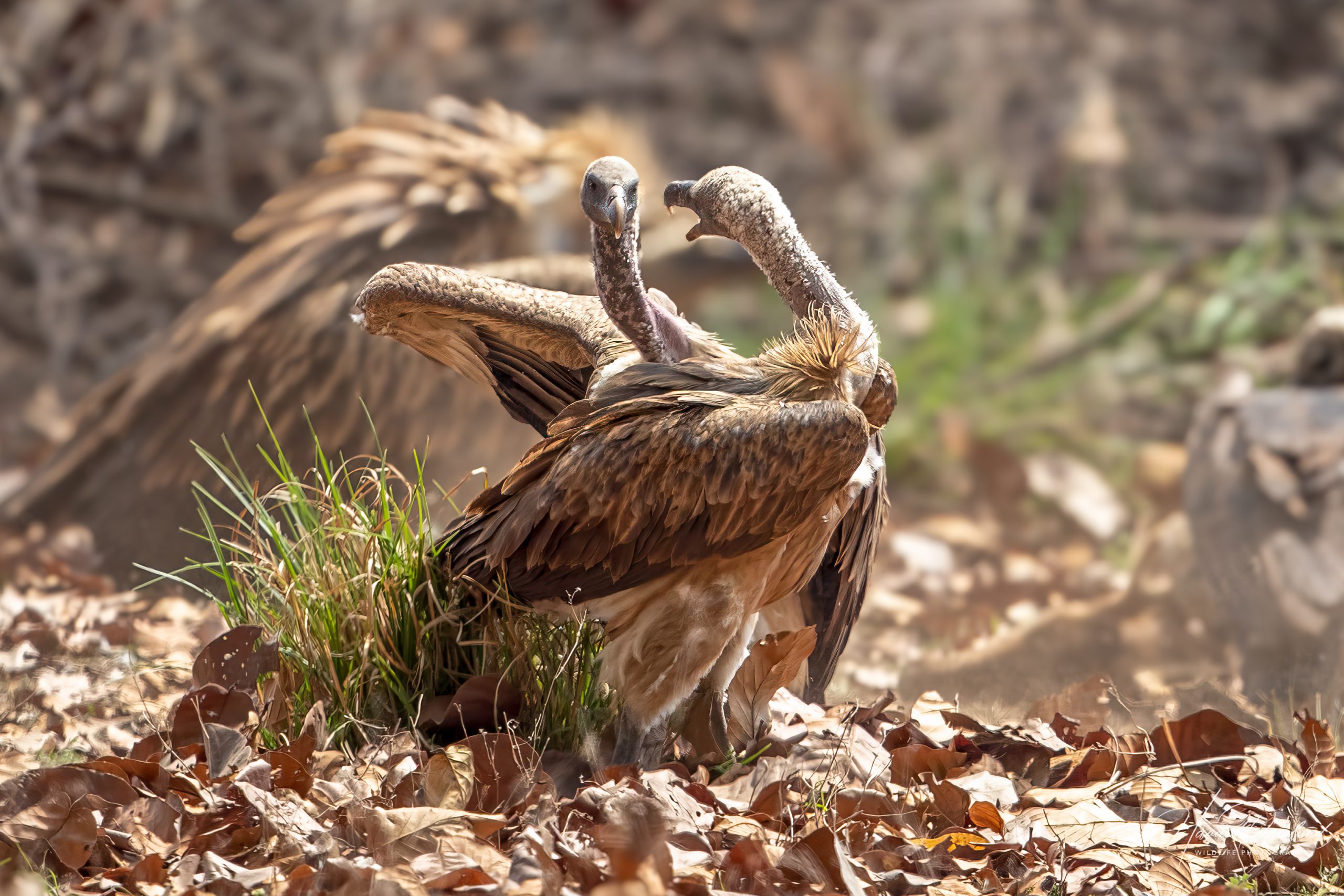
Indian vultures are social around feeding sites and roosts. When a carcass is found, several birds may gather rapidly and feed alongside other vulture species, while communal resting sites bring birds together between foraging bouts.
Breeding can be solitary or colonial depending on the nesting landscape, with multiple pairs sometimes occupying the same cliff system or group of suitable nest sites.
Home ranges
A satellite-tracking study published in 2022 from Saurashtra in Gujarat followed three adult Indian vultures. Their annual home ranges covered 4,265–6,897 km², with core-use areas of 700–1,056 km².
The three birds travelled on average about 78–92 km per day, and space use contracted during the breeding season when adults repeatedly returned to nests. Even breeding birds therefore use landscapes extending far beyond individual colonies.
Breeding
Breeding generally begins in the cool dry season. Indian vultures usually build large stick nests on cliff ledges and rocky faces, although trees and large buildings are used locally. A single egg is the normal clutch, and both adults share incubation and later provision the chick.
A study published in 2026 from Barmer and Jaisalmer in Rajasthan recorded 35 nests across ten sites during 2021–2024, mostly in hilly or cliff habitat. Mean incubation lasted 54.9 days and the nestling period 105.8 days, with overall reproductive success of 74.2% across three breeding seasons. The slow one-chick breeding strategy means that adult mortality has exceptionally severe population consequences.
Relationship with humans
Indian vultures have long been closely tied to human livestock systems. In many parts of India, cattle and buffalo carcasses left in the open created predictable food for Gyps vultures, while the birds in turn removed large quantities of animal remains quickly and efficiently.
The collapse of vulture populations therefore had consequences beyond wildlife conservation. Vultures provide sanitation and public-health benefits by rapidly consuming carcasses that would otherwise remain available to feral dogs and other scavengers. The Indian vulture is one of the species whose disappearance greatly reduced this ecosystem service across the subcontinent.
Status
The Indian vulture is classified as critically endangered on the IUCN Red List. The global population is estimated at only about 5,000–15,000 mature individuals, vastly below historical abundance. During the original vulture crisis, Indian and slender-billed vultures combined were estimated to have declined by about 96.8% over roughly fifteen years.
Road surveys published in 2024 found that the catastrophic decline had largely stopped after the diclofenac ban but detected no clear recovery. Indian population data updated in 2025 estimate a long-term decline of about 93.9% and a continuing decline of about 6.8% per year. The population therefore remains extremely depleted without a secure national recovery.
Threats
The catastrophic collapse of Indian vultures was caused primarily by veterinary diclofenac. Cattle treated with this non-steroidal anti-inflammatory drug can retain residues after death; vultures feeding on the carcasses suffer kidney failure and a lethal build-up of uric acid in their organs. The drug became widely used in veterinary medicine during the 1990s and triggered the rapid collapse of South Asian Gyps populations.
India banned veterinary diclofenac in 2006 and later also banned aceclofenac, ketoprofen and nimesulide after evidence showed that these drugs are toxic to vultures. Veterinary nimesulide was banned in December 2024. Banned and other vulture-toxic anti-inflammatory drugs are nevertheless still found in parts of the veterinary market. Flunixin is proven toxic to vultures, while carprofen can be toxic at high doses. Phenylbutazone and several other NSAIDs have raised toxicological concerns but have not been sufficiently safety-tested to be considered safe. Meloxicam and tolfenamic acid are the two veterinary anti-inflammatory drugs demonstrated to be safe. Accidental poison baits, electrocution and collisions with power infrastructure are additional threats, while mining and disturbance can damage local nesting cliffs.
Conservation
Population recovery depends above all on livestock carcasses being free from vulture-toxic veterinary anti-inflammatory drugs. Bans on these medicines, safer alternatives such as meloxicam and tolfenamic acid, and Vulture Safe Zones reduce risk across the large landscapes used by foraging birds.
Captive-bred Gyps vultures are released from breeding centres in India while wild populations remain severely depleted. The recovery of white-rumped and slender-billed vultures in Nepal after reduced exposure to toxic drugs shows that South Asian Gyps populations can grow when the main source of adult mortality is reduced. Any recovery of Indian vultures will still be slow because the species matures late and normally raises only one chick at a time.
Conservation organizations

Image gallery
Loading map and observations…
Have you seen this species?
Independent species archive
Did you find this species page useful?
Wildlife Vagabond is independently built and maintained. Voluntary support helps cover hosting, maps, data storage and continued improvements to the species archive.
Support Wildlife VagabondSpecies content will remain freely available.
References
Information about the species’ global distribution and status is based primarily on global Red List data. See the references below for details.
- BirdLife International. (n.d.). Indian Vulture species factsheet. https://datazone.birdlife.org/species/factsheet/indian-vulture-gyps-indicus
- Cook, S. E., Green, R. E., Lieberherr, E., Bowden, C. G. R., Chaudhry, M. J. I., Alam, A. B. M. S., Bharathidasan, S., Prakash, V., Ghoshal, A., Margalida, A., Shobrak, M., & Thapa, I. (2024). Current policies in Europe and South Asia do not prevent veterinary use of drugs toxic to vultures. Ecological Solutions and Evidence, 5(2), e12357. https://doi.org/10.1002/2688-8319.12357
- Ghosh-Harihar, M., Yadav, N., Gurung, N., Darshan, C., Shashikumar, B., Vishnudas, C., Prakash, V., Green, R. E., & Ramakrishnan, U. (2024). Spatial patterns in the diet of Gyps vultures in India and their implications for conservation. Biological Conservation, 292, 110551. https://doi.org/10.1016/j.biocon.2024.110551
- International Union for Conservation of Nature. (n.d.). Indian Vulture. The IUCN Red List of Threatened Species. https://www.iucnredlist.org/species/22729731/204672586
- Markandya, A., Taylor, T., Longo, A., Murty, M., Murty, S., & Dhavala, K. (2008). Counting the cost of vulture decline—An appraisal of the human health and other benefits of vultures in India. Ecological Economics, 67(2), 194-204. https://doi.org/10.1016/j.ecolecon.2008.04.020
- Panchal, A. K., Saran, R. P., & Kumar, R. (2026). Population status and breeding ecology of critically endangered Long-billed Vulture Gyps indicus in Barmer and Jaisalmer, India. Current Science, 130(1), 68-82. https://doi.org/10.18520/cs/v130/i1/68-82
- Prakash, V., Bajpai, H., Chakraborty, S. S., Singh Mahadev, M., Mallord, J. W., Prakash, N., Ranade, S. P., Shringarpure, R. N., Bowden, C. G. R., & Green, R. E. (2024). Recent trends in populations of Critically Endangered Gyps vultures in India. Bird Conservation International, 34, e1. https://doi.org/10.1017/S0959270923000394
- Ram, M., Sahu, A., Tikadar, S., Gadhavi, D., Rather, T. A., Jhala, L., & Zala, Y. (2022). Home Range, Movement and Activity Patterns of Six vulture Species Using Satellite Telemetry in Saurashtra landscape, Gujarat, India. Ecologies, 3(4), 492-507. https://doi.org/10.3390/ecologies3040035
- SAVE. (2025). India Issues Gazette Notification of Veterinary Nimesulide Ban. https://save-vultures.org/2025/01/india-issues-gazette-notification-of-veterinary-nimesulide-ban/
- SAVE. (2025). Saving India’s Vultures from Extinction: Summary & Policy Statement. https://save-vultures.org/wp-content/uploads/2025/09/Vulture-policy-brief-India-2025.pdf
- State of India's Birds. (2025). State of India’s Birds 2025 – Indian Vulture. https://stateofindiasbirds.in/species/indvul1/
- The Peregrine Fund. (n.d.). Indian/Long-billed Vulture. https://peregrinefund.org/explore-raptors-species/vultures/long-billed-vulture