
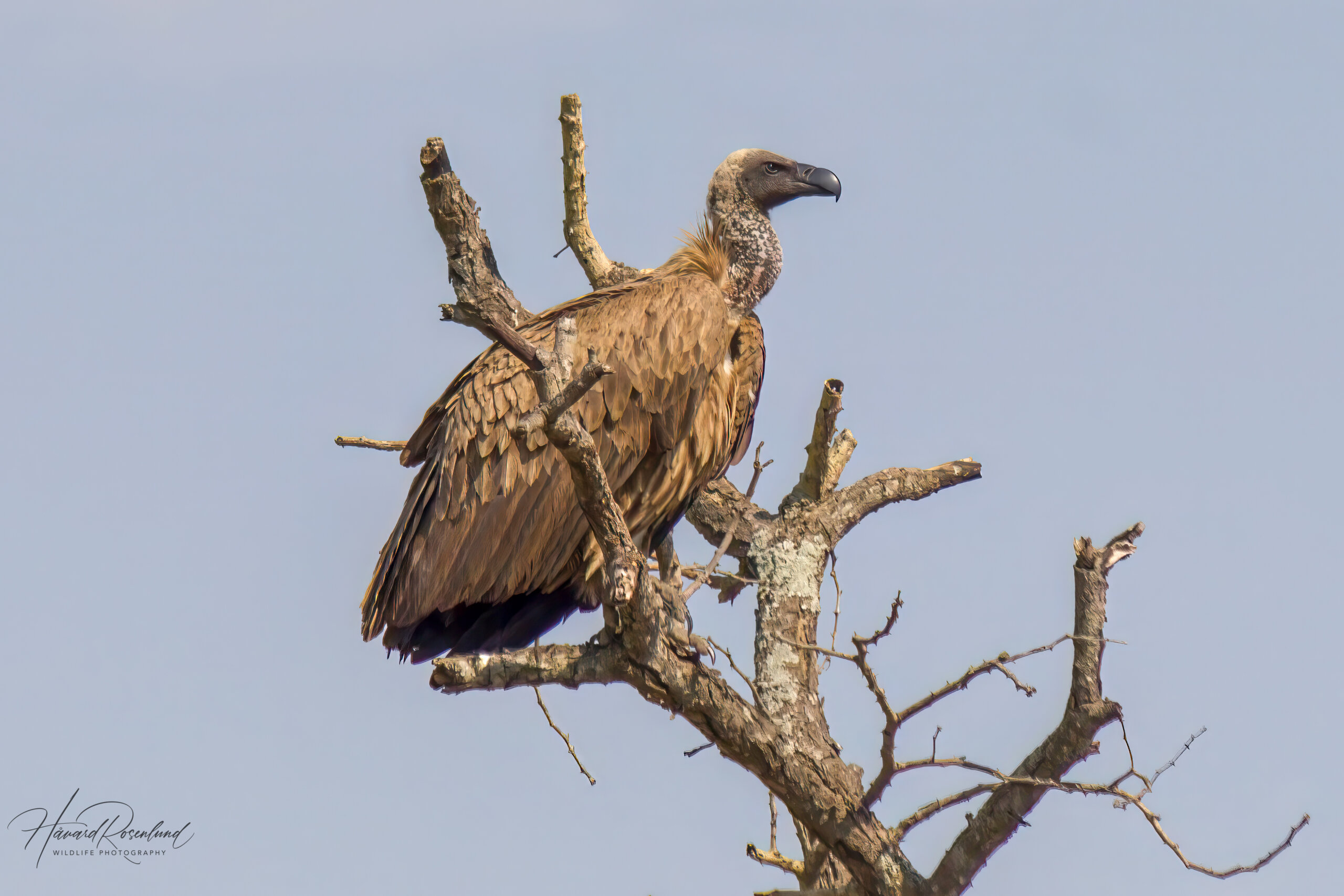
White-backed Vulture
Gyps africanus
At a glance
Habitat
- Savanna and open woodland with abundant large mammals
Diet
- Carrion, especially soft tissue from large mammal carcasses
Activity
- Diurnal
Size
- Length: 90–100 cm Weight: 4.6–6.6 kg
Range
- Sub-Saharan Africa excluding most dense equatorial forest
Description
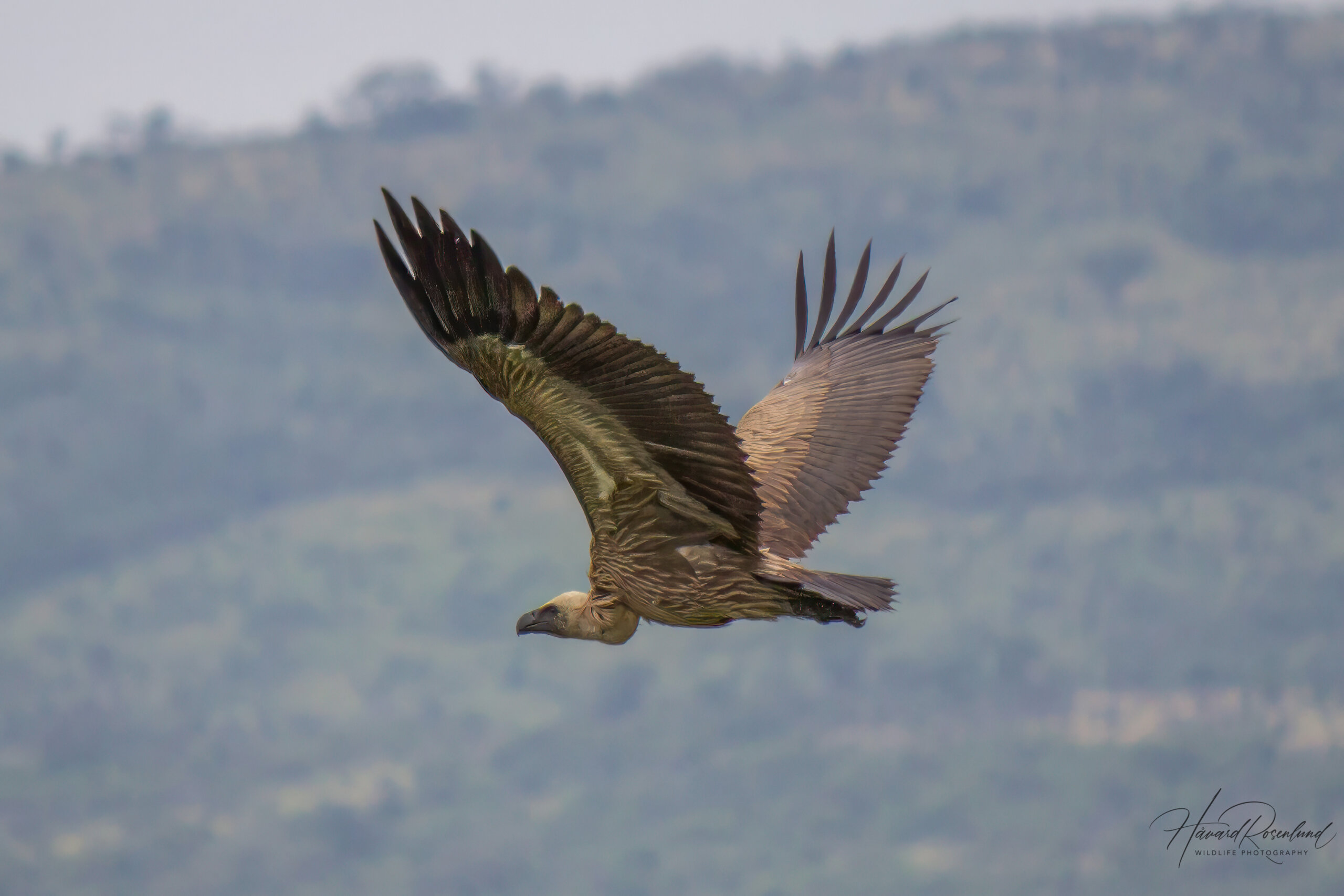
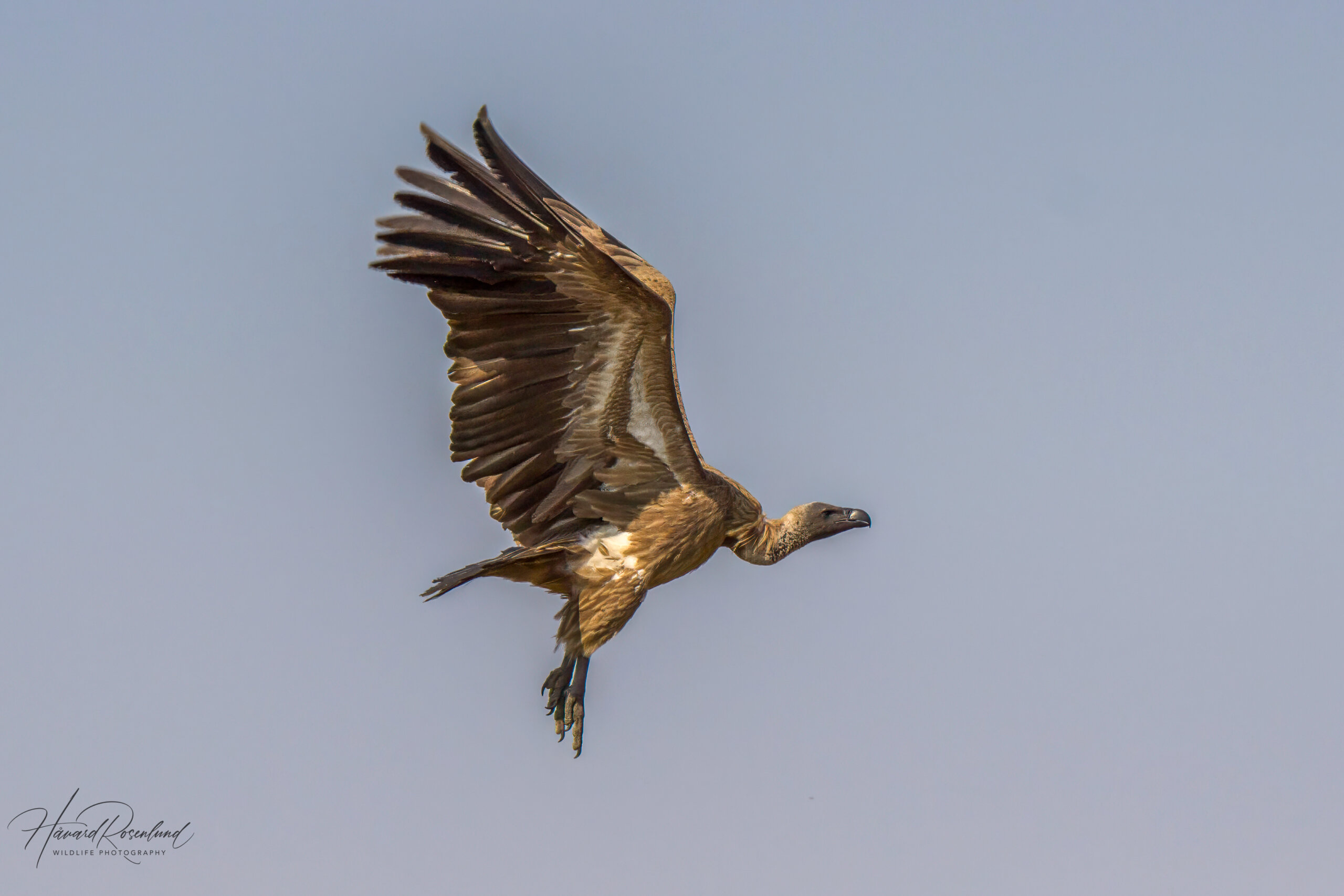
The white-backed vulture (Gyps africanus) is a medium-sized African vulture that was once one of the continent's most familiar large scavengers. Adults are about 90–100 cm long, weigh roughly 4.6–6.6 kg and have a wingspan a little over two metres. Plumage becomes paler with age while the flight feathers remain dark, and the diagnostic white lower back and rump are especially conspicuous when the wings are spread.
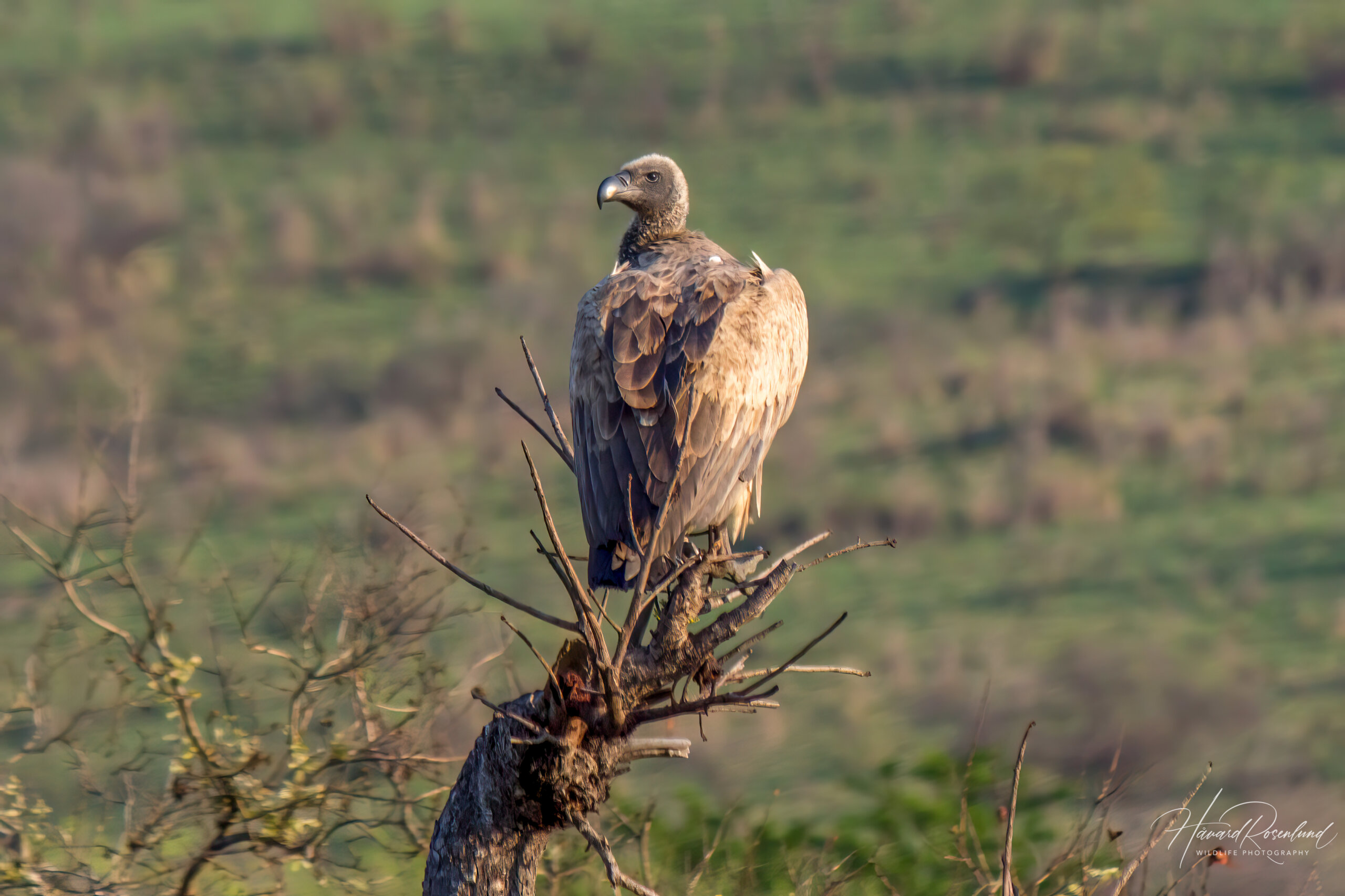
The head and neck are dark and sparsely feathered, with a compact pale ruff at the base of the neck. Juveniles are darker and more heavily streaked and take several years to acquire full adult plumage. The similar Cape vulture (Gyps coprotheres) is larger and generally paler, with a different pattern of bare skin and underwing markings.
Habitat
White-backed vultures are birds of open sub-Saharan landscapes, especially savanna and open woodland where large wild mammals or livestock provide a regular supply of carrion. Dense equatorial forest and the driest desert regions are largely avoided.
The species needs landscapes broad enough to support wide-ranging searches for food as well as tall trees for nesting and communal roosting. Protected areas remain important, but the birds routinely range far beyond reserve boundaries while searching for carcasses, exposing them to threats across much larger human-dominated landscapes.
Diet
The diet consists almost entirely of carrion, particularly the soft tissues of medium-sized and large mammal carcasses. White-backed vultures are not well equipped to tear through very thick intact hide and often benefit when a carcass has already been opened by a predator or a more powerful scavenger.
They feed rapidly once access is available, concentrating on flesh and internal tissues rather than the tougher skin, tendons and bones exploited by some other scavengers.
Scavenging
White-backed vultures search for carrion by soaring efficiently on rising air, allowing them to scan enormous areas at low energetic cost. Birds also watch the movements and descents of other vultures, so the discovery of a carcass can quickly draw individuals from a wide surrounding area.
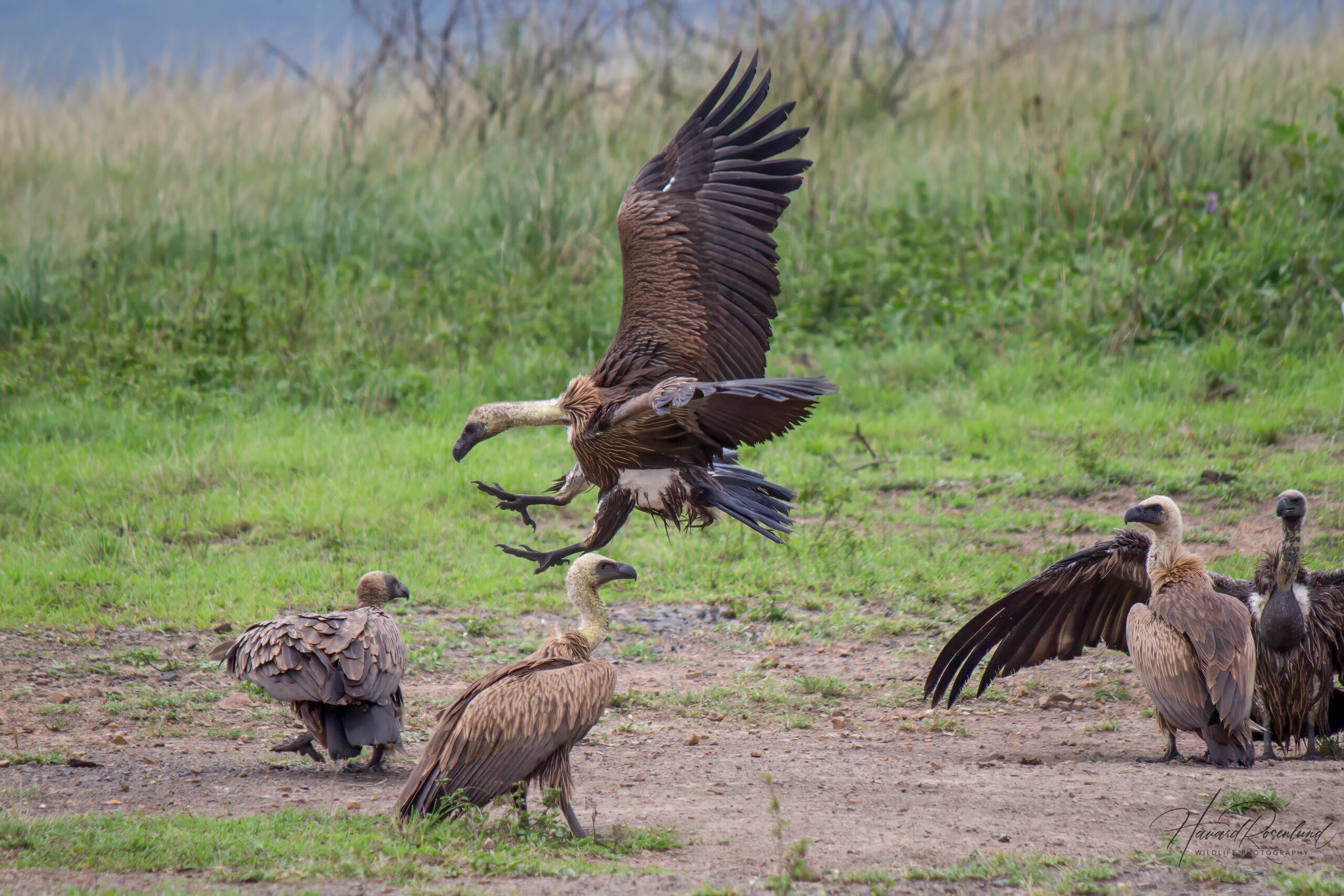
Large numbers may converge on the same carcass and competition is intense. Birds crowd tightly around accessible openings, pushing and jostling for soft tissue, and a large group can consume much of a carcass in a short time. This highly efficient communal scavenging is well suited to an unpredictable food source that may appear far apart in both space and time.
Ecological role
As a specialised scavenger, the white-backed vulture is part of Africa's natural carcass-disposal system. By locating and consuming dead animals rapidly, vultures recycle nutrients and shorten the period during which decomposing carcasses remain available to other scavengers and potential disease vectors.
This ecological service depends on vultures being able to travel widely between unpredictable food sources. The same adaptation creates a severe conservation vulnerability: a single poisoned carcass can attract birds from far beyond the immediate area and kill a large part of the local or regional population in one event.
Behaviour
The species is not a regular long-distance migrant, but movement patterns vary greatly with age and breeding status. Adults are generally more faithful to familiar nesting and roosting areas than immatures.
White-backed vultures are strongly social around food and at communal roosts. Outside the breeding season large numbers may gather in suitable trees overnight before dispersing over the surrounding landscape after morning thermals begin to develop.
Home ranges
White-backed vultures use extraordinarily large home ranges because carrion is unpredictable and scattered. In southern Africa, mean home ranges of about 24,800 km² have been recorded, while tracking of immature birds has produced averages of roughly 33,900 km².
Age and breeding status matter. Immature birds can roam across several countries, whereas breeding adults are pulled repeatedly back towards the nest and familiar roosts. Home ranges also overlap heavily between individuals because carcasses are shared resources rather than defended territories. This enormous spatial scale explains why protecting only nesting sites or individual reserves cannot secure the species.
Breeding
White-backed vultures are monogamous and, unlike most other Gyps vultures, normally nest in trees rather than on cliffs. Pairs often breed within sight of one another in loose colonies, usually with one nest in a tree. The large stick platforms are lined with grass and may be reused.
The female normally lays one egg, usually between April and September in southern Africa. Both parents share incubation, which lasts about 56–58 days. The young remain in the nest for roughly 120–125 days before fledging and then stay partly dependent on their parents for another five to six months. With a single-egg clutch and a generation time of about 13 years, the species cannot rapidly replace breeding adults that are lost.
Cultural significance
Vultures have long held a place in belief-based practices and traditional medicine in parts of Africa, especially in southern and western Africa. White-backed vultures are among the species whose body parts are sought for these purposes. In KwaZulu-Natal, interviews with traditional health practitioners found that vulture heads and brains were the most frequently used parts, particularly in preparations associated with divination and the ability to foresee future events. Bones, claws, wings, hearts, eyes and eggs were also reported for a range of spiritual and medicinal uses.
This use has serious consequences for vulture populations. Demand for body parts supports an illegal trade, and birds may be deliberately poisoned or hunted so that parts can be collected. The practice therefore reflects a long-standing cultural relationship with vultures while also creating a direct modern threat to species already declining for many other reasons.
Status
The white-backed vulture is classified as Critically Endangered on the IUCN Red List and is also Critically Endangered in South Africa, Lesotho and Eswatini. The regional population is estimated at about 6,000 mature individuals, equivalent to roughly 3,000 breeding pairs. The global estimate for 2024 is about 68,000 mature individuals, with a broad uncertainty range of roughly 43,000–117,000.
The regional population continues to decline. In Kruger National Park, formerly a major stronghold, the breeding population fell by about 40% between 2013 and 2022. Over three generations, this corresponds to an estimated decline of about 84%.
Threats
Poisoning is the most serious threat. Some incidents are accidental, when vultures feed on poisoned carcasses intended to kill mammalian predators, while others deliberately target the vultures themselves. Birds are poisoned to obtain body parts for belief-based use, and poachers may also poison carcasses to prevent circling vultures from revealing the location of illegally killed animals. From 2015 to 2024, recorded poisoning incidents killed nearly 2,000 white-backed vultures in the Greater Limpopo Transfrontier Area and just over 3,100 across the wider region. These are minimum figures because many incidents go undetected. In May 2025, a deliberate poisoning event at Lionspruit Game Reserve near Marloth Park in Mpumalanga killed 92 white-backed vultures; around 90% were breeding adults.
Other major causes of mortality include electrocution and collisions with power infrastructure, collisions with wind turbines, lead ingested from shot carcasses and toxic veterinary drugs. Elevated lead levels are estimated to affect more than two-thirds of South African white-backed vultures. Because adult survival is so important to this slow-breeding species, repeated mass-mortality events can suppress recovery for decades.
Conservation
Much of the conservation work focuses on preventing poisoning and responding rapidly when incidents occur. Measures include training poison-response teams, safely removing and cleaning up poisoned carcass sites, cooperation with landowners and protected-area staff, stronger investigation and enforcement, and tracking that can reveal abnormal movements or sudden mortality. Real-time tracking helped locate the mass-poisoning site near Marloth Park in 2025.
Reducing collisions and electrocutions requires safer routing and design of new power infrastructure, retrofitting dangerous structures and marking high-risk lines. Protecting nesting trees and connected landscapes is also important. Rehabilitation, conservation breeding and carefully managed releases can reinforce wild populations, but these measures cannot offset persistently high adult mortality unless the underlying threats are reduced.
Conservation organizations


Image gallery
Loading map and observations…
National Red List status
| Country | Status | Assessment | Source |
|---|---|---|---|
| South Africa | CRCritically Endangered | Regional Red Data Book of Birds of South Africa, Lesotho and Eswatini 2025 | BirdLife South Africa – Regional Red Data Book 2025 |
Have you seen this species?
Independent species archive
Did you find this species page useful?
Wildlife Vagabond is independently built and maintained. Voluntary support helps cover hosting, maps, data storage and continued improvements to the species archive.
Support Wildlife VagabondSpecies content will remain freely available.
References
Information about the species’ global distribution and status is based primarily on global Red List data. See the references below for details.
- African Wildlife Foundation. (n.d.). Vulture conservation. https://www.awf.org/wildlife-conservation/vulture
- BirdLife International. (n.d.). White-backed Vulture species factsheet. https://datazone.birdlife.org/species/factsheet/white-backed-vulture-gyps-africanus
- BirdLife South Africa. (n.d.). White-backed Vulture, 2025 Red Data Book. https://www.birdlife.org.za/red-list/white-backed-vulture/
- International Union for Conservation of Nature. (n.d.). White-backed Vulture. The IUCN Red List of Threatened Species. https://www.iucnredlist.org/species/22695189/204461164
- Manqele, N. S., Selier, S. A. J., & Downs, C. T. (2023). The ethnomedicinal use of vultures by traditional health practitioners in KwaZulu-Natal, South Africa. Journal of Ornithology, 164(4), 777-788. https://doi.org/10.1007/s10336-023-02076-6
- Phipps, W. L., Willis, S. G., Wolter, K., & Naidoo, V. (2013). Foraging Ranges of Immature African White-Backed Vultures (Gyps africanus) and Their Use of Protected Areas in Southern Africa. PLoS ONE, 8(1), e52813. https://doi.org/10.1371/journal.pone.0052813
- Shaw, P., Ogada, D., Dunn, L., Buij, R., Amar, A., Garbett, R., Herremans, M., Virani, M. Z., Kendall, C. J., Croes, B. M., Odino, M., Kapila, S., Wairasho, P., Rutz, C., Botha, A., Gallo-Orsi, U., Murn, C., Maude, G., & Thomsett, S. (2024). African savanna raptors show evidence of widespread population collapse and a growing dependence on protected areas. Nature Ecology & Evolution, 8(1), 45-56. https://doi.org/10.1038/s41559-023-02236-0
- VulPro. (2025, May 20). Mass poisoning incident in Mpumalanga. https://www.vulpro.com/news/catastrophe-another-100-critically-endangered-vultures-dead-poisoned-in-mpumalanga-2/
- VulPro. (n.d.). Mission and conservation work. https://www.vulpro.com/mission/
- Zvidzai, M., Zengeya, F. M., Masocha, M., Ndaimani, H., & Murwira, A. (2022). Application of GPS occurrence data to understand African white‐backed vultures Gyps africanus spatial home range overlaps. Ecology and Evolution, 12(4), e8778. https://doi.org/10.1002/ece3.8778