
Brown Snake-Eagle
Circaetus cinereus
At a glance
Habitat
- Dry woodland, thornveld and wooded savanna with open ground and elevated perches
Diet
- Mostly snakes, including venomous species; also lizards, birds and small mammals
Activity
- Diurnal; hunts mainly from tall exposed perches
Size
- Length: 70–80 cm Weight: 1.5–2.5 kg
Range
- Widespread across sub-Saharan Africa
Description
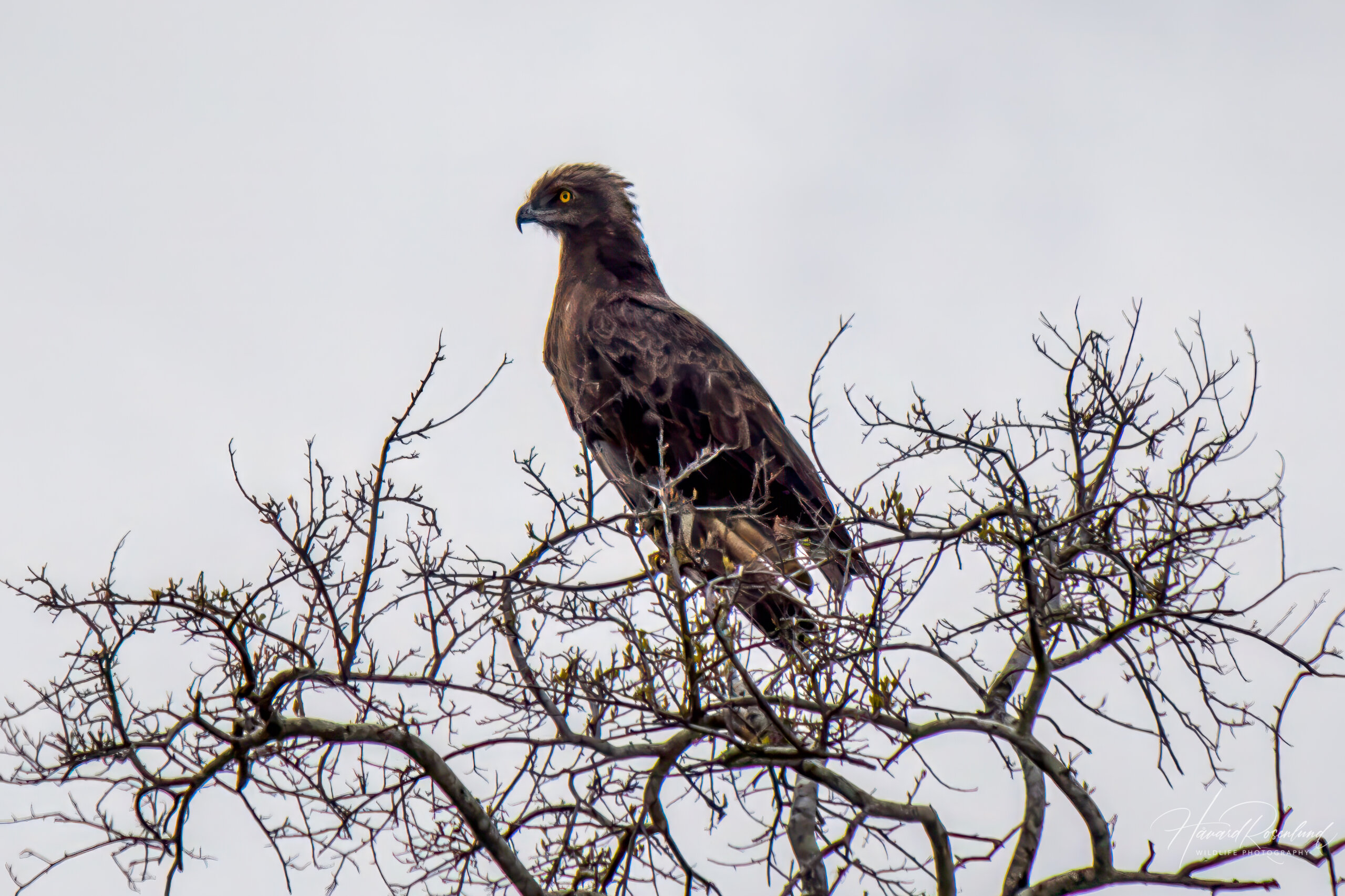
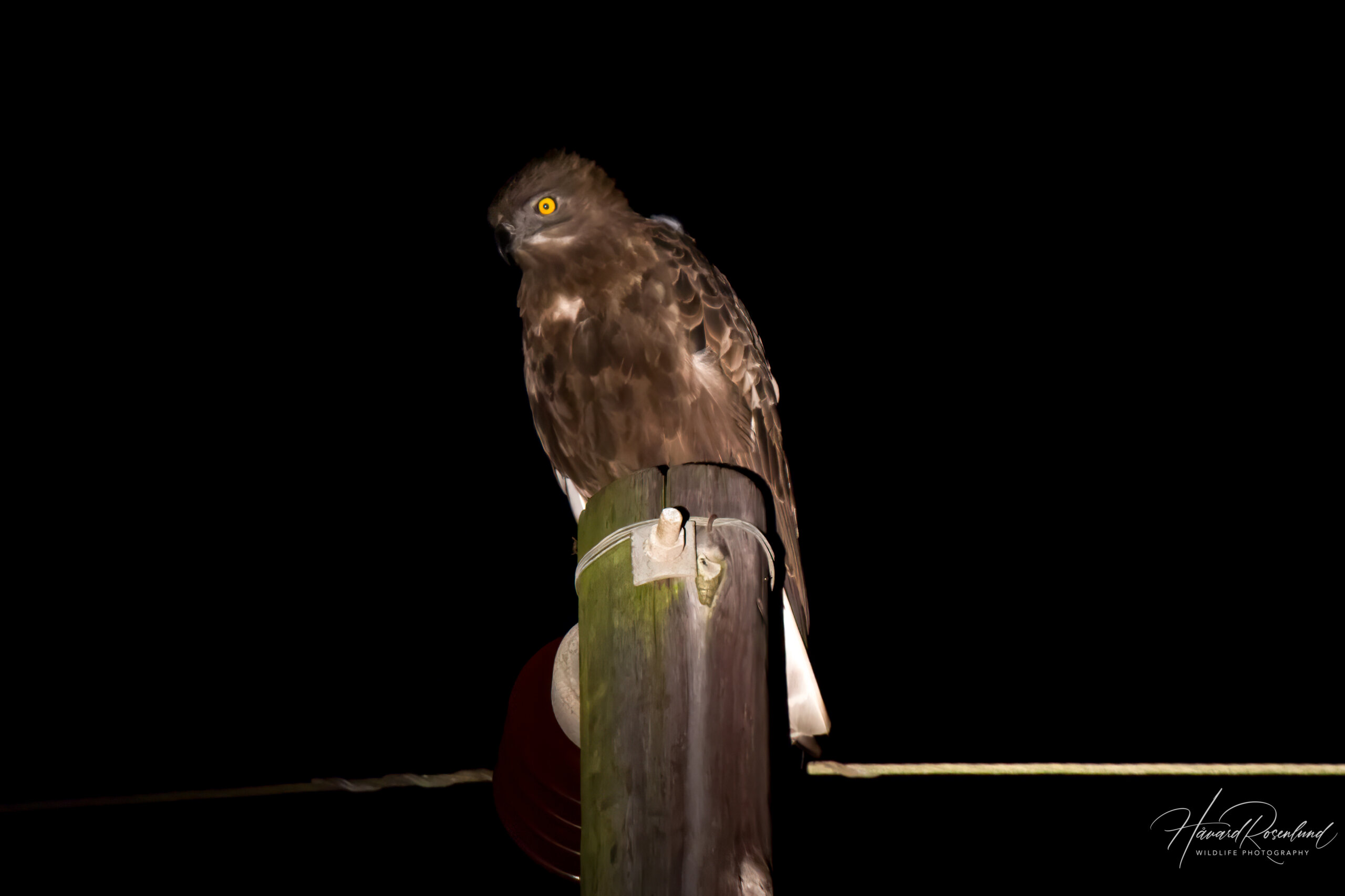
The brown snake-eagle (Circaetus cinereus) is the largest of the snake-eagles and a powerful raptor of sub-Saharan Africa. Adults are roughly 70–80 cm long, have a wingspan of about 160–175 cm and weigh around 1.5–2.5 kg. The plumage is largely uniform dark brown, with yellow to orange eyes and greyish, unfeathered legs.
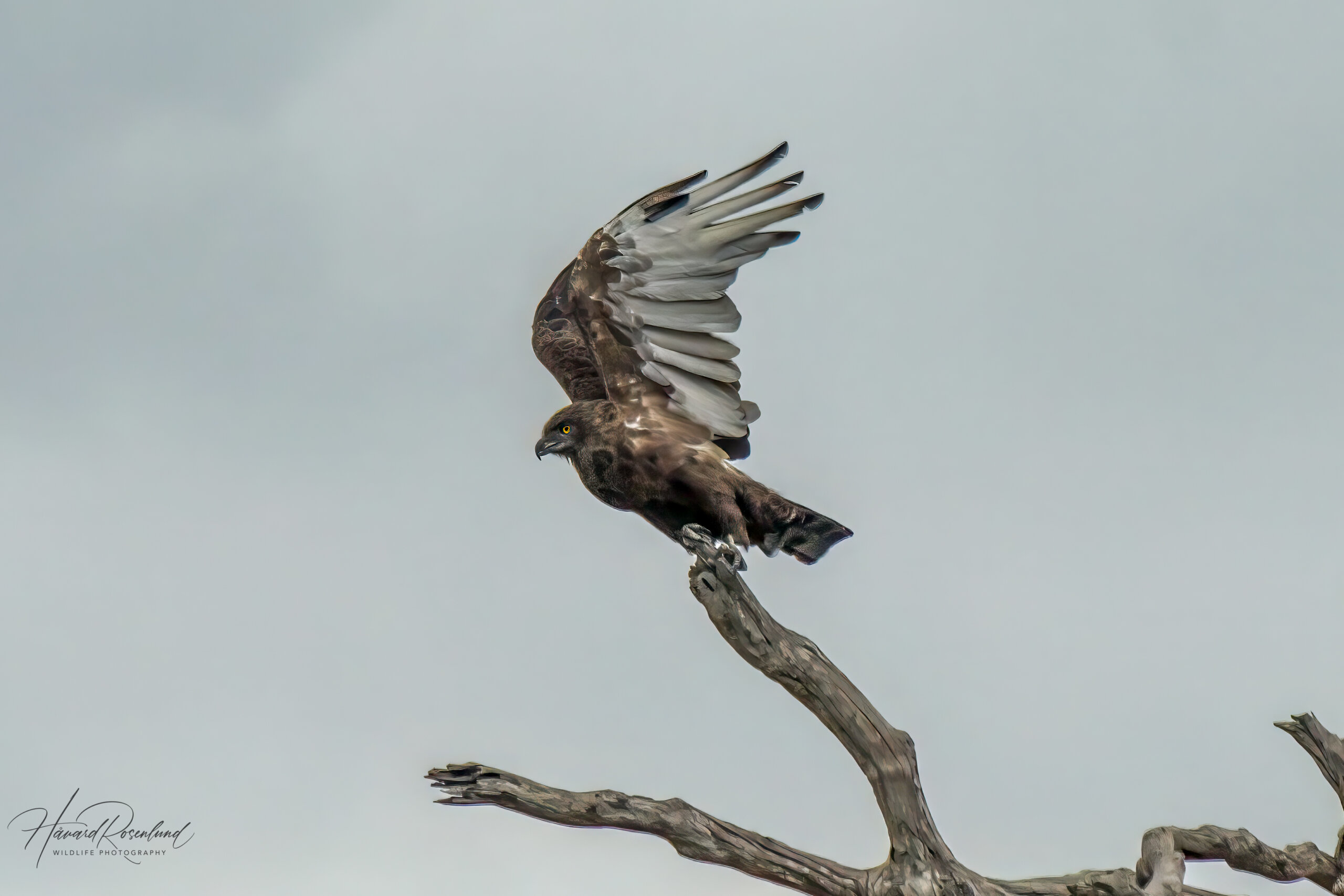
The large head with forward-facing eyes and erect stance gives the bird a distinctive profile. The tail is crossed by four clear pale bars. In flight, the dark body and underwing coverts contrast with much paler, silvery-grey flight feathers. Juveniles are paler and more variable than adults, often showing rufous or whitish areas that gradually disappear as the darker adult plumage develops.
Habitat
Brown snake-eagles favour dry woodland, thornveld and broad-leaved wooded savanna, especially where tall trees or other exposed perches overlook open ground. They also occur around farmland and the edges of settlements.
Dense forest, extensive treeless grassland and the most arid open country are generally avoided. The combination of woody cover for perching and nesting with sufficiently open ground for detecting reptiles is particularly important.
Diet
Snakes dominate the diet, including highly venomous species such as cobras and puff adders (Bitis arietans). Non-venomous snakes are also taken, together with lizards and occasional small vertebrates such as birds and mammals.
This strong dependence on reptiles makes the brown snake-eagle one of Africa's most specialised snake predators, although it remains opportunistic enough to take other vertebrate prey when available.
Hunting
The eagle usually hunts from a tall, exposed tree or electricity pylon. It may wait for long periods while scanning the ground, then glide down rapidly and seize detected prey with its powerful feet and toes. This hunting method is especially effective over open patches where snakes and other prey can be seen from above.
The lower legs are covered by unusually heavy, overlapping scales that give extra protection against snake bites. Brown snake-eagles are not known to be immune to snake venom, so they still depend on this physical protection and on gaining control of the snake quickly. Once seized, snake prey may be killed by crushing the head or spine. Adults have also been recorded decapitating dead snakes before carrying them to the nest.
Breeding
Brown snake-eagles form monogamous territorial pairs. They build a relatively small stick nest high in a tree, often hidden by dense foliage; nests may also be placed in epiphytes and, occasionally, on pylons. Old nests of other raptors may be taken over and repaired, including nests of tawny eagles (Aquila rapax) and African harrier-hawks (Polyboroides typus). Fresh green leaves are added throughout the breeding period.
One egg is normally laid. The female performs most of the incubation while the male supplies food, and incubation lasts about 48–53 days. After hatching she broods the chick almost continuously for about the first ten days, then spends progressively less time covering it and usually stops brooding altogether by around 35 days.
The young eagle develops slowly and normally leaves the nest at about 95–112 days. It becomes fully independent roughly one week to two months later. The single-egg clutch and prolonged period of parental care make each successful breeding attempt a substantial investment for the pair.
Status
The brown snake-eagle remains globally classified as Least Concern on the IUCN Red List. It has a very broad distribution across sub-Saharan Africa but is naturally uncommon across much of that range, and no precise current global population estimate is available.
Long-term counts from several African regions indicate a median decline of about 55% over three generations. Declines have been strong in West Africa and northern Cameroon and have also been recorded in Kenya, whereas northern Botswana showed an increase. In Botswana, numbers remained stable inside protected areas and increased outside them between surveys in the early 1990s and 2015–2016, a striking regional exception to the declines measured in many other areas.
Habitat conversion, declining prey availability, loss of large nesting trees, persecution and poisoning can affect local populations. The global Least Concern category therefore masks substantial declines in parts of the species' range.
Image gallery
Loading map and observations…
Have you seen this species?
Independent species archive
Did you find this species page useful?
Wildlife Vagabond is independently built and maintained. Voluntary support helps cover hosting, maps, data storage and continued improvements to the species archive.
Support Wildlife VagabondSpecies content will remain freely available.
References
Information about the species’ global distribution and status is based primarily on global Red List data. See the references below for details.
- Biodiversity Explorer. (n.d.). Circaetus cinereus life history, based on Roberts – Birds of Southern Africa VII. Iziko Museums of South Africa. https://www.biodiversityexplorer.info/birds/accipitridae/circaetus_cinereus.htm
- BirdLife International. (n.d.). Brown Snake-eagle species factsheet. https://datazone.birdlife.org/species/factsheet/brown-snake-eagle-circaetus-cinereus
- BirdLife International. (n.d.). Raptor population trends in northern Botswana. https://datazone.birdlife.org/articles/raptors-in-botswana-are-faring-poorly-outside-protected-areas
- International Union for Conservation of Nature. (n.d.). Brown Snake-Eagle. The IUCN Red List of Threatened Species. https://www.iucnredlist.org/species/22695271/202831652
- Kemp, A. C., & Marks, J. S. (2020). Brown Snake-Eagle (Circaetus cinereus). Birds of the World. https://doi.org/10.2173/bow.brseag1.01
- Shaw, P., Ogada, D., Dunn, L., Buij, R., Amar, A., Garbett, R., Herremans, M., Virani, M. Z., Kendall, C. J., Croes, B. M., Odino, M., Kapila, S., Wairasho, P., Rutz, C., Botha, A., Gallo-Orsi, U., Murn, C., Maude, G., & Thomsett, S. (2024). African savanna raptors show evidence of widespread population collapse and a growing dependence on protected areas. Nature Ecology & Evolution, 8(1), 45-56. https://doi.org/10.1038/s41559-023-02236-0
- The Peregrine Fund. (n.d.). Brown Snake-eagle. https://peregrinefund.org/explore-raptors-species/eagles/brown-snake-eagle
- van Thiel, J., Khan, M. A., Wouters, R. M., Harris, R. J., Casewell, N. R., Fry, B. G., Kini, R. M., Mackessy, S. P., Vonk, F. J., Wüster, W., & Richardson, M. K. (2022). Convergent evolution of toxin resistance in animals. Biological Reviews, 97(5), 1823-1843. https://doi.org/10.1111/brv.12865