
Eastern Cattle Egret
Ardea coromanda
At a glance
Habitat
- Grassland, pasture, farmland, rice fields, wetlands and other open habitats, usually near large herbivores
Diet
- Mostly insects and other small animals flushed by cattle and wild grazers; also frogs, small reptiles and other opportunistic prey
Activity
- Diurnal; commonly walks beside cattle or follows agricultural machinery
Size
- Length: 46–56 cm Weight: about 250–510 g
Range
- South and East Asia through Southeast Asia to Australia and nearby islands
Description
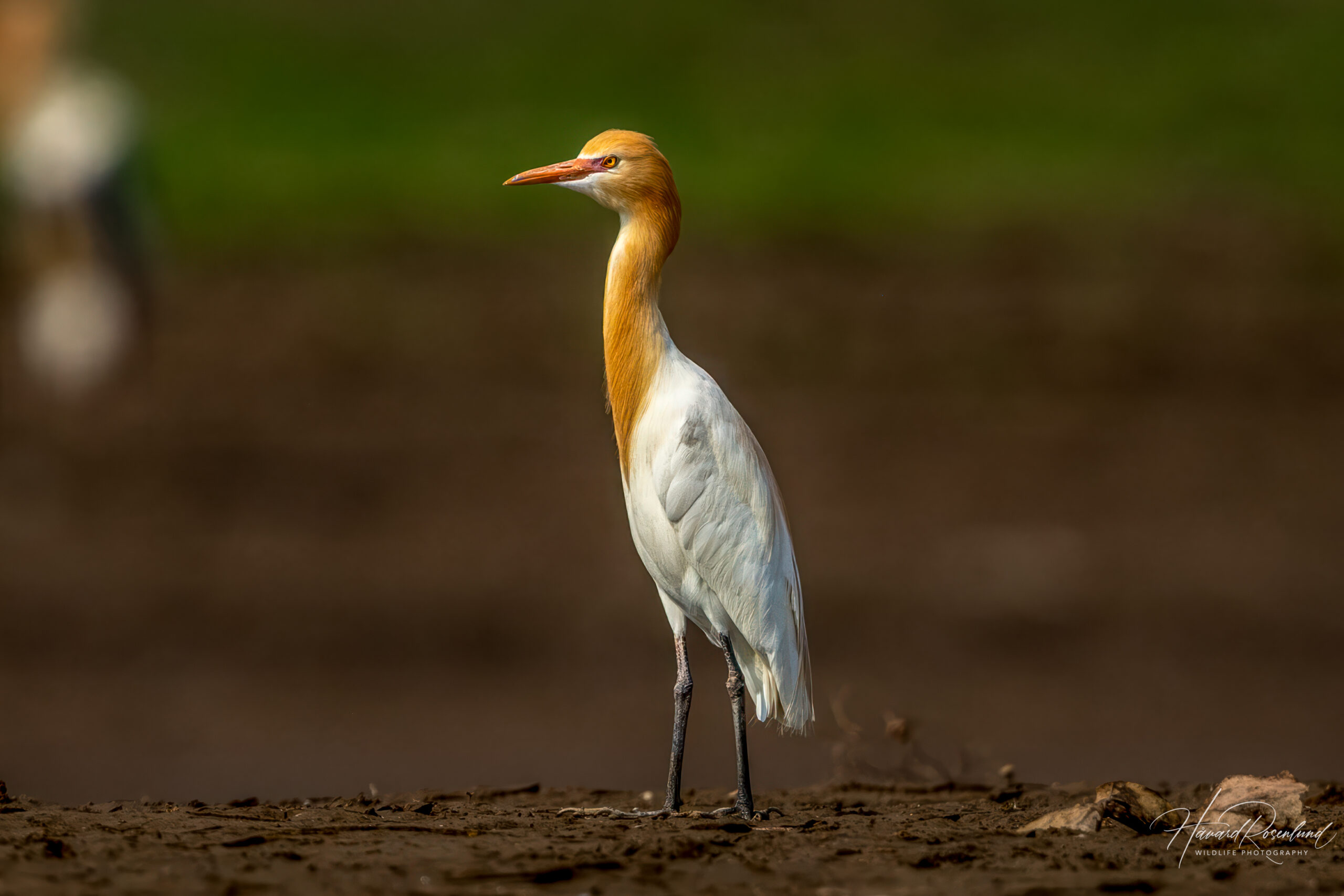
The eastern cattle egret (Ardea coromanda) is a compact heron of South, East and Southeast Asia and Australasia, about 46–56 cm long, with a wingspan of roughly 88–96 cm and a weight of 250–510 g. Outside breeding it is mainly white, with a short thick neck, relatively short legs and a sturdy yellowish bill.
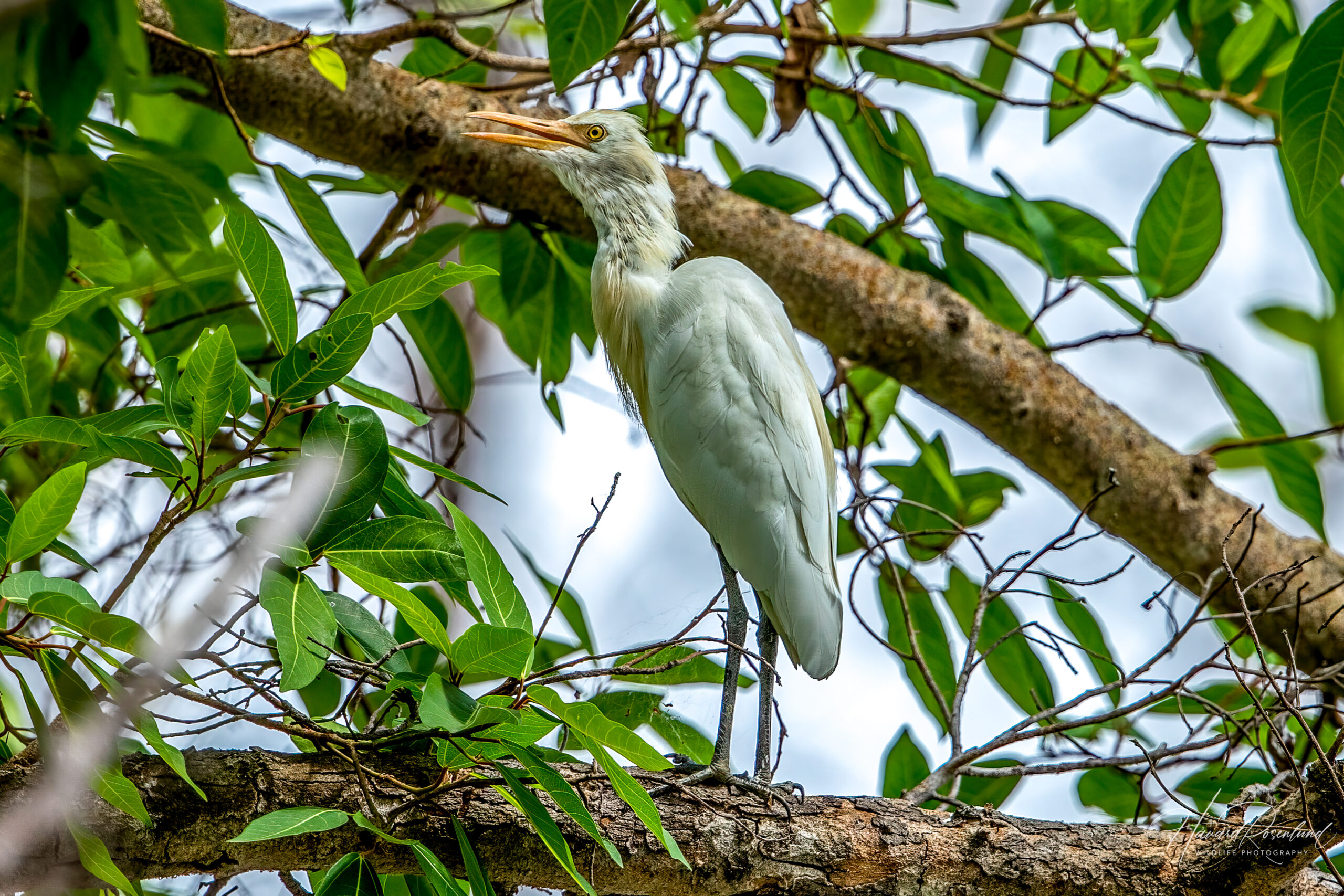
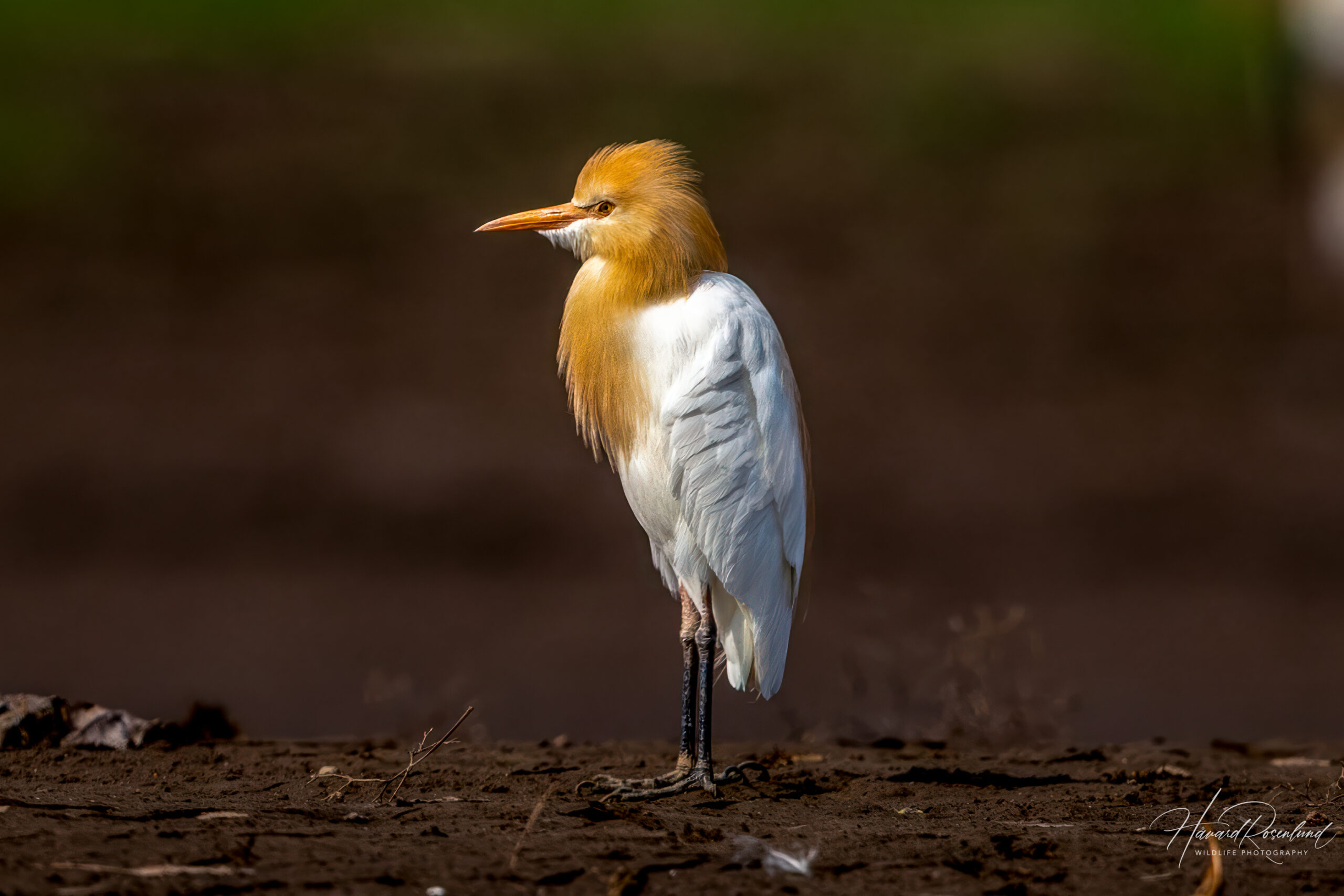
Breeding adults develop rich orange-buff plumage over the head, neck and upper breast, much more extensive than in the western cattle egret (Ardea ibis). The bill and legs can also become more intensely coloured during breeding. Eastern cattle egrets average longer bills and legs than western cattle egrets, but the measurements overlap, so breeding plumage remains the much clearer distinction. Juveniles are white with darker bills and subdued bare-part colours.
Taxonomy
Eastern and western cattle egrets were long treated as one widespread species and were usually placed in the genus Bubulcus. The eastern form appeared in older sources as Bubulcus ibis coromandus or, when treated as a species, Bubulcus coromandus.
Phylogenetic studies place cattle egrets within Ardea, and AviList v2025b recognises two species: eastern cattle egret Ardea coromanda and western cattle egret Ardea ibis. The eastern species differs most visibly in its much more extensive orange-buff breeding plumage and also shows geographic and genetic separation from the western lineage.
Habitat
Eastern cattle egrets use pasture, grassland, rice fields, cultivated land, wetland margins and urban green spaces. Unlike most herons, they are not strongly tied to open water and can forage far from wetlands wherever terrestrial prey is abundant.
Large grazing mammals are especially valuable because their movement through vegetation exposes prey. Irrigated agriculture, rice cultivation and other open human-modified landscapes can therefore provide excellent habitat as long as feeding areas are combined with suitable trees or wetland vegetation for resting and breeding.
Diet
Insects dominate much of the diet, particularly grasshoppers, crickets, beetles and flies. Frogs, small reptiles, spiders and other small animals are also taken opportunistically.
Prey composition changes with habitat and season. Birds following grazing animals often concentrate on terrestrial insects, while flooded fields and wetland margins provide a broader mixture of aquatic and land-based prey.
Foraging
The species is known for feeding beside cattle, buffalo and other large herbivores. Birds walk close to the moving animals and seize prey flushed from grass and soil before it can escape.
A study published in 2000 in Gujarat, India, found that eastern cattle egrets following livestock caught prey more often while spending less energy searching than birds foraging alone. Tractors exposed even more prey and were also actively followed through fields. The eastern cattle egret's foraging strategy is therefore flexible rather than dependent on one particular host species.
Behaviour
Eastern cattle egrets are diurnal and highly mobile within productive landscapes. Some tropical populations are largely resident, whereas others disperse widely after breeding or make seasonal movements associated with monsoon rains, agricultural cycles and changing food supplies.
The species colonised Australia naturally around 1948 and is now widespread in suitable parts of the continent. It was first recorded in New Zealand in 1956 and has been an annual migrant from Australia since 1963, particularly in winter. Breeding in New Zealand has not been confirmed. This shows how far eastern cattle egrets can disperse when new suitable landscapes become available.
Social behaviour
The eastern cattle egret is strongly social. Birds commonly feed in flocks, especially around large herds or concentrated insect outbreaks, and may gather in large numbers at communal evening roosts. Individuals readily tolerate close neighbours where food is abundant, and groups can move together between feeding areas and roosts.
Breeding
Eastern cattle egrets breed colonially, commonly together with other herons and egrets in trees, shrubs or reedbeds near wetlands. Breeding timing varies regionally and often coincides with monsoon rains or other periods when insect and other prey populations increase.
Both partners contribute to the stick nest. Clutches usually contain three or four eggs, although clutches of two to five occur. A study published in 2013 in Jammu, India, found an incubation period of 21–23 days; both parents incubate and feed the chicks. The young fledge after about 30 days and become independent at around 45 days of age.
Females can also lay eggs in nests belonging to other eastern cattle egrets. In such intraspecific brood parasitism, another pair incubates the egg and may raise the resulting chick.
Status
The current global Red List assessment still covers the older combined cattle-egret concept and classifies it as least concern. AviList v2025b, however, treats eastern and western cattle egrets as two separate species.
The eastern species is widespread and locally abundant across much of Asia and Australasia and is not considered threatened. A separate global Red List assessment of the currently delimited eastern cattle egret is not yet available.
Image gallery
Loading map and observations…
Have you seen this species?
Independent species archive
Did you find this species page useful?
Wildlife Vagabond is independently built and maintained. Voluntary support helps cover hosting, maps, data storage and continued improvements to the species archive.
Support Wildlife VagabondSpecies content will remain freely available.
References
Information about the species’ global distribution and status is based primarily on global Red List data. See the references below for details.
- AviList. (n.d.). v2025b – Eastern Cattle-Egret (Ardea coromanda). https://www.avilist.org/checklist/v2025b/
- BirdLife International. (n.d.). BirdLife International – Cattle Egret species factsheet and current global assessment. https://datazone.birdlife.org/species/factsheet/cattle-egret-bubulcus-ibis
- Birds New Zealand. (n.d.). Cattle Egret – distribution and migration in Australia and New Zealand. https://www.birdsnz.org.nz/society-publications/checklist/pelecaniformes-pelicans-herons-and-ibises/
- eBird. (n.d.). Eastern Cattle-Egret (Ardea coromanda). Cornell Lab of Ornithology. https://ebird.org/species/categr2
- International Ornithologists’ Union. (n.d.). IOC World Bird List – transfer of cattle egrets from Bubulcus to Ardea. https://www.worldbirdnames.org/new/updates/taxonomy/
- International Union for Conservation of Nature. (n.d.). Cattle Egret assessment treating the former combined taxon. The IUCN Red List of Threatened Species. https://www.iucnredlist.org/species/22697109/155477521
- Kour, D. N., & Sahi, D. N. (2013). Aspects of breeding biology of Cattle Egret, Bubulcus ibis coromandus (Boddaert) in Jammu, India. International Journal of Environmental Sciences, 3(5), 1547–1561. https://doi.org/10.6088/ijes.2013030500025
- Mukherjee, A. (2000). Adaptiveness of Cattle Egret’s (Bubulcus ibis) foraging. Zoos' Print Journal, 15(10), 331-333. https://doi.org/10.11609/JoTT.ZPJ.15.10.331-3
- South American Classification Committee. (n.d.). Proposal 994: Treat Cattle Egret as two species. https://www.museum.lsu.edu/~Remsen/SACCprop994.htm