
Great Egret
Ardea alba
At a glance
Habitat
- Freshwater, brackish and marine wetlands, including marshes, lakes, rivers, lagoons, estuaries and flooded fields
Diet
- Mainly fish, with amphibians, reptiles, small mammals, birds and aquatic invertebrates also taken
Activity
- Diurnal
Size
- Length: 94–104 cm Weight: About 1 kg
Range
- Nearly worldwide in temperate and tropical regions of the Americas, Europe, Africa, Asia and Australasia
Description
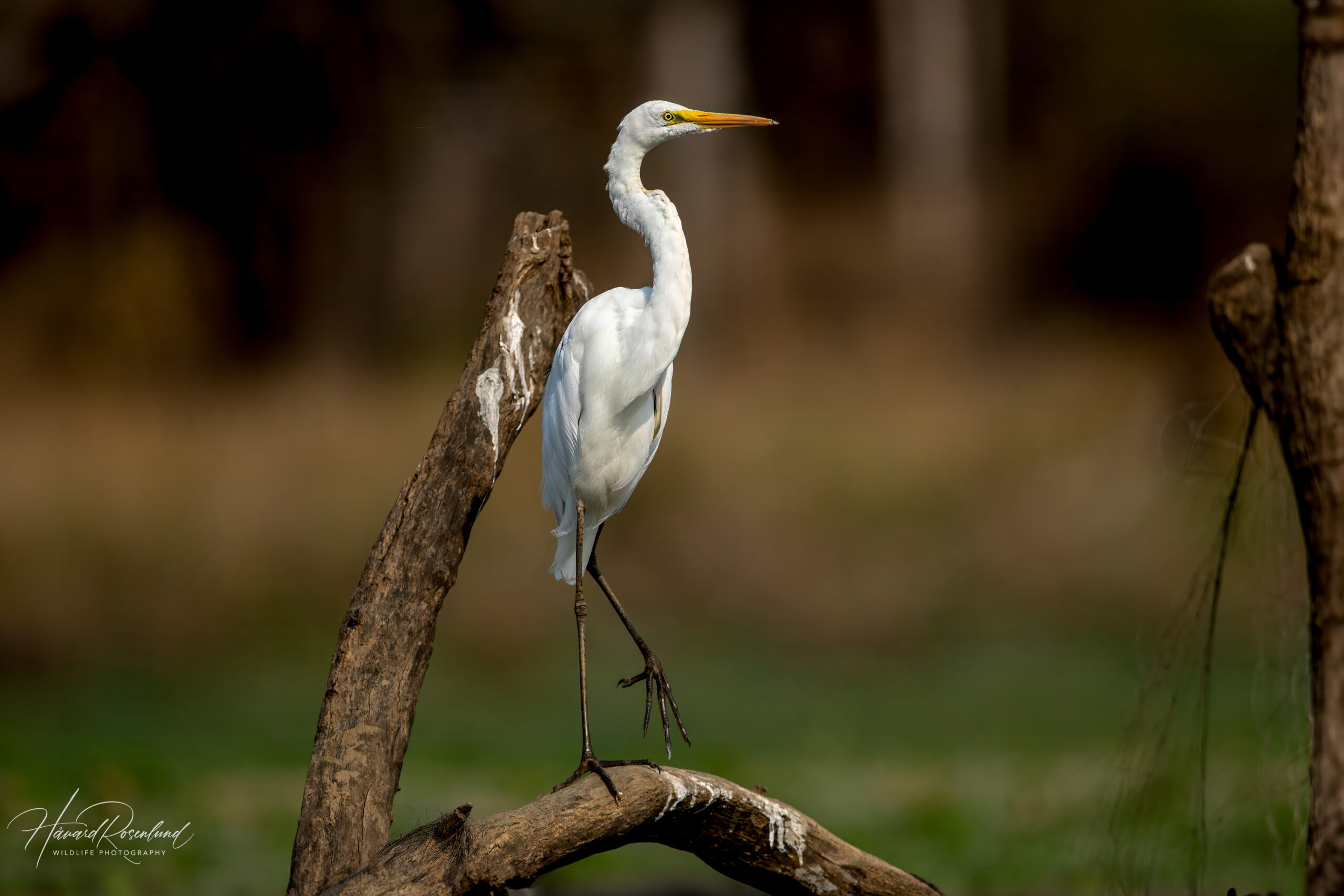
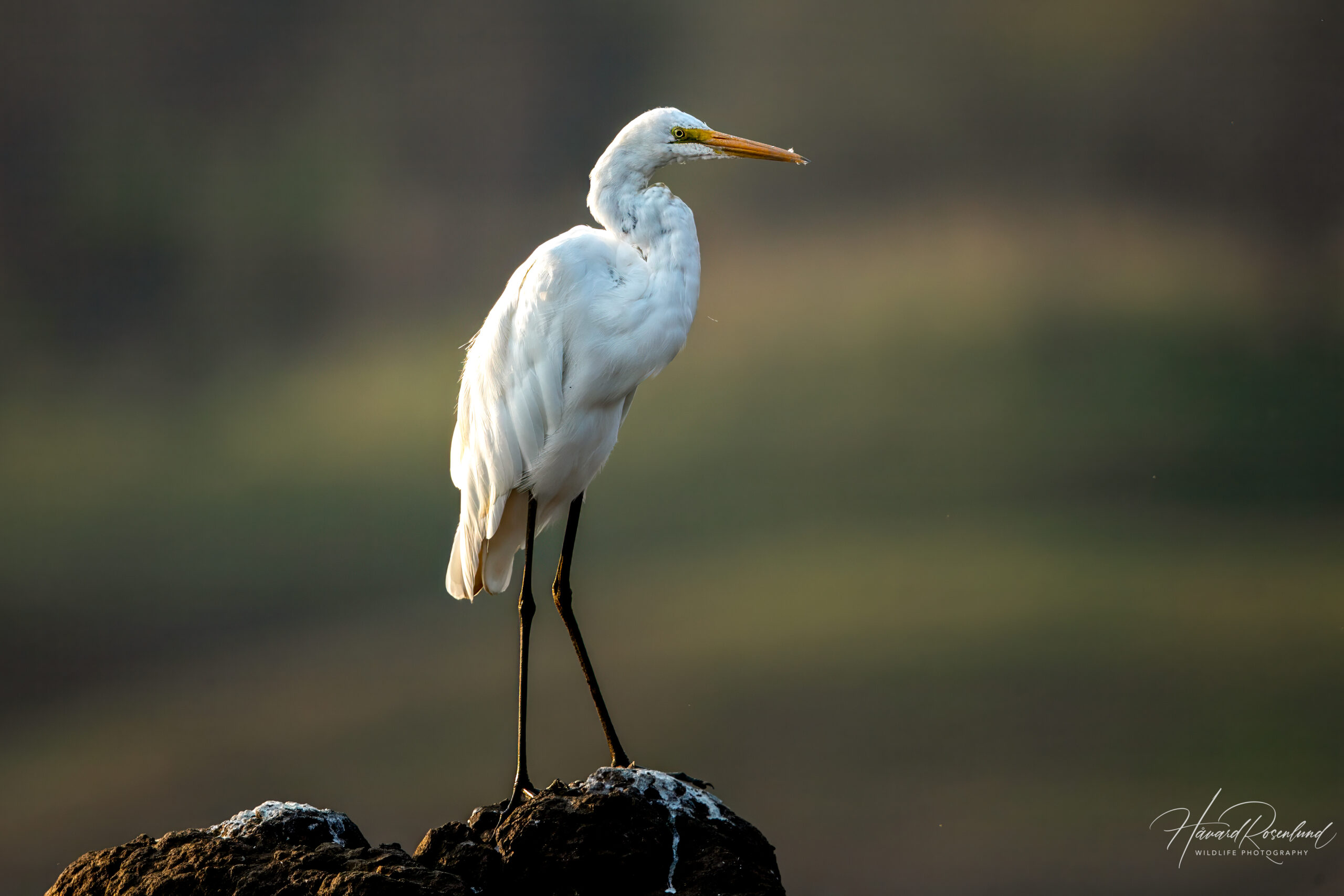
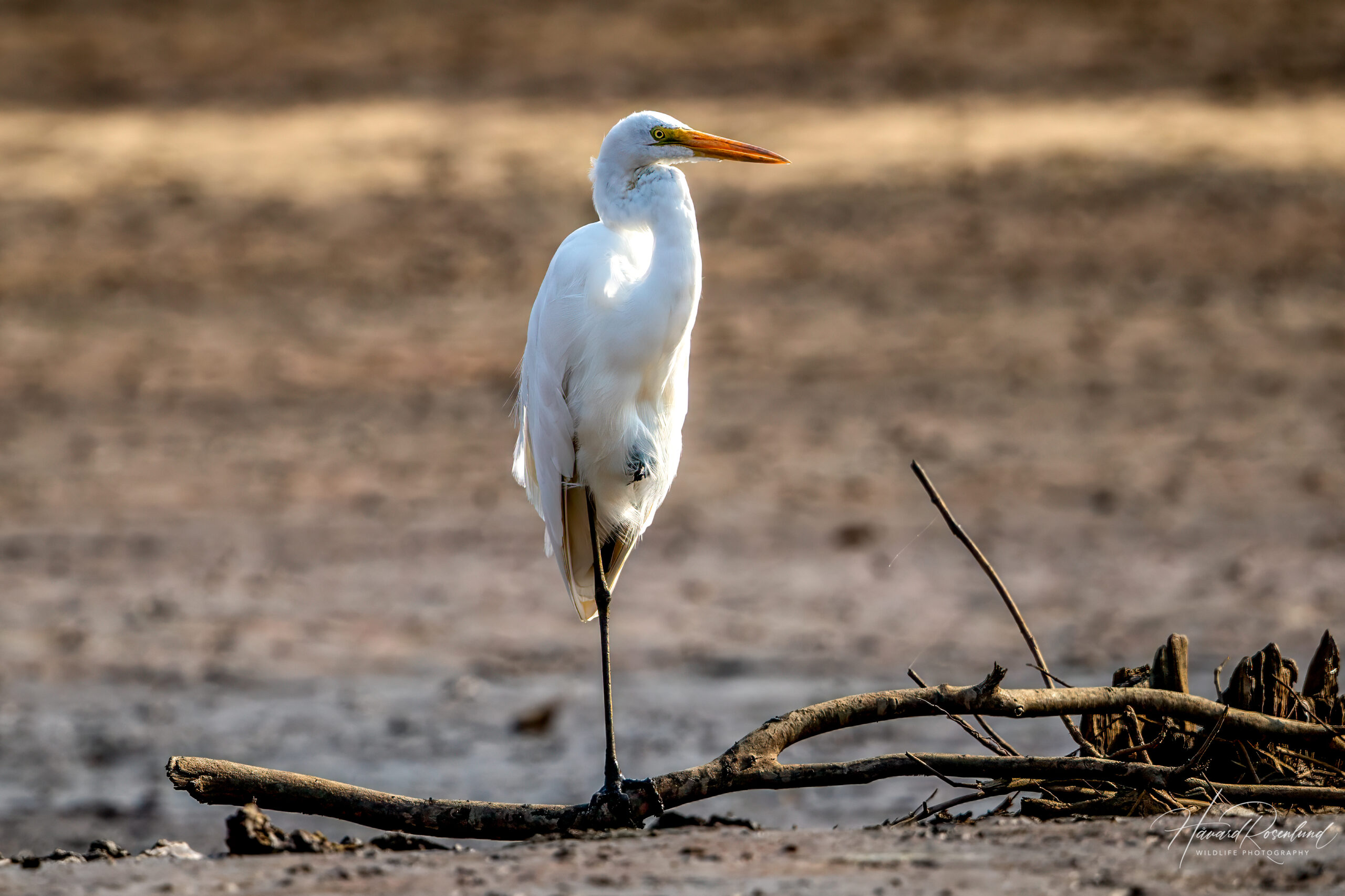
The great egret (Ardea alba) is a large, long-necked white heron with an almost worldwide distribution. Adults are 94–104 cm long, weigh around 1 kg and have a wingspan of roughly 131–145 cm. Outside breeding condition they are entirely white with a long yellow-orange bill and dark legs. In flight the neck is folded into the characteristic heron S-shape while the legs trail well beyond the tail.
Size is the most useful feature when separating great egrets from smaller white herons. Medium-sized white herons are distinctly more compact with shorter necks and bills, while little and snowy egrets are much smaller and typically show contrasting yellow feet. The gape line of a great egret also extends conspicuously behind the eye.
Taxonomy
Several geographic subspecies are recognised, and breeding appearance varies noticeably among them. All develop long ornamental plumes on the back and brighter bare facial skin, but bill and leg colour differ between regions.
American breeding birds generally retain an orange-yellow bill, while African, Eurasian and Asian-Australasian birds can develop a dark or black bill together with vivid green or blue-green lores. These geographic differences explain why photographs from different continents can make the same species look surprisingly different.
Habitat
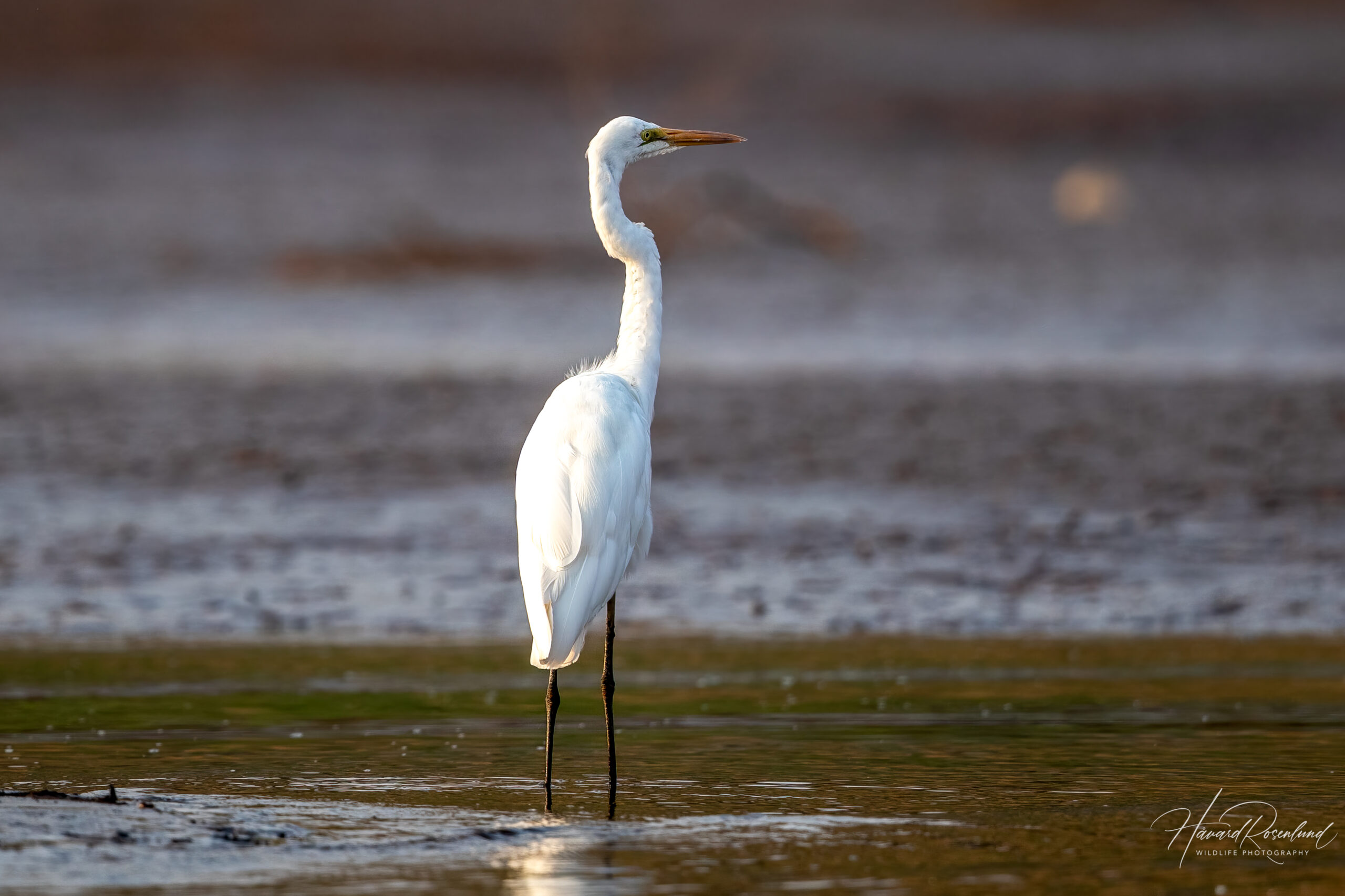
Great egrets use freshwater, brackish and marine wetlands, including marshes, swamps, lakes, rivers, ponds, estuaries, lagoons, tidal flats, canals and flooded fields.
They also venture into drier grassland and agricultural areas when terrestrial prey is available. Shallow wetlands with abundant prey are especially important because they allow the long-legged birds to hunt efficiently over large areas.
Diet
Small fish form the core of the diet in many wetlands, but frogs, crustaceans, insects, reptiles, small mammals and occasional birds are also taken. The exact mix varies strongly with habitat, and great egrets readily switch between aquatic and terrestrial prey as local availability changes.
Hunting
Great egrets usually hunt patiently, wading slowly or standing motionless before driving the head and spear-like bill forward at prey. Birds can also walk more actively after prey and, more rarely, swim or hover over water to reach fish beyond normal wading depth.
Migration
Movement varies greatly across the global range. Many populations in warmer regions are resident or make local seasonal movements, while birds breeding in colder parts of Europe, Asia and North America migrate or disperse south after breeding.
Water levels, freezing conditions and food availability can also drive shorter movements between wetlands, so regular migration and local dispersal grade into one another across the species' range.
Breeding
Great egrets breed in colonies, often together with other herons, ibises, spoonbills and other waterbirds. Males establish display sites and begin a platform of sticks before pairing; after pair formation both birds may contribute to completing the nest. Nests are usually in trees or shrubs over or near water, although ground nesting and artificial platforms are also used.
A clutch contains one to six eggs and both parents incubate for about 23–27 days. The young hatch asynchronously, and competition between siblings can be intense. Larger chicks may dominate feeding and can attack or even kill younger siblings when food is limited. The young begin climbing out of the nest and onto nearby branches after roughly three to four weeks, but are not fully capable of sustained flight until about six to seven weeks and remain dependent for longer.
The oldest known banded great egret reached 22 years and 10 months, showing that individuals can live for more than two decades in the wild.
Relationship with humans
The great egret played an unusually important role in the history of bird conservation. Its long breeding plumes, known as aigrettes, became fashionable decorations for women's hats in the late nineteenth and early twentieth centuries. Because the plumes are produced during breeding, hunters often shot adults directly at nesting colonies, leaving eggs and chicks behind.
Public opposition to this slaughter helped drive some of the earliest organised bird-protection campaigns in the United States. Protection of breeding colonies and restrictions on the feather trade allowed populations to recover, and the Migratory Bird Treaty Act of 1918 added federal protection for migratory birds. The association became so strong that the National Audubon Society adopted a flying great egret as its symbol in 1953.
Status
The great egret is classified as least concern on the IUCN Red List and remains widespread and numerous.
Wetland drainage, disturbance at breeding colonies and contaminated runoff can reduce local populations. The species is highly mobile and uses many different wetland types, but breeding and feeding still depend on suitable shallow wetlands and secure colony sites.
Image gallery
Loading map and observations…
Have you seen this species?
Independent species archive
Did you find this species page useful?
Wildlife Vagabond is independently built and maintained. Voluntary support helps cover hosting, maps, data storage and continued improvements to the species archive.
Support Wildlife VagabondSpecies content will remain freely available.
References
Information about the species’ global distribution and status is based primarily on global Red List data. See the references below for details.
- Avibase. (n.d.). AviList 2025 / Avibase – Great Egret (Ardea alba). https://avibase.bsc-eoc.org/species.jsp?avibaseid=13E9F9B114D335A7&lang=EN
- BirdLife International. (n.d.). Great Egret species factsheet. https://datazone.birdlife.org/species/factsheet/great-egret-ardea-alba
- Cornell Lab of Ornithology. (n.d.). Great Egret Life History. https://www.allaboutbirds.org/guide/Great_Egret/lifehistory
- International Union for Conservation of Nature. (n.d.). Great Egret. The IUCN Red List of Threatened Species. https://www.iucnredlist.org/species/22697043/155465940
- National Audubon Society. (n.d.). History of Audubon and bird conservation. https://www.audubon.org/about/history
- U.S. Fish & Wildlife Service. (n.d.). Migratory Bird Treaty Act of 1918. https://www.fws.gov/law/migratory-bird-treaty-act-1918
- U.S. Geological Survey. (n.d.). Bird Banding Laboratory – Longevity records. https://www.usgs.gov/labs/bird-banding-laboratory/science/science-topics/longevity-records