
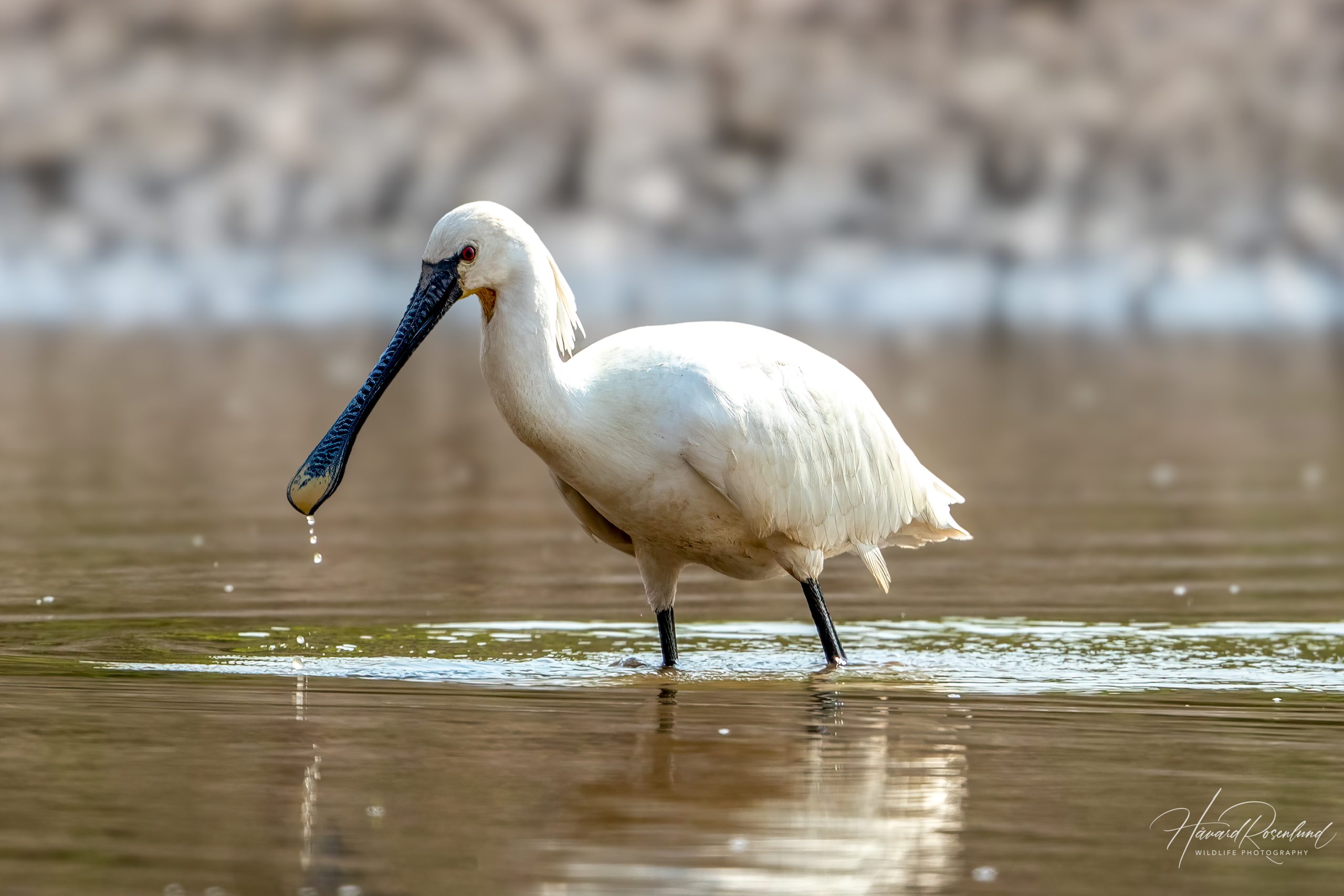
Eurasian Spoonbill
Platalea leucorodia
At a glance
Habitat
- Shallow freshwater and saline wetlands, marshes, floodplains, lagoons, estuaries and tidal flats
Diet
- Small fish, crustaceans, aquatic insects, molluscs, worms and other small aquatic animals
Activity
- Mostly diurnal; feeding follows local water conditions
Size
- Length: about 70–95 cm; wingspan 115–135 cm Weight: about 1.1–2 kg
Range
- Europe, North Africa and much of Asia; northern populations migrate south, while others are resident or locally mobile
Description
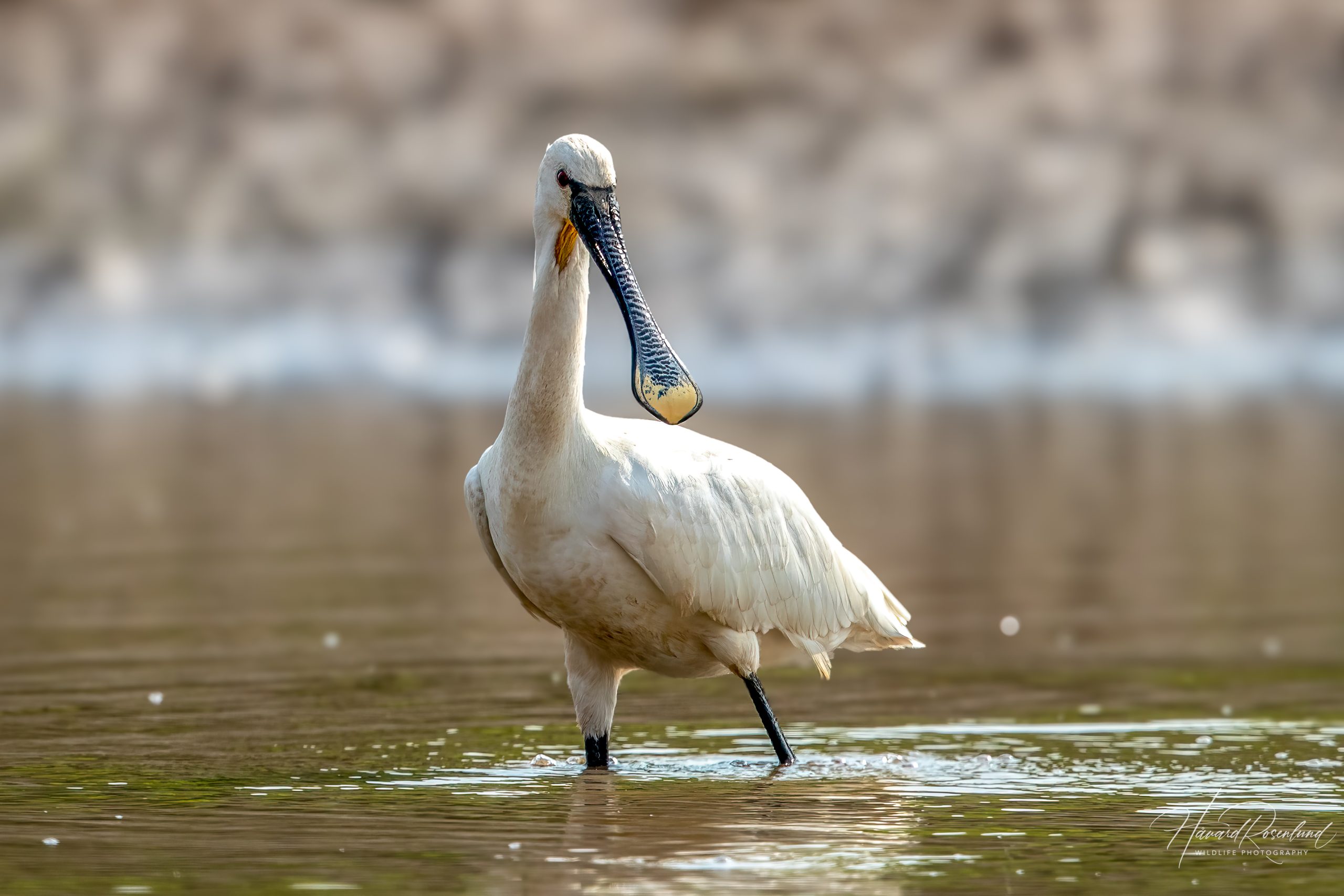
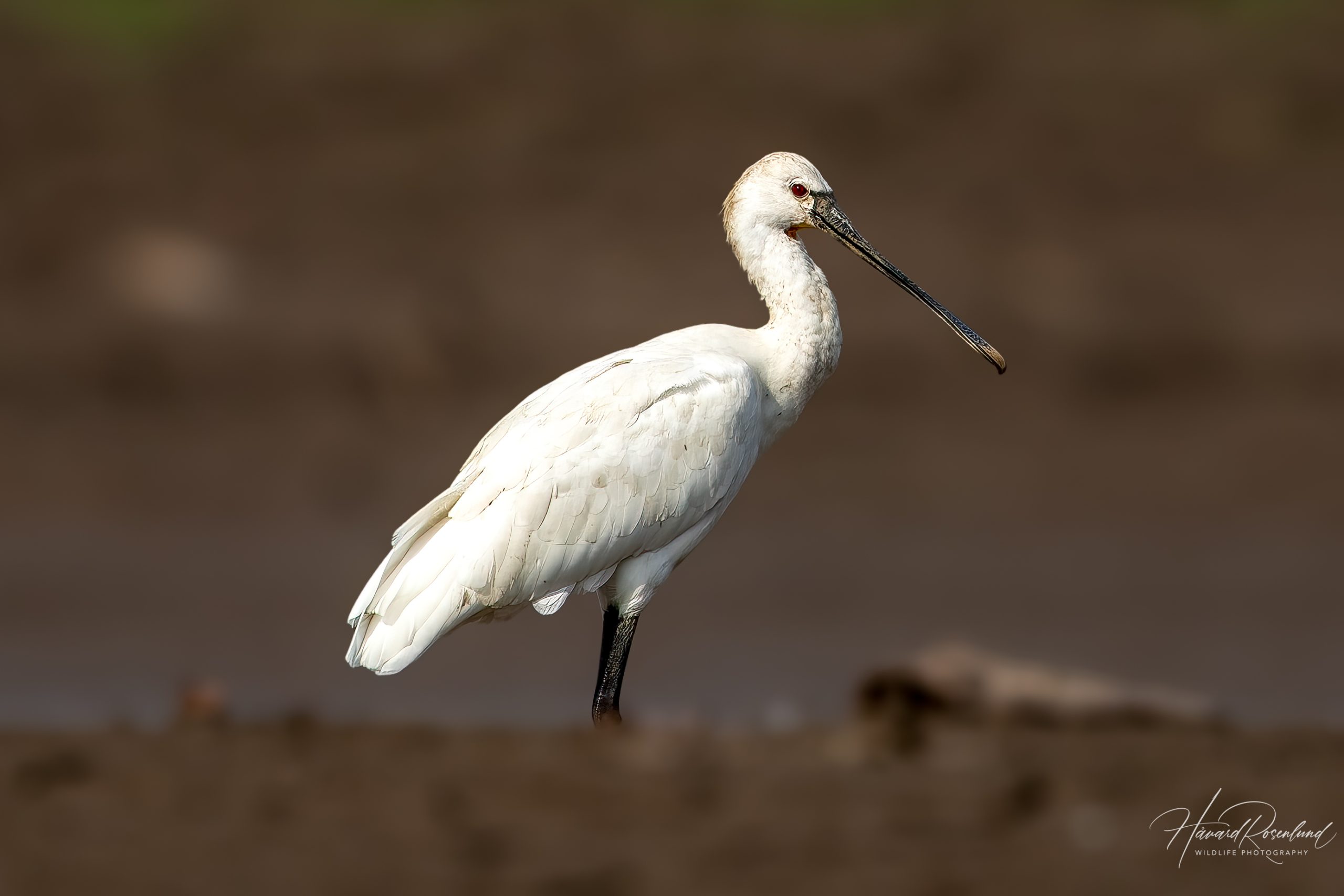
The Eurasian spoonbill (Platalea leucorodia) is a large white waterbird, about 70–95 cm long with a wingspan of roughly 115–135 cm. Its most distinctive feature is the long black bill, flattened and widened into a spoon-shaped tip that is yellow in adults. Breeding birds develop a shaggy crest and often a warm yellowish patch across the upper breast, while juveniles have a paler bill and dark tips to the flight feathers.
In East Asia it can be confused with the rarer black-faced spoonbill (Platalea minor). Eurasian spoonbill is generally larger and has a feathered white face, whereas black-faced spoonbill has bare black facial skin continuous with its entirely dark bill.
Habitat
Eurasian spoonbills depend on shallow wetlands where they can wade while feeding. They use freshwater marshes, floodplains, shallow lakes, reservoirs and river margins as well as brackish lagoons, estuaries, saltpans and tidal flats.
Water depth and access to undisturbed roosting and nesting sites are often more important than whether the water is fresh or saline. Colonies are typically close enough to productive feeding wetlands that adults can travel repeatedly between nests and shallow foraging areas.
Diet
The diet consists of small fish, crustaceans, aquatic insects and their larvae, molluscs, worms and other small aquatic animals; amphibians are taken less often. Prey varies strongly with locality and season.
The broad bill is used as a sensitive feeding tool. A bird walks through shallow water while sweeping the partly open bill from side to side. When prey touches the bill, it closes rapidly. Groups may feed side by side, each bird rhythmically sweeping through the water and sediment.
Behaviour
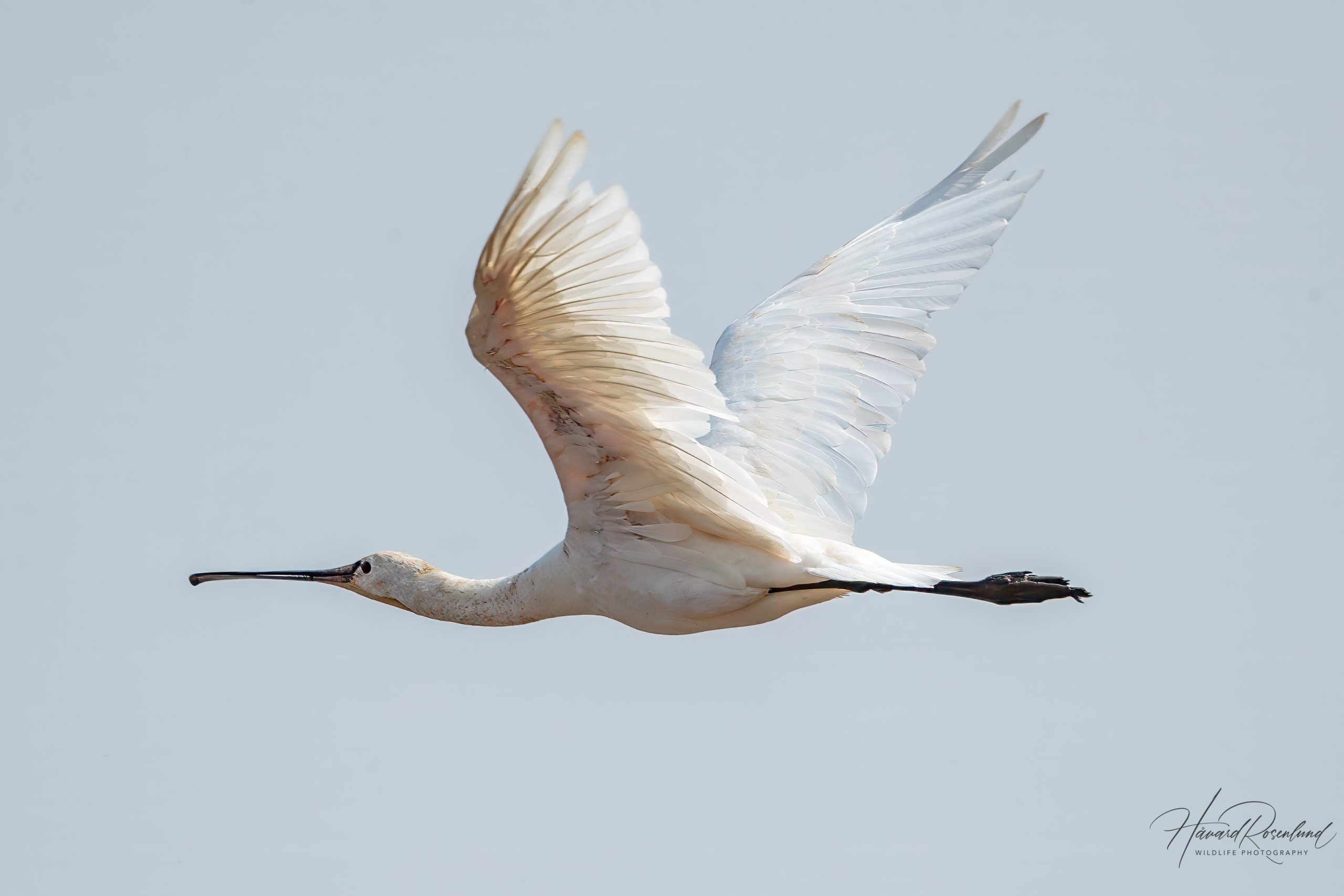
The species is usually quiet away from colonies. Feeding activity follows local water levels and tides, so birds may shift between sites through the day as shallow areas become available. In flight the neck is stretched forward and the legs trail behind, unlike herons, which retract the neck.
Social behaviour
Eurasian spoonbills are social and commonly feed, rest and travel in groups. They often share wetlands and breeding colonies with herons, ibises, cormorants and other colonial waterbirds. Groups frequently rest together between feeding periods and may commute repeatedly between favoured feeding and roosting wetlands.
Migration
Movement patterns differ greatly among populations. Birds breeding in northern and continental parts of Europe and Asia often migrate long distances to wintering areas in the Mediterranean region, Africa, the Middle East, South Asia and East Asia. Populations in milder climates may remain year-round or make shorter seasonal movements.
A study published in 2022 of colour-ringed spoonbills from the Pannonian breeding population found that about 80% wintered in Africa and 20% in Europe. GPS tracking published in 2021 showed a different pattern in East Asia: birds from north-eastern China wintered mainly along the Jiangsu coast, while birds summering in Mongolia used inland wintering areas in the Yangtze River floodplain.
Breeding
Eurasian spoonbills breed colonially, sometimes alongside other large waterbirds. Courtship includes bill movements, mutual preening and exchanges of nesting material between partners. Nests are built from sticks, reeds and other vegetation and may be placed in reedbeds, bushes, low trees or on islands, depending on the region and available protection from disturbance and predators.
A typical clutch contains three or four eggs. Both parents incubate for about 21–25 days and later feed the chicks by regurgitation. Young birds become capable of flight after roughly 45–50 days. Families can remain together for weeks afterwards; observations from Hungary documented parents travelling with fledged young for at least ten weeks after they left the colony, with parental feeding continuing during part of this period.
Status
The Eurasian spoonbill is classified as least concern on the IUCN Red List. The species remains widespread across Europe, North Africa and much of Asia, but depends on shallow wetlands that can be altered by drainage, water management, pollution and disturbance.
State of India’s Birds 2025 classifies Eurasian spoonbill as High Priority and as a wetland specialist. The national long-term decline is estimated at about 46.8%, while the current annual decline is about 4.3%; both are classified as Rapid Decline.
Image gallery
Loading map and observations…
Have you seen this species?
Independent species archive
Did you find this species page useful?
Wildlife Vagabond is independently built and maintained. Voluntary support helps cover hosting, maps, data storage and continued improvements to the species archive.
Support Wildlife VagabondSpecies content will remain freely available.
References
Information about the species’ global distribution and status is based primarily on global Red List data. See the references below for details.
- AviList. (n.d.). v2025 – Global avian checklist. https://www.avilist.org/
- BirdLife International. (n.d.). Eurasian Spoonbill (Platalea leucorodia) species factsheet. https://datazone.birdlife.org/species/factsheet/eurasian-spoonbill-platalea-leucorodia
- British Trust for Ornithology. (n.d.). Spoonbill BirdFacts. https://www.bto.org/learn/about-birds/birdfacts/spoonbill
- International Union for Conservation of Nature. (n.d.). Platalea leucorodia. The IUCN Red List of Threatened Species. https://www.iucnredlist.org/species/22697555/155460986
- Pigniczki, C. (2022). Observations on parental care of the Eurasian Spoonbill during postfledging dispersal. Ornis Hungarica, 30(1), 146–157. https://doi.org/10.2478/orhu-2022-0011
- Pigniczki, C. (2022). Winter distribution and migratory strategies of Eurasian Spoonbills (Platalea leucorodia) from the Pannonian breeding population: are they long-distance migrants? Acta Zoologica Academiae Scientiarum Hungaricae, 68(4), 341-360. https://doi.org/10.17109/AZH.68.4.341.2022
- State of India's Birds. (2025). State of India’s Birds (2025 update) – Eurasian Spoonbill. https://stateofindiasbirds.in/species/eurspo1/
- Xi, J., Deng, X., Zhao, G., Batbayar, N., Damba, I., Zhao, Q., Cui, S., Jiang, C., Chen, Y., Yu, Y.-T., Cao, L., & Fox, A. D. (2021). Migration routes, behavior and protection status of Eurasian Spoonbills (Platalea leucorodia) wintering in China. Avian Research, 12(1), 70. https://doi.org/10.1186/s40657-021-00302-4