
Brown-hooded Kingfisher
Halcyon albiventris
At a glance
Habitat
- Woodland, forest edge, riverine thickets, plantations, wooded grassland, parks and large gardens
Diet
- Mostly insects and other terrestrial prey; also reptiles, amphibians, small birds and rodents, with fish only occasionally
Activity
- Diurnal; usually hunts from a perch and drops to prey on the ground
Size
- Length: 20–22 cm Weight: 50–75 g
Range
- Central and eastern sub-Saharan Africa south to South Africa, scarce in the driest regions
Description
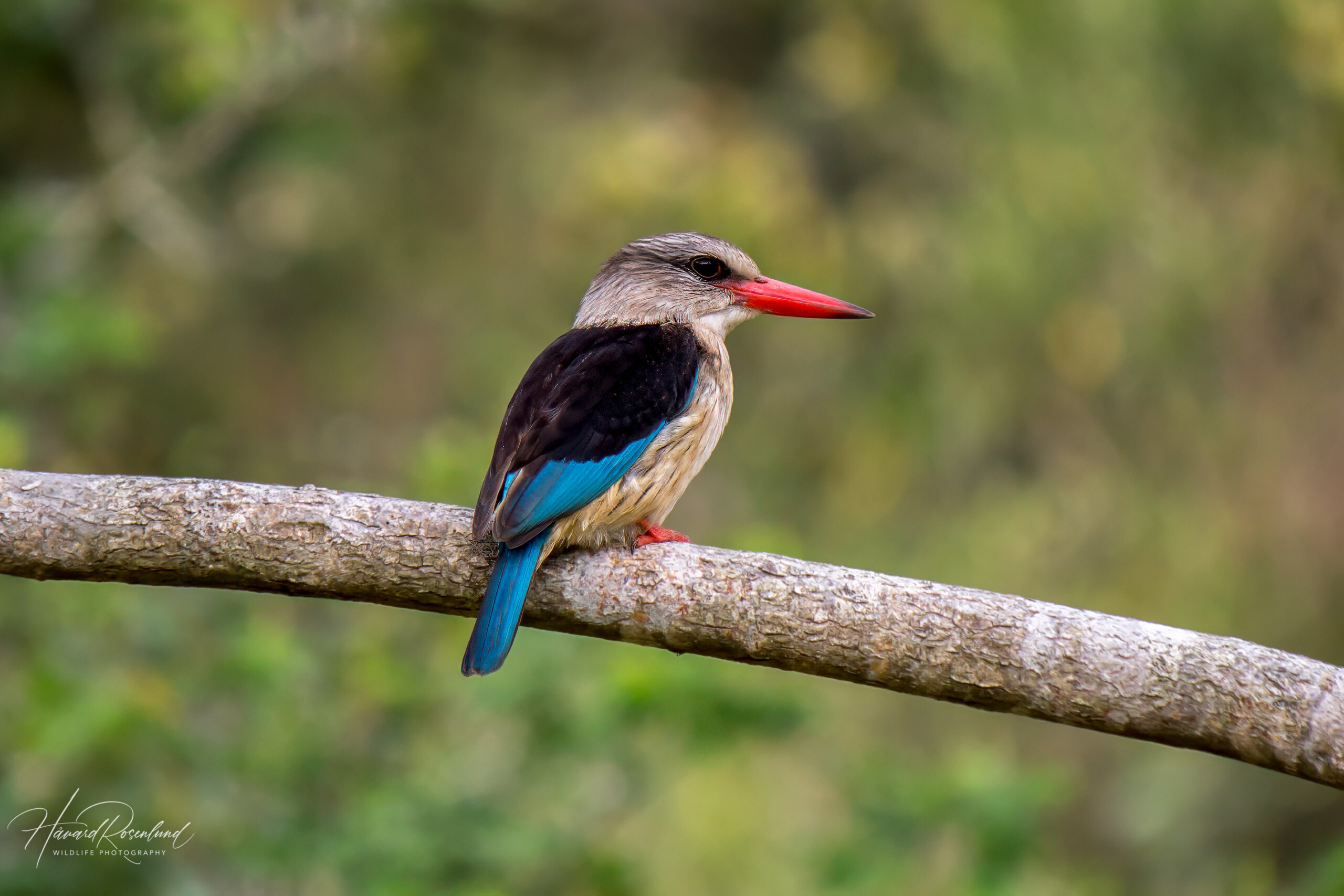
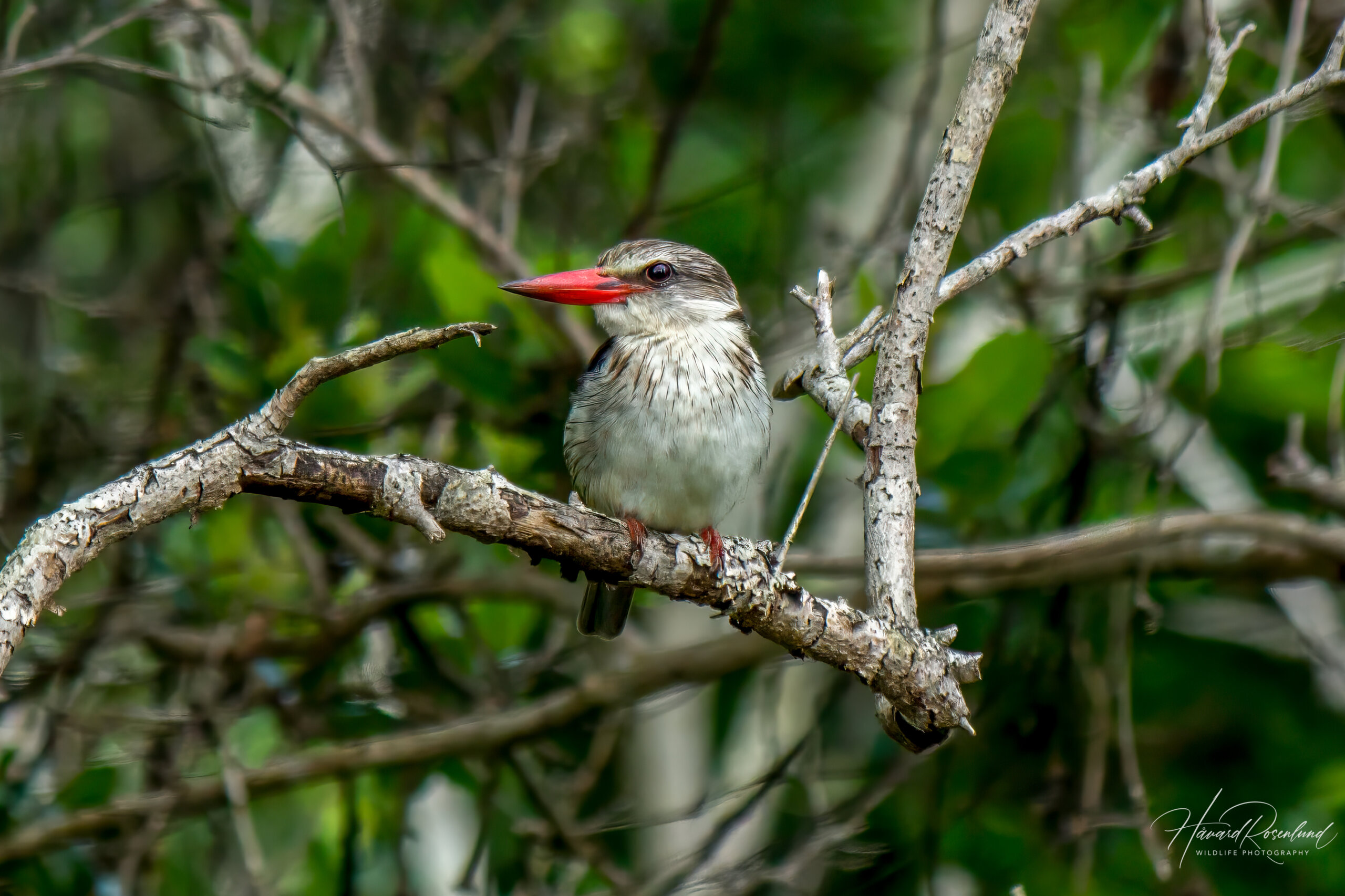
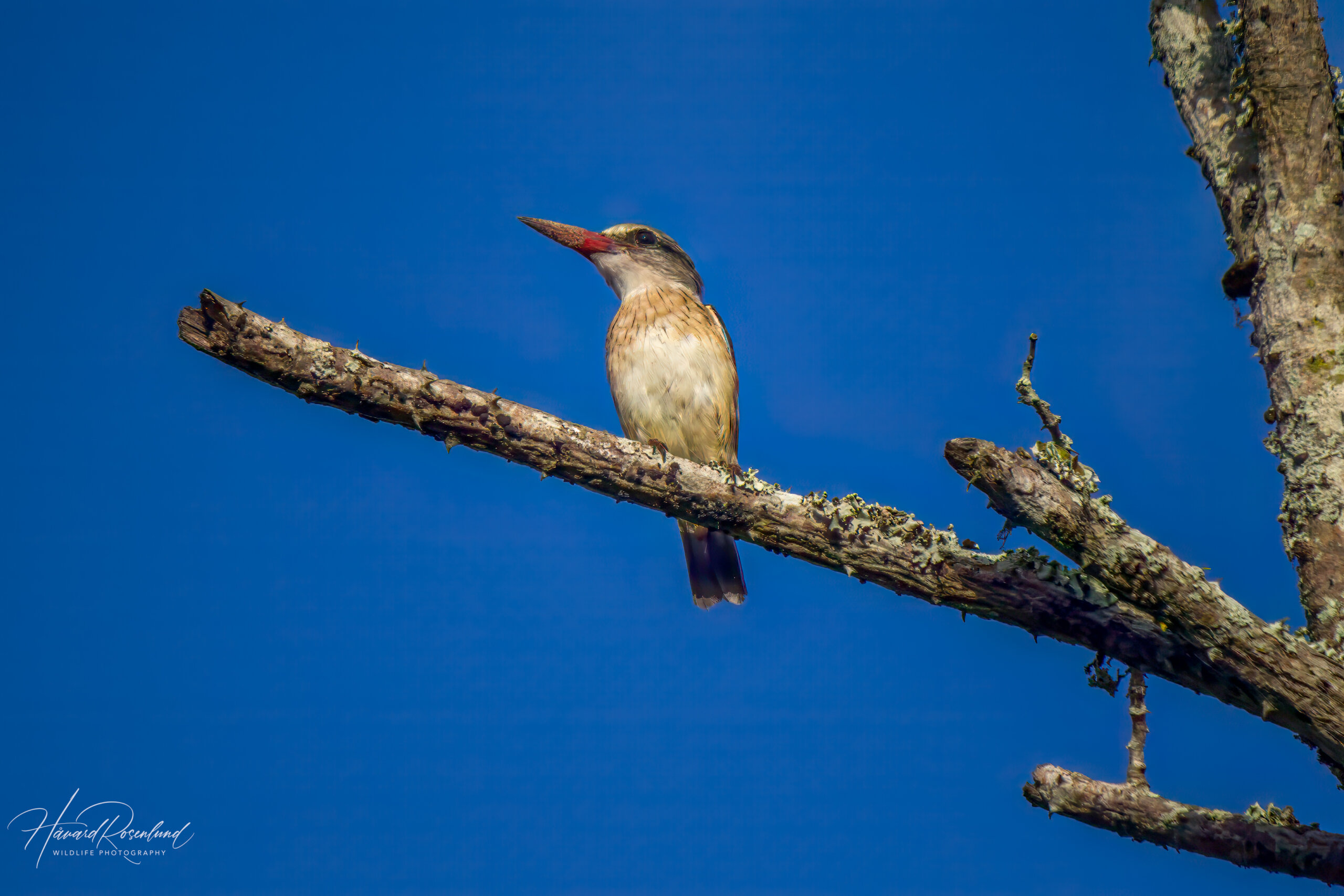
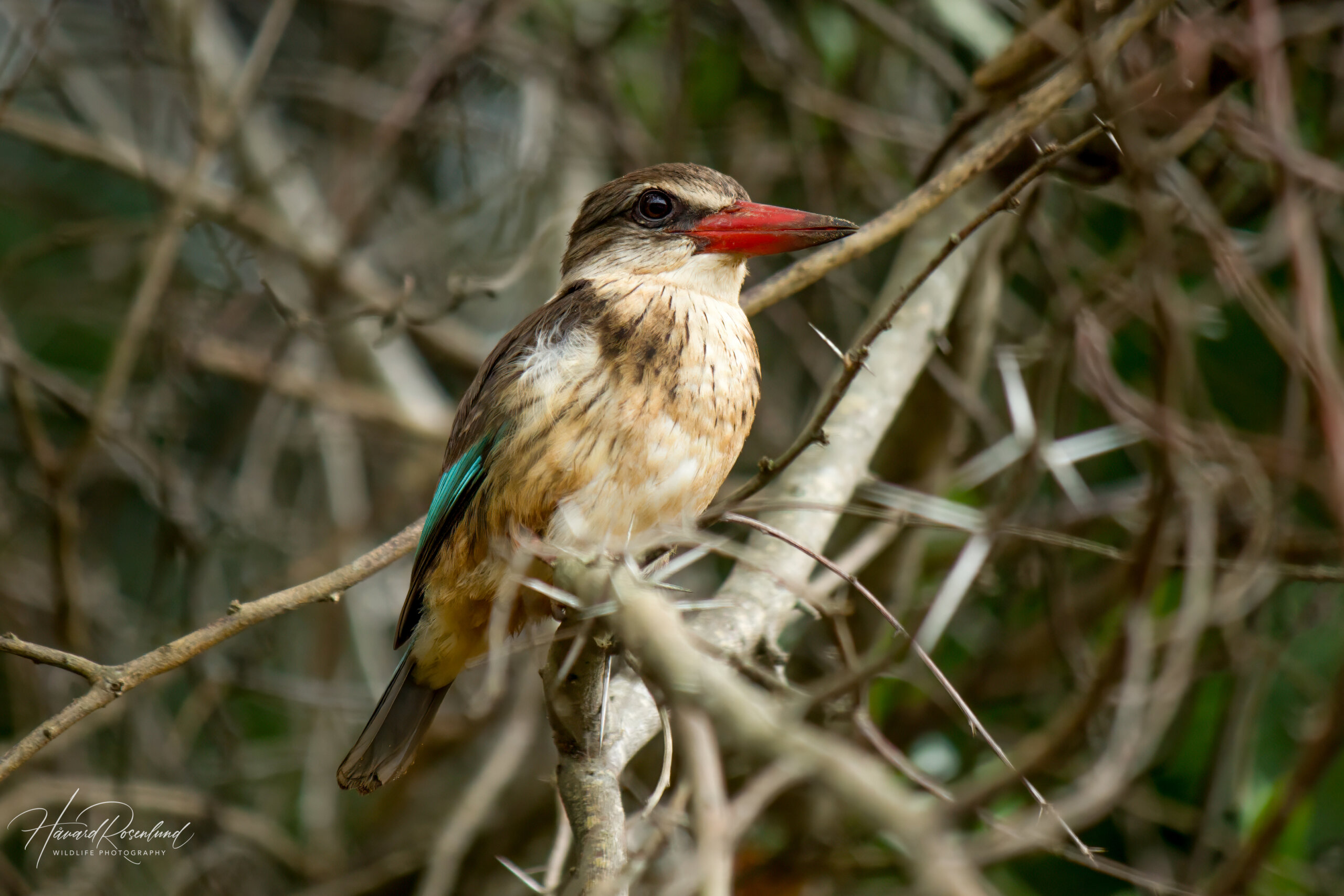
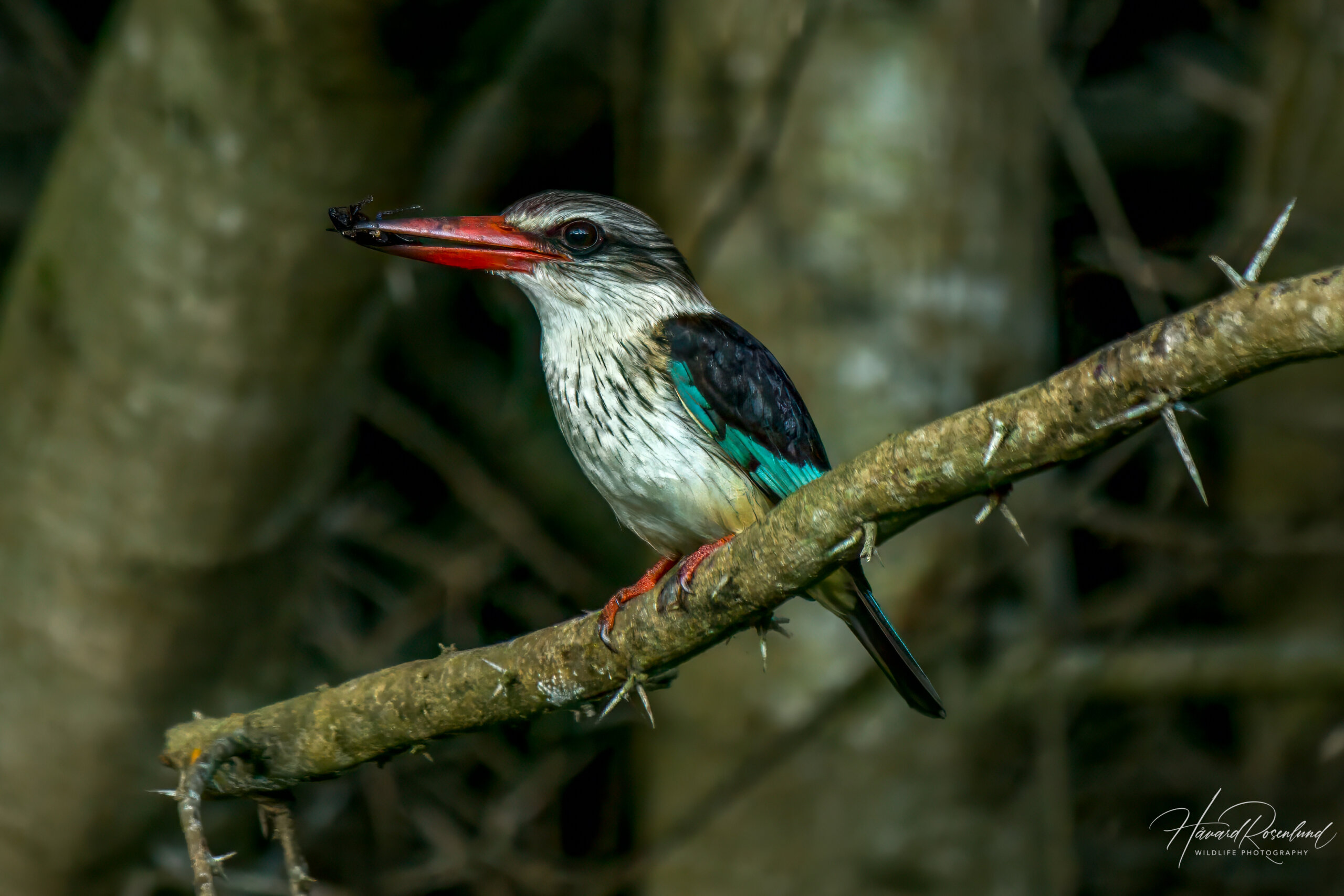
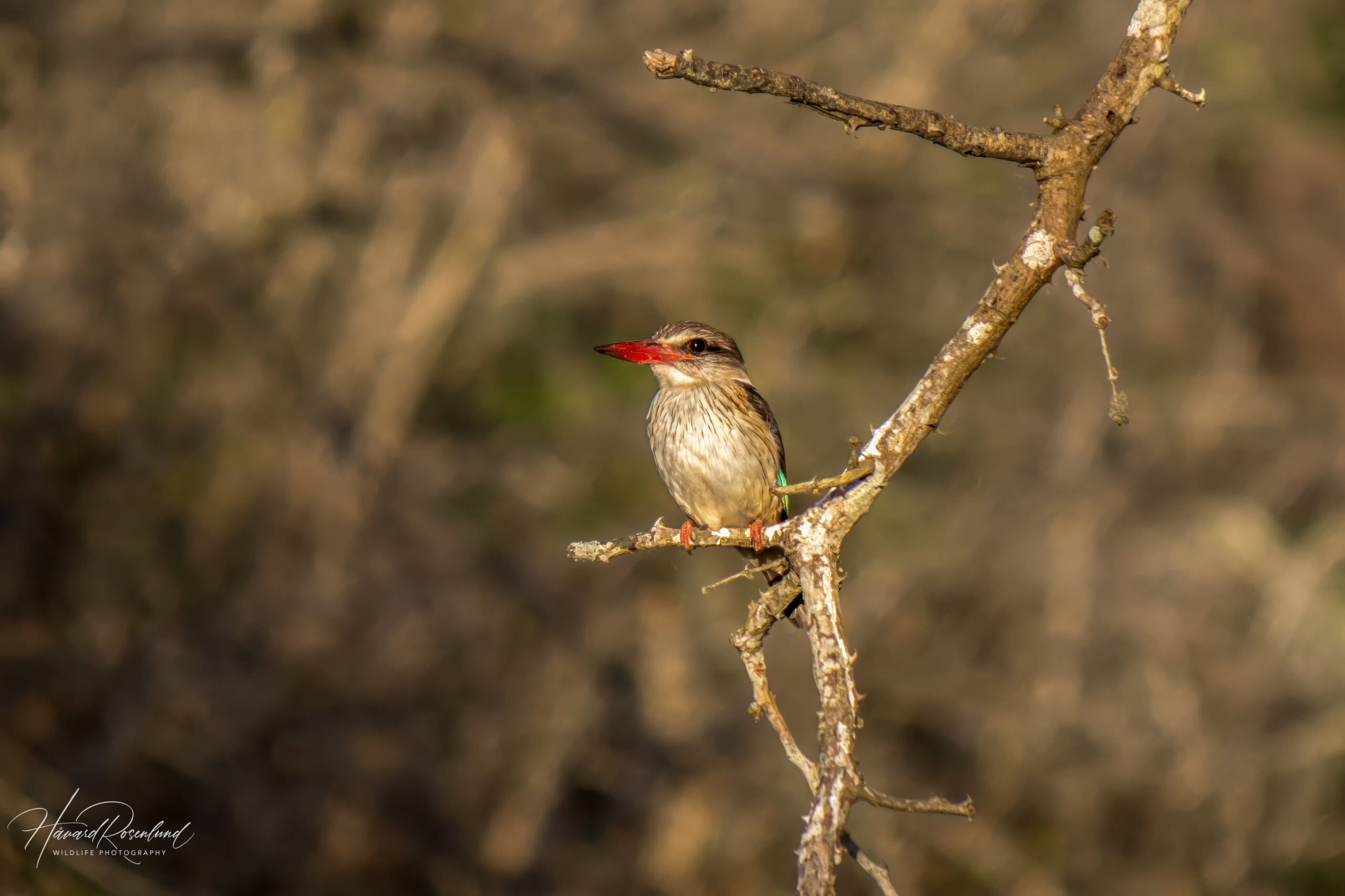
The brown-hooded kingfisher (Halcyon albiventris) is a medium-sized African tree kingfisher, about 20–22 cm long and weighing roughly 50–75 g. It has a brown to grey-brown head, a bright red bill, rich buff-brown underparts and striking blue to turquoise panels on the wings and back.
It can resemble the smaller striped kingfisher (Halcyon chelicuti), but the brown-hooded kingfisher has a much heavier all-red bill and less strongly streaked underparts. Juveniles are duller and the bill is initially darker before becoming redder with age.
These relatively small birds can also be surprisingly long-lived. One ringed individual in southern Africa was recorded alive 8 years and 11 months after ringing.
Habitat
The brown-hooded kingfisher is not strongly tied to open water despite its name. It lives in woodland, riverine thickets, forest edges, plantations, wooded grassland and well-treed gardens and parks, and can occur far from rivers or lakes.
For hunting, it mainly needs suitable lookout perches with open or accessible ground below. During breeding, exposed earth or sand banks in gullies, road cuttings or riverbanks provide sites for nest burrows.
Diet
Insects form a large part of the diet, including grasshoppers, crickets, beetles, mantises and caterpillars. Spiders and other invertebrates are also taken, together with frogs, lizards, chameleons, snakes, small birds and rodents. Fish are eaten only occasionally, and crabs may be taken near water.
Some vertebrate prey is substantial relative to the bird’s size. Southern African records include snakes up to about 23 cm long as well as skinks, geckos, chameleons and small passerines.
Hunting
Brown-hooded kingfishers are sit-and-wait hunters. A bird scans from a branch, post or other perch and, when prey is detected, makes a rapid downward sally to seize it with the bill before usually returning to a perch to handle and swallow the catch.
The hunting style is flexible and opportunistic rather than following one fixed search routine. A field study published in 2002 near Amani in the East Usambara Mountains of Tanzania found no simple relationship between how long birds searched from a perch and factors such as perch height or attack distance. Birds often left a perch sooner when they had detected prey and made a capture attempt.
Handling also varies with the catch. Small insects can be swallowed quickly, whereas larger reptiles and other vertebrates require more manipulation before they can be eaten.
Behaviour
Brown-hooded kingfishers are usually encountered alone or in pairs, although family groups may remain together for a period after breeding. They are often easy to detect in suitable woodland and regularly reveal themselves with a loud, distinctive call from trees and other exposed perches.
The species is broadly resident, but some southern populations make local seasonal movements after breeding. These movements are limited compared with true long-distance migration and vary across the range.
Breeding
Brown-hooded kingfishers usually nest in an earthen bank rather than a tree cavity. Both members of the pair excavate a tunnel in the wall of a gully, riverbank or similar exposed face. A typical tunnel is around one metre long and ends in a wider nesting chamber roughly 25–30 cm across.
In southern Africa egg-laying is concentrated mainly from September to December. The clutch normally contains two to five white eggs, with six recorded occasionally. Incubation lasts about 14 days and is performed by the female. The young continue to receive food after leaving the burrow and family groups may remain together for a time after fledging.
The species has also been recorded as a host of the greater honeyguide (Indicator indicator), a brood parasite that lays its eggs in the nests of other birds.
Status
The brown-hooded kingfisher is globally classified as Least Concern on the IUCN Red List. It has a broad African range and remains common in many suitable wooded habitats.
Its ability to use plantations, parks and large gardens gives it some tolerance of modified landscapes. Local populations can nevertheless decline where woodland is removed or suitable nesting banks are destroyed or repeatedly disturbed.
Image gallery
Loading map and observations…
Have you seen this species?
Independent species archive
Did you find this species page useful?
Wildlife Vagabond is independently built and maintained. Voluntary support helps cover hosting, maps, data storage and continued improvements to the species archive.
Support Wildlife VagabondSpecies content will remain freely available.
References
Information about the species’ global distribution and status is based primarily on global Red List data. See the references below for details.
- AviList. (2026). v2025b. https://www.avilist.org/checklist/v2025b/
- Biodiversity and Development Institute. (2019). Longevities of kingfishers. https://thebdi.org/2019/04/05/longevities-of-kingfishers/
- Biodiversity Explorer. (n.d.). Brown-hooded Kingfisher. Iziko Museums of South Africa. https://www.biodiversityexplorer.info/birds/dacelonidae/halcyon_albiventris.htm
- BirdLife International. (n.d.). Brown-hooded Kingfisher species factsheet. https://datazone.birdlife.org/species/factsheet/brown-hooded-kingfisher-halcyon-albiventris
- Corbin, C., & Kirika, M. (2002). Foraging behaviour of brown-hooded kingfishers (Halcyon albiventris) in the East UsambaraMountains, Tanzania. African Zoology, 37(1), 47-54. https://doi.org/10.1080/15627020.2002.11657154
- International Union for Conservation of Nature. (2016). Brown-hooded Kingfisher. The IUCN Red List of Threatened Species. https://www.iucnredlist.org/species/22683273/92982324
- Woodall, P. F. (2020). Brown-hooded Kingfisher (Halcyon albiventris). Birds of the World. https://doi.org/10.2173/bow.brhkin1.01