
Indian Peafowl
Pavo cristatus
At a glance
Habitat
- Woodland, scrub, forest edges, farmland and tree-rich settlements
Diet
- Seeds, shoots and fruit plus insects and small vertebrates
Activity
- Diurnal; roosts communally in trees at night
Size
- Length: 0.86–2.12 m (including male train) Weight: 2.7–6 kg
Range
- Indian subcontinent; introduced populations occur elsewhere
Description
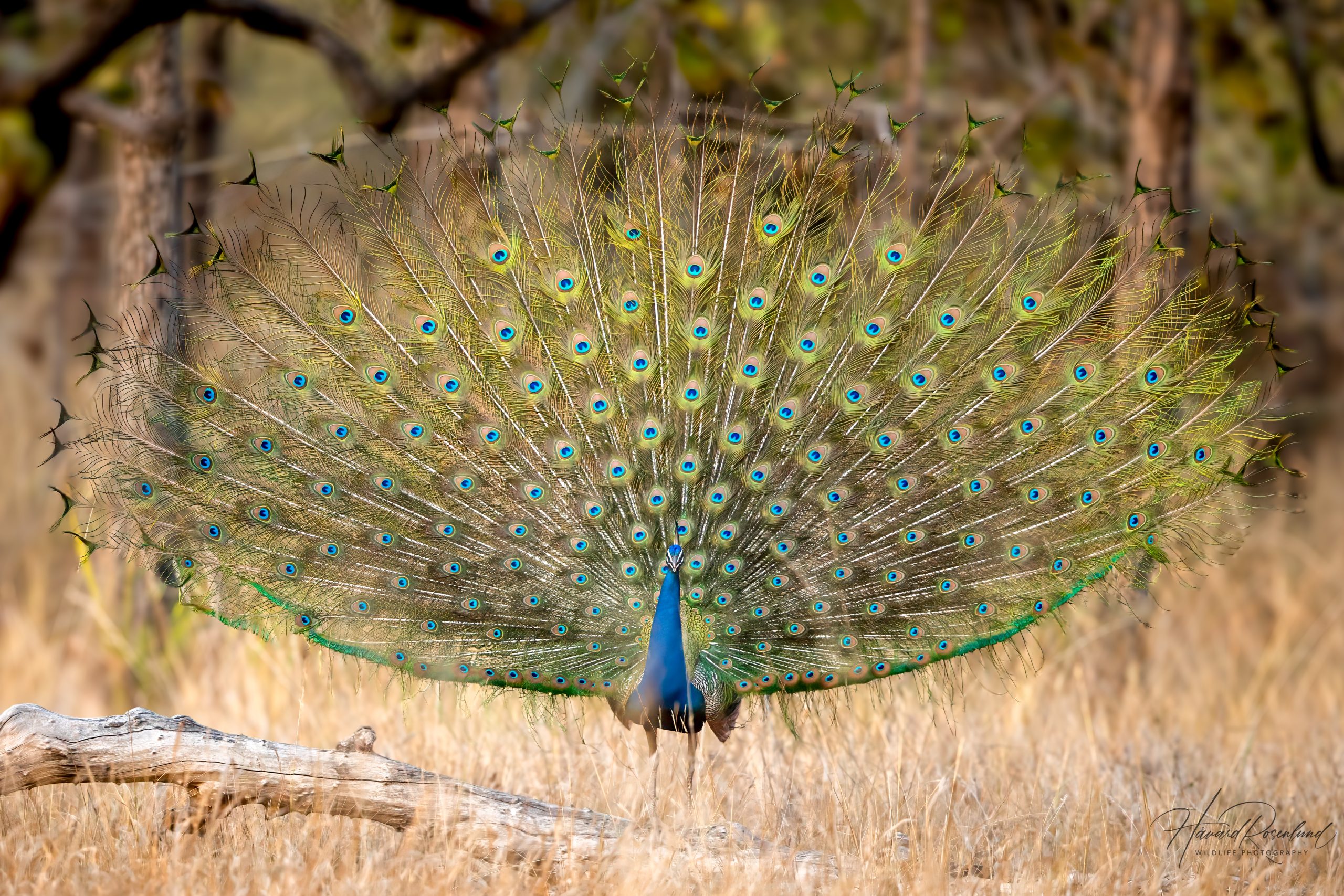
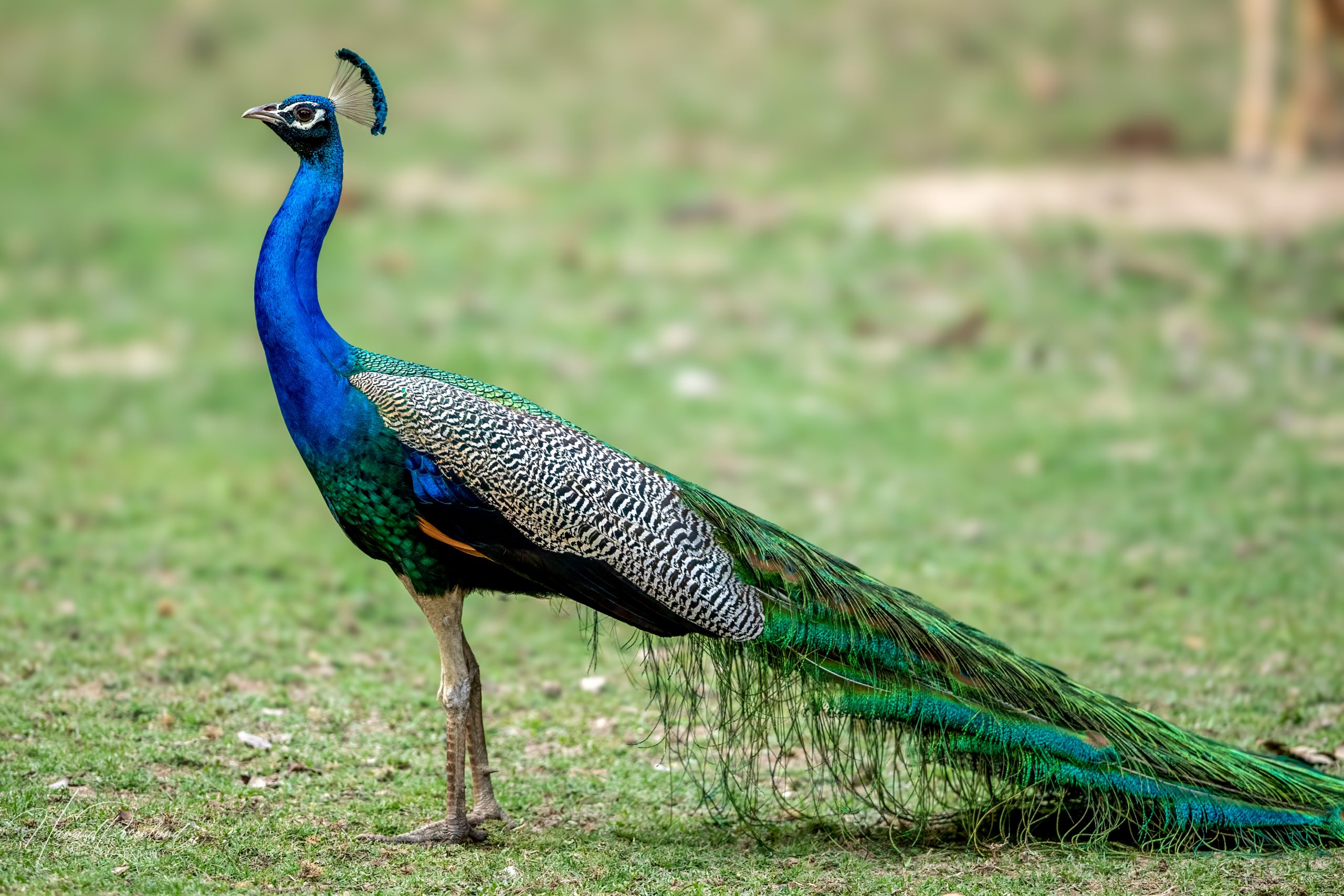
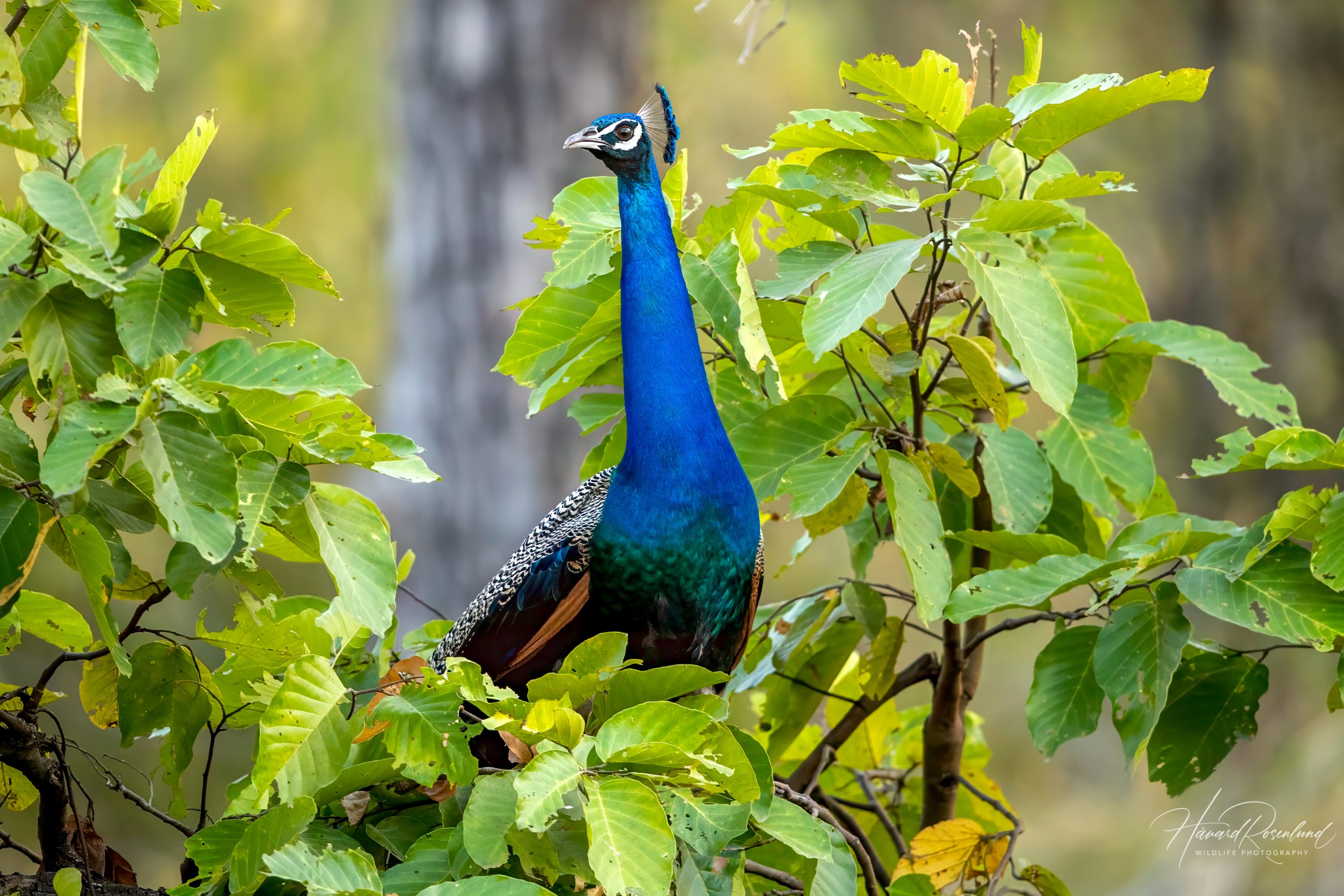
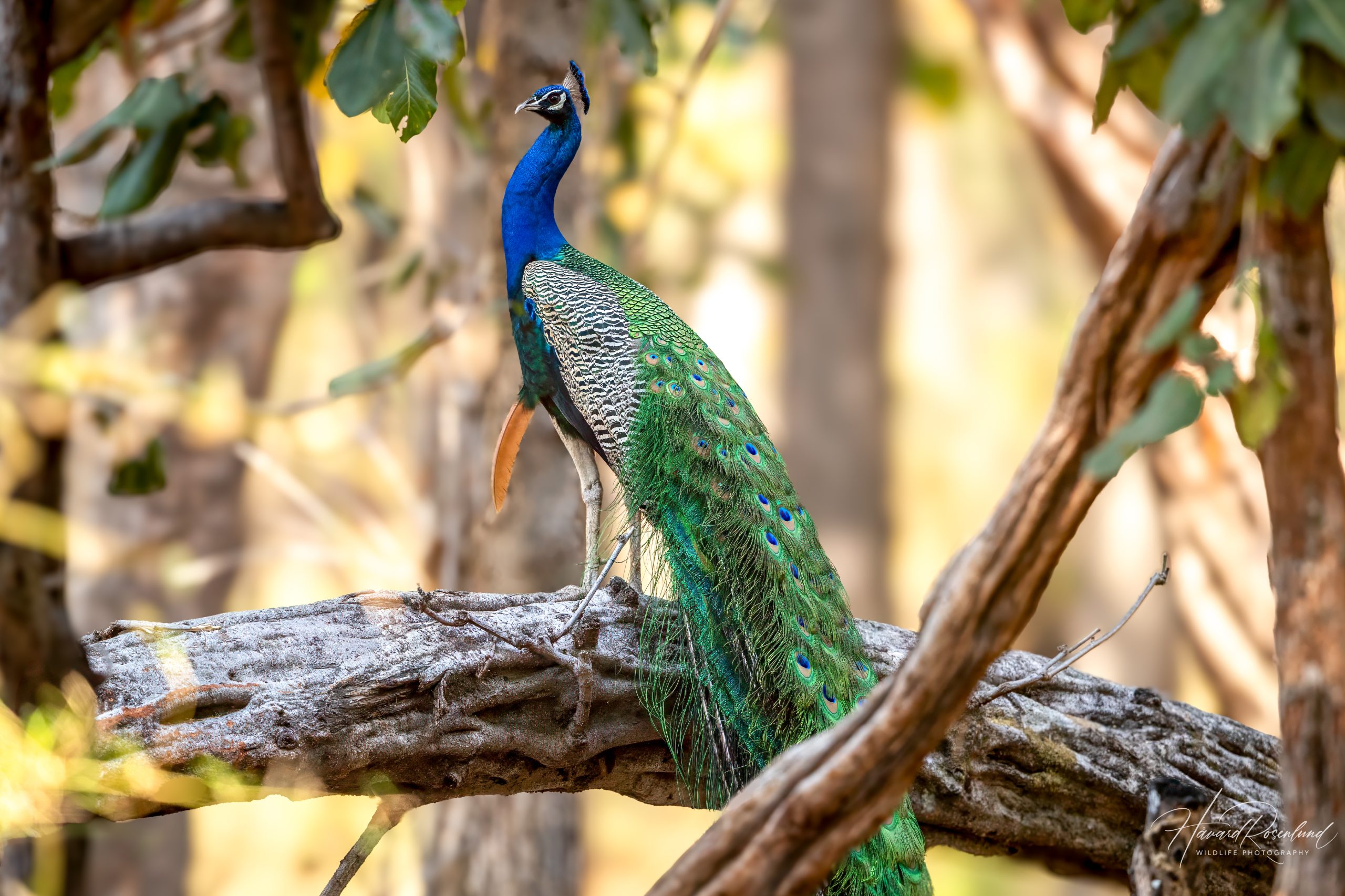
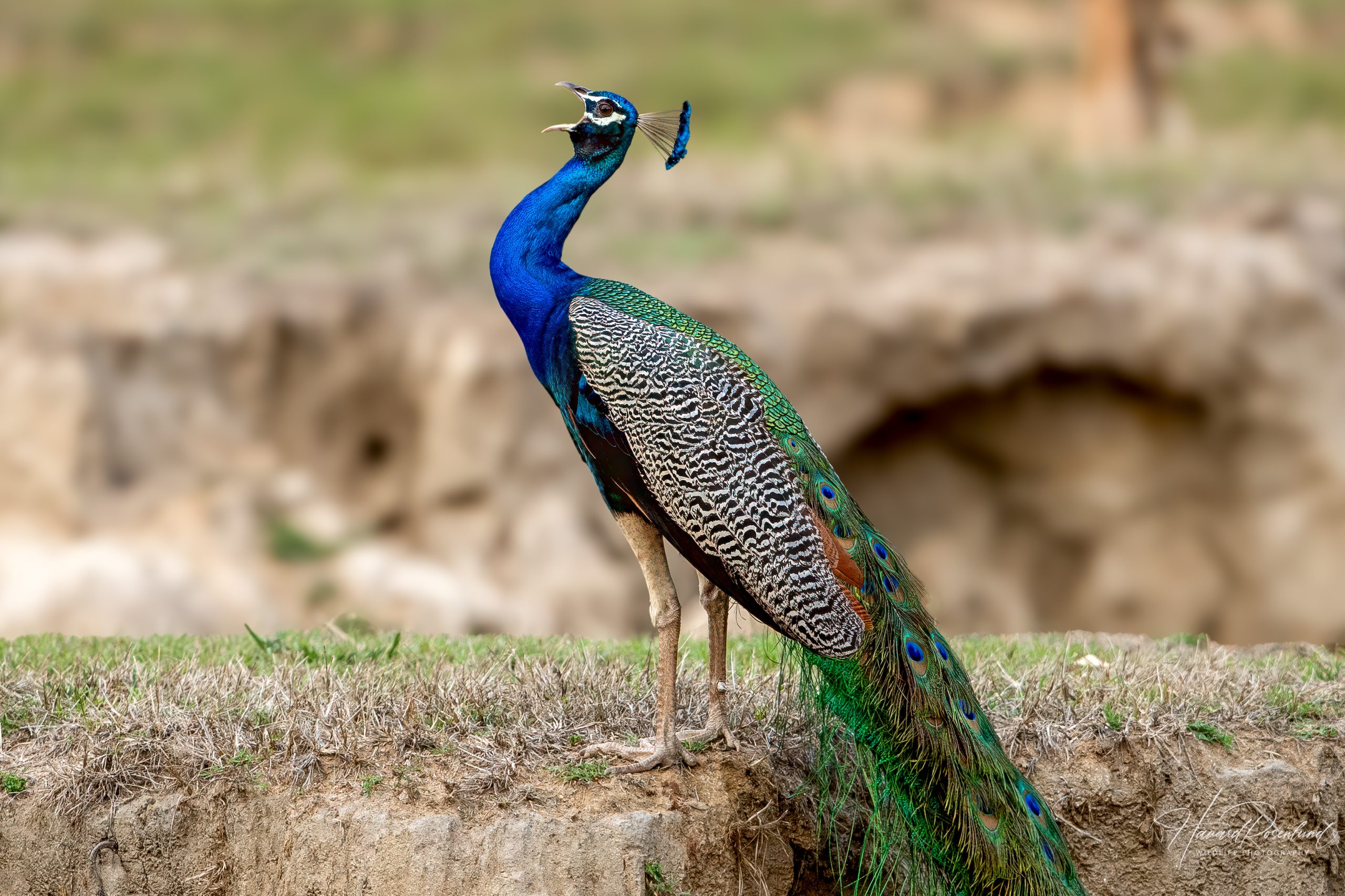
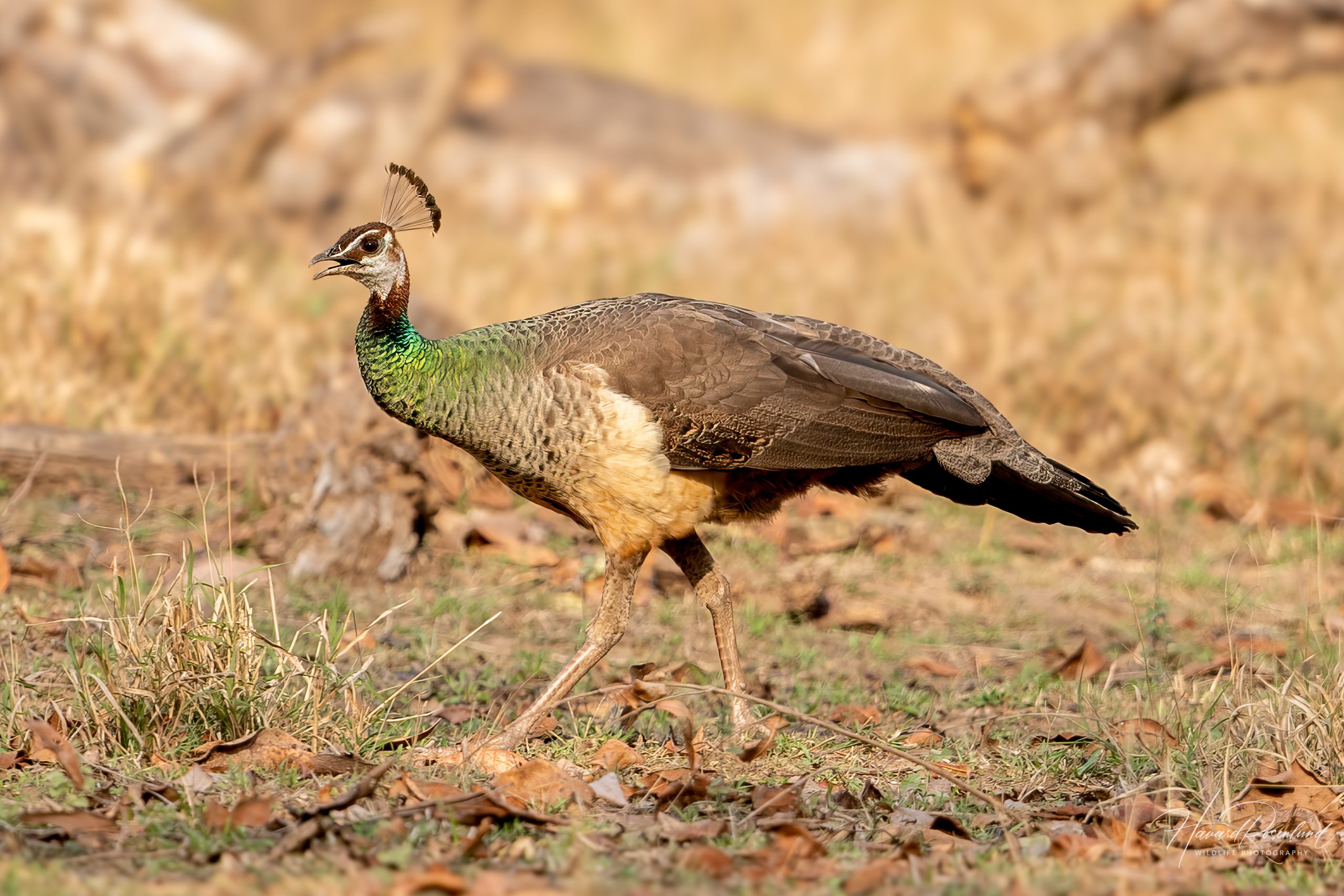
The Indian peafowl (Pavo cristatus) is a large South Asian gamebird and one of the world's most familiar examples of extreme sexual dimorphism. Adult males have an iridescent blue head, neck and breast, a fan-shaped crest and an enormous ornamental train covered in shimmering eyespots. Females are smaller and much less conspicuous, with brown and grey plumage, a greenish neck and the same characteristic crest.
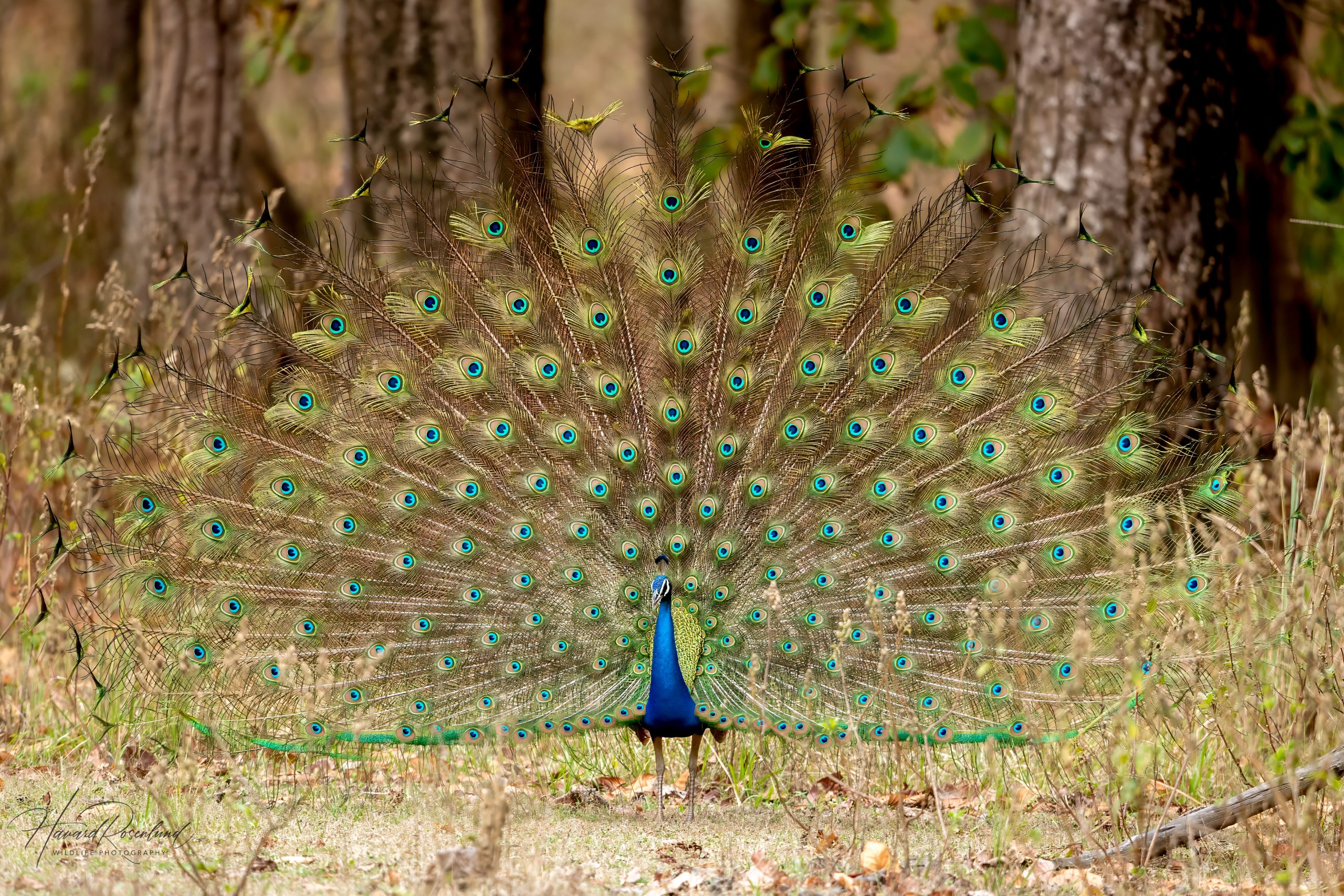
The spectacular train is not the true tail. It consists of greatly elongated upper tail coverts—the feathers above the true tail—which can make a displaying male more than 2 m long overall; the shorter, stiff tail feathers beneath help support and raise the train. Males have a wingspan of roughly 130–160 cm, while females are around 80–130 cm. Across the species, body mass is roughly 2.7–6 kg. The closely related green peafowl (Pavo muticus) differs in having predominantly green and bronze plumage in both sexes and a narrower, more pointed crest.
Habitat
Indian peafowl inhabit dry and moist deciduous forest, scrub, woodland edges, riverine vegetation, cultivated land and villages with sufficient tree cover. They are especially successful in mosaics where open ground for feeding lies close to dense vegetation for refuge and large trees for night roosting.
The species tolerates people unusually well in many parts of its native range and can become common around farms, temples and settlements where it is protected or deliberately fed. It is largely resident, although local movements follow water, food and seasonal conditions.
Diet
Indian peafowl are opportunistic omnivores that forage mainly on the ground. Seeds, grain, shoots, fruit and other plant matter are combined with insects, spiders and other invertebrates, and birds may also take small reptiles, amphibians and other small vertebrates. Their exact diet changes strongly with season and local food availability.
In agricultural landscapes the same flexibility can be beneficial when peafowl consume insects and other potential crop pests, but birds may also feed on cultivated grain and other crops. Foraging commonly takes place in loose groups, especially outside the breeding season.
Behaviour
Despite their heavy build, Indian peafowl can fly strongly over short distances. Birds usually escape danger by running into cover or taking explosive flight, and they commonly roost high in trees at night. Groups leave the roost around dawn to feed and return toward evening.
The species is highly vocal. Loud, far-carrying calls are particularly frequent around the breeding season and may advertise the presence of males as well as warn other animals of disturbance or predators. Outside active courtship, females and young often occur in small groups while adult males may associate more loosely.
Breeding
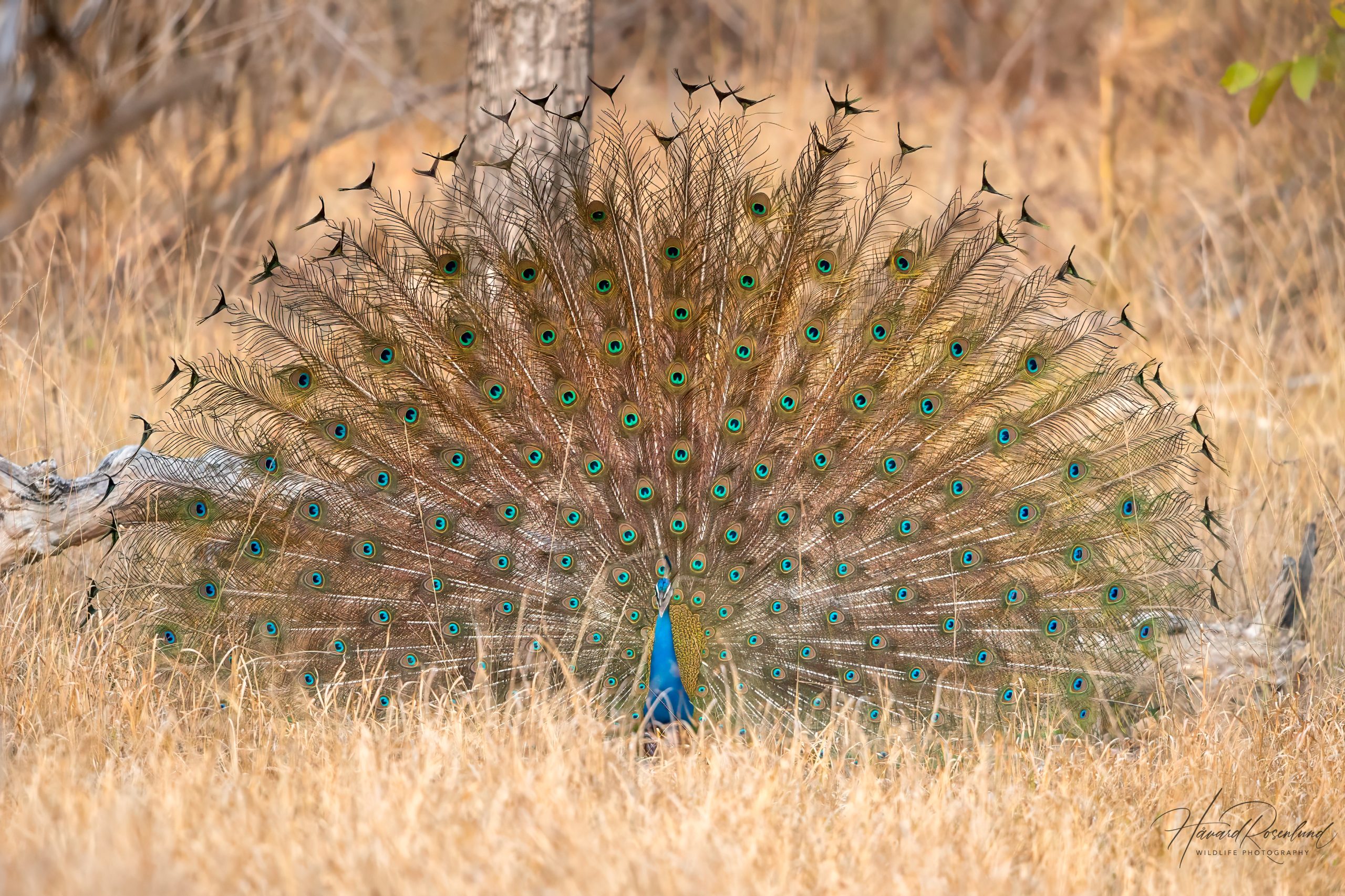
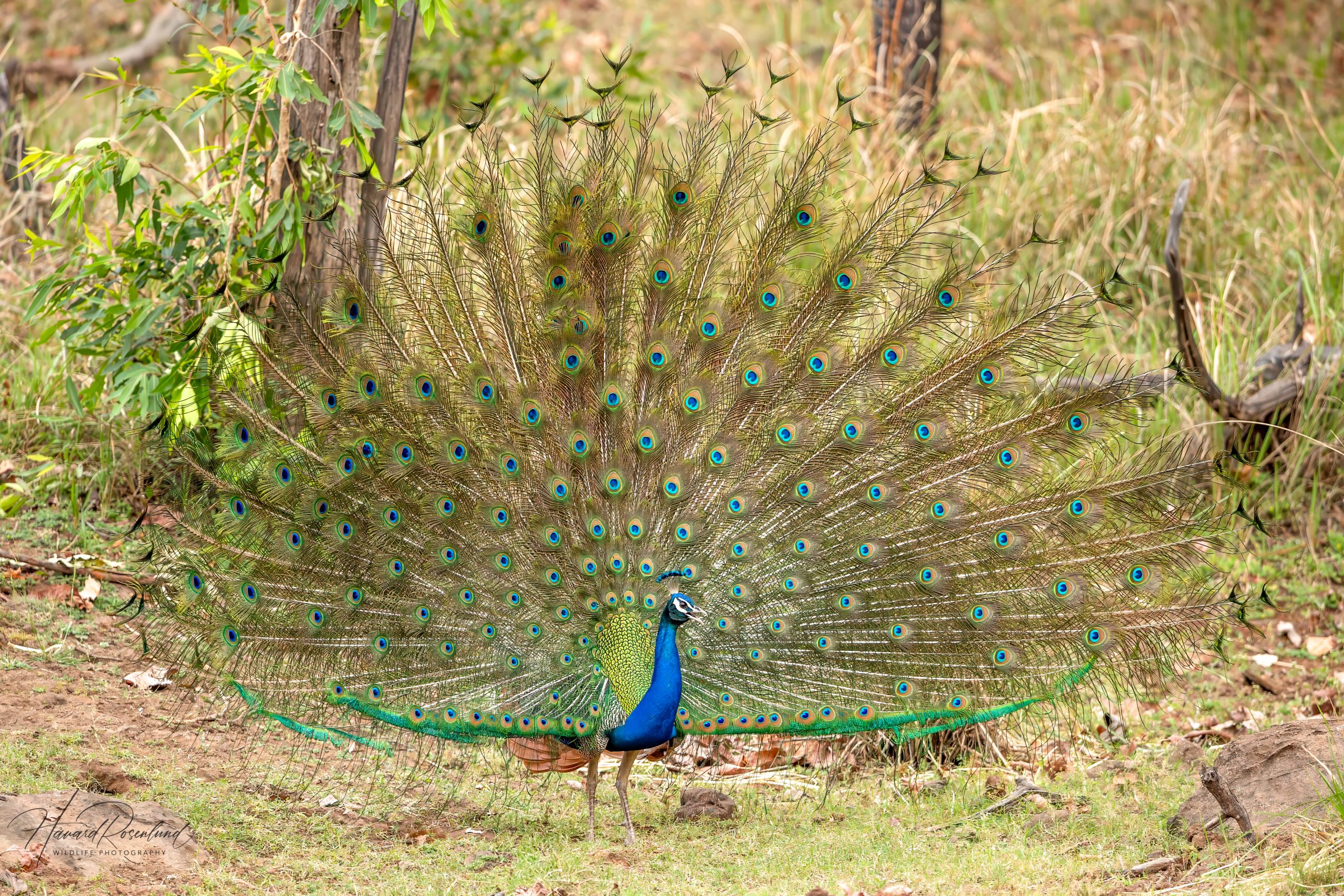
Breeding timing varies geographically and is closely associated with local rainfall; across much of India activity intensifies before and during the monsoon. Males display from small courtship territories, erecting the train into a broad fan and orienting it toward visiting females. A biomechanical study published in 2018 measured wing-shaking at about 5.4 Hz during courtship and train-rattling at roughly 25–28 Hz. The crest feathers on the head responded especially strongly to frequencies used in the display. A hearing study published in 2020 also showed that Indian peafowl respond to sound as low as 4 Hz, well within the infrasonic range. Courtship therefore combines visual signals with sound and vibrations across an unusually broad frequency range.
The eyespotted train is important in mate choice, but female choice is more complex than a simple preference for the male with the greatest number of eyespots. A study published in 2013 found that reduced mating success was mainly associated with males from which more than 20 eyespots had been removed, pushing the ornament below the normal range of adult males. Among otherwise normal males, eyespot number itself had little relationship with mating success, while eyespot colour and iridescence were much more strongly associated with copulation success.
After mating, the female alone builds a shallow ground nest, incubates the eggs and cares for the young. A clutch usually contains 3–8 eggs, and incubation lasts about 28–30 days. The chicks are precocial, meaning they can move around soon after hatching, and leave the nest quickly while remaining with the female as they learn to feed and avoid predators.
The video below shows a male displaying his train during the breeding season in Kanha National Park, India.
Cultural significance
Few wild birds have a closer cultural association with people in South Asia. Peafowl have appeared for centuries in religious traditions, art, architecture and decorative motifs, and the male's train has become one of the most recognisable natural symbols of the region. The Indian peafowl was designated India's national bird in 1963, reflecting both its wide distribution and its exceptional cultural prominence.
That cultural status also has practical consequences for the bird. Around many temples, villages and other settlements, peafowl are tolerated, protected or deliberately fed, allowing unusually close coexistence with people. In some places these traditions have helped maintain dense local populations even in landscapes that are heavily modified.
Relationship with humans
Indian peafowl have been kept as ornamental birds for centuries and transported far beyond their native range. Escaped and released birds have established free-living populations in several countries, especially around estates, parks and suburban areas where large trees and supplementary food are available.
Within the native range, coexistence is not always entirely positive. Birds can feed in fields and gardens and may damage grain or other crops locally, while large concentrations near settlements can create nuisance problems. The relationship therefore ranges from active protection and feeding to local conflict, depending on how many birds occur and how closely they use cultivated land.
Status
The Indian peafowl is classified as least concern on the IUCN Red List. It remains widespread across the Indian subcontinent and is particularly successful in many human-modified landscapes.
State of India's Birds classifies the species as a low conservation priority. Its 2025 update estimates a national long-term increase of about 233%, a recent annual increase of roughly 8.7%, and an Indian distribution of about 1.92 million km². These national trends do not rule out local pressures such as hunting, poisoning, disturbance or loss of roosting and nesting habitat, but they show a very strong overall increase across India.
Image gallery
Loading map and observations…
Have you seen this species?
Independent species archive
Did you find this species page useful?
Wildlife Vagabond is independently built and maintained. Voluntary support helps cover hosting, maps, data storage and continued improvements to the species archive.
Support Wildlife VagabondSpecies content will remain freely available.
References
Information about the species’ global distribution and status is based primarily on global Red List data. See the references below for details.
- BirdLife International. (n.d.). Indian Peafowl species factsheet. https://datazone.birdlife.org/species/factsheet/indian-peafowl-pavo-cristatus
- British Trust for Ornithology. (n.d.). Indian Peafowl BirdFacts. https://www.bto.org/learn/about-birds/birdfacts/indian-peafowl
- Dakin, R., & Montgomerie, R. (2011). Peahens prefer peacocks displaying more eyespots, but rarely. Animal Behaviour, 82(1), 21-28. https://doi.org/10.1016/j.anbehav.2011.03.016
- Freeman, A. R., & Hare, J. F. (2015). Infrasound in mating displays: a peacock's tale. Animal Behaviour, 102, 241-250. https://doi.org/10.1016/j.anbehav.2015.01.029
- Government of India – National symbols. (n.d.). Indian Peafowl. https://www.mea.gov.in/Uploads/PublicationDocs/184_india-dynamic-democracy.pdf
- International Union for Conservation of Nature. (n.d.). Indian Peafowl. The IUCN Red List of Threatened Species. https://www.iucnredlist.org/species/22679435/92814454
- State of India's Birds. (2025). Indian Peafowl. https://stateofindiasbirds.in/species/compea/
- Wildlife Institute of India. (n.d.). Indian Peafowl research and status. https://wii.gov.in/index.php/publications/research-papers/on-the-current-status-of-indian-peafowl-pavo-cristatus%3A-keeping-the-common-species-common