
Jungle Nightjar
Caprimulgus indicus
At a glance
Habitat
- Dry and moist woodland, forest edge, scrub and secondary growth, usually with open areas for nocturnal feeding
Diet
- Flying insects, especially moths, beetles and other large nocturnal insects
Activity
- Crepuscular and nocturnal; most active from dusk through the night and around dawn
Size
- Length: 21.5–24 cm Weight: 60–108 g
Range
- India and Sri Lanka
Description
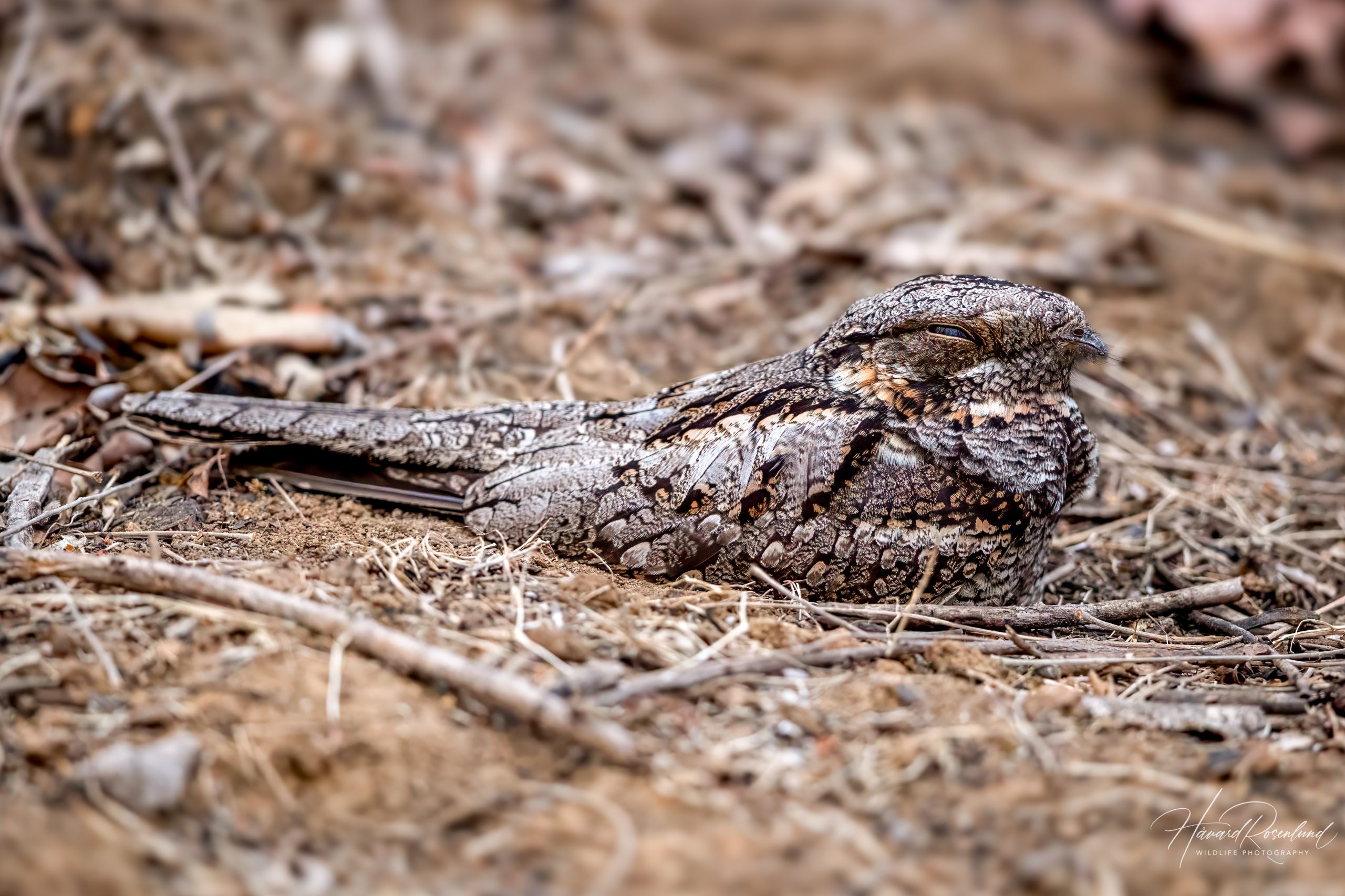
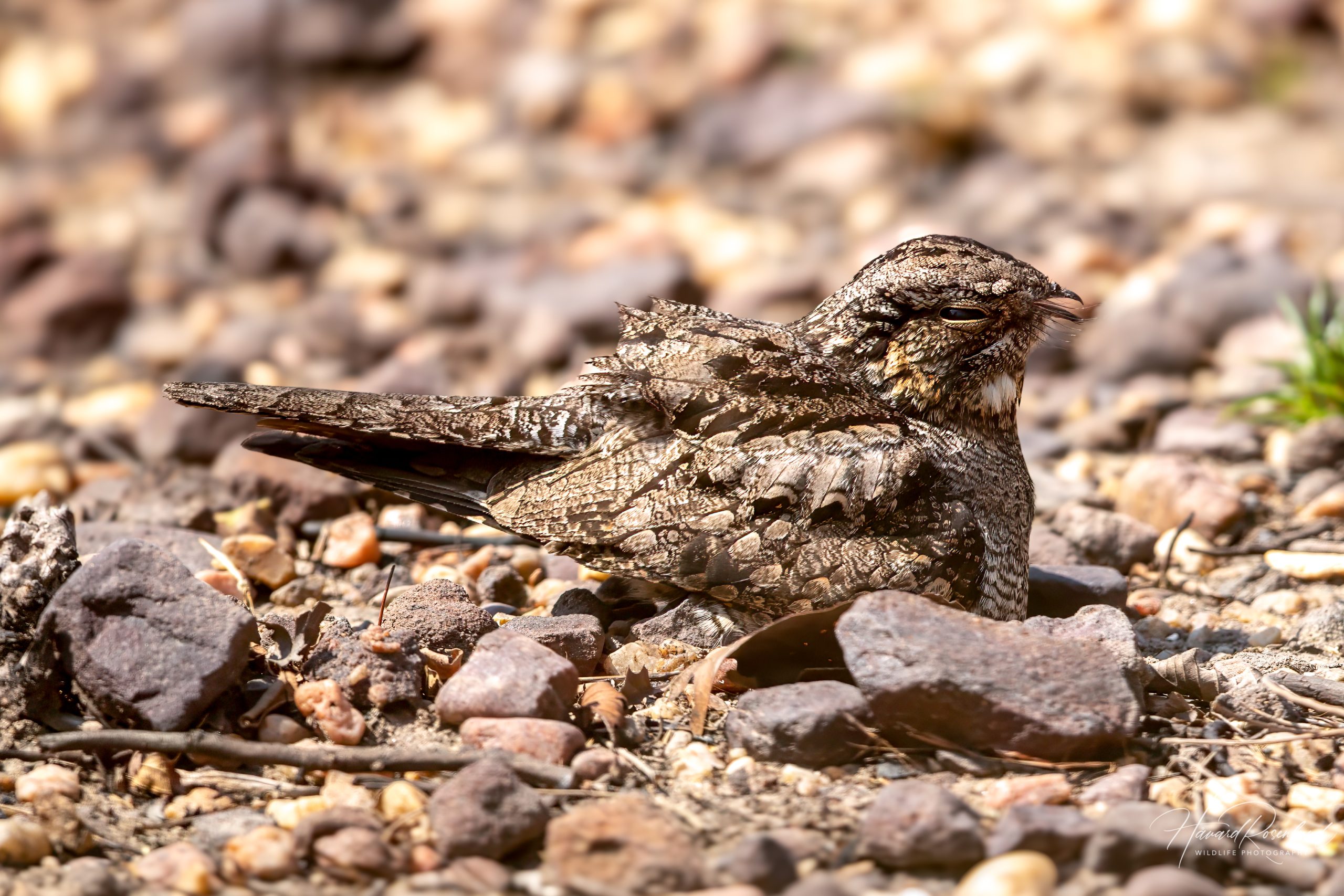
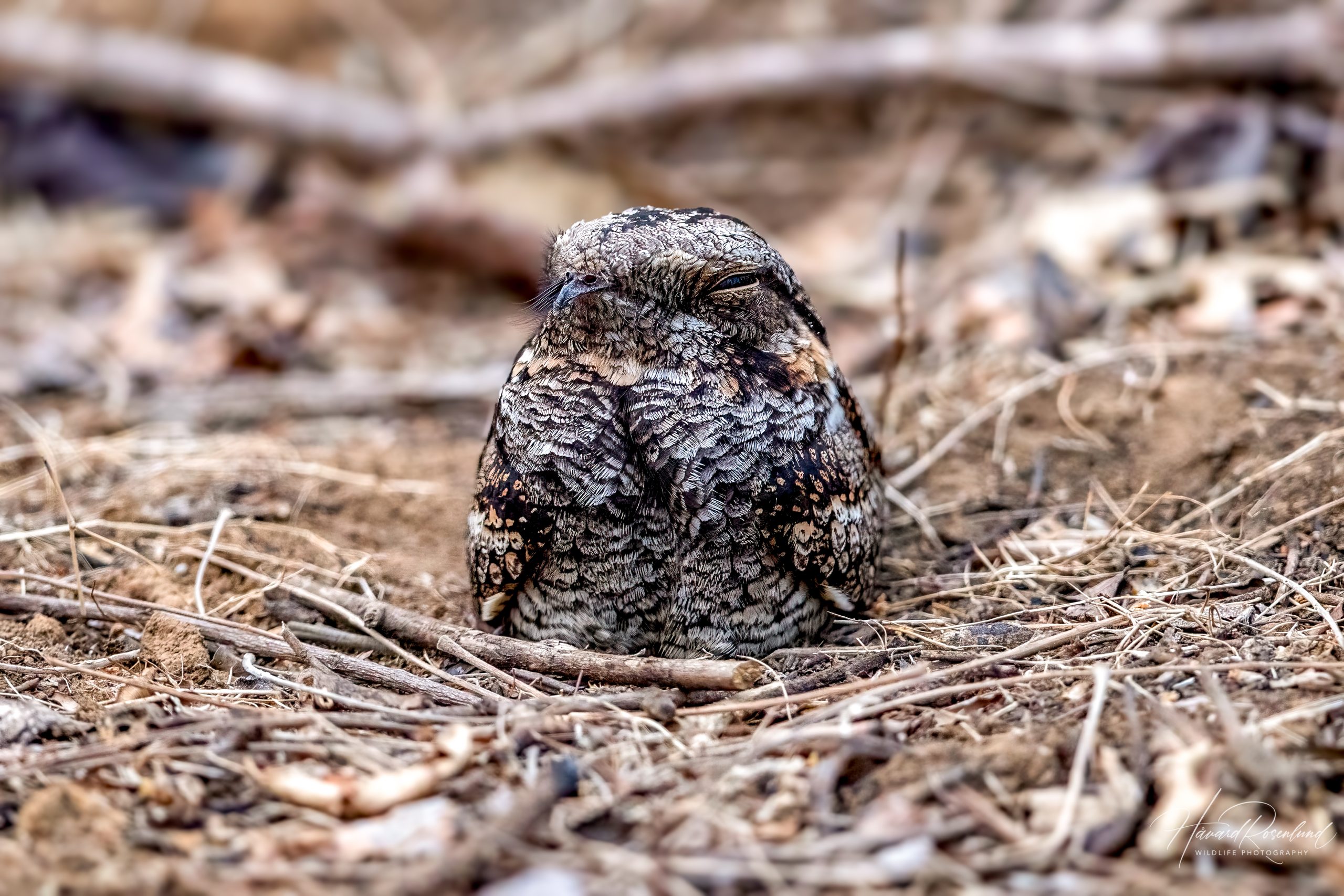
The jungle nightjar (Caprimulgus indicus) is a medium-sized nightjar found in India and Sri Lanka. Adults are about 21.5–24 cm long and weigh roughly 60–108 g. The plumage is cryptically coloured in mottled brown, grey, buff and black, closely matching dry leaves, bark and stony ground. During daylight a resting bird can be extraordinarily difficult to detect.
Like other nightjars, the species has a very wide gape and long wings suited to catching insects in flight. Males show more obvious white markings in the wings and tail and have a broken white throat patch; in females the throat patch is rufous. The repeated nocturnal calls often reveal its presence long before the bird itself is seen.
Taxonomy
The name Caprimulgus indicus once covered a much broader Asian group. East Asian and Himalayan populations are now treated as a separate species, the grey nightjar (Caprimulgus jotaka), leaving jungle nightjar with a much more restricted range in India and Sri Lanka.
This taxonomic history means that older literature from East Asia and the Himalayas, including work from Japan, may use C. indicus for birds now assigned to C. jotaka. Biological observations from those populations therefore describe grey nightjar rather than the present-day jungle nightjar.
Habitat
Jungle nightjars occur in a range of wooded and semi-open habitats, including deciduous and evergreen forest, open woodland, forest edges, secondary growth, scrub and plantations. They need sheltered places for daytime roosting but also openings, tracks and clearings where they can hunt flying insects after dark.
The species often rests directly on the ground among leaf litter or lengthwise along a branch, where the patterned plumage breaks up the outline of the body. This close dependence on camouflage means that apparently simple features such as undisturbed leaf litter and low cover can be useful parts of its daytime habitat.
Diet
Jungle nightjars are insectivores that take moths, beetles and other flying nocturnal insects. Much of the prey is captured in the air through the wide gape during agile feeding flights through clearings, above tracks or around the edges of woodland.
Behaviour
The species is crepuscular and nocturnal. Activity rises around dusk and continues through the night, often increasing again before dawn. Birds may watch from the ground or a low perch between feeding flights and repeatedly return to productive patches where insects are abundant.
During the day birds remain quiet and motionless, relying on their cryptic plumage rather than fleeing immediately when danger approaches. The combination of nocturnal activity and exceptional camouflage makes the species easy to overlook even in areas where it occurs regularly.
Breeding
Breeding timing varies geographically, extending roughly from January to June in India and from March to July in Sri Lanka. Males advertise breeding territories with repeated calls after dark and may use display flights during courtship. Jungle nightjars do not build a conventional nest. The eggs are laid directly on bare ground or leaf litter, often in a sheltered patch where their mottled colour blends with the surroundings. Two eggs are typical.
Both parents share incubation, which lasts about 16–17 days. The adults depend heavily on camouflage while incubating and caring for the young. Newly hatched chicks are covered in down and can move away from the laying site before they can fly.
Status
The jungle nightjar is classified as least concern on the IUCN Red List. It retains a broad distribution across India and Sri Lanka and can use secondary woodland and other modified wooded habitats as well as more natural forest.
Local populations can nevertheless be affected by loss and fragmentation of woodland, removal of scrub and heavy disturbance of ground cover.
Image gallery
Loading map and observations…
Have you seen this species?
Independent species archive
Did you find this species page useful?
Wildlife Vagabond is independently built and maintained. Voluntary support helps cover hosting, maps, data storage and continued improvements to the species archive.
Support Wildlife VagabondSpecies content will remain freely available.
References
Information about the species’ global distribution and status is based primarily on global Red List data. See the references below for details.
- BirdLife International. (n.d.). Jungle Nightjar species factsheet. https://datazone.birdlife.org/species/factsheet/jungle-nightjar-caprimulgus-indicus
- Birds of India. (n.d.). Jungle Nightjar. https://www.birdsofindia.org/Caprimulgus-indicus
- India Biodiversity Portal. (n.d.). Caprimulgus indicus. https://indiabiodiversity.org/species/show/239983
- International Ornithologists’ Union. (n.d.). IOC World Bird List – Nightjars and allies. https://www.worldbirdnames.org/new/bow/nightjars/
- International Union for Conservation of Nature. (n.d.). Jungle Nightjar. The IUCN Red List of Threatened Species. https://www.iucnredlist.org/species/22725692/94899774