Description
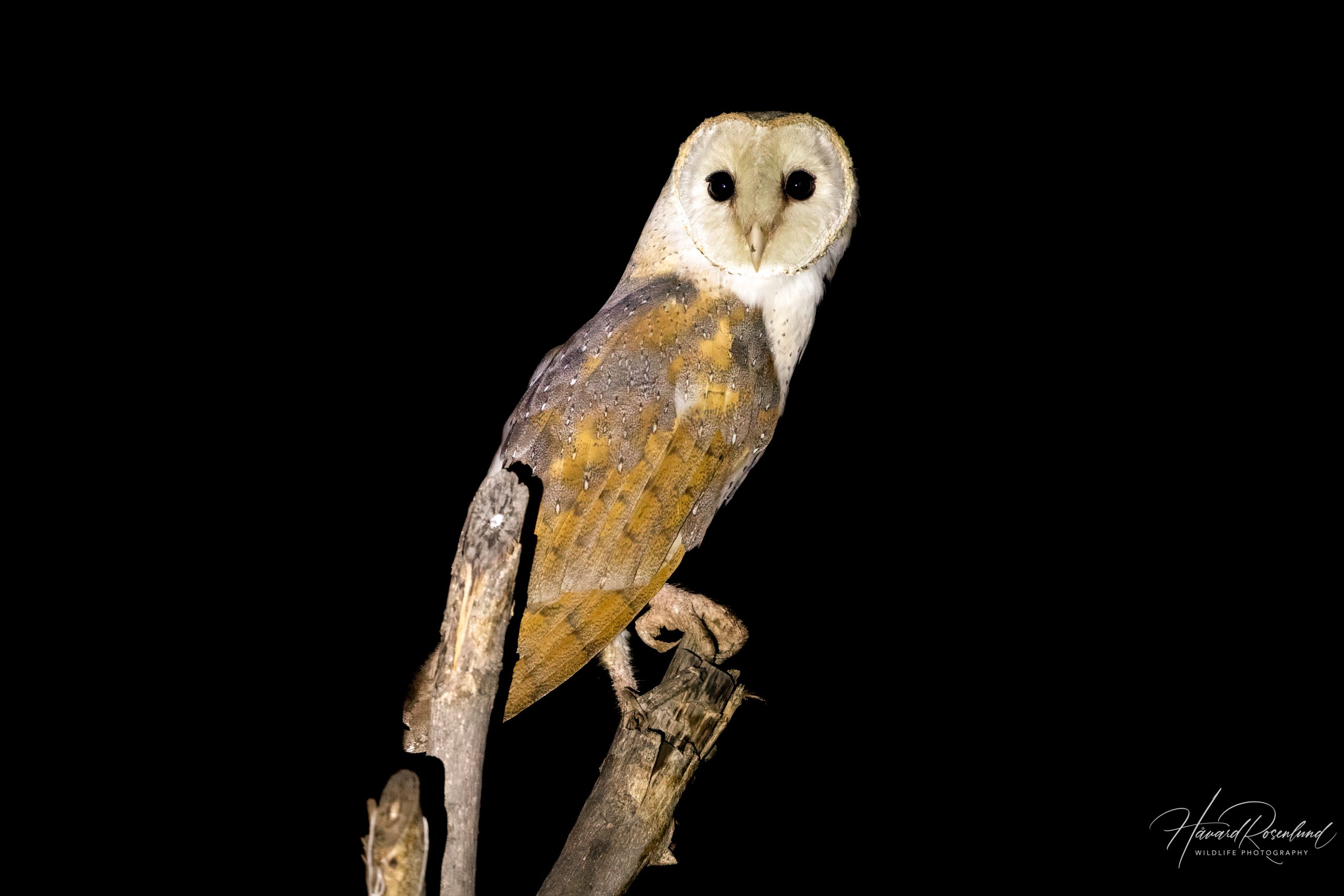
The eastern barn owl (Tyto javanica), also known as the Australasian barn owl, is a widespread owl species found across southern and southeastern Asia, as well as much of Oceania, including Indonesia, the Philippines, New Guinea, and Australia. It closely resembles other barn owls, with its distinctive heart-shaped facial disc, pale underparts, and a mix of buff, grey, and mottled tones on the upperparts.
It is a medium-sized owl, typically measuring 30–40 cm (12–16 in) in length, with a wingspan of around 85–95 cm (33–37 in). Females are generally larger and darker than males, a common trait among owls. Compared to its western relatives, the eastern barn owl often shows slightly warmer buff tones and more variation in plumage across its range.
What was once considered a single, globally distributed species—the barn owl (Tyto alba)—has now been split into several species based on genetic, vocal, and morphological differences. The eastern barn owl (Tyto javanica) represents the populations in Asia and Australasia, while the western barn owl (Tyto alba) occurs in Europe and Africa, and the American barn owl (Tyto furcata) is found in the Americas. These species differ subtly in size, coloration, and especially in their vocalizations, which are important for species recognition.
Like other barn owls, it differs from typical owls such as the tawny owl (Strix aluco) and the short-eared owl (Asio flammeus) by its pale coloration, lack of ear tufts, and its characteristic dark eyes set within the white facial disc.
Diet & habitat
The eastern barn owl inhabits a wide variety of open environments, including grasslands, agricultural areas, savannas, wetlands, and even urban and suburban landscapes. It generally avoids dense forests, preferring open terrain where hunting is more efficient. Suitable nesting sites include tree cavities, cliffs, palm crowns, and buildings.
Its diet consists mainly of small mammals, particularly rodents such as mice and rats, making it an important natural pest controller in agricultural regions. It will also take small birds, reptiles, amphibians, and large insects when available.
Like other barn owls, it is a nocturnal hunter with exceptional hearing. It hunts by flying low over open ground, using sound to detect prey even in complete darkness, before descending in near-silence to capture it.
Behavior
Eastern barn owls are mostly solitary outside the breeding season. They are not typical “hooting” owls, but instead produce eerie, drawn-out screeches and hissing sounds, which can be quite startling if heard at night. These vocalizations are used in territorial defense and communication between mates.
Their silent flight is made possible by specialized feather structures that reduce turbulence and noise. The heart-shaped facial disc functions as an efficient sound collector, directing sound toward asymmetrically placed ears, allowing precise localization of prey.
Nesting
Breeding timing varies across its large range and is often linked to food availability rather than a fixed season. In tropical and subtropical regions, breeding can occur year-round during periods of high prey abundance.
Eastern barn owls are typically monogamous and may reuse nesting sites over multiple seasons. The female lays a clutch of usually 3 to 6 eggs, which she incubates for about 30 to 34 days while the male provides food.
As in other barn owls, the eggs hatch asynchronously, meaning the chicks vary in size. This can be advantageous in fluctuating food conditions, as the smallest chicks may not survive if prey is scarce. The young fledge at around 7 to 8 weeks of age but remain dependent on their parents for some time afterward.
Status
The status of eastern barn owl is not yet classified as a single species, but the global barn owl species complex is classified as least concern by the IUCN Red List, due to its wide distribution and stable overall population across its range.
However, local declines can occur due to habitat loss, pesticide use reducing prey availability, and road mortality. In some regions, it benefits from human activity, particularly agriculture, which supports high rodent populations. Nest box programs have also proven effective in supporting local populations and enhancing its role in natural pest control.
Pictures