
Rook
Corvus frugilegus
At a glance
Habitat
- Open farmland, pasture and grassland with groups of mature trees for nesting
Diet
- Omnivorous; especially earthworms, insects, grain and seeds, but also fruit, carrion and other foods
Activity
- Diurnal
Size
- Length: 44–46 cm Weight: about 280–540 g
Range
- Europe and temperate Asia, with northern and eastern populations generally more migratory
Description
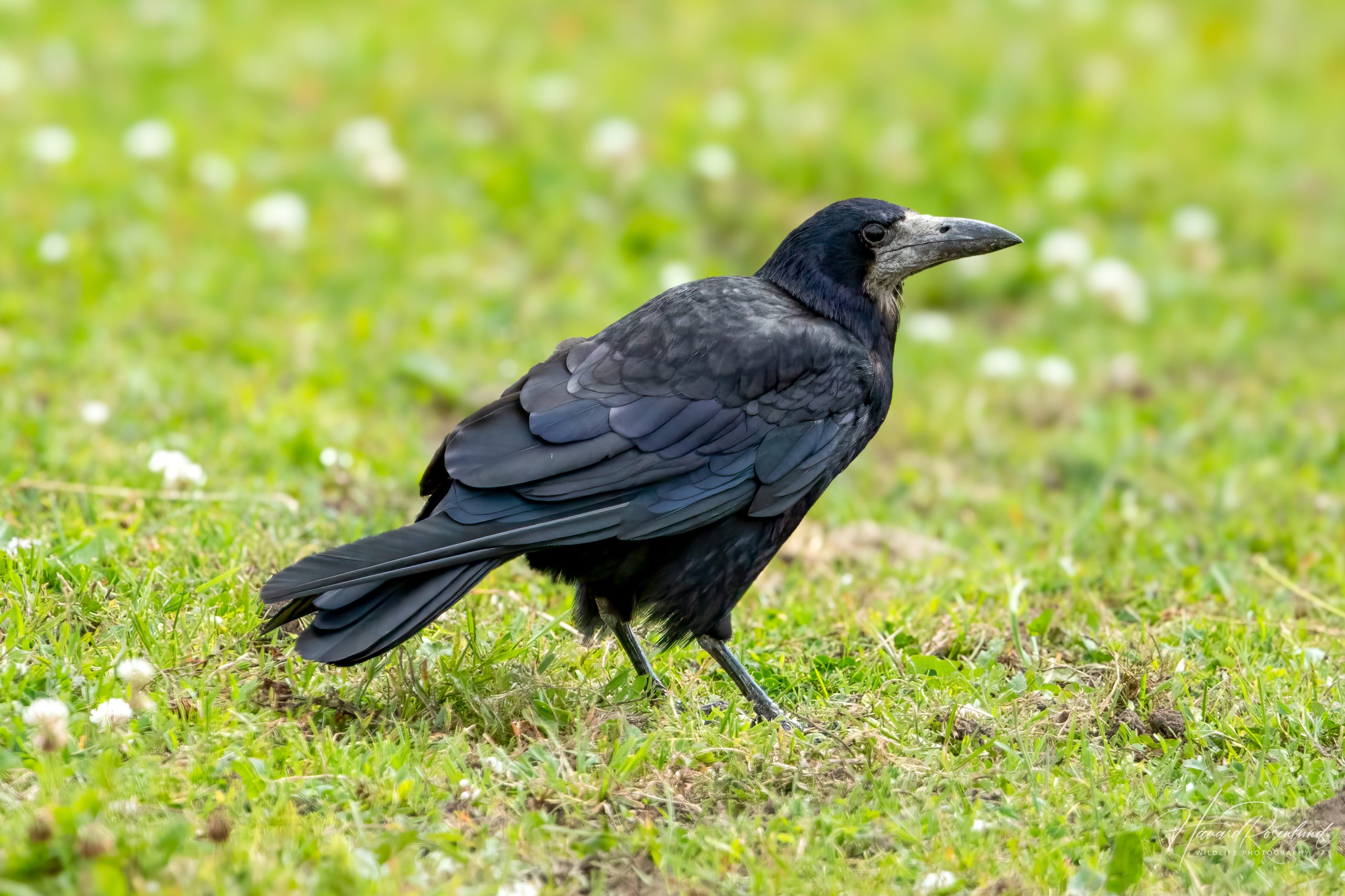
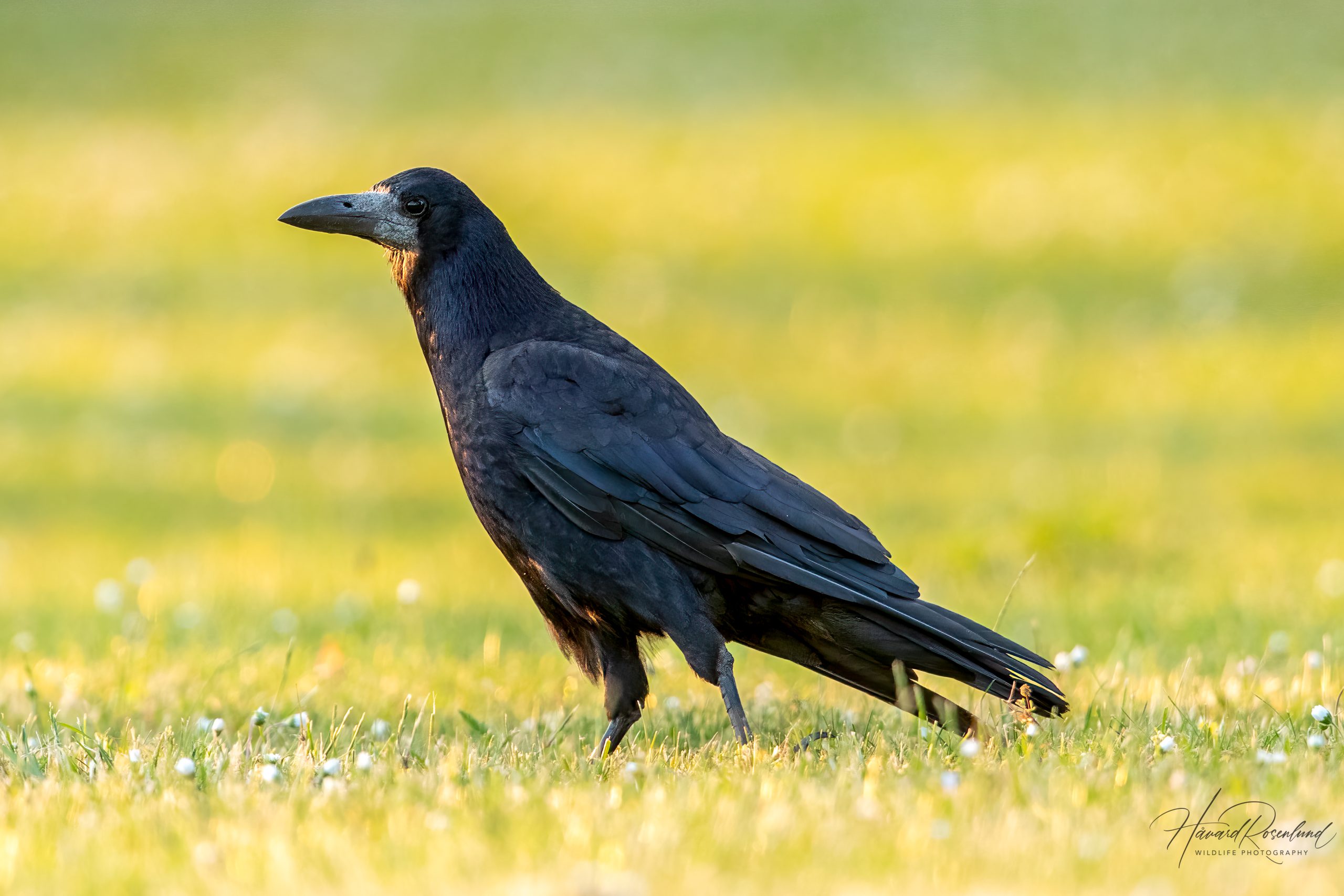
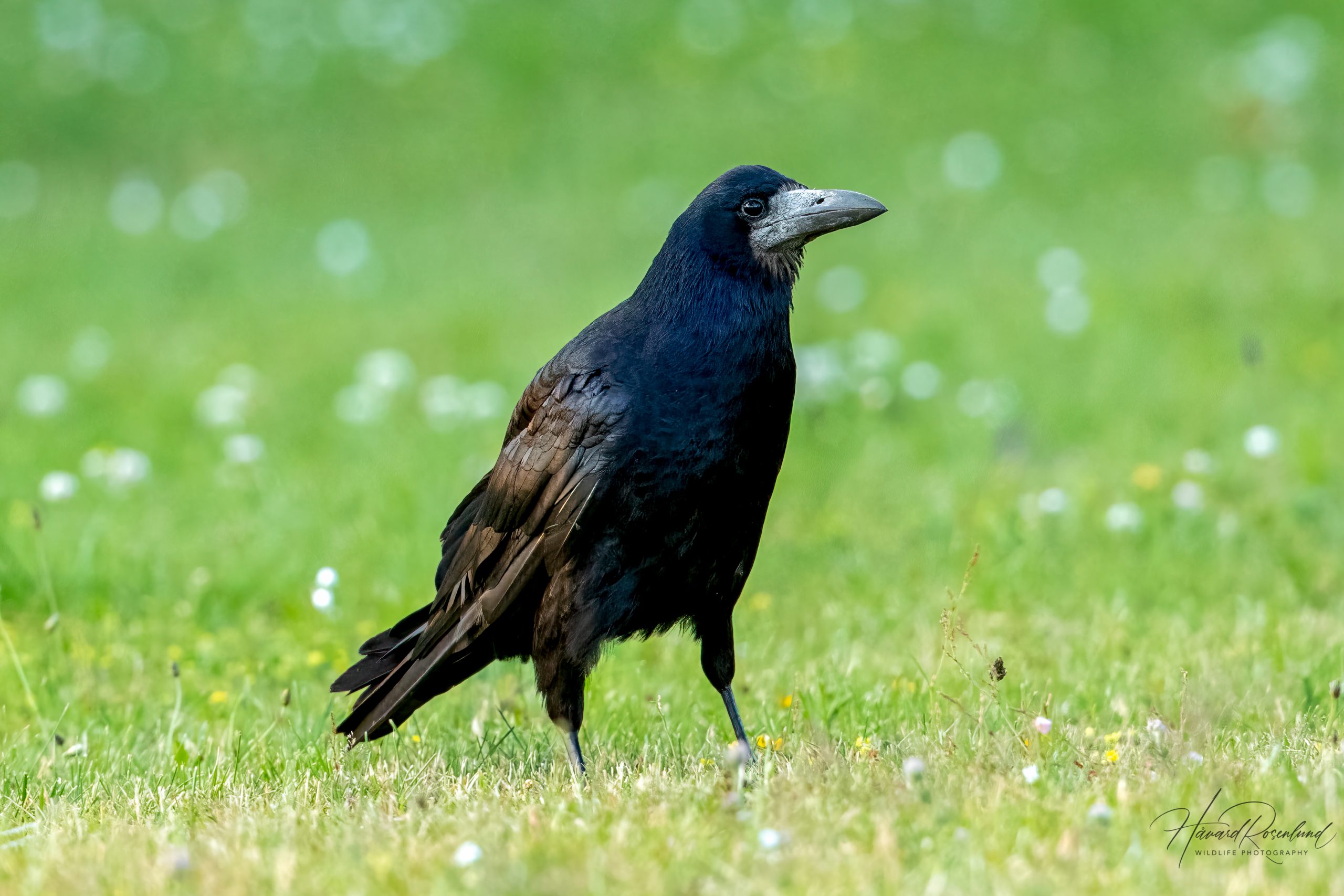
The rook (Corvus frugilegus) is a highly social crow found across much of Europe and temperate Asia. Adults are about 44–46 cm long, have a wingspan of roughly 81–94 cm and weigh around 280–540 g. The plumage is glossy black with a purple or blue sheen, and adults are easily recognised by the patch of bare greyish skin around the base of the bill.
Young rooks keep feathers around the bill for their first months and can therefore resemble carrion crows (Corvus corone). Even then, the rook usually looks slimmer, with a longer and more pointed bill and a slightly peaked crown. The bare face develops as the bird matures.
Habitat
Rooks are characteristic birds of open agricultural landscapes. They favour arable fields, pasture, grassland and other open ground where they can feed, combined with mature trees for nesting and communal roosting. Villages, parks, roadside tree rows and the edges of towns can all provide suitable nesting sites when feeding habitat remains nearby.
Modern farming can both create and remove suitable conditions. Ploughed fields and short grass expose soil invertebrates, while very intensive agriculture can reduce food availability and remove old trees and small landscape features used by colonies. Regional trends therefore differ strongly: rooks remain common in some farming landscapes while declining sharply in others.
Diet
Rooks are omnivores, but much of their feeding is done on the ground. Earthworms, beetles, insect larvae and other soil invertebrates are important, together with grain, seeds and other plant material. They also take fruit, small vertebrates, carrion and human food where available.
The long bill is especially useful for probing into soil and turf. Flocks often spread across fields and pastures, with individual birds repeatedly pushing the bill into the ground or turning over loose material. Feeding in groups also means that birds can quickly follow one another to newly disturbed soil or other temporary food sources.
Behaviour
Outside the breeding season, large flocks may commute daily between farmland feeding areas and traditional night roosts. These movements can cover substantial distances without being true seasonal migration, linking day-to-day movements closely to the changing distribution of food and safe resting sites.
Social behaviour
Few European crows are as strongly social as the rook. Birds breed in colonies, feed in flocks and often gather in large communal roosts outside the breeding season. Pair bonds can last for years, and partners frequently sit together, preen one another and share food. Social relationships therefore remain important far beyond the nest itself.
Intelligence
Rooks have become important subjects in studies of corvid cognition. In a laboratory experiment published in 2006, seven of eight birds rapidly solved a physical problem in which food had to be moved through a tube while avoiding a trap. Most birds could transfer the successful solution when the appearance of the task changed, although only one individual succeeded when the visual cues were altered more radically. The results showed sophisticated physical problem-solving without proving that the birds understood all of the hidden physical forces involved.
Even more strikingly, captive rooks have spontaneously used and modified tools despite the species not being known for regular tool use in the wild. A study published in 2009 found birds selecting suitable tools, bending wire into hooks and using several tools in sequence to reach food. This suggests that advanced physical cognition in corvids is not restricted to species whose natural ecology depends on habitual tool use.
Migration
The rook is partially migratory. Birds in western and milder parts of Europe may remain close to their breeding areas throughout the year, while many populations farther north and east move south-west in autumn. Young birds are often more likely to disperse or migrate than established adults.
Seasonal movements depend strongly on weather and food, and cold conditions can push birds farther south or towards areas where unfrozen soil remains accessible.
Breeding
Rooks breed in colonies known as rookeries, often using groups of tall trees that may hold dozens or hundreds of nests. The nest is a substantial platform of sticks lined with roots, grass and other softer material. Pairs frequently return to the same colony year after year and repair or rebuild nests early in spring. Courtship can include repeated bowing with drooped wings, tail-fanning and loud calls, and the male may offer food to the female.
A classic study from Cornwall published in 1960 found that both sexes took part in nest building. The male generally did more of the coarse stick construction, while the female contributed more to shaping and lining the nest cup. During incubation the male fed the female at the nest.
A typical clutch contains three to four eggs, although two to seven have been recorded. The female usually incubates for about 15–16 days. Rooks normally raise one brood per year. After hatching, the male continues to bring much of the food while both parents care for the chicks. The young usually fledge after about 32–34 days but remain associated with their parents and the colony for some time afterwards.
Status
The rook is classified as least concern on the IUCN Red List and has a very large range and substantial global population. Regional trends differ strongly, however, and declines have occurred in several European countries.
Changes in agriculture are among the most important pressures. Loss of pasture and mixed farming, reduced soil invertebrates, removal of nesting trees and direct persecution can all affect local colonies. Because rooks nest communally, destruction or repeated disturbance of a single rookery can affect a large part of a local population at once.
Image gallery
Loading map and observations…
Have you seen this species?
Independent species archive
Did you find this species page useful?
Wildlife Vagabond is independently built and maintained. Voluntary support helps cover hosting, maps, data storage and continued improvements to the species archive.
Support Wildlife VagabondSpecies content will remain freely available.
References
Information about the species’ global distribution and status is based primarily on global Red List data. See the references below for details.
- Animal Diversity Web. (n.d.). Corvus frugilegus. https://animaldiversity.org/accounts/Corvus_frugilegus/
- Bird, C. D., & Emery, N. J. (2009). Insightful problem solving and creative tool modification by captive nontool-using rooks. Proceedings of the National Academy of Sciences, 106(25), 10370-10375. https://doi.org/10.1073/pnas.0901008106
- BirdLife International. (n.d.). Rook species factsheet. https://datazone.birdlife.org/species/factsheet/rook-corvus-frugilegus
- British Trust for Ornithology. (n.d.). Rook BirdFacts. https://www.bto.org/learn/about-birds/birdfacts/rook
- Coombs, C. J. F. (1960). Observations on the rook Corvus frugilegus in southwest Cornwall. Ibis, 102(3), 394-419. https://doi.org/10.1111/j.1474-919X.1960.tb08417.x
- International Union for Conservation of Nature. (n.d.). Rook. The IUCN Red List of Threatened Species. https://www.iucnredlist.org/species/22705983/118782308
- Seed, A. M., Tebbich, S., Emery, N. J., & Clayton, N. S. (2006). Investigating Physical Cognition in Rooks, Corvus frugilegus. Current Biology, 16(7), 697-701. https://doi.org/10.1016/j.cub.2006.02.066