
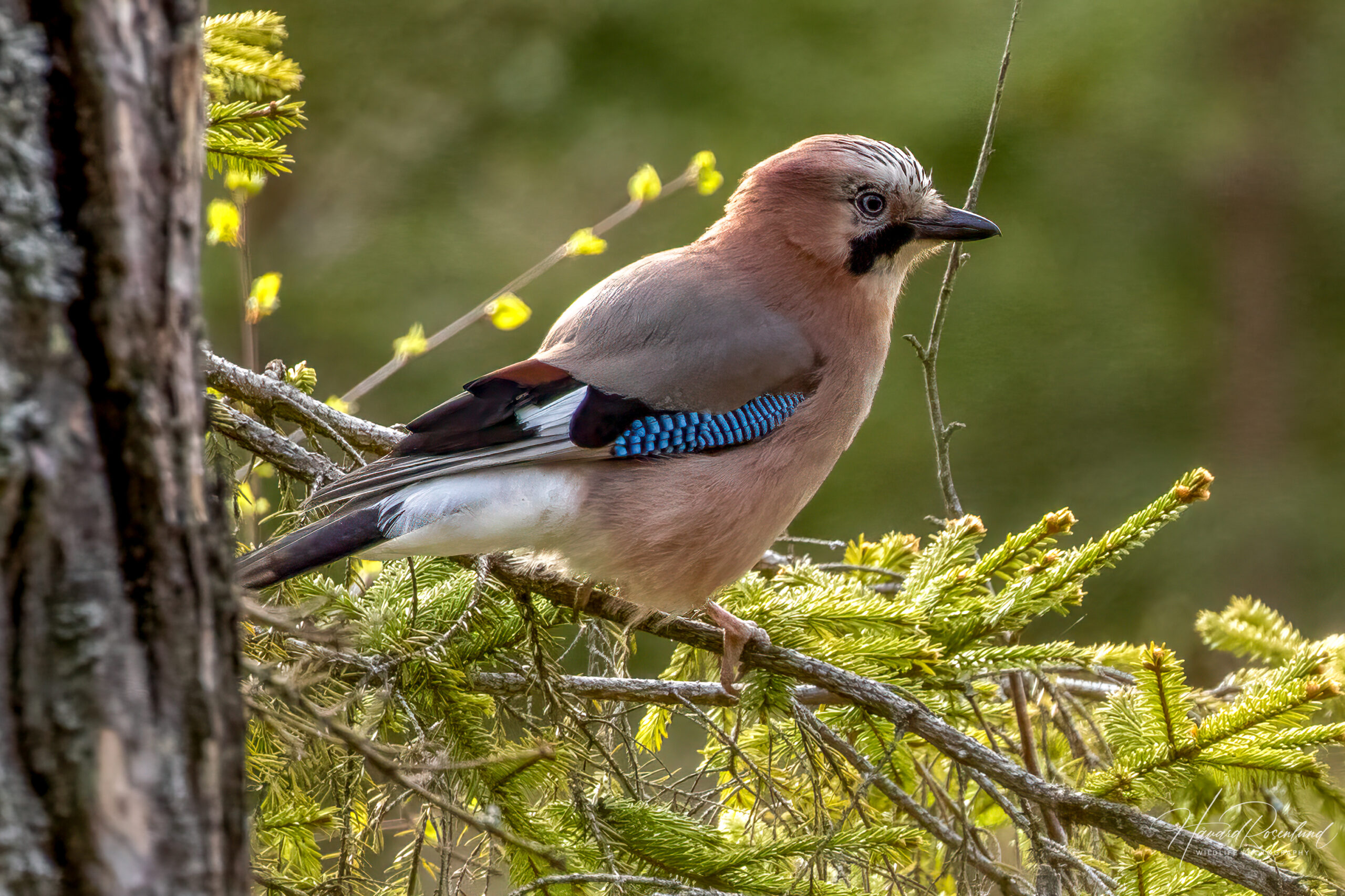
Eurasian Jay
Garrulus glandarius
At a glance
Habitat
- Deciduous, mixed and coniferous woodland, especially mature forest with oaks; also parks and large gardens
Diet
- Omnivorous; acorns and other seeds, insects, fruit, small vertebrates, eggs and nestlings
Activity
- Diurnal
Size
- Length: 34–35 cm Weight: 170 g
Range
- Widespread from Europe and north-west Africa across temperate Asia to East Asia
Description
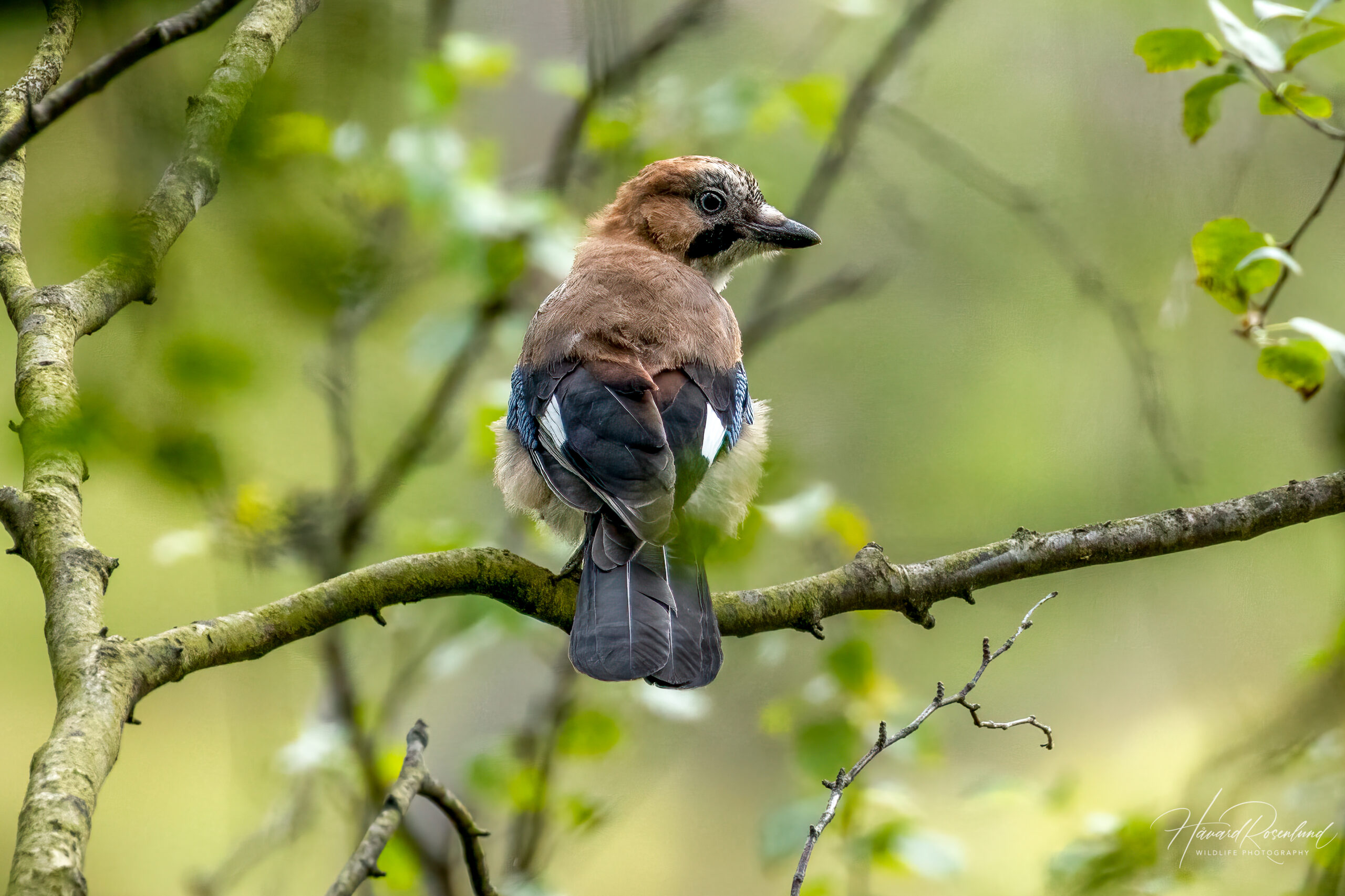
The Eurasian jay (Garrulus glandarius) is a medium-sized member of the crow family. Adults are about 34–35 cm long, weigh around 170 g and have a wingspan of 52–58 cm. Across much of Europe the species has a pinkish-brown body, black moustachial stripe, white rump and striking blue-and-black barred wing coverts. It is highly variable across its enormous range, with numerous subspecies differing markedly in head pattern and overall colour.
Despite its bright plumage, a jay can be surprisingly difficult to see in woodland. It often remains within cover and announces itself first with a harsh, rasping call. The broad white rump and contrasting wing pattern become conspicuous when the bird flies between trees.
Habitat
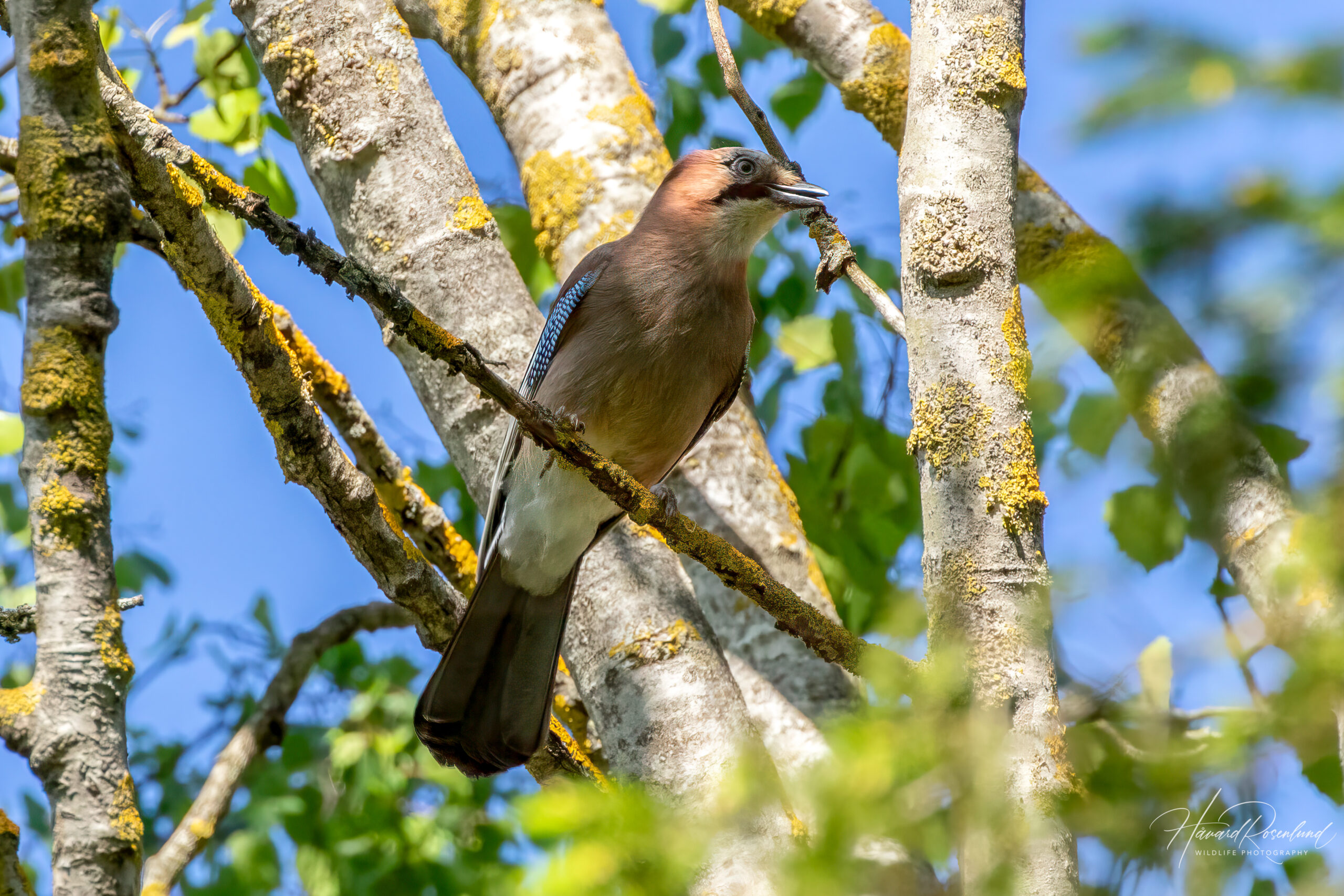
Eurasian jays occupy deciduous, mixed and coniferous forests, as well as mature parks and large wooded gardens. Oaks are especially important across much of Europe because they provide one of the species’ most valuable autumn and winter foods, although jays also thrive well beyond the main oak belt where other trees and food sources are available.
They generally favour structurally varied woodland with enough mature trees for nesting and cover, together with clearings, edges and other places where animal food can be found. Their ability to use both natural forest and well-wooded human landscapes contributes to the species’ enormous distribution.
Diet
The diet is extremely varied. In spring and summer jays eat large numbers of insects and other invertebrates and may also take small vertebrates, eggs and nestlings. Fruit, grain and seeds are used throughout the year when available.
In autumn and winter acorns, beech mast and other tree seeds become especially important. Jays can carry several acorns at once, including one in the bill and others in the expandable throat and mouth, allowing them to transport food efficiently from productive trees to suitable storage sites.
Behaviour
Acorn caching is one of the defining behaviours of the Eurasian jay. During autumn a single bird may transport and hide thousands of acorns, usually burying them beneath leaf litter, moss or a thin layer of soil. Many caches are recovered months later using strong spatial memory and landmarks in the surrounding landscape.
Radio-tracking published in 2007 found that jays moved cached acorns from only a few metres to more than 500 m, with many carried tens of metres from the tree where they were collected. Not every acorn is recovered. Forgotten caches can germinate away from the parent tree, making jays major dispersers of oaks and important agents of woodland regeneration and expansion.
Jays also adjust caching according to previous experience, food availability and the risk that another bird may steal a cache. Experiments published in 2012 found behaviour consistent with anticipating distinct future needs, while later work published in 2021 tested competing explanations for such caching decisions. Exactly which cognitive mechanisms are involved remains unresolved. What is clear is that caching depends on sophisticated memory, learning and flexible decision-making rather than one simple fixed response.
Jays are also accomplished vocal mimics. Alongside their own harsh calls they can imitate other birds, including raptors, and their repertoire becomes especially varied during social interactions.
Movements
Most Eurasian jays are resident or make only local movements, but the species can become highly mobile in some years. When crops of acorns and other tree seeds fail across large areas, substantial numbers may leave their normal territories, producing conspicuous autumn movements or invasions.
These irregular movements are particularly well known in northern and eastern Europe. They differ from regular migration because both the number of birds moving and the distance travelled can vary dramatically from one year to the next according to seed production.
Breeding
Pairs are generally monogamous and both birds help construct a twig nest, usually placed in a tree or large shrub. The inner cup is lined with roots and other finer material. A typical clutch contains 4–5 eggs.
Both sexes incubate, with incubation lasting about 18 days. Both parents feed the nestlings, which normally remain in the nest for around 20–22 days before fledging. The young remain dependent on their parents for some time afterwards. During breeding the normally conspicuous calling becomes much less frequent around the nest, helping the birds remain surprisingly unobtrusive.
Status
The Eurasian jay is classified as least concern on the IUCN Red List. It has an enormous range across Europe, North Africa and Asia and remains common across much of it.
European monitoring still classifies the long-term trend as a moderate increase, but the population index fell by about 11% during 2015–2024. Regional trends therefore vary considerably, and annual abundance and movements can also fluctuate strongly with crops of acorns and other tree seeds.
Image gallery
Loading map and observations…
Have you seen this species?
Independent species archive
Did you find this species page useful?
Wildlife Vagabond is independently built and maintained. Voluntary support helps cover hosting, maps, data storage and continued improvements to the species archive.
Support Wildlife VagabondSpecies content will remain freely available.
References
Information about the species’ global distribution and status is based primarily on global Red List data. See the references below for details.
- Amodio, P., Brea, J., Farrar, B. G., Ostojić, L., & Clayton, N. S. (2021). Testing two competing hypotheses for Eurasian jays’ caching for the future. Scientific Reports, 11(1), 835. https://doi.org/10.1038/s41598-020-80515-7
- BirdLife International. (n.d.). Eurasian Jay species factsheet. https://datazone.birdlife.org/species/factsheet/eurasian-jay-garrulus-glandarius
- Cheke, L. G., & Clayton, N. S. (2012). Eurasian jays (Garrulus glandarius) overcome their current desires to anticipate two distinct future needs and plan for them appropriately. Biology Letters, 8(2), 171-175. https://doi.org/10.1098/rsbl.2011.0909
- International Union for Conservation of Nature. (n.d.). Eurasian Jay. The IUCN Red List of Threatened Species. https://www.iucnredlist.org/species/103723684/118779004
- Pan-European Common Bird Monitoring Scheme. (n.d.). PECBMS – Eurasian Jay population trend, 2025 update. https://pecbms.info/trends-and-indicators/species-trends/species/garrulus-glandarius/
- Pons, J., & Pausas, J. G. (2007). Acorn dispersal estimated by radio-tracking. Oecologia, 153(4), 903-911. https://doi.org/10.1007/s00442-007-0788-x
- Royal Society for the Protection of Birds. (n.d.). Jay. https://www.rspb.org.uk/birds-and-wildlife/jay