
Bluethroat
Luscinia svecica
At a glance
Habitat
- Wet scrub, willow thickets, marsh edges, reedbeds and moist meadows with dense low cover
Diet
- Mainly insects and other small invertebrates; berries and seeds become more important outside breeding
Activity
- Diurnal
Size
- Length: ~13–14 cm Weight: ~20 g
Range
- Breeds across northern Europe and Asia; different populations winter from Africa and the Middle East to the Indian subcontinent and Southeast Asia
Description
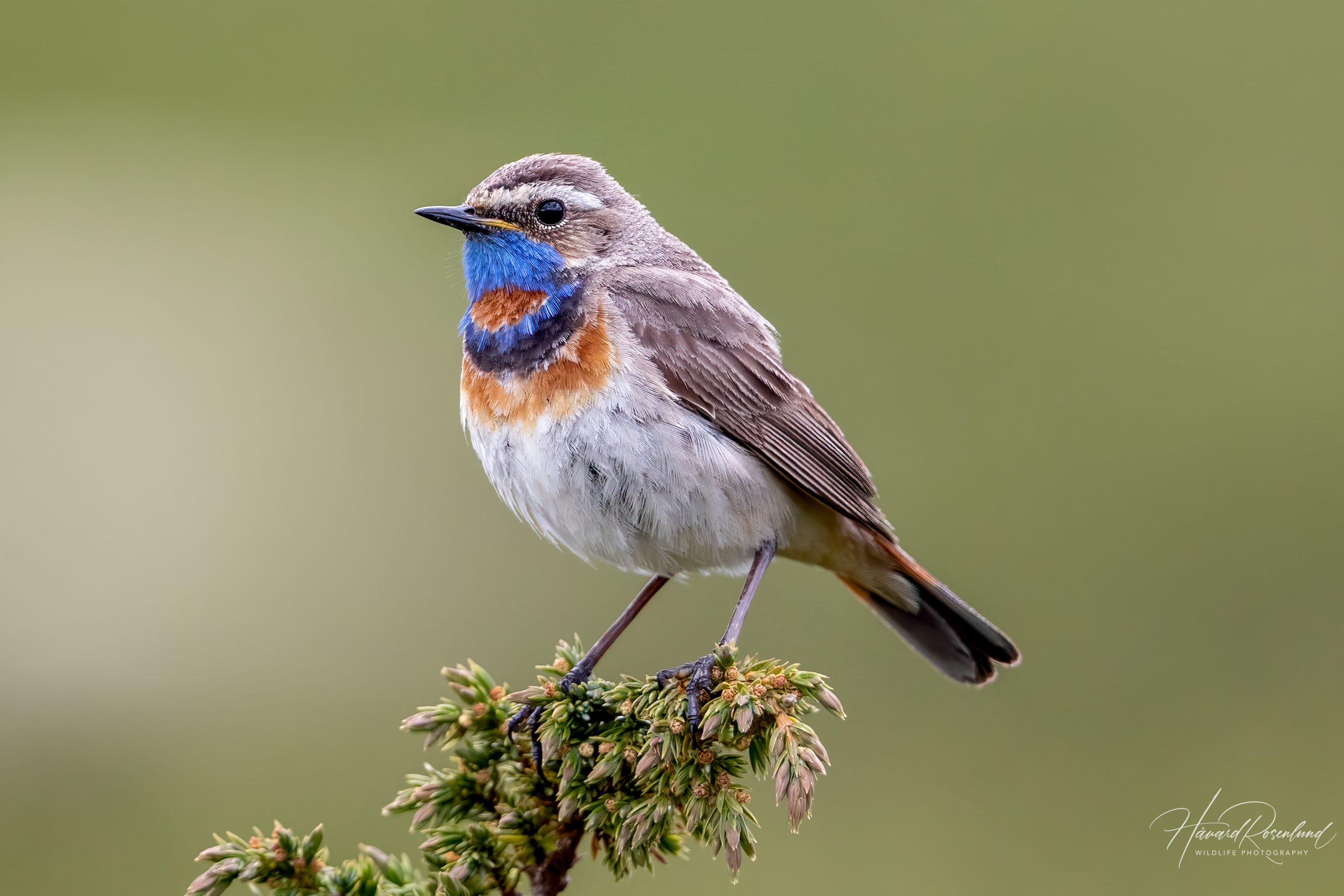
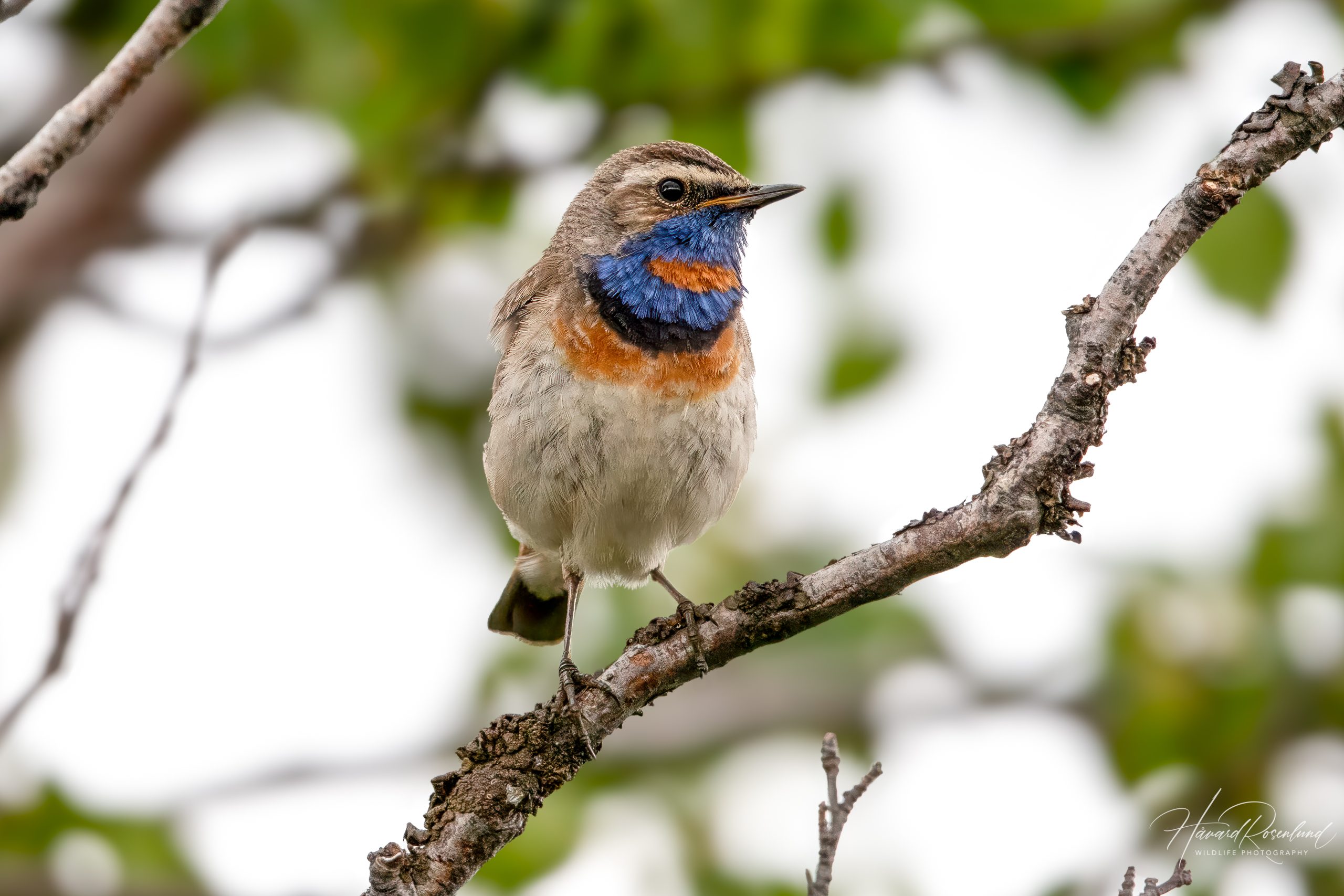
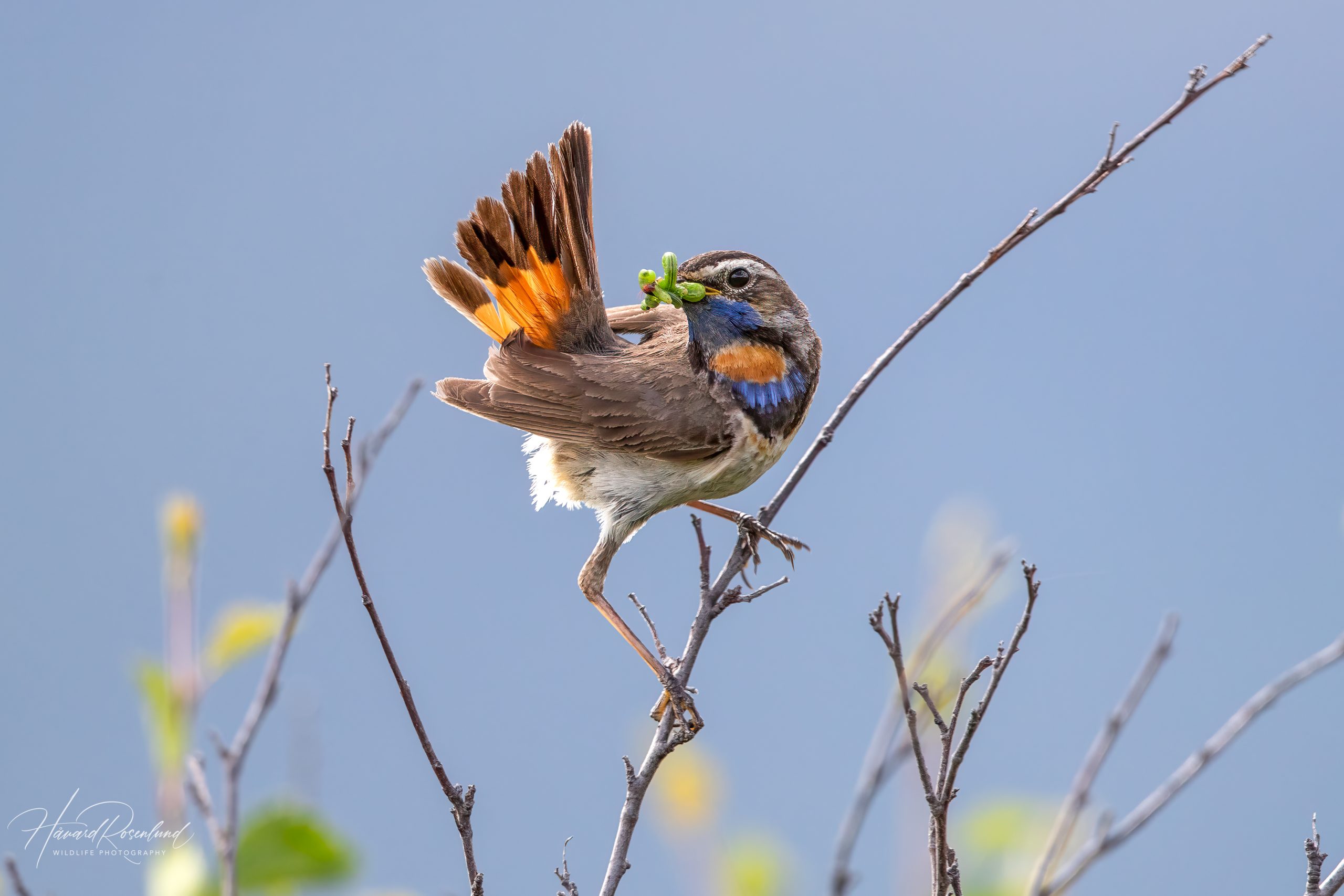
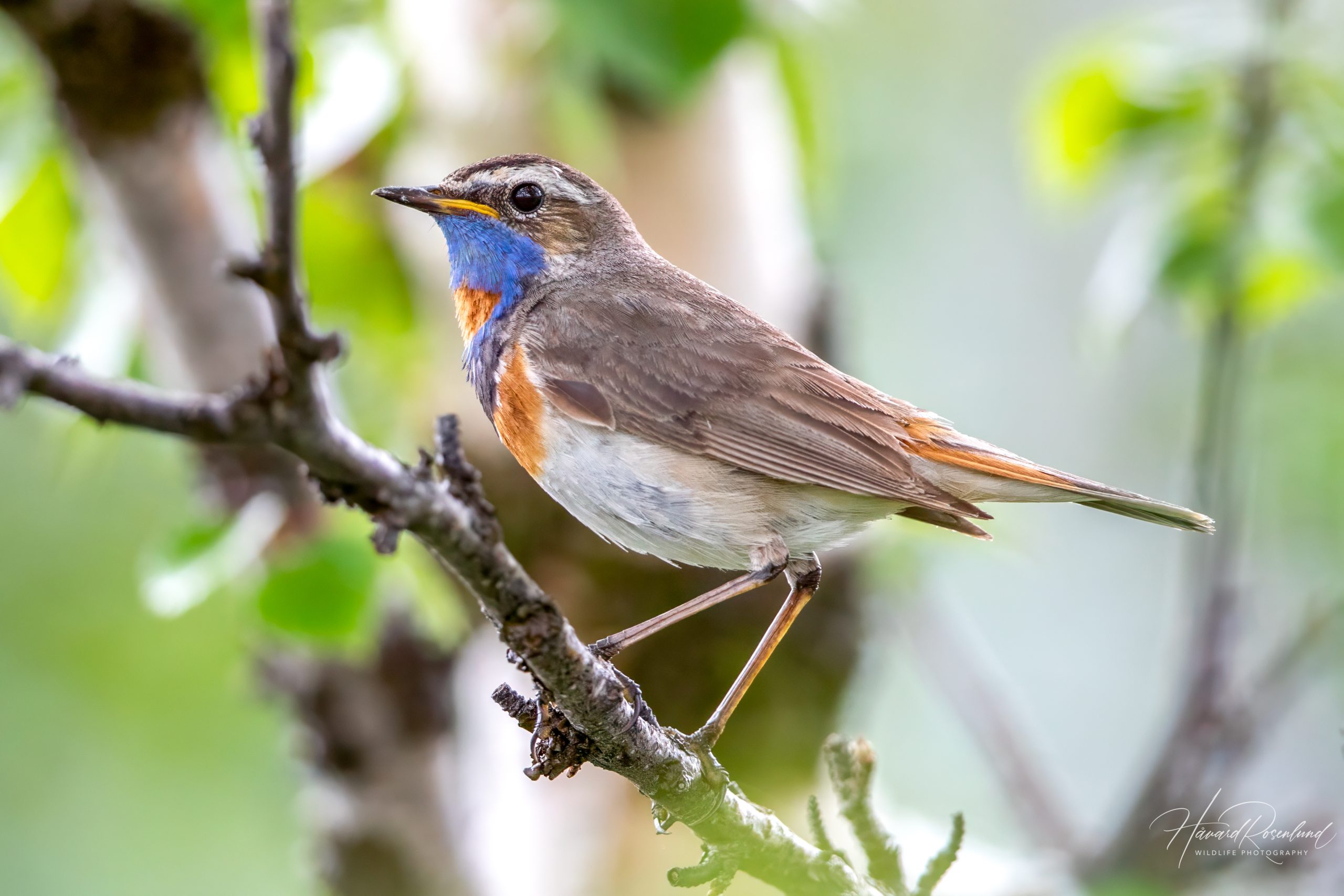
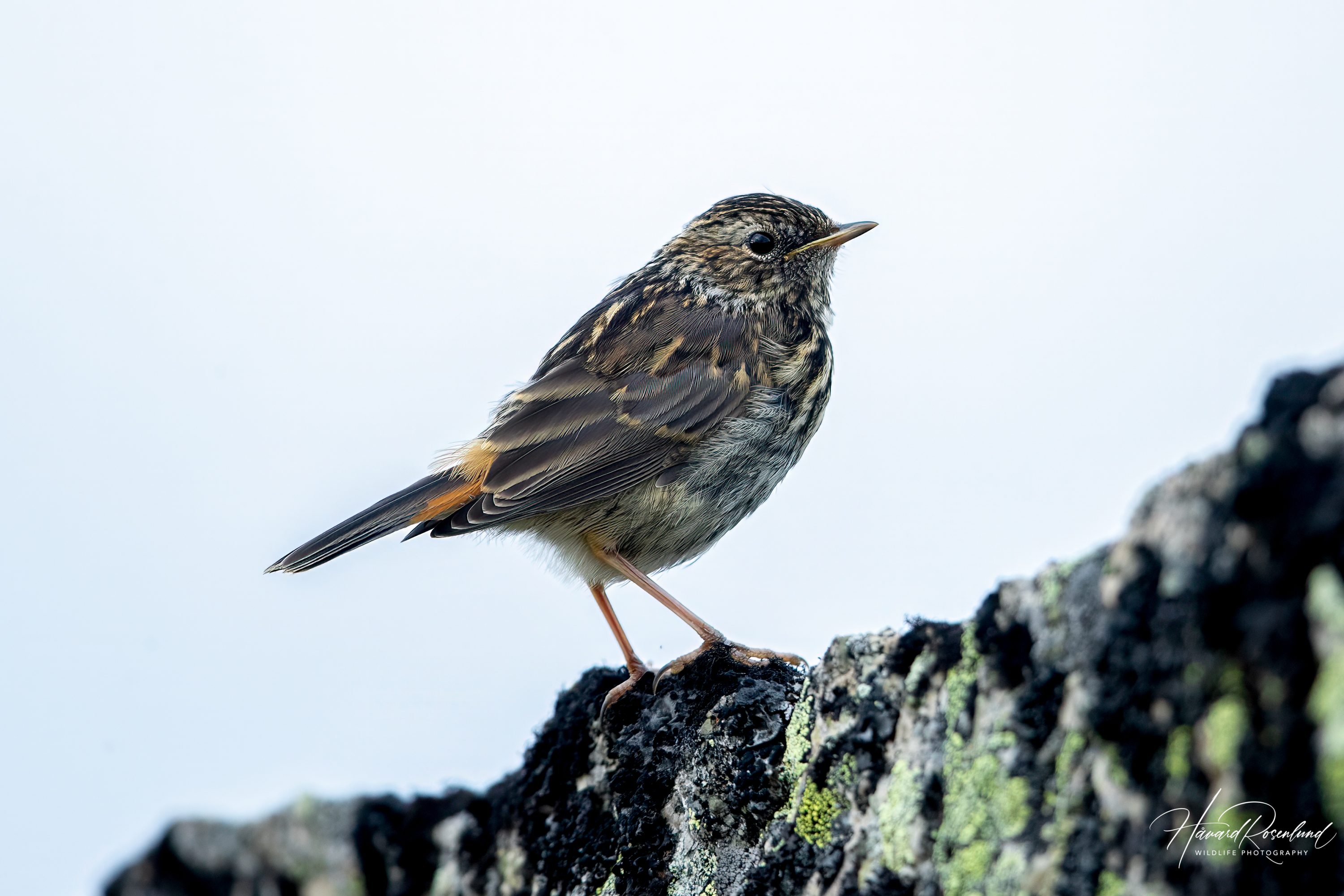
The bluethroat (Luscinia svecica) is a small migratory songbird with a breeding range stretching across much of northern Europe and Asia. Adults are about 13–14 cm long, have a wingspan of roughly 20–22 cm (7.9–8.7 in) and weigh around 20 g. Males are unmistakable in breeding plumage, with a brilliant blue throat bordered below by black, white and chestnut bands. Females are browner and more subdued, although many show traces of the same throat pattern.
The colour in the centre of the blue throat varies geographically. Males of the northern subspecies L. s. svecica have a chestnut-red central spot, while several western European populations have a white spot or no obvious central spot. These differences are useful clues to the complex geographical variation within the species.
Habitat
Bluethroats favour moist habitats with dense vegetation close to the ground and enough open patches for feeding. Breeding sites include willow scrub, wet birch woodland, marsh edges, reedbeds, riverbanks and damp meadows. Northern populations often occur in subalpine and tundra-like landscapes where willow thickets follow streams and wet depressions.
The combination of dense cover and nearby open ground is important. Birds hide, sing and nest within shrubs and low vegetation but spend much of their feeding time on the ground or along exposed edges where small invertebrates are easier to find.
Diet
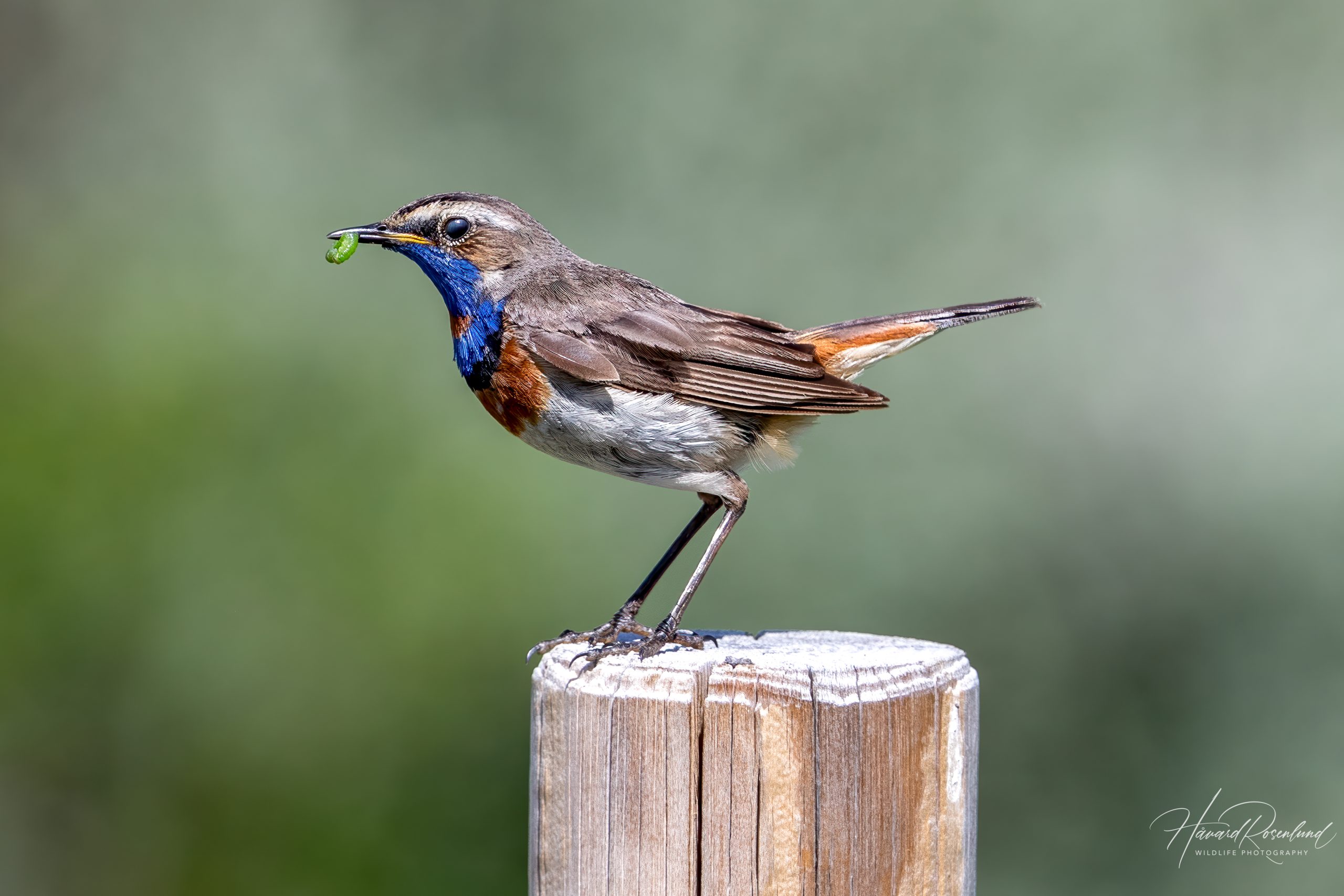
Bluethroats feed mainly on insects and other small invertebrates, including beetles, flies, caterpillars, spiders and small worms. They usually forage on or close to the ground, hopping through low vegetation, turning over leaves and picking prey from damp soil and plant stems.
Berries and seeds become more important during autumn, migration and winter. This flexible diet allows birds to rely more on plant food when invertebrate activity declines outside the breeding season.
Behaviour
Bluethroats spend much of their time low in dense vegetation or on the ground, moving between cover and small open feeding patches. Outside the breeding season they are usually solitary and become particularly quiet and inconspicuous.
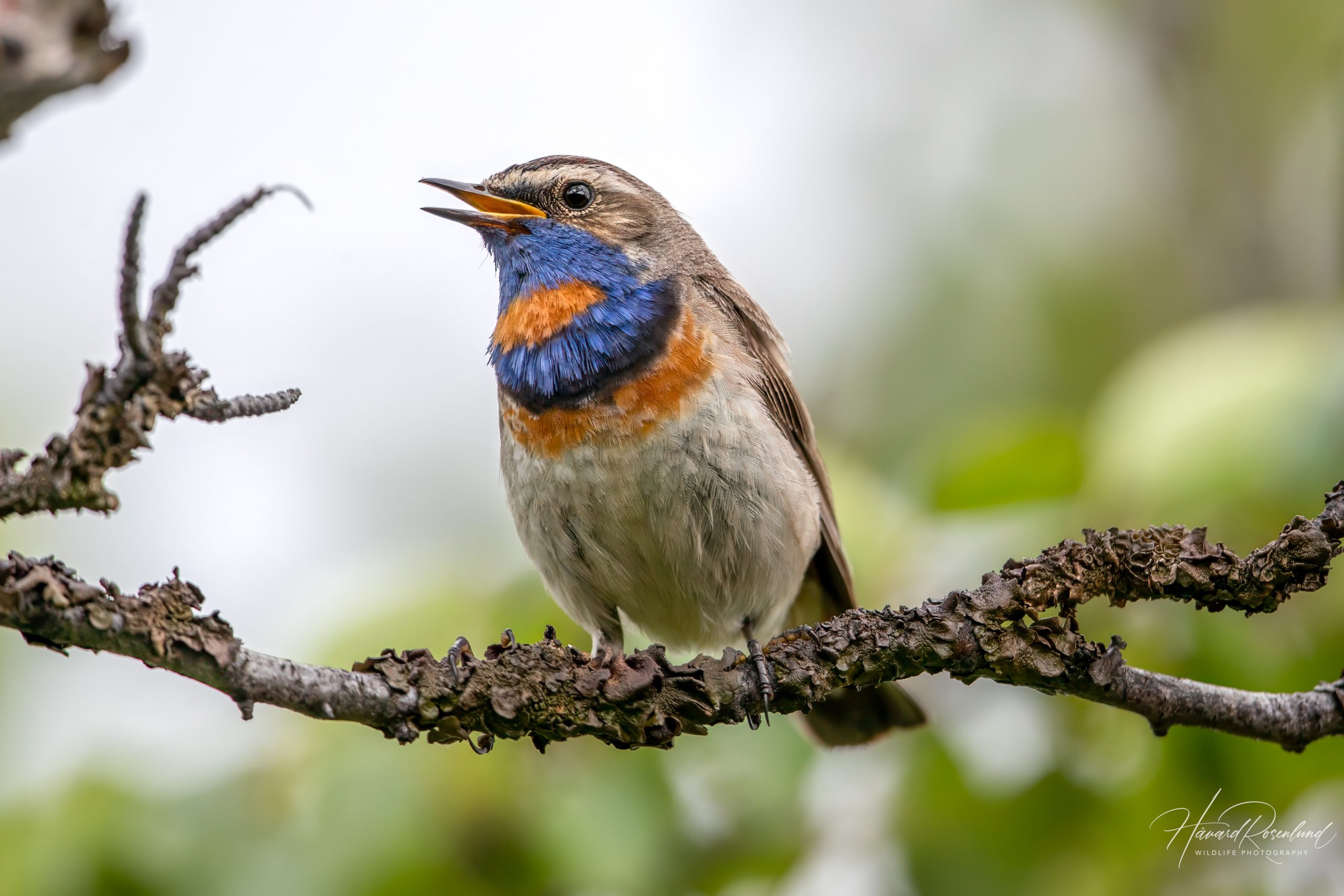
During the breeding season, males defend territories with a rich and highly varied song delivered from exposed shrubs and low trees, often combined with short song flights. The song can include imitations of other birds and sounds from the surroundings. A study at Kilpisjärvi in Finnish Lapland, published in 1994, found that singing and song-flight activity were most intense soon after males arrived and especially in the early morning, before dropping sharply after egg laying began. A playback experiment from the same area, published in 2000, found that unmated males increased both singing and song-flight activity when they heard another male. This shows that the displays also play a role in territorial competition between males.
Migration
Bluethroat migration differs strongly among populations. Western European birds may winter around the Mediterranean, North Africa and parts of the Middle East, while many northern red-spotted bluethroats travel much farther east and south.
A tracking study published in 2015 fitted light-level loggers to males breeding at Isdalen in Norway and in the Krkonoše Mountains in the Czech Republic. The four birds that yielded usable year-round data wintered in India or Pakistan, more than 6,000 km from their breeding areas. The study therefore documented a migration route between European breeding areas and the Indian subcontinent.
Breeding
Song and song flights also help males attract females. The 1994 Kilpisjärvi study found that males with more song-flight activity paired more quickly. During close displays, the male raises the head and turns the brightly coloured throat towards females, making the blue patch an important visual signal.
The female builds a well-hidden cup nest close to or on the ground, usually within dense grass, willow, shrubs or other low vegetation. A clutch commonly contains five to seven eggs. The female performs most of the incubation, which lasts about 13–15 days, while both parents feed the chicks after hatching.
The chicks usually leave the nest after about 14–15 days but remain dependent on the adults for food and protection for a period afterwards. Dense vegetation around the nest is especially important because the family spends much of this vulnerable stage close to the ground.
Status
The bluethroat is classified as least concern globally on the IUCN Red List and remains widespread across Eurasia. Trends vary substantially among regions and subspecies, reflecting the species' broad range and dependence on very different wetland and scrub habitats.
Drainage, removal of wet scrub and changes to marshes or river margins can reduce breeding habitat locally. Because different populations follow very different migration routes, conditions at stopover and wintering sites can also affect birds far from their breeding grounds.
Image gallery
Loading map and observations…
Have you seen this species?
Independent species archive
Did you find this species page useful?
Wildlife Vagabond is independently built and maintained. Voluntary support helps cover hosting, maps, data storage and continued improvements to the species archive.
Support Wildlife VagabondSpecies content will remain freely available.
References
Information about the species’ global distribution and status is based primarily on global Red List data. See the references below for details.
- BirdLife International. (n.d.). Bluethroat species factsheet. https://datazone.birdlife.org/species/factsheet/bluethroat-luscinia-svecica
- British Trust for Ornithology. (n.d.). Bluethroat BirdFacts. https://www.bto.org/learn/about-birds/birdfacts/bluethroat
- Cornell Lab of Ornithology. (n.d.). Birds of the World – Bluethroat. https://birdsoftheworld.org/bow/species/blueth/cur/introduction
- International Union for Conservation of Nature. (n.d.). Bluethroat. The IUCN Red List of Threatened Species. https://www.iucnredlist.org/species/22709707/137567006
- Lislevand, T., Chutný, B., Byrkjedal, I., Pavel, V., Briedis, M., Adamik, P., & Hahn, S. (2015). Red-spotted BluethroatsLuscinia s. svecicamigrate along the Indo-European flyway: a geolocator study. Bird Study, 62(4), 508-515. https://doi.org/10.1080/00063657.2015.1077781
- Merilä, J., & Sorjonen, J. (1994). Seasonal and Diurnal Patterns of Singing and Song-Flight Activity in Bluethroats (Luscinia svecica). The Auk, 111(3), 556–562. https://doi.org/10.1093/auk/111.3.556
- Sorjonen & Merilä. (2000). Response of male Bluethroats Luscinia svecica to song playback: evidence of territorial function of song and song flights. Ornis Fennica, 77, 43–47. https://ornisfennica.journal.fi/article/view/133524