
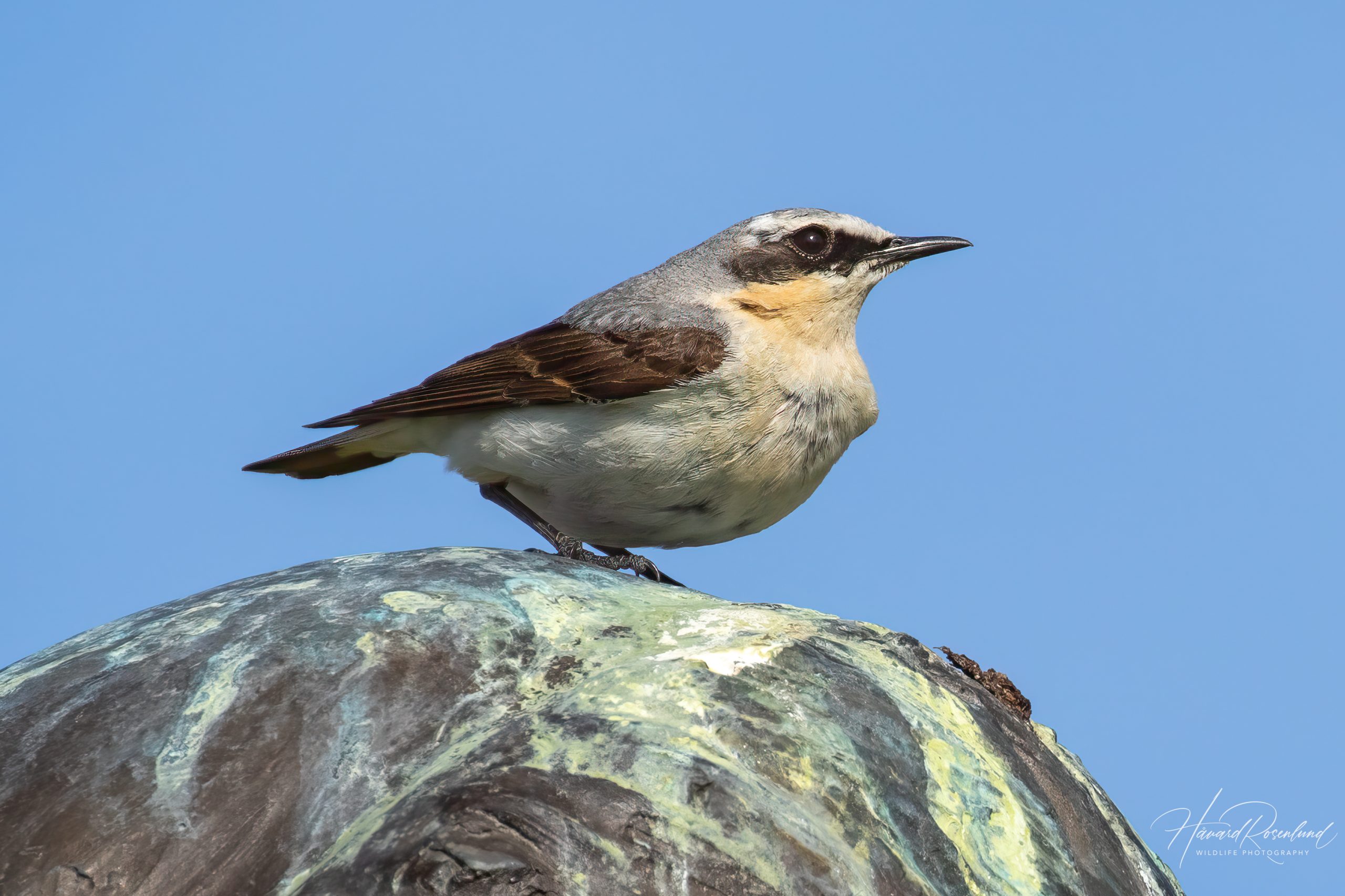
Northern Wheatear
Oenanthe oenanthe
At a glance
Habitat
- Open rocky country, tundra, mountain slopes, coastal heath, grassland and other sparsely vegetated ground
Diet
- Mostly insects and other small invertebrates, supplemented by berries and other plant food
Activity
- Diurnal
Size
- Length: 14.5–16 cm Weight: Often 20–30 g
Range
- Almost circumpolar breeding range across Eurasia, Greenland and northern North America; all populations winter in sub-Saharan Africa
Description
The northern wheatear (Oenanthe oenanthe) is a small, long-legged ground bird with one of the widest breeding ranges of any songbird. It breeds from Europe and northern Asia across Greenland and the Canadian Arctic to Alaska, yet the entire species spends the non-breeding season in sub-Saharan Africa. Adults are roughly 14.5–16 cm long and commonly weigh around 20–30 g.
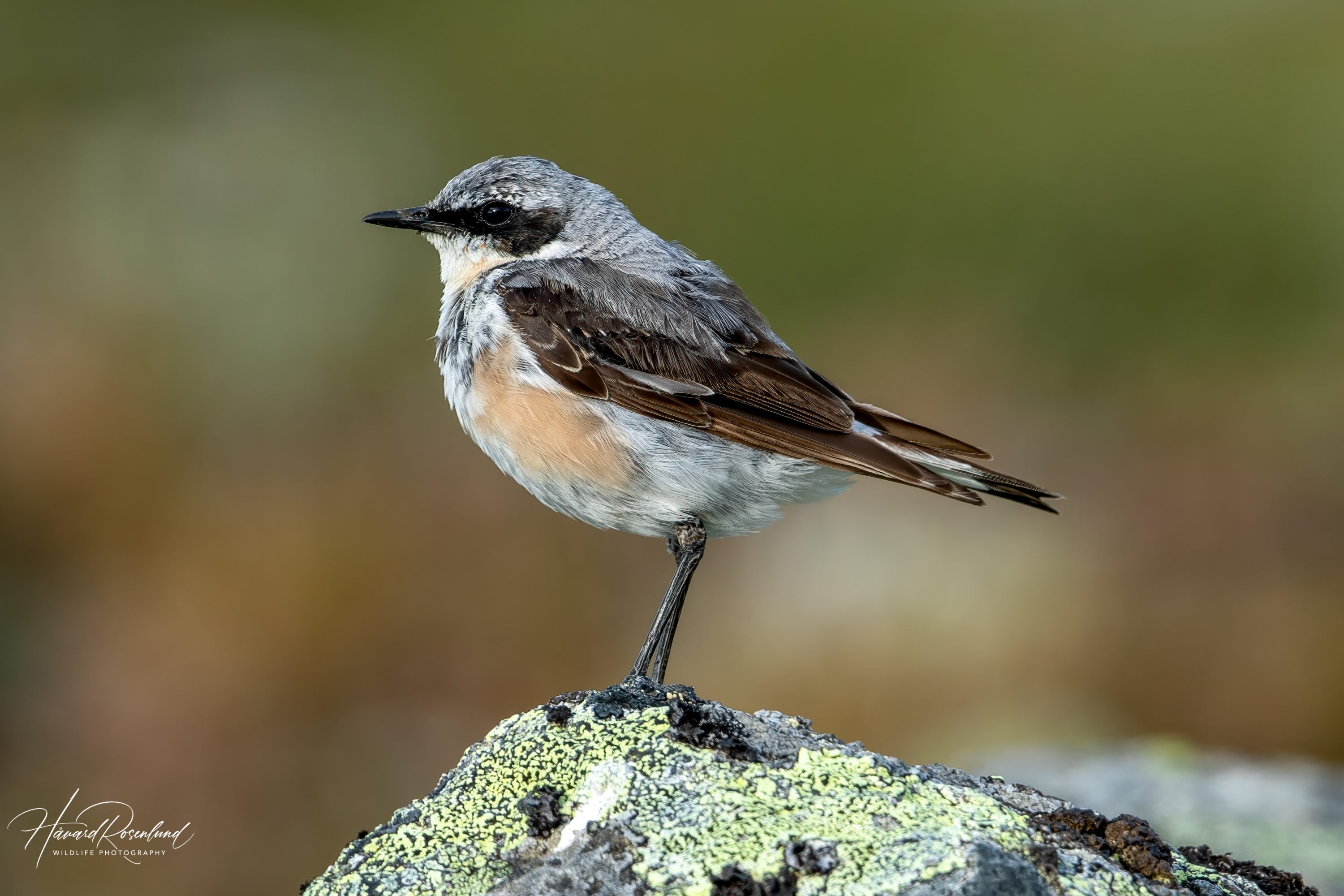
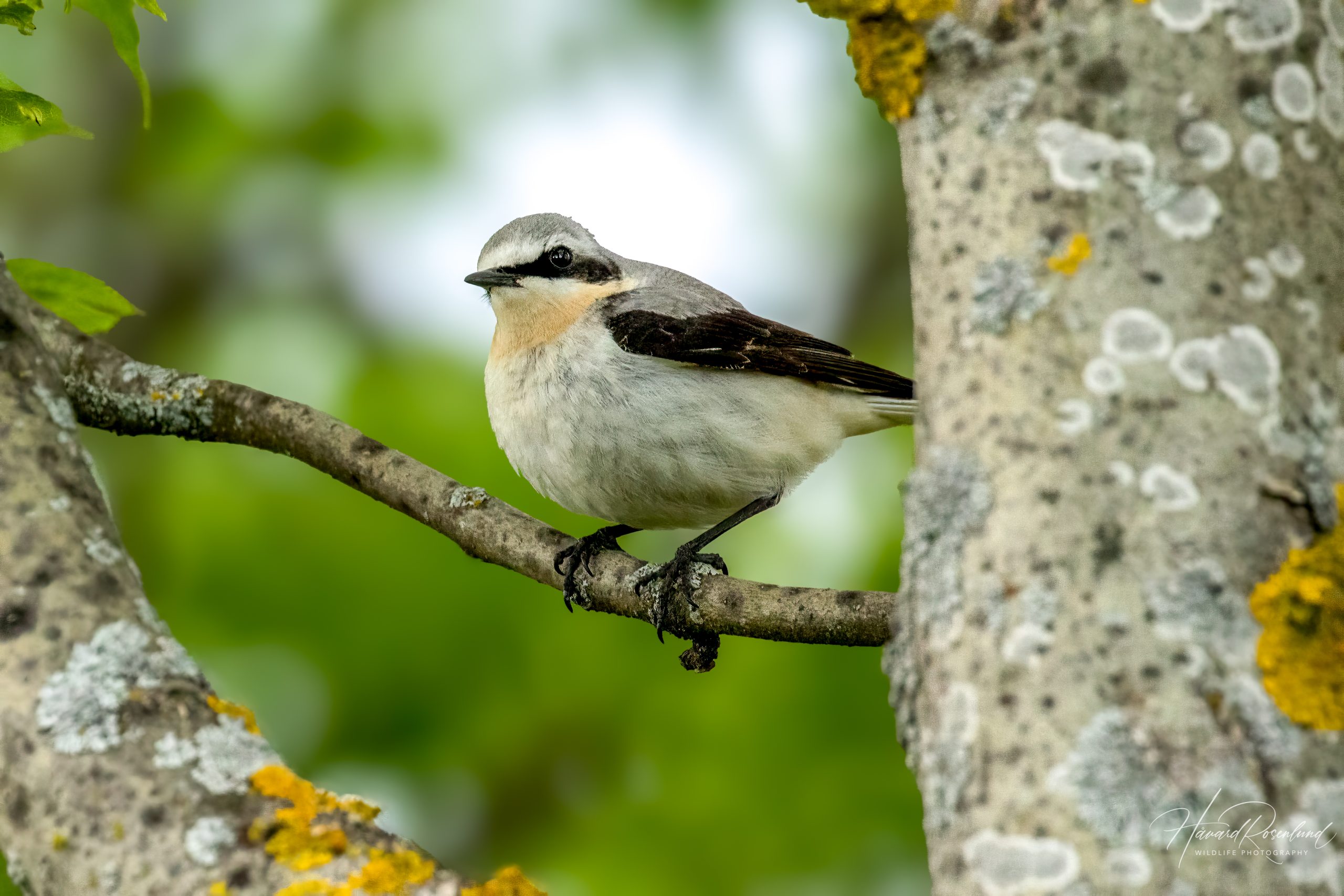
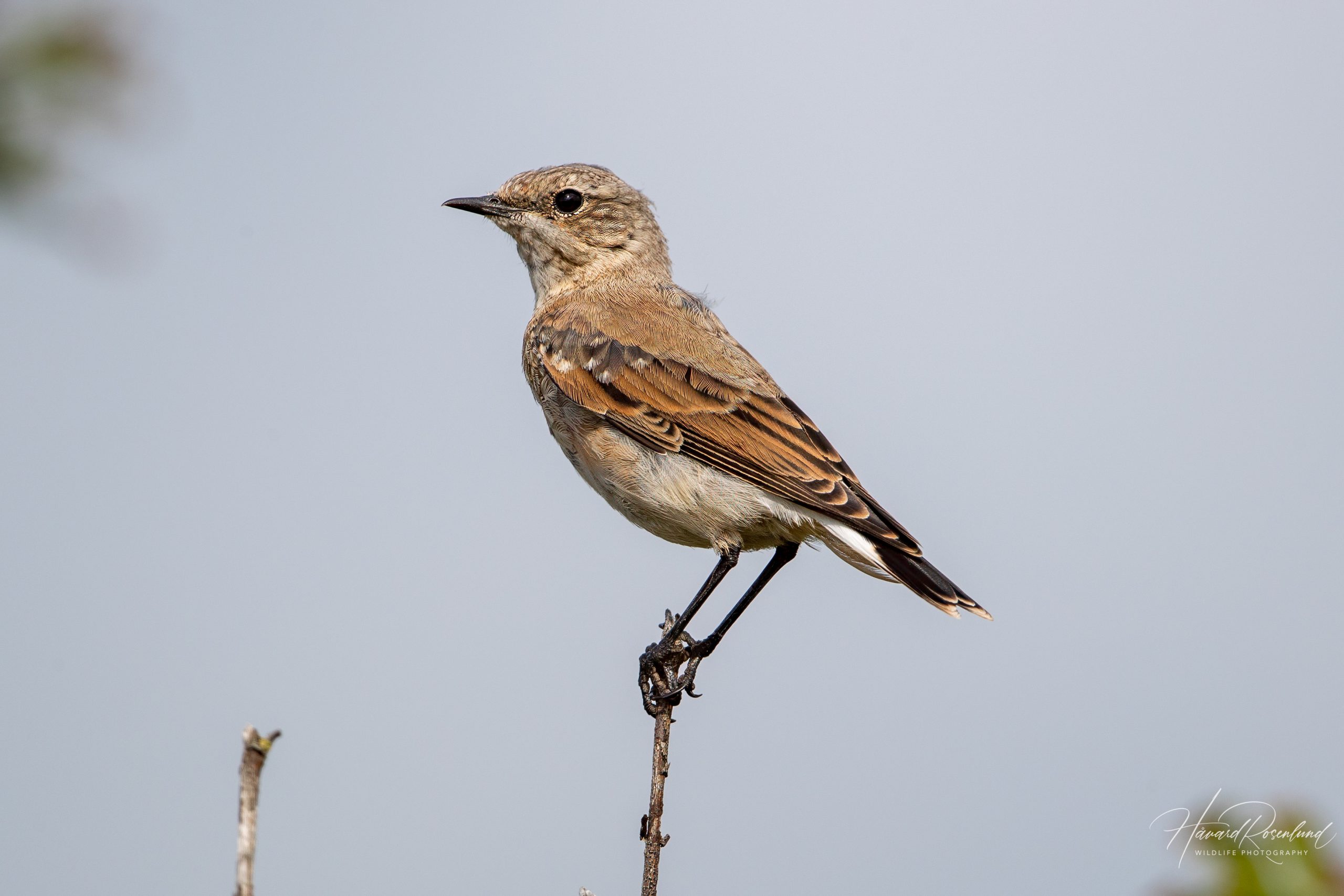
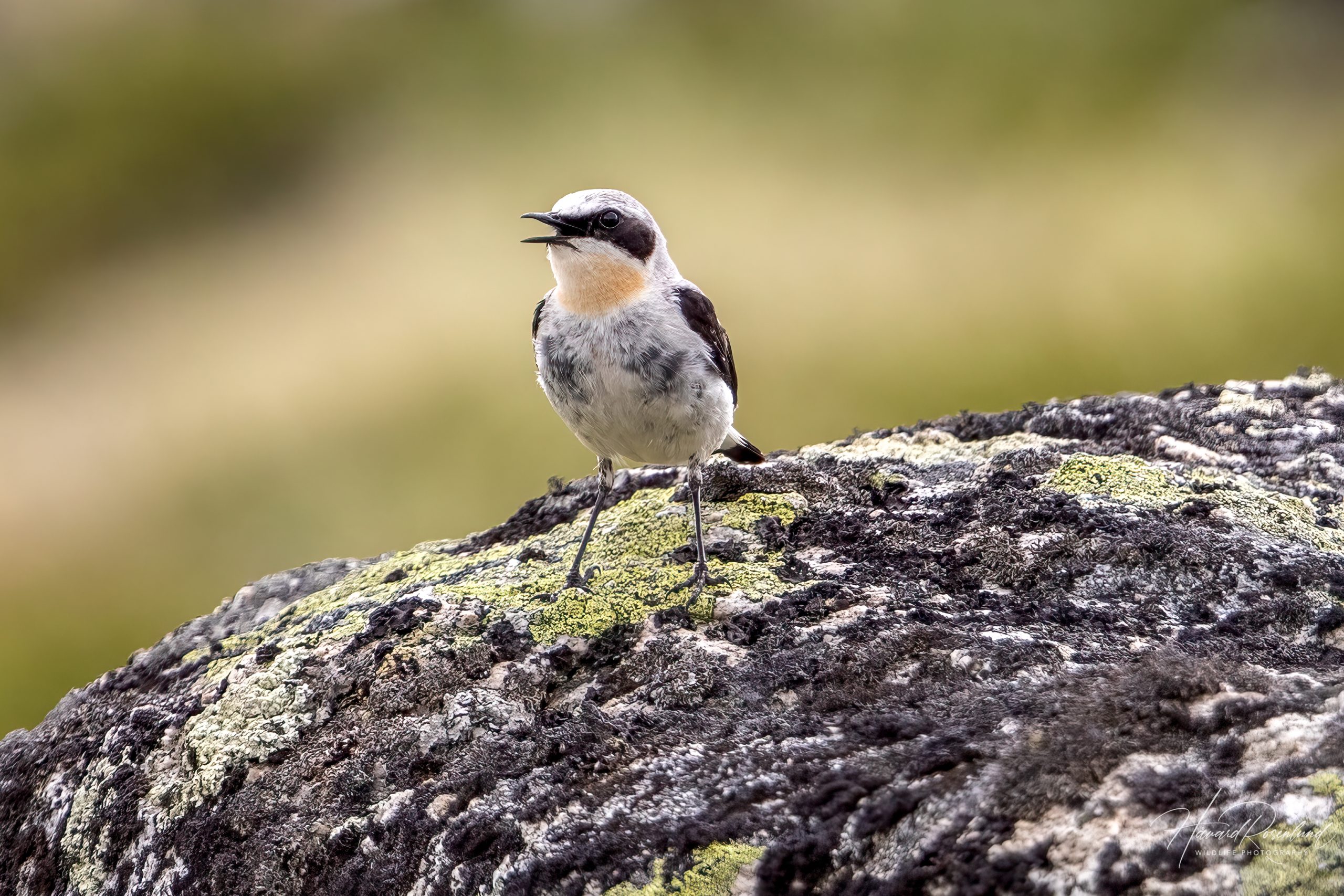
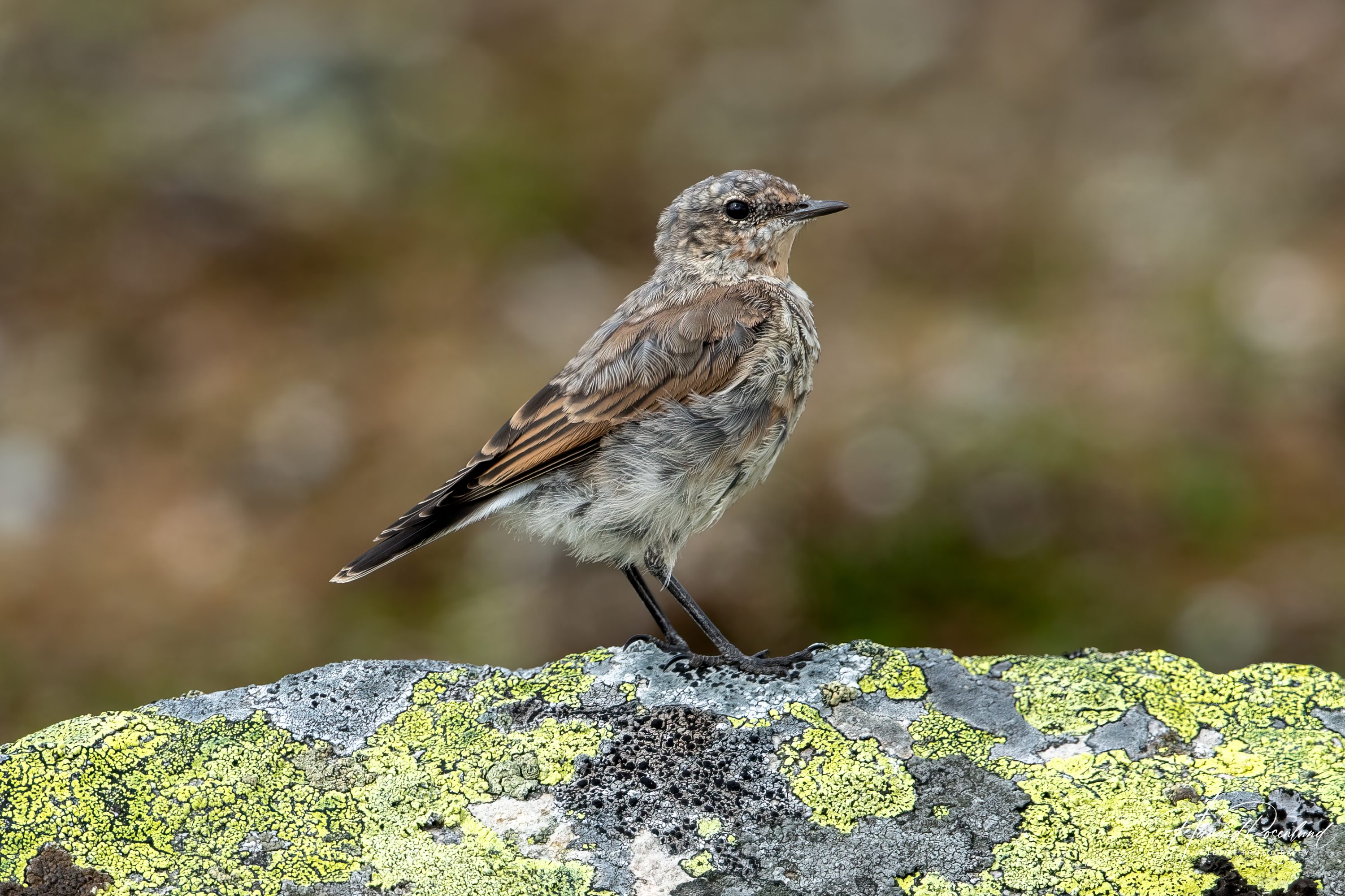
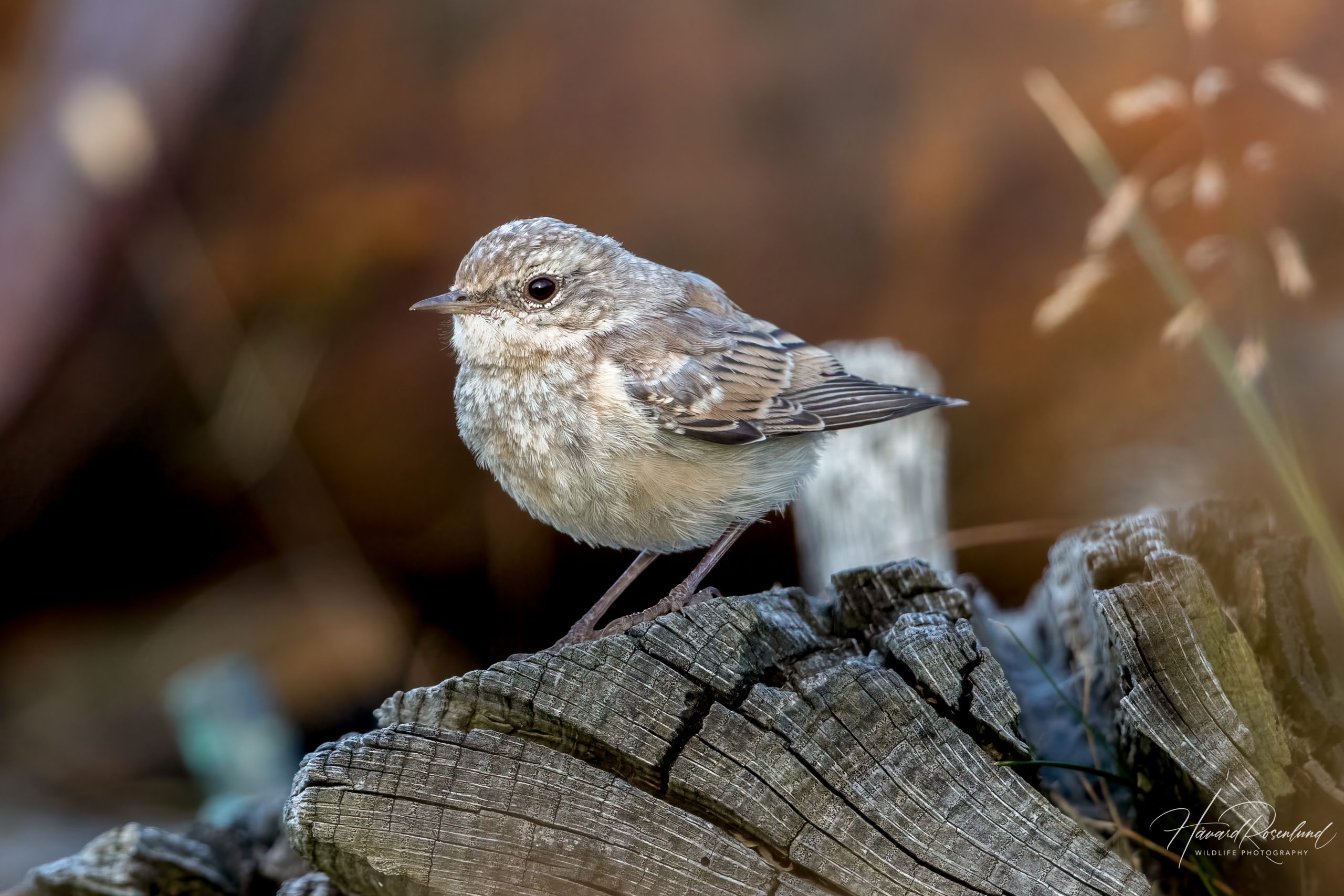
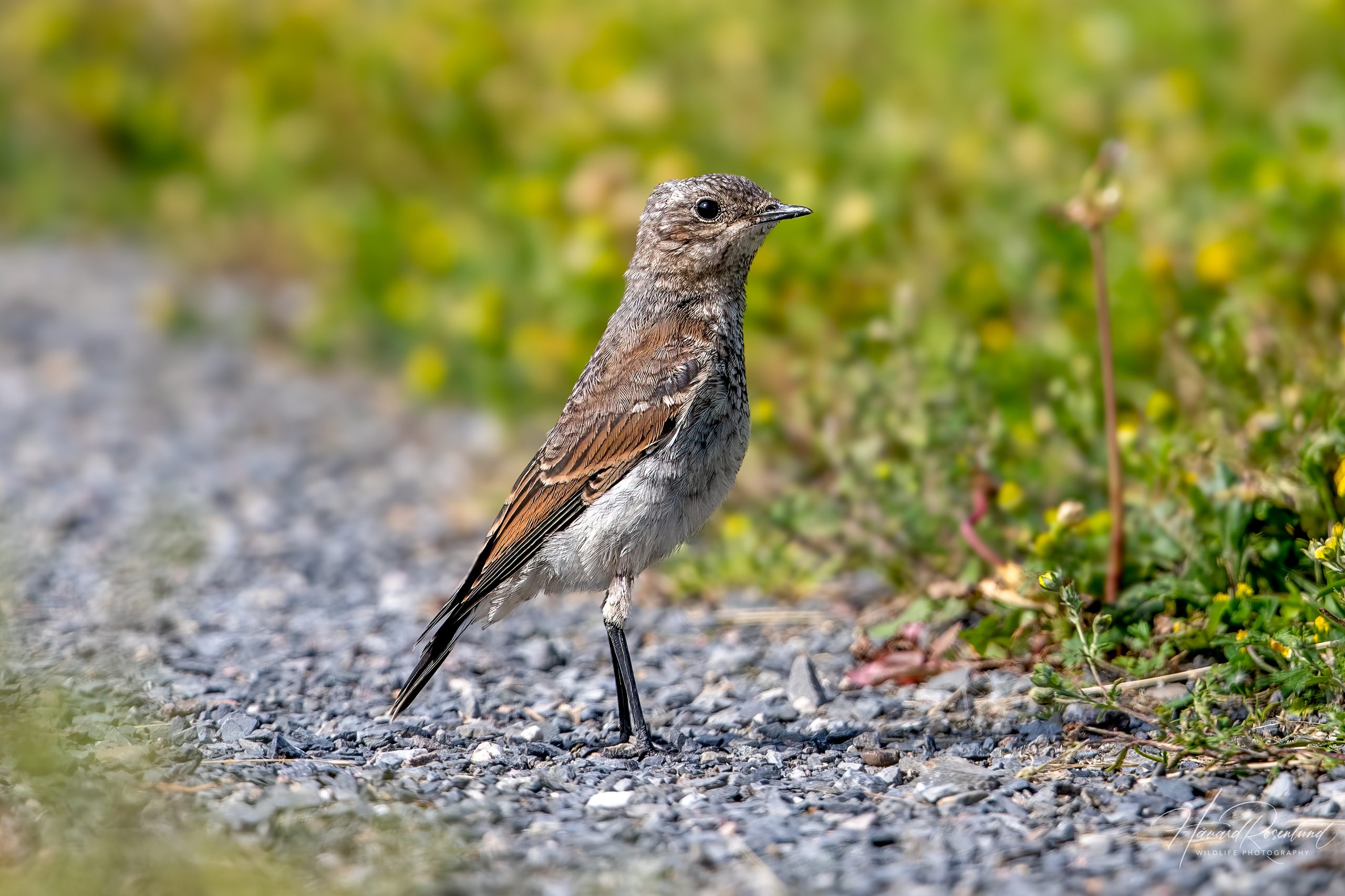
Breeding males have a blue-grey back, black wings and eye-mask, a pale buff breast and conspicuous white rump and tail pattern. Females and young birds are browner and less strongly marked, but the broad white rump and black terminal tail pattern are visible in all plumages and are among the best identification features in flight.
Habitat
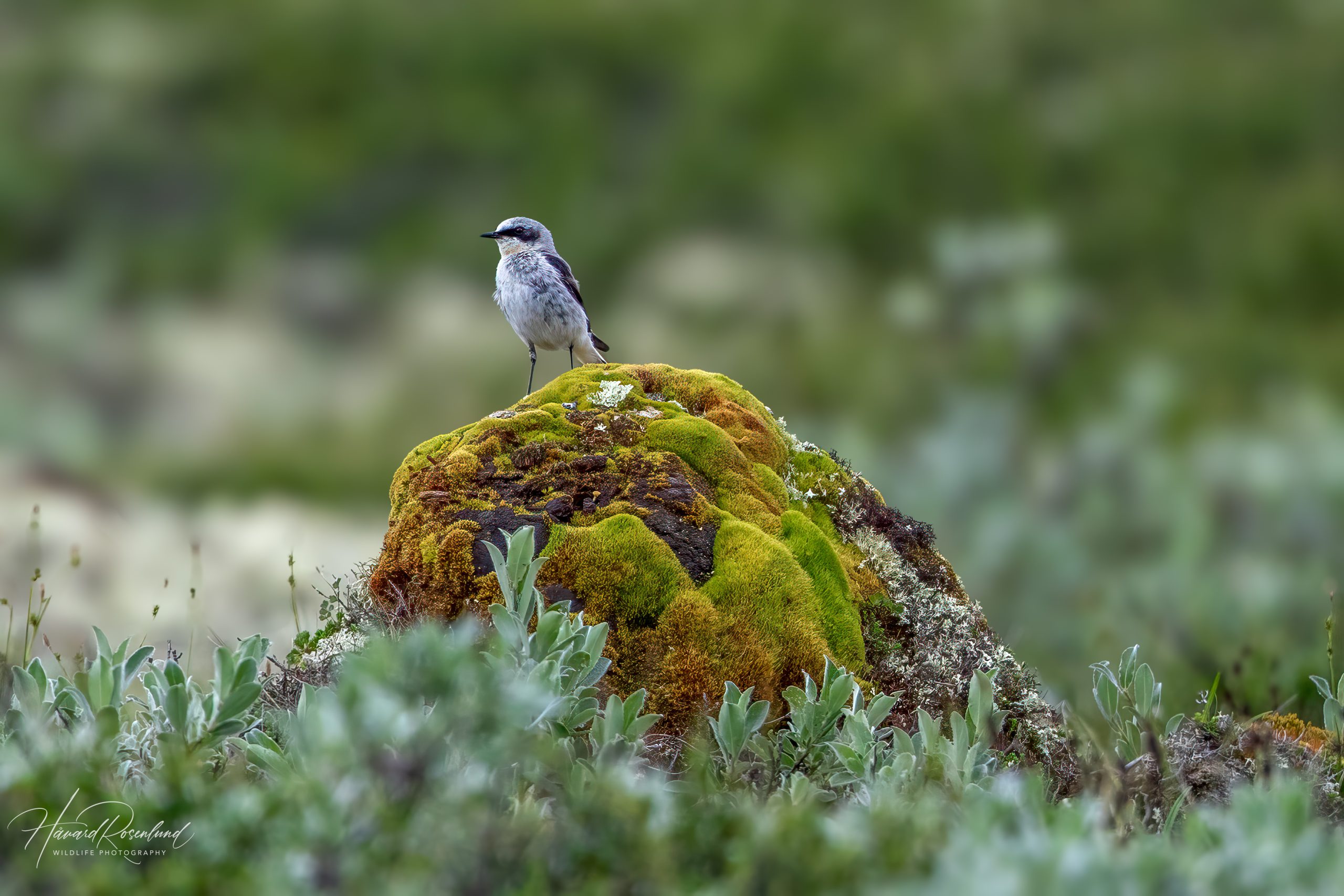
Northern wheatears favour open ground with short or sparse vegetation, abundant exposed soil or rock and access to cavities for nesting. Typical breeding habitat includes tundra, alpine slopes, boulder fields, rocky heath, coastal grassland, dunes, grazed pasture and other open landscapes with stones, walls or banks.
The species often disappears where vegetation becomes too tall or dense. In mountains and the Arctic, natural climate and grazing maintain open ground; in lowland Europe, livestock grazing and other forms of traditional land management can create similar structure. Perches such as rocks, fence posts and walls are used repeatedly while birds scan the ground for prey.
Diet
The diet is dominated by insects and other small invertebrates, including beetles, ants, flies, caterpillars, spiders and small worms. Berries and other plant food become more important at times when invertebrates are scarce or during migration.
Behaviour
Most prey is taken on or close to the ground. Wheatears watch from low rocks or other perches, run or hop after detected prey and make short flights to capture insects. The combination of open ground and raised lookout points is therefore an important part of their foraging behaviour.
Northern wheatears are strongly territorial. The behaviour is most obvious around breeding territories, but individuals can also defend temporary territories during migration and in African non-breeding areas. Intruders are chased actively, and wheatears may also drive away other small songbirds from favoured feeding patches.
Migration
The northern wheatear has one of the most remarkable migration systems among small songbirds. All populations winter south of the Sahara even though the breeding range stretches around much of the Northern Hemisphere. A geolocator study published in 2012 showed that Alaskan birds can travel about 14,500 km each way to Africa, while a bird breeding in the eastern Canadian Arctic crossed roughly 3,500 km of the North Atlantic before continuing south.
European populations also differ in route. A 2022 tracking study comparing birds from Germany, Switzerland and Austria found that Alpine populations crossed the Mediterranean more directly, while the German lowland population travelled farther west via the Iberian Peninsula. All populations winter in Africa, but they reach the continent through strikingly different migration corridors shaped by breeding origin.
Breeding
The nest is hidden in a cavity, typically among rocks, beneath stones, inside a wall, in a bank or in an abandoned burrow. The female builds a cup of grass, roots and other plant material, often with a softer inner lining. A clutch commonly contains five or six pale blue eggs, although smaller and larger clutches occur.
Incubation lasts about 14 days and is carried out mainly by the female. Both parents feed the nestlings, which usually leave the nest after about 15–16 days but remain dependent on the adults for a period afterwards. In northern regions the exceptionally long summer daylight can allow parents to forage and deliver food for most of the 24-hour day.
Status
The northern wheatear is classified as least concern on the IUCN Red List because of its enormous breeding range and large total population. Nevertheless, regional trends differ substantially, and long-term monitoring has documented declines in parts of Europe.
Because the species depends on open, sparsely vegetated ground, changes in grazing, abandonment of marginal farmland, scrub encroachment and other changes that close the vegetation can reduce breeding habitat in some regions. Its exceptionally long migrations also connect breeding populations to stopover and wintering areas spread across a large part of Africa, so conditions on the breeding grounds are only one part of what shapes the population over the course of a year.
Image gallery
Loading map and observations…
Have you seen this species?
Independent species archive
Did you find this species page useful?
Wildlife Vagabond is independently built and maintained. Voluntary support helps cover hosting, maps, data storage and continued improvements to the species archive.
Support Wildlife VagabondSpecies content will remain freely available.
References
Information about the species’ global distribution and status is based primarily on global Red List data. See the references below for details.
- Bairlein, F., Norris, D. R., Nagel, R., Bulte, M., Voigt, C. C., Fox, J. W., Hussell, D. J. T., & Schmaljohann, H. (2012). Cross-hemisphere migration of a 25 g songbird. Biology Letters, 8(4), 505-507. https://doi.org/10.1098/rsbl.2011.1223
- BirdLife International. (n.d.). Northern Wheatear species factsheet. https://datazone.birdlife.org/species/factsheet/northern-wheatear-oenanthe-oenanthe
- British Trust for Ornithology. (n.d.). Wheatear BirdFacts. https://www.bto.org/learn/about-birds/birdfacts/wheatear
- Dierschke, V., & Delingat, J. (2003). Stopover of Northern Wheatears Oenanthe oenanthe at Helgoland: where do the migratory routes of Scandinavian and Nearctic birds join and split? Ornis Svecica, 13(2–3), 53-61. https://doi.org/10.34080/os.v13.22807
- International Union for Conservation of Nature. (n.d.). Northern Wheatear. The IUCN Red List of Threatened Species. https://www.iucnredlist.org/species/103773898/132192232
- Meier, C. M., Rime, Y., Lisovski, S., Buchmann, M., & Liechti, F. (2022). Locally adapted migration strategies? Comparing routes and timing of northern wheatears from alpine and lowland European populations. Journal of Avian Biology, 2022(8), e02932. https://doi.org/10.1111/jav.02932