
Common Wood-Pigeon
Columba palumbus
At a glance
Habitat
- Woodland, farmland, parks, gardens and wooded urban areas
Diet
- Leaves, shoots, seeds, grain, buds and fruit
Activity
- Diurnal
Size
- Length: 41–45 cm Weight: 507 g
Range
- Europe, western Asia and parts of North Africa
Description
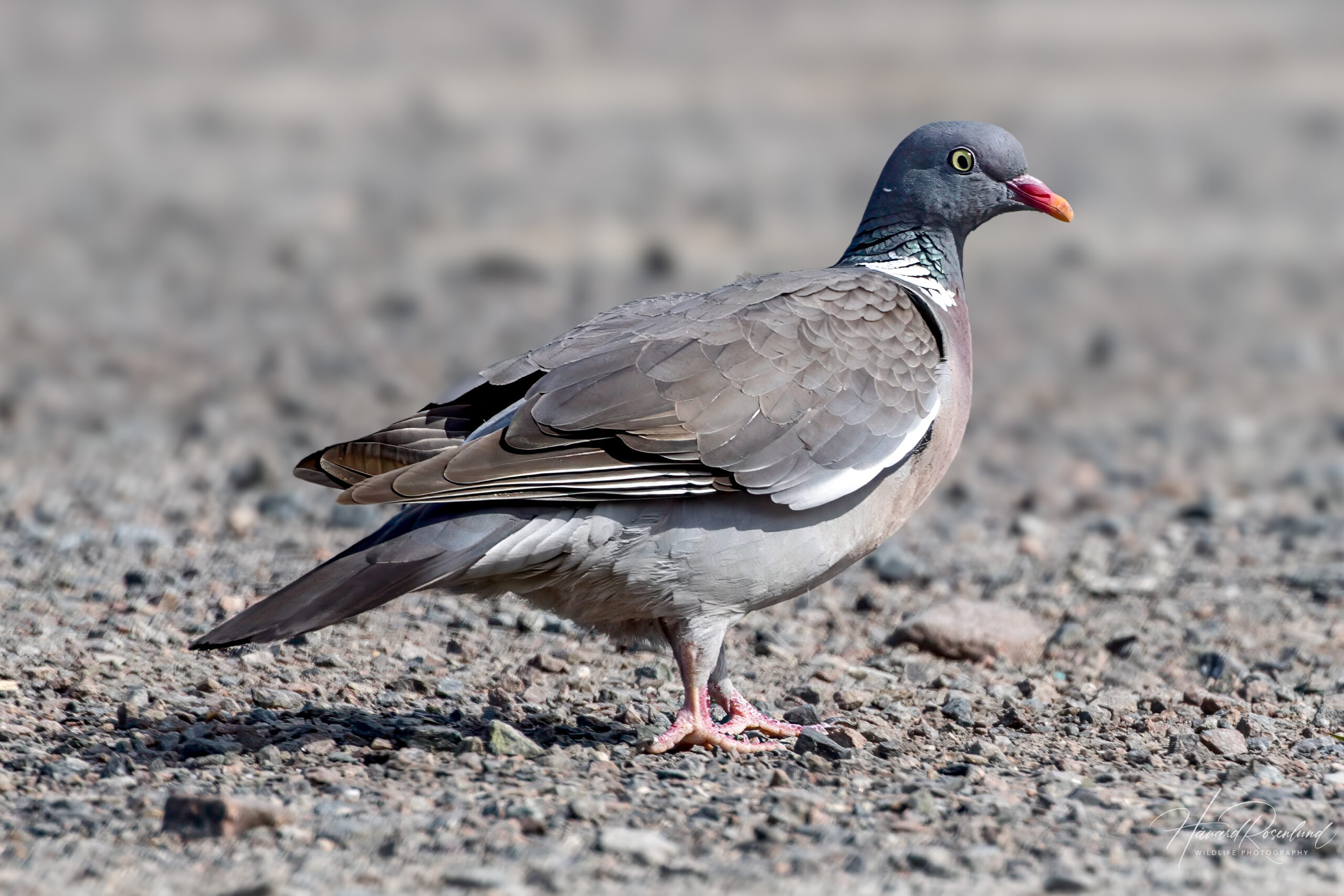
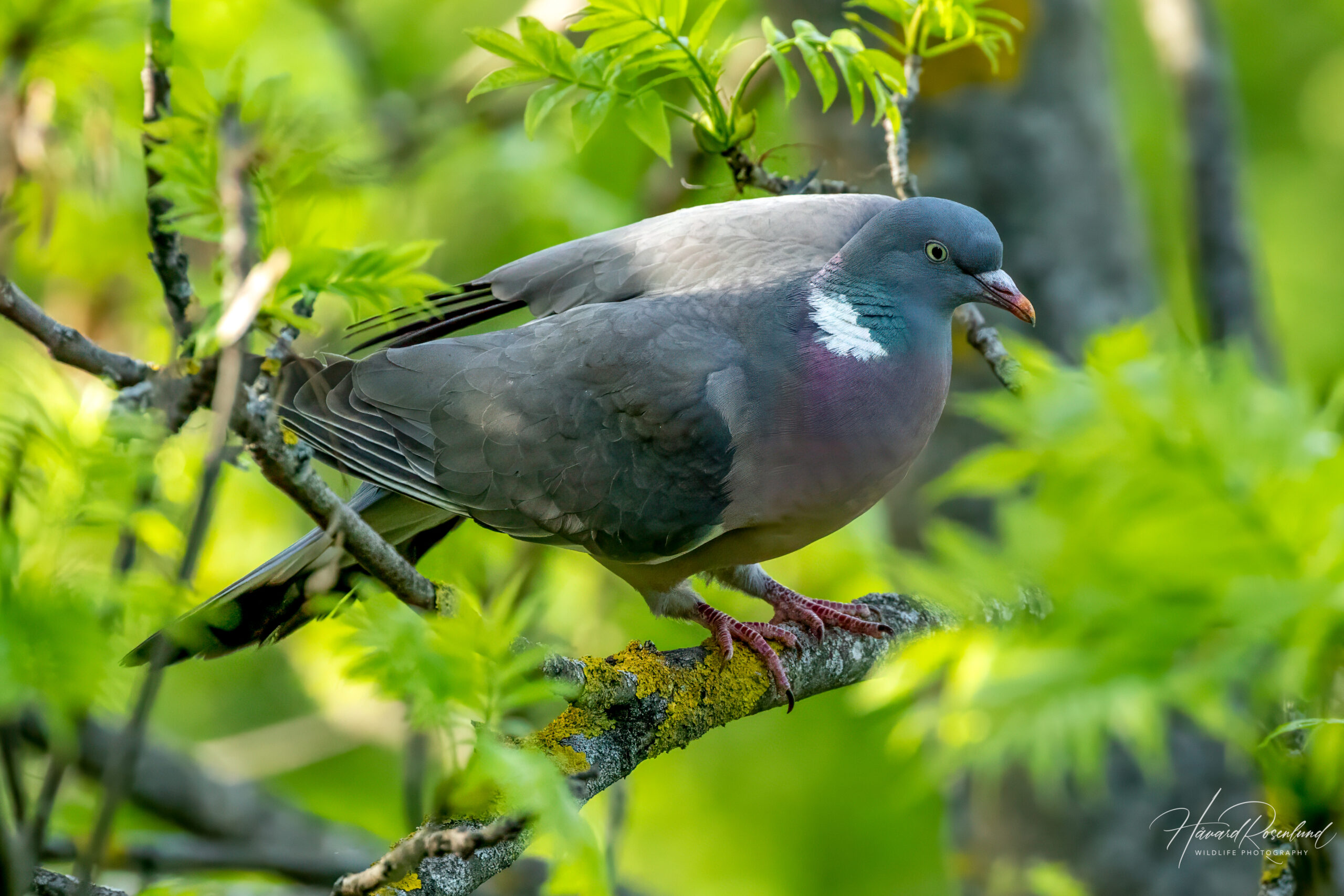
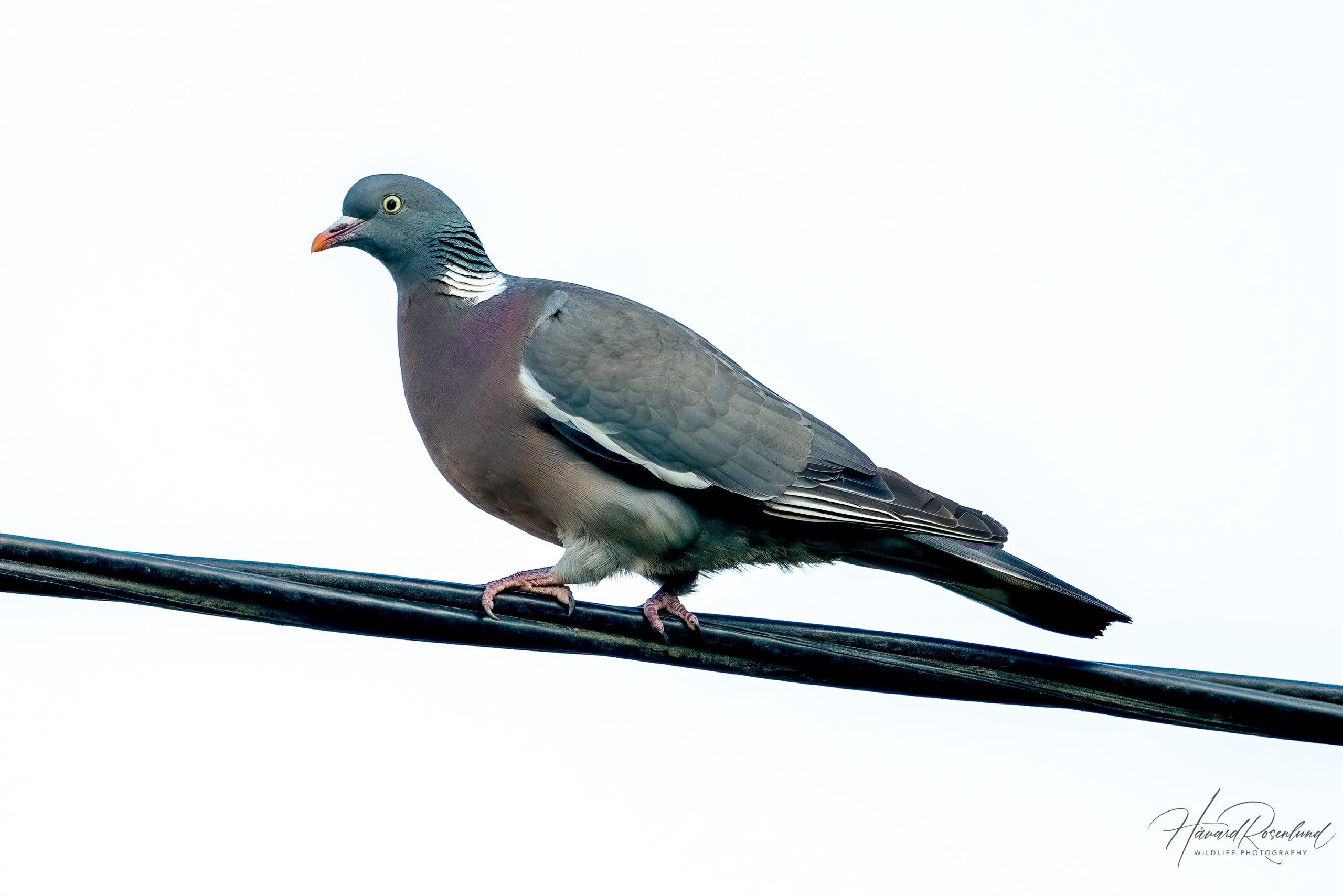
The common wood-pigeon (Columba palumbus) is a large, heavy-bodied pigeon native to Europe, western Asia and parts of North Africa. Adults are about 41–45 cm long and average roughly 507 g. The plumage is blue-grey with a pinkish breast, bold white patches on the sides of the neck and a broad white band across the wing that is particularly conspicuous in flight. Juveniles initially lack the white neck patches.
The smaller stock dove (Columba oenas) lacks both the white wing band and white neck patch and has a generally more compact appearance. The white wing band therefore remains a useful distinguishing feature even in juvenile wood-pigeons before the neck patches develop.
Habitat
Wood-pigeons occupy a broad range of wooded and semi-open habitats. They breed in woodland, farmland with hedgerows and trees, parks, gardens and wooded urban areas, usually placing the nest in a tree or shrub while travelling into open ground to feed.
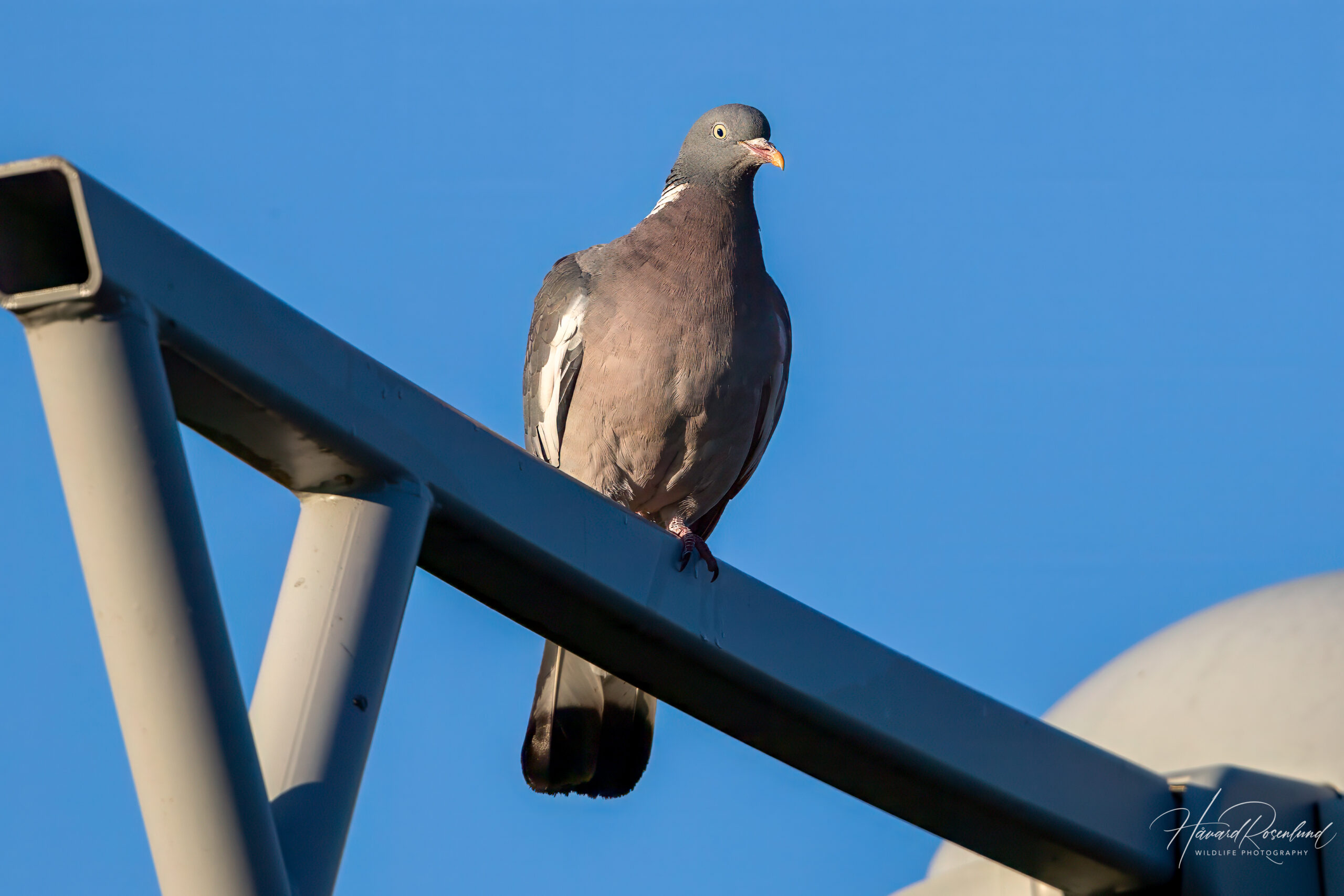
The species has adapted particularly well to towns and cities in many parts of Europe. Mature trees provide nesting sites, while lawns, gardens, street trees and nearby farmland provide abundant food. Outside the breeding season large flocks can gather where crops, stubble or trees rich in seeds and fruit provide plentiful food.
Diet
Wood-pigeons are predominantly herbivorous and eat leaves, shoots, buds, seeds, grain, fruit, berries and other plant material. They usually feed on the ground but also take leaves, buds and fruit directly from trees and shrubs.
This broad diet allows the species to switch rapidly among seasonal resources. Farm crops can become especially important when readily available, while acorns, beech nuts and other wild foods can support large flocks at other times of year.
Migration
The common wood-pigeon shows striking flexibility in migration. Populations in western and southern Europe are largely resident, whereas many birds from Scandinavia and eastern Europe move south and west in autumn. Large migratory flocks can form where routes converge.
A tracking study published in 2022 compared wood-pigeons breeding in Portugal and Germany. The Portuguese birds were resident, while the German population was partially migratory: some birds stayed, others migrated mainly to France, and individuals could switch between resident and migratory behaviour from one year to the next. The tracked birds also used more than one wintering site, showing that migration can vary both between populations and from year to year within the same individual.
Breeding
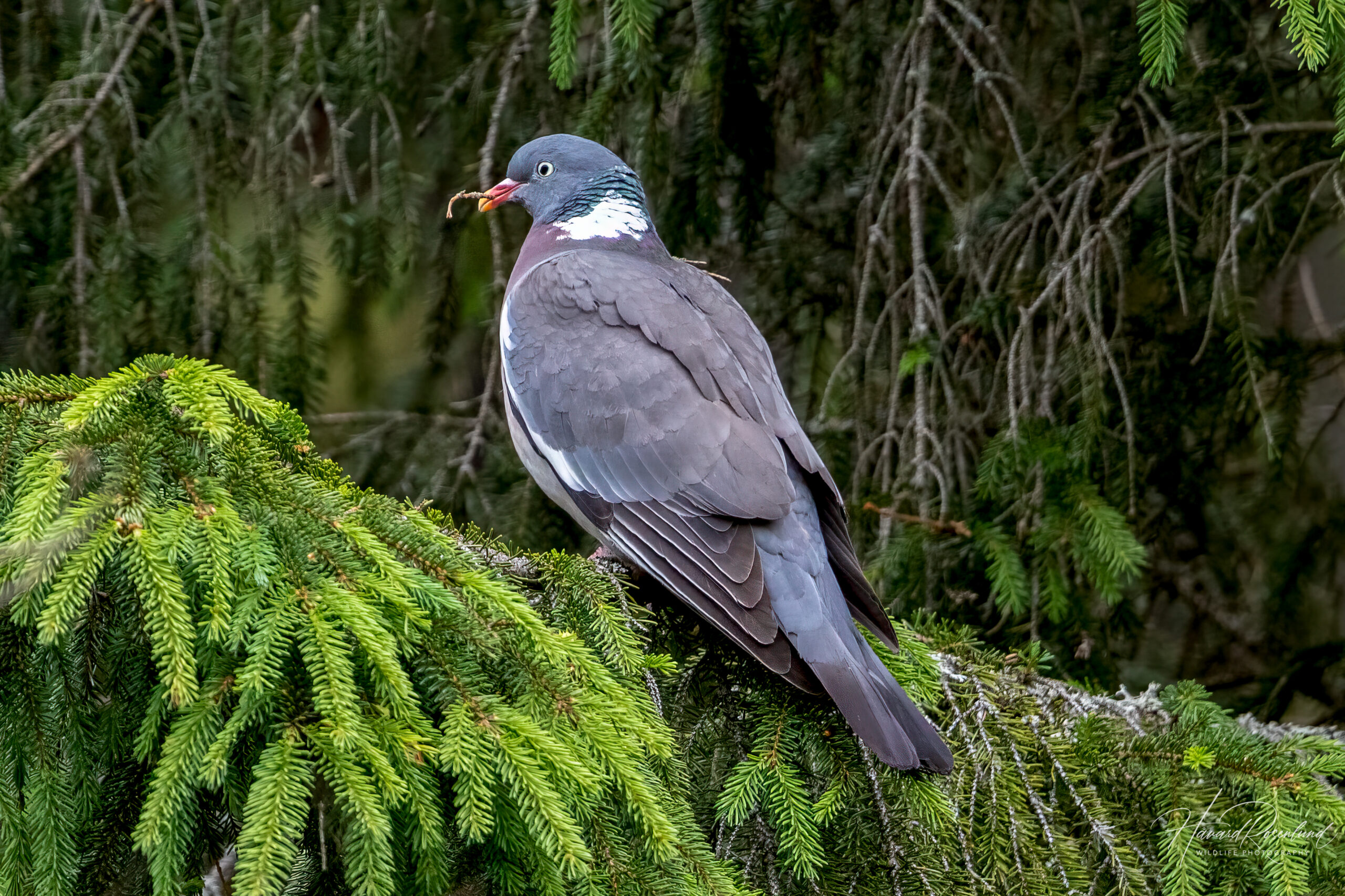
Wood-pigeons build a rather simple platform of twigs in a tree, shrub or suitable structure in built-up areas. The normal clutch contains two white eggs, incubated by both parents for about 17 days. The young remain in the nest for roughly 33–34 days, and both adults feed them.
Pigeons and doves have an unusual way of nourishing very young chicks. Both male and female wood-pigeons produce crop milk, a nutrient-rich material made from cells shed from the lining of the crop. During the first few days after hatching this is the chicks’ only food; increasing amounts of softened plant material are then added as they grow. Crop milk is produced by only a small number of bird groups and allows pigeons to raise young on a diet that is otherwise dominated by plant material.
The breeding season can be long where conditions are favourable. One or two broods are common, and repeated attempts may extend well beyond the main spring breeding period.
Relationship with humans
Wood-pigeons make extensive use of both farmland and urban green spaces, but large flocks can also feed heavily on crops, particularly grain and oilseed rape, and cause agricultural damage. The species is therefore controlled in some regions to limit crop losses and is also hunted.
Status
The common wood-pigeon is classified as least concern on the IUCN Red List. It has a very large range and has adapted particularly well to agricultural and urban landscapes in many parts of Europe.
Image gallery
Loading map and observations…
Have you seen this species?
Independent species archive
Did you find this species page useful?
Wildlife Vagabond is independently built and maintained. Voluntary support helps cover hosting, maps, data storage and continued improvements to the species archive.
Support Wildlife VagabondSpecies content will remain freely available.
References
Information about the species’ global distribution and status is based primarily on global Red List data. See the references below for details.
- BirdLife International. (n.d.). Common Wood Pigeon species factsheet. https://datazone.birdlife.org/species/factsheet/common-wood-pigeon-columba-palumbus
- British Trust for Ornithology. (n.d.). British Trust for Ornithology – Research on Woodpigeon feeding and agricultural crops. https://www.bto.org/sites/default/files/shared_documents/publications/research-reports/2009/rr533.pdf
- British Trust for Ornithology. (n.d.). Crop milk. https://www.bto.org/learn/about-birds/behaviour/crop-milk
- British Trust for Ornithology. (n.d.). Woodpigeon. https://www.bto.org/learn/about-birds/birdfacts/woodpigeon
- International Union for Conservation of Nature. (n.d.). Common Wood Pigeon. The IUCN Red List of Threatened Species. https://www.iucnredlist.org/species/22690103/131924602
- Schumm, Y. R., Masello, J. F., Cohou, V., Mourguiart, P., Metzger, B., Rösner, S., & Quillfeldt, P. (2022). Should I stay or should I fly? Migration phenology, individual-based migration decision and seasonal changes in foraging behaviour of Common Woodpigeons. The Science of Nature, 109(5), 44. https://doi.org/10.1007/s00114-022-01812-x