
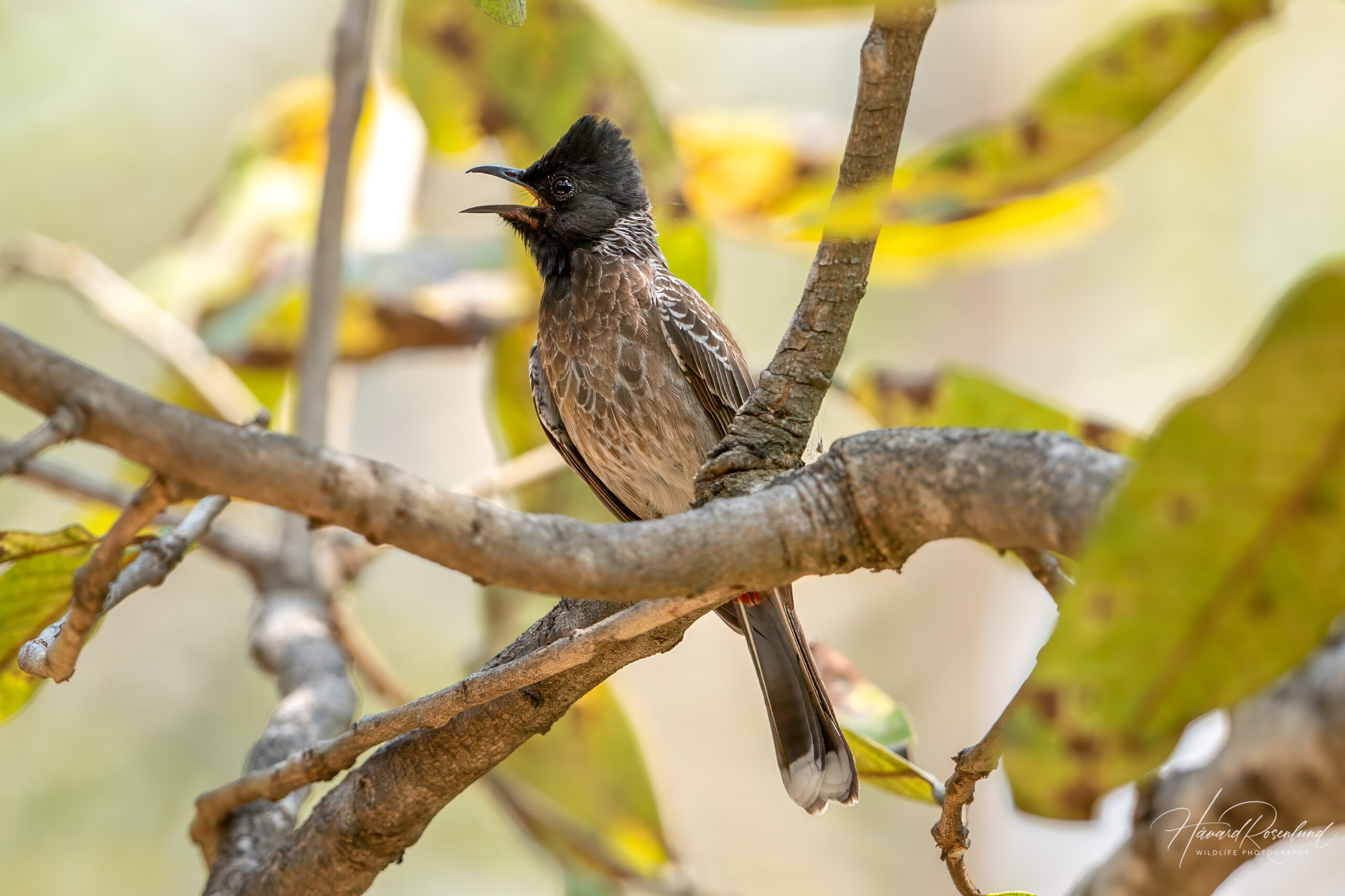
Red-vented Bulbul
Pycnonotus cafer
At a glance
Habitat
- Open woodland, scrub, farmland, gardens and urban areas; highly adaptable to human-modified landscapes
Diet
- Fruit, berries, flowers, nectar and insects; an important seed disperser where fruit forms much of the diet
Activity
- Diurnal
Size
- Length: about 20–21 cm Weight: 26–45 g
Range
- Native across much of the Indian subcontinent and parts of South Asia; introduced widely on tropical and subtropical islands and in several continental regions
Description
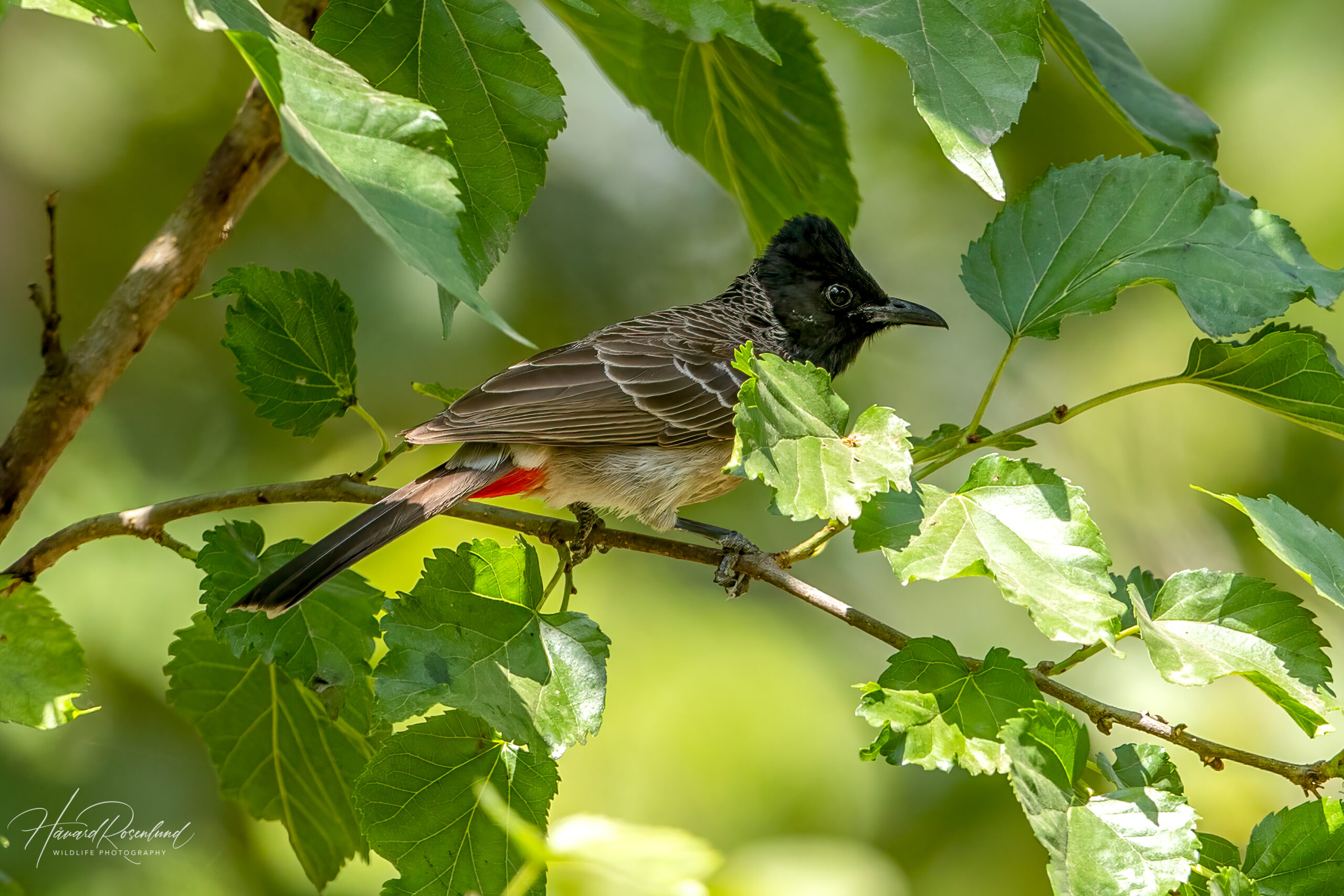
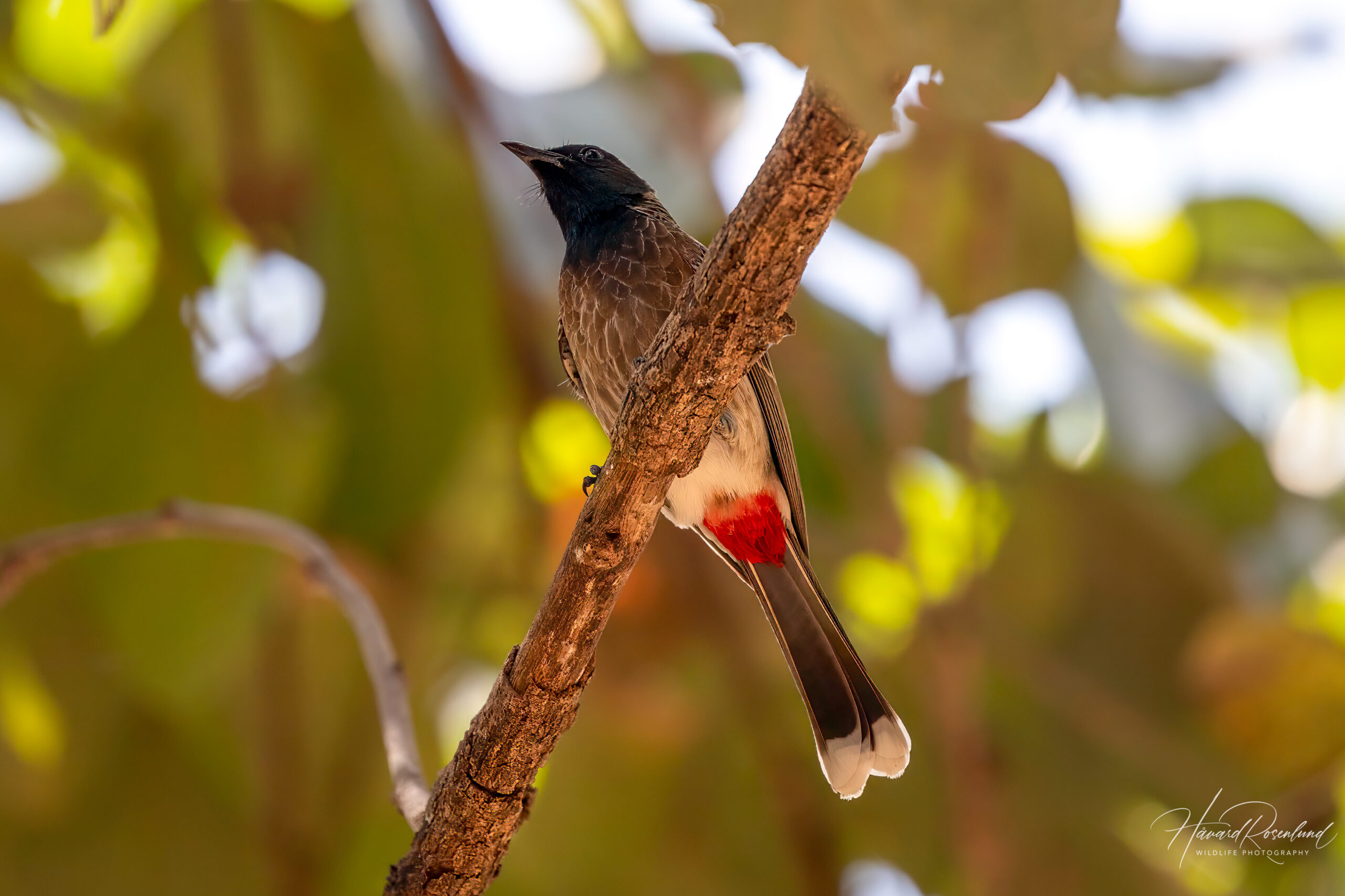
The red-vented bulbul (Pycnonotus cafer) is a medium-sized bulbul native to much of the Indian subcontinent and neighbouring parts of South Asia. Adults are about 20–21 cm long and weigh roughly 26–45 g. The head and short crest are black, while the back and breast are brown with pale-edged feathers that create a scaled appearance. A white rump is conspicuous in flight, and the bright crimson undertail coverts give the species its English name. Males and females look very similar.
Where ranges overlap, it can be confused at a glance with the red-whiskered bulbul (Pycnonotus jocosus), but that species has a taller pointed crest, bold white cheek patches and a conspicuous red patch behind the eye. The red-vented bulbul has a darker, plainer face and a shorter crest.
Habitat
The species occurs in open woodland, scrub, forest edges, farmland, gardens and towns and is generally much less dependent on closed forest than on structurally varied habitats with fruiting plants, shrubs and scattered trees.
It readily exploits cultivated and ornamental vegetation and is highly tolerant of people. This ecological flexibility has helped it become common in many South Asian cities and agricultural landscapes and has also contributed to successful establishment outside the native range.
Diet
Fruit and berries form an important part of the diet, together with flower petals, nectar, buds, insects and other small invertebrates. Birds feed in trees, shrubs and on the ground and often gather where fruit or flowers are abundant.
Many swallowed seeds pass through the digestive tract intact, making the red-vented bulbul an effective seed disperser. In its native range this is part of normal plant–bird interactions; in introduced ranges the same behaviour can help disperse exotic plants and alter plant communities.
Breeding
Breeding timing varies across the large native range and can be prolonged where climate and food allow. Pairs are socially monogamous and defend the immediate nesting area. Both birds participate in nest construction and later feed the young.
The nest is a compact open cup placed in a shrub, small tree or other sheltered vegetation, although introduced populations also use ornamental plants and other structures in urban settings. Clutches commonly contain two to three eggs, with larger clutches also recorded. Incubation lasts around two weeks and the chicks leave the nest after roughly another two weeks, remaining dependent on their parents for a period after fledging.
Introduced populations
Red-vented bulbuls have been transported far beyond their native South Asian range through the cage-bird trade and releases or escapes. Established populations now occur on numerous Pacific and Indian Ocean islands and in places such as the United Arab Emirates, New Zealand, Hawaii and parts of the continental United States.
Ecological impact varies greatly among regions. In New Caledonia, studies found that native birds were generally less abundant where red-vented bulbuls occurred, while the bulbuls also dispersed seeds of several introduced plants. They can therefore contribute both to competition with native birds and to the spread of introduced plants. By contrast, a 2013 study in Houston found no evidence that the population was a serious agricultural pest, major competitor or important disperser of invasive plants. A follow-up published in 2025 showed that its range had since expanded well beyond its earlier core, although the expansion was still relatively slow. The contrast shows that the same adaptable species can have very different ecological consequences in different communities.
Status
The red-vented bulbul is classified as least concern on the IUCN Red List. It is common across much of its native range and readily occupies human-modified habitats.
Indian monitoring data published in 2025 show a national long-term increase of about 61% and a recent annual increase of about 2.2%. The species remains in the low conservation-priority category and has a very large distribution in India.
Image gallery
Loading map and observations…
Have you seen this species?
Independent species archive
Did you find this species page useful?
Wildlife Vagabond is independently built and maintained. Voluntary support helps cover hosting, maps, data storage and continued improvements to the species archive.
Support Wildlife VagabondSpecies content will remain freely available.
References
Information about the species’ global distribution and status is based primarily on global Red List data. See the references below for details.
- BirdLife International. (n.d.). Red-vented Bulbul species factsheet. https://datazone.birdlife.org/species/factsheet/red-vented-bulbul-pycnonotus-cafer
- Brooks, D. M. (2013). Ecology, behavior, and reproduction of an introduced population of Red-vented Bulbuls (Pycnonotus cafer) in Houston, Texas. The Wilson Journal of Ornithology, 125(4), 800-808. https://doi.org/10.1676/13-037.1
- Global Invasive Species Database. (n.d.). Pycnonotus cafer. https://www.iucngisd.org/gisd/species.php?sc=138
- International Union for Conservation of Nature. (n.d.). Red-vented Bulbul. The IUCN Red List of Threatened Species. https://www.iucnredlist.org/species/22712695/132102224
- State of India's Birds. (2025). 2025 – Red-vented Bulbul. https://stateofindiasbirds.in/species/ar-revbul/
- Thibault, M., Masse, F., Pujapujane, A., Lannuzel, G., Bordez, L., Potter, M. A., Fogliani, B., Vidal, É., & Brescia, F. (2018). “Liaisons dangereuses”: The invasive red‐vented bulbul (Pycnonotus cafer), a disperser of exotic plant species in New Caledonia. Ecology and Evolution, 8(18), 9259-9269. https://doi.org/10.1002/ece3.4140
- Thibault, M., Vidal, E., Potter, M. A., Dyer, E., & Brescia, F. (2018). The red-vented bulbul (Pycnonotus cafer): serious pest or understudied invader? Biological Invasions, 20(1), 121-136. https://doi.org/10.1007/s10530-017-1521-2
- Thibault, M., Vidal, E., Potter, M. A., Sanchez, T., & Brescia, F. (2018). The invasive Red-vented bulbul (Pycnonotus cafer) outcompetes native birds in a tropical biodiversity hotspot. PLOS ONE, 13(2), e0192249. https://doi.org/10.1371/journal.pone.0192249