
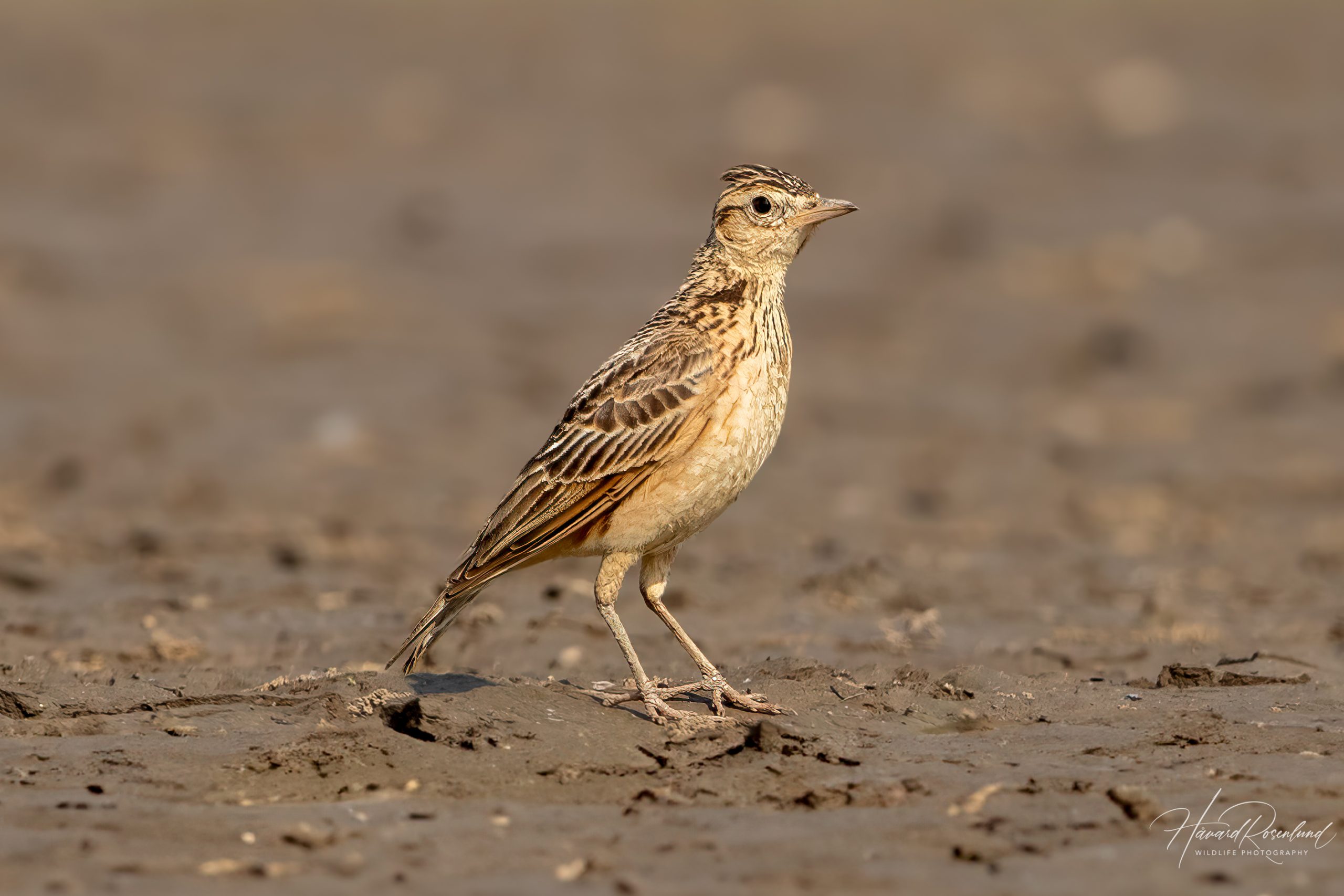
Oriental Skylark
Alauda gulgula
At a glance
Habitat
- Open grassland, farmland, fallow fields and other short-vegetation habitats
Diet
- Seeds and grain, with insects and other small invertebrates especially during breeding
Activity
- Diurnal
Size
- Length: about 15–18 cm Weight: about 20–26 g
Range
- South, Central and East Asia; resident or locally mobile in much of the south, with northern populations moving south in winter
Description
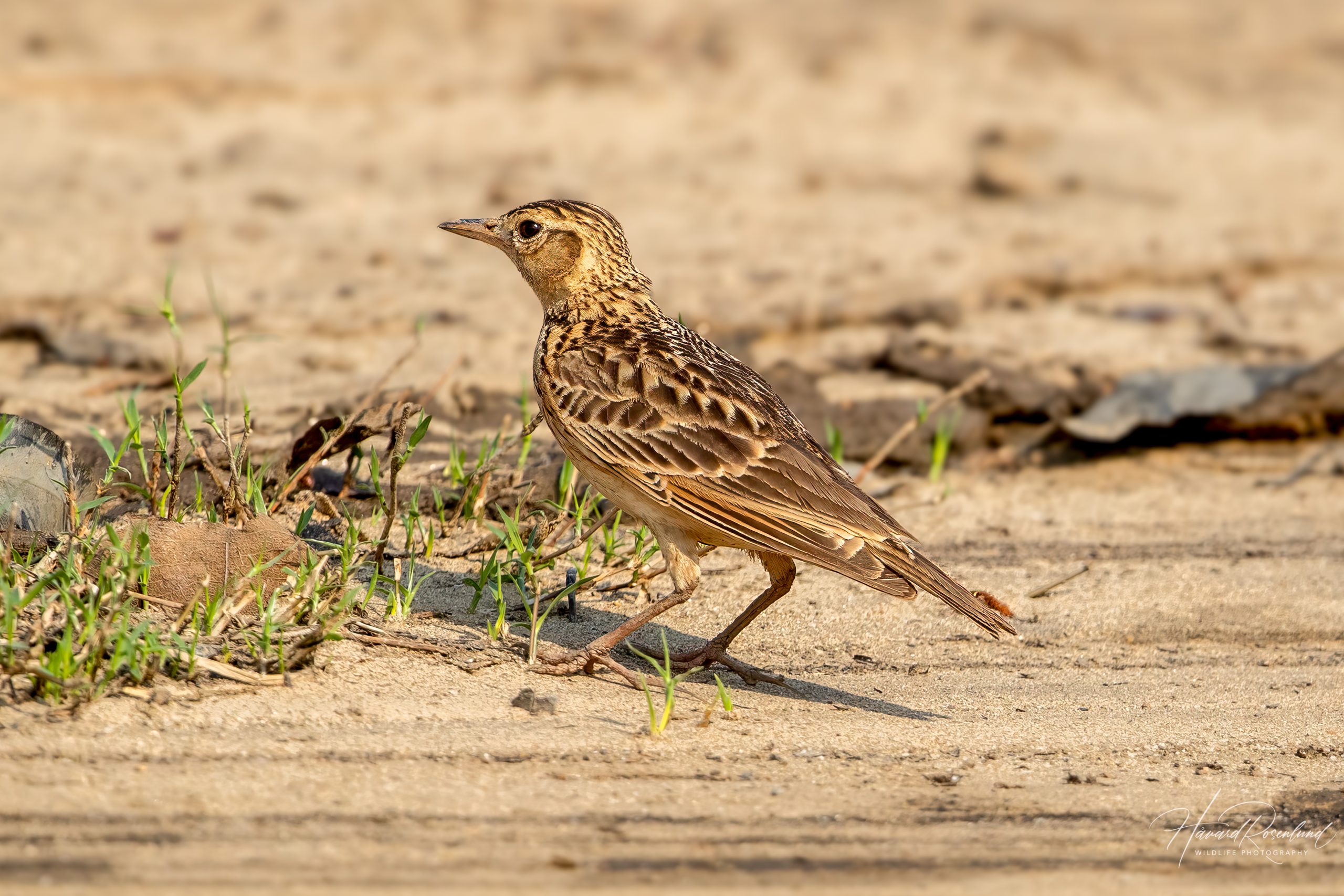
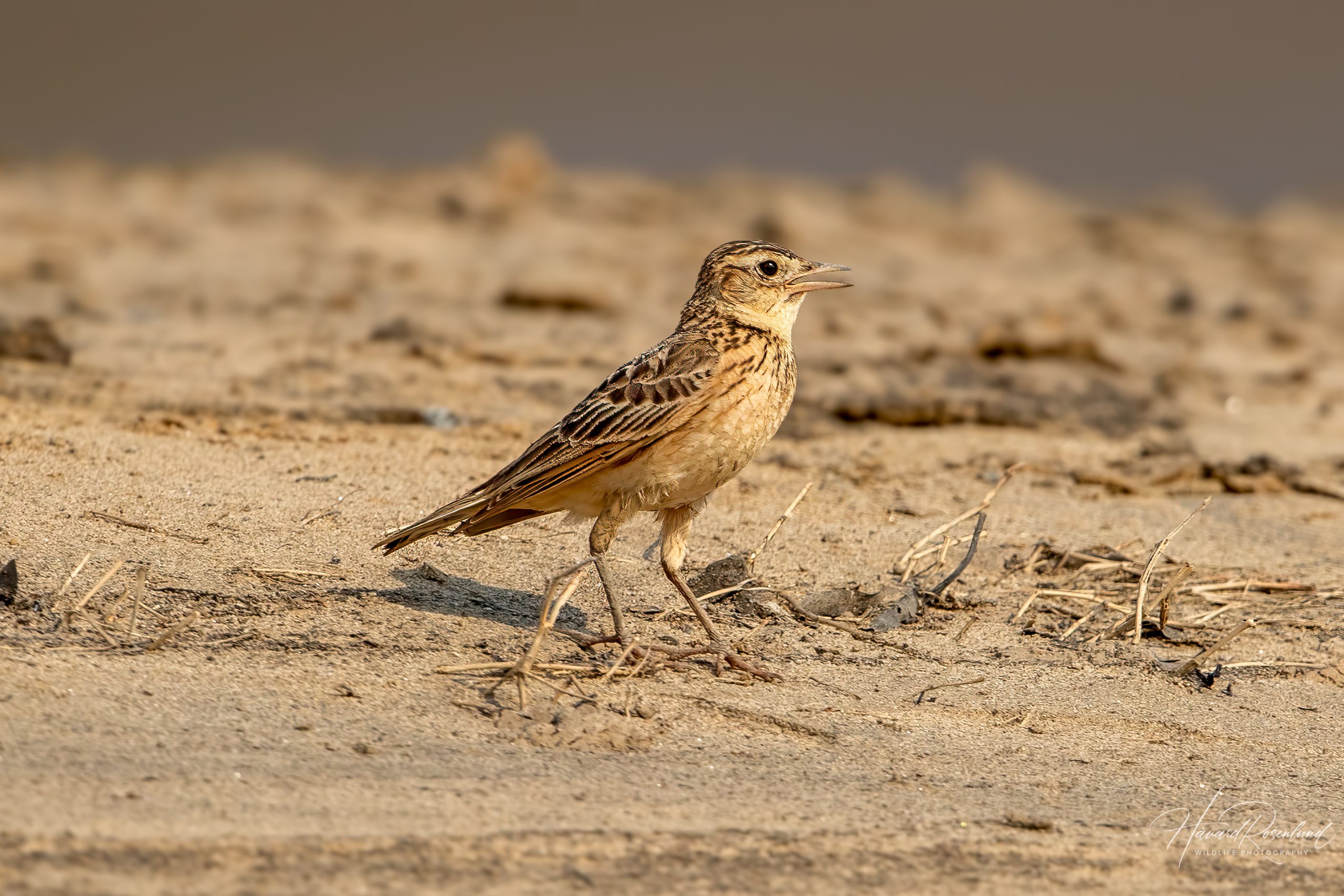
The Oriental skylark (Alauda gulgula) is a small lark of open Asian landscapes, usually about 15–18 cm long and roughly 20–26 g. It has streaked brown upperparts, a pale buff to whitish underside with darker streaking across the breast, a short erectile crest and a fairly long, pointed bill. Plumage varies geographically and can be strongly affected by wear.
It resembles Eurasian skylark (Alauda arvensis) but is generally smaller and more compact, with shorter wings and tail and a proportionally longer, narrower bill. Oriental skylark also shows less conspicuous white in the outer tail and lacks the strong white trailing edge to the wing typical of Eurasian skylark.
Habitat
Oriental skylarks are birds of open ground. They use natural grassland, short grassy plains, fallow fields, cropland, dry open country and locally open wetland margins or saline flats. In India they are classified as open-habitat specialists.
The species can breed successfully in farmland when enough low vegetation remains for nest concealment. Grazing, machinery, trampling and repeated disturbance can nevertheless destroy ground nests even where adult birds remain common.
Diet
Seeds and grain form an important part of the diet, especially outside the breeding season. Beetles, caterpillars and other small invertebrates are also taken and become particularly important when adults are feeding growing young.
Most food is collected on the ground. Birds walk through short vegetation and bare patches, picking seeds or small prey from the soil surface and low plants rather than feeding high in vegetation.
Behaviour
Oriental skylarks spend much of their time on the ground, walking or running through short vegetation and often crouching low when alarmed before finally taking flight. Their streaked brown plumage makes resting birds difficult to see in dry grass and bare soil.
Males mark and defend territories with prolonged song flights, rising above the open landscape while singing before descending again. Outside the breeding season birds may gather in looser groups where food is concentrated, and when disturbed they often fly only far enough to settle again on nearby open ground.
Migration
Movement varies across the wide range. In India the species is mainly resident or a local migrant, shifting between suitable open habitats as rainfall, cultivation and vegetation conditions change. Populations farther north in Central and East Asia are more strongly migratory and move south for winter.
Some populations also make shorter seasonal or altitudinal movements rather than long-distance migrations, so local abundance can vary substantially through the year.
Breeding
Breeding timing varies geographically and is closely linked to local climate and vegetation. The nest is a shallow cup on the ground, usually hidden among short grass or other low vegetation.
A study published in 2022 followed 39 nests in farmland in Pakistan between April and July. Active nests held two to four eggs, with a mean clutch size of 3.16. Females incubated alone for 11–13 days, averaging 12.08 days, while the nestling period lasted 11–13 days, averaging 12.59 days. Both parents fed the chicks.
Nest destruction by grazing cattle, agricultural machinery and people, together with predation and other chick losses, reduced breeding success. Overall breeding success in the study was about 60.8%.
Status
The Oriental skylark is classified as least concern on the IUCN Red List. The species remains widespread across South, Central and East Asia.
State of India’s Birds 2025 classifies the species as High Priority nationally. The updated estimates show a long-term decline of about 61.4% and a current annual decline of about 4.3%; both are classified as Rapid Decline. As an open-habitat specialist, Oriental skylark is affected by loss and intensive management of grasslands and fallow land, while grazing and agricultural disturbance can also reduce breeding success.
Image gallery
Loading map and observations…
Have you seen this species?
Independent species archive
Did you find this species page useful?
Wildlife Vagabond is independently built and maintained. Voluntary support helps cover hosting, maps, data storage and continued improvements to the species archive.
Support Wildlife VagabondSpecies content will remain freely available.
References
Information about the species’ global distribution and status is based primarily on global Red List data. See the references below for details.
- AviList. (n.d.). v2025 – Global avian checklist. https://www.avilist.org/
- BirdLife International. (n.d.). Oriental Skylark (Alauda gulgula) species factsheet. https://datazone.birdlife.org/species/factsheet/oriental-skylark-alauda-gulgula
- International Ornithologists’ Union – World Bird List. (n.d.). Larks. https://www.worldbirdnames.org/new/bow/larks/
- International Union for Conservation of Nature. (n.d.). Alauda gulgula. The IUCN Red List of Threatened Species. https://www.iucnredlist.org/species/22717424/94531143
- Sadam, A., Khan, R. U., Gabol, K., Awais, M., & Khan, I. (2022). The Breeding Ecology of Oriental Skylark Alauda gulgula on Farmland in the Mardan District, Khyber Pakhtunkhwa, Pakistan. Ornithological Science, 21(1). https://doi.org/10.2326/osj.21.71
- Shirihai, H. (1986). Identification of Oriental Skylark. British Birds, 79, 186–197. https://britishbirds.co.uk/sites/default/files/pdf-store/V79_N04_P186_197_A037.pdf
- State of India's Birds. (2025). State of India’s Birds (2025 update) – Oriental Skylark. https://stateofindiasbirds.in/species/orisky1/