
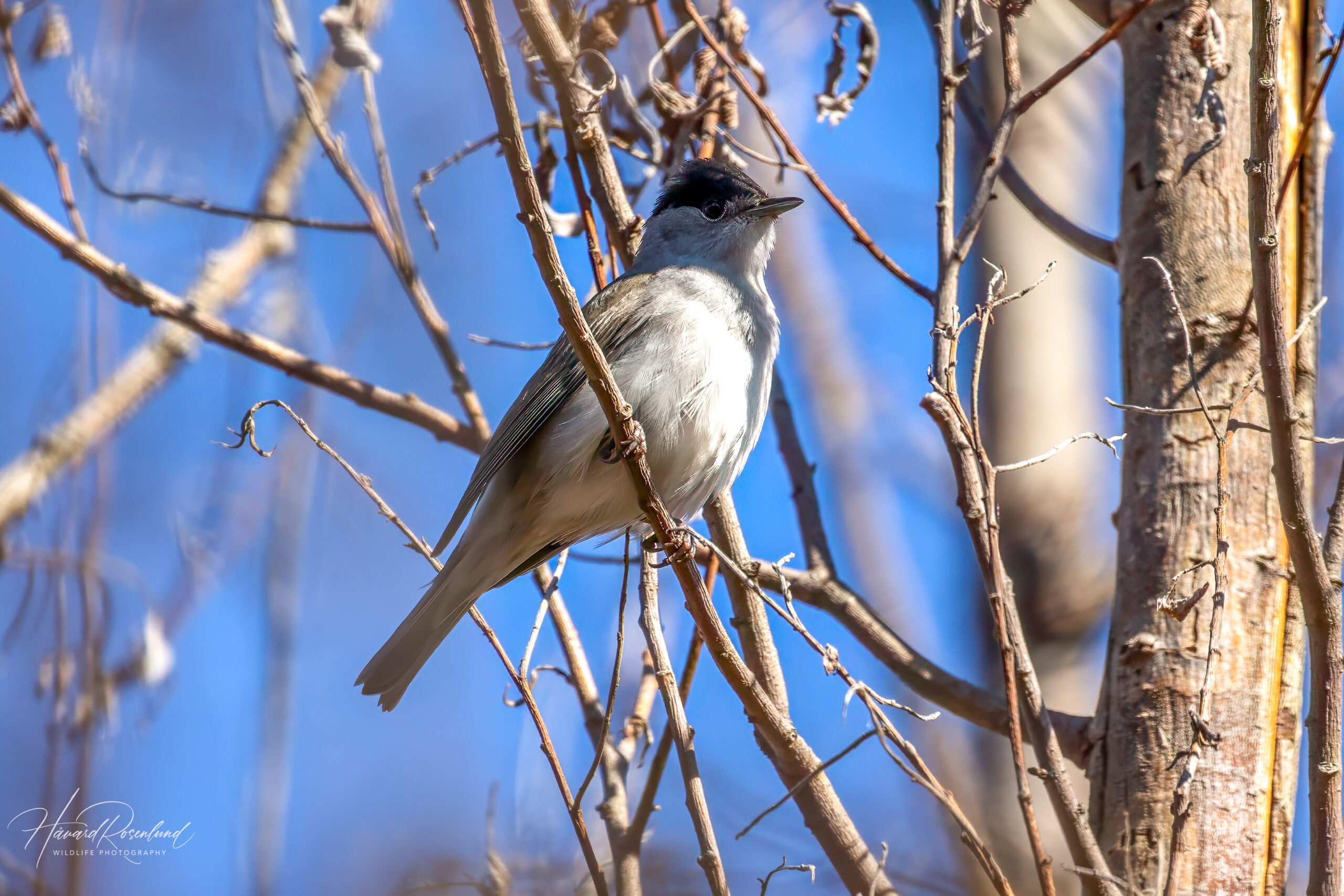
Eurasian Blackcap
Sylvia atricapilla
At a glance
Habitat
- Deciduous and mixed woodland, forest edges, scrub, parks and wooded gardens
Diet
- Mostly insects and other invertebrates when breeding; fruit and berries become important later in the year
Activity
- Diurnal
Size
- Length: 13.5–15 cm Weight: 9–29 g
Range
- Europe and North Africa east to central Siberia; migration varies greatly between populations
Description
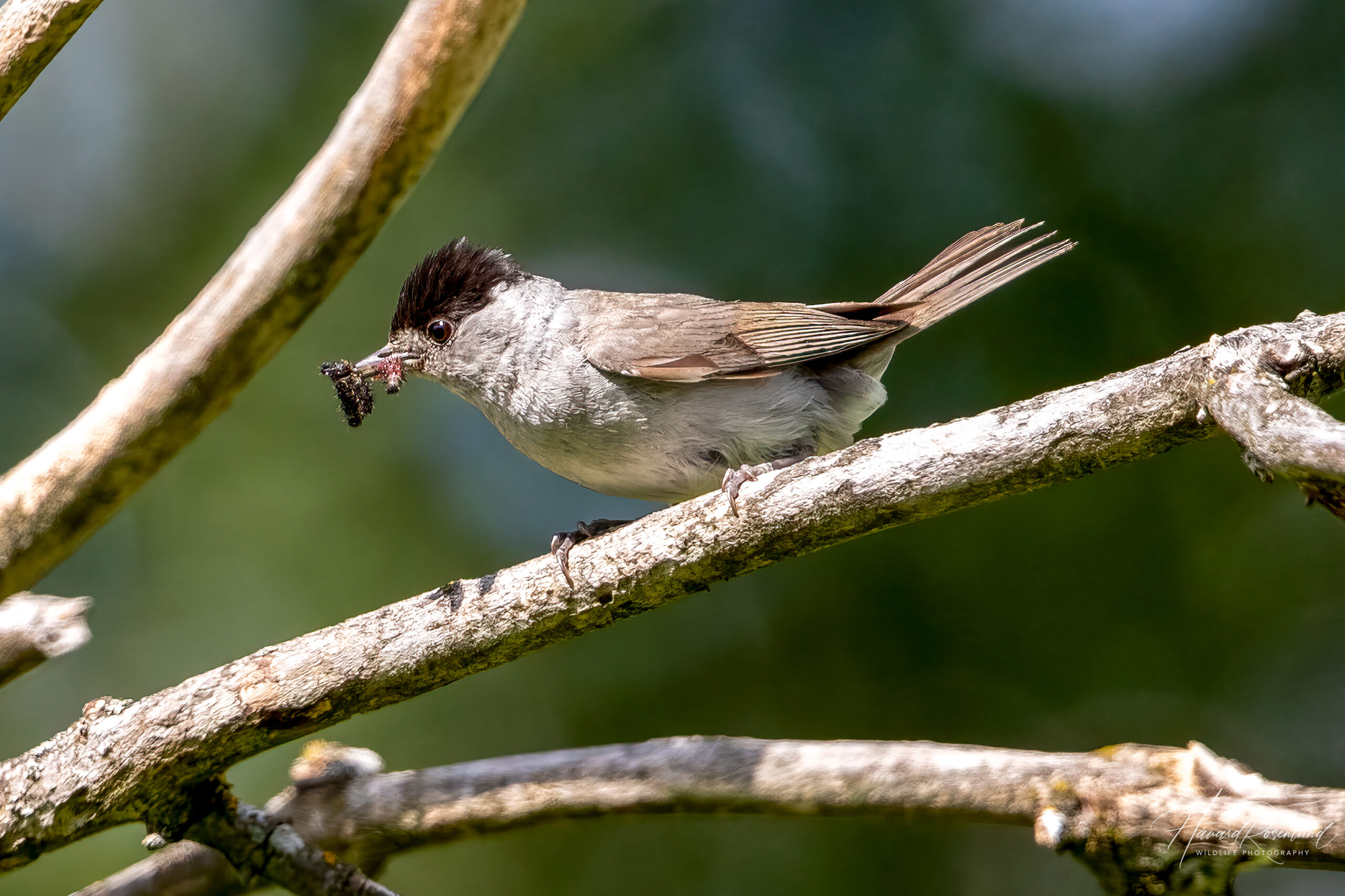
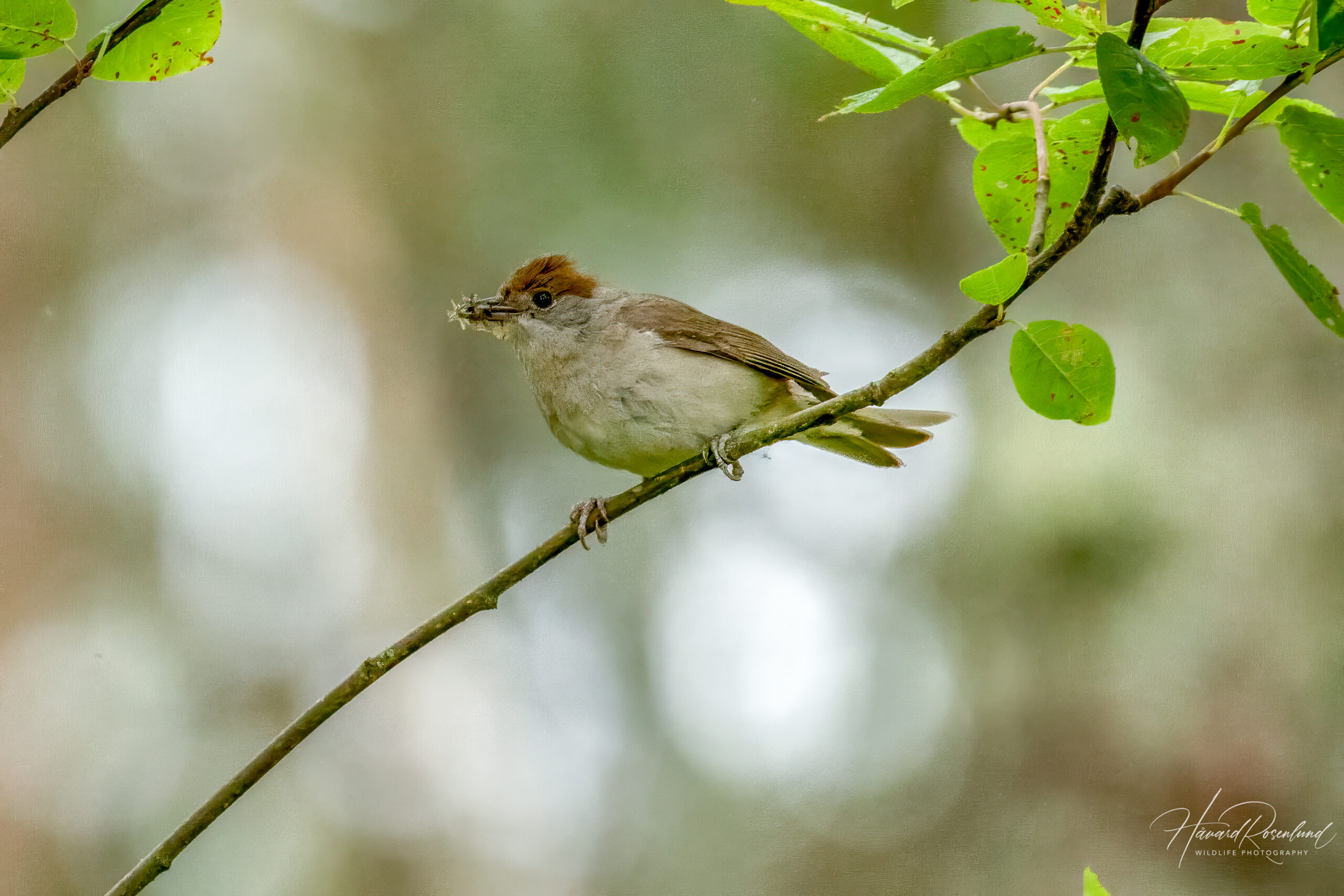
The Eurasian blackcap (Sylvia atricapilla) is a sturdy woodland warbler with subdued grey-brown plumage and a distinctive coloured crown. Adults are about 13.5–15 cm long, have a wingspan of roughly 20–23 cm and average around 18 g, although body mass changes substantially through the annual cycle. Males have a neat black cap, while females and juveniles have a warm chestnut-brown cap.
The species is also famous for its rich, fluting song. The opening can be quiet and rambling before developing into clear, powerful phrases. Garden warbler (Sylvia borin) has a similarly rich song and occupies many of the same habitats, but lacks the black or brown crown, so the two are easy to separate once seen.
Habitat
Blackcaps favour deciduous and mixed woodland with a well-developed shrub layer, along with forest edges, dense scrub, parks and mature wooded gardens. They often remain within foliage rather than feeding in the open and can occur from lowlands into montane woodland wherever dense cover is available.
The understorey is particularly important because it provides both feeding surfaces and concealed nest sites. This allows the species to use a broad range of natural and human-modified wooded habitats without being tied to one particular tree species.
Diet
During spring and summer the diet is dominated by insects, spiders and other small invertebrates picked from leaves, twigs and shrubs. These animal foods are particularly important while chicks are growing.
Fruit becomes increasingly important from late summer onwards and can dominate during migration and winter. Blackcaps take a wide range of berries and soft fruits and may also use garden feeding stations where fruit is available. This seasonal switch provides energy-rich food during migration and allows some wintering birds to exploit human-provided resources.
Song
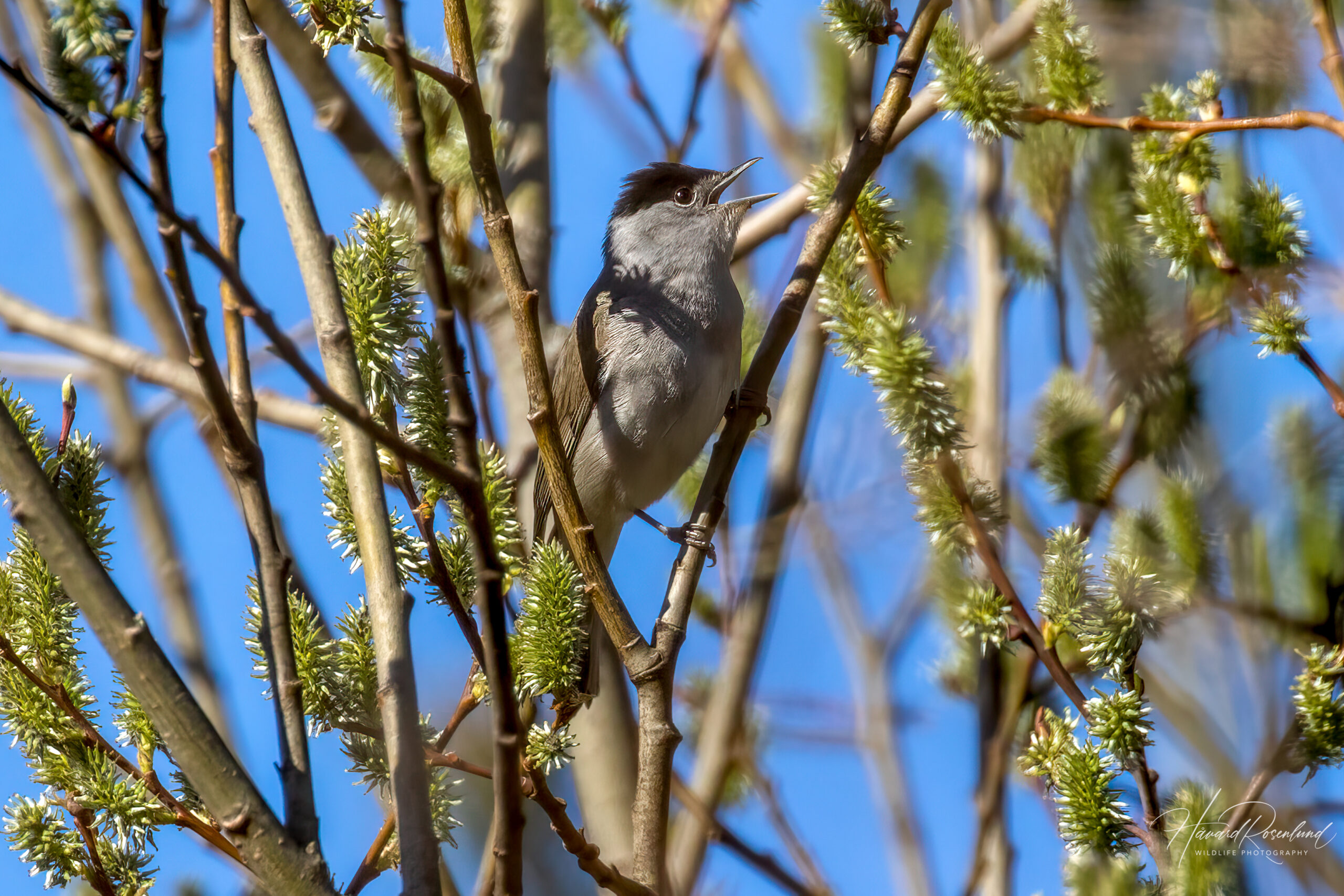
Male blackcaps sing strongly from spring onward, often while still partly concealed in shrubs and trees. They use the song to proclaim and defend a territory and to attract a mate, often beginning before nest building itself is underway.
The rich song can vary considerably in length and phrasing, but usually builds from softer, more rambling notes into clearer fluting phrases. Males may also chase intruders from the territory they are defending.
Migration
The blackcap has one of the most varied migration systems among European songbirds. Northern and eastern populations are mainly migratory, while some western and southern populations are resident or only partially migratory. A major divide in central Europe separates populations migrating southwest toward Iberia and north-west Africa from birds travelling southeast toward the eastern Mediterranean and eastern Africa.
Classic experiments published in 1992 showed that migration direction has a strong inherited component. Both the tendency to migrate and the preferred direction can be passed between generations, helping distinct routes persist even where neighbouring populations meet.
An especially striking new route emerged during the twentieth century, when increasing numbers of central European blackcaps began migrating northwest to winter in Britain and Ireland. Research published in 1992 documented how rapidly this new migratory direction could evolve. Many of these wintering birds originate on the European continent rather than being British breeders that stayed behind, and milder winters and abundant garden feeding have helped make this high-latitude wintering strategy successful.
A study published in 2021 found that both climate and food provided in gardens strongly influence where blackcaps spend the winter in Britain and Ireland and how they fare there. The route shows how quickly migration can evolve when new winter conditions favour a different direction.
Breeding
Blackcaps breed in dense shrubs, brambles and low trees. During courtship the male may begin several loose nest platforms, after which the pair completes the chosen nest. The finished nest is a light cup of grass, stems and other plant material concealed within vegetation.
A typical clutch contains 4–5 eggs. Both sexes incubate for about 13–14 days and both feed the nestlings. The young usually leave the nest after roughly 10–12 days but remain dependent on the adults for a period afterwards. One or two broods may be raised in a season.
Status
The Eurasian blackcap is classified as least concern on the IUCN Red List. It has a very large range and remains abundant across much of Europe.
The European population has increased over the long term, although local and short-term fluctuations still occur. The species’ broad habitat use, seasonal dietary flexibility and varied migration strategies allow it to exploit a wide range of conditions throughout the year.
Image gallery
Loading map and observations…
Have you seen this species?
Independent species archive
Did you find this species page useful?
Wildlife Vagabond is independently built and maintained. Voluntary support helps cover hosting, maps, data storage and continued improvements to the species archive.
Support Wildlife VagabondSpecies content will remain freely available.
References
Information about the species’ global distribution and status is based primarily on global Red List data. See the references below for details.
- Berthold, P., & Helbig, A. J. (1992). The genetics of bird migration: stimulus, timing, and direction. Ibis, 134(s1), 35-40. https://doi.org/10.1111/j.1474-919X.1992.tb04731.x
- Berthold, P., Helbig, A. J., Mohr, G., & Querner, U. (1992). Rapid microevolution of migratory behaviour in a wild bird species. Nature, 360(6405), 668-670. https://doi.org/10.1038/360668a0
- BirdLife International. (n.d.). Eurasian Blackcap species factsheet. https://datazone.birdlife.org/species/factsheet/eurasian-blackcap-sylvia-atricapilla
- British Trust for Ornithology. (n.d.). Blackcap. https://www.bto.org/learn/about-birds/birdfacts/blackcap
- International Union for Conservation of Nature. (n.d.). Eurasian Blackcap. The IUCN Red List of Threatened Species. https://www.iucnredlist.org/species/22716901/87681382
- Van Doren, B. M., Conway, G. J., Phillips, R. J., Evans, G. C., Roberts, G. C. M., Liedvogel, M., & Sheldon, B. C. (2021). Human activity shapes the wintering ecology of a migratory bird. Global Change Biology, 27(12), 2715-2727. https://doi.org/10.1111/gcb.15597