
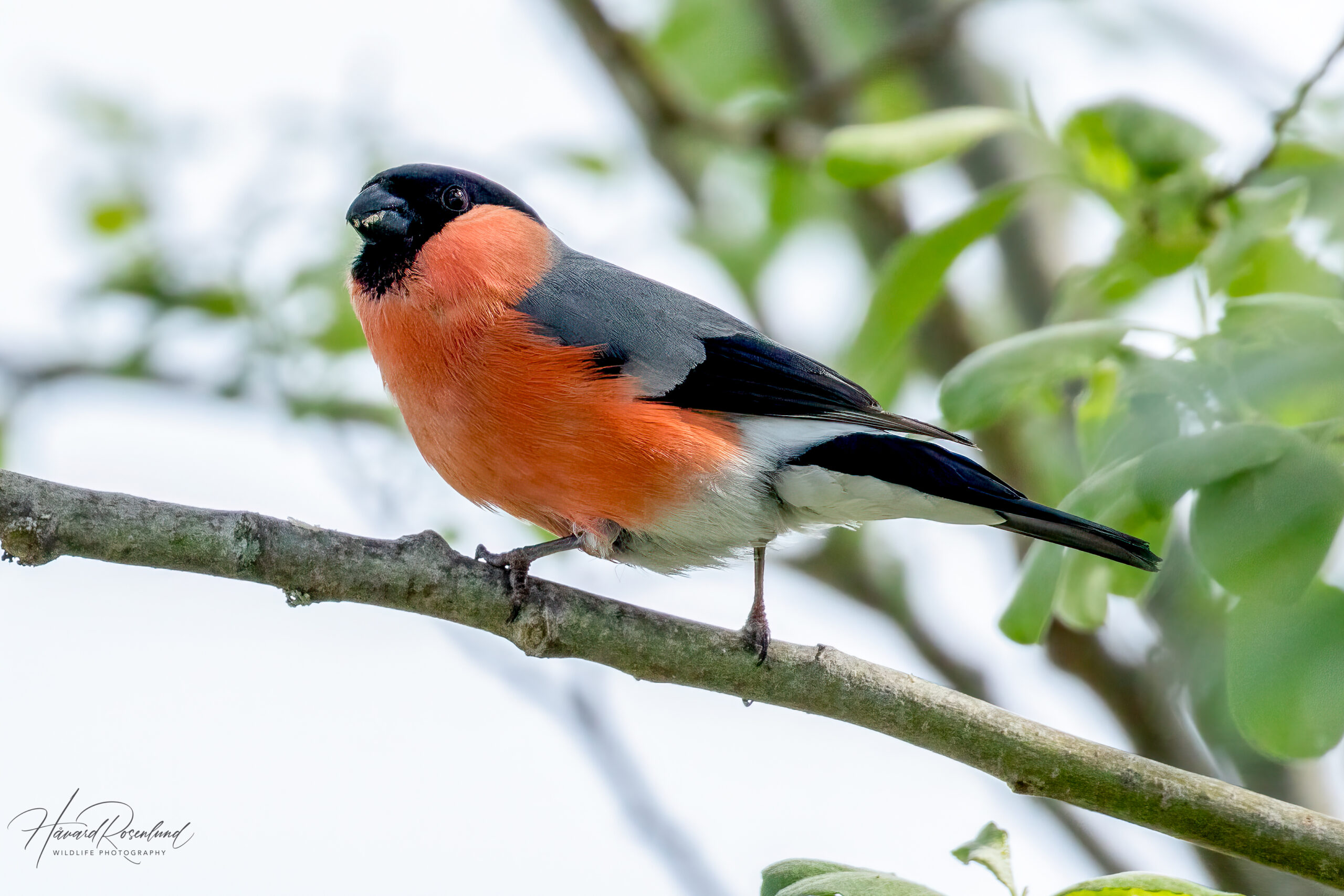
Eurasian Bullfinch
Pyrrhula pyrrhula
At a glance
Habitat
- Woodland with dense understorey, scrub, hedgerows, orchards, parks and wooded gardens
Diet
- Seeds, berries and tree buds; nestlings receive both seeds and invertebrates
Activity
- Diurnal
Size
- Length: 15–17 cm Weight: about 22.5 g
Range
- Europe across temperate Asia to Japan
Description
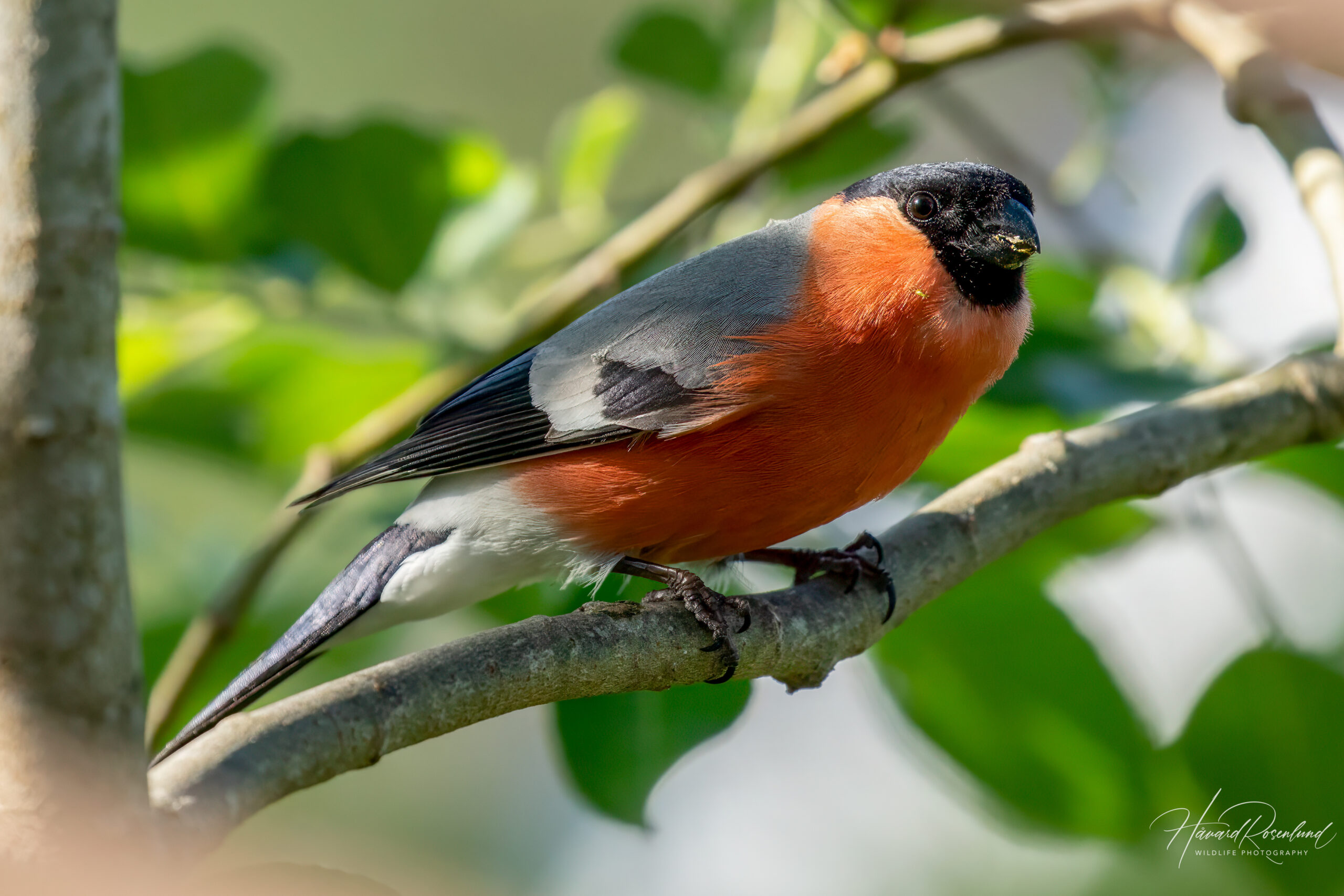
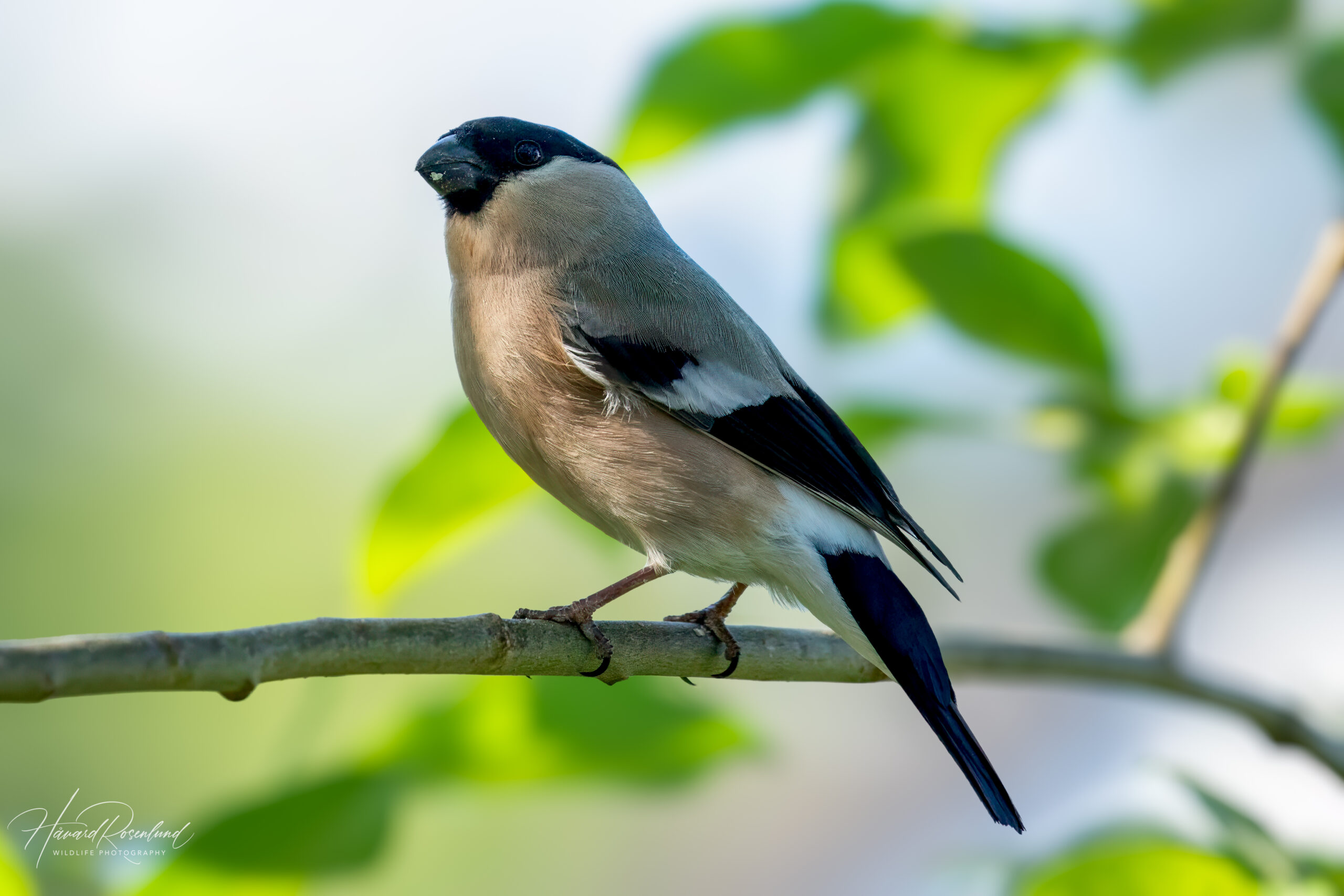
The Eurasian bullfinch (Pyrrhula pyrrhula) is a stocky finch found from Europe across temperate Asia to Japan. Adults are about 15–17 cm long and average roughly 22.5 g. Both sexes have a thick black bill, black cap, black wings and tail, a blue-grey back and a conspicuous white rump. Adult males have rich rose-red underparts, while females are much duller grey-brown. Juveniles lack the black cap and are browner overall.
Despite the male's bright colour, bullfinches can be surprisingly unobtrusive in dense vegetation. Their usual call is a soft, plaintive whistle, often revealing a pair feeding quietly before the birds themselves are noticed.
Habitat
Eurasian bullfinches favour woodland with a well-developed understorey, scrub, hedgerows and woodland edges, and they also use orchards, parks and wooded gardens. Habitat use varies across the range; in northern Europe they commonly occupy coniferous and mixed forest as well as deciduous woodland where dense shrubs and young trees provide cover.
Outside the breeding season they may become more visible in gardens and other open wooded habitats as birds move between berry-bearing shrubs, seed sources and feeding stations.
Diet
The strong, short bill is well suited to seeds and buds. Bullfinches eat seeds, berries and buds from a wide range of trees, shrubs and herbs, and they readily visit feeding stations in winter. The diet changes seasonally as different plants provide ripe seeds, fruit or fresh buds.
Nestlings receive both plant and animal food. A study published in 2022, carried out in hedgerow landscapes in northwestern Spain, found seeds to be quantitatively most important overall, while caterpillars and spiders were the main invertebrate prey. Animal food was relatively more important for the youngest chicks than for older nestlings.
Migration
Eurasian bullfinches are resident or only partly migratory across much of Europe. Many adults remain within the same general region throughout the year, while birds from colder northern and eastern populations are more likely to move south or west in autumn.
The scale of movement varies between years with weather and food availability. Winter influxes can therefore make the species temporarily much more conspicuous in some regions, even where local breeding birds are largely resident.
Breeding
Eurasian bullfinches usually form monogamous pairs. Colour-ringing studies in Norway and England have shown that pair bonds can persist from one breeding season to the next and, in some cases, for several years. The female builds the nest in dense shrubs, young conifers, hedges or other well-concealed vegetation. The nest has a loose outer structure of twigs and a softer inner cup, often lined with roots, plant material and occasionally hair.
A typical clutch contains 4–5 eggs, which the female incubates for about 14–16 days. The young normally remain in the nest for roughly 15–16 days, and both parents feed them. After fledging, the parents usually continue feeding the young for a further 2–3 weeks.
Pairs are often quiet and inconspicuous around the nest. The relatively large plant component in the nestling diet is unusual compared with many small passerines, although invertebrates remain important during the earliest growth stages.
Cultural significance
In Norway and elsewhere in Scandinavia, the bullfinch is strongly associated with winter and Christmas. The male's bright red underparts stand out against snow and evergreen vegetation, and the species has become a familiar motif on Christmas cards, wrapping paper, decorations and other seasonal imagery.
The bullfinch is also part of the cultural tradition surrounding the Norwegian Christmas sheaf, or julenek. Older folklore associated plentiful bird activity at the sheaf with a good grain harvest in the coming year. Together with winter feeding, this tradition has made a normally quiet woodland bird far more culturally visible in midwinter than during most of the rest of the year.
Relationship with humans
Bullfinches have historically been regarded as orchard pests in parts of Europe because they can remove flower and leaf buds from fruit trees, especially when natural food is scarce and several birds feed in the same area. This brought the species into direct conflict with fruit growers and led to control measures in some regions.
At the same time, bullfinches are familiar visitors to gardens in winter. They readily use bird feeders, especially where sunflower seeds and other suitable seeds are offered, bringing a normally rather secretive woodland bird into close contact with people.
Status
The Eurasian bullfinch is classified as least concern on the IUCN Red List. Its very large range and population keep it outside the threatened categories, although trends differ considerably between regions.
The UK breeding population is currently about 55% lower than in 1967. The steepest decline began in the mid-1970s; numbers increased after around 2000 but have fallen again in recent years. Trends now differ strongly within Britain, with bullfinches continuing to increase in Scotland while declining farther south. Changes in habitat quality and food availability, including the loss or alteration of scrub, woodland edges and orchards, have been implicated, but no single cause fully explains the long-term decline.
Image gallery
Loading map and observations…
Have you seen this species?
Independent species archive
Did you find this species page useful?
Wildlife Vagabond is independently built and maintained. Voluntary support helps cover hosting, maps, data storage and continued improvements to the species archive.
Support Wildlife VagabondSpecies content will remain freely available.
References
Information about the species’ global distribution and status is based primarily on global Red List data. See the references below for details.
- BirdLife International. (n.d.). Eurasian Bullfinch species factsheet. https://datazone.birdlife.org/species/factsheet/eurasian-bullfinch-pyrrhula-pyrrhula
- British Trust for Ornithology. (n.d.). Bullfinch BirdFacts. https://www.bto.org/learn/about-birds/birdfacts/bullfinch
- Hernández, Á. (2022). Diet and grit characteristics in young Eurasian Bullfinches (Pyrrhula pyrrhula) inhabiting Iberian hedgerows. Ornis Fennica, 00-00. https://doi.org/10.51812/of.124715
- International Union for Conservation of Nature. (n.d.). Eurasian Bullfinch. The IUCN Red List of Threatened Species. https://www.iucnredlist.org/species/22720671/132141969
- NIBIO – Norwegian Christmas traditions. (n.d.). A rich cultural heritage shaped by food, drink and nature. https://www.nibio.no/en/news/norwegian-christmas-traditions-a-rich-cultural-heritage-shaped-by-food-drink-and-nature
- Store norske leksikon. (n.d.). Dompap. https://snl.no/dompap