
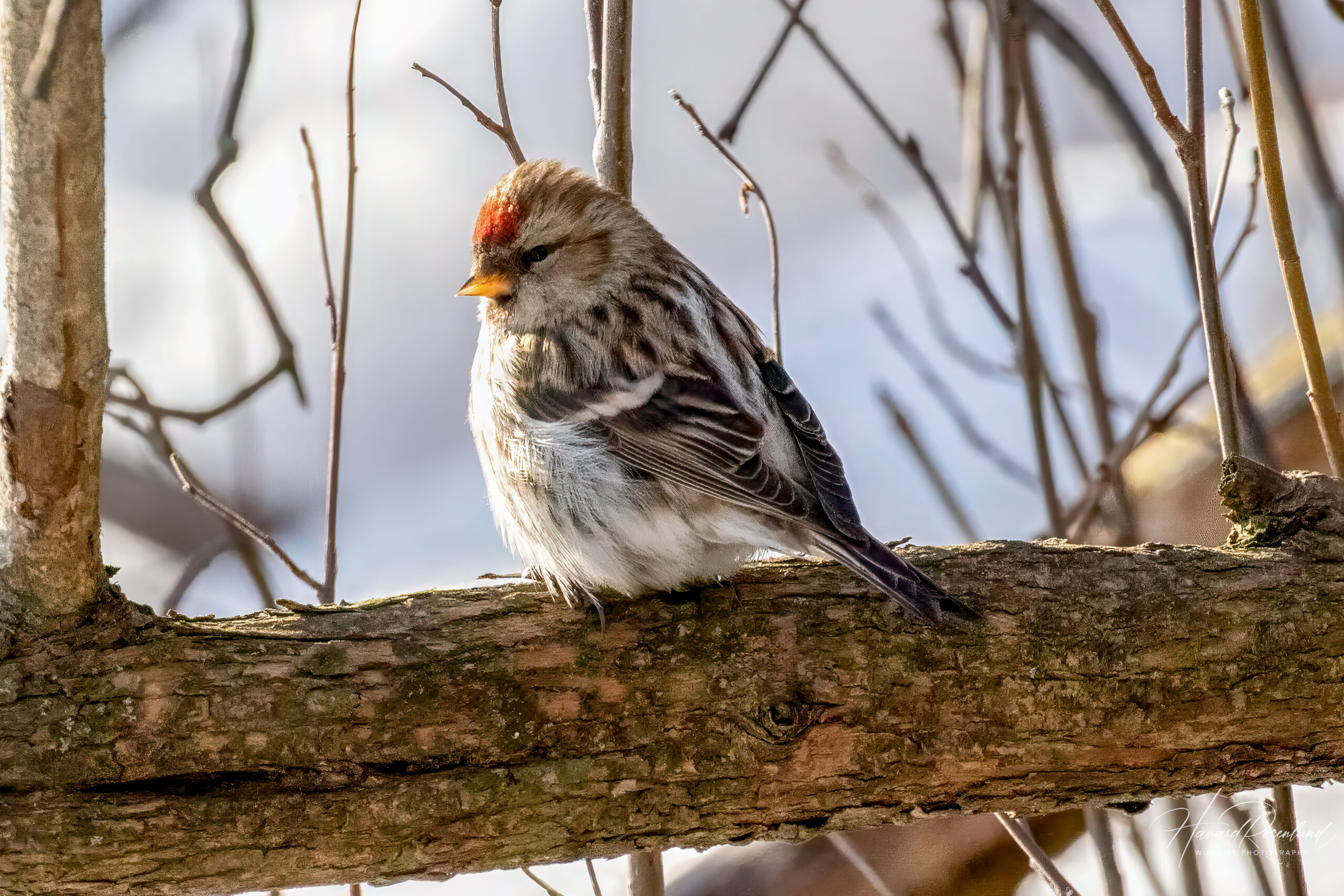
Redpoll
Acanthis flammea
At a glance
Habitat
- Boreal and subarctic birch, willow and conifer woodland, tundra scrub and open northern habitats; more varied scrub and woodland in winter
Diet
- Mostly small seeds, especially birch and alder; also willow, conifer and herb seeds, plus insects and spiders in summer
Activity
- Diurnal
Size
- Length: 11.5–14 cm Weight: 10–20 g
Range
- Holarctic: northern Eurasia and North America, with irregular winter movements far south of the breeding range
Description
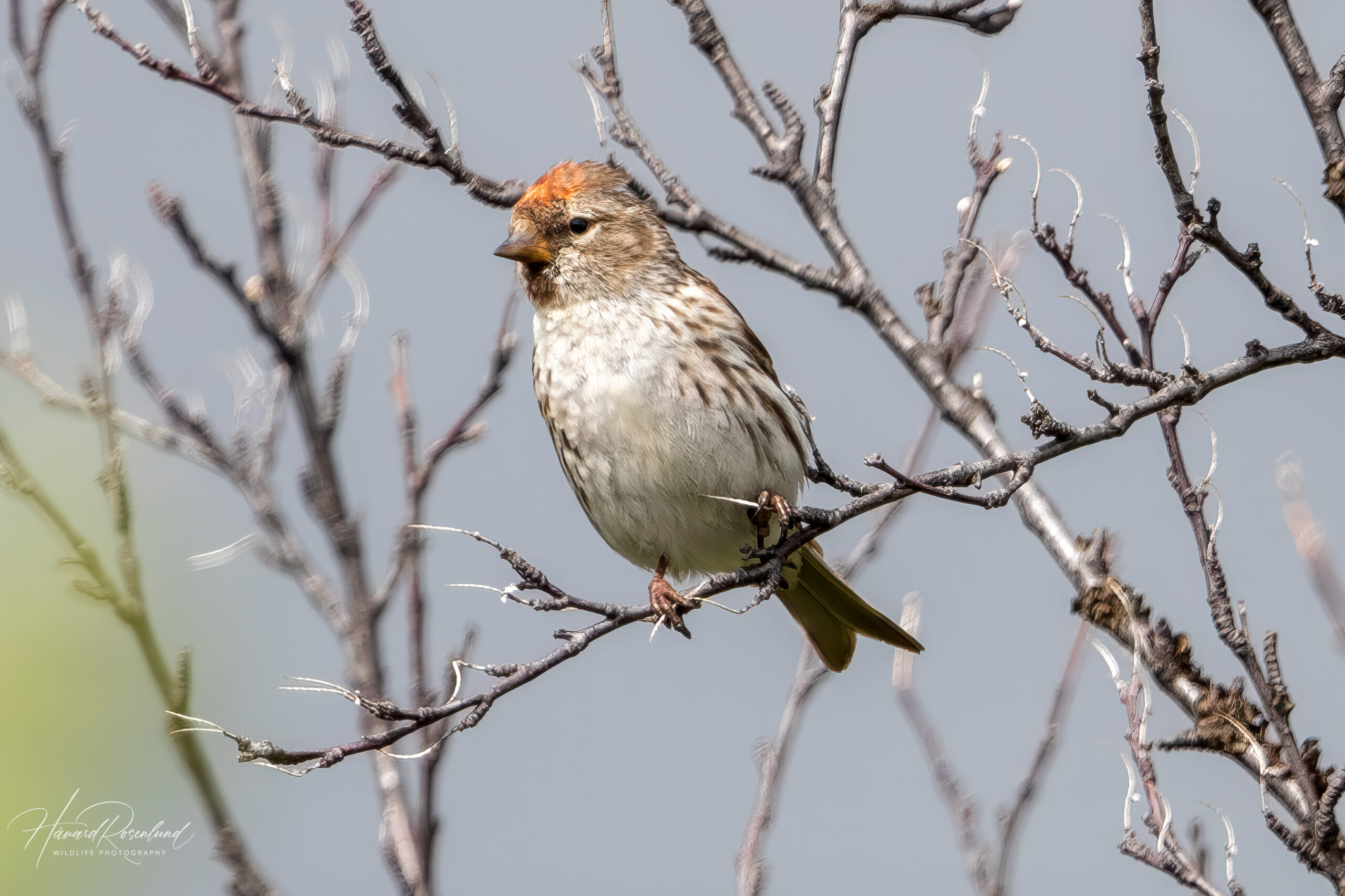
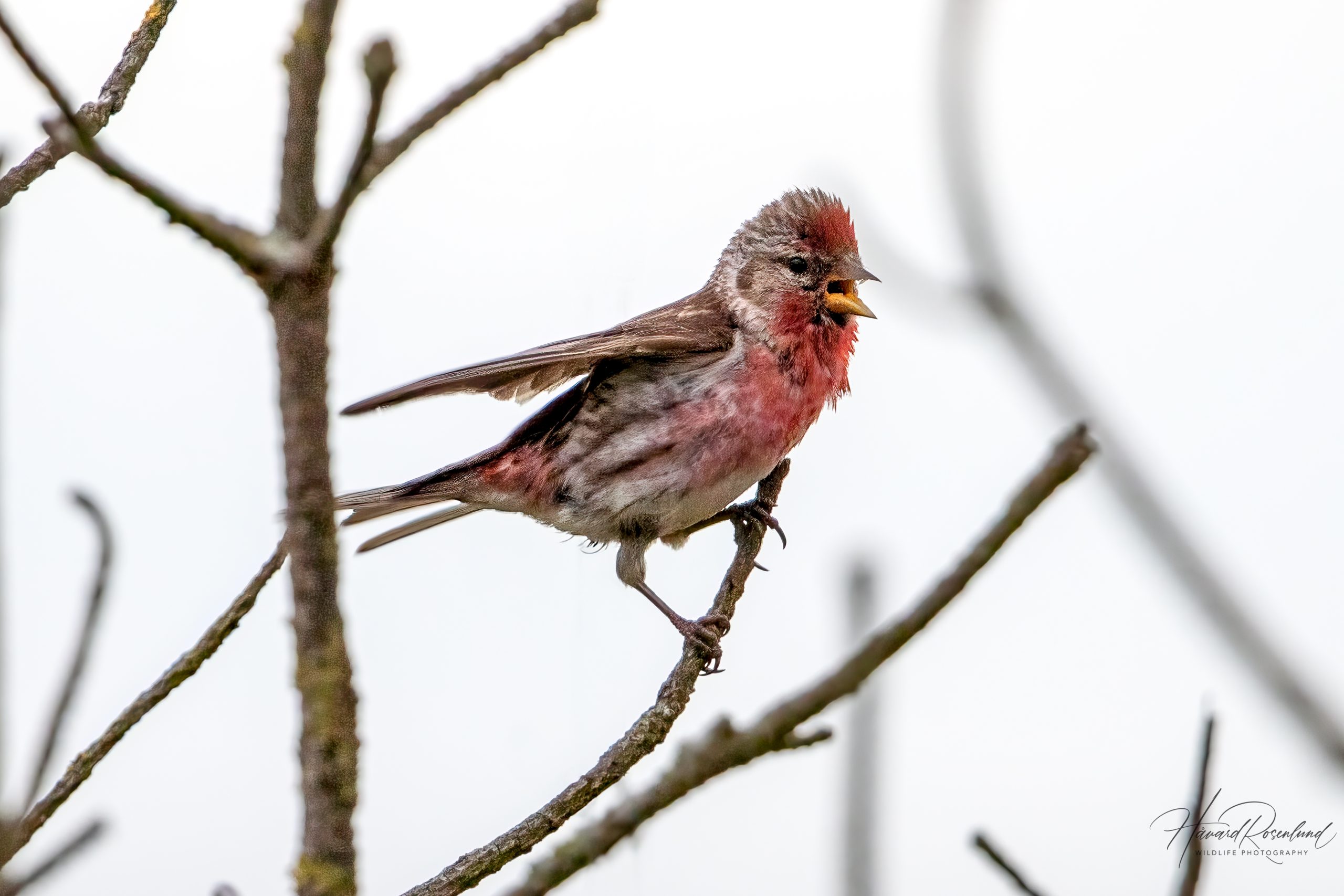
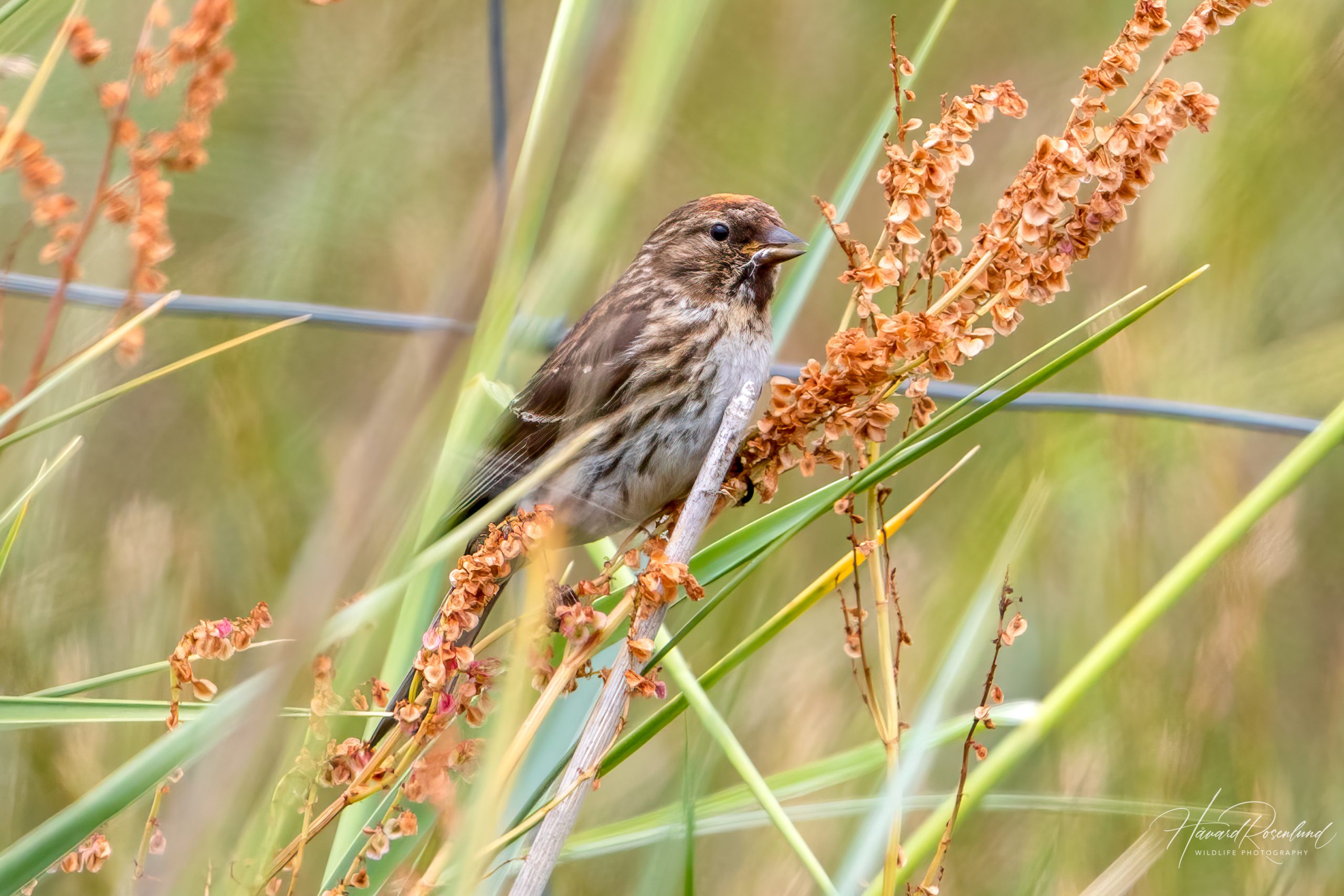
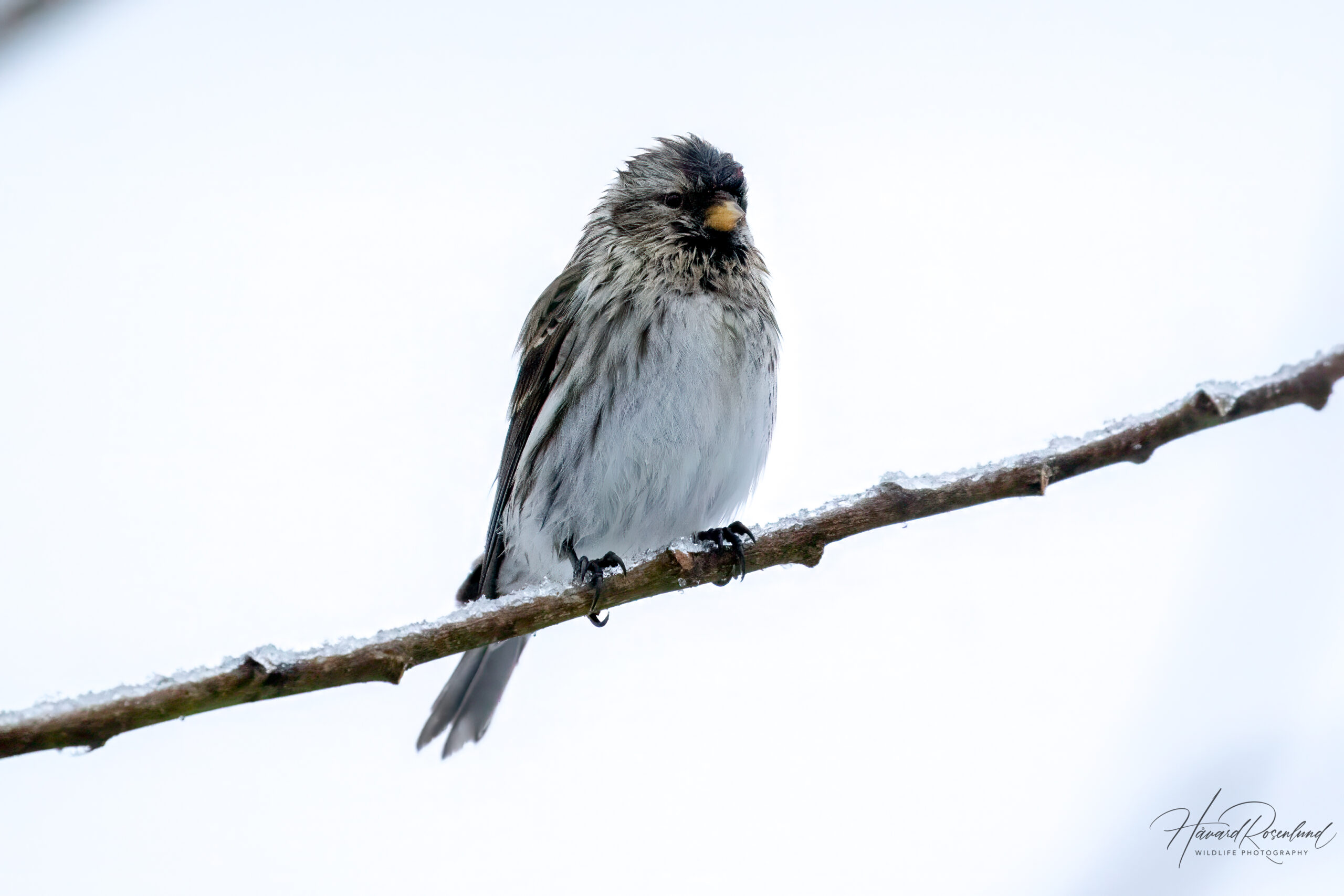
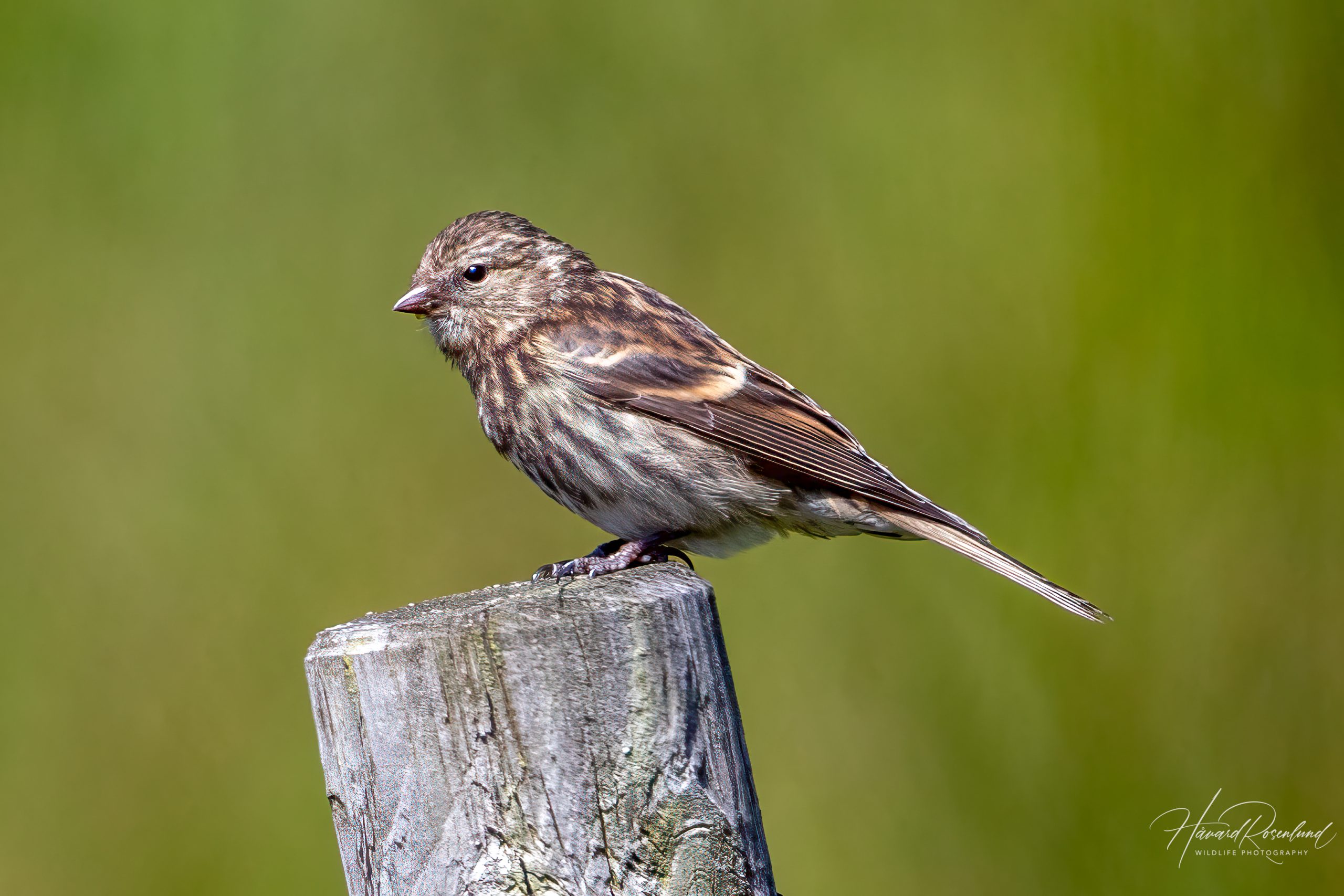
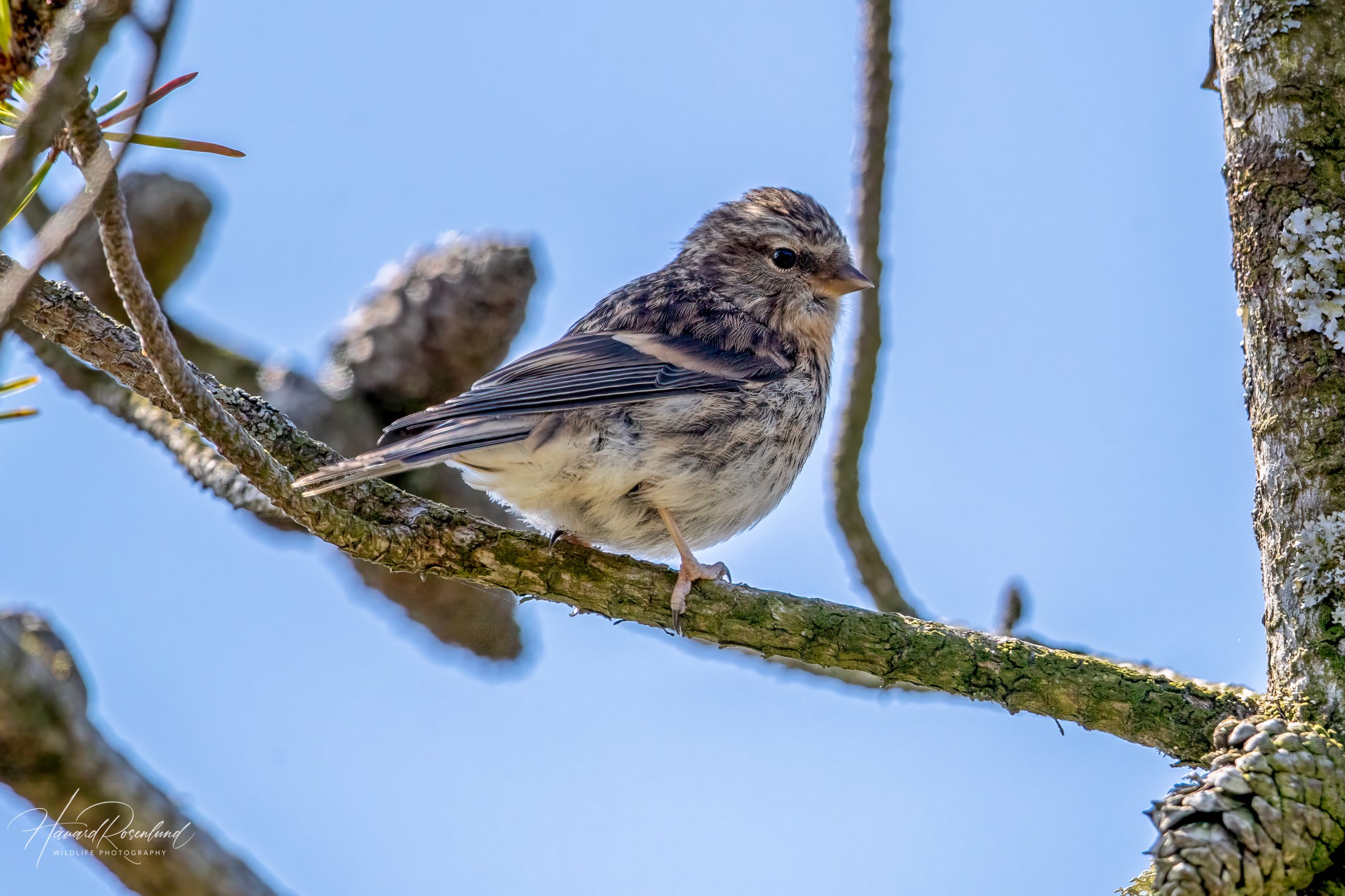
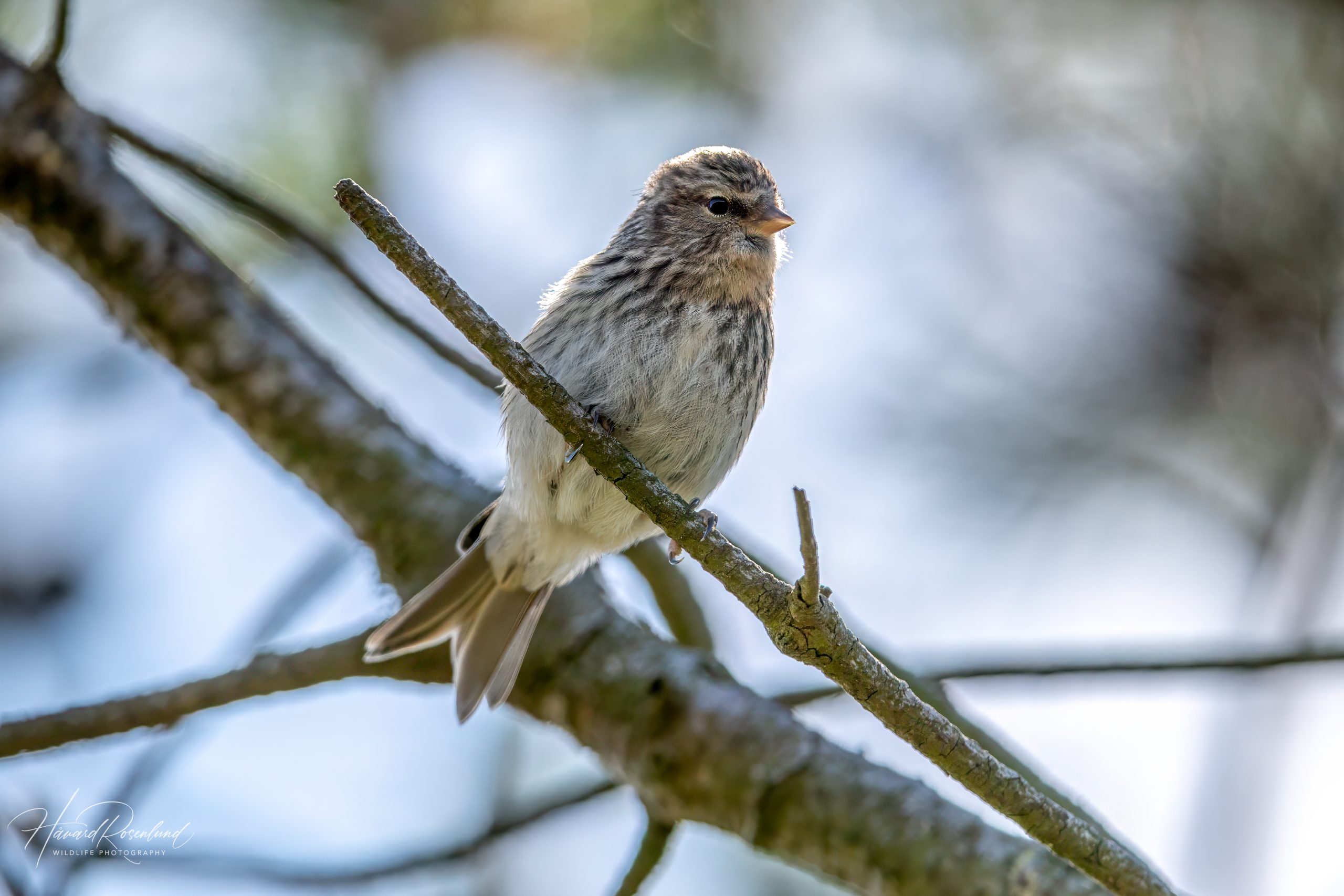
The redpoll (Acanthis flammea) is a tiny Holarctic finch of northern Eurasia and North America. Adults are roughly 11.5–14 cm long and usually weigh about 10–20 g. All forms share a crimson forehead, a small black chin and heavily streaked brown or grey upperparts. Adult males often develop pink to red on the breast, while females usually remain more strongly streaked and lack extensive pink below.
Appearance varies enormously across the range. Some birds are small and dark brown, others larger and frostily pale, and intermediate birds are common. This variation made redpoll identification notoriously difficult when the forms were treated as separate species.
Taxonomy
Redpoll taxonomy changed repeatedly because striking differences in plumage, bill shape and body size contrast with surprisingly little genetic separation. Until recently, major checklists commonly recognised Common Redpoll (Acanthis flammea), Lesser Redpoll (A. cabaret) and Hoary or Arctic Redpoll (A. hornemanni) as separate species.
Genetic studies progressively weakened that arrangement. Work published in 2008 found little molecular support for separate species, while later whole-genome research showed extensive gene flow across the complex. Much of the conspicuous variation in colour and bill morphology is associated with a large chromosomal inversion that acts as a supergene, linking several traits together. AviList therefore treats the complex as one species, Redpoll Acanthis flammea. The familiar pale, dark and intermediate forms remain biologically real and useful in the field even though they no longer represent separate species.
Habitat
Redpolls breed in boreal and subarctic birch, willow and conifer woodland, tundra scrub and other open northern habitats. During winter they range much more widely through woodland edges, scrub, weedy fields and gardens wherever seed crops are abundant.
The species is well adapted to severe cold. During harsh winter weather, individuals may burrow into loose snow to roost, using the insulating snowpack as shelter from much colder air above.
Diet
Small seeds dominate the diet, especially those of birch and alder, with willow, spruce, pine, grasses and herbs also used. In summer, spiders and insects become more important, particularly as food for growing young. Redpolls are agile feeders and often hang upside down from fine twigs to reach seed heads.
They also have a pair of expandable pouches in the oesophagus where seeds can be stored temporarily. This allows a bird to gather food rapidly at an exposed feeding site, then regurgitate the seeds for husking and eating later in a safer or more sheltered place.
Migration
Redpoll movements are highly irregular and are better described as nomadic or irruptive than as a simple fixed migration. Birch, alder and conifer seed crops vary dramatically between years and regions, and flocks respond by travelling widely in search of food.
Outside the breeding season redpolls are highly social and commonly travel and forage in active flocks, sometimes numbering several hundred birds. In poor seed years, large numbers can appear far south of the usual breeding range, whereas abundant seed crops may keep many birds much farther north. This mobility also makes local population trends difficult to interpret because sharp changes in counts can partly reflect birds shifting where they breed or winter.
Breeding
Breeding begins in late spring or early summer, depending strongly on latitude and local conditions. Pairs defend relatively small nesting areas. The female chooses the nest site and builds a compact cup of fine twigs, grasses, roots and moss, thickly lined with feathers, fur or other soft material. Nests are commonly placed low in birch, willow, alder or spruce, although sheltered ground-level sites and crevices may be used in treeless northern habitats.
A typical clutch contains four or five eggs. The female incubates for about 10–12 days and is fed by the male during much of this period. Both parents feed the nestlings, which normally leave the nest after roughly 9–16 days. A second brood can be raised when conditions are favourable.
Status
The redpoll is classified as least concern on the IUCN Red List. Its enormous Holarctic range and very large population keep it outside the globally threatened categories, although long-term trends vary between regions.
The species' extreme nomadism and recently broadened taxonomic limits make regional trends difficult to interpret. Counts in any one region can rise or fall sharply as birds follow seed crops, and older monitoring series may refer to the former Common, Lesser and Hoary redpolls separately. Trends therefore need to be read with both movement ecology and taxonomic scope in mind.
Image gallery
Loading map and observations…
Have you seen this species?
Independent species archive
Did you find this species page useful?
Wildlife Vagabond is independently built and maintained. Voluntary support helps cover hosting, maps, data storage and continued improvements to the species archive.
Support Wildlife VagabondSpecies content will remain freely available.
References
Information about the species’ global distribution and status is based primarily on global Red List data. See the references below for details.
- Artsdatabanken. (2021). Gråsisik, Norsk rødliste 2021. https://lister.artsdatabanken.no/rodlisteforarter/2021/28866
- BirdLife International. (n.d.). Redpoll species factsheet. https://datazone.birdlife.org/species/factsheet/redpoll-acanthis-flammea
- BirdLife Norge. (n.d.). Norske navn på verdens fugler. https://www.birdlife.no/fuglekunnskap/navn/
- British Trust for Ornithology. (n.d.). Redpoll BirdFacts. https://www.bto.org/learn/about-birds/birdfacts/redpoll
- Cornell Lab of Ornithology. (n.d.). Redpoll life history. https://www.allaboutbirds.org/guide/Redpoll/lifehistory
- Fisher & Dater. (1961). Esophageal diverticula in the Redpoll. https://academic.oup.com/auk/article/78/4/528/5224471
- Funk, E. R., Mason, N. A., Pálsson, S., Albrecht, T., Johnson, J. A., & Taylor, S. A. (2021). A supergene underlies linked variation in color and morphology in a Holarctic songbird. Nature Communications, 12(1), 6833. https://doi.org/10.1038/s41467-021-27173-z
- International Union for Conservation of Nature. (n.d.). Redpoll. The IUCN Red List of Threatened Species. https://www.iucnredlist.org/species/22725044/155292529
- Marthinsen, G., Wennerberg, L., & Lifjeld, J. T. (2008). Low support for separate species within the redpoll complex (Carduelis flammea–hornemanni–cabaret) from analyses of mtDNA and microsatellite markers. Molecular Phylogenetics and Evolution, 47(3), 1005-1017. https://doi.org/10.1016/j.ympev.2008.03.027