
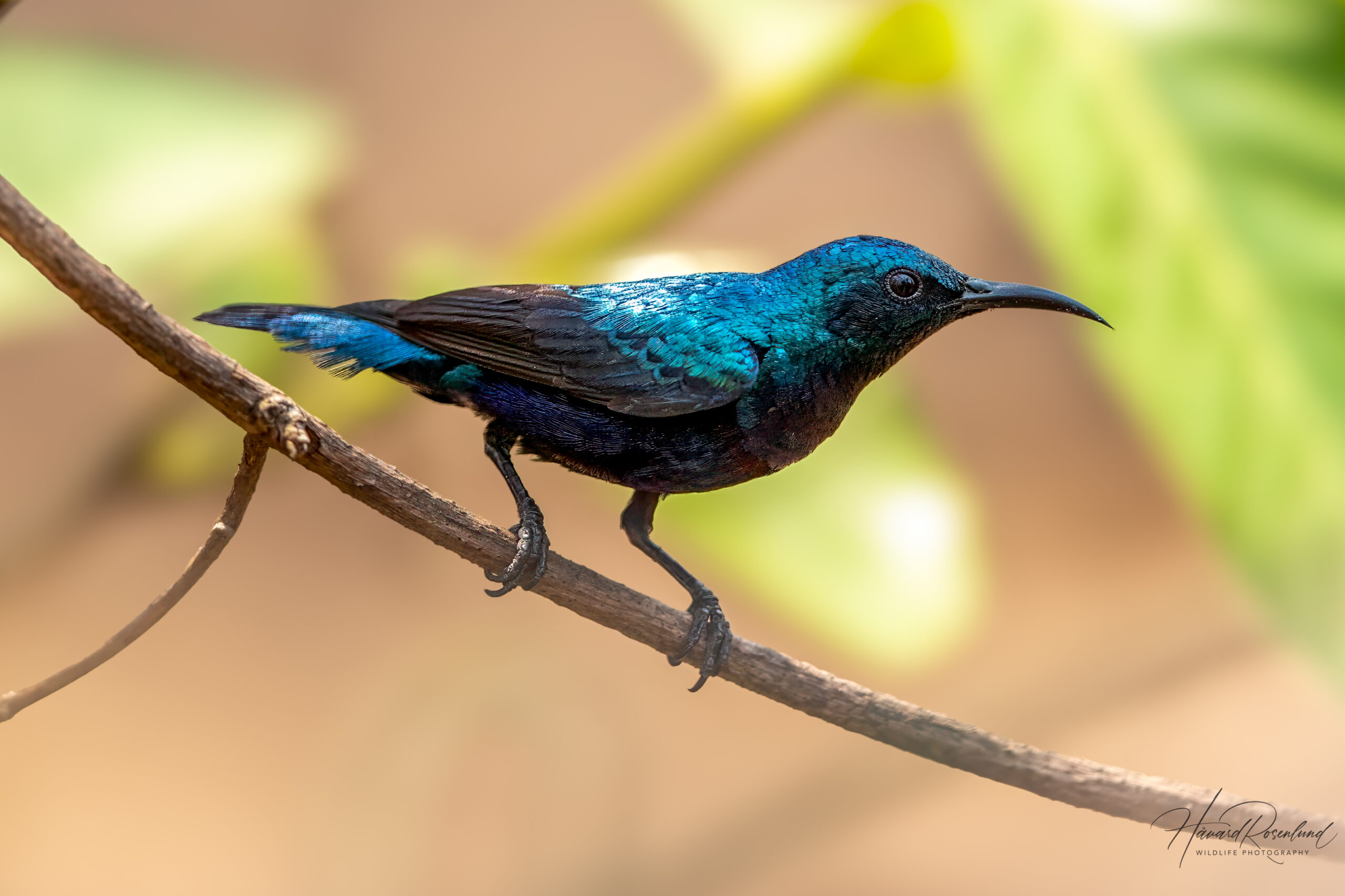
Purple Sunbird
Cinnyris asiaticus
At a glance
Habitat
- Open woodland, scrub, gardens, cultivated areas and forest edges, often close to people
Diet
- Nectar, supplemented by insects and spiders, especially when feeding young
Activity
- Diurnal
Size
- Length: 10–11 cm Weight: ~8 g
Range
- South and Southeast Asia, extending west into parts of the Arabian Peninsula
Description
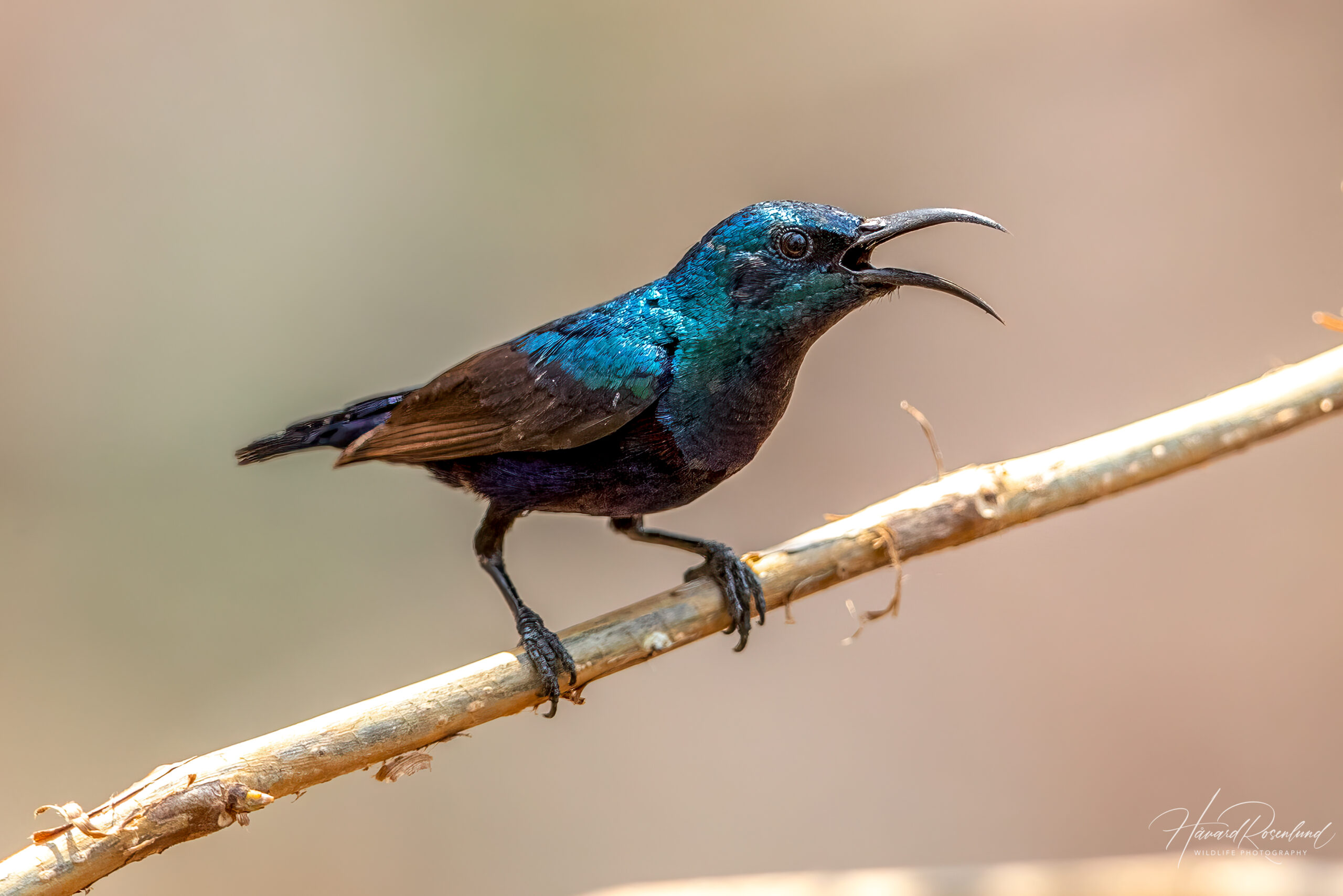
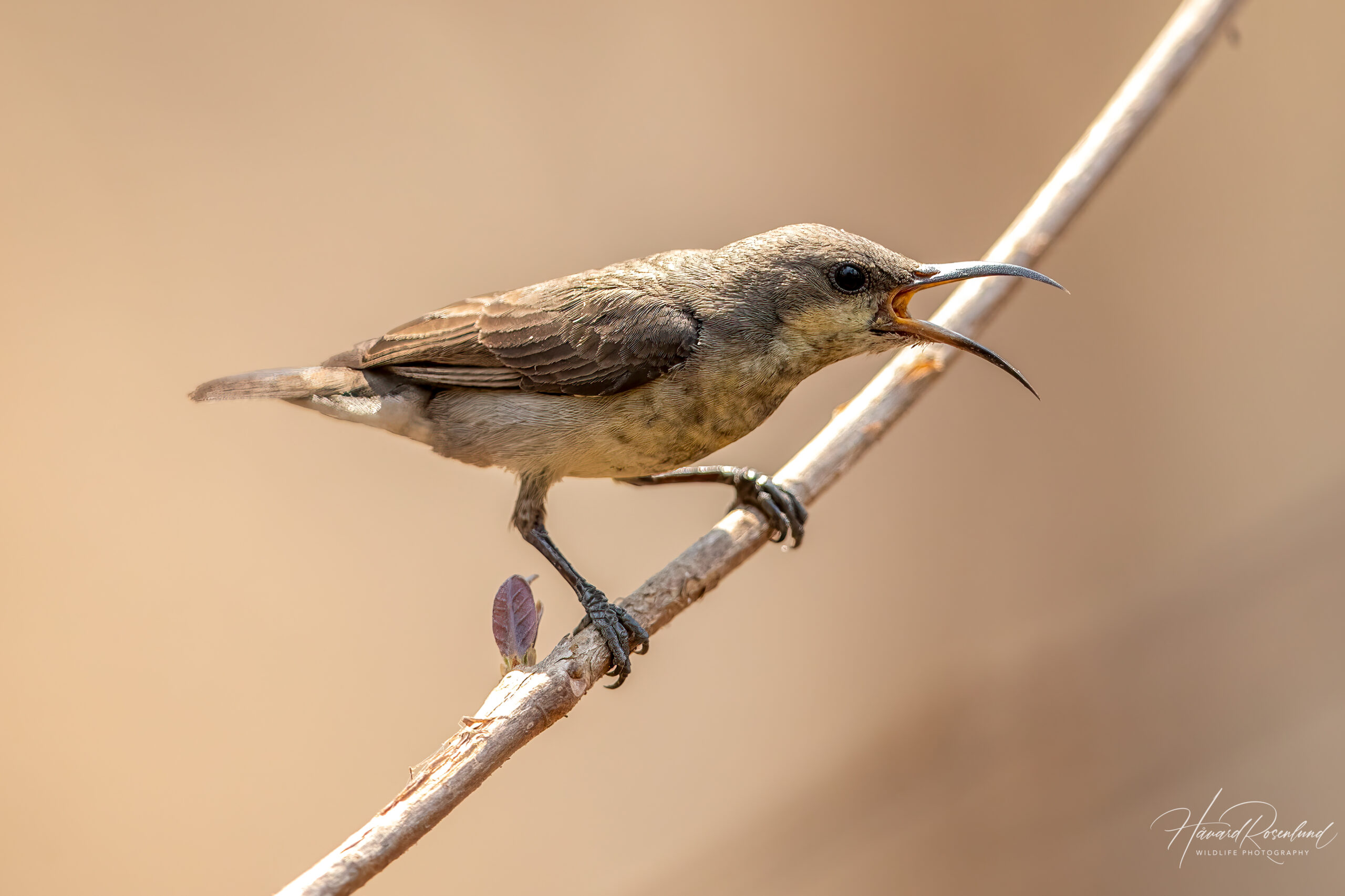
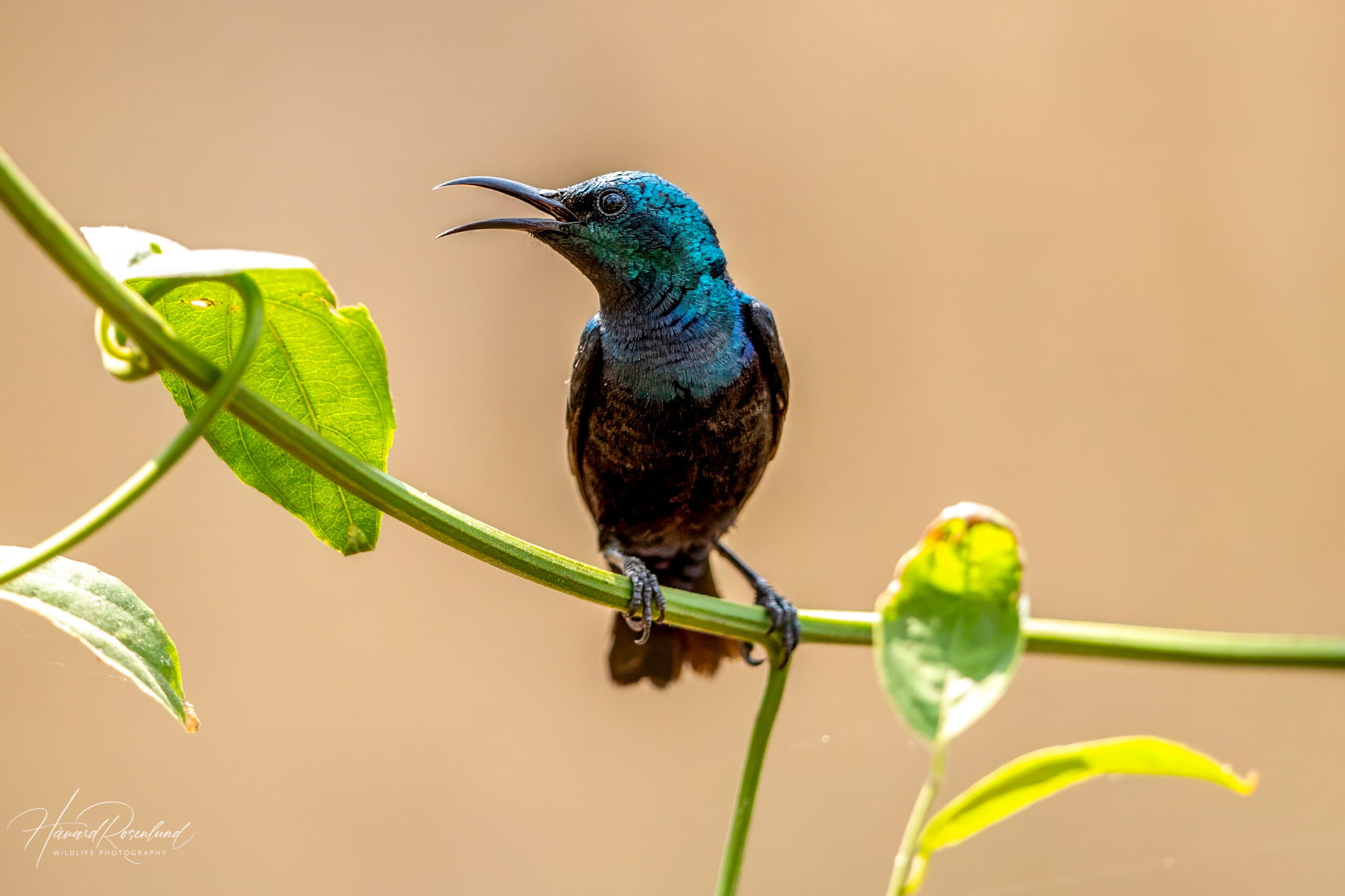
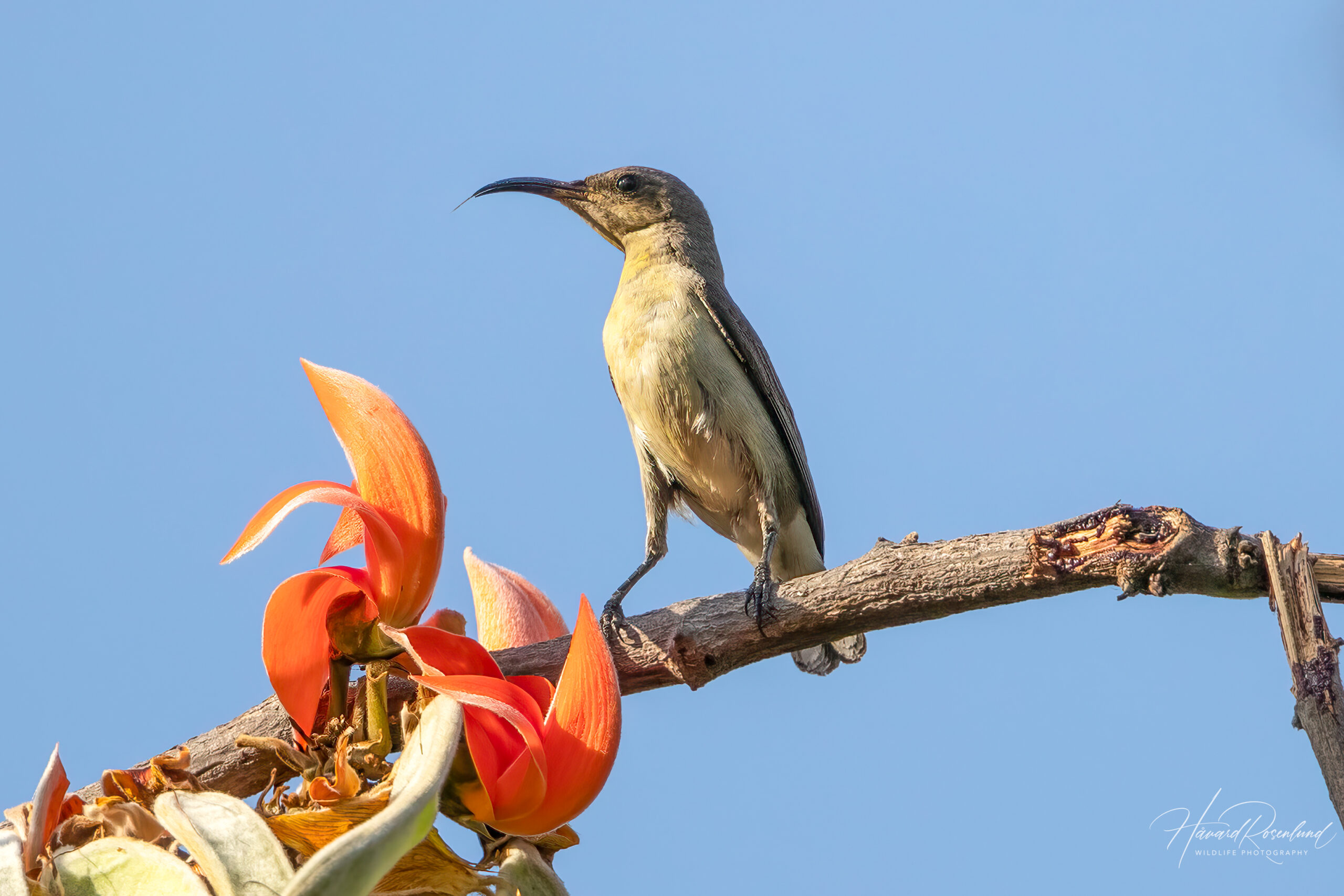
The purple sunbird (Cinnyris asiaticus) is a tiny sunbird widespread across South Asia and parts of Southeast and West Asia. Adults are about 10–11 cm long and weigh around 8 g. Females are olive-brown above and yellow below, while males change strikingly with season. In full breeding plumage a male can look almost black in shade, but direct light reveals intense blue, violet and purple iridescence, with maroon tones on the breast. Outside the breeding season he becomes much more female-like but retains a dark central stripe down the underparts.
In India, the similar Loten's sunbird (Cinnyris lotenius) is larger and has a conspicuously longer, more strongly curved bill. The purple sunbird's shorter bill and more compact proportions are useful field clues where the two occur together.
Plumage
The male's breeding plumage is one of the species' most distinctive features. Its colour changes markedly with viewing angle because much of the blue-purple sheen is structural rather than simply produced by pigment. A 2016 microscopy study found layers of keratin with rod-shaped melanosomes in the feathers. Feathers of different colours also contained different mixtures of metal elements, although their contribution to the colours remains uncertain.
After breeding, males moult into a duller eclipse plumage dominated by olive, yellow and brown, then later regain the glossy breeding colours. This seasonal change can make the same male look almost like two different birds at different times of year.
Habitat
Purple sunbirds use open woodland, scrub, gardens, cultivated landscapes and forest edges and adapt readily to towns and villages where flowering plants are abundant. They are not tied to one vegetation type and can remain common in strongly modified landscapes if nectar-producing plants and insect prey are available.
Local abundance often follows flowering conditions. Birds may shift short distances between gardens, scrub and woodland edges as different plants come into bloom, which helps explain their success across seasonally variable South Asian landscapes.
Diet
Nectar forms the core of the diet and is taken with the long, downcurved bill and a specialised tongue. Purple sunbirds often feed while perched and can hover briefly in front of flowers, although they do not rely on sustained hovering in the manner of hummingbirds.
Insects and spiders provide important protein and become especially important when adults are feeding nestlings. The combination of nectar and animal prey allows the species to exploit both flowering plants and small arthropods across a wide range of habitats.
Breeding
Breeding timing varies across the wide range and can track local rainfall and flowering conditions. The female constructs the characteristic hanging, purse-shaped nest from fine plant fibres, grass, bark and cobwebs, sometimes incorporating paper, string or other available material around human settlements. It is suspended from a thin branch, wire or similar support and has a side entrance.
Clutches are small, usually containing two or three eggs. The female incubates for roughly two weeks, while both parents feed the young after hatching. Males defend the nesting area and use fluttering wing displays and song during courtship.
Status
The purple sunbird is classified as least concern on the IUCN Red List. It has a very broad distribution and uses gardens, farmland and other human-modified habitats as well as more natural vegetation.
Indian monitoring data published in 2025 show a national long-term increase of about 110%. The more recent annual estimate is about +3.0%, although the short-term trend is classified as inconclusive. The species remains in the low conservation-priority category and has a very large distribution in India.
Image gallery
Loading map and observations…
Have you seen this species?
Independent species archive
Did you find this species page useful?
Wildlife Vagabond is independently built and maintained. Voluntary support helps cover hosting, maps, data storage and continued improvements to the species archive.
Support Wildlife VagabondSpecies content will remain freely available.
References
Information about the species’ global distribution and status is based primarily on global Red List data. See the references below for details.
- BirdLife International. (n.d.). Purple Sunbird species factsheet. https://datazone.birdlife.org/species/factsheet/purple-sunbird-cinnyris-asiaticus
- eBird. (n.d.). Purple Sunbird. Cornell Lab of Ornithology. https://ebird.org/species/pursun4
- International Union for Conservation of Nature. (n.d.). Purple Sunbird. The IUCN Red List of Threatened Species. https://www.iucnredlist.org/species/22717855/155489800
- Khare & Chahal. (2020). Nesting ecology of Purple Sunbird in a residential area. https://www.faunajournal.com/archives/2020.v7.i5.A.742/nesting-ecology-of-purple-sunbird-cinnyris-asiaticus-in-a-residential-area
- Kumar, C., Thind, S. K., & Kaleka, A. S. (2020). Breeding behaviour of Purple Sunbird, <i>Cinnyris asiaticus</i> (Latham, 1790) in semiurban area of Punjab. Records of the Zoological Survey of India, 120(4), 323–340. https://doi.org/10.26515/rzsi/v120/i4/2020/152044
- Mahapatra, B. B., Marathe, S. A., Meyer-Rochow, V. B., & Mishra, M. (2016). A closer look at the feather coloration in the male purple sunbird, Nectarinia asiatica. Micron (Oxford, England : 1993), 85, 44-50. https://doi.org/10.1016/j.micron.2016.04.001
- State of India's Birds. (2025). 2025 – Purple Sunbird. https://stateofindiasbirds.in/species/pursun4/