Description
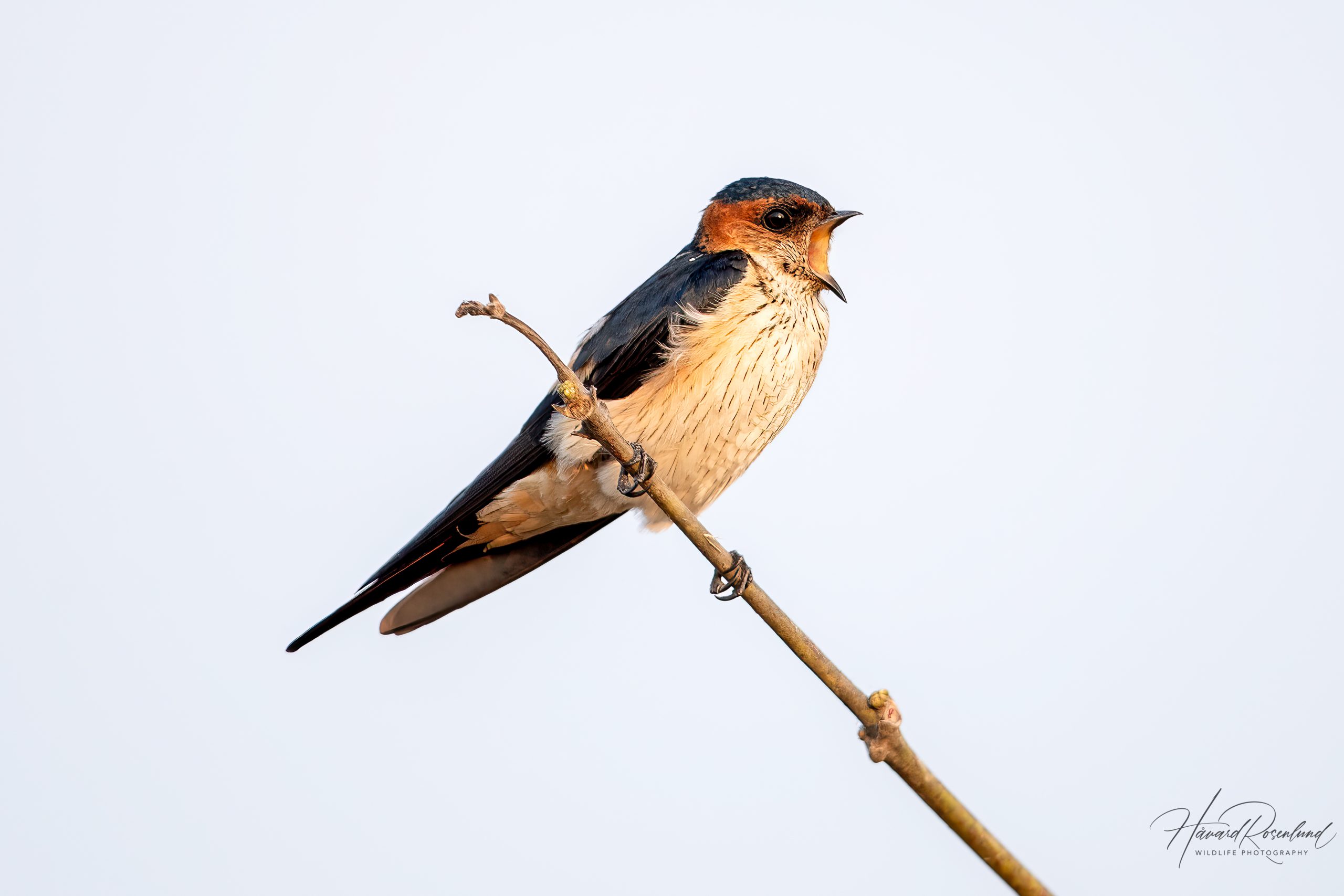
The Eastern red-rumped swallow (Cecropis daurica) is a small passerine bird found across much of Asia, including parts of Central Asia, the Indian subcontinent, and East Asia. It was previously considered part of a much wider-ranging species, the red-rumped swallow, but recent taxonomic revisions have divided this complex into several distinct species.
It measures about 16–17 cm (6.3–6.7 in) in length, with a wingspan of approximately 32–34 cm (12.6–13.4 in). It is characterized by its slender, streamlined body and elegant flight. The most distinguishing feature is the rich rufous (reddish-brown) rump and sides of the head, contrasting with glossy blue-black upperparts. The underparts are pale, typically whitish to buff, with fine dark streaking on the breast and flanks.
Taxonomy
The taxonomy of the red-rumped swallow group has changed in recent years. What was once treated as a single species (Cecropis daurica) has now been split into three main species: the Eastern red-rumped swallow (C. daurica), the European red-rumped swallow (C. rufula), and the African red-rumped swallow (C. melanocrissus).
The Eastern red-rumped swallow now includes populations that were previously assigned to the striated swallow (Cecropis striolata), which is no longer treated as a separate species. As a result, this species shows considerable variation in plumage across its wide range, particularly in the extent and strength of streaking on the underparts.
Compared to the European red-rumped swallow, the Eastern red-rumped swallow often shows more variation in streaking and slightly different plumage tones, though separation in the field can sometimes be subtle and is often best supported by geographic location. The African red-rumped swallow differs more clearly in plumage details and range, being restricted to sub-Saharan Africa.
Diet & habitat
The preferred habitats of the Eastern red-rumped swallow include open countryside, agricultural landscapes, and urban or suburban areas, particularly where cliffs, bridges, or buildings provide suitable nesting sites. It is also commonly found in hilly and mountainous regions, often near rivers, lakes, or other open water sources.
Like other swallows, it is primarily insectivorous, feeding on a wide variety of flying insects. It is an agile and graceful flier, often seen gliding low over fields, wetlands, and open woodland, where it catches prey in mid-air. Its diet mainly consists of flies, beetles, and other small arthropods, and it often forages in mixed flocks with other swallows and swifts.
Migration
The Eastern red-rumped swallow is largely migratory across much of its range. Populations breeding in temperate parts of Asia migrate southward to winter in tropical regions of South Asia and Southeast Asia.
Migration typically occurs in late summer to early autumn when birds leave their breeding grounds, and in late winter to early spring when they return. These journeys can cover considerable distances and are closely tied to seasonal insect availability and weather patterns. Some populations in warmer parts of its range may be resident or only undertake short-distance movements.
Nesting
Breeding season varies depending on location but generally takes place between April and August. The Eastern red-rumped swallow is known for its distinctive mud nests, which are often attached to vertical surfaces such as cliffs, buildings, culverts, or under bridges.
The nest is typically flask-shaped with a narrow entrance tunnel, offering protection from predators and environmental conditions. Nests are often reused and repaired in subsequent breeding seasons.
Both parents take part in nest construction and in feeding the young. The female usually lays 3–5 eggs, which are incubated for about 14–16 days. After hatching, both parents feed the chicks, which fledge after approximately 20–25 days. Depending on conditions, the species may raise one or two broods per season.
Status
The Eastern red-rumped swallow is not currently classified as a sperate species, but the red-rumped swallow species complex as a whole is currently listed as least concern by the IUCN, due to its wide distribution and large overall population.
However, as with many insectivorous birds, it faces potential threats from habitat changes, including the loss of traditional nesting sites due to modern construction practices and agricultural intensification. Climate change may also impact the species by altering insect availability and shifting migration patterns.
Pictures