
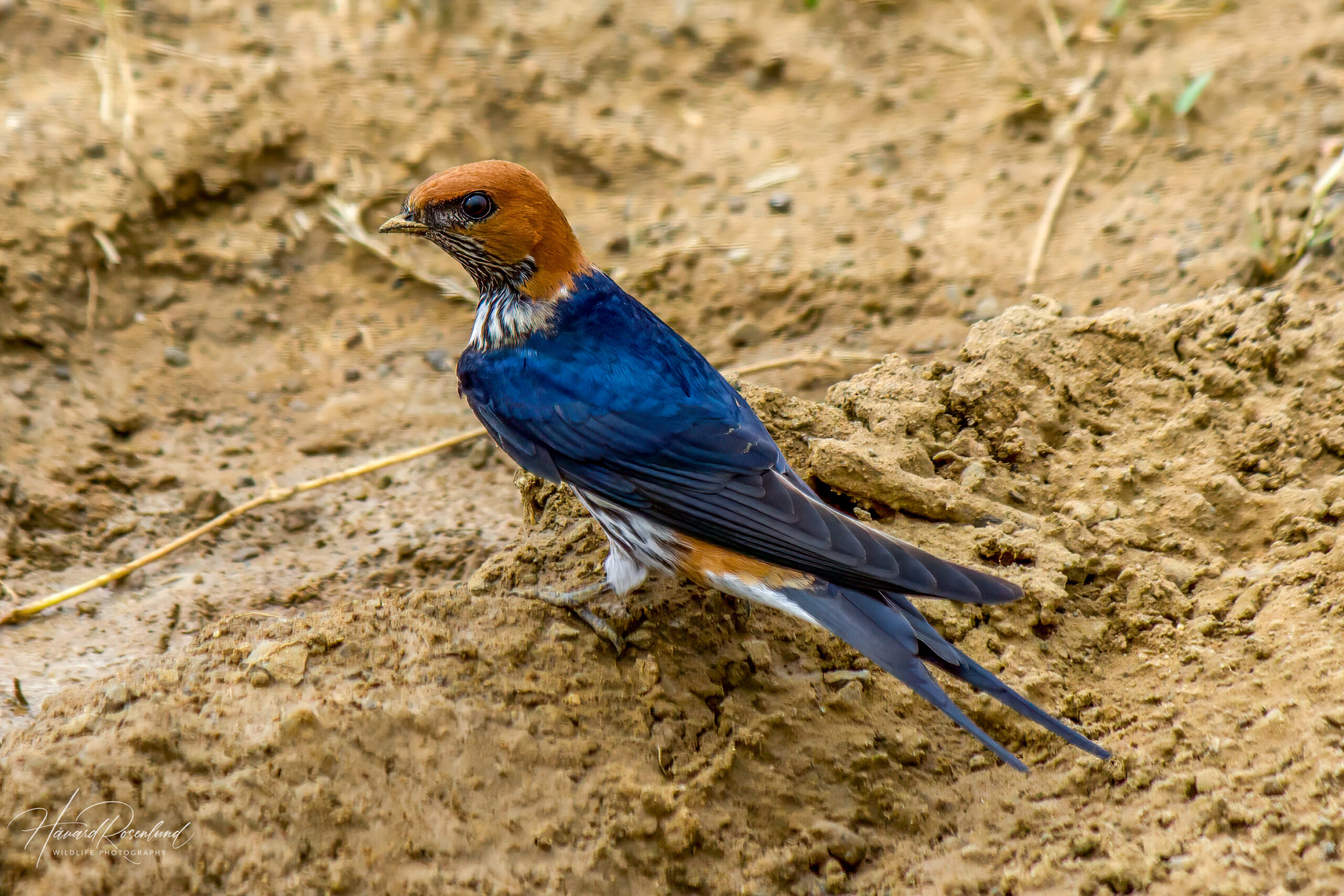
Lesser Striped Swallow
Cecropis abyssinica
At a glance
Habitat
- Savanna, grassland, open woodland, forest edge, farmland and settlements
Diet
- Flying insects, especially flies, beetles, bees, wasps and other aerial invertebrates
Activity
- Diurnal; feeds almost entirely in flight
Size
- Length: 15–19 cm Weight: 15–21 g
Range
- Widespread in sub-Saharan Africa; southern and northwestern populations are seasonal migrants
Description
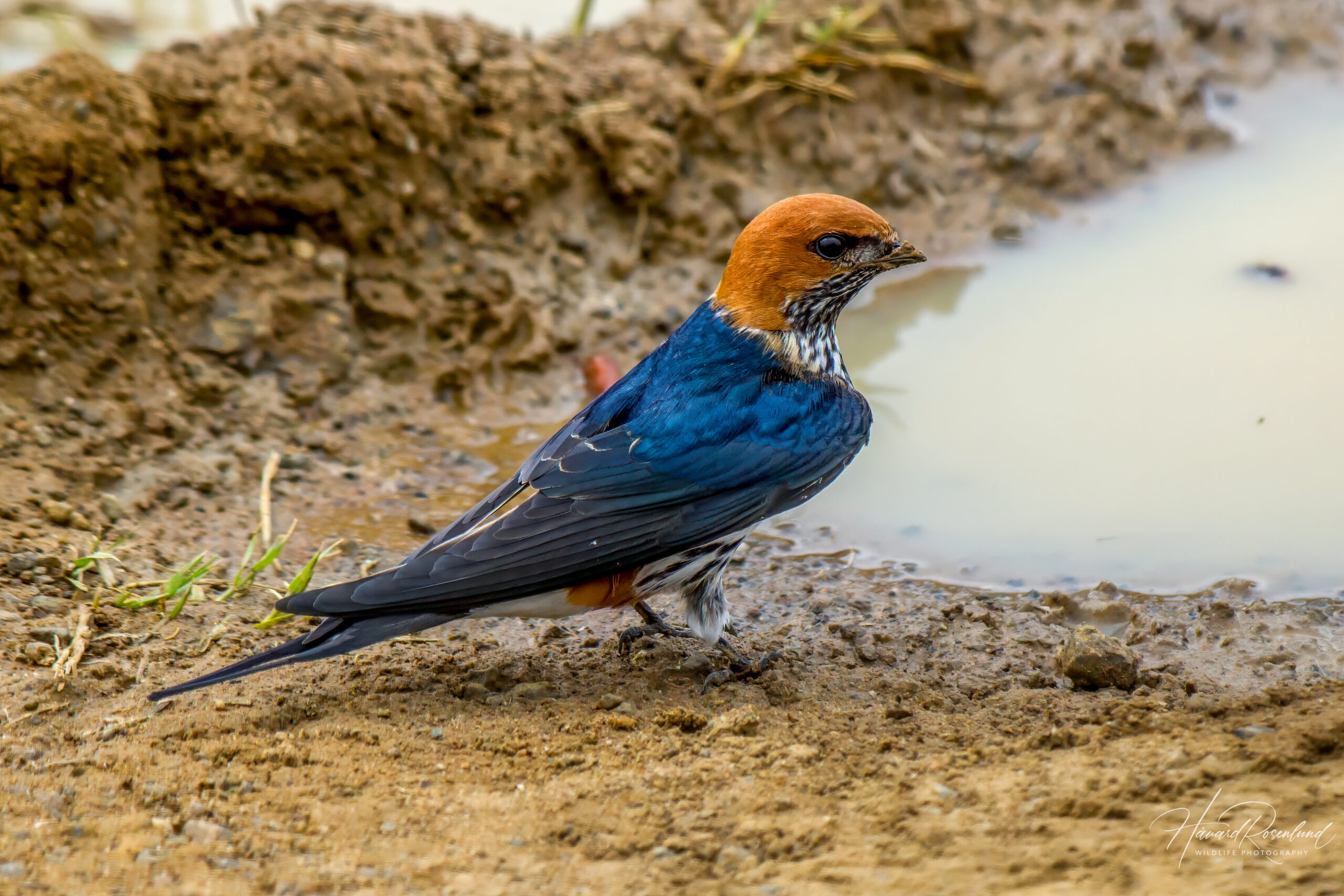
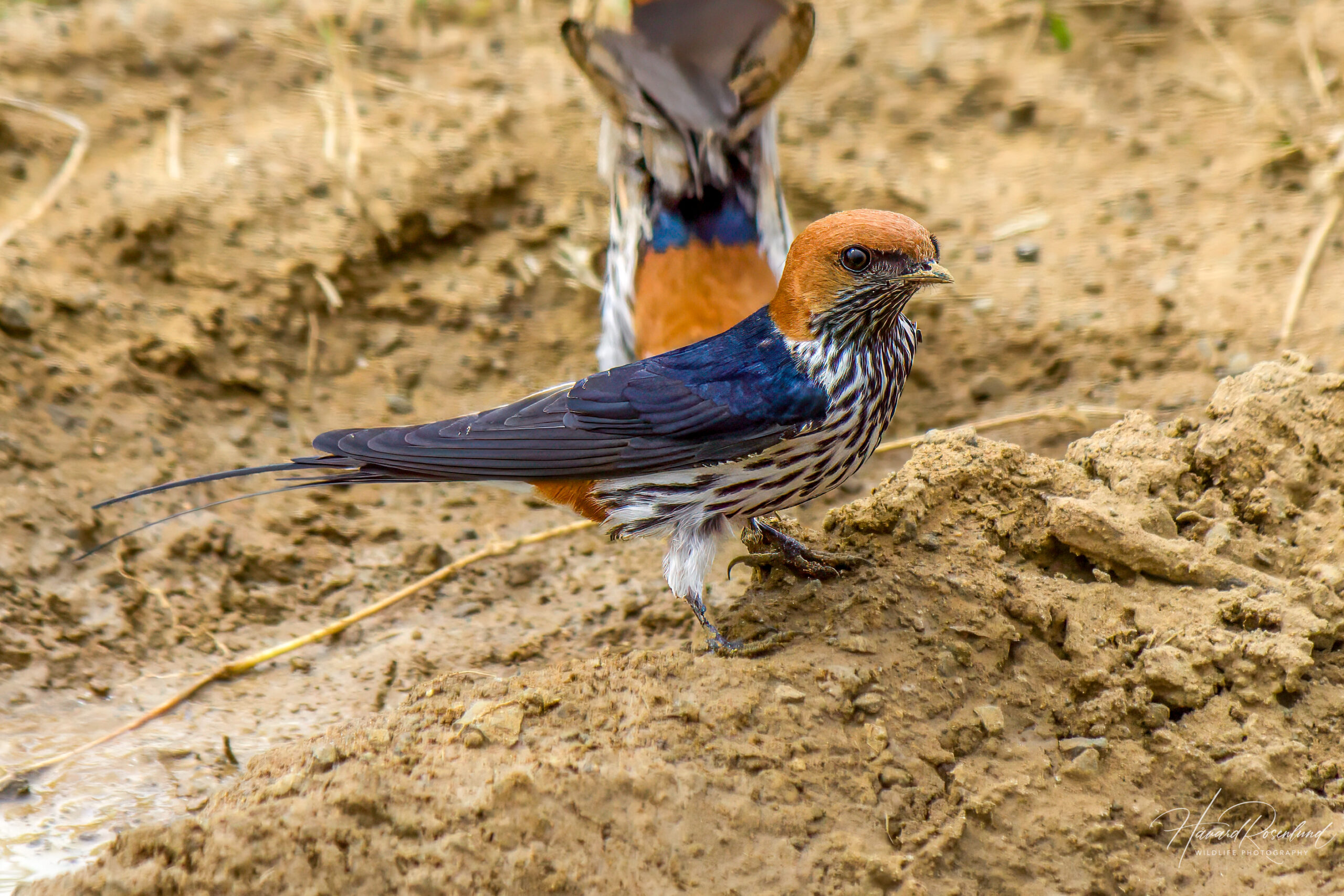
The lesser striped swallow (Cecropis abyssinica) is a distinctive African swallow with glossy blue upperparts, a rich rufous crown and face, a rufous rump and heavily streaked pale underparts. Adults measure about 15–19 cm and weigh roughly 15–21 g. The tail is deeply forked, with elongated outer feathers.
In southern Africa it can overlap with the larger greater striped swallow (Cecropis cucullata). The lesser striped swallow has much heavier streaking on the throat and underparts, more extensive rufous on the face and generally occurs at lower elevations and in somewhat more wooded country.
Habitat
The species uses savanna, grassland, open woodland, forest edge, cultivated land and settlements. It is especially common where open airspace provides good feeding opportunities and cliffs, bridges, buildings or other sheltered surfaces provide suitable nest sites.
Rivers, dams and wetland edges can attract large numbers when flying insects become concentrated above them.
Diet
Flying insects dominate the diet, including flies, beetles, bees, wasps and many other small aerial invertebrates. Prey composition changes with season, rainfall and local insect abundance. Fruit and seeds are also taken occasionally.
Foraging
Lesser striped swallows feed almost entirely in flight, making rapid turns and glides through open air while snapping insects with the wide mouth. They may forage alone or as pairs, but larger feeding flocks form when insects are concentrated, often together with other swallow and swift species. Occasionally they perch in trees to eat fruit or seeds.
Large, short-lived concentrations of insects after rain or around water can attract many swallows to the same area and provide particularly rich feeding opportunities.
Behaviour
The birds spend relatively little time on the ground apart from collecting mud for nests. Between feeding bouts they rest on wires, exposed branches and structures near nest sites and communicate with soft twittering and chattering calls.
Migration
Movement patterns vary strongly across Africa. Many equatorial populations are resident, while southern African birds are mainly wet-season breeding visitors and move north after breeding. Northwestern populations also show seasonal movements.
Moult follows different annual schedules among regions, reflecting the varied movement strategies across the species' broad range.
Breeding
Breeding generally follows seasonal rainfall. Both sexes build an enclosed mud nest beneath an overhang, with a projecting entrance tunnel leading to a chamber lined with grass and feathers. Natural cliffs and rock faces are used where available.
Pairs may nest alone or close to other pairs where suitable sites are concentrated. Clutches usually contain two to four eggs. The female incubates alone for about 14–21 days, while both parents feed the chicks after hatching. The young leave the nest after around 17–18 days but remain dependent on their parents for a further three to four weeks.
Relationship with humans
Bridges, culverts, roofs and buildings provide many substitutes for natural overhangs, and lesser striped swallows readily attach their mud nests to these structures. In settled landscapes, artificial structures can therefore provide many additional suitable nest sites.
The species also benefits from some open agricultural landscapes as long as flying insects remain abundant.
Status
The lesser striped swallow is classified as least concern on the IUCN Red List. It remains widespread and common across much of sub-Saharan Africa.
The global population has not been quantified precisely, but the overall trend is considered increasing. The species is generally tolerant of moderate landscape change where flying insects and suitable nest sites remain available.
Image gallery
Loading map and observations…
Have you seen this species?
Independent species archive
Did you find this species page useful?
Wildlife Vagabond is independently built and maintained. Voluntary support helps cover hosting, maps, data storage and continued improvements to the species archive.
Support Wildlife VagabondSpecies content will remain freely available.
References
Information about the species’ global distribution and status is based primarily on global Red List data. See the references below for details.
- BirdLife International. (n.d.). Lesser Striped Swallow (Cecropis abyssinica) species factsheet. https://datazone.birdlife.org/species/factsheet/lesser-striped-swallow-cecropis-abyssinica
- Earlé, R. A. (1988). The timing of breeding and moult of the Lesser Striped Swallow Hirundo abyssinica. Ibis, 130(3), 378-383. https://doi.org/10.1111/j.1474-919X.1988.tb08812.x
- eBird. (n.d.). Lesser Striped Swallow (Cecropis abyssinica). Cornell Lab of Ornithology. https://ebird.org/species/lessts1
- International Union for Conservation of Nature. (n.d.). Lesser Striped Swallow (Cecropis abyssinica). The IUCN Red List of Threatened Species. https://www.iucnredlist.org/species/22712350/111068375
- Oiseaux.net. (n.d.). Lesser Striped Swallow (Cecropis abyssinica): biometrics, range and subspecies. https://www.oiseaux.net/birds/lesser.striped.swallow.html
- SANBI Biodiversity Explorer. (n.d.). Lesser Striped Swallow (Cecropis abyssinica): diet and breeding biology. https://www.biodiversityexplorer.info/birds/hirundinidae/hirundo_abyssinica.htm