
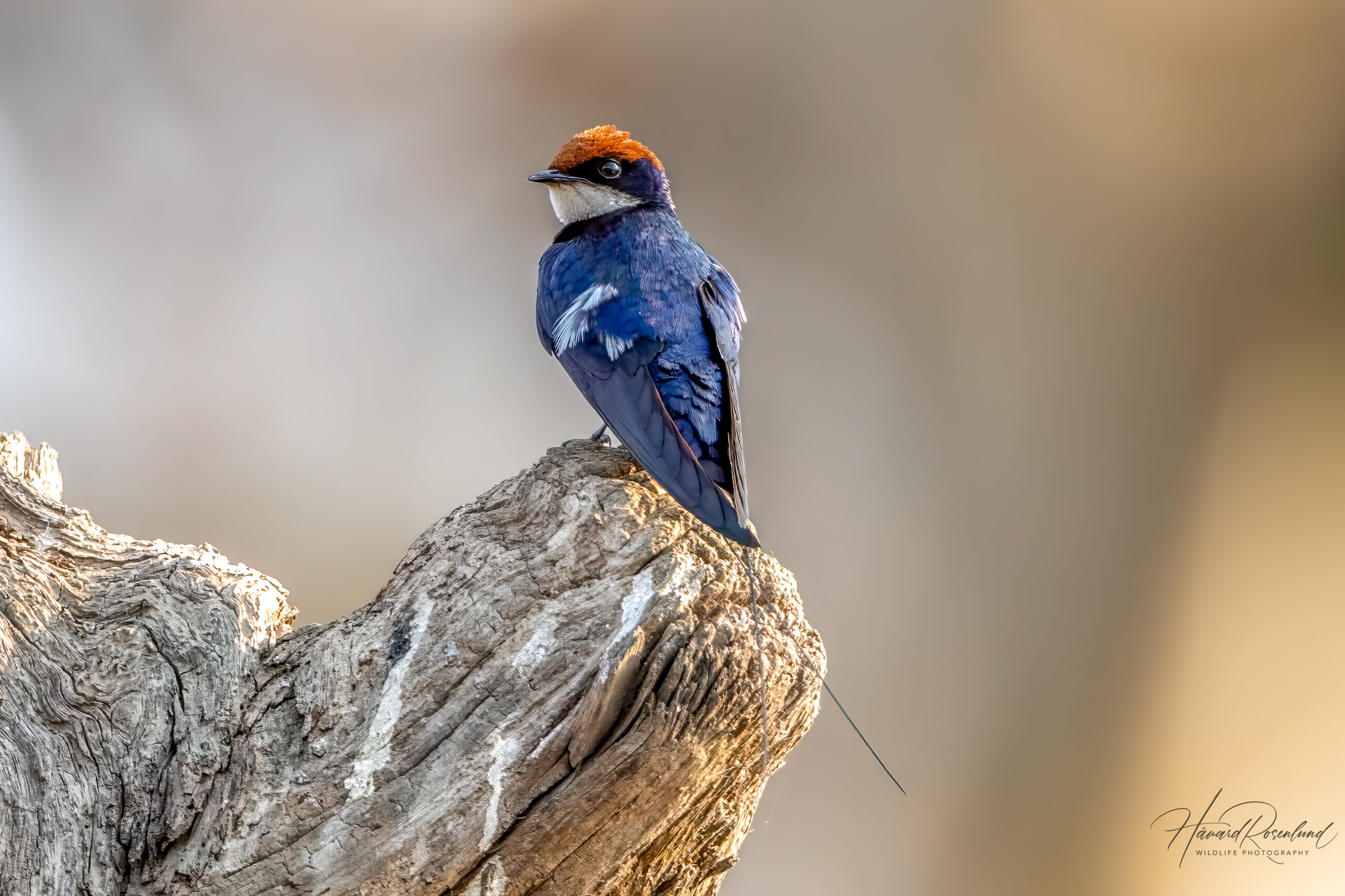
Wire-tailed Swallow
Hirundo smithii
At a glance
Habitat
- Open country near rivers, lakes, wetlands and other water; also farms and settlements
Diet
- Flying insects caught almost entirely on the wing
Activity
- Diurnal
Size
- Length: 14–21 cm including streamers Weight: ~12 g
Range
- Sub-Saharan Africa and southern Asia; the two regions are occupied by separate subspecies
Description
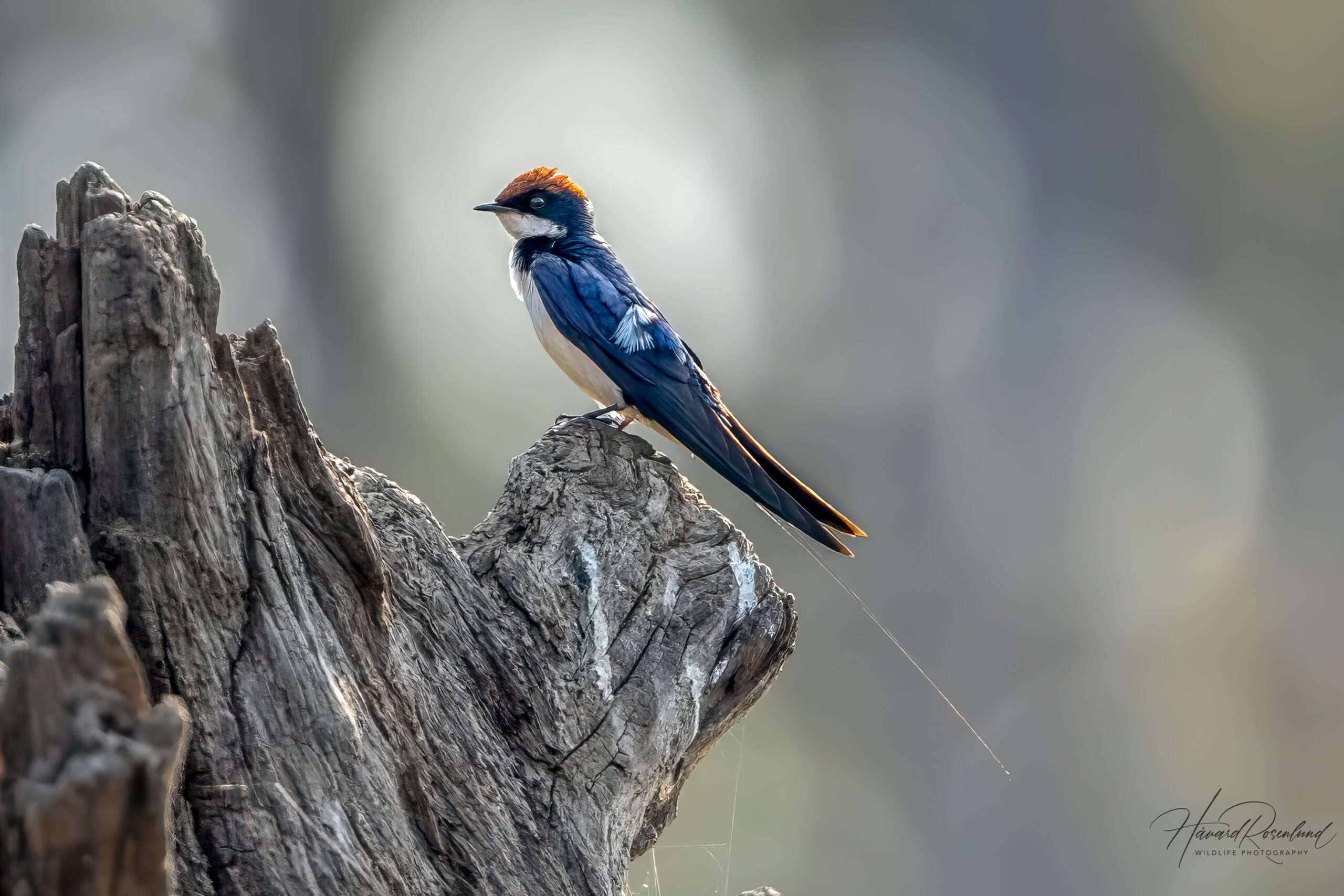
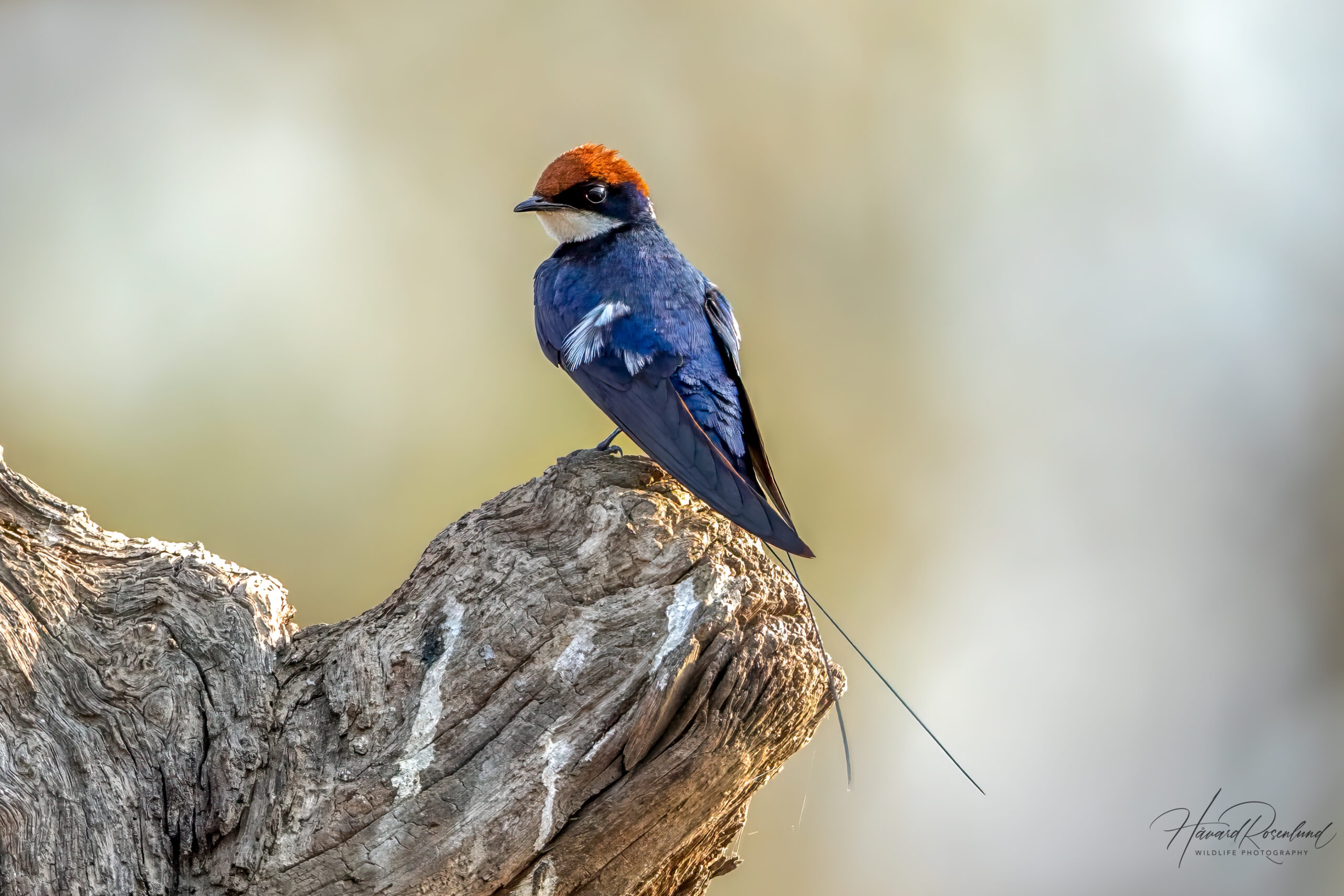
The wire-tailed swallow (Hirundo smithii) is a small, elegant swallow of sub-Saharan Africa and southern Asia. Adults weigh around 12–13 g. Body size is similar between the sexes, but the outer tail feathers form extremely narrow wire-like streamers that are much longer in adult males, so total length varies greatly and can reach about 21 cm in long-tailed individuals.
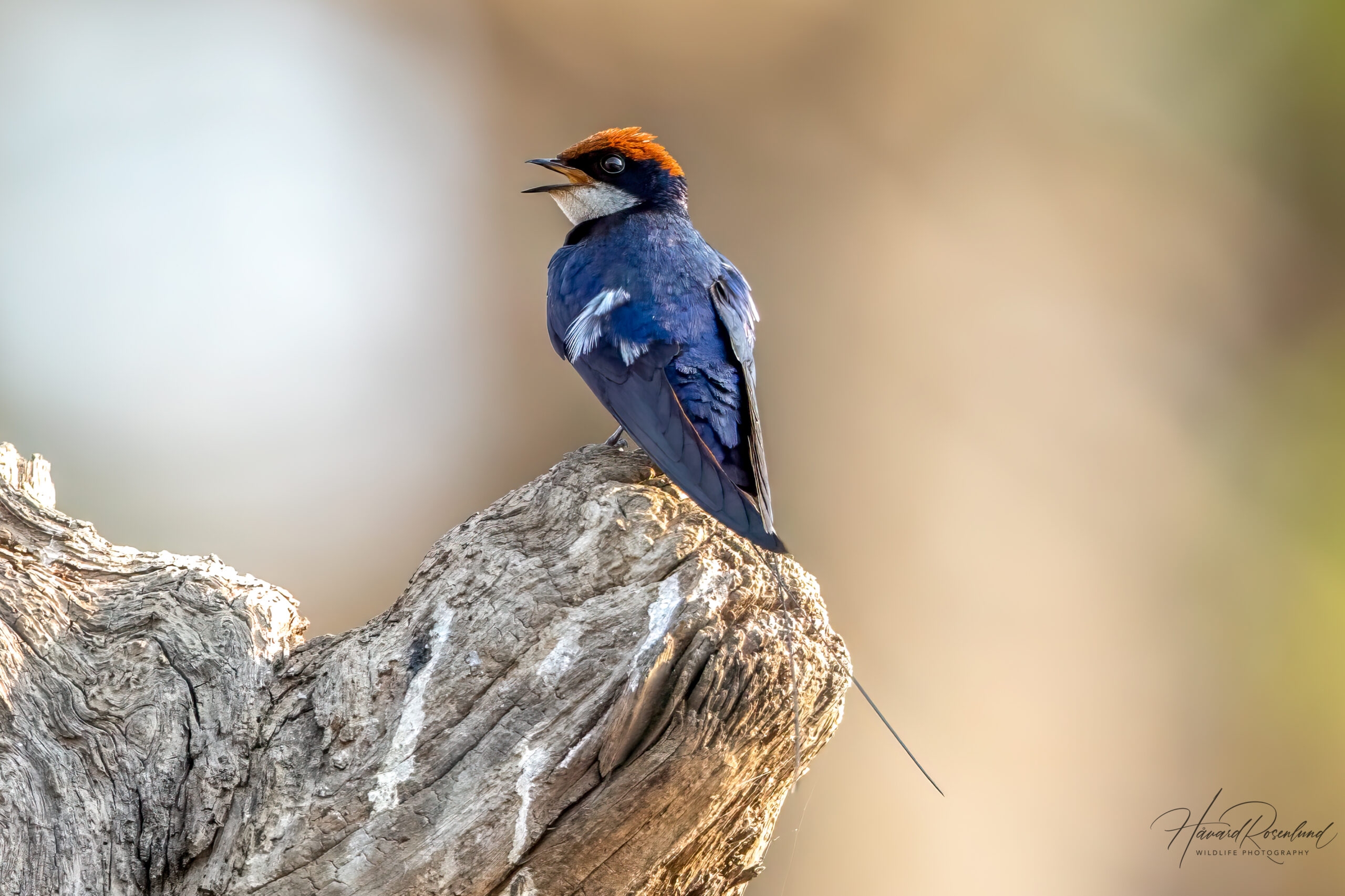
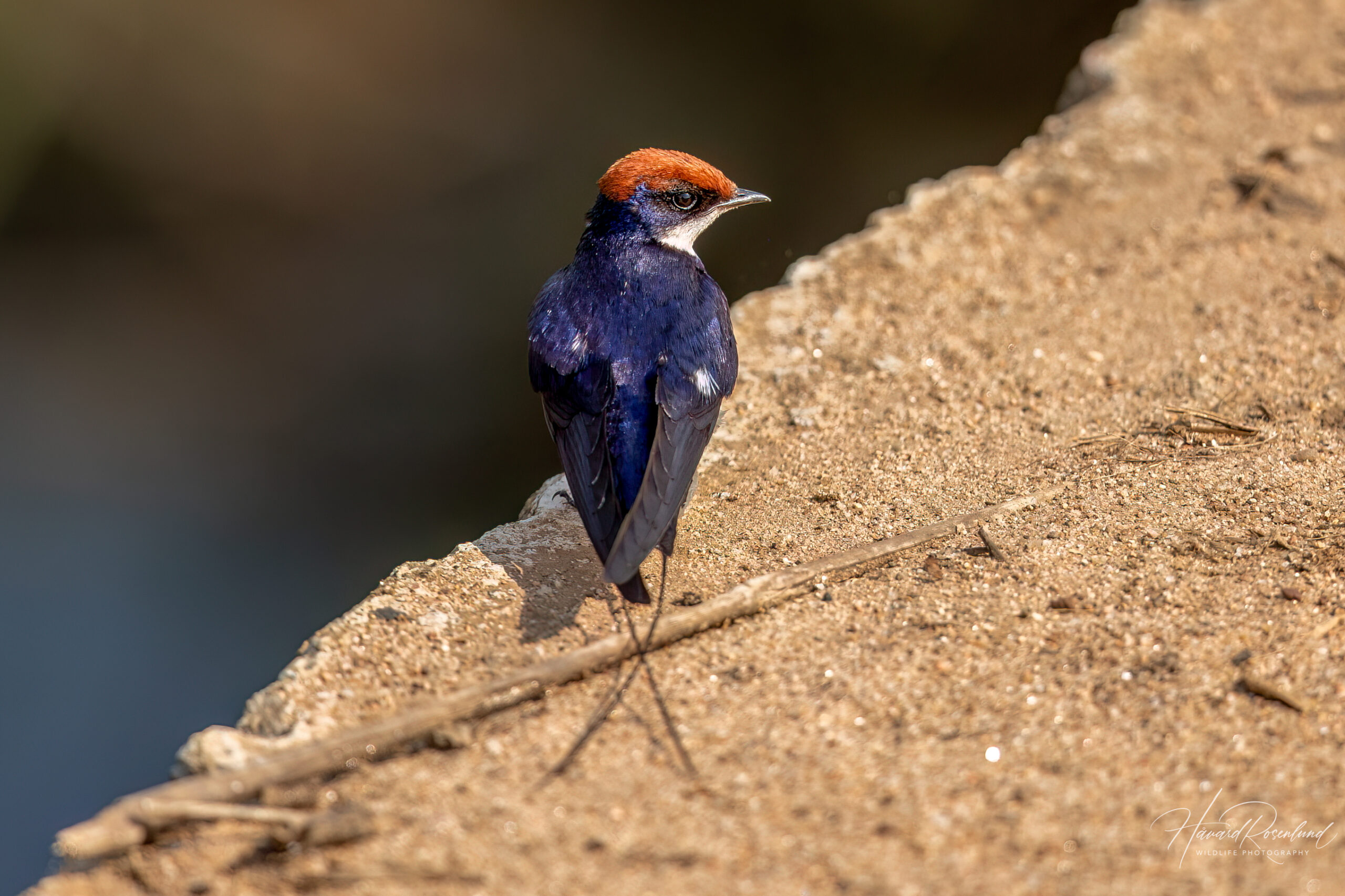
The upperparts are glossy deep blue, the underparts clean white and the crown rich chestnut-red. Females resemble males apart from their shorter tail streamers, while juveniles are duller and initially lack the long wires. Two subspecies are recognised: H. s. smithii in Africa and H. s. filifera in South Asia and parts of Southeast Asia. The Asian form generally has longer tail streamers, particularly in males.
Habitat
Wire-tailed swallows are strongly associated with open habitats close to water, including rivers, lakes, reservoirs, marshes and flooded fields. They also use farmland, villages and towns where flying insects are abundant over water and open ground.
The species has adapted readily to human structures. Bridges, culverts, verandas and buildings can provide sheltered nesting surfaces, while wires, railings and exposed branches provide perches between feeding bouts.
Diet
The diet consists almost entirely of flying insects, including flies, beetles, flying ants, termites, bugs and other small aerial prey.
Wire-tailed swallows feed in low, fast flight over water and open ground, repeatedly changing direction while pursuing insects. Between feeding bouts they often return to favourite exposed perches such as wires, dead branches, rocks or bridge railings. Flying insects often concentrate over water, making rivers and wetlands particularly good feeding areas.
Social behaviour
The species is usually seen in pairs or small groups and is less strongly colonial than many other swallows. Birds can nevertheless feed alongside other swallows where flying insects are concentrated, and several pairs may use the same bridge or buildings when suitable nest sites are available.
Migration
Movement patterns differ markedly between the African and Asian parts of the range. The African subspecies is largely resident but can make local movements in response to changing water and insect availability.
Many Asian populations are also resident in warm regions, while birds breeding farther north, including parts of Pakistan, northwestern India and neighbouring areas, move south outside the breeding season. Migratory behaviour therefore varies geographically across the range.
Breeding
Breeding timing varies across the wide range and often coincides with rainfall and high insect abundance. The nest is a small open cup of mud pellets, usually attached to a vertical or sheltered surface beneath a bridge, culvert, roof, veranda, rock ledge or similar structure. Both sexes contribute to construction and line the cup with grass, hair and feathers.
Clutches usually contain two to four eggs. Incubation lasts around 14–16 days, with the female doing most or all of the incubation in well-studied populations, while both parents feed the nestlings. Young usually leave the nest after roughly 16–22 days; in the Asian subspecies H. s. filifera, about 15 days of incubation and 16 days in the nest have been documented. Fledglings continue to receive food after leaving the nest.
Status
The wire-tailed swallow is classified as least concern on the IUCN Red List. It has an extensive range across sub-Saharan Africa and southern Asia, and the global population trend is considered increasing.
The readiness to nest on bridges, culverts and buildings can provide additional breeding opportunities in human-modified landscapes. Local populations still depend on open habitats with sufficient flying insects, especially around wetlands and waterways.
Image gallery
Loading map and observations…
Have you seen this species?
Independent species archive
Did you find this species page useful?
Wildlife Vagabond is independently built and maintained. Voluntary support helps cover hosting, maps, data storage and continued improvements to the species archive.
Support Wildlife VagabondSpecies content will remain freely available.
References
Information about the species’ global distribution and status is based primarily on global Red List data. See the references below for details.
- Avibase. (n.d.). Wire-tailed Swallow (Hirundo smithii). https://avibase.bsc-eoc.org/species.jsp?avibaseid=B79D6B3DD15ECB2B
- Biodiversity Explorer. (n.d.). Wire-tailed Swallow (Hirundo smithii). Iziko Museums of South Africa. https://www.biodiversityexplorer.info/birds/hirundinidae/hirundo_smithii.htm
- BirdLife International. (n.d.). Wire-tailed Swallow species factsheet. https://datazone.birdlife.org/species/factsheet/wire-tailed-swallow-hirundo-smithii
- International Union for Conservation of Nature. (n.d.). Wire-tailed Swallow. The IUCN Red List of Threatened Species. https://www.iucnredlist.org/species/22712299/94328026
- Kler, T. (2004). Some observations on the breeding biology of Wire-tailed Swallow Hirundo smithii filifera Stephens. ResearchGate. https://www.researchgate.net/publication/298298866_Some_observations_on_the_breeding_biology_of_Wiretailed_Swallow_Hirundo_smithii_filifera_Stephens